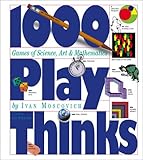
1000 Play Thinks by Ivan Moscovich. il Tim
Robinson.
Workman Publishing: NY, 2001.
This is an amazing book of puzzles, illusions, paradoxes and
games. It's an exciting adventure for the mathematical mind. Too
overwhelming for those who are not, but specific puzzles can be used
from the book to be shared with a child or class less mathematical.
It is a great resource to go back to again and again for a challenge
or to demonstrate fun aspects of math.
related-geometry, numbers, logic and probability, topology, points
and lines, graphs and networks, curves and circles, perception,
shapes and polygons, patterns, mathematical concepts, science
recreation, dissections
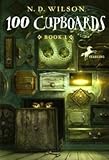
RL=5th & up, as young as 1st grade for single puzzles 100 Cupboards by N. D. Wilson.
Random House: NY, 2007.
Staying in his aunt and uncle's attic for the summer, Henry discovers 99 cupboards under the plaster in the wall. Two of the doors open on their own, beckoning. One cupboard has a light on in the middle of the night and mail. His grandfather's bedroom door has been sealed shut for two years, since his death, but a grandfatherly man roams the floor late at night. He'd like to talk to his uncle about these strange happenings; he's a good listener. But he decides to wait.
One of his cousins, Henrietta, snoops and pushes Henry to explore the cupboards despite his misgivings. Some lead to interesting places, others to dangerous situations. All can be accessed both directions unless the locking mechanism is utilized.
From the first moment, I wanted to explore the cabinets. The book is a little slow in getting to the subject, but not at all disappointing in the discoveries. Knowing now that this is the beginning of a series, I can see it was necessary to set up the characters and town well, before centering on what we all wanted to know about. Uncle Frank and Henry's new friend Zeke are likely to be important in the series. There are also family tidbits through the book that may or may not be setting up sequels.
The book is an easy and exciting read. It's a fairly low level book, but doesn't lose any appeal in that. A great adventure for 4th to 6th graders, especially boys. Reluctant readers as old as 8th. I'm happy to share this book, because it is hard to find books for 4th graders that are this compelling.
related-doors, magic, space and time, cousins, family life, Kansas, other worlds, portals, boys, mystery, adventure
RL=4th-8th 11 Birthdays by Wendy Mass.
Scholastic Press: NY, 2009.
Amanda and Leo have shared their first 10 birthdays together. It's time for their 11th, but because of their year-long fight, they are celebrating separately for the first time. Amanda's having the worst day of her life. All she can think about is their rotten fight and how wrong it is that they haven't been friends. She's ready for the next day, so her worst birthday will be over. But the same tacky balloon startles her when she awakes. She thinks it's a bad joke, but no one else seems to be aware of the repeat. She relives the day trapped in the same horrible birthday only to do it all over again and again. As the days are relived, she starts to make changes in her day. Obviously, something needs to be fixed in order to move on. But what? There is so much to improve.
The chance to relive the day, though excruciating at first, gives Amanda time to see things that she hadn't noticed as she stewed the first time around. Little things that could be important to those around her. She finds she's not the only one stuck in the time warp. Leo is also, and they both are experimenting to find a solution.
This is a great book for middle graders. Funny in parts, thoughtful and touching in others. Quite an adventure. The kids seem older to me than 11-year-olds, but the story is enjoyable anyway.
related-birthdays, time, friendships, interpersonal relations
RL=5th-8th 1 2 3 Moose: A Pacific Northwest Counting Book. Photographs by Art Wolfe. Text by Andrea Helman.
Sasquatch Books: Seattle, WA, 1996.Awesome photographs and an interesting selection of mostly animals are displayed in this nicely done counting book.
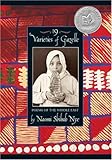
RL=read aloud and 2nd-3rd 19 Varieties of Gazelle by Naomi Shihab Nye.
Greenwillow Books/HarperCollins: NY, 2002.
National Book Award Finalist
This is a poetry collection of Nye's (an Arab-American) memories of family and connections to the Middle East. Most of the poems are of people - relatives, friends, hosts. Mostly deeply held remembrances. Some deal with the struggle of wrapping the brain around the unworkable situation we are expected to accept. Obviously the poet has a strong desire for peace and has even worked towards peace through her travels, reaching out to others through visits and her words.
I don't totally understand all of the poems, but it touched me enough
that I want to understand it better. We come from much different backgrounds, but I sense that we share the same feelings. I cannot know the pain she has; it is much more personal for her.
I enjoyed many of the people poems - Different Ways to Pray,
My Father and the Fig Tree, Going to the Spring, The Words Under the Words, For Mohammed on the Mountain, Arabic Coffee, and Footfall.
I would like all relevant politicians to read this book. It is fairly simple and quick and has a few poems that speak directly to the heart of the matter: Those Whom We Do Not Know, Jerusalem,
Trenches and Moats and Mounds of Dirt, Mr. Dajani, Calling
From Jericho, and All Things Not Considered.
related-Middle East, poetry, conflict and resolution, human behavior, daily life, people, memories, remembrances
RL=YA-adult
Maybe what I need is a list of books focused on awareness, striving for
peace. I have a book here or there, but nothing resembling a list.
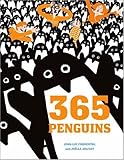
365 Penguins by Jean-Luc Fromental and Joëlle Jolivet.
Abrams Books for Young Readers: NY, 2006 (English language edition).
Originally Naïve Livres: Paris, 2006.
Someone with an odd sense of humor is sending a family a penguin each day with notes to take care of them. At first, it's just strange and mysterious, but several problems arise: feeding them all, their desire to be in water, keeping them (and the house) clean, etc.
The book is hysterical. The penguins are cute as they multiply, and their antics are amusing. There are some math concepts added in, but the main focus is the hilarity of the situation. The illustrations are visually appealing and full of great details, like Chilly with the blue feet (sort of an I Spy element, or the penguin paint footprints). Certain page spreads are just fabulous: the stacking of the penguins to count them, the housing solution, the penguins in the shower, and thinking penguin.
It is a must read picture book. Fun for the whole family, not just little ones. For those interested in other languages, there are French and Spanish editions also.
related-penguins, care of animals, conservation, counting
RL=1st-2nd, read aloud to younger, all ages The Absolutely True Diary of a Part-Time Indian by Sherman Alexie. il Ellen Forney.
Little, Brown and Company: NY, 2007.
Arnold/Junior, a stuttering brain-damaged (but smart) target of a teen pours out his life and soul in his writings and his cartoons. On the advice of a teacher, Junior transfers from his reservation's school to an all white high school in a nearby town. A bold and courageous move, but necessary for his future, considering the social devastation surrounding him. His best friend is furious, feeling abandoned. Risk taking is required to gain acceptance and friends in his new environment, while still residing on the reservation. His risks pay off, gain him respect and confidence, although personal losses make it difficult to continue.
The style is quirky and forthright. The beginning is odd but doesn't take long to hook the reader. Junior's descriptions of his life are painfully direct at times. His humor and cartoons lighten the sadness, though. It is refreshing that Junior is able to gain acceptance at his new school, though it isn't automatically given. He's surprised by the difference in rules for the separate communities, and he learns that his own openness and willingness to adjust to the new rules will win friends. Poverty, teen sensuality, and deaths of loved ones make it a book for mature teens. It is heavy in places, but has some realizations that give hope. Two in particular are the different tribes to which he belongs and the reference to his being a nomad in modern times.
I know that there has been lots of talk about and acclaim for this book, at least on the internet. I've been eyeing it at the library for a while. It is a quick and satisfying read. Good enough that I plan to read more of Alexie's works. It has a more hopeful perspective on poverty and prejudice than most. Hopeful in that circumstances can change.
The reading level and length should not be daunting for any teen.
related-poverty, prejudice, Native Americans, Indian reservations, alcoholism, social improvement through education, acceptance, coming of age, death of loved ones, basketball, cartoons, comics
RL=YA-adult An Acquaintance with Darkness by Ann Rinaldi.
Gulliver Books/Harcourt Brace & Company: NY, 1997.As her mother lays dying, Emily plans to move in with her best friend Annie Surratt. Her plans are ended by the assassination of President Lincoln and the suspicion of the Surratt family's guilt. Emily's Uncle Valentine (a local doctor and anatomy teacher) saves her from becoming entangled in the conspiracy, only to expose her to his own illegal activities.
Emily does not know how to help Annie with the horror of her mother's imprisonment and impending execution. She wants to stand by Annie despite her uncle's demand that she go nowhere near the Surratt boarding house. However, since moving in with her uncle, she is distracted by the unsavory graverobbing practices of her uncle and his associates. When a schoolmate forces her to admit the truth, she feels betrayed. She also is concerned that one of his patients is being held as a prisoner and tries to rectify the situation.
The Civil War and the Lincoln assassination magnified the physicians' awareness of the need to study anatomy. There were, however, few bodies to be had legally, so emerging medical schools took matters into their own hands. This theme shares an equal part of the story with the Surratts' relationship to John Wilkes Booth and their experiences as a result. The focus on the Surratts is of particular interest to me since it seems they were guilty mostly by association and sympathy (not enough to hang someone-although Johnny was certainly involved in Confederate plotting). Dishonesty, different points-of-view, and strength of character are more subtle factors in the book.
I found the book to be surprising and compelling. Rinaldi takes some tiny (yet sensational) themes and weaves them around a young adult's struggle with relationships and morality. She also inspires thought about the complications of living during the Civil War period without it controlling the whole story.
related-body snatching, physicians, Lincoln assassination conspiracy, Washington, D.C., Civil War, 1861-1865, the trial and hanging of Mary Surratt, secessionists
RL=YA Across Five Aprils by Irene Hunt.
Follett Publishing Company: Chicago, 1964.
Newbery Honor 1965A close knit Southern Illinois family with ties to the South are torn by the issues of the American Civil War. Jethro listens to their debates, but at ten years old he must stay and work the farm as the menfolk leave to fight in the war. He is faced with defending his family's honor in town due to one brother's rebel sympathies, and he continually sorts through the issues with those left near home and in his mind.
This is an incredibly moving story that comprehensively discusses the issues of the time. One of the books I recommend all students read for further understanding of the Civil War.
RL=6th-YA The Adoration of Jenna Fox by Mary E. Pearson.
Henry Holt and Company: NY, 2008.
The Adoration of Jenna Fox is likely the best science fiction book I've read. It employs biological advances that are not too distant and sets them in almost today's world.
Jenna Fox has woken from a year long coma after a car crash which should have killed her. It did kill her best friends. She has no personal memories. She watches videos of her childhood and doesn't feel like the same person. Her devoted grandmother acts as if she is not Jenna, which starts Jenna's mind questioning. Her parents are unwilling to answer her questions, so she must search behind their backs. As she starts to know herself, she has trouble differentiating between what are true memories and what she has been told.
A neighbor and friends at her satellite school help her to learn who she is. Regarding her accident and ordinary coming of age identity and soul searching.
At the center of the book is a controversy about the use of biomedical advances. Jenna's friend Allys has lost body parts to illnesses that could no longer be prevented or alleviated by antibiotics due to over usage. Jenna's father has been at the forefront of technological breakthroughs which are not yet legal. These breakthroughs raise ethical questions. Questions about identity. Many books of this sort have a strong right or wrong tone to them. This one is more about the possibilities and the mix of questions. I would really love to say more here, but can't, because it might spoil the story. The author has done such an excellent job of building suspense-adding on bit by bit to the story.
This is a great sci fi book for those who don't think they are sci fi fans. Contemporary, realistic environment just touching on sci fi.
related-medical ethics, bioethics, biotechnology, memory, self-perception, identity, coming of age, tragic loss, familial love, cell cloning, body regeneration
RL=YA-adult The Adventures of a Nose by Viviane Schwarz. il. Joel Stewart.
Candlewick Press: Cambridge, MA, 2002. It is natural for a nose to stick out. Is it possible for it to fit in, too? Meet the nose that travels the world before it finds its place in the world. A wonderful lesson about being yourself with imaginative and artistic illustrations.
RL=1st-2nd and read aloud
The Adventures of Bert by Allan Ahlberg and Raymond Briggs.
Farrar, Straus and Giroux: NY, 2001.Bright, funny pictures partner simple and hilarious stories. It must be a challenge to make a basic beginning reader that is so captivating!
Read also A Bit More Bert 2002.
RL=K-1st
Adventures of Huckleberry Finn by Mark Twain (Samuel Clemens), 1884.I read this aloud with 2 of my sons recently. It has been required reading e: Tin some areas although I didn't read it as a child. I have heard that there is controversy regarding the book. Some people believe that it is proof that Twain was a racist. To be honest, I found it difficult to read aloud because of the racist language, and I can understand that black students would be offended by being forced to read it or hear it. The language seriously bothered me. However, I don't believe Twain was racist. He was an author who forced people to look at things they did not want to see. When Twain wrote this book, much of society wanted to forget slavery and ignore racial relationships. He stuck it in their faces and didn't let them look away.
As we read the book, my sons preferred that I read it. Though it was partly because I made them slow down and repeat parts not spoken clearly, it was also difficult for them to read the dialogue with regional accent. My kids enjoyed the book and the antics of Huckleberry Finn and Tom Sawyer. We also used it as a starting point in discussing slavery and the treatment of other people.
related-orphans, slavery, Mississippi River region, adventure, humor
RL=7th-adult
Agent A to Agent Z by Andy Rash.
Arthur A. Levine Books/Scholastic Press: NY, 2004.
This is an exciting spy alphabet book clever in its use of language with sharp, action-filled pictures.
RL=1st-3rd and read aloud Ain't Gonna Study War No More by Milton Meltzer.
HarperCollins Publishers: NY, 1985.I was amazed when I first found this book. During the Vietnam War, I was too young to understand the resistance to the war. Through all of the formative years of my life the subject was taboo. The implication was that the resisters were not behaving properly. The implication was that this was the first time in U.S. history that there was major opposition to war. Meltzer documents resistance to all of the major wars in which the U.S. has participated (until 1985). He puts into words things that I feel deeply in my heart. One of the most important freedoms of all is to decide individually whether you are willing to participate in a specific war or wars-and to what extent. If a government can coerce you into war, do you truly have freedom? Is it a positive thing to be willing to go to war and kill other people without thinking objectively about why both sides are fighting?
I believe this is a very important book. These questions need to be thought about and discussed openly and respectfully. Both sides of the issue may never agree, but it is my hope that people will not be called cowards because they believe killing is wrong. It is my hope that people will not teach children that patriotism is more important than thinking and morals. It is my hope that people will look beyond propaganda to other factors of war that are not talked about openly and would be considered less acceptable (ex. economics, control of resources).
RL=7th-YA
Airman by Eoin Colfer.
Hyperion Books for Children/Disney Book Group: NY, 2008.
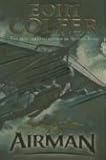
Conor Broekhart, born to fly, born flying in a hot air balloon exhibited at the 1878 World's Fair in Paris, is given an exceptional education and training due to his parents' status in the Kingdom of the Saltee Islands (off the Irish coast) and his own daring exploits. Proclaimed a hero at age 9, he is trained by the King's friend and aeronaut enthusiast, Victor Vigny. A few years later he is caught in the crossfire of the Marshall Bonvilain's political manipulation and sent to rot or die on the prison island of Little Saltee. To survive he becomes a new person and collaborates with criminals. To escape will require using all of his knowledge and skills-including building and flying an untested device. He thinks he has turned his back on his prior familial existence, but to save his parents and queen from Bonvilain's ambitions, he will need to become a revolutionary aeronaut and risk life and limb without the usual safety precautions.
To the inhabitants of the Saltee Islands and Irish coast, Conor Broekhart A.K.A. Conor Finn must have been a wonder, almost a superhero, or to some a demon. With his ability to fly, so far not a regularly known possibility, and his near maniacal fighting skills, honed through his tutor's training and his need to survive prison. The ending in which Conor achieves his ultimate test and rescue attempt is masterful.
The story is darker and also has more depth than Artemis Fowl, another riveting creation of Colfer's. One of the things I like about Colfer is that each of his works is so different-from both what he has already done and anything else.
related-early flight, adventure, survival, political intrigue, diamond mining, 1890s, 19th century, spies, science fiction
RL=7th-YA Al Capone Does My Shirts by Gennifer Choldenko.
G. P. Putnam's Sons/Penguin Young Readers Group: NY, 2004.
Newbery Honor 2005Moose's family has tried everything his mother can imagine to help his sister Natalie be normal. The next idea is to send her to a special boarding school in San Francisco. Their family moves to Alcatraz, so his father can work to pay for the school. His mother starts teaching piano lessons in San Francisco. So, until Natalie gets into the school, Moose is babysitting Natalie every day. She follows him all over the island, and they surprisingly meet new friends-although he can never stop watching out for trouble. He longs to have a normal boyhood, but can't with Natalie along.
I suspect what most children enjoy about the book are the humor in Piper's (the warden's daughter) scams and the references to Al Capone and the other criminals. The best parts to me are the relationship he has with his sister and the family dynamic-the thoughts and feelings Moose has about caring for his sister, his parents' absense, and his need for his parents' trust and support. Many families struggle with Natalie's problem-now called autism. Most of us have seen glimpses of it. I like that Choldenko shows Natalie interacting with her brother and friends. She isn't a freak to everyone else as Moose is afraid she will be. He cares for her, but there is also concern about her safety and happiness and fear of how things will look outside of the family.
related-Alcatraz Island, California, U.S. history, autism, family problems, brothers and sisters, prison life, behavior, trust, support
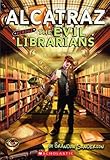
RL=7th-YA Alcatraz Versus the Evil Librarians by Brandon
Sanderson.
Scholastic Press: NY, 2007.
Alcatraz Smedry, raised in foster family after foster family, has a
surprise visit by a man claiming to be his grandfather. He says that the
country Alcatraz lives in is ruled by Librarians that control information
and how the world is perceived, primarily meaning no magic and lesser
technology than the area where Grandpa Smedry lives. Since an unusual gift of his (a bag of sand) has been stolen, Alcatraz leaves with Grandpa to try to recover it and finds he has cousins also, who like them have bizarre powers. For ex., Alcatraz has the ability to make things break. They have a young knight with them on their mission as well.
This young fantasy novel is written in a similar style as Lemony
Snicket's A Series of Unfortunate Events. Maybe not quite as dark seeming, but very sarcastic and opposite meaning. It is funny and flows well. I would highly recommend it for young readers, especially
boys.
related-humorous stories, librarians and libraries, grandfathers, high
interest
RL=3rd-YA Alchemy by Margaret Mahy.
Margaret K. McElderry Books/Simon & Schuster: NY, 2003.This book falls into the category of unique, like my Knock Your Socks Off Books. It is half social issues and half fantasy/alchemy. There is a little discussion of the science and philosophy behind the alchemy, rapt up in the mystery of Jess's situation.
Roland, a prefect and popular student, is manipulated by his Literature teacher into befriending Jess, who is the ultimate loner, because she is having personal problems. As he interacts with Jess, he is drawn into her life because of the mystery and similarities to his own life. Knowing her is a way to learn more about his own predicament. However, focusing on her means estrangement from his girlfriend and risking disfavor with his mom and friends.
The story has depth for one so short and some interesting concepts. It possibly could have been developed a little more. One of the concepts is the use of spoonerisms, which is unusual itself. Jess rearranges words in her dialogue for a twist of meaning that also fits the situation. I also think the book should be shelved as YA (though the cover says 12 & up), because the protagonist is an older teen with definite teen issues.
related-alchemy, magic, magicians, dating, spatial matter, telepathy, spirit walking
RL=YA
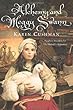
Alchemy and Meggy Swann by Karen Cushman.
Clarion Books/Houghton Mifflin: NY, 2010.
Elizabethan England. Meggy has been called to London by her father she has never seen. Her mother is all too ready to be rid of her. She feels that the only friend she has or could have is a goose. She's crabby from being crippled and harassed all her life about it.
On arrival, she meets her father's ex-apprentice as he is vacating the home. He seems determined to be a friend despite her cantankerousness. Her father, a dedicated alchemist, stays in his laboratorium most of the time. No attention to household necessities whatsoever. Survival is up to her alone. In seeing to her needs, and her fathers, Meggy mingles with neighbors, sharing experiences, making friends, and accomplishes more than she would have dreamed possible. She is a swan, changing from a lonely cripple to a stronger and valued part of a community.
Disturbed by her father's late night visitors, Meggy overhears a plot to kill a baron with poison. She struggles with her father's involvement and his callousness. Then, she tries to set things right.
I enjoyed the use of language in building the setting. There is a freedom of expression, personally smashing words together in a colorful, descriptive manner (as would have been common in the period). Cushman also uses others forms of expression, such as printed word and players and ballads.
Meggy is an appealing and whole/real person. She struggles through her daily life. She lets out her frustration, and she slowly comes to enjoy some of life and learns to play. There is a lot of life in such a short book. A good example of historical fiction.
related-disabilities, alchemy, poverty, London, England, 16th century, Great Britain, Elizabeth I, fathers and daughters
RL=6th and up The Alchemyst: The Secrets of the Immortal Nicholas Flamel by Michael Scott.
Delacorte Press/Random House: NY, 2007.I've been waiting to read this book since hearing about it. It didn't quite live up to my
expectations, but it has a sequel, so I'm hoping the story will improve now that much of the
backstory is out of the way. Maybe there was too much anticipation, since I already knew a little
about the elusive Flamel and his wife. After reading Harry Potter and the Sorcerer's Stone,
my son searched for information about the real Flamel. His story is begging to be told, but no one
really knows it.
Nicholas Flamel and his sorceress wife reappear after centuries of inconspicuous living. They
have been flushed out of hiding by another alchemyst, John Dee, adviser to Queen Elizabeth I
(another historical character of mystique). Flamel is the keeper of the Book of Abraham the Mage
which holds secrets of alchemy and sorcery as well as prophecies of the ultimate battles for world
dominance. Dee is determined to appropriate the book for the benefit of those he serves. If the
alchemy is not enough to grab you, Scott also incorporates an Elder Race, consisting of gods and
goddesses from ancient times, and mixes in historic information twisted to match his world view.
Possibly the biggest surprise is the inexperienced twins Nicholas is bound to protect and teach due
to the prophecies regarding them.
There is information at the end regarding the Flamels and John Dee and the author's inspiration.
My interest has been piqued enough that I will also be looking for other works by Michael
Scott.
related-Nicholas Flamel, John Dee, alchemists, supernatural, twins, brothers and sisters, mythology
and legend
RL=YA
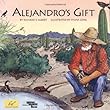
Alejandro's Gift by Richard E. Albert. il by Sylvia Long.
Chronicle Books: San Francisco, 1994.
What I love about this book is the theme. It is a gentle, peaceful story about a beautiful deed. A solitary man gardens to pass the time. While enjoying the fruits of his labor, he notices small animals coming out of the desert for water from his irrigation rows and shelter from the desert sun. He thinks about the animals' need for water and decides to dig a large enough source for the big animals, too. The character has some trial and error and extra work to do, yet still feels that the labor and sweat is worth doing, even when he can't actually watch the animals at the watering hole. I like that the story shows Alejandro's thought processes as he goes about his days, encouraging children then to think also about what they might do or create.
Richard Albert stretches the story discussing the animals of the desert, and there are descriptions at the end. Young ones may find this to be the best part, along with searching for the critters in the illustrations.
related-gardening, desert habitat, life in the desert, animals, water, sharing
RL=1st-2nd, read aloud with toddlers-K *Not 1st level reading. The words are mostly not difficult, but it's not short, and it is paragraphs, not sentences level. All Alone in the Universe by Lynne Rae Perkins.
Greenwillow Books/William Morrow and Company: NY, 1999.Debbie and Maureen have always been best friends. They do everything together-until this summer. Glenna is now keeping Maureen too busy to visit with Debbie, and Maureen doesn't seem to miss her. The book deals with this heartrending problem in a sensitive manner and carries messages that young people need to hear when a close friendship ends.
related-best friends, friendship
RL=6th-YA All Quiet on the Western Front by Erich Maria Remarque. trans. by A. W. Wheen.
Little, Brown and Company: Boston, 1929.
Originally Im Westen Nichts Neues
Ullstein A. G.: Germany, 1928.
This book is to be neither an accusation nor a confession, and least of all an adventure, for death is not an adventure to those who stand face to face with it. It will try simply to tell of a generation of men who, even though they may have escaped its shells, were destroyed by the war.
This simple explanation serves as the introduction to the book. The book is a description of war and how it affects those involved. There are others like it (probably several for each major war), but All Quiet on the Western Front is honest and specific without being as abrasive as the others tend to be. It has truths in it that are often avoided in talk of war.
I have heard it said that it should be required reading; I am not sure how much it would matter. I agree with what the book has to say, and more people understanding what war does to people is a positive thing. But I noticed that it was written between WWI and WWII from a German viewpoint-and nothing seems to matter when a government wants to start a war. Not the people and land it will destroy and not the anger of the citizens paying for it. The ultimate factor is still that people in power are gaining from it-power, prestige, and money.
related-World War I, death, nature of war, effects on soldiers, realities of war, artillery fire, monotony, pointlessness, chance, classic literature, social issues
RL=YA-adult Alone Across the Arctic: One Woman's Epic Journey by Dog Team by Pam Flowers with Ann Dixon.
Alaska Northwest Books/Graphic Arts Center Publishing Company: Portland, OR, 2001.Read this exciting account of Pam Flowers's trip across the Arctic. She completely changed her life to follow her dream. As an adult, she decided to learn to raise sled dogs and learn the survival skills necessary for travelling alone with a team in the wilderness. She eventually became the first woman to journey alone across the Arctic with a team of sled dogs. She has written in detail about the preparation, routine, coping, and teamwork required for them to succeed against so many odds.
Her story is awe-inspiring and beautiful and so full of wisdom and love for her dogs. She is an inspiration for all who have a dream that may seem impossible. Or one that will not gain support from those around you. Her message is not just that you can do extraordinary things if you have the motivation and discipline, but also that you should be yourself even when that self is totally different from what is considered normal.
I had the great fortune to hear Pam Flowers speak at the Bangor Public Library, ME. She has a great gift of storytelling, and her stories are true. She has so much strength and emotion in her presentation.
related-Alaska, Arctic regions, dogsledding, journeys, survival
RL=4th-adult
Alphabet Book. photography by Dave King. text by Lara Tankel Holtz.
DK Publishing, Inc: NY, 1997.My youngest enjoyed the format of this ABC book. It is a bit like the I Spy books. Many of the pictures are collages or still lifes. There are enjoyable words included and a list of names of objects to find in the pictures.
RL=1st-2nd and read aloud to younger The Alphabet From Z to A (With Much Confusion on the Way) by Judith Viorst. il Richard Hull.
Atheneum/Macmillan Publishing Company: NY, 1994.
Such awesome pictures with beautiful and fascinating details. Going backwards is a different
idea, but the best part of the text is the comparison of letters and sounds that is rarely done
in alphabet books. Viorst inserts her wit as well to keep it from becoming tedious. As the cover says, it is "an alphabet book for folks who already know their ABCs."
RL=K-3rd The Amazing Maurice and His Educated Rodents by Terry Pratchett.
HarperCollins Publishers: NY, 2001.
Pratchett tells a twisted version of the Pied Piper. Maurice the talking cat and his talking rat friends and piper boy are pulling their last piper scam, except the current town already has a scam going on. The rat catchers of the town are stealing and selling food to the river trade and blaming it on the rats. Rats are hated, poison and traps everywhere, though there are no rats to be found.
The mayor's daughter, always in search of an adventurous tale, befriends the newcomers and joins with them to expose the scam and reorganize human-rat relations.
The story takes place in Discworld, with only a few references-place names, magic, mention of wizards, werewolves, vampires, etc. It has the bizarre wit expected of the series.
I enjoyed the philosophical conversations, mostly with the rats, and the second look at human interaction with animals. There are a few hilarious moments, as is typical of Pratchett. It is amazing what he can do with a few lines. One of the funniest is a reference to Discworld which is less meaningful if you haven't read more of the series (the coach robbery).
I found the book in the YA section of the library. I do not know if it was written for YA or if it was catalogued as such because of the 2 young characters.
related-rats, cats, musicians, swindlers, human-animal relationships, humorous stories, Discworld
RL=YA-adult Amazing Sun Fun Activities by Michael Daley.
Learning Triangle Press/McGraw-Hill Companies, Inc: NY, 1998.Discussion of how solar energy is used and easy activities that can be done with household materials to further understanding and inspire continued inventiveness.
RL=3rd-7th
Amelia and Eleanor Go for a Ride by Pam Muñoz Ryan. il Brian Selznick.
Scholastic Press: NY, 1999.
Two of the most exciting women in history are together on a jaunt! Fact and fiction are mixed
in this warm and lively meeting of two independent, like-minded women. Ryan has notes at the back
to sort out which is which.
At a dinner party at the White House, Eleanor Roosevelt and Amelia Earhart decide to fly
around D.C. after Eleanor asks Amelia what it is like to fly at night. To top off the evening,
they go for a fast ride in Eleanor's automobile in continuation of their sharing their love of
freedom.
The text perfectly captures the spirit of these two women and the excitement of their shared
adventure. The illustrator being Selznick, the pictures are gorgeous and alive. The cover art ranks
among my favorite.
related-Amelia Earhart, Eleanor Roosevelt, First Lady of the United States, flight, cars,
independence, adventure, historical fiction
RL=1st-3rd, read aloud to toddler-1st
American Gods by Neil Gaiman.
HarperCollins Publishers: NY, 2001.
Originally William Morrow: NY, 2001.There is a battle brewing between the forgotten gods from other countries and cultures and the new American gods of technology and money. The forgotten gods feed on some form of sacrifice (given freely or not) to stay alive. Shadow, formerly in prison, has been contracted by one of the gods (apparently the ringleader) to play an important role in the confrontation. It isn't clear until the end what his purpose is; he is just following orders. Because he has been set up, his wife comes back from the dead to protect him. His innate goodness also affords him protection.
A host of gods and cultural figures are trotted out in this literary tale-mostly the forgotten ones. They lead colorful, and mostly pathetic, lives. I would have been interested to see more of the new gods.
Perhaps I read through it too quickly. I sense there is more under the surface than I recognized. It is definitely a symbolic work. In this copy of the story, there are an interview and review questions, which I read halfway through, to help mull it over.
I read the book after reading a teacher's discussion of using the book in her high school class. There are a couple spots in the book that might not be considered appropriate for that level. They are small parts that can be glossed over. I think the story is excellent and certainly understandable to teenagers. However, being a sheltered female, I would not have been prepared as a teen for the graphicness of a scene in the first chapter. I might have skipped over it and been relieved the rest wasn't that way. Or I might have stopped reading the book. As an adult, I don't feel the scene is necessary. To me, sex is a personal and private thing, and I don't like to see it cheapened or used to sell. Otherwise, it is a deep and riveting story-an exceptional story with reason and a perfect balance between description and visual fluidity.
related-America, faith, sacrifice, purpose of gods, deception, mystery
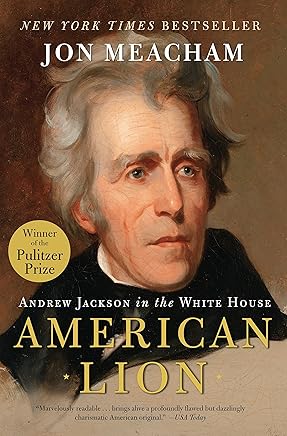
RL=adult, YA depending on maturity level American Lion: Andrew Jackson in the White House by Jon Meacham.
Random House: NY, 2008.
I am on a quest to learn more about Presidents of the United States, especially those that are less discussed. While Andrew Jackson is discussed in biographies, it seems that he is being glossed over in schools. I was only taught a few things about him: he was considered a heroic general, he opposed the National Bank which Alexander Hamilton founded, and he was an instigator of the Trail of Tears situation. So, I felt it was important to learn more about this President who was hugely popular before he was President. This book was recommended to me.
As I read, I began wondering why Jackson's Presidency was not discussed in schools. Clearly, he was very popular. He managed to hold the union together despite the dissension in Washington. Yes, John C. Calhoun (as Jackson's Vice President) was already pushing for secession at that time. He also did succeed in stopping the National Bank, though another was started later. He was opposed by other strong factions as well: John Quincy Adams, Henry Clay, and their followers. I have some suspicions regarding skipping over him; it is probably political in nature. From a historical perspective it makes no sense, because Abraham Lincoln and the Roosevelts clearly followed in his footsteps, in using popular sentiment to gain strength and leverage and in using their strength to advocate for an expanded number of the people. Jackson wasn't the first. Thomas Jefferson also did, and so did Aaron Burr advocate for people of less property. (Note: Aaron Burr is also someone to learn more about. He was on a path to become President before allegations were brought against him, and the case against him was at best shadowy. He was not convicted.) There is no answer to my question here; that would take much more reading and study. I suspect it has to do with the fear of democracy in our government and the desire of other factions to retain power over the people. It may also be that Jackson's Presidency came at a time when the country was still young and developing. It makes politics and government easier to portray the country as this idea that was inevitable and heroic. Jackson planned to take power away from those that had been there for a long time, and as a result ended up fighting them constantly. It was messy, and would require people to reconsider some of what they have been told to believe. It seems to me this is what we need to be reading. Not only is it very interesting, but it also shows people that history is alive. People then were not legendary. They made mistakes too and at times behaved immaturely, just like today's politicians. It is important to compare to now and sift out what looks like it worked and what didn't. It also helps us measure how we got to this point. To me, that is what history is about. This book does a good job of discussing the background and characters of the time. It encourages me to read more, as a good book should.
related-19th century, history of the United States, Presidents, Andrew Jackson, westward expansion, Spanish territories, slavery as a political issue, John C. Calhoun, John Quincy Adams, Henry Clay, changing of political parties, Francis Preston Blair, Edward Livingston, John Henry Eaton, Martin Van Buren, Andrew and Emily Donelson
RL=adult, accessible to YA Americans Who Tell the Truth by Robert Shetterly.
Dutton Children's Books/Penguin Group USA: NY, 2005.Shetterly's portraits of famous Americans are awesome. Even more powerful are the quotes chosen to go along with them. I know that it will inspire readers to learn more about these incredible people. What a great idea it was to combine the two!
My husband and I had the good fortune to view the portraits as well at the Bangor Public Library, Maine.
RL=6th-YA (Due to the content. 5th may understand also.)
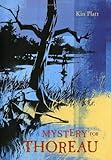
A Mystery for Thoreau by Kin Platt.
Farrar, Straus and Giroux: NY, 2008.
This is an odd, but interesting mystery. The tone is unusual because
the story is set in 1846 and the language reflects the setting. The
author started writing for the comic industry in the 1930s and books in
the 1960s. Adding to the flavor is that the setting is in Concord, Ma with Ralph Waldo Emerson, Henry David Thoreau, and Louisa May Alcott as
characters. Thoreau even helps to solve the mystery.
Oliver, a young newspaper reporter, is given a prophecy of death by an old crazy woman. Thoreau is jailed for tax evasion. A young woman comes from Boston, advertising for a job and looking for a place to live. The old woman is killed. The young one has disappeared, with her parasol and hat found near the crime scene. The reporter gets the scoop on these
incidents and becomes embroiled in the investigation.
Through the book, the reporter has interviews with a few people, including Thoreau. He renews his friendship with a childhood friend, an Algonquin Indian, who knows wood lore almost as well as Thoreau and finds the young woman by tracking her. Period issues are discussed - treatment of the Native Americans, the United States invasion of Mexico, and sentiments of the townspeople towards Emerson, Thoreau, and the Alcotts.
related-journalists, murder, Henry David Thoreau, 19th century, Algonquin
Indians, Indians of North America - Massachusetts, New England, Native
Americans, history of Concord, MA, mysteries and detective stories
RL=YA-adult
Note: The book was published post humously. Anahita's Woven Riddle by Megan Nuttall Sayres.
Amulet Books/Harry N. Abrams, Inc: NY, 2006.Anahita is repelled by the marriage proposal of her tribe's kahn. She has plans for her life and isn't sure marriage fits at all. At the very least, she wants to choose her own husband. Her father is upset, knowing how greatly her refusal may impact the village and its seasonal migration.
Inspired by the riddles she shares with her father, Anahita requests permission to hold a contest to determine her betrothal. She wishes to weave a riddle into her wedding carpet to eliminate the possibility of marrying the Kahn. Anahita acts impulsively and does not think through the consequences of her behavior. Word of the challenge spreads farther than she desires. The idea of the competition causes upheaval in her village, and consequently, her family.
I especially like the characters and how they each relate to the contest, the turmoil caused by one girl's desire to choose her own path, the lessons she learns through the process, and the meaning of the weaving itself as Anahita works and plans and as each suitor tries to guess her thoughts.
related-Iran, Persia, nomads, handmade carpets, natural dyes, riddles, weaving, weavers, change, tradition, strong female protagonist/character
RL=YA The Ancient One by T. A. Barron.
Philomel Books/The Putnam & Grosset Group: NY, 1992.Having lost her grandfather, Kate goes for a visit with his sister in Oregon where she is soon drawn into another astounding adventure. Part conservationist, Aunt Melanie involves Kate in her attempt to save the redwoods in a secluded volcanic crater from loggers. Kate takes shelter in the hollow of the oldest tree and is transported back to when the area was an ancient tribal camp (5oo years). At that point, instead of being a historical tale, it goes a more fantastical direction. In order to travel back to her time, she is sent on a quest to retrieve powerful magical artifacts from the evil Gashra (the ruler of the volcano) and his minion Sanbu. She has three sidekicks plus a dog and owl to help her achieve her goal. Again this story is more fantasy than I usually choose to read. For me, the historical and social subjects within it balance it enough to keep the interest level up. The fantasy parts are also so separate that they seem like a dream-even to Kate.
related-time travel, conservation of natural resources, friendship, transformation, tree of life, connection of all living things, past and present, magic, ancient tribes, volcanoes-fiction
RL=6th-YA The Ancient Technology Series by Michael Woods and Mary B. Woods.
Runestone Press/Lerner Publishing Group: Minneapolis, MN, 2000.
Ancient Agriculture
Ancient Communication
Ancient Computing
Ancient Construction
Ancient Machines
Ancient Medicine
Ancient Transportation
Ancient WarfareThis is an awesome World History series. I found the books at my local library and introduced them to my sons to show them different types of technology. I wanted to impress on them the brilliance and importance of discoveries made thousands of years ago. Many things are still used today because they are still among the best ways to accomplish tasks. I also wanted them to learn that there are things that ancient people knew that were lost for centuries and needed to be rediscovered.
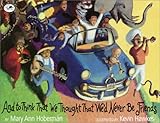
RL=3rd-6th And to Think That We Thought That We'd Never Be Friends by Mary Ann Hoberman. il Kevin Hawkes.
Crown Publishers, Inc/Random House: NY, 1999.
This rhyming story starts with a brother and sister fighting. A third child settles the dispute through sharing. The kids fight again in the evening, and their father distracts them by sharing a book. The new neighbors disturb their peace with music (terrible music). The matter is set right when they join in. The disturbance continues throughout the community and beyond, growing larger as more people share the music, spreading throughout the world.
The message is settling disputes through friendship. First, that arguments can be resolved, and then, that it can work for everyone. The extension of friendship spreading through the world is one not common for this theme, and it is shown in a fun and contagious way.
Hawkes has used lots of color, contrast, and shadow for a dynamic effect, with the people and animals almost leaping from the page. I wasn't sure I was going to like this book (because of the didactic content). As always, Hawkes' beautiful rendering is perfect for the story, and the reader is soon caught up in the spirit of the parade instead of dwelling on the lesson. And there are plenty of details to go back and pore over.
related-conflict resolution, friendship, sharing, peace, brothers and sisters, stories in rhyme
RL=1st-3rd, read aloud to toddler and up Angry Arthur by Hiawyn Oram. il by Satoshi Kitamura.
Farrar, Straus and Giroux, 1982.
First published in Great Britain by Andersen Press, 1982.

Arthur is angry, because he doesn't want to go to bed. His anger
builds and builds until his house and town are so far out in the universe
that they become particles. Each increase of anger pushes him and his
world a little farther, and he is told by his parents and grandparents that it is enough. Finally, he is tired from the drama and doesn't remember why he was angry.
This is a very cohesive story for one so brief. There are some great
descriptions, such as a hurricane ripping off roofs. Well thought out and
with a catastrophic event for each build.
As good as the story is, the illustrations are the best part. Each
page adds to the story. Cracks in the room before the initial explosion,
the devastated neighborhood, the town being washed away by a flood, and
then the outer space pictures, Arthur hanging onto his anger all the
while.
I wish I had known about this book when my kids were young.
RL=K-2nd, read aloud to toddler-1st The Animal Atlas by Barbara Taylor. il. Kenneth Lilly.
Dorling Kindersley Limited/Alfred A. Knopf: NY, 1992.The animals are grouped by habitat and continent with maps showing their locations. The pictures and captions are much like the popular Eyewitness series.
RL=3rd-5th
Animalia by Graeme Base.
Harry N. Abrams, Inc: NY, 1986.Animalia is my favorite alphabet book. It has totally absorbing pictures, wonderful descriptions for each letter, plus many objects hiding in the scene starting with the appropriate letter for each picture. It is a book children enjoy way beyond the age of ABCs.
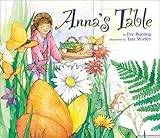
RL=PreK-4th Anna's Table by Eve Bunting. il Taia Morley.
NorthWord Press: Chanhassen, MN, 2003.
Anna has a table in her bedroom where she keeps found and collected objects from nature - rocks, shells, a dead crab, a flattened lizard, bones from owl pellets, etc. Each object is presented with its own story and mystique. The girl is filled with wonder at each new discovery.
I have heard that it is best to leave the objects in nature. For kids, I'm not sure I agree. Collecting instills a deep appreciation of nature and is a later reminder of the joy of the discoveries. It seems a natural thing to want to keep the items for studying and as a reminder of the whole experience.
The rhyming story has a slow and contemplative mood, giving children time to look closely at the objects on display. The pictures are filled with whimsy and the excitement of being in nature and exploring its mysteries.
related-nature, collections and collectors, stories in rhyme
RL=1st-3rd, read aloud to toddlers-1st Anne of Green Gables by Lucy Maud Montgomery
Originally L. C. Page & Co: Canada
Anne of Green Gables 1908
Anne of Avonlea 1909
Anne of the Island 1915
Anne's House of Dreams 1917
Rainbow Valley 1919
Rilla of Ingleside 1920
Anne of Windy Poplars 1936
Anne of Ingleside 1939
Note: Books 4-8 are about Anne Shirley as an adult, and so are not appropriate for 3rd graders.Antics! by Cathi Hepworth.
G. P. Putnam's Sons/The Putnam & Grosset Book Group: NY, 1992.This is definitely a read aloud alphabet. It has great vocabulary but not words young ones would be reading. The pictures are wonderful and at times hilarious. I love the Brilliant with the flowing white hair (an exaggeration of Einstein). A vocabulary builder with great pictures.
RL=read aloud
Archer's Quest by Linda Sue Park.
Clarion Books/Houghton Mifflin Company: NY, 2006.
author of A Single Shard and The Kite FightersKevin is trying to do homework when an arrow comes at him. The intruder says he fell off a tiger when asked how he got there. Unbelievable! It turns out that the young man is an ancient Korean ruler, and to prevent drastic changes in history he must be sent back. How do you send someone back in time (and place) if you don't know how and why they arrived? That is the mystery, and Linda Sue Park has written a unique and entertaining solution.
related-Korean history, rulers, time travel, magic, Tongmyong Wang (King of Korea 58-19 B.C.), trust, honor, tigers
RL=4th-8th Archimedes: Greatest Scientist of the Ancient World by D. C. Ipsen.
Enslow Publishers, Inc: Hillside, NJ, 1988. In searching for biographical information for my children, I came across this book at the library. Certainly I had heard of Archimedes, but I had no idea how interesting his life was. This book left me wanting to learn more about him and other people from history who were so focused on the problem at hand.
RL=5th-YA
Around the World in a Hundred Years: From Henry the Navigator to Magellan by Jean Fritz.
G. P. Putnam's Sons: NY, 1994. The Ancient Greek philosophers wondered about what lay beyond places marked on their maps. Some of them tried to mathematically find answers about the unknown. When the Romans conquered, they destroyed the phenomenal library in Alexandria where much of the scolarship was happening. Neither the Romans nor the Christians (who came to power later) encouraged questioning the unknown. As a result, maps prior to 1400 A.D. were not too accurate. However, during the 1400's people did start to be curious again about what lay beyond their regions (possibly because regional rulers were gaining in power and they were less controlled by the Church). They also believed there were fortunes to be made in trading foreign goods and wanted to be the first to acquire these trade goods. Jean Fritz has done an excellent job of exploring the trips of the adventurers who started to map the world.
RL=4th-6th
Around the World in Eighty Days by Jules Verne.
Originally published as Le Tour du Monde en Quatre-Vingts Jours.
Pierre-Jules Hetzel: France, 1873.
Edition read trans. by Robert and Jacqueline Baldrick.
E. P. Dutton & Co: NY, 1968.In this fantastic global trip, Phileas Fogg and his manservant race around the world to win a bet. Detective Fix tries to trip them every step of the way because he believes Fogg committed a bank robbery the day of the bet.
Around the World in Eighty Days is probably the most believable of the Jules Verne stories. Fogg's setbacks and Fix's near misses add drama and comedy to the adventure. Even though we look back at it as a historical reading, it is one of the least outdated of the classics because it is still a great adventure. An adventure we could conceivably make ourselves. Parts of the trip would even still be considered adventurous.
related-travel, impossible feat, loyalty, resourcefulness, First Transcontinental Railroad of the U.S., linking of the Indian railways, Suez Canal, classic books
RL=7th-adult Artemis Fowl by Eoin Colfer.
Talk Miramax Books/Hyperion Books for Children: NY.Magic and fairy tales (literally) go hi-tech in this most original, humorous, and elaborate series. All of the books are absorbing with many memorable moments. Artemis is a mastermind at planning and technology. Despite his intelligence, he is certainly not the ideal in character. However, exposure to the fairy world teaches him valuable lessons in friendship, loyalty, and selflessness.
Artemis Fowl ©2001: Through research and scheming Artemis finds a way to capture a fairy in order to increase his family fortune. Because of his knowledge he is sure of success, but there are still things about the fairy world that he has not learned.
Artemis Fowl: The Arctic Incident ©2002: Artemis's father is being held in Russia for ransom. The B'Wa Kell goblins are rebelling with the help of an insider at LEPrecon headquarters. Human artifacts are surfacing underground, so Holly Short, Root and Foaly believe Artemis must be trading with the goblins. Artemis and Butler are interrogated to learn the truth, and the 5 join forces to retrieve Artemis Fowl, Sr. and end the goblin uprising.
Artemis Fowl: The Eternity Code ©2003: Possibly the best of the series, this book has many surprises. Artemis builds the ultimate computer-with fairy equipment confiscated in earlier situations. The C Cube will make all other communications technology obsolete. It is verbally controlled, wireless, and can be used as a TV, phone, video and audio player, and computer. It can hack any computer and scan any contents-electronic or organic. It can also piggyback on any satellite given the source code.
Artemis tries to make a business deal regarding the C Cube, and it ends up in the hands of a ruthless criminal industrialist. Holly and Foaly are drawn into Artemis's deals again because the Cube has scanned their information systems. Because the Cube is verbally controlled, Spiro (the thief) will require Artemis's services.
Artemis Fowl: The Opal Deception ©2005: Opal Koboi has made an ingenious escape and has set out to destroy all those responsible for her incarceration. Artemis walks directly into her trap. Thanks to Butler's unique abilities they elude death. Holly has lost connection with Foaly and is on the run as a suspect for the murder of Commander Root. So, Artemis is the only one capable of stopping Opal, but he has to recover his memories of the fairy people first.
Artemis Fowl and the Lost Colony ©2006: Not reviewed yet.
RL=5th-YAThe Arthur Trilogy by Kevin Crossley-Holland.
Arthur A. Levine: NY.
The Seeing Stone: 2001.
This is the journal of a younger son (page) at the turn of the thirteenth century near the border of England and Wales. It is a cozy glimpse into life in a small medieval village. It is also an exciting parallel of the King Arthur stories. Scenes of King Arthur's life are played out before him in a seeing stone given to him by his friend and mentor, Merlin. There are many similarities between what he sees in the stone and what happens in his life. Some of the things are seen beforehand, and others he sees in the stone after experiencing a similar version. Either way, the thirteenth century Arthur has a thirst for knowledge and understanding and learns from both the seeing and experiencing.
related-King Arthur, thirteenth century, medieval village, England and Wales
RL=6th-YA
At the Crossing Places: 2002.
Arthur leaves Caldicot to train as a squire with Lord Stephen de Holt. He continues to view King Arthur's world through his seeing stone as he and Lord Stephen prepare for a Crusade. He examines things he is told or taught as he faces contrasting ideas in life, and everything is logged in his journal. As he prepares for knighthood, he is also preparing to manage his inheritance-Catmole. Or as he finally realizes, his Camelot.
related-King Arthur, Middle Ages, British history, identity, contradictions in life
RL=6th-YA
The King of the Middle March: 2004.
In the last book of the trilogy, Arhtur participates in the Fourth Crusade in Venice and Zara and witnesses the confusion and horrors of war. He also sees the downfall of King Arthur's court in his seeing stone. The third book also focuses on his courtship of Winnie and his worry that he will lose her. After the other 2 books, this one was disappointing to me. It is likely to appeal to less people, and I would not recommend for younger than YA, although the depiction of the Crusades is interesting as is the parallel between Arthur and Winnie/Arthur and Guinevere.
related-King Arthur,British history-Richard I, 1189-1199, King John, 1199-1216, Middle Ages, magic, identity
RL=YA
Artisan Bread in Five Minutes a Day: The
Discovery That Revolutionizes Home Baking by Jeff
Hertzberg and Zoë François.
St. Martin's Press: NY, 2007.
All of my adult life I have wanted to make good crusty
breads. After having my second child, I did try, using a
book written for bread machines. The idea was to mix with
the bread machine and bake in the oven. The dough was too
sticky to handle. The bread ended up too heavy, and I still
had a mess to clean up.
My first reaction to this title is that it must be an
exaggeration. After reading the introduction and mixing a
batch, I learned that the hands on preparation is really
that short and simple. Hertzberg (a chemist) and
François (a professional baker) systematically
worked through the baking process, eliminating unneeded,
time-consuming procedures. Those who have made or tried to
make bread know that mixing and kneading, rising, shaping,
and cleaning all add to the aggravation of making bread. In
the Five Minutes a Day approach, mixing is simple and
quick. It can be done with a wooden spoon in a couple
minutes, cutting down on cleanup. There is no kneading. You
mix, let it rise for two hours and refrigerate. You make a
large amount and take out only the amount needed each time.
Shape it quickly, let it rise for a short time on the
wooden paddle you use to put it in the oven (or a baking
pan), then bake (with a small amount of water in a pan
underneath). It is easy enough that teens and pre-teens
with oven experience could make the bread. And amazingly
there is little mess.
The basic recipe does what it says it does. I had good
(not just edible) bread on the first try. I'm ready to move
on to the next bread type (after only one batch). The basic
is white bread. Variations include rye, wheat,
pumpernickel, olive, oat, potato, semolina, bagels,
flatbreads, and dessert breads. There are more, but these
are common breads. Some require more ingredients, others
different handling.
A pizza stone and peel (paddle) are recommended, for
ease and proper baking. The two factors that are easiest to
mess up are the amount of dough you shape and bake and the
time for baking, since the amount is not very specific and
the amount affects the time. Read from the beginning
through the master recipe before making a batch. There are
techniques and things you should know about ingredients
before baking.
related-breadmaking, baking, recipes, food
RL=6th and up The Atlas of Oceans by Linda Sonntag.
Aladdin Books Ltd: London, 2001.This is a very nice introduction to the oceans of the world. It is both a geographical resource and science reference with maps and beautiful pictures relating to the ways local creatures and people rely on the oceans. It also discusses how the ocean works and early exploration.
RL=3rd-5th
The Audacity of Hope: Thoughts On Reclaiming the American Dream by Barack Obama.
Crown Publishers/Random House, Inc: NY, 2006.Senator Obama speaks to our people in an uncommonly forthright and personal way about issues that have long remained unaddressed. In his book, he discusses why politics since the Vietnam War has been a never-ending haranguing of opposite campaigns. He suggests a way to start to move beyond the partisan politics that has existed for so long in order to alleviate the difficulties that are looming-the growing economic insecurity of our families, racial and religious tensions, and global threats (political, economical and environmental).
One of the things that strikes me about the book is Obama's talking of proud American traditions. One of those traditions is democratic discourse. He says that between World War II and the Vietnam War politicians may have disagreed, but they still worked together to solve the problem at hand. It has not been that way since (my whole lifetime). And he says "What is needed is a broad majority of Americans-Democrats, Republicans, and Independents of goodwill-who are reengaged in the project of national renewal, and who see their own self-interest as inextricably linked to the interests of others."
related-politics and politicians, legislators of the United States, African Americans, Congress, Senate, national characteristics, ideals, governmental philosophy, values, opportunity, faith, race, family-his and in general
RL=YA-adult Avi Wortis
Avi is one of the best authors for the 3rd-8th grade range of books. He has written many, many books on diverse topics with varying styles-for kindergarten through young adult ages. My personal favorites are the historical fiction, but others are equally as good. Poppy, Windcatcher, Nothing But the Truth, and Who Stole the Wizard of Oz? are also exceptional books.
Beginning Readers
Abigail Takes the Wheel
Prairie School
Novels
Beyond the Western Sea: Volume I & II
Don't You Know There's a War On?
Encounter at Easton Sequel to Night Journeys
Night Journeys
Nothing But the Truth Newbery Honor 1992
Poppy & Sequels
The Secret School
Shadrach's Crossing
Sometimes I Think I Hear My Name
The Traitor's Gate
The True Confessions of Charlotte Doyle Newbery Honor 1991
Windcatcher
Who Stole the Wizard of Oz?
Who Was That Masked Man, Anyway?
Wolf Rider
Silent Movie picture book
Second Sight short stories
What Do Fish Have To Do With Anything? And Other Stories short stories
Books Not Reviewed Yet
The Barn
The Bird, the Frog, and the Light
Blue Heron
Bright Shadow
Captain Grey
City of Light, City of Dark Comic book novel
The Christmas Rat
Crispin: The Cross of Lead Newbery Award 2003
Crispin: At the Edge of the World Sequel
Devil's Race
Emily Upham's Revenge
The End of the Beginning
Finding Providence biograhy of Roger Williams
The Fighting Ground
The Good Dog
The History of Helpless Harry
Man From the Sky
The Man Who Was Poe
The Mayor of Central Park
Midnight Magic
Never Mind
No More Magic
Perloo the Bold
A Place Called Ugly
Punch With Judy
Romeo and Juliet-Together (and alive!) At Last
Something Upstairs
S.O.R. Losers
Smuggler's Island
Snail Tale
Strange Happenings
Things That Sometime Happen
Tom, Babette & Simon
Abigail Takes the Wheel. il Don Bolognese.
HarperCollins Publishers: NY, 1999.
There is a collision in New York Harbor! Abigail's father uses his freight boat to help. He must steer the ship, so Abigail takes the wheel of their boat to tow the ship to a pier. More excitement follows as Abigail guides the ship through the busy harbor with the help of her brother.
related-nineteenth century, shipping, New York Harbor
RL=3rd-4th Level 3 beginning reader
Beyond the Western Sea: The Escape From Home
Orchard Books: NY, 1996.
Written as a Victorian novel, there are many twists and turns and dramatic situations. An Irish brother and sister receive tickets to America as they are about to be put out of their homes by an English landlord. The son of a wealthy English lord also heads for America after his father allows his brother to beat him. It is a story of coincidences and near misses as the two boys meet and help each other through their journeys. Many others become involved in their situations, and it is difficult for them to know who is helping and who is harming them.
RL=6th-YA
Beyond the Western Sea: Lord Kirkle's Money
Orchard Books: NY, 1996.
Here is the continuation of the story of Patrick and Maura recently from Ireland and Lord Kirkle's son Laurence who has run away from London. The novel starts with the trip to America in steerage and Laurence as a stowaway. After landing in Boston, the major characters go separate ways, but all have reasons to make their way to Lowell, MA and the labor problems brewing there. The stolen money changes hands a few times. Again there are many twists with much adventure and anticipation of the resolution.
related-emigration and immigration, runaways, nineteenth century, adventure, labor, Lowell-Mass.
RL=6th-YA
Don't You Know There Is a War On?
HarperCollins Publishers: NY, 2001.
Howie, Denny, and most of their class have fathers or other relatives serving overseas during World War II. Their teacher, Miss Gossim, helps them to cope with the daily reminders of the war. Howie overhears the principal telling the superintendent of schools that Miss Gossim should be fired. He is determined to find out why and help her to continue teaching their class.
This is a moving example of WWII from the perspective of a child confronted everyday by headlines of war, security blackouts, and war shortages. He dreams nightly of his father dying. His mother is exhausted from working long hours and her own anxiety. His teacher is the one thing making his life bearable.
related-World War II (US), teacher-student relationships, schools, sacrifice, political lessons
RL=5th-8th
Encounter at Easton
William Morrow and Company, Inc.: NY. Originally published by Pantheon Books/Random House: NY, 1980.
This sequel to Night Journeys is told as court testimony from 4 points-of-view. Robert Linnly, the fugitive boy, is the focus. The girl with whom he is escaping is desperately ill, so he must plan how to cross the Lehigh River, get help for her, and provide food for them. John Tolivar, the master of the runaways, describes his hiring of Nathaniel Hill to pursue the girl. Mr. Hill is acting as a bounty hunter and describes his pursuit of Elizabeth Mawes and his dealings with the other characters. George Clagget is the constable in Easton whom Mr. Hill employs to help in apprehending Elizabeth. All 3 men claim their innocence and lawfulness in the calamitous circumstances that unfold. The story is emotionally moving and significant in that it shows the parallels between indentured servitude and slavery.
related-fugitive laws, eighteenth century, Pennsylvania, indentured servants
RL=6th-YA
Night Journeys
Pantheon Books/Random House, Inc.: NY, 1979.
Two young indentured servants have escaped from their master in New Jersey in the 1700s. They have been told they would be safe and be able to find work if they can reach Easton, PA. Peter York's foster father is the Justice of the Peace in a small township just over the Delaware River border, but he is also a Quaker. Thinking of the reward money, Peter offers to help search for the fugitives. What he doesn't know is that they are children. Both Peter and his foster father wrestle with their consciences over the events that arise.
The first time I read this book I was overwhelmed. It has been a few years, so I wasn't sure if I would still be as moved. Again, I was amazed by the depth of emotion evoked by Peter York's struggles. There are about 10 to 12 of Avi's books that I think are great. This is near the very top.
related-indentured servants, Society of Friends, eighteenth century, Pennsylvania
RL=6th-YA
Nothing But the Truth
Orchard Books: NY, 1991.
Newbery Honor 1992
Philip is sent to the vice-principal's office for behaving disrepectfully while the national anthem is played. The situation quickly spins out of control as students, teachers, parents, school officials and the media become involved in the matter.
This is Avi at his best as he highlights an issue that does tend to get totally out of control. The facts tend to get lost in the fuss, and people's ability to reason is also lost as emotions become inflamed. Both sides become increasingly defensive, and the more attention is given, the more the story changes.
RL=7th-YA
Poppy il Brian Floca.
Orchard Books: NY, 1995.
Poppy's boyfriend is eaten by the owl who says he is the protector/ruler of the forest. She is forced to confront him with her father to get permission to move the family due to lack of food. It is the scariest thing she has ever done. Scarier still is her confrontation with the frightful porcupine who turns out to be her true protection.
Poppy is courageous and smart enough to solve her seemingly insurmountable problems. There is much adventure, suspense, and comic relief in this short novel which is one of the best for this reading level. The sequels are equally as good.
RL=3rd-5th
Poppy and Rye il Brian Floca.
Avon Camelot/Avon Books, Inc: NY, 1998.
Poppy convinces Ereth to travel with her to tell Ragweed's family of his death. On the way she meets Rye, Ragweed's brother. She is drawn into their family's predicament-beavers have flooded their home and are planning more extensive flooding of the area. Meanwhile Ereth is struggling with his feelings (friendship, love) for Poppy. Rye wrestles with his own problem of proving himself as dependable and worthy as Ragweed.
RL=3rd-5th
Ragweed 1999 (not reviewed)
Ereth's Birthday 2000 (not reviewed)
Poppy's Return 2005 (not reviewed)
Prairie School. il Bill Farnsworth.
HarperCollins Publishers: NY, 2001.
Noah loves life on his family's pioneer farm. His Aunt Dora travels west to teach him how to read, but he finds every possible excuse to avoid lessons-running off and doing one chore after another. Realizing she won't be able to keep him cooped up, Aunt Dora finds a way to capture his attention out on the prairie.
related-nineteenth century, pioneers, reading, physically handicapped, teaching
RL=2nd-3rd Level 3 beginning reader
Second Sight
Philomel Books/Penguin Putnam Books for Young Readers: NY, 1999.
Eight short stories for a new millenium by notable authors. There is a wide variety of
stories with fantasy, humor, and realism. Authors include Avi, Natalie Babbitt, Madeleine
L'Engle, Richard Peck, Janet Taylor Lisle, Rita Williams-Garcia, Nancy Springer, and Michael
Cadnum.
RL=6th-8th
The Secret School
Harcourt, Inc: NY, 2001.
The teacher of Elk Valley just received news of her mother's illness, so she must leave the school. Mr. Jordan, the head of the school board, refuses to keep the school open for the last month and a half of the term. Ida and Tom must pass exit exams to move on to high school, so Tom suggests they continue classes with Ida as the teacher. She agrees because it seems to be the only way, and she wants to teach anyway. It is decided that they must meet without Mr. Jordan knowing in order to continue. What would it be like for an eighth grader to teach 7 other students? Can she do this, keep up with farm chores, and study to pass her own exams? This is an engaging book with funny and heartwarming moments. Especially pleasing for those who enjoy learning or have a bit of the teacher inside themselves.
related-one room schoolhouse, teachers, coming of age, early twentieth century, rural town life, school, achievement
RL=5th-8th
Shadrach's Crossing
Pantheon Books/Random House, Inc: 1983.
Smugglers take over Lucker's Island as the town is struggling through the Depression. At first the residents are glad for the money they bring, but as time goes by they are given less money, and their fear of the smugglers increases. Everyone is afraid to go against them-except Shadrach. Because of the humiliation and fear of his parents he decides to collect evidence for a man he believes is a government employee. He may have gone too far and endangered his family as well as himself. A captivating and thrilling adventure as Shad follows his convictions and stands up against the criminals who have taken over his home.
related-smuggling, islands, Coast Guard, Great Depression 1930s, courage, spying
RL=6th-8th
Silent Movie il C. B. Mordan.
An Anne Schwartz Book/Atheneum Books for Young Readers: NY, 2003.
The black and white pictures definitely set the melodramatic mood of the silent films. The faces and some of the gestures also have been exaggerated for effect. The story is also the type of story that would have been used for a silent movie. Two non-English-speaking immigrants (mother and son) are lost in New York City. They expect to meet Papa at the docks after immigrating but cannot find him. The story has been presented very well.
Because of the content, I am not sure what is an appropriate reading level. The text is simple and can be read by first graders, but it may take several readings for young readers to appreciate it. Our video-saturated culture is so different from what it was 100 years ago. I would suggest read aloud to young readers and possibly use for a Social Studies or Art Lesson for 5th-6th.
RL=read aloud
Sometimes I Think I Hear My Name
Avon Books: NY, 1982.
Conrad has been living with his aunt and uncle in St. Louis since his parents divorced years ago. He had been visiting them in New York City on his vacations-except for the past year something else always came up. So for spring vacation, Conrad has his heart set on going to visit his parents when his aunt and uncle announce they are sending him to England instead. He tries to convince them he doesn't want to go, but it is no good. However, when he goes to pick up his plane ticket he stumbles upon a plan that may work with the help of a girl who is returning home to New York City for spring break.
This story is strange and sad to me. The boy is caught between his love and trust of his aunt and uncle and his desire to be with his parents who are not able to care for him. His mother works constantly to just get by and his father seems totally irresponsible. Also compared to his situation is a family that is wealthy, but in their unhappiness the parents have separated themselves from their children and pretend otherwise.
related-divorce, foster care/adoption, trust, identity, honesty, stability
RL=7th-8th
The Traitor's Gate by Avi.
A Richard Jackson Book/Atheneum Books for Young Readers: NY, 2007.
John Huffam's father swears he doesn't owe any one person the amount of money for
which he is sent to debtor's prison in 1849 London. While trying to solve the problem of
getting his father released, John learns that just about everyone he encounters is
lying-his father, the family's housemaid, the bailiff, his ex-school teacher, his
sister's suitor, the inspector treating his father as a traitor, the inspector who isn't
that confronts him with a warning, even Sary, his new friend, who is helping him make
sense of the confusing mystery. All he knows for sure is that there is a spy after a
secret that his father holds, and he is determined to discover who it is.
Very much in the style of Dickens, the story has many elements that Dickens
used-scenes of poverty, sneaks from the lower class, wrongful accusation, trial of the
innocent, many and varied colorful characters, wealthy benefactor, and emphasis on detail
and description. Because of the detail and twisting of the plot, it takes some time to
become involved in the story. Once sufficiently into the story, the mystery is
captivating. It isn't my favorite Avi book, but I would recommend it for both historical and mystery.
related-19th century England, imprisonment for debts, spies, Scotland Yard, intrigue,
poverty (1800s), mystery and detective stories
RL=6th-YA
The True Confessions of Charlotte Doyle
Orchard Books/Franklin Watts, Inc: NY, 1990.
Newbery Honor 1991
Upon learning which ship Charlotte Doyle is sailing on to America, the porter refuses to deliver her trunk to the ship. Another laborer is quickly hired to deliver the trunk, but he also runs away when told which ship. Despite this obvious warning, the man entrusted by her father to see her safely onto the ship demands that she sail on it. Her father has left no alternate plan or funds. They also find that the 2 families with whom she planned to travel will not be sailing with her. This leaves Charlotte the sole passenger aboard the ship. Not long after departure she is given a dagger by the cook to protect herself. The voyage becomes an ordeal that changes her perceptions drastically. The fantastic events seem extraordinarily real in this captivating novel.
RL=5th-8th
What Do Fish Have To Do With Anything? And Other Stories
Candlewick Press: Cambridge, MA, 1997.
A stimulating collection of short stories (very short) about psychological topics. Subjects include depression and homelessness, good vs. bad, a missing brother, classroom atmosphere, reaction to death, suicide, and divorce. The stories are all well-done although shorter than I usually like.
RL=6th-YA
Who Stole the Wizard of Oz?
Bullseye Books/Random House, Inc: NY, 1981.
Becky has been accused of stealing The Wizard of Oz from a library book sale. Offended by the suggestion, she and her twin want to know why anyone would steal a book if the price is only 5 cents. They start to investigate themselves. As they uncover clues, they are led on an unusual treasure hunt.
related-mystery, robbery, children's books, classics, treasure hunt, inheritance, libraries, high interest
RL=3rd-5th
Who Was That Masked Man, Anyway?
A Richard Jackson Book/Orchard Books: NY, 1992.
This novel certainly has a unique style-jumping back and forth from 1940s radio shows and Frankie's life which is as much of a radio show as he can make it. He has a friend that he drags through his adventures as a sidekick. Frankie has created his own world and cannot be swayed from it. This creativity tends to be disruptive and gets him into trouble continually.
Frankie's imagination makes this an enjoyable book for many young readers. There are undercurrents of more serious issues although Frankie's attitude lightens the overall feeling.
related-WWII (US), heroes, radio, war injuries, imagination, teacher-student relationships
RL=4th-6th
Windcatcher
Simon & Schuster Books for Young Readers: NY, 1991.
Tony is learning to sail as he stays with his grandmother on the Connecticut coast. He hears rumors of sunken treasure nearby and watches and follows a couple who appear to be searching for it. He and his grandmother do some sleuthing, and Tony is convinced the treasure is real. As Tony ventures out of safe waters, it quickly becomes clear he is beyond his level of safety.
This is a riveting story for young readers with the mystery of the treasure and of the town's founder, and also, the adventure of sailing and survival. It is also exciting because it demonstrates the possibility of achieving something of the adult world; for children that is momentous.
RL=3rd-6th
Wolf Rider
Simon Pulse/Simon & Schuster: NY, 1986.
Andy's father no longer trusts him, and the police arrange counselling at his school for him, after he contacts the police about a murder that has not happened. Everyone believes it is a hoax except him. He learns that the "victim" is a real person and wants to ensure her safety. It is upsetting that no one takes his warnings seriously including her. Andy tries to allay the suspicions of his father, the counselor, and the police. Continuing his own investigating he could either end up in jail or a victim himself.
related-father and son relationships, Good Samaritan, mystery, detective stories
RL=YA
Bad Samaritans: The Myth of Free Trade and the Secret History of Capitalism by Ha-Joon Chang.
Bloomsbury Press: NY, 2008.I found this book to be an excellent critique of free trade dogma. The author uses history (the development of countries now rich and crises of those practicing neo-liberal economics) to refute the all too common harangue that free trade is the only way to succeed in the global market. With my limited knowledge of economics (basic economics and government classes), I have never believed the free trade mantra and have not read or heard anything giving a convincing argument-only that it is the best and necessary for success. In fact, it seems that, as in politics, supporters believe uttering the phrase is all that is required to win an argument. The author states that some degree of globalization is necessary but that protections need to be in place for developing countries to be able to compete (as has been true of all of the rich countries as they were developing). The author only discusses how the reigning policies affect developing countries (as he is from Korea and most concerned with their issues) not how the policies affect even the rich countries themselves (i.e. the loss of manufacturing and production in the U.S. and lower standard of living for the middle and lower classes). I think many of his comments also apply to our (the U.S.) situation in the past 3 decades, though we may not have been as greatly impacted as developing countries-yet (or maybe it's just happening more slowly). All of the success stories given have a mixture of open trade and protectionism, instead of following the orthodoxy that regimes of recent decades have tried to force on us, and the IMF, World Bank, and World Trade Organization have tried to force on developing countries. My belief is that, if it isn't working for either us or developing countries, we need a new direction.
Bad Samaritans is accessible to those with at least an average high school education level (whether from school or life) and a desire to know about the subject. It is clear and sensible, and those wanting a stronger American economy could learn from it. It would also be a good selection for government or economics classes.
I believe the title is unfortunate for distribution in the U.S., as is the repetition of referring to rich countries as "Bad Samaritans." It is interesting to me that the author dismisses culture as too broad to define economics and then lumps us all into the category of "rich countries." Our country as a whole has little control over what is happening economically (and is suffering from current policies). It is a few forceful people who control the situation-not countries. Everyone else is following blindly, because they don't understand. However, with a little education and understanding a movement can be created which can have some effect on those controlling. For now, my advice is to ignore the stigmatization and read the overall message.
My local library had a running list this summer of book suggestions for the Presidential candidates to read. I missed my chance to add it, but I recommend this book!
related-free trade vs protectionism, capitalism vs subsidies and state ownership, IMF, World Bank, WTO
RL=YA-adult (adult book) Baloney (Henry P.) by Jon Scieszka. il Lane Smith.
Viking/Penguin Group: NY, 2001. The pictures are fantastic and captivating in this colorful excuse for being late for school. I enjoyed the use of real words from Earthling languages that are woven into the tale to seem like Henry P. is making them up.
RL=2nd-3rd
Bamboozled by David Legge.
Scholastic, Inc: NY, 1994.
A young girl on her weekly visit to her grandfather senses there is something unusual this day and can't figure out what it is. The story is very simplistic, though a little higher than the Wacky Wednesday it brings to mind. The pictures are what makes the book. They are a blend of David Wiesner's and Norman Rockwell's styles. The wacky Escher-ness of Wiesner's and the 40s Americana of Rockwell's. Many of the details feel like they have a story themselves.
My oldest son loved Wacky Wednesday as a toddler. The counting, kindergarten feel of it always irritated me. Though the idea is similar here, it is more about exploring the illustrations and delighting in the ideas and impossibilities. I caught myself wondering what if it could be that way, regarding some of the items. So, though it is a bit corny, it is a fun book to examine closely.
related-grandfathers, family, impossible happenings
RL=1st-2nd, read aloud to toddlers-K Bats at the Library by Brian Lies.
Houghton Mifflin Company: Boston, 2008.
The bats are in store for a treat. Someone left a window open at the
library, and the bats use the facilities for a fun-filled night.
The illustrations are fantastic. Great bat and library perspectives.
Page after page of entertainment for the bats - photocopying themselves,
making shadows with a lamp, playing house in a pop-up book, and
experiencing story time. No text would be necessary to enjoy the book,
though it flows better with it. Also the text adds the idea of the bats
being captured by the stories, to the point of living them. Several
stories are portrayed with bats as the characters. It's tremendous fun
picking out the familiar books.
I don't know about you, but I love a good library story. This one ranks
with the best. Watch for every detail in the pictures!
Also available in Spanish.
related-bats, libraries, books and reading, stories in rhyme
RL=K-2nd, read aloud to toddlers-1st
The Bear's Autumn by Keizaburo Tejima.
The Green Tiger Press: La Jolla, CA, 1986.
Originally published by Fukutake Pub. Co. Ltd.: Tokyo, Japan, 1986.
English translation by Susan Matsui.
Tejima is a woodcut artist, who has used fairy tales and themes of nature for his picture books. This is one of several books by Tejima. All have delightful print work, in color.
A mama and baby bear are feeding to store food for the winter. The mama is teaching her baby, who shows curiosity and playfulness in his climbing higher for a peek over the trees and his diving into the river to catch a moonlight fish.
The story is so simple, but it has a poignant feel. Lovely to think of a parent teaching a child about bears in nature, just as the mama bear is teaching her young.
related-animals, bears, fall, food
RL=RL=1st, mostly read aloud, to babies-K
Beast by Donna Jo Napoli.
Atheneum Books for Young Readers: NY, 2000.Beast is the part of Beauty and the Beast the reader never hears. The explanation of why Beast is no longer human. Napoli draws on Charles Lamb's 1811 description of the Beast as a Persian prince to tell the tale.
In the context of our times, it was difficult at first to read the story. The beginning atmosphere is strongly different in texture. Also, not knowing of Charles Lamb's version, my initial reaction was that it was a racial slur to say the Beast was Persian (Given the long history of animosity, it may have been in 1811 as well). However, as I read, it became apparent that Napoli was portraying the Prince as a spiritual and reasonable person. Perhaps Napoli's description of the Persian culture will open up some minds. It is also enlightening to see more personally the Beast's struggle between his human and animal instincts.
related-fairy tales, Iran, Beauty and the Beast
RL=YA **Publisher says age 12 and up.
Becoming Naomi León by Pam Muñoz Ryan.
Scholastic Press: NY, 2004.This book surprised me. In the beginning, Naomi describes her life with her Gram and younger brother Owen as simple and pleasant, though not without struggle. Owen has physical problems, and Naomi hasn't learned to speak up.
But then her mother plays a surprise visit after abandoning them nine years earlier. She announces her plan to take Naomi with her. When Naomi doesn't cooperate, her mother becomes ugly. Gram has a surprise install for us all. She's not about to give up without a fight, and her defense is astonishing and effective.
The events set in motion by Gram lead to an unexpected adventure. Besides being quite an experience, their travels bring them closer and give Naomi the strength she needs to tell the judge her view of the whole situation. It is her testimony that decides her future.
There are two aspects of this story that are often inserted with purpose but stick out: social injustice and ethnic culture. Ryan's story unfolds naturally, and these aspects are profound pieces of the whole. The radish festival is one of these delightful segments. The part the children's father plays gives the story much of its uniqueness. I also enjoyed Naomi's "splendid words" list and the continuing of it with Spanish words.
Naomi's character is quite strong, as is Gram's despite being brief. The family and friends surround Naomi in such a loving, supportive way; it is beautiful. After about a third of the way, I could not put the book down.
This is the third book I've read of Ryan's-all different levels. The intuition and clarity in her writing amazes me. She knows the characters so well and makes you feel that it could be you in the story.
related-great grandmothers, brothers and sisters, family problems, Mexican Americans, Mexico, Mexican culture, identity, custody battle
RL=6th & up Bees, Snails, & Peacock Tails by Betsy
Franco. il Steve Jenkins.
Margaret K. McElderry Books/Simon & Schuster: NY,
2008.
Bees, Snails, & Peacock Tails is a delightful
mixture of mathematical design, the science of nature,
poetry, and art. The focus of the poems is on designs found
in the Animal Kingdom and on characteristics of the animals
specified. Some of the patterns are decorations on their
bodies, and some are related to their behavior. There are
extra notes about each creature afterwards.
I enjoy the whole book, but the best part is the mixed
media collages. The 2 page spreads are stunning. Out of 13,
there are about 7 I think are perfect, and 3 others I found
appealing. I love the variety of paper textures and the use
of color and balance. I appreciate the delicacy of the
details.
related-nature, poetry, mathematical patterns and designs,
animals, illustrators, paper art and crafts
RL=2nd-4th, read aloud toddler-1st
related books:
Birdsongs by Besty Franco. il Steve Jenkins
Living Color by Steve Jenkins
What Do You Do with a Tail Like This? by Robin Page. il Steve Jenkins
Beetle Bedlam by Vlasta van Kampen.
Charlesbridge Publishing: Watertown, MA, 1997. A bunch of bugs are the cast of characters in this intriguing trial of a tree killer. Dramatic, larger than life pictures are included as well as a description of each beetle in the cast.
RL=1st-3rd
Beetle Bop by Denise Fleming.
Harcourt, Inc: Orlando, FL, 2007.
I haven't found many minimal words books, targeted at babies and
toddlers, that impressed me. However, Beetle Bop has a
combination of unique artwork and rhyming, beat-based word play. I can
hear the humming of the beetles, all sorts, doing the kind of things
beetles do. It is simple, but the words themselves want to play in your
mouth. And in the right hands, it'd be an awesome read aloud book.
The vibrant colors and different texture drew me right off. After
seeing how the illustrations were produced, I can see that the texture is
like handmade paper. They were created by "pouring colored cotton fiber
through hand-cut stencils" for a unique and satisfying effect.
related-beetles, stories in rhyme, insects
RL=read aloud to babies and toddlers, 1st-2nd by themselves
The Bee Tree by Patricia Polacco.
Philomel Books/Putnam & Grosset Group: NY, 1993.Grampa and Mary Ellen start an adventure to find a honey tree. A parade forms as members of the town join their quest.
They have a honey-eating party afterwards, and Grampa compares the chase for the honey to the search for knowledge or
enjoyment of books. I enjoy the old-time story, but I especially like that it is an adventure we could have ourselves
today.
related-books and reading, bees, simple pleasures
RL=2nd-3rd and read aloud ages 3-6 Befiddled by Pedro de Alcantara.
Delacorte Press/Random House, Inc: NY, 2005.Becky works hard at playing the violin, but when she plays for her teacher, it is always miserable. The handyman for her apartment offers her pointers and life lessons in exchange for friendship and pride in her accomplishments. He teaches her to relax and play with her heart. He suggests entering a competition for the local school of music, and that becomes her one chance of continuing with the violin. Her irritated, overworked mother is ready to end her lessons and stop paying for violin rental. Her younger brother captures it all in his monthly newsletter.
Becky learns lessons which improve her depressing life. Confidence is what she lacks most. There are some inspirational moments with the handyman, and the newsletter in each chapter adds comic relief.
related-violin, music lessons, scholarship competition, friendship, schools
RL=4th-7th Behemoth by Scott Westerfeld. il Keith Thompson.
Simon Pulse/Simon & Schuster: NY, 2010.
Behemoth carries on where Leviathan left off, with the airship en route to Istanbul (Constantinople). An unfortunate occurrence sours the relations between the British officers and Austrian visitors, and Prince Alek is forced to escape with his men. After a failed diplomatic attempt in Istanbul, Deryn (Dylan) is given a secret mission of sabotage. Both of them end up stranded in Istanbul, joining forces with local revolutionaries, with a common goal of limiting Germany's power.
The story focuses on a part of WWI that is less often told. The Ottoman Empire has been weakened, and locals are trying to replace the sultan with a democratic government. German and British diplomats have both attempted to gain the backing of the Ottoman Empire in the European war. In the end, the Germans are more successful. Also at this time, Austria joins Germany in their war against Britain. Prince Alek, holding a letter from the Pope confirming him as heir to the Austrian throne, is weighed down by the knowledge that perhaps his existence could end the war. Of course, that is why he is being pursued by the Germans, and in this book his identity will be revealed. Deryn's secret identity is also being threatened. Both are bribed for different purposes.
This 2nd book is much more exciting than the 1st. It is adventurous, fast paced, more historical, and more complex. Both the Clankers and the Darwinists have new technology up their sleeves. If it was not clear during the 1st book that there is spying involved, it definitely is now. Despite knowing how WWI plays out, the story (as an alternate history novel) holds out the hope that Alek, Deryn, and Dr. Barlow (on a diplomatic/military intelligence mission) can shift the direction of the impending war. Dr. Barlow is still a mysterious character. Her purpose is not fully revealed, though it seems that she has great influence in the British hierarchy.
No disappointment this time. Behemoth is excellent. Unusually creative, and anticipation is flowing. Looking forward to the next, which it appears will have a Japanese setting.
related-science fiction, imaginary creatures, genetic engineering, World War I, princes
RL=6th and up Behind the Curtain: An Echo Falls Mystery by Peter Abrahams.
Laura Geringer Books/HarperCollins Publishers: NY, 2006.
sequel to Down the Rabbit HoleIngrid's father is suddenly paranoid he will lose his job. Does it have anything to do with the young woman recently hired as Vice President of Operations-and who is also the new assistant of Ingrid's soccer team? Ingrid's brother is moody and obsessed with weightlifting. She starts snooping around as she notices strange happenings. Before clues start to fall into place, she is kidnapped, locked in a car trunk, and then escapes. She has known the police chief for years, but can he continue to believe her with no evidence? Will anyone believe her? She keeps collecting data until she solves the case, but will it be to late to get help? And is it the same case? Or is she getting herself in more trouble?
I found the book a little slow to get into, but once things started coming together it was exciting. One thing happens after another, and there are some unique occurences.
related-mystery, Sherlock Holmes, kidnapping, detective stories
RL=7th-YA Ben and Me: An Astonishing Life of Benjamin Franklin By His Good Mouse Amos. Discovered, edited & illustrated by Robert Lawson.
Little, Brown and Company: Boston, 1939.
author of Rabbit Hill Newbery Award 1945 and The Great Wheel Newbery Honor 1958Irritated by historical accounts of Franklin's life, Amos decides to set the record straight. He maintains that many of the ideas with which Ben was credited were actually his ideas. An imaginative and humorous tale with exceptionally artistic illustrations. This is an excellent book for reading aloud to 2nd-5th graders.
RL=3rd-5th and read aloud Ben Franklin's Almanac by Candace Fleming.
Atheneum Books for Young Readers/Simon & Schuster Children's Publishing: NY, 2003. The layout of this book is great. It has the look of Franklin's Poor Richard's Almanack. It starts with a timeline for Ben's life, and then each article is an interesting part of Franklin's life. The illustrations are period drawings, and there are engaging tidbits that are unusual in children's biographies. It's not only a fascinating portrayal of Ben Franklin but also a unique peek at the beginning of our country.
RL=4th or 5th & up
The Best Alternate History Stories of the 20th Century
ed by Harry Turtledove with Martin H. Greenberg.
Ballantine Publishing Company/Random House: NY, 2001.
I so far haven't branched too far into reading adult alternate
history. Since this is titled "Best of," I thought I'd give it a try.
Many of the adult alternate history books are heavily sci fi (space
oriented), which I'm not really interested in. I prefer the history based
stories. This book has some of both. Overall I am excited about the book.
There was only 1 story I wasn't interested in reading, and a few make the
book definitely worth reading.
The book starts with a reworking of the dropping of the atomic bomb
which I love, The Lucky Strike by Kim Stanley Robinson. If you
are going to die for principles, then the protagonist has got it right.
Next, The Winterberry by Nicholas A. DiChario envisions John F.
Kennedy's life if he had survived the assassination attempt. A little
depressing, but a good case of extrapolation. In Islands in the
Sea by Harry Turtledove, emissaries (one Christian and one Muslim)
curry the favor of a Bulgarian khan and debate religion for him. Then,
they await the decision he makes for his people. The fate of the world
hinges on his choice. Susan Shwartz's Suppose They Gave a Peace
describes a family that traditionally watches election results together,
this time during the Vietnam War. A father mulls the folly of his
daughter's behavior, but then changes his mind after hearing of his son's
military death and marriage. Gene Trimble in Larry Niven's All the
Myriad Ways contemplates the rash of recent suicides and wonders if
time travel trade is responsible. If endless results are caused by
endless branching universes, then the consequences are less dramatic.
Does this matter, or not? Through Road No Whither by Greg Bear
portrays a modern German war in which two couriers are lost as they try
to deliver orders. They come upon an old woman in a hut that refuses to
guide them due to their motives. After a century of no war, humans wage
war against rogue mechs that used to serve them in Manassas,
Again by Gregory Benford. In Dance Band on the
Titanic by Jack L. Chalker, a ferry's route corresponds to
several routes on other timelines resulting in countless changes in
destinations and passengers. After seeing repetitions, a new employee
interferes, with the hope of saving a life. Bring the Jubilee by
Ward Moore takes place in a United States defeated by the Confederate
States. Hodgins learns through self-study at his benefactor's book store.
When he is ready to move on, he joins a community dedicated to
scholarship and discovery. His forte is historical research, and he
assists a colleague with her time travel experimentation. Iason is a time
traveler, in Eutopia by Paul Anderson, researching alternate
histories, their cultures and governments. His briefing pre-travel is
faulty, and he unknowingly commits a faux pas and must be extricated from
the current project. The Undiscovered by William Sanders may be
my favorite story in the book. An Eastern American tribe captures a
scrawny white man who has unexpected depths. The tribe has an expert in
languages who is given a chance to communicate with the man. He is
embraced by the tribe after fiercely defending their camp and showing
himself to be an exceptional entertainer. Mozart in Mirroshades
by Bruce Sterling and Lewis Shiner is a little strange. Increased trade
is enabled by time travel, with a consequence of future knowledge and
technology being transferred to the past. In some cases, the travelers
use their future knowledge for their own motives, including fraternizing
with historical personalities. And those people use the knowledge to
escape their destinies. Some even manipulate their way onto flights to
the future. The Death of Captain Future by Allen Steele is my
least favorite. A grunt worker accepts a job on a shuttle to migrate
cross space. He thinks the captain is nuts. The ship goes to the aid of a
freighter, with even worse conditions. Last, but not least, is Moon
of Ice by Brad Linaweaver, in which the Nazis have won, and
propaganda minister Joseph Goebbels reminisces about Hitler, ideology,
and the relaxing of restrictions after the war. Goebbels has two
politically active children. One in the new SS controlled country of
Burgundy, and one fighting for the German Freedom League against the
agenda of her father.
RL=YA-adult, adult book The Betrayal of Maggie Blair by Elizabeth Laird.
Houghton Mifflin Harcourt: Boston, 2011.
The Betrayal of Maggie Blair is part witch hunt, part religious and political freedom fighting, part survival in a difficult era. Maggie and her grandmother are sentenced as witches. The old lady is hung, but a friend steps in to help Maggie escape and flee to the mainland of Scotland and her father's brother. Uncle Blair is a Presbyterian Covenanter, which means he has pledged to keep his faith against the interferences of King Charles II of England, who has replaced the ministers in Scotland with his own men. His faith is strict and unyielding, but not as uncompromising as the penalties placed on the Covenanters - fines to beggar families and confiscate property and jail and execution for those unwilling to capitulate, which Blair will not do.
Maggie's life is fraught with uncertainty. A key factor is the jealous servant Annie, who lies to ensure charges against Maggie and Granny and who follows Maggie to her uncle's home and inserts herself into the household with her manipulative ways. She tells Maggie she wants what Maggie has, despite Maggie feeling she has little beyond her tenuous inclusion in her uncle's family.
The book is enjoyable and anticipatory. Secrets and hiding make up much of the story. Knowing little of this time and place, I found the historical setting interesting.
related-witchcraft, fugitives from justice, history of Scotland, 17th century, betrayal, family
RL=7th and up, YA Between Earth & Sky: Legends of Native American Places by Joseph Bruchac. il Thomas Locker.
Harcourt Brace & Company: NY, 1996. This book shows the land we love in a more sacred and majestic way. The legends remind us of lessons that are important to us all.
RL=2nd-3rd The Big Bug Search by Caroline Young. il. Ian Jackson.
Usborne Publishing Ltd: London, 1996. This is an excellent book for curious young ones who are not yet reading or reading well. There are large habitat pictures in which you look for various insects. The names of the insects and pictures are given with a sentence or two as a hint of where they can be found.
RL=PreK-1st
The Biggest Bear by Lynn Ward.
Houghton Mifflin: Boston, 1952.
Caldecott Medal 1953This is one of the books my oldest son wanted read to him again and again. When I first read it, I wasn't crazy about it, but I grew to enjoy it also with successive readings. I don't know specifically what so appealed to him, but I see possibilities-the boy determined to shoot a bear like all the neighbors and instead bringing home a baby to raise, the idea of a huge animal for a young boy, the havoc the bear creates as it grows unbelievably fast, the wonderfully meaningful drawings. For such simple language, the book has so much to say. My guess is that it was the pictures he loved the most.
related-hunting, farm life, animals, bears, wild pets, zoo, humorous
RL=1st-2nd read aloud to pre-K and K The Biggest House in the World by Leo Lionni.
Pantheon Books/Random House, Inc: NY, 1968.All of Lionni's books have a beautiful simplicity about them. This particular one is a fable about wishing for too much. I love "the house like a birthday cake." It was a little disappointing to see it decay, even though mobility is obviously better for a snail.
RL=1st-2nd and read aloud to PreK-K Big Surprise in the Bug Tank by Ruth Horowitz. il Joan Holub.
Dial Books for Young Readers/Penguin Young Readers Group: NY, 2005.In this second Bug Lab book, the two boys bring home two hissing cockroaches as pets. Not surprisingly, they multiply before the boys can figure out a solution. Logically, the boys decide to share their pets with others in this hilarious story.
Their is no lag in interest with this simple text, and for a bonus there are some imaginative similes.
RL=2nd-3rd Level 3 Black Horses for the King by Anne McCaffrey.
Harcourt Brace & Company: NY, 1996.
Lord Artos (Arthur) has a strategy to defeat the Saxons who threaten to spread across the British land. He plans to build a cavalry to drive them back using Libyan horses. Because of his language skills, Galwyn is recruited to help in the purchase of the animals. Since he has worked with horses before, he also helps to transport them to the island and care for them as the horses are bred and trained for battle. Galwyn is taught that the most important thing is to protect the hooves of the horses, and so he becomes involved in the introduction of iron sandals (horseshoes).
This is a fascinating depiction of how Arthur could have become the leading general in his region. The transportation and breeding of the horses plus the use of the horseshoes would have been so phenomenal that folk hero status would be inevitable.
related-King Arthur, British history before 1066 AD, horses, horseshoes, cavalry
RL=5th-8th maybe YA
Black Mirror by Nancy Werlin.
Dial Books/Penguin Putnam: NY, 2001.
The mystery begins less than a year after Frances' brother's funeral. Officially, it is a suicide. Frances finds that hard to believe. She accepts it up until the time that the charity organization he participated in, Unity Service (a multi-campus, private high school scholarship and food pantry) proposes a memorial scholarship using his name. Frances wants to be involved with the group for her brother's sake but is rejected by a lead organizer (her brother's girlfriend). However, the executive of the organization requests that she personally sign the fundraiser's invitation letter - something she is unwilling to do, because it defames her brother.
Frances has no friends, since she has spent all of her puberty hiding from people. As an artist, hiding is easy. Now, she desperately needs someone to talk to about her questions and concerns. Three people step into that void: her art teacher, the local student drug pusher, and the campus gardener who has slight mental disabilities. The gardener is a reliable friend and knows more than what he is given credit for. Frances believes she has a bond with the art teacher but is thrown when the teacher advises her to be the liaison for the charity. The drug pusher is a drug pusher, so how much can he be trusted?
I've been seeing this book at the library, and when it showed up on a mystery search list, I decided to read it. The first half of the book deals with Frances and her family, her inferiority complex, campus life, and her brother's death. Half of the book is gone before there is a glimpse of the mystery. I found the book provocative anyway, and then the mystery adds another level to it. I did guess one of the character twists but not the other two. So, the ending was a surprise. The storyline and setting (the charity) are different and bring a fresh twist to the mystery.
related-suicide or murder, mysteries and detective stories, boarding schools, charity organizations, identity, individuality, community, fitting in, art, separation
RL=YA-adult Blackout by John Rocco.
Hyperion Books/Disney Book Group: NY, 2011.
Caldecott Honor 2012
Our society, our world moves so fast. New York City is the epitomy of this concept. It is exciting to be surrounded by a constantly moving and noisy city, but humans need rest, down time, the enjoyment of simple things and just being together without all of the frills. This story is about that need. It draws on the recent experience (2003) of a forced down time, when there was an electric blackout throughout the Northeastern US, also affecting the Midwest and Ontario, Canada. For New York City, this is an anomally. Parts of the city may lose power, but usually somewhere else has it. For my home (Maine), it is less rare. It tends to not last long, but we are familiar with the need of simple entertainment and the basic level of sharing time and sometimes necessities.
The story is told mostly through illustrations, with concise text. It is very effective. I like the dark greyscale through much of the blackout, for a change. The initial letdown when the power goes out is not there, but the excitement that comes with the new experience is. The discovery of the stars and neighbors' activities are a bonus. It is reminiscent of a simpler time, when people were less reliant on electricity. I have been watching the Ken Burns Jazz documentary with my kids recently. There is a similar feeling in glimpses of poorer neighborhoods, in the episodes, as much of it takes place during the 1930s.
A trailer for the book includes New York City inhabitants talking about their experience during the blackout. Very nice!
related-family, too busy, power outage, electricity, sharing time, shared experience, dark
RL=1st, share with toddlers-1st Blue Aliens! An Adventure in Color by Tony Porto and 3CD.
Little, Brown and Company: NY, 2003.
This has got to be one of the most imaginative color focused books. A boy's mind wanders through a school day, triggered by a late night watching a scary movie. He's decided there are blue aliens eating everything blue. Each blue object spurs a random factual thought. His mind jumps from his missing jeans and blueberry to the sky to water to whales and music to lined paper and sticky stars. Last of all to his teacher who may or may not be an alien.
A very funny book. It has fairly simple humor, but it is all over the place, just as young children tend to think. It has some absolutley perfect moments, such as the mom alien and the teacher's smile.
The design is a little random. It is appealing anyway, and it suits the text. Vivid and closeup, with handwritten font style and tiny text for facts, like an afterthought.
related-colors, blue and green, space aliens, schools, humorous stories
RL=1st, read aloud with preK-K Blueberry Girl by Neil Gaiman. il Charles Vess.
HarperCollins Publishers: NY, 2009.
A lovely, magical prayer for a baby girl yet to be born. The sentiments are what anyone would want for their daughter: a life free of the most troublesome worries, trust in herself, wisdom to follow her own path. All said in Gaiman's lyrical way. The illustrations are beautifully romantic and fit perfectly with the poem. Animals follow the blessed girl through her adventures, going where she dreams, living life to the fullest.
Courtesy of Book Aunt, I watched a YouTube video of Gaiman reading the book before actually seeing the book. Quite a treasure, his reading is far better than I would make of it. Still, it would be a cozy book to read to a young girl, sharing love and dreams with a specific child.
related-parents and daughters, girls, wishes for a good life
RL=read aloud to all ages, especially toddlers-K
A Bone From A Dry Sea by Peter Dickinson.
Delacorte Press/Bantam Doubleday Dell Publishing Group, Inc: NY, 1992.This book includes two stories. The first is that of a tribal community living both on land and in water. There is a girl who in the end becomes the leader of the tribe because of her ability to analyze and adapt. She saves her tribe from dying out through her reasoning (and some luck). The second story is that of an archaeological team that discovers the remains of the tribe's habitat. They only hold enough evidence to wonder about the community, not unravel the whole picture.
Dickinson has written many, many books. This is the best of the 3 I've read so far. Concise and fascinating with the possibilities it suggests and so different in topic. This exciting story is told by a storyteller with great command of the language.
related-prehistoric man, paleontology, fossils, archaeology, adaptation
RL=YA Boogie Bones by Elizabeth Loredo. il Kevin Hawkes.
G. P. Putnam's Sons/The Putnam & Grosset Group: NY, 1997.
An odd and lighthearted story. Boogie Bones loves to dance. He hears of a dance contest at the local town hall and can't resist going, though skeletons don't leave the cemetery except for trick-or-treating. He gathers his courage and decides to only watch, but he cannot resist the music.
The story and illustrations are pure fun. The style is the usual Hawkes with bright colors and shadow, plenty of action and energy, some clever details, and interesting vantage points. Not my favorite of the Hawkes books, but not to be missed if you love his artwork.
related-dancing contests, skeletons, acceptance
RL=1st-3rd, read aloud to pre-K to 1st Book of a Thousand Days by Shannon Hale.
Bloomsbury: NY, 2007.Based on the Brothers Grimm fairy tale "Maid Maleen," the story is transformed and reset in a world similar to medieval Mongolia. It is a realistic portrayal of Lady Saren's imprisonment (intended for 7 years) in an abandoned watch tower for disobedience to her father. Shut in with minimal necessities, her maid Dashti struggles to keep them both alive and sane. It is Dashti who communicates with visitors-one terrifying and one consoling. She is commanded to assume her mistress's identity. Though it is a hanging offense, she sees no other solution.
There are some cultural specifics that relate to Mongolia but not enough to historically place it. The harsh laws could have applied to any medieval area, since at the time women and daughters were considered property and were punished as their Lords chose. Communities were self-sufficient and lived by their own laws. Dashti's inner turmoil would, of course, not have been considered important, but it is stimulating to read and contemplate the intricacies of her situation.
Overwhelmingly the mood is of fear and sadness, and the young women survive mostly through Dashti's strengths. It is a roller coaster of emotion with some hope and anticipation thrown in. There is a certain amount of fairy tale to it, but overall it is realistic. Once into the story, I didn't want to put it down. I have heard Shannon Hale fans were disappointed by the book. As this is my first book of hers to read, I was impressed by her style and compelling story.
related-girls, loyalty, service, imprisonment, disguise, shape shifting, healing with touch, seeing and understanding, love, Asian steppes, strong female protagonist/character
RL=YA-adult The Book of Mordred by Vivian Vande Velde.
Houghton Mifflin Company: NY, 2005.This version of the King Arthur stories fills in some of the gaps regarding Mordred and also how the knights moved from brotherhood to friend against friend in the final confrontation. The focus is on Mordred as a knight of Arthur's Roundtable instead of the evil guy who attacks Arthur. For much of the book the evil guy is a wizard grabbing power because Merlin has disappeared. The battles between Mordred and Arthur are about different opinions and loyalties rather than Mordred trying to take over. The final battle is a result of a mistake than neither of them can stop. The story is more reallistic and less romantic than the average Arthur story. The violence is also more real, particularly as Lancelot and Guinevere escape from Camelot. A special touch that I truly enjoyed is Merlin's seeing well into the future.
related-King Arthur, Lancelot and Guinevere, Merlin and Nimue, Alayna and Kiera, Mordred, knights, fall of Camelot, wizards, British history to 1066
RL=YA
The Book Thief by Markus Zusak.
Alfred A. Knopf/Random House: NY, 2006.
Originally published by Pan Macmillan Australia Pty Limited: Australia, 2005.The Book Thief is the story of a foster child living near Munich, Germany during WWII. In one of the poorest families, she grabs as many soul-nourishing moments as possible. Books become some of her most valued memories. Stealing the books becomes a habit as a couple are thrown into her path and one is given to her by the mayor's wife. She learns to read by pouring over these books, and she learns to comfort those in desperate need through reading. Liesel's life touches so many of the issues of the Holocaust-the strict political discipline of the Germans, the treatment of the Jews, the propaganda, the burning of books and attacking of detractors, the training of the youth, the hiding of Jews and other acts of kindness, the fear of those who disobey and those who comply, and the war itself.
Though the tone is dark, it is beautiful in moments. As with most books of this topic, it is a story begging to be told with its own nuances, its own angles. It is about the power of words: to teach, to comfort, to heal, to anger and destroy-and to release.
On a side note, I wonder if the reason there are so many books related to this subject is that we are all still struggling with the horror of the Holocaust of WWII. We want an explanation-whether we are Jewish or not-and there is no satisfactory answer. Maybe also because the hatred and killing that continue in the world, in order to gain an advantage, are a constant reminder.
related-History of Germany, 1930s, 1940s, books and reading, storytelling death, Jews, World War II, rescue, family, friendship, love
RL=7th-adult Bowman's Store: A Journey to Myself by Joseph Bruchac.
Dial Books/Penguin Books: NY, 1997.
I knew about Joseph Bruchac before reading his autobiography, so I do not know if this has influenced my thinking. Bruchac is a renowned storyteller of Abenaki folklore. He is known for researching and passing on traditions and supporting other Indians/Native Americans in regaining their heritage as well. I didn't know, however, that he was not raised in those traditions - manner of life, yes, but not the stories. His grandfather hid the fact that he was Abenaki to avoid harassment.
Bruchac's life is interesting. His family life was unusual, living with his grandparents instead of his parents, who he saw occasionally. His grandparents drew from different heritages in raising him - a strong moral background and outdoor and indoor learning were equally important, with lots of time to explore on his own. As I described it, not so different from my own, but for different reasons. I lived with my family, a large family, but they tended to go their own ways, so I was often alone.
Bowman's Store is largely about the things that are related to his grandfather and his heritage, and the love and protection he felt from his grandparents. Bruchac weaves in Abenaki stories in many of the chapters. Besides his passionate story (heartaches and affirmations), the book is also an accounting of rural life in New York state, primarily in the 1950s.
In my reading of biographies, I have found many to be plain and of interest only for the information. This is the opposite. The telling itself is worth the reading. The Abenaki perspective also adds to the personal history. It made me see some things about history that I hadn't noticed before. One of the truly wonderful aspects of biographies, multiple perspectives.
related-Abenaki Indians, Indian authors - United States, Native Americans, storytelling and storytellers, folklore, traditions, heritage, conduct of life
RL=7th and up The Boy of a Thousand Faces by Brian Selznick.
HarperCollins Publishers: NY, 2000.
Having relatives in the earlier motion picture business (Lewis J. and sons, David O. and Myron Selznick) must have made
quite an impression on Brian Selznick. His books are so focused on theatrical performance. The
Boy of a Thousand Faces carries this fascination to the extreme with a boy entranced by early
horror movies. He lives the stories through his imagination, and he creates his own beasts,
keeping a photo album for posterity. His goal is to exhibit 1000 faces.
The boy has a neighbor who shares his passion for the old movies. He gives him monster stamps
(displayed on the end pages of the book). He encourages him in his exploration, and he concocts a
story that sparks the interest of others.
The beginning of the story is too funny. There are some fantastic pictures which are integrated
with the story. I think many people-young boys especially-go through a period of utter fascination
with creatures of horror or things defying explanation. The awe and suspense are a great part of what
captures boys attention. At this level of reading the ability to capture their attention is
crucial.
The vocabulary in this book may be more challenging than some short novels, but the text is
very short and high interest.
related-horror films, monsters, Halloween, Lon Chaney, costume, makeup, living fantasy, imitation
of stories, transitional books
RL=2nd-4th, younger for early readers The Boys' War by Jim Murphy.
Clarion Books/Houghton Mifflin: NY, 1990.
Jim Murphy describes the American Civil War through the eyes of youth soldiers using excerpts of first hand accounts. The excitement and adventure that the boys expected upon enlisting is depicted as well as the dreariness and deprivation of the camps and horrors of the war. Not only does the book accurately depict the Civil War, including pictures from it, but also war in general. The realities of war as described ought to be emphasized more in school studies, including the involvement of children and civilians, since they are standard in all wars, not anomalies. The Civil War is the best example Americans have of what war is really like, and if it were truly taught, it would serve as an indication of why our country ought to be trying more seriously to avoid war. War does, in fact, devastate the region it is being waged in, always.
The Civil War was the last war in which large numbers of young American boys were involved, because rule changes were made soon after. Historians of the time, however, largely ignored the part underage boys played. This concept has been portrayed in many children's novels, such as The Red Badge of Courage by Stephen Crane and Charley Skedaddle by Patricia Beatty.
related-United States history, personal narratives from the American Civil War, children as soldiers, recruiting, enlistment, battles, prisons and mobile hospitals, lack of supplies, disease
RL=7th-YA Brave Bear by Kathy Mallat.
Walker Publishing Company: NY, 1999.
This is a story told almost exclusively through illustrations. The brief text is all the dialogue of the bear that helps a bird which has fallen from its nest. You can almost hear the bird twittering back. The artwork is fantastic with the bear as the focus. Each picture spills beyond its borders and propels the reader through the story.
The pictures capture the caring and emotion well. It is a simple story with each spread having a strong point. The bear is perfectly drawn with many poses through its adventure, including the stuffed bear look at the start.
It is a nice one to read aloud in a small group, close in for the best viewing. The one-sided conversation helps to build the anticipation as the children must pay close attention to see what is happening.
related-bears, birds, courage, helping others
RL=K-1st, mostly read aloud to babies and toddlers Bread Comes to Life: A Garden of Wheat and a Loaf to Eat by George Levenson. photos by Shmuel Thaler.
Tricycle Press/Ten Speed Press: Berkeley, CA, 2004.
This is an exciting nonfiction book. Who doesn't enjoy a nice piece of bread? The author shows a baker sowing his own wheat in his backyard, the wheat growing through different stages, the processes of his harvesting and separating the seeds and grinding it into flour, and then the making of the dough for a loaf. It is shown in such a simple way that it appears that any of us could try it ourselves. Great photos, by the way.
Most of the book is simple, like a picture book. The last pages discuss wheat a little more - as a staple food, backyard growing, harvesting wheat grass to eat, chewing the grains to make a chewing gum, how bread rises, and a simple recipe for a loaf.
I have been wanting to try to make some bread for a while and have been procrastinating. I can make my own pizza dough. So, when I read this book, it inspired me. I'd like to try growing some of my own wheat. Somehow I thought the process would be more difficult or would require a larger space to grow. If you're used to some gardening, it sounds pretty simple. Check it out, and maybe try it yourself. If not, the book will at least give young ones a greater appreciation of what they are eating, the loving process from start to finish.
related-bread, wheat, baking, gardening, bakers, food
RL=K-5th, all ages, read aloud to toddlers-K Breakout at the Bug Lab by Ruth Horowitz. il Joan Holub.
Dial Books for Young Readers/Penguin Putnam Inc: NY, 2001. On the day for a big important party at the Nature Center a giant hissing cockroach is on the loose. The bug must be found, or panic will ensue.
RL=1st-2nd Bringing Ezra Back by Cynthia DeFelice.
Farrar Straus Giroux: NY, 2006.
This sequel is what prompted me to read Weasel. Ezra had gone to find his deceased wife's family; they had been a part of the Shawnee migration to the West (The Trail of Tears). That tale is not told in the story, but a visiting tinker shows Nathan and his family a flyer which appears to proclaim Ezra a wild "White Indian" with a travelling freak show. Astounded by this revelation, Nathan decides to travel with the Tinker to Pennsylvania in the hope of finding Ezra and bringing him back home. He doesn't like the Tinker, but it is the only way his pa will let him go after Ezra. Nathan is confronted with the problem of trusting through the whole trip. Who to trust, when to not trust. He learns that there are varying degrees of evil behavior and that people who are truly horrible can still not be as bad as Weasel was. Other people who are not so bad can still do some really bad things, and you can like them anyway.
It is sad to see Ezra in the shape he is in. He has to grieve over the situation with his wife's family before he even begins to respond to Nathan's attempts to reach him. Nathan on the other hand is fleshed out a bit more in the sequel. He grows much through his travels and predicaments. The characters in the travelling show add some spice to the story and some humor with their conspiring in Ezra's escape.
This story is a little longer than the previous, about the same in reading level and probably a little more adventurous and anticipatory.
related-travels, adventures, rescues, freak shows, frontier and pioneer life
RL=4th-8th The Broken Lands by Kate Milford.
Clarion Books/Houghton Mifflin Harcourt: Boston, 2012.
It took a bit of time for me to get into this book. It was rambling, but also teasing, so I kept reading, wanting to know if those intriguing bits would develop. Once interest sparked, there was a fantastic display.
There is a fun cast of characters. Sam (a young gambler), looking for a momentous opportunity, meets Jin (a Chinese creator of fireworks) and immediately pursues a friendship with her. Supporting characters include roamers with secretive pasts (2 musicians and another gambler), pillars of New York society (a saloon owner and a mob personality and a black servant woman), and the writer Ambrose Bierce. Jin has an "uncle" who trains her, and two people-like monsters come to New York to claim the city for someone the devil rejected, rumor has it. The pillars (protectors of the city) are destroyed or coerced, all but one. She, Susannah, must come up with new pillars in a pinch.
It seems that fate is an issue, things falling into place perfectly. A number of the characters prove to be more than they seem. There are some strange and awesome elements. The fireworks, of course, are front and center. Fireworks, alchemy, and talismans combined. Jin uses an ancient, traditional book with coded language for her concoctions. For those who can read it at all, the meaning changes according to the reader. The author says she feels this way about her own book. A fabulous concept that I am glad she encourages. Sam's game playing and the new-to-town gambler, who challenges him and then gives him pointers, are a nice show. Sam plays an incredible match of a fascinating game to block and stall the villians. Santine is something like Magic the Gathering with the addition of powerful saints. A game in which new rules can be created by the daring. The stakes are a little like playing the devil, but also reminiscent of Ron Weasley's game of Wizard's Chess from Harry Potter. In setting the stage, Civil War soldiers are hanging about. It has been 10 years since the war ended, with no healing of the country. Ambrose is representative of this, as well as a black wandering soldier/musician and others that recognize him. I kept waiting to see if more would develop with the musicians, but not really. The construction of the Brooklyn Bridge is also part of the setting. There are snatches of history, but I somehow wanted more to do with it. I would have liked more participation by the adults as well.
Sam's gentleness and compassion with Jin are striking. She, too, has a past that is gradually coaxed from her. Her past may be a key to why she is the most important in stopping the villains.
related-supernatural, good vs evil, demons, orphans, Coney Island, New York history, 19th century, Brooklyn Bridge
RL=6th and up Brother, Can You Spare A Dime?: The Great Depression 1929-1933 by Milton Meltzer.
Facts on File: NY, 1991.
Originally published by Alfred A. Knopf, Inc: NY, 1969.This is not a new book, but it is gaining in importance as our economy is being pushed closer towards a catastrophe. Within our country there has been argument about how the 1930s Depression was handled ever since it happened. There are some people now saying that the sooner we have a collapse the better-we will then be able to start rebuilding. They are ignoring the widespread devastation that would result, and there are many people again who would do little to help individuals through the devastation. This is an account of the 1930s Depression by a historian who lived through it.
The primary focus of the book is how the American people were affected by not just the October 1929 Stock Market crash, but also the massive laying off of workers and salary cuts resulting from working at all having more importance than the salary or conditions. He touches on FDR's New Deal but does not give many details of the programs or their effects.
I put off reading this book because I know enough about this period of widespread unemployment, poverty, and homelessness to know the book would be depressing. There is no cheerful book about the Great Depression.
This is a subject that was barely covered in my years of American history classes. We read maybe a chapter in 9th grade and some in 5th grade, too. It was never really discussed. Yet, it is such an important subject to learn about, particularly now, since for the last two and a half decades (1980s-2000s) parallels have been appearing. We have seen massive layoffs by corporations (with the corporations showing profits as a result of the layoffs), many years of cutting workers' benefits and increasing workload, the ceasing of manufacturing in our country, huge increases in prices (especially food, fuel, and real estate), home mortgages and other debt that people cannot hope to pay, a larger gap between the wealthy and everyone else, a frenzy of buying plus stock and real estate speculation similar to that of the 1920s, and a great lack of confidence in the economy as a whole by both businessmen and workers.
In the early 1990s, there was a trend emerging indicating the possibility of another Great Depression. Investors have, since the late 1980s, used one industry after another to try to prop up the economy (and when that industry is maximized they move on to another). The latest industries (real estate and oil) cannot be sustained, and their crash could bring the whole thing down because of their importance as necessities. In the 1990s, a shift in priorities might have stopped the crisis. That shift didn't happen. Since the election of G. W. Bush in 2000, it seems there has been instead a rush towards an inevitable crash. It is so important to study the 1920s and 1930s to learn how we can avoid or alleviate the worst conditions.
This time around we are facing some frightening differences. In the 1930s, there was a lack of jobs, but a workforce skilled in manufacturing, so they were prepared to work once given a job-not this time. Also in the 1930s, there were many more families involved in the growing of food. The ones who still had their homes could at least grow some food and possibly feed others. It has been generations since the bulk of our people grew their own food. Knowing these dangers you would think our government would want to avoid a crash, but now as then, they are refusing to interfere in business whatever the cost.
As with many Meltzer books, this is just a starting point. He does give references at the end for further reading, and hopefully, his readers will read more.
RL=YA-adult Brother Eagle, Sister Sky A translation of the words of Chief Seattle. il Susan Jeffers.
Dial Books/Penguin Books USA Inc: NY, 1991. A most amazing book! There is an almost tangible power flowing through the message of Chief Seattle to the representatives of the U.S. government as they try to buy native lands. The truth is so absolute that we feel the essence of his words even though we are reading a translation without his imposing presence. "The earth does not belong to us. We belong to the earth." and "What befalls the earth befalls all the sons and daughters of the earth."
The paintings are an excellent partner in this wondrous statement of truth.
RL=read aloud and 3rd-4th Bucking the Sarge by Christopher Paul Curtis.
Wendy Lamb Books/Random Books:NY, 2004. Hardworking Luther helps his mother run her business network for just the promise of money for college and and the possibility of a future in her businesses to fall back on. He learns some important lessons along the way-including his need to stand up for himself and his beliefs. He is self-reliant and dependable but has a buddy who drags him into troublesome situations.
I like this author's style and humor. I have been waiting for him to come out with something new since reading Bud, Not Buddy and The Watsons Go to Birmingham-1963.
related-fraud, Black Americans, mothers, group home, business enterprises
RL=6th, content=7th
Bullfrog Pops! by Rick Walton. il. Chris McAllister.
Gibbs-Smith Publisher: Salt Lake City, 1999.What a wonderful Western story with some very unusual twists! Great use of language and phrases. Wonderfully unique illustrations.
RL=1st-2nd
Buried Blueprints: Maps and Sketches of Lost Worlds and Mysterious Places by Albert Lorenz and Joy Schleh.
Harry N. Abrams, Inc., Publishers (no copyright page).My sons love this catalogue of fourteen legendary places. Included are an incredibly detailed, fold-out illustration of each place and an introductory description of each place and time. Many of the places are known historically, but little is known of them. Some are only legend or fiction even.
RL=3rd-5th
Burnt Toast on Davenport Street by Tim Egan.
Houghton Mifflin Company: NY, 1997. Unbelievably a fly grants Arthur three wishes because he doesn't swat it. He doesn't believe it and chooses some crazy, careless wishes. Arthur and his wife don't need the wishes and want their normal lives.
RL=1st-3rd
Burt Dow: Deep-Water Man by Robert McCloskey.
Viking Press: NY, 1963.
It may not be the first book that comes to mind for most people when they think of Robert McCloskey. Many have never heard of it. While I enjoy the more popular Make Way for Ducklings, Blueberries for Sal, and One Morning in Maine, I think Burt Dow has more character. The language is rich with culture and sound. The humor is irresistible and stimulating. The details in the pictures and story are fabulous (though some may find the pictures garish).
Upon moving to Maine, we tried all the McCloskey books. All but Time of Wonder are fixtures in our home and have been lovingly read to all 3 kids. We have favorite parts of each book. For Burt Dow that would be giggling gull, the new fashion of striped band-aids for the whales, the boat's paint job, the Pollock-like decoration of the whale's tummy, and the descriptive words and sounds.
The texture and rhythm of Burt Dow's language takes a little getting used to, but (odd though it is) I believe it is the best book of the bunch.
related-whales, boats, fishing on the ocean, self-sufficiency, Maine
RL=2nd-3rd and read aloud to age 2 and up Butterfly Boy by Virginia Kroll. il Gerardo Suzán.
Boyds Mills Press: Honesdale, PA, 1997.Emilio's grandfather can no longer speak, but receives pleasure from Emilio reading to him and watching the butterflies on a sunny day. Emilio can tell by the glimmer in his grandfather's eyes. The butterflies migrate and come again the next year. On the day of their arrival, Emilio greets the butterflies and then learns his father has painted their white garage blue. The white being the main attraction for the butterflies, Emilio begs his father to change it back. It takes a few moments for his father to understand the importance of his plea, but he leaves for white paint soon after.
This is a delightful story bringing together a grandson's love and caring of an elderly and incapacitated man and the habits of butterflies. Both are subtly shown, but all important in the story. It has great depth of feeling.
The illustrations are vibrant and alive, carrying the same depth of emotion and meaning. The artwork is Mexican in style, with fantasy and symbolism and even some foreshadowing. As much as I like the story itself, the paintings are what attracted me and keeps me coming back.
related-butterflies, debilitating illness, old age, Mexico-juvenile literature
RL=1st-2nd, read aloud to toddler and up Butterfly House by Eve Bunting. il Greg Shed.
Scholastic Press: NY, 1999.
A young girl saves a caterpillar from a jay, and her grandfather helps her to make a home for the larva and butterfly it will become, as he did as a boy. The story describes the steps and time passing with the girl's thoughts. The girl is shown as an old woman at the end, surrounded by butterflies in her garden. A nice touch for a story filled with a sense of awe.
Greg Shed's paintings beautifully illustrate the story. Eve Bunting has written an astounding number of books. Every one I've read has had a different illustrator, and yet so many have this sense of awe - both the text and illustrations.
At the end, there are instructions for raising and releasing a butterfly. Bunting, Shed, and the model for the girl all have raised butterflies.
related-butterflies, appreciating nature, metamorphosis, grandfathers, stories in rhyme
RL=1st-3rd, read aloud to toddlers-1st By the Light of the Halloween Moon by Caroline Stutson. il Kevin Hawkes.
Lothrop, Lee & Shepard Books/William Morrow & Company: NY, 1993.I usually steer clear of holiday books, but for someone looking to celebrate the day this cumulative poem can be fun. It's not your standard Halloween book. I think the illustrations are the best part. That, the tempting toes, and the whack the girl gives at the end. The illustrations tell more of a tale than does the poem, as each character is tempted by the wiggling toes. The pictures are more crisp than most of Hawkes' books, and they steal the show.
RL=1st-2nd, mostly read aloud to toddler-1st The Calder Game by Blue Balliett.
Scholastic Press: NY, 2008.
The Calder Game is the 3rd in a collection of art mysteries
that employ math, logic, philosophy, history, and literature as well.
Connections and interwoven clues are a huge part of the stories. They
are unique stories that encourage looking at life, art, and the world
in different ways. They also approach the whole subject of education
in a different way. I found the 2 that I read so far to be intriguing
and awesome in their vision and focus. I haven't been able to get my
hands on the 2nd, The Wright 3, but loved the other 2.
The Calder Game centers around an art exhibit of Alexander
Calder's sculpture at the Museum of Contemporary Art in Chicago.
Calder Pillay's class goes to the exhibit for a field trip, but their
unfriendly teacher makes the experience a disaster. She doesn't allow
the class to explore the hands-on room at the exhibit, though Calder
sneaks in on his own. This portion challenges all participants (even
globally) to create their own Calder sculpture-using any medium,
including words on paper, mathematical concepts, literally
anything.
Calder is scheduled to visit Oxford, England while his dad attends
a gardening conference. It is too good of an opportunity to pass up.
Calder will be able to visit a centuries old hedge maze. On arriving
in the town of Woodstock where they will be staying, Calder and his
dad find a Calder sculpture in the village square. It has been
donated anonymously, and the villagers hate it, mostly. He sees a
mysterious girl and meets another American interested in the Calder
sculpture before both he and the sculpture disappear. Calder's
friends Petra and Tommy, chaperoned by Mrs. Sharpe, are flown to
Woodstock to help search for him. Like Calder, they each have their
own specific talents and ways of solving puzzles. Through the process
of solving the mystery, they each have a Calder epiphany.
related-mysteries, pentominoes, art, Alexander Calder sculpture,
history, Oxford, England, Woodstock, England, Blenheim Palace, Oxford
Botanic Garden, wishes
RL=5th-adult
See also Chasing Vermeer by Blue Balliett Calico Bush by Rachel Field.
The Macmillan Company: NY, 1931.
Newbery Honor 1932This is an excellent example of pioneer life. Seventy-five years later it is still interesting and relevant.
Marguerite, a young French girl, is bound into service to a family moving from Massachusetts to coastal Maine. Mostly she is responsible for the care of the five young children, but the many emergencies that arise (and the nature if pioneer living) necessitate harder labor and strength and courage. Because of her French birth and ways there is also a conflict between her and the family as well as the few neighbors. One wise woman recognizes her worth and takes her under her wing.
related-pioneer life, 18th century, Indian raids (with connection to the French Canadians), bound servants, Maine history and geography, friendship, neighbors, herbal lore, textiles
RL=5th-8th Camelot ed by Jane Yolen.
Philomel Books/Putnam & Grosset Group: NY, 1995.Camelot is one of two excellent books that prompted me to explore the ever-expanding selection of King Arthur books. The other is Quest for a King by Catherine M. Andronik about the historic Arthur. Camelot remains one of my favorite of all the books.
Camelot is an exciting and varied collection of original short stories touching on King Arthur, Guinevere, and the Knights of the Round Table. They are not Arthur canon, but for me they are more alive, captivating, and inspiring than the more traditional writings (with the exception of Gerald Morris's series and Mary Stewart's Merlin series.
The stories range from Merlin shifting Arthur's soul into animals to the bringing of horses to England for the first time to a staged marvel gone horribly wrong to Mordred's struggle with his fate.
RL=6th-adult Camille and the Sunflowers: A Story About Vincent van Gogh by Laurence Anholt.
Barron's Educations Series, Inc: NY, 1994.This book is based on real people who did actually meet van Gogh. It is a nice introduction to one of my very favorite artists and some of his famous works. The pictures follow the style of van Gogh's works as well.
RL=1st-2nd
Gordon Lightfoot's Canadian Railroad Trilogy il by Ian Wallace.
Groundwood Books/House of Anansi Press: Toronto, Canada, 2010.
The text is a song by Gordon Lightfoot about the building of the Canadian Pacific Railroad, with sheet music at the end of the book. The CPR has a similar story to the Union Pacific that was built across the United States. Slightly different time period, and perhaps, the Native Americans were treated a little better than they were in the United States. First Nations people (as they are called in Canada) did participate in building the CPR, and I don't believe that was true of the UP. I was not surprised to read that two of the major players in the project were from the United States.
Ian Wallace has attempted to portray all aspects of the construction project through his illustrations. It was a huge undertaking with enormous consequences. The scope of the drawings tells far more of the story than the simple, yet poetic, lyrics. Wallace used pastels to give the story a dream-like tone. The artwork is amazing, each one a masterpiece. The artist also includes a description of his intentions for each illustration. The artwork itself is what first caught my attention. I also seem to have heard of Ian Wallace before.
This is the first time that the song Canadian Railroad Trilogy has been illustrated.
related-1st Prime Minister of Canada, Sir John MacDonald, Canadian Pacific Railroad, railroad construction, First Nations, Chinese workers
RL=1st, for all ages The Cardturner by Louis Sachar.
Delacorte Press/Random House: NY, 2010.

Alton is spending his summer turning cards for his blind great-uncle, Lester Trapp, a regional legend among the Bridge playing community. Trapp believes Alton knows nothing of Bridge, but he has been paying attention and learning from Toni Castaneda - Trapp's usual cardturner, protegé, and granddaughter of his deceased, perfect partner. The Castaneda family has its own story within the story. Before this summer, Alton knows almost nothing of his uncle, accept that his mother has been trying for years to ingratiate their family with the uncle to be mentioned in his will, with no success. Alton seems to be stirring things up for Trapp this summer. He, Gloria (Trapp's partner), and Toni convince Trapp to participate in regional championships and consider nationals. This seems a great success, but also proves too much for Trapp. Oddly, the national event results in a chance for the reuniting of Trapp and his favorite partner, sort of.
How are we supposed to be partners? He can't see the cards and I don't know the rules! This quote is the start of an interesting situation. I don't want to give away the whole story, so I can't go into it more. There are a few stories meshed within the book. An unusual story to say the least. A delight if you enjoy card games. I've never played Bridge, but am familiar with some of the concepts through playing Hearts and Spades. There is enough explanation to not be lost during the competitions, and the relationships involved are as much the story as the cards are. Needless to say, Alton's summer is not wasted.
Note that the Bridge lessons are a little thick at times, but I actually enjoyed the peek at the logic of the game.
related-Bridge, card games, competition, strategy games, relationships
RL=YA-adult Carmine: A Little More Red by Melissa Sweet.
Houghton Mifflin Company: Boston, 2005.
At first glance this looks like an alphabet book; words are emphasized stylistically on each page. But it is less an alphabet book than a reworked fairy tale, given that there is mostly just one word representing the sound out of a paragraph. The alphabetical words are different and interesting, but some of them may not have been the best choice to represent the letter. Knoll doesn't have the k sound. Indeed and surreal are abstract and not in many children's vocabularies.
There are a combination of factors lending fresh, intriguing, and artistic touches to the story. There are little comic asides, but not on every page. Other tales show up in the comics, and the style of the pictures is comic, though very colorful. I think Carmine is a much better character than the usual Red. She has more pizzazz. Obviously, she's going to love the color red, but in this telling she uses it to paint and revels in the occurrence of her favorite color in nature. There are some great words emphasized in the story. Her pet dog has his own little story going. There are a couple of maps to enjoy and a soup recipe at the end. The whole package is linked together nicely, with some cool moments, such as the howling mockingbird and woodcutter helping the three little pigs build a treehouse. I like that everything is explained well and there are connections throughout the whole busy and convoluted tale. Of course, those who already know the usual tale will be able to guess some of the connections right away.
A bonus for me is that Melissa Sweet is from Maine. She also does have some other books I will have to watch for.
related-Little Red Riding Hood, retellings of fairy tales, paintings, wolves, grandmothers, family life
RL=1st-2nd, read aloud to toddler-K Camille Saint-Saëns's The Carnival of Animals new verses by Jack
Prelutsky. il by Mary GrandPré.
music performed by the Württemberg Chamber Orchestra.
Alfred A. Knopf: NY, 2010.
Camille Saint-Saëns was a 19th century composer. He composed The Carnival of
Animals in 1886, and it was published posthumously in 1921. There are 14
orchestral movements. Thirteen short ones introducing the animals and a long finale.
The musical suite is used by music teachers to familiarize students with different
instruments and classical music.
The music has been performed previously with poems by Ogden Nash (a humorous poet known for light verse and
unconventional rhymes, first collection published 1931), one poem for each movement.
The Ogden Nash poems were written in 1949. In 1988, Weird Al Yankovic wrote new poems
for his Carnival of the Animals, part II (also different music in the
Saint-Saëns style). In 1993, Peter Schickele (aka P.D.Q. Bach) also wrote new poems,
keeping the original music, for the B side of his Sneaky Pete and the Wolf.
He also arranged the music for Fantasia 2000 which used parts of The
Carnival of the Animals.
Now Jack Prelutsky has written and performs his own new poems to go with the
Saint-Saëns music. Prelutsky's poems are more dignified than his usual work but form
a nice juxtaposition with the movements of the suite. The composition may need a
couple hearings to seem normal. I found the switching back and forth a little jarring
at first, but maybe because my full attention was not on it. Neither would a child's
be, though. Obviously, the included CD is an essential part of the book. It reminds
me of listening to Disney produced albums as a child, Peter and the Wolf,
The Sorcerer's Apprentice, Fantasia, and an old almost forgotten
Musical Monkey Shines. I do remember hearing a similar animal/instrument
album in music class also, but not sure if it was this or something else.
Prelutsky was chosen America's first Children's Poet Laureate in 2006. Ogden
Nash's poetry is a forerunner of Prelutsky's style. Prelutsky has expanded upon it
(though his work here is decidedly tame). I think it is interesting to compare
different versions.
The illustrator, Mary GrandPré, may be most well known for her artwork for
the Harry Potter series. The illustrations here are very dramatic with
vibrant and varied color palettes. They are appealing enough you will not want to
skip the book and only listen. There are so many wonderful details, including the
depth due to creating with a mix of collage and painting.
Judith Bachleitner, Head of the Music Department of the NY Rudolph Steiner School
(Waldorf school) notes the educational opportunities The Carnival of Animals
offers students. Young children can act out animal behavior to the music. Older
students can be encouraged to write a poem and simple melody for animals Saint-Saëns
did not include. As they become more experienced with music, they may be able to
compare other pieces, both to what Saint-Saëns alluded and works that are derivative
of The Carnival of Animals.
related-animals, musical instruments, introduction to classical music, teaching
music, children's poetry, using imagination, imaginative exploration and
stimulation
RL=for all ages to enjoy, poems 1st-2nd reading level
Of all the poems, I like Weird Al Yankovic's Carnival of the Animals, part
II best. But I was not able to hear the music he wrote to go with them. The poems
are less simplistic and are regarding other animals. I was unable to hear Peter
Schickele's version or view another parody, Bugs and Daffy's The Carnival of the
Animals. But the Warner Brothers cartoon can be found on Looney Tunes Golden
Collection: Volume 5 DVD, disc 4, which is available through Netflix.
More info on Camille Saint-Saëns and his The Carnival of Animals can be
found at Wikipedia. Castaways of the Flying Dutchman by Brian Jacques.
Philomel Books/Penguin Putnam Books for Young Readers: NY, 2001.
author of acclaimed Redwall seriesThe angel who doomed the Flying Dutchman to sail the seas for all eternity spared a boy and his dog from that fate. Because of their innocence and good-heartedness, they were instead given the opportunity to live through the centuries helping people in ditsress. This first book introduces the Flying Dutchman legend and then focuses mainly on a village that is soon to be destroyed by industrial development and the coming together of townfolk to save it with the guidance of the boy and dog.
My sons are big Redwall fans, but personally, I enjoyed The Castaways of the Flying Dutchman and its sequels The Angel's Command (2003) and Voyage of Slaves (2006)
more. There is an exciting treasure hunt and references to the founding of the village. The boy tries to get as many townspeople involved as possible so that they come together as a community instead of depending on a hero. The community working together is a recurring theme in most of Brian Jacques's books. As usual the characters and attention to detail contribute to another success for Jacques.
related-heroes, angels, dogs
RL=5th-8th
Catch A Tiger By The Toe by Ellen Levine.
Viking/Penguin Group: NY, 2005. In the 1950's, Ellen has a big secret that must be kept-even from her best friend. As events move along the secret is bound to be exposed. Her family members belong to the Communist Party. To her this means they believe in equality and helping those who have been treated unfairly. To Senator McCarthy and many scared and angry people it means they are trying to overturn the government.
The book spotlights a time in U.S. history when anything people said or did could lead to being accused of Communism and anti-Americanism. It was a time of harassment and personal fear and devastation. Jamie Morse is confronted by these things at school and in her neighborhood by other students and adults. Ellen Levine has done an excellent job of handling a harsh and consequential reality in a way that affects and absorbs younger readers.
related-secrets, schools, family life-Bronx,NY, United States politics and history, McCarthyism, Communism
RL=5th-adult
Chains by Laurie Halse Anderson.
Simon & Schuster Books for Young Readers: NY, 2008.
After the death of their sickly master, Isabel and her sister Ruth are sold to a couple residing in New York City, at the outset of the American Revolution. They are promised freedom upon her death, so Isabel cannot accept their status. More difficult tasks fall to her, such as hauling water from a town pump and running errands, enabling her to meet other slaves in the community. A friend, who early on helps her in her distress, works for Patriots and asks her to pass on information within her household. Her household is staunchly Loyalist.
The story portrays the strife between factions and the change in power within the area. There is exploration of ideas of slavery and freedom. For example, the British announced that slaves of Patriots would be set free, but those of Loyalists would not be. Some, who might have helped Isabel in her plight, withheld support, because of strict rules on the subject. Isabel bides her time to achieve freedom, but is unsure of the best approach.
Isabel is a stronger character than slaves tend to be in novels. She tolerates the intolerable in order to protect her sister, but she does not accept her circumstances. She is conflicted regarding freedom versus the reality she lives. She has moments of independence and rebellion, but suffers consequences for them.
Isabel's strength and thought, the spying on the British, the power shifts, and the devastating fire and circumstances are aspects which show a different handling of the theme. Despite the subject, it is a light and compelling read.
Compare with M. T. Anderson's equally compelling, though heavy and dark, The Astonishing Life of Octavian Nothing, Traitor to the Nation. Years ago, before I started reviewing books, I read The Spy by James Fenimore Cooper. This would also be a challenging read, but it offers yet another take on the Revolutionary period. Like Chains, The Spy is set in New York, but a different area, not in the city. The Astonishing Life of Octavian Nothing is set in the Boston area.
Chains is the 1st of a trilogy called Seeds of America. I'm excited about reading the next book Forge, and the 3rd Ashes is expected in 2014.
related-freedom, slavery, American Revolution, 1776, New York history, spying, United States history, African Americans
RL=YA Chalice by Robin McKinley.
Putnam Juvenile: NY, 2008.
The Master of Willowlands has died after seven years of misuse of the
land, a few of his reigning Circle along with him, including his Chalice
whose task it is to bind all agreements and bind the people and land together. His younger brother comes home from the priesthood of Fire to take his place, though no third level priest has ever been allowed to rejoin the human world. Both the people and land are in upheaval, not knowing if the new Master and Chalice can heal the damage done and be accepted.
Some of the Circle want a different choice for Master. They push for the naming of an outblood Heir, and they scheme to replace the Master who is not quite human, using his burning touch as an excuse. Some hope for the Chalice's support in deposing the Master; others expect she will do everything in her power to compensate for the risk of destruction attached to a change in bloodlines.
The new, untrained Chalice, Mirasol, gains her power through her beekeeping and the healing power of honey. Honey is the fluid that Chalice uses in all of her rituals. The bees protect her from harm, and likely, they are the source of her communication with the land. The Master uses the Fire within him in a similar manner, despite the need to become more human again. The use of these two components is the essence of the story. They are what makes it unique and compelling.
related-bees, healing, change of leadership
RL=YA-adult Charles and Emma: The Darwins' Leap of Faith by Deborah
Heiligman.
Henry Holt and Company: NY, 2009.
Printz Honor Award
The focus of this biography is Charles Darwin's adulthood, primarily
his married life, but also showing his own struggle with the subject he
chose to study. After returning from his world trip on the Beagle, Charles set about cataloging his specimens and mailing some to experts who could verify his own suspicions of rarity. Even before he decided to marry, he realized the importance of his independence for his career and that he would be lucky to find a wife (in that time period) who would accept the controversial material he was
compelled to study.
The newish field of biological study, which included the collecting
and comparing of specimens, was in fact leading biologists towards the
understanding that species do change over time. He was not the only one
to come to this understanding on his own, though he also used his
observations of people and pets to form his views. Unfortunately, this was counter to the Christian world view of the time. Darwin knew the difficult decision he had to make for himself regarding the contradiction. So it would be that much harder for others to accept, because either they were more religious than him or they were not looking at variations of creatures day after day. Then, after coming to the
conclusion that his theory was right, to publicize the knowledge in such a hostile environment was something he feared to do. He delayed publishing his theories for about twenty years, partly because he wanted them to be irrefutable, but also somewhat out of fear of the public's reaction.
Darwin found a wife who respected his work, his cousin Emma, but she
also did worry about the contradictions between his work and religion. They had a happy marriage, but he exhibited recurring illnesses, which likely were related to his anxiety over his work and his fear that it would not be accepted. Partly because Emma could not embrace his views. He was compelled to do the work, because to him it was incontrovertible. But knowing oneself and broadcasting the knowledge are two different things. It took another biologist publishing a very similar belief to motivate him to finally publish his work.
I like Heiligman's approach to Darwin's life and work. Nowadays this
subject is still seen mostly as the contradiction between science and
religion, with little of the actual work involved in the discussion. It
is good to see the struggle within the man himself and interactions with
his friends, family and colleagues on the subject. It is also good to have some clarifications about the religious environment of the time, to see past beliefs that have changed (like the idea that God created each species as unchangeable). It is important to understand that some of his work can be accepted by all, even if the whole of evolution theory is not accepted for religious or other reasons.
For me, there was a little too much focus on Emma's resistance to Charles' theories. It was reiterated too many times, but I like that the book centered around the idea, because her concerns are the crux of why his work is still not accepted by many. As open as she was to her husband, she still feared to accept his evidence. Also, the religious and social climate was so different then than now. Religion permeated all of life for so many. I think it is important for people to see how much our beliefs have changed since then, whether we are religious or not.
related-Charles Darwin, Emma Wedgwood Darwin, naturalists, evolution,
British history, The Origin of Species
RL=YA-adult
Charlie Bone Series by Jenny Nimmo
Orchard Books: NY
Midnight for Charlie Bone 2003
Charlie Bone And The Time Twister 2003
Charlie Bone And The Invisible Boy 2004
Charlie Bone And The Castle Of Mirrors 2005
Charlie Bone And The Hidden King 2006
Charlie Bone And The Beast 2007
Children with personal magical talents are taught at a school for the descendants of one family. It isn't a school of magic; it's just a way of keeping track of them. It is another story of good vs. evil. I haven't read the latest book, but each story has a unique and exciting storyline building up to a climax still in the future.
RL=4th-6th
Charlie's Raven by Jean Craighead George.
Dutton Children's Books/Penguin Young Readers Group: NY, 2004.
author of Julie of the Wolves Newbery Award 1973
& My Side of the Mountain Newbery Honor 1960Charlie's Raven has a few themes running through it. Charlie is told a legend of ravens curing the sick. He steals a baby raven from a nest, so then must raise the wild bird. His grandfather is a naturalist and guides him in studying the behavior of ravens. Grandpa reminds him of the importance of observing and collecting data and not judging before having all of the facts. They collect data to try to determine if ravens are good or bad and also to see how raising a raven might impact the human community. Lastly, the story deals with serious illness and the deaths of loved ones in a gentle way.
The raven lore and antics are enjoyable. The scientfic study is a fresh approach to portraying conflicts between nature and people, and it is fascinating to think how the ravens and humans (or other animals) can interact and change each other's behavior.
related-ravens, wild pets, observation of nature, serious illness, death of relative or friend, scientific experimentation
RL=5th-8th Chasing Vermeer by Blue Balliett. il by Brett Helquist.
Scholastic Inc: NY, 2004.Exciting and original, Chasing Vermeer connects several seemingly unrelated puzzles. It starts with 3 letters from an art thief who wants to revise the art history record regarding Johannes Vermeer. It continues with a teacher who sets her class to work on the puzzle without them knowing it is a real problem. Two of her observant, quick-thinking students follow clues from the beginning as they were prompted by an old author, Charles Fort, to watch for and question connections between unexplainable events. One of the students uses pentominoes to direct his thoughts and communicate with a friend. His friend has moved to New York with his stepdad, and they have a missing boy in the neighborhood.
Balliett's first novel is stimulating and fun-not the ordinary novel. It encourages the reader to think and look into the ideas presented. A very intriguing mystery and story.
related-Johannes Vermeer, art theft, coincidences, connections, unexplainable events, pentominoes, exploration of the letter as a form of communication, art history, art critics, Hyde Park-Chicago, John Dewey-University School, student-directed learning, art comparison, geometry, puzzles, mystery, detective stories
RL=5th-8th
The Cheshire Cheese Cat by Carmen Agra Deedy & Randall Wright. il by Barry Moser.
Peachtree Publishers: Atlanta, 2011.
Ye Olde Cheshire Cheese is a London inn popular among writers, including Mr. Charles Dickens. While hanging about the inn, stumped by his current writing of A Tale of Two Cities, Dickens invites the alley cat Skilley into the place, and Skilley becomes the resident mouser. The innkeeper's daughter Nell, away on holiday, has saved and ministered to animals, including the mouse Pip and the raven Maldwyn. Pip and Skilley become friends, since Skilley's favorite food is cheese. Maldwyn is hidden as he is still healing.
Also residing at the inn is the maid Adele who hates the mice that have taken to harassing her. She brings in another cat to speed the decrease of mice. This cat, Pinch, is a bully and Skilley's nemesis.
Meanwhile, one of the ravens from the Tower of London is missing. Guess who? The animals scheme to return him to his home. Plus, cheese is disappearing at a rapid rate.
This is the secret to how Ye Olde Cheshire Cheese has managed to survive through the centuries when other inns have not. Somewhat ordinary events are portrayed in a fantastic account. Mr. Dickens, and even Queen Victoria, play a part.
It's been a while since I have read a book for young readers I so thoroughly enjoyed. The decriptions of animal behavior are great. The story is complex for that level, and the flow keeps any level interested. And of course, there are references to Dickens's writings.
related-animals, cats and mice, Cheshire cheese, taverns, inns, Great Britain, Queen Victoria, light fantasy
RL=4th and up The Chicken Chasing Queen of Lamar County by Janice N. Harrington. il Shelley Jackson.
Melanie Kroupa Books/Farrar, Straus and Giroux: NY, 2007.
A young girl makes a contest of chasing her favorite chicken around the farm. She's determined to catch Miss Hen, and Miss Hen is just as determined not to get caught. The girl tries several tactics until she discovers a secret about Miss Hen which is even better than the chase.
The mixed media pictures are great. Alive and energetic with varied texture and detail. There is so much humor in the girl and her chickens, and little ones will be looking closely to see what all they can find.
I don't think I've seen any of Harrington or Jackson's work before, but this is a selection I would want to share with everyone. A simple aspect of farm life infused with warmth, excitement, and hilarity.
related-chickens, farm life, barn animals, African-Americans
RL=2nd-3rd, read aloud to PreK-1st The Great Tree of Avalon by T. A. Barron.
Philomel Books/Penguin Young Readers Group: NY, 2004.The concept of a tree so huge that it contains seven realms-and that's just the roots of the tree-is a promising start for the series. Add to this the fact that Merlin was instrumental in the growth of it, and his mother and sister governed and nurtured the realms in his absence. Then, a time comes when Avalon's whole future is at stake, and Merlin's heir (whoever he is) is the one person who can restore harmony.
The story starts powerfully with the prophecy. Merlin gives the care of young Tamwyn to an eaglewoman with a son the same age. He gives his staff to the son (Scree) to protect until it is needed in the future by Merlin's "true heir." Years later the mother dies and the boys are wrenched apart-one to wander in search of his foster brother and the other to go back to their origins and await the arrival of his brother.
The strength of the story is the characters (and the initial setup). I would like to have seen more of Scree, but maybe that will happen in other books. The focus is more on Tamwyn and Elli, a young priestess who also plays an important role and will likely be involved in succeeding books. I am also looking forward to more exploration of the Tree of Avalon itself in later books. I feel certain Barron will reveal more of the connection between Earth and the Otherworld.
RL=7th and up The Chrestomanci Books by Diana Wynne Jones.
Greenwillow Books: NY.
Charmed Life 1977
The Magicians of Caprona 1980 - No Review Yet
The Lives of Christopher Chant 1988
Mixed Magics: Four Tales of Chrestomanci 2001 - No Review Yet
Witch Week 2001 - No Review Yet
Conrad's Fate 2005
The Pinhoe Egg 2006
In a world full of magic it is the Chrestomanci's job to control the magical community, keep the magical from trampling the nonmagical, and limit travel between their world and others. Because of the risks involved, the Chrestomanci is always a powerful enchanter with nine lives-so he can afford to lose a few. He also must have the ability to learn what everyone is up to and travel easily himself to the other worlds. In the series, there is also a Chrestomanci-in-training for each book.
Charmed Life Originally published in Great Britain by Macmillan London Ltd: Gwendolen and Cat are picked to live and study in Chrestomanci Castle-they believe because of Gwendolen's abilities. However, she and the Chrestomanci clash immediately, and she proceeds to show everyone the extent of her powers. Cat, meanwhile, is cowed by her and trying to fit in without incurring his sister's wrath. When Gwendolen escapes into another world, she leaves a Replacement further complicating matters for Cat.
Charmed Life is the start of an ingenious series. I like it best of the series with The Lives of Christopher Chant a close 2nd. Cat and Chrestomanci are wonderful characters, and there are several entertaining tidbits and plenty of twists with foreshadowing details.
related-magic, multiple lives, law enforcement, family, travel between worlds, doubles in other worlds, high interest
RL=5th-YA
The Lives of Christopher Chant: This chronicles the boyhood of the Chrestomanci in Charmed Life. When Christopher's uncle learns of his exploring 10 other worlds in his dreams, he recruits him for "experiments" which turn out to be far more sinister. As he loses lives during these dangerous escapades, Christopher's father realizes he has nine lives and takes him to Chrestomanci Castle to be trained as the next Chrestomanci (chief of magical law enforcement). His future and past collide making him the ideal enchanter to save the present Chrestomanci (Gabriel), foil the plans of enemy #1, and meanwhile save a goddess from her sacrificial fate.
Many little pieces of the story are quite entertaining. Some of them turn out to have more relevance than you'd guess. The character interaction between Christopher and Tacroy/Mordecai and Christopher and the living goddess/Millie is especially noteworthy. It is interesting to see the boyhoods of Christopher and Gabriel, and the cricket moments and Throgmorten ( a devilish cat) are most enjoyable.
related-magic, multiple lives, law enforcement, family, travel between worlds, high interest, smugglers, black market
RL=5th-YA
Conrad's Fate: Conrad goes to work in Stallery Mansion (in an alternate world of the Chrestomanci universe) as a servant. The property is in a spot where details of the world shift at times. Someone in the mansion has learned how to control the shiftings and increase their number.
Christopher Chant follows Millie to this same world since she ran away from her boarding school. While searching for her, he and Conrad are caught in the shifting as is Millie.
There are several ideas going on in the book that are interesting-the shifting of the worlds (alternate mansions), Christopher as a servant incognito, other characters with assumed identities, magical spells, as usual the appearance of the Chrestomanci to set matters right, and a reality shift at the end when all characters are identified. The servant/household structure is reminiscent of Victorian novels-which is also interesting, but overdone. There are some amusing episodes involving servants-in-training, but I would have preferred less details of decor for a smoother flow in the story. All in all a good story, but the 1st and 2nd are still my favorites.
RL=6th-8th
The Pinhoe Egg has some good characters, interesting concepts, and hilarious details. I don't think it is up to the standard of the other books in the series, though. To be fair my kids enjoyed it more than I did. I think it is long for the level it is, and through much of the book the events seem haphazard and unconnected to the plot. They come together at the end, but it is far into the book before there is any connection. It is whimsical in tone, except the 2 clans having a huge brawl. I did enjoy the 2 main characters (one is Cat Chant), and there are some hints of other stories in the making.
Marianne's family is a secret clan of witches. The leader of the clan, her grandmother, has been out of line for quite a while, but recently is incoherent and silently feuding with a neighboring clan.
Marianne finds a unique and precious egg in her grandmother's abandoned attic and gives it to her new friend, Cat Chant. Cat hatches the egg and starts a flood of trouble. Marianne tries to warn her family of her grandmother's behavior and is hushed up. Cat, meanwhile, is noticing oddities in the surrounding area (redirection spells, a strange barrier in the woods, and a feeling of emptiness in the forest). Cat and Marianne join together to bring it all out in the open for the Chrestomanci, Cat's cousin and teacher, to see and resolve.
related-magic, griffin, identity, family, feud, power struggle, invention, mythical or magical creatures, magic in crafts
RL=5th-8th
The Chronicles of Harris Burdick by 14 authors.
Houghton Mifflin Harcourt: Boston, 2011.
The whole of The Mysteries of Harris Burdick by Chris Van Allsburg is included in the book.
Short stories by 14 award winning authors (including Chris Van Allsburg himself) and an introduction by Lemony Snicket. All of Chris Van Allsburg's The Mysteries of Harris Burdick is used as a foundation for the stories. Each tale has the corresponding picture, title and caption before it. The Van Allsburg introduction is at the end of the book.
This is a fantastic collection. I have loved Chris Van Allsburg's illustrations for years. They beg to have stories written about them. When my kids were younger, I had two of them write a short story based on one picture of their choice from the book. So, I was excited to see this collaboration.
There is an incredible range of concepts and styles in this book. All of the stories portray a magical experience. All of the stories are wonderful additions to the collection. I cannot believe how creative and original each story is.
Lemony Snicket's intro is like no other. Tabitha King starts the tales with two spirits overseeing a Boy Wonder as he sleeps, or so they think. They speculate about him, and he knows perfectly well why he has the nickname. Jon Scieszka writes about advice a grandmother gives, with the focus being on not sweeping a problem under the rug. Sherman Alexie describes precocious twins (inventive and cruel) who pretend to be triplets. Gregory Maguire writes of a young orphan being controlled for his inheritance. Loose in Venice, he meets a gingerbread lady/sailor, who helps him to settle his future. She is quite a character. Cory Doctorow imagines a tale of time travel and infinite possibilities. Jules Feiffer depicts an author of children's books whose creatures are living in his house. Linda Sue Park tells of two situations in which the young people are in need of a lesson, two bickering sisters and an angry boy feeling abandoned and removed from his home. A wizardly old man provides the lesson. Walter Dean Myers shares a private library with a special, addictive book. Lois Lowry gives an account of levitating chairs, a natural ability of young females, with a rare occurrence of developing the talent. Kate DiCamillo produces letters of a sick orphan girl to her brother, who has been drafted during WWII. M. T. Anderson creates one of the most bizarre and astounding of all. A boy is regularly warned not to leave the neighborhood. Not to keep him from getting lost, but because all is not as it seems. There is a secret that his parents are in on. Louis Sachar reveals a haunting, with the ghost's routine changing through time. Chris Van Allsburg narrates a family's obsession with a physics theory and the search for the proof of the concept. A breakthrough comes where least expected. Lastly, Stephen King shares his story, The House on Maple Street, in which kids attempt to relieve themselves of an abusive stepfather. This story is a reprinting, so I don't know if it was originally inspired by Harris Burdick or not. Is it possible that it spurred the idea of the collection?
RL=5th and up; I think this collection would appeal to many ages - far beyond 5th grade.The Circle of Magic Series by Tamora Pierce.
Scholastic Press: NY.
Sandry's Book 1997
Tris's Book 1998
Daja's Book 1998
Briar's Book 1999
The Circle Opens
Magic Steps 2000
Street Magic 2001
Cold Fire 2002
Shatterglass 2003
The Will of the Empress 2005 BookAdvice Book of the Month Nov 2006
The Circle of Magic Series explores the concept of trade magic. The books are fascinating and well-planned. RL=5th-8th
Sandry's Book is primarily an introduction to the series. The mage Niklaren Goldeye gathers 4 young people (Sandry, Daja, Tris, and Briar) with unusual qualities to teach them to understand and use their abilities.The magic of natural things is explored-textiles, weather, metalsmithing and plants.
In Tris's Book, Winding Circle Temple is at risk by a pirate attack. The four young mages assist in defending the city. They have found they can communicate telepathically with each other, and they explore their own abilities as well as combine their magic for a stronger effect.
In Daja's Book, the apprentices' abilities are being transferred to each other uncontrollably. They are challenged to discover more about how they are connected and learn to manage their skills better instead of going wherever the magic leads.
in Briar's Book, an epidemic is attacking the city. One of Briar's street friends asks for his help. He soon learns that the disease is beyond Rosethorn's healing abilities. Each member of Winding Circle is enlisted in the fight against the disease according to their abilities. Briar will prove his worth in the process and move finally beyond the status of street urchin and thief.
The Circle Opens books are for more advanced readers. They are more complex than the earlier Circle of Magic books, and they have more violence than the earlier books. The books are captivating and explore the mages' abilities in detail. The nuances are intriguing, and the there is mystery, adventure, and drama in all of them. However, I would not recommend for young readers. RL=7th-YA
In Magic Steps, Sandrilene has found a young mage with a more unusual ability than hers-dancing. As their is no one available with the training to teach him, the responsibility falls on her as the discoverer of his powers. First she must convince him and his family of the necessity of training him.
There are invisible killers loose in Emelan taking vengeance on one particular family. As their vengeance continues, Sandry and her student are drawn into the mystery. Their particular talents may be the key to stopping the killers.
Street Magic takes place in the city of Chammur. Briar spies a street urchin polishing rocks in the marketplace. The seller knows the rocks she touches sell better, but all she knows is that certain rocks call to her. When he approaches her, she runs, and Briar plays a cat and mouse game trying to convince her she needs a teacher. They both run afoul of the street gangs in the city-especially one controlled by a wealthy widow. When the gang learns of Evvy's ability, they try to lure and then capture her to work for them-not knowing the devastating consequences of crossing a mage as powerful as Briar (and even Evvy) even though he is only 14. The story is less about magic than it is about gangs and street life plus the intrigue of the wealthy widow.
In Cold Fire, Daja and Frostpine are staying in Namorn with old friends of Frostpine. Daja finds that the twin daughters of the family have ambient magic (as she does). She recruits a teacher for each according to her ability, but she has to train them in meditation-each in a different way to suit her personality. Their training interrupts her own projects. There has been a rash of fires set in the island region. She is drawn into helping to control them and tracking the arsonist. She is also attempting to design clothing for the leader of the fire brigades since he is personally involved in every firefight.
There are clues from the beginning about who sets the fires, but there is still suspense about why and how he will be caught. The story is a little dark and sad. But it is captivating, and the concepts are thought-provoking.
related-fire prevention and protection against fire, cooking, woodworking, arson, abuse, hospital, ice skating, metalworking, twins, forms of meditation
In Shatterglass, Niko and Tris have travelled to Tharios for a huge conference for mages. As Tris explores the glass shops, she meets Keth who has blown a living dragon of glass. He tries to demolish the dragon as it was an accident, and she saves it from him. She learns that he is a lightening mage with no knowledge of his power, and so he becomes her responsibility.
In exploring the city, she also learns of the class system in which prathmuni are untouchables because the handle all wastes of the city (including the dead) and of the deaths of the yaskesdasi that no one cares about because they are only poor, wanton street performers. That is, they don't care until they are left by the murderer in public places to defile the cleanliness of the city. Naturally, Tris and Keth become involved in the case.
In The Will of the Empress, Daja, Briar, and Tris come home to Emelan from their travels. They each return with dark secrets wondering if they will still be accepted and unwilling to open up their mental connection to each other. Though bickering as a result of their disconnection, Duke Vedris asks the 3 to accompany Sandry to her family's home in Namorn as Sandry's cousin, the Empress of Namorn, is demanding her presence. They know right away the Empress wants to keep Sandry there (by force if necessary), but they soon learn that she wants all of them to stay. Their connection is evetually reforged and strengthened by the conflicts with the Namornese which they face.
For me, there was a little too much court nonsense in the story, and the middle dragged as a result (maybe because Pierce's dealing with 4 people's reactions to court life). The excitement level does, however, pick up in the second half of the book. With the Namornese kidnapping law, it resembles a Victorian novel at times with the damsel in distress situation. It is handled fairly well, and there is a point to it. As usual the mages' abilities lend complexity to the story. Those enjoying the story will be thrilled.
related-courts and courtiers, rulers, friendship
RL=YA Circles: Fun Ideas for Getting A-Round in Math by Catherine Sheldrick Ross. il. Bill Slavin.
Addison-Wesley Publishing Company: Reading, MA, 1992. Many interesting circle facts are included-and some ways to explore circles, too. Some of the exercises can be done with young children, but most require good motor skills.
RL=3rd-5th
Cities by Robert Royston. ed by Isaac Asimov.
Facts On File Publications: NY, 1985.The book was written with a view towards the future. Although it was published a while ago, it still has interesting and futuristic information. Certainly, the cities are still getting larger. However, technological growth is slower than it was in the 20th century-other than that of computers and other electronics. Problems are still largely not being resolved-although that must change soon.
related-cities, city planning, urbanization, past and future of cities
RL=5th-up City of Fire by Laurence Yep.
Tom Dougherty Associates/Tor: NY, 2009.
I was happy to see Laurence Yep's new book, since I haven't seen anything of his in a while. I read most of his books in the years before writing reviews, so I need to work on reviews for his books. I have always liked his style, ranging from his highly historical Newbery honor books Dragonwings and Dragon's Gate to his young readers Later, Gator and Skunk Scout and his powerful Hiroshima.
City of Fire is different from anything else I've read by Yep. An alternate history/fantasy story that gives the impression that it could have existed within a subset of the San Francisco community of 1941. The use of local history and myth (for San Francisco and Hawaii) adds realism and encourages readers to explore further the events and culture. In fact, there are research activities and study questions supplied, such as comparisons of what is history or created by the author.
City of Fire is the first of a trilogy, so much of it is setting up the series. A group of unlikely characters join together to try to stop a murderous thief. Young Scirye, a descendant of the ancient Kushan Empire avenging her sisters death. Kles, her lap griffin and trusted companion. Leech, an orphan boy with undiscovered powers. His friend Koko, protective of Leech, since he is more adept at life on the streets. Bayang, a dragon in disguise, sent to assassinate one foe but finding another more appropriate. Their common enemy is Mr. Roland whose goal to obtain the Five Lost Treasures of Emperor Yi would give him control of the universe. There is as much conflict among their gang as with the culprits. Their pursuit takes them to a magically created Hawaiian island, where they join forces with Pele, the volcano goddess.
Questions of honor and identity make the story more than just another fantasy quest. For ex., Bayang's change of course as she becomes involved with her prey, and Leech's self-analysis after learning who he is (or was). I enjoyed the blurring of fantasy and history. The use of a historical man-made island to compare with the one magically created. The flying carpet may be an old idea, but it was used to advantage. Bayang and Pele both are great characters, showing a different face to humanity. Both choose a weak facade (with plenty of spirit) as disguise. Scirye shows promise as well. I'll definitely be watching for the next installment, City of Ice.
related-magic, dragons, Hawaii, Pele, mythology, high interest
RL=6th and up
Reading level is low, but a little violent and longer than Yep's books for younger readers. Civil Liberties of the Opposing Viewpoints series. ed by Auriana Ojeda.
Greenhaven Press/Gale Group/Thomson Learning: Farmington Hills, MI, 2004.

This book is a part of a series that includes controversial issues of today with arguments from people on both sides of the issues. Some of the people are well-known, others not. Much of the information is taken from periodicals and speeches, some from books. The viewpoints given are only a starting point to encourage the readers to learn more, to show another side than to what the readers have so far been exposed, to emphasize the necessity of listening to another viewpoint, to help the readers to develop skills in filtering information and forming opinions, and to give the readers a better understanding of their own viewpoints. There is a brief introduction before each issue, and there is no conclusion, as the readers are meant to consider the ideas themselves. These are not questions that have one easy answer. Both sides have merit. Both sides deserve thought.
This particular book addresses Constitutional Amendments; freedoms of citizens such as freedom of expression, religion, and privacy; and how our rights have been affected by the War on Terrorism.
Again, this is only a starting point. But I believe it is important, since it is not possible to have anything resembling a democracy without recognizing others' views. We are at a point in our society when there is little honest discussion of political ideas. What we have is a screaming match with those in the middle abstaining from any view and people afraid to talk to anyone for fear they may disagree. We have very important matters to fix, but it cannot be done without truly listening to each other and ending the us vs them mentality. Nobody is going to have their way totally without totalitarianism. We need to end the mentality of If I can't have my way, then we won't do anything. I believe we ought to be able to discuss things if we approach them honestly and consider the feelings of other people. It is mostly the labeling of others, as if it somehow makes them less of people, that stands in the way of discourse. I know it is a difficult thing to learn how to discuss heated topics without an all-out argument. But it is imperative that we learn, children and adults alike. None of the problems our society faces will improve otherwise.
I see this book as being an effective tool for promoting discussion in the classroom, especially government classes. It is also an excellent source for essay questions, and I would recommend it for all young adults in honing skills in discerning and making judgements. This is not the only book I've read in the series, but this one is far more important. I do like the series in general, as it is a way of learning about issues with less of the demagoguery.
related-civil rights in the United States, freedom of speech, separation of Church and State, right to privacy, terrorism, government, politics
RL=7th-adult Clariel by Garth Nix.
HarperCollins Publishers: NT, 2014.
The Abhorsen or Old Kingdom series
I waited many years for this to come out, only to miss it when it did. I am not disappointed, but it went a different direction than I expected. It didn't satisfy my curiosity about Clariel. She has much more story to tell, and the same is true of her cousin Bel. Most of the story is buildup, and the readers are definitely left hanging.
Clariel and her mother are in the family line for rule of the kingdom and the Abhorsen responsibility. None of the grownups in either family seem to be interested in their position or responsibility. The King is in seclusion and wishing for his heir to arrive and take over. The Abhorsen is more interested in game hunting. Clariel's mom is a goldsmith focused only on her artistry. Bel is the driving force behind any concern and is frantically learning Abhorsen duties. Clariel has been taught nothing and is happy to stay in her forest out of the way of it all. But it is not to be. Clearly, she will not get what she wants. The governor of Belisaere sees a chance to take the whole kingdom. Clariel is inevitably drawn into the events.
The book is a departure in a couple ways. With it being a prequel, well in advance of Sabriel, it feels like a different place and background. 600 years difference can change a place. Also, the other books were about Abhorsens and the walking dead. Clariel is not the Abhorsen, though there is a sense that she could be. She is instead pitted against free magic. It felt to me like the story is a story telling why her story isn't going to be told. In this process, I was waiting to see more of Bel then, and that really didn't happen either. It felt like the book wasn't finished. I'm okay with that for now. We'll see where Nix intends to go next. Still enjoy the series and waiting to read more.
related-free magic, fantasy, politics, lineage, personal independence, choice vs destiny
RL=7th and up Andrew Clements
Andrew Clements's books touch readers of so many ages. Mostly what I have read of his books is his novels. All of them are high interest stories. All ages enjoy them. His novels all have some type of school-related conflict in which the student/students are allowed to take control of the situation. Most of them show the teacher employing a more casual and personal method of teaching in which both the teacher and students learn through the process. The books also show the teachers as regular people both with problems and as people to whom the students can talk. They are thin and have the vocabulary of middle grade books, but they also are loaded with passion, creativity, social relations, and moral lessons. Some of the stories have several stories or themes interlaced giving a complexity hard to believe with such short and simple language. Besides all that is packed into the stories, they are highly enjoyable. I am surprised that he has not yet been given a Newbery Award.
I wanted to point out which books I liked the best, but honestly that would be more than half of the novels. I do think that Things hoped for is the best yet. Other favorites are marked with an asterisk.
Because of the high interest level of the books and their simple language, I believe Clements's novels would be great choices of books to use for children moving into chapter books or older children and adults with difficulty reading to help them strengthen their reading.
Novels
*Frindle 1996
The Jacket 2002
The Janitor's Boy 2000
*The Landry News 1998
*The Last Holiday Concert 2004
*Lunch Money 2005
*The Report Card 2004
Room One: a Mystery or Two 2006
*The School Story 2001
*Things hoped for 2006
*Things not seen 2002
*A Week in the Woods 2002
Note: The rest of the books are listed after the reviews since I have not read most of them.
Frindle
Simon & Schuster Books for Young Readers: NY, 1996.
This is a humorous example of the spread of words from creation to popularity. A language lesson that Nick finds boring inspires him to create a new word in order to challenge his teacher. He carries the joke too far (partly because of her response), and the situation goes beyond his control.
related-words and language, schools, teacher/student relationships, creativity, thinking and learning, high interest
RL=3rd-6th
The Jacket
Simon & Schuster Books for Young Readers: NY, 2002.
The Jacket is the most serious book I have read by Clements. It is an honest and gentle exploration of an explosive topic which is difficult to understand and deal with-prejudice. The language is simple enough for 3rd to 4th graders.
In the book, Phil is startled by the realization that he has prejudices he had no idea he held when he accuses a boy of stealing his brother's jacket. He examines life a little closer as a result of the incident, and both boys grow from the experience.
related-racial prejudice, gifts, hand-me-downs, fighting at school, cleaning lady
RL=4th-7th
NO REVIEW YET for The Janitor's Boy although I did read it and remember enjoying it.
The Landry News
Simon & Schuster Books for Young Readers: NY, 1999.
The new student, Cara Landry, thinks Mr. Larson is the worst of teachers. She posts her editorial opinion on the bulletin board and prods Mr. Larson into challenging his students to write a real newspaper. The whole class gets involved and really learns as the principal uses the newspaper as an excuse to fire Mr. Larson.
related-newspapers, teachers, schools, divorce, First Amendment, high interest
RL=5th-8th
The Last Holiday Concert
Simon & Schuster Books for Young Readers: NY, 2004.
Hart Evans shoots the chorus teacher, Mr. Meinert, in the neck with a rubberband, and the teacher goes ballistic. What Hart doesn't know is that Mr. Meinert is being fired due to lack of funds.
The next day as the class prepares for the Holiday Concert, the teacher is set off again. This time he decides the students can come up with their own concert. One of the students decides they should vote to see who is in charge, and Hart is elected the director without asking for the responsibility. Mr. Meinert gloats, as he believes it is the perfect retribution. Neither foresee the events that will lead to the best concert ever.
related-holiday concerts, schools, student-teacher relationships, music, leadership, cooperation, choir, peace, creativity, high interest
RL=5th-8th
Lunch Money
Simon & Schuster Books for Young Readers: NY, 2005.
For both Lunch Money and The Last Holiday Concert I made the bad mistake of judging the book by its cover, so I did not read them until recently. They didn't seem like anything special to me; I should have known better. It is amazing to me that Clements can use so few and simple words to convey all that he does in his stories.
In Lunch Money, a business-minded boy (Greg) implements his best project yet: mini-comics. His neighbor, classmate, and nemesis (Maura) appreciates his idea and makes her own books. They feud, are separated, and then become business partners. They share their creative endeavors, and they band together to save their business with the help of their math teacher.
related-interpersonal relations, moneymaking projects, business, comics, authorship, schools, selling and marketing at schools, student/teacher relationships, high interest
RL=4th-7th
The Report Card
Simon & Schuster Books for Young Readers: NY, 2004.
Nora learns at an exceptionally young age that she thinks differently. At the same time, she realizes she doesn't like the attention that is the result of her differences, so she spends her elementary school life making sure others don't see she has rare abilities. Until fifth grade when test grades are dividing students into smart and dumb categories. She brings home a poor report card on purpose. Her parents then want to know how this can happen without any warning from the teachers. Under pressure from her parents, the school administers an I.Q. test, and the problem snowballs. She pushes ahead with her plan to prove grades are not important with the help of her best friend and a librarian she trusts with her thoughts and feelings.
There are a few funny moments, but mostly it is a serious story about a subject that affects many people-students, teachers, parents and administrators. Though it is easy enough for 4th to 5th graders to read, it is interesting enough for anyone above that reading level.
related-grades, exams, achievement tests, schools, genius, friendship, I.Q., memorization vs. learning and interaction, high interest
RL=4th and up
Room One: A Mystery or Two
Simon & Schuster Books for Young Readers: NY, 2006.
Room One is one of the most serious of Clements's books. It is suspenseful with an unusual topic. The setting is a
small Nebraska town with a one-room school in danger of being closed. Ted is a 6th grade boy who can't resist a mystery.
After completing his paper-route before school, he thinks he sees a girl through the window of the abandoned Anderson
farmhouse. He investigates the farm and starts to help the girl and her family. In his mind he solves the whole situation,
with his teacher as an adviser, only to find that they have their own solution.
related-school closings, multi-grade classroom, family farms, homeless, war casualty assistance
RL=3rd-7th
The School Story
Simon & Schuster Books for Young Readers: NY, 2001.
Andrew Clements is one of the most exciting authors in this age range, and this is one of my favorites of his books. Passionate, realistic, and fun-the story touches on honesty, achievement, confidence, and loss.
Like most of his books, it is school-related. This one is about a budding young author, Natalie, who ought to be published but does not expect to be. Her best friend is determined that the story will be published. Zoe sets herself up as her friend's agent-even renting office services-and contacts the publishing agency where Natalie's mother works. The manuscript is enough to convince their English teacher to advise them, and Zoe's father (a lawyer) gives advice on negotiations.
related-authorship, publishing and publishers, friendship, loss of parent, honesty, achievement of dreams, student/teacher relationships, high interest
RL=3rd-7th
Things Hoped For
Philomel Books/Penguin Group: NY, 2006.
Sequel to Things Not Seen
Things Hoped For is tremendous. It is strongly realistic with just a touch of fantasy. There is passion, tension, and conflict from the beginning since the story revolves around a student musician preparing to perform her college auditions. Her grandfather with whom she is living disappears, and she has to ignore this in order to be capable of performing. She takes a short break at a cafe and meets Robert (from Things Not Seen), and her routine starts to unravel. He helps her to deal with her grandfather's disappearance, but other factors push things beyond their control.
related-music and musicians, identity, friendship, family, grandfathers, death, New York City life, high interest
Things Not Seen
Philomel Books/Penguin Putnam Books for Young Readers: NY, 2002.
Invisibility-the ultimate topic. What child wouldn't want to become invisible for a while? Not Bobby when he wakes up and discovers he cannot see himself and doesn't know why. His parents don't want him to leave the house for fear the authorities will find out and keep him in a laboratory to learn why he is invisible. He slips out to the library and starts to talk to a blind girl thinking she won't notice anything unusual. He has to talk to someone. His dad and her dad (being scientists) try to figure out what happened. Bobby's disappearance from school complicates things as the school authorities become involved. They now have a time limit to solve Bobby's problem, or else.
This is a funny and serious novel. You can't help but be interested in the exploration of Bobby's situation-just how invisible is he, what happens when he wears clothes, touches someting, etc. Then there is the reality of the school authorities threatening his parents (which would likely happen), and what if it can't be reversed? Or has it happened to anyone else? So, naturally this is another hit for Clements.
related-invisibility, physical handicap, blind, skipping school, disappearance, high interest
RL=5th-8th
A Week in the Woods
Simon & Schuster Books for Young Readers: NY, 2002.
BookAdvice Book of the Month Oct 2006Mark has just moved to rural New Hampshire from New York. He has half a year at the public school, and then he will be shipped off to a boarding school the next school year. He is angry about moving and about the business interests that keep his parents travelling instead of home with him. He is also terribly bored at school and doesn't see any point in participating.
After a couple of weeks he decides to try to fit in better. He makes progress with the other students, but the teachers are irritated with him and are not so willing to forgive.
The whole sixth grade is preparing for the traditional camping trip, and Mark is excited because he has been exploring on his own and wants to learn more. He wants to prove himself to his science teacher who is the director of the camping trip and resident expert. An unfortunate incident will make that impossible. Or will it? The event changes the whole atmosphere from a school conflict to survival and eventually cooperation.
This is one of my favorite Andrew Clements books because it has so much packed into it. One of the things I like about Clements's books is that they show teachers as people with their own problems. There is usually a gap in communication, misunderstandings, and a process working towards cooperation from which we can all learn.
related-schools, teacher-student relationships, survival, camping, adventure, exploring, communication, cooperation, high interest
RL=5th-8th
Chapter Books
Jake Drake, Bully Buster 2001
Jake Drake, Know-it-all 2001
Jake Drake, Teacher's Pet 2001
Jake Drake, Class Clown 2002
Beginning Readers
Watch Me Read, Houghton Mifflin
Ham and Eggs for Jack 1999
Hurricane Andrew 1999
Three Wishes for Buster 1996
Karen's Island 1996
Invitations to Literacy, Houghton Mifflin
Robocat 2004
Robocat Stops Crime 2004
The Big Gust
Ruthie's Perfect Poem
Paperback Plus Series, Houghton Mifflin
Bill Pickett, An American Original - Texas Style
Pair-It Books, Published by Steck Vaughn
Inventors, Making Things Better 1998
Milo's Great Invention 1995
Desert Treasure 1998
Life in the Desert 1998
Pets to the Rescue
Brave Norman 2001
Delores and the Big Fire 2001
Ringo Saves the Day 2001
Tara and Tiree, Fearless Friends 2002
Picture Books
Because Your Daddy Loves You 2005
Big Al 1989
Big Al and Shrimpy 2002
Billy & the Bad Teacher 1992
Bird Adalbert 1985
Bright Christmas - An Angel Remembers 1996
The Christmas Kitten 2000
Christmas Won't Wait 1996
Circus Family Dog 2000
Double Trouble in Walla Walla 1995
Go for the Mold 1997
Gromble's Haunted Halloween 1998
Krumm's Halloween Treat 1998
Look Who's in the Thanksgiving Play! 1999
A Million Dots 2006
Mother Earth's Counting Book 1992
The Mouse Family 2001
Music Time, Any Time! 1997
Naptime for Slippers 2005
Noah & the Ark & the Animals 1987
Santa's Secret Helper 1993
The Secret Father's Day Present 2000
Slippers at Home 2005
Slippers at School 2005
Slippers Loves to Run 2005
Sparkle?s Brightest Holiday 2000
Stage Fright! 1997
Temple Cat 1996
Things That Go Eek on Halloween 1997
Who Owns the Cow? 1995
Workshop 1999
Click by 10 authors: Linda Sue Park, David Almond, Eoin Colfer, Deborah
Ellis, Nick Hornby, Roddy Doyle, Tim Wynne-Jones, Ruth Ozeki, Margo Lanagan, Gregory
Maguire.
Arthur A. Levine Books/Scholastic Inc: NY, 2007.Ten exceptional authors each insert their own perspective and style to create this
novel with one surprise after another. Linda Sue Park introduces the focal point-a
recently deceased photojournalist who has traveled the world, exhibited powerful work,
and touched many lives. He has left two grandchildren mementos which are meant to direct
their paths in a way that they will use their hearts and minds to interact with the world
as he has done.
The story does not progress in the standard timeline format, but each chapter has a
special point-of-view that connects to the legacy of George Keane, the photographer. The chapters seem like separate short stories, but each
chapter has a power of its own and builds one upon the other, as if each were a snapshot,
to form an amazing portfolio. I particularly like the symbolism of each chapter being a
different snapshot, a different view of the world.
It would be interesting to hear how the authors proceeded with their combined effort.
The story is so cohesive and flowing despite shifts in thought and storyline. I think
each author must have waited his/her turn as preceding chapters were written-similar to
role-playing games. Since it is dedicated to Amnesty International, was there a plan all
along to focus on multiculturalism, understanding of humanity, and openheartedness, or
were some of the connections happy coincidences as the story unfolded? Was there an
intention of challenging the readers to add on their own chapters as well, or was that
solely Gregory Maguire's doing?
related-photojournalism, photography, legacies, adventures, world travel, death,
adoption, war, imprisonment, molestation, sea creatures, families, boxing, nuclear
devastation, friendship, kindness, understanding, atomic radiation, clones, memories,
generations
RL=YA-adult Click, Clack, Moo: Cows That Type by Doreen Cronin. il. Betsy Lewin.
Simon & Schuster Books for Young Readers: NY, 2000.
Caldecott Honor Book 2001
Cows that type? Farm animals bargaining for better living conditions. Farmer Brown has to learn to compromise, but will that be the end of his troubles? This is a very simple story but so entertaining.
RL=1st-3rd
A Cloak for the Dreamer by Aileen Friedman. il Kim Howard.
Marilyn Burns Education Association/Scholastic Inc: NY, 1994. A tailor asks his three sons to each make a cloak for a customer to prove their readiness to be tailors. The two older boys do beautiful work. What the third son does is lovely, but not quite right for a cloak. However, the father has a solution. The story has lovely pictures (especially if you love fabrics and designing with them as I do) and connections to geometry.
RL=2nd-3rd
Cloud Eyes by Kathryn Lasky. il Barry Moser.
Harcourt Brace & Company: NY, 1994.
This book was a pleasant surprise to me. The text is in the style of Native American storytelling. A flowing story told in a matter of fact manner with mystery and tradition. It seems very much the sort of story you would want to read to a young boy, with the protagonist being so lively and strong of character, obviously an important person in his community.
It is the story of a young hero who discovers the reason for a lack of honey by following the bear tracks. He listens to the bees and dreams of the bears' behavior. He learns to communicate with the bears to solve the problem the bears are creating, and he shares the goodness of the honey with the bears as a peace offering.
Barry Moser's black and white drawings are a major attraction of the book. Magnificently drawn illustrations that can easily be stand alone art. Bears in diferent aspects - sleeping, dancing, watching. Cloud eyes - young, dreaming, as a reflection, disguised, and later in life.
The story was inspired by the novel Dancing Bear by James Crumley.
related-bears, bees, honey, Indians of North America
RL=1st-2nd, read aloud to toddlers-1st
A Coalition of Lions by Elizabeth E. Wein.
Viking/Penguin Group: NY, 2003.
A Coalition of Lions is the 2nd book of the series, touching on King Arthur lore. It takes place after Arthur's death. Britain is in chaos; Arthur's heir killed also; Medraut (Mordred's equivalent) is missing, presumed dead; and Arthur's daughter Goewin escapes Morgause's scheming, fleeing to Aksum (now Ethiopia). Aksum is also in transition. Goewin arrives to find the British ambassador has become the viceroy, mentoring the young Aksum heir. The Aksum ambassador accompanying Goewin is immediately placed under house arrest, on suspicion of possible treason, due to his ranking high up on the inheritance list. The whole book deals with straightening out matters in Aksum. The viceroy is the next heir for Britain's kingdom, on approval of Goewin, who is disinclined to agree based on his behavior. It's a stalemate, with casualties, until Goewin looks beyond Aksum for a higher authority. She finds the authority, but is given different advice than expected.
The blending of Arthurian legend and African history is intriguing. Political tug of war is the bulk of the story, centering around the relationships of Goewin, Priamos (Aksum ambassador), and Constantine (British ambassador and heir/Aksum viceroy). There is a touch of romance, mostly providing conflict. Ethiopian details (lions, coffee, historical conflicts) add much to the story. The last Arthurian battle is handled somewhat differently than legend, which works for the story. All in all, a compelling read.
The first book of the series is The Winter Prince.
related-King Arthur, 6th century, Mordred, Aksum, Africa, princesses
RL=7th and up The Color of Absence: 12 Stories About Loss and Hope ed by James Howe.
Simon Pulse/Simon & Schuster: NY, 2003.
This is a very strong collection of short stories, with many award winning writers. Emersive is the word I would use for the stories, despite being so short. I don't know if it is due to the caliber of the writers or perhaps that loss has a tendency to grab at your heart. Each story has an aspect, all varying, which is a hook to draw in the reader. In The Tin Butterfly by Norma Fox Mazer, it is Mim's not belonging and finding her haven to grow. In The Fire Pond by Michael J. Rosen, it is the trout in the pond. Reading Red Seven by C. B. Christiansen, I wanted to know more about Grandma and what caused the depression of the mom. For The Rialto by Jacqueline Woodson and Chris Lynch, I very much wanted to know how the difficult relationship situation was going to turn out. Reading their bio afterward, I was also intrigued by their writing process.
There is only one of the twelve that didn't really touch me. That is excellent for short story collections! While there tends to be something for everyone, it is much harder to have all of the stories impress someone, because the writers have widely varying styles and tastes in content. I do sometimes wonder if others' favorites within the collection are totally opposite mine.
related-dealing with loss, living & growing afterward, grief and grieving, learning to celebrate memories
RL=7th-adult
Stories included:
Summer of Love by Annette Curtis Klause
What Are You Good At? by Roderick Townley
Atomic Blue Pieces by Angela Johnson
The Tin Butterfly by Norma Fox Mazer
The Fire Pond by Michael J. Rosen
Chair: A Story for Voices by Virginia Euwer Wolff
Red Seven by C. B. Christiansen
Shoofly Pie by Naomi Shihab Nye
You're Not a Winner Unless Your Picture's in the Paper by Avi
Season's End by Walter Dean Myers
The Rialto by Jacqueline Woodson and Chris Lynch
Enchanted Night by James Howe Come On, Rain! by Karen Hesse. il Jon J. Muth.
Scholastic Press: NY, 1999.
The neighborhood is suffering from a drought this summer. Tessie observes the wilting plants, the burning of the heat, the heat shimmering off the pavement, and then the clouds that could bring the much needed rain. She begs her mom to allow her to wear her swimsuit, anticipating the celebratory romp through the shower. Tessie calls her friends together to share the experience, and spontaneously it becomes more.
To truly appreciate the story you must have known a drought period when everyone was desperate for rain. The text is simple, but descriptive and eloquent. Much like the work of Jon Muth's own books. Hesse has done an excellent job of building suspense and the feeling of waiting for the needed rain.
The pictures are more somber than usual for Jon Muth. The watercolors match the prose beautifully. So much emotion is conveyed with simplicity. Two of my favorites are four sets of young hands reaching up to the sky and bare feet waiting as the first fat drops fall in the dust.
related-rain and rainfall, playing in the rain, mothers and daughters, celebrate simple things, friends, neighbors
RL=2nd-3rd, mostly read aloud for toddler-1st Comet's Nine Lives by Jan Brett.
G. P. Putnam's Sons: NY, 1996.
The book is presented with Brett's usual style: beautifully detailed, two-page spreads with themed borders and extra pictures on the side which tell a second story. In this particular book, the two stories converge for the ending. Oddly, considering this is a cat story, all of the background characters are dogs.
The story is not terribly original, but it does put Comet in many of the types of trouble in which cats tend to get themselves. It seems to me Comet loses his lives too readily, but the concepts create nice settings for Brett's artwork. If you are looking for a story set in New England or involving cats, this isn't a bad choice.
related-cats, Nantucket Island, New England, Massachusetts, nine lives of a cat, mischief
RL=1st-2nd, read aloud to toddler-K Comic Strips: Create Your Own Comic Strips From Start to
Finish by Art Roche.
Lark Books/Sterling Publishing Co: NY, 2006.
Everything you need to know to create your first comic strip and
more! Roche starts with a brief explanation and history of comics. He
gives tips about beginning and developing drawing skills, plus
discusses building and polishing stories. He talks about publishing
your strips in different formats and for different media and
audiences in order to get feedback to launch your successful
career-whether your purpose is strictly for fun or to become a
professional. He has suggestions for continuing to brainstorm and
look for new ideas and for keeping a portfolio.
The book is accessible to fairly young readers, but has enough
information to be useful for any beginning comic strip
artist.
related-drawing techniques, writing process, continue reading, layout
& design, finishing product, self-publishing, internet,
syndicates, other media & products
RL=4th & up The Conch Bearer by Chitra Banerjee Divakaruni.
Roaring Brook Press: Brookfield, CT, 2003.
This story feels to me like an Indian version of The Lord of the
Rings for young children. 12 year old Anand is asked by a master
healer/wise man to assist him in returning a powerful artifact to a
distant Himalayan valley, after Anand proves himself worthy. It was stolen by an adept of the valley, and this man, as powerful as Anand's companion, will do anything to get it back. A homeless girl, Nisha, invites herself along, and both are tested along their journey.
Magic and creatures share the journey, but one way this is different
from the average fantasy quest is that the tests undergone are allegorical, the lessons have spiritual meanings. There are echoes of the Eastern religions, though it may be just lessons towards striving to be a
better person. In order for the three to reach their destination, Anand at least has to continue to prove his worthiness. The initial test is
reminiscent of Jesus to me as well. Anand cares for an old man he believes to be helpless, who turns out to be a miracle worker.
I enjoyed the characters and writing style of the book. The adventure moves right along. I could have wished for more moments with Abadhyatta, but that's the way of fantasy quests. The mentor disappears in order to not take over the whole story. Nisha is a good counterpoint to Anand's constant goodness.
related-healers, shells, magic, journeys and travels, India,
adventures
RL=4th-8th Pretend Soup and Other Real Recipes: A Cookbook for Preschoolers. by Mollie Katzen and Ann Henderson.
Tricycle Press: Berkeley, CA, 1994.
Honest Pretzels: And 64 Other Amazing Recipes for Cooks Ages 8 & Up written and il by Mollie Katzen.
Tricycle Press: Berkeley, CA, 1999. Katzen's books are organized and written in a simple format to get young people involved in the cooking process. The recipes are simple and appealing to kids. The books get them excited about meal preparation and help them to see how we cook. It is also an experience to do with an adult, so that's a plus for them. Cooking together is a great experience. A bonus for parents is that if the kids are involved, there will be less whining about the food.
RL=1st and up **One of the books says preschoolers. I don't know how involved they can be at that age. Certainly they will like the pictures and food and be interested, but the adult would be doing most of the work.
Review by Magdalena. A Cool Drink of Water (2002) and A Little Peace (2007) by Barbara Kerley.
National Geographic Society
These two books highlight with incredibly powerful photographs the importance of both peace and water for life in this world. With very simple text Kerley links us all through the understanding of these necessities. There are notes at the back of each book about the photos and where they were taken, plus notes about each concept.
RL=1st and up, never too young or old to enjoy the pictures Cosmic by Frank Cottrell Boyce.
Walden Pond Press/HarperCollins: NY, 2008.
Frank Cottrell Boyce has launched another crazy story idea. The creator of a Chinese theme park offers four children the opportunity to be the first kids in space, though the mission is secret.
A fifth kid manages to hitch a ride, masquerading as a dad of another child. Liam Digby is a 12 year old who looks like an adult, tall and slightly bearded. That is how he pulls off the dadliness, but he also has to set up a plausible scenario to convince his parents and his friend's that they will be at a camp for weeks. He also has some learning to do in order to continue pulling off the dad facade. As a gifted and talented student, he is quite good at hands-on learning.
The original intention is to shoot the kids into space alone. Liam convinces them to send a dad as a chaperon. He wants to go, but a contest will determine the adult to be sent. The mission is supposed to be a piece of cake, just some buttons to push when told. The students and dads do go through some training first, but as you can imagine all does not go according to plan. Liam really needs to be an adult, keeping the team focused, to overcome the problems that arise.
Like the eccentric Framed, it is a comical, quirky story with inspirational moments. Liam bumbles through school a bit, but is an accomplished leader type on his own time. It gets him into difficult situations. He's used to his dad following him in his taxi and bailing him out of trouble. He's gone too far this time.
related-rockets, space travel, astronauts, father/child relationships, moonwalk, Waterloo, light sci fi, humorous
RL=6th and up Crazy Alphabet by Lynn Cox. il Rodney McRae.
Orchard Books: NY, 1992.
First published by Angus & Robertson Publishers: Australia, 1990.
My two favorite things about this alphabet book are the collage style pictures that include quilt-like motifs and the language used. Almost half of the pictures are attractive and highly detailed, with many of them incorporating two of the letters. The language is an accumulating story. Some of the words are standards for alphabet books; others are more creative. There are some great action words besides. All taken together, it makes for a more exciting book than most alphabet books.
This is one of the best ABC books for learning to read due to the variation and repetition. Most are too simple to go far. Some might think it would be too difficult, but I believe there needs to be some challenge. When I taught my kids, I wrote out a few sentences for each letter for us to read together, concentrating on the letter and family interests. It was difficult at first, but they learned very quickly.
related-alphabet, ABCs, accumulating stories
RL=1st-2nd, read aloud to toddlers-K, preK-1st can follow along with words
Criss Cross by Lynne Rae Perkins.
Greenwillow Books/HarperCollins Publishers: NY, 2005.
Newbery Award Winner 2006Perkins follows some teenagers as they connect with each other and miss possible connections. The teens are mostly on the verge of dating but not quite there. It is a thought-provoking novel that explores reasons for the missed connections, differences in perception regarding those moments, and what it means (or doesn't mean) if you don't connect. It also focuses on the heightened awareness of teens. There are some profound moments in the story, and yet the whole is handled in a light and musing manner.
related-identity, teens, relationships, volunteering, guitar
RL=7th-YA
Cristo and Jeanne-Claude: Through The Gates and Beyond by Jan Greenberg and Sandra Jordan.
Roaring Brook Press/Holtzbrinck Publishing : NY, 2008.
The main focus of this book is Cristo and Jeanne-Claude's process of constructing their large scale art projects, which are as much a managerial achievement and public discourse as they are artwork. The Gates in New York's Central Park are their most recent temporary display. For 2 weeks in 2006, The Gates (7503 orange, rectangular arches with free-flowing fabric) stood along the paths of the park. The project was proposed in 1979 and was 26 years in the making.
A short history of the artists' work is given, as well as the next 2 upcoming projects: the Arkansas River Project, CO and The Mastaba of Abu Dhabi for the United Arab Emirates. For the Arkansas River Project, forty miles of the river will have a silvery fabric ceiling, temporarily. The Mastaba will be a huge structure made of oil drums, taller than the largest pyramid at Giza.
Although orange would not have been a color I would choose, The Gates would have been exciting to experience. A splash of color in the New York winter, the fabric flowing with the wind, crowds of people sharing the experience. If I had known it was happening, it might have been a reason to visit New York. I think it would have been amazing to see from above, maybe from some nearby skyscrapers. I would have liked to have seen the fabric rippling. I'm sure many people view the artists' projects as stunts, but I find them intriguing. They require public discussion and agreement before they can be constructed, and they are a shared public experience. The magnitude is amazing for their self-imposed temporary events.
I was first introduced to the artists' work in college. The Surrounded Islands of Biscayne Bay, FL had been a recent project. They were controversial then, too. I liked the idea, but I don't think I knew at the time what they were trying to accomplish.
Something else I would like to have seen was The Umrellas, Japan and California in 1991. 3100 umbrellas, 19 ft 8 in high and 28 ft in diameter, split between the two locations.
Greenberg and Jordan's book is a great introduction to Cristo and Jeanne-Claude's art projects. The pictures are wonderful, of course, and the process towards completion is enlightening.
Searching for pictures online, I found a community blog of The Gates event. Unfortunately, I didn't find many more pictures, other than the posters for sale.
related-artwork and artists, public events
RL=4th and up Crossing Stones by Helen Frost.
Farrar, Straus and Giroux: NY, 2009.
Printz Honor Author
Muriel is an outspoken young woman grappling with the difficulties of life in rural 1917. Up until then, she has had her siblings and two best friends (a neighboring pair of siblings) for emotional support. After graduating, her friend Frank goes to Europe to fight in WWI, and her younger brother is considering following. Muriel's family is split on how it views the war, though it does not drive them apart. Her aunt goes to Washington, D.C. to picket for the Vote for women, and the third big topic of the book is the influenza epidemic. More central, but also more often portrayed, is Muriel's transition to adult responsibility and how she handles it. The burden of the household chores is thrust upon her when her mother takes a job in town. It takes an unusual and necessary experience, one her mother does not want, to propel her out of that role.
The story is told in flowing verse, short journal-like entries from three perspectives: Muriel, her brother Ollie, and her friend Emma's. The atmosphere is tense and fraught with emotion from beginning to end. The handling of the topic is good. Not too preachy, just characters' feelings and thoughts on how they are dealing with the issues themselves. The characters are all presented as loving people trying to figure things out, doing what they think they need to do. There is quite a bit of history packed into this little book. This is one of the best war related novels I have read. Maybe because it is all reactions to the war. Maybe because it is not the standard dialogue. It is deeply private reactions. It doesn't hurt that I agree with the lead character's view, but it is also not one-sided.
Also, I must say that this is the first place I have read/heard that the spread of the influenza of 1917 was a result of the war, instead of a big scary disease that is bound to be an epidemic. Afterward, my husband said that the U.S. outbreak started in a military hospital. In other words, it was brought over from Europe by numerous soldiers weakened by war conditions. Our citizens had not had previous exposure and were also living with war restrictions, enabling it to spread and injure people more readily. Add to that the fact that sanitation had not reached the whole of our country yet. I really dislike the use of the 1917 epidemic in stirring up fear regarding the flu, and I appreciate that this author is not using it for that purpose.
related-novels in verse, World War I, 1917, soldiers, friendship, family life, women's rights and issues, 20th century history, Michigan, United States, suffragettes
RL=YA-adult The Crucible by Arthur Miller.I had seen the play as a one-act production in high school. It is powerful and emotional, and I wanted to see if it would have the same strength reading it as seeing it. It very nearly does. The writing itself is engaging. I liked it so much, I intend to read more of his plays, starting with Death of a Salesman, and watch movies to go with them. The Cuckoo's Haiku by Michael J. Rosen. il Stan Fellows.
Candlewick Press: Somerville, MA, 2009.
The watercolor illustrations are reason enough to make this book Picture Book of the Month. Both the composition and color convey the excitement and curiosity of birdwatching. The illustrations and playful language reflect the awe of following avians through the seasons. Little moments shared with fleeting guests are heart-warming and bring bursts of joy to our days, and I'm not even an avid watcher, just notice visitors to my region and yard.
There are some good words utilized in the poems. Some of the concepts are evocative as well, such as the comparison of electrical wires and stanzas, turkeys' arrows or the starlings' swooping formations. My anticipation got the better of me in relation to the watercolors. I expected more of the haiku, but it's good to remember how difficult it is to convey your thoughts in so few words. Looking back, I like the poetry more than I did at first. Maybe I just needed to take more time with it. I do love the book and will want to keep going back to it for a while.
I like that there are notes about the different types of birds (bird songs, coloration, etc.), but the one thing I don't like about the book is that the notes throughout are written in hard-to-read text. There are also informative end notes.
I was a little surprised by how many of the birds are familiar. Some of them I may have seen without knowing their names. Now I can look forward to possible differentiation in the future. Fun!
related-poetry for children's literature, common birds of America, birdwatching
RL=4th and up, read aloud to toddlers-3rd A Curious Collection of Cats by Betsy Franco. il Michael Wertz.
Tricycle Press/Ten Speed Press: Berkeley, CA, 2009.
This is a delightful collection of concrete poems in celebration of cats. Cats in every imaginable situation. The essence of cats. The graphical depictions are fantastic in a rainbow of colors. Bright, dynamic, and totally appropriate to the poems. From a cat's tail to cat perches to a cat standoff, each poem-picture combination is a treasure. This book is one for all cat lovers to share and go back to again and again.
related-cats, children's poetry, concrete poems, monoprints
RL=2nd-5th, read aloud to toddlers-2nd The Curious Garden by Peter Brown.
Little, Brown and Company: NY, 2009.
The Curious Garden is about a garden that brightens a very bland city. On a rainy day, a boy notices a spot of color on the abandoned, raised railway tracks. He encourages it to grow, and with a little tending it expands on its own, taking advantage of other unused spots, taking over the whole railroad track. With time more gardeners pop up all around the city.
The illustrations are such an amazing part of the story. Bright, crisp, cityscapes. With inventive garden spots including a scarecrow on a skyscraper, a tree house garden, windmills, and much more. I enjoyed the garden with a life of its own and the author's vision of gardens all over the city.
related-city gardens
RL=K-1st, read aloud to toddlers-1st Cycle of Rice, Cycle of Life by Jan Reynolds.
Lee & Low Books Inc: NY, 2009.
This is an awe-inspiring discussion of the growing process of rice in Bali, Indonesia - a sustainable farming and living cycle which has been in place since the ninth century. The author describes a network of human-made waterways, seasonal growing practices, and community understanding and cooperation, which as a whole provide proper irrigation, replenishing nutrients, and pest control. She also explains that in the 1960s their government abandoned this system for a modern, technological approach. The result was devastating and unexpected. An American anthropologist (J. Stephen Lansing), with much effort, proved to the Balinese government that the traditional system worked far better and needed to be restored. They have moved back towards their centuries-old system, but damage still remains.
Reynolds' description is full of life, and there is a sense of awe for the farming process. The Balinese people understand life and balancing nature in a way that seems to be lost to Americans. The long history of such an unbroken cycle of sustainability is spiritual and amazing. I hope that this book will give our children a greater understanding of sources of their food. A greater understanding can reduce both waste and overeating.
The photographs are beautiful and are a perfect accompaniment.
related-rice, Indonesia, Bali, sustainable agriculture, J. Stephen Lansing, conservation, chemical fertilizers and pesticides
RL=3rd & up, use for Social Studies 4th-6th The Danger Box by Blue Balliett.
Scholastic Press: NY, 2010.
I snatched up this book immediately since I enjoyed Balliett's art
mysteries so thoroughly. This is another mystery with educational
connection. Odd at first, because there are three story lines from the
beginning which have no apparent connection. All three eventually
diverge, but not until about halfway through the book. One of the stories
is very strange - clues to a mystery person that I thought initially was
imaginary. Instead, it is a historical figure with a delightful connection to the protagonist. Personally, I cheated. I looked at the back for some clue about authenticity and found a whopper of a revelation. The meaning of the book grew in proportion as a result.
The all-encompassing story follows a young boy Zoomy, raised by grandparents in a small town, who is legally blind and sees and adjusts to life differently from others around him. He develops his first non-family friendship with a summer visitor he meets at the library. They share the joy of research through the computer. Zoomy gains possession of a notebook written by someone much like himself, and the two friends research topics noted in the journal.
The intro speaks of a valuable package being shipped in a peculiar
fashion. When the recipient dies, the package doesn't quite make it to its destination. The last carrier is drawn to Zoomy's town and mayhem ensues.
Zoomy's character is one of the best things about the book. His sight is discussed as a positive aspect, forcing him to move slower and more
carefully but also ensuring that he sees things others don't. It is his
reason for studying nature and part of his connection to the mystery person. That mystery is also a favorite part of the book. Zoomy and Lorrol collaborate on a newsletter project, with the content being clues to the person's identity.
Balliet has a knack for building anticipation, with so much going on
in her novels at once. I love the educational connections! She has some
of the very best mysteries, smart and challenging, with great personality. This one is a more standard mystery than the art mysteries, but with her usual flare and mind-blowing revelations.
Sequence order is shifted within the book making it harder to decipher
clues.
related-mystery, history, science, physical disabilities or challenges,
living with grandparents, family reunion, small towns, family businesses, high interest
RL=5th-adult Darius Bell and the Glitter Pool by Odo Hirsch.
Kane Miller/EDC Publishing: Tulsa, OK, 2010.
Originally published by Allen & Unwin Pty: Sydney, Australia, 2009.
Darius Bell and the Glitter Pool is an unusual and refreshing read. The Bell family lives an alternate lifestyle in an otherwise commercial, modern society. It can afford to do so, because their estate was bestowed upon their ancestors by a grateful ruling class. Due to some jealous people among that group, restrictions were placed upon the holdiing of the estate. A gift must be given every 25 years to the town, and none of the estate can be used or sold for monetary gain.
Since centuries have passed, the family is lacking money, and parts of the estate are in disrepair. The Bells get by through the use of a barter system. They have several retainers who live on the land and use some of their resources in exchange for providing services (the cook, the farmer, the maintenance guy, etc). They are all friends and have time to pursue careers separately. It is similar to the medieval landlord/peasant setup, except that the retainers receive all of the profit and only a little is expected of them. Also, they have more freedom to leave and more choice in their lives. It is like a small community within the town's community.
Much of the book is taken up with the matter of the Gift. The leader of the town is spreading rumors about how spectacular the Gift will be, knowing that the Bells have no money for anything flamboyant. Any old gift will do, but Darius's father is unwilling to give something that will not uphold the family name.
Darius has stumbled upon something that he thinks will help solve their dilemma. He goes to great lengths to develop the idea, all the while keeping it a secret, as much as he can. Coming up on the eleventh hour, he thinks he has failed. One of his friends demonstrates that it need not be monetary, and he includes more people in the secret in order to pull it off.
I thoroughly enjoyed this book. The problem solving aspect is inspirational. I like to see a bit of nature and science employed as well. It may seem a little simplistic, but that works fine for the reading level.
related-community, sharing, social ideas, working together, geological formations, minerals, education, science
RL=3rd & up The Dark Deeps by Arthur Slade.
2nd book of The Hunchback Assignments
Wendy Lamb Books/Random House: NY, 2010.
In this sequel, Modo works with a different agent, an infamous French spy. Both have been sent to New York to discover a coded secret, as has an agent of the Clockwork Guild. The code is latitude and longitude coordinates for an area near Iceland. There is a community of disenfranchised citizens who have banded together to form their own self-sustaining country, relatively unaffected by others. A key factor for survival is a steampunk submarine, given that their homeland is under the ocean. All three agents are shipwrecked, not together. Colette is saved by the subterranean inhabitants. Modo forces the hatch open to sneak onto the submarine, and Griff sneaks on when Modo pries open the hatch. Their mission then is to find a way off the submarine and collect information until that becomes possible. The Icarians are hostile and wrecking ships that come within their territory, because they have new technology and are afraid the empirical countries will attack them.
In this book, Modo's abilities are primarily his shape-changing. The others are played down. He seems to be confused much of the time also, rather than using his sharp detective skills. Maybe to provide a contrast to Colette and allow Griff to have the upper hand for a while.
Besides the undersea community, submarine and early electrical usage, another steampunk theme is invisiblity. Griff has been rendered invisible through tonics administered to him for years as he grew up. He sees himself as invincible and has the manic behavior that often goes with that thinking.
Because the story concentrates specifically on Modo's shapeshifting, the concept is explored a bit. When he cannot stay shifted, through exhaustion or injury, he is emotionally conflicted as well. It looks like there may be evidence that his appearance will not be an obstacle in having closer relationships, but the situation is clouded. His innocence is another aspect explored in the story. Does his innocence contribute to the negative situation? Will it be used as an Achilles heel by the Clockwork Guild as they gather more information about him, as they now know about his shapeshifting?
The reading level is lower than it needs to be. While it gives access to kids who are not voracious readers, it also can negatively impact the opinion of loyal readers. This particular story is interesting enough that good readers will read it anyway, but I find it an annoying trend that books that sound like they should be YA are more and more written with a low reading level. My children are being forced to read adult books to find literature that is not too low. Dumbing down the books isn't doing anyone a favor, as it takes reading challenges to get to the point that the reader can understand college level textbooks.
related-steampunk, detective and spy stories, metamorphosis, invisibility, submarines, underwater world, sci fi
RL=4th and up, content is more like 7th and up Dark Emperor & Other Poems of the Night by Joyce Sidman. il by Rick Allen.
Houghton Mifflin Harcourt Publishing Company: Boston, 2010.
Caldecott Honor Book 2011
Sidman features meadow and woodland plants and creatures of the night in her poems. All of them are commonly known, and she infuses some greatness into each character. Each also has scientific discussion, interesting details to further the spotlight.
As nice as the poems are, the illustrations seem to me to be the centerpiece. Allen has created intricate linoleum cut prints. Truly gorgeous works of art. My eyes were constantly drawn back as I was trying to read.
It's enough to inspire a trek through the woods, stopping to peer at sights along the way. I confess myself interested in the night life, but too chicken to explore. We have spent some time chasing fireflies, but do not move out of sight of the house. Never into the woods. We have too many visiting creatures, including skunk and predators. I may have to check out the primrose moths at least when the primrose is in bloom, as we have plenty of primrose.
related-children's poetry, night, animals and plants, biology, art, linoleum prints
RL=2nd-3rd, for all ages, read aloud to baby-1st The Dark Is Rising Series by Susan Cooper.
Over Sea, Under Stone. Harcourt, Inc: NY, 1965.
The Dark Is Rising. Atheneum: NY, 1973. Newbery Honor 1974
Greenwitch. Atheneum: NY, 1974.
The Grey King. Atheneum: NY, 1975. Newbery Award 1976
Silver on the Tree. Athenuem: NY, 1977.
RL=5th-adult *Some of the books may be challenging for grade levels under 7th.
I finished my second reading of The Dark Is Rising series. The first was 4 to 5 years ago, and I remember being excited and enthralled by it. This time, looking at it more objectively, I noticed that there is an excitement building within the books similar to an orchestra rising to a crescendo. This is an impressive achievement for the author. The series is a masterful work of storytelling. It has the complexity of Tolkien without the heaviness. The language is filled with the High Magic making the reading an awesome poetical experience.
The story just touches on Arthurian legend, and yet it still has a strong Arthurian feel. The books are heavily laced with a mystical and magical sense of purpose and of destiny, though a wrong turning at one point or another could change the whole outcome.
In Over Sea, Under Stone, Simon, Jane, and Barney find a crumbling manuscript with a map in the attic of an old house in Cornwall. They rejoice at the opportunity for a treasure hunt, and they become drawn into a much more important quest. It is a race between the forces of good and evil. As the story unfolds, there are references to the days of King Arthur and a hint of adventures to come in the rest of the series.
related-Cornwall, good vs evil, quest, King Arthur
In The Dark Is Rising, Will Stanton discovers that he is, like Merriman Lyon, one of the Old Ones-the immortals who strive unceasingly to curtail the domination of the Dark. His first task as a newly awakened Old One, is to gather the six Signs that are needed to overcome the Dark in the final battle, and in so doing, learn what it means to be an Old One and what is expected of him. During the twelve days of Christmas, the power of the Dark increases. Will is confronted by Dark forces throughout his quest as they try to stop the fulfillment of his destiny.
This complex fantasy is loaded with symbolism and allusions to ancient Celtic and English traditions and legends. Will has been drawn into a whole new world as he continues in his own family and village as well. The blending of his worlds is fantastical and spectacular. The book is a departure from the first. It can stand alone as a splendid story as well as being connected through the character of Merriman Lyon and the continuing contest of wills between the Light and Dark forces.
related-Buckinghamshire, good vs evil, quest, Christmas, village life, traditions and legends-Celtic and English
In Greenwitch, the grail has been stolen from its museum. Simon, Jane, and Barney return with Great-Uncle Merry to help restore it to the Light. They also wish to retrieve the scroll which is the key to the markings on the grail. Will Stanton joins them in their endeavors.
The creation of the Greenwitch is the centerpoint of the story. The local women construct the Greenwitch annually, and she is thrown into the sea as a sacrifice. Jane watches the ceremony in fear and sympathy. While humans made it and the Light and Dark can call it forth, controlling it is another matter since the Light and Dark have no authority over the Wild Magic. In the end, Jane's bond with the Greenwitch is an important factor in the resolution of their crisis.
related-good vs evil, Wild Magic, Cornwall
Like the 2nd book, The Grey King is laced heavily with symbolism and myth and legend. Will Stanton recuperates in Wales with relatives after a terrible illness and must fulfill his first quest without help from other Old Ones as he faces the strongest of the Dark forces yet. A local boy named Bran is introduced and will play a major part in the last book. This particular book also focuses more on human character-feelings, motivations, obsessions, and free will.
related-Wales, good vs evil, Pendragon
In Silver on the Tree, the Dark is rising for the last time. Bran and Will go in search of the crystal sword made for the Light but kept by the maker. The Drew children play a part in protecting Bran as he fulfills his destiny. As the Dark is challenging them, they are drawn through time to face fear, nightmares, and even death.
Silver on the Tree is totally wrapped in mystical symbolism. It is very much the Arthurian quest (a continuation of the quest in The Grey King). So heavily mythological, and yet, it works. There is again the blending of times through the use of the land (done to a greater extent in The Dark Is Rising).
related-Wales, good vs evil, Pendragon, Lost Land, dreams, nightmares The Dark Is Rising by Susan Cooper.
Atheneum: NY, 1973.
Newbery Honor 1974In The Dark Is Rising, Will Stanton discovers that he is, like Merriman Lyon, one of the Old Ones-the immortals who strive unceasingly to curtail the domination of the Dark. His first task as a newly awakened Old One, is to gather the six Signs that are needed to overcome the Dark in the final battle, and in so doing, learn what it means to be an Old One and what is expected of him. During the twelve days of Christmas, the power of the Dark increases. Will is confronted by Dark forces throughout his quest as they try to stop the fulfillment of his destiny.
This complex fantasy is loaded with symbolism and allusions to ancient Celtic and English traditions and legends. Will has been drawn into a whole new world as he continues in his own family and village as well. The blending of his worlds is fantastical and spectacular. The book is a departure from the first (Over Sea, Under Stone). It can stand alone as a splendid story as well as being connected through the character of Merriman Lyon and the continuing contest of wills between the Light and Dark forces.
related-Buckinghamshire, good vs evil, quest, Christmas, village life, traditions and legends-Celtic and English
REVIEW OF SERIES Dave the Potter by Laban Carrick Hill. il by Bryan Collier.
Little, Brown and Company: Boston, 2010.
Caldecott Honor Book 2011
I so love this book. The strength and beauty of the whole process of pottery is drawn out step by step through the pages, including the the extraction of the clay from the soil. I can feel the power of the man's art-making process, the care in which he goes about his work. Or did, I should say, because this is the story of a historical potter, a slave from South Carolina, with works ranging from the 1830s up to the Civil War period and just after. Dave's name is known in art and history circles for his pots, especially for his rare 20 to 40 gallon pots. He is also known for his poetic additions included with his signature and date.
Besides the expertise of the workmanship, there is a more subtle awesome undertone. Dave is a rare individual in that American slaves were not usually allowed to become craftsman. Add to that the fact that they were not allowed to read and write normally, and Dave was not just signing his masterpieces, but expressing himself with wordcrafting. A strong testament to the human spirit.
I love to see picture books that are as strong in artwork as they are in words! The paintings in this book speak as eloquently as the language. The potter has presence, the hands convey strength and ability, and the artist seeks to remind the readers through background images that Dave was still a slave after all.
related-pottery, artists, poetry, slaves, African Americans, South Carolina, biography
RL=1st-2nd, all ages, can be used for study of pre-Civil War and art and poetry The Da Vinci Code by Dan Brown.
Doubleday/Random House: NY, 2003.This book created a sensation when it was published, as did the movie based on the book. I saw the movie first and wanted to know more. The movie follows the book closely with some changes nearing the end. The book is more clear about some points, such as the mastermind's reason for killing the leaders of the Priory of Scion and the reason why the suspicion of the police shifts away from the main characters. In the book, Sophie is truly the granddaughter of the Grandmaster of the Priory, but not in the movie. These things make the resolution of the book more clear. The movie is more fast paced, resulting in the monk's story being more clear.
The topic is, of course, sensationalistic. The Holy Grail and Mary Magdalene's bloodline. I do not have enough knowledge on the subject to know how much of the evidence is real. However, the story has been researched well. Bits and pieces are things I have heard speculation about for years, such as the difference between how the Church depicts Mary Magdalene and historical evidence. Also, it is true that medieval artists used pagan symbolism in their masterpieces. The story has a true ring to it, and enough is true to make it fascinating. How many fiction stories can you say prompt you to learn more? This one does.
The story is a strong and smart mystery. The symbolism and codes keep you hanging to the very end. I wanted to have more of a conclusion for the Priory, but it is fitting that there isn't. At least, we were given a glimpse of the Grail.
For those who don't already know the subject, I don't want to say too much. However, I suspect that those who are set in their religious beliefs and do now want to hear any conflicting ideas would hate the story. There is truth in it that would likely just anger them.
related-religion, history, religious symbolism, codes and language, secrets, Mary Magdalene, Jesus, search for the Holy Grail, treasure hunt, murder mystery, Opus Dei, Priory of Scion, Knights Templar, Masons
RL=adult The Day of the Pelican by Katherine Paterson.
Clarion Books: NY, 2009.
This book has such a cool title, I had to pick it up. It certainly doesn't sound like it should be anywhere near as sad as the subject is.
I wish that this book (or another like it) had been written sooner. The reason is that I had so little awareness of the regional war of which it deals. In the 1990s, I heard the region name (Kosovo) and Milosevic (the Serbian leader) and that the Serbs were slaughtering the citizens of Albanian descent. I didn't know that the Albanians were Muslim and the Serbs Christian, just that they had ethnic differences. Would more awareness have made a difference in our people's behavior after 9-11? I have to think knowing that Christians have massacred people recently would have caused a little more restraint regarding Muslims.
The story follows a family from the beginning of the killings, through the loss of their property and beating of their son, their time in a camp of resisters, times of family clinging together, a refugee camp when the Albanians were being expelled from the country, their decision to move to America and leave extended family behind, the actual move to the United States with the help of sponsors, and their adjustment period in Vermont. Another important factor is that within about a year's time of fleeing from their besieged homeland, they come face to face with war in their new home. As Muslims and strangers, they are confronted as if they were the terrorists who attacked the World Trade Center (or just like them). The children's instinct is to flee, but their father demands they face their attackers. Confrontation initiates a process of discussion and a chance to learn who the family really is.
I believe the strengths of the book are the daily description of the family experiences, a witness to the refugee experience, and the father's insistence that violence and revenge are not the answer. The eldest son recognizes that most people think differently than his father, and especially after he is beaten, he cannot agree with his father, though he obeys as is his duty. They butt heads through most of the book, but the father is determined to keep the family together and his son out of a soldiers' camp. The son does eventually start to see that hate and revenge do not make sense. They just breed more hate and often in misplaced ways. In seeing this, he can start to heal and communicate with others again.
related-refugees, refugee camps, international aid, Muslims, Albanians, war in Kosovo 1998-1999, 20th century history
RL=6th & up The Dead Drop by Jennifer Allison.
Gilda Joyce psychic detective
Dutton Children's Books/Penguin Group: NY, 2009.
Psychic investigator Gilda Joyce travels to her dream job in Washington, D.C. for the summer. Any job at the International Spy Museum would be thrilling. Luckily, a counselor for Spy Camp quits, and Gilda's enthusiasm convinces her superiors to give her a chance. She's determined to finish camp with the best trained team, even though her young age means she gets the youngest campers.
Gilda's curious and suspecting nature embroils her in an investigation
of international espionage. She accidentally uncovers a dead drop (spy
swap spot) in a cemetery, and there is no end to the suspicious activity all around her - flashing lights across from her apartment and a scowling
woman staring at her, a known ex-spy's paranoid behavior, dreams of a dead woman warning her, a subway stalker. Gilda tries to keep it all to herself, but breaks down and confides in those around her. The stress is too much to bear alone, but with just a little help she can solve the riddle of her dreams and put to rest another ghost.
Gilda Joyce is a great female character. She has style and gumption, a knack for being in the thick of things, an inquisitive mind, an abundance of confidence, and perseverance when it comes to solving a mystery. This time there are two ghosts (one warning and one pointing the way) and also straightforward psychic activity, with which her psyche becomes
entwined.
This book is even more exciting than the other Gilda Joyce book I read, The Ghost Sonata. The pace and anticipation are optimal. There are four so far, and I look forward to reading more.
related-detective stories and mysteries, strong female characters,
psychic ability, dreams, spies, CIA agents, museums, Washington, D.C.
RL=4th-8th Dear Ellen Bee: A Civil War Scrapbook of Two Union Spies by Mary E. Lyons & Muriel M. Branch.
Atheneum Books for Young Readers/Simon & Schuster: NY, 2000.Written in diary/scrapbook format, this novel seeks to round out the story of Elizabeth Van Lew and her freed slave Liza, who worked as a team passing Confederate information to Union troops hoping to ensure a speedy end to the Civil War. It is a fascinating portrayal of 2 women who have been credited for the importance of their assistance.
The real Elizabeth Van Lew did keep a scrapbook and diary, but much of the diary has been lost. Mary Elizabeth Bower (Liza) also kept an album which referred to a man named Davis (Jefferson Davis, who she worked for incognito), but it is believed to have been thrown away accidentally.
related-Elizabeth Van Lew of Richmond, Virginia, Mary Elizabeth Bower, slavery, abolitionists, Quakers, American Civil War, United States history, scrapbooks, diaries and journals, freeing of slaves, spies, espionage, women during the Civil War, education during the Civil War, Northern schools, 1861-1865
RL=5th-8th Harry Potter and the Deathly Hallows by J. K. Rowling.
Arthur A. Levine Books/Scholastic, Inc: NY, 2007.A spectacular ending for Rowling's phenomenal series! I expected that the ending would not be about who was best at spells in a duel, since Harry could not hope to win. I could not fathom how JKR would solve the conflict, though. In the end, Voldemort defeats himself. Harry knows and uses the knowledge to his advantage.
It is gratifying to know finally that I was right about some essential points and excited to learn there were surprises that could not have been predicted. Rowling has given the feeling of loss that you would expect from a war without a total bloodbath. It is a bit of a roller coaster ride-with changing loyalties and unexpected adventures.
As always there are the entertaining details for which Rowling is loved-although less humor as is fitting. A couple particularly nice touches are the way everyone uses their strengths to do their part (expelliarmus as Harry's choice for the final duel, Prof. Sprout and Neville bringing plants into the fray, the use of the Room of Requirement, Hermione and Ron's help with the horcruxes) and the evidence in the epilogue of Harry's forgiveness and true understanding (as well as Ron's lack of change).Detective LaRue: Letters from the Investigation by Mark Teague.
Scholastic Press: NY, 2004. Canary burglars are on the loose, and so are Mrs. Hibbins's 2 cats. Is it a coincidence? Ike LaRue (dog suspect) thinks not. He snoops around, trying to find proof of the cats' wrongdoing. It's anyone's guess which story is true, but it's quite entertaining with 2 versions of the story layed out in dramatic pictures.
RL=2nd-3rd
The Diary of Pelly D by L. J. Adlington.
Greenwillow Books/HarperCollins Publishers: NY, 2005.
Originally by Hodder Children's Books: Great Britain, 2005. Toni V, a teenager working on a demolition crew that cleans up after the War, finds Pelly D's diary buried in the Plaza. He smuggles it into his sleeping quarters and reads it in his spare time. Pelly D is a beautiful, rich girl who is used to getting whatever she wants. Political changes disrupt her world. Toni V becomes enchanted by her writings.
The novel is written in a distinctly modern to futuristic style, but there are subtle references to the Holocaust of World War II. There are also references to the go with the flow, don't make waves, do what you're told attitude of present times. The book explores how a democracy or republic can change into a more totalitarian, tyrannical society.
related-diary, domination, persecution, Holocaust, electronic surveillance
RL=YA
The Dinosaurs Meet Dr. Clock by Martha Weston.
Holiday House: NY, 2002.Dr. Clock travels back in time to observe dinosaurs. He becomes more involved than he plans. In fact, he becomes the dinosaurs' toy in this funny story with witty pictures.
related-dinosaurs, time travel, scientists
RL=1st grade, level 1 beginning reader The Dinosaurs of Waterhouse Hawkins by Barbara Kerley. il Brian Selznick.
Scholastic Press: NY, 2001.
Caldecott Honor 2002
Through the prose and images, the reader is drawn into the setting: England in
the 1850s. In 1853, with the help of a scientist, Waterhouse Hawkins builds the first models of dinosaurs to be
displayed on the grounds of the Crystal Palace science museum. To impress the scientific community
he planned a dinner party to present his creations.
The illustrations in this book are amazing, and it is an interesting story that most people wouldn't already know. There are also great notes at the end regarding the dinosaurs, Waterhouse Hawkins, Boss Tweed,
the Crystal Palace, and the experiences of Barbara Kerley and Brian Selznick in recreating
Hawkins's story.
RL=3rd-5th, read aloud with PreK-2nd Discworld by Terry Pratchett
Books Reviewed:
Dogsbody by Diana Wynne Jones.
Greenwillow Books: NY, 1988.
Originally published in Great Britain, 1975.
The star Sirius is convicted of murder of another star by a panel of
celestial judges. He is sentenced to life on Earth as a dog and compelled
to find the missing Zoi (meteorite with powers) used to kill the luminary. If he can locate it, his sentence will be terminated and his position reinstated.
Born into a litter of pups that is thrown into a river, Sirius struggles free of the bag and is brought home by Kathleen, an Irish girl living with her uncle's family in Britain. She saves him, and he in return is her companion in an uncomfortable household. Learning to manage in the family and town, Sirius searches for the Zoi and learns the real culprit is trying to kill him. Through his searching he meets townspeople and the rest of the litter of pups.
Three things struck me about this book. All of the celestial bodies are personalities (Sirius, Polaris, Earth, Moon, Sol, etc). Sol and Earth are the two having the most contact with Sirius in the story, and therefore stronger descriptions. I liked this aspect of the book. It is mostly a starting point, but because it is so different it makes a big impression. Next, Sirius's life as a dog - having to adjust to the new form and feelings. Much of the story is about the challenges of adapting, reminding me of Eva, though
Dogsbody was published first. He's a dog with uncommon intelligence. He cannot speak to Kathleen, but he learns language well enough to understand speech. Lastly, is the relationships. There is maybe a little too much of the clich´e; mistreatment of dog and Irish girl, but the interaction between the dog and girl, dog and cats, and dog and townspeople fills in the gaps between action moments. The story has a
slower pace than what is usual nowadays, but it thoroughly portrays the dog life, which I found to be more interesting than the adventure aspect,
although I was interested in knowing what would happen when the Zoi was
found.
Of note is that the book was published in 1975 and does not feel aged. I completely enjoyed Sirius's character and thoughts, his warring of dog and luminary natures, his conflicts of interest (ex. comforting Kathleen
vs searching for the Zoi).
related-stars, science fiction/fantasy, mystery, dogs, relationships between animals and humans, pets
RL=5th and up Don't Make Me Laugh by James Stevenson.
Frances Foster Books/Farrar, Straus and Giroux: NY, 1999.This is one of the funniest of Stevenson's books. Reading aloud to young ones it is almost impossible not to laugh or grin.
RL=read aloud and 1st-2nd Down the Rabbit Hole: An Echo Falls Mystery by Peter Abrahams.
Laura Geringer Books/HarperCollins Publishers: NY, 2005.Ingrid goes into a woman's home to call a taxi when she becomes lost. Later the woman is found dead. Ingrid is afraid she will be the prime suspect when she realizes she left her cleats. She tries to discover the truth about the murder when she learns that the victim performed with the Prescott Players as she is in the current production. She plays the lead in Alice in Wonderland and feels just as trapped in craziness as Alice. The police chief is concerned about her behavior and asks her disturbing questions. Her algebra teacher has decided she cheats since she finally had a good grade. She, herself, is behaving in all sorts of unusual ways. Solving the mystery will mean an end to the craziness.
Abrahams has created lots of action and suspense with Ingrid popping up all over town in her search for the truth. Having read the sequel first, I know that he has also included connections to the sequel-particularly to her family.
related-murder, mystery and detective stories, Sherlock Holmes
RL=7th-YA Dragon Bones and Dinosaur Eggs: A Photobiography of
Explorer Roy Chapman Andrews by Ann Bausum. photos from the
American Museum of Natural History in New York.
National Geographic Society: Washington, D.C., 2000.This is an impressive biography of someone I never would have
known about and in an industry I would not have been likely to
research. Dinosaurs are not particularly interesting to me, but what
is fascinating is the way archaeologists go about finding evidence. I
wanted to keep reading for the fantastic photos alone, and the
content is compelling in its uniqueness.
While Andrews was not an archaeologist as defined today, he was an
adventurer with enough knowledge, daring, and organizational skills
to make it possible to search unexplored areas in a huge way. He was
one of the first expeditioners to find dinosaur bones and eggs,
although his first find was unintentional. He was looking for human
remains instead.
Another aspect which is interesting is that besides the journals,
letters, and other witings he did (and most others do) he also wrote
books about the dinosaurs for children. After one of his first
experiences (with whale hunts), he gave lectures for school children
as well. The first American to be allowed to explore the area after
him (in the 1990s) grew up reading his books. A possible learning
extension would be to search in the periodical guides to find more
current information regarding this area, the Gobi Desert.
related-naturalists, dinosaurs-eggs, paleontologists, Central Asiatic
Expeditions
RL=3rd-6th The Dragonriders of Pern by Anne McCaffrey.
(mostly) Ballantine Books/Random House:NY.
Dragonflight
Dragonquest ©1971
The White Dragon © 1978
These first three have also been published as a 3 story set and are closely related.
Dragonsong © 1976 Simon & Schuster Childrens Publications: NY
Dragonsinger © 1977 Atheneum/Macmillan Publishing Company: NY
Dragondrums © 1979 Atheneum Books for Young Readers/Simon & Schuster
The Masterharper of Pern © 1998 Ballantine Publishing/Random House
These four books are the harper series and are parallel to the first three. They have some of the same characters with a focus on different subject matter. They have a more historical and artistic feel to them as opposed to fantasy/science fiction. They are the books that first drew my attention and captured it.
Moreta: Dragonlady of Pern ©1983
Nerilka's Story ©1986
Dragonsdawn ©1988
The Renegades of Pern ©1989
The Chronicles of Pern: First Fall ©1993
All the Weyrs of Pern ©1991
Dragonseye ©1997
Dragon's Kin (with son Todd McCaffrey) ©2003 Del Rey/Ballantine Books
Dragonsblood (Todd McCaffrey) ©2005 Del Rey/Ballantine Books
Anne McCaffrey has created a whole new world for readers. The people have come from a highly technological society and travelled to a solar system far from Earth in an attempt to leave behind the constant and seriously destructive warfare. The colonization was an attempt to start again with a far less technological and more cooperative culture. Each book delves deeper into the culture, and the detail with which the series is described is impressive and exciting.
**The author suggests that books in the series be read in the order of publication.
Dragonflight: This story explains the threat of thread and the necessity of the dragons and dragon partners. Not everyone believes it is a real threat. F'lar becomes the one of the leaders of the society(weyrleader) as he prepares for and convinces people of the necessity of preparedness. His weyrwoman finds a way to save the people since they are not ready for the peril.
Dragonquest: The oldtimers who have been fighting thread the longest are causing problems. They live by a different set of rules, the landowners (holders) are becoming angry and uncooperative as a result. F'lar tries to find a better solution for thread and friction caused by the oldtimers.
The White Dragon: Jaxom is to inherit Ruatha Hold, but a trustee is managing it until he is of age. Meanwhile, he attends a dragon hatching and unintentionally bonds with a dragon(which means he has to raise it). This is unheard of for a Lord Holder, but Ruth is no ordinary dragon. Jaxom is allowed to keep Ruth as a "pet," but soon he is training him also in secret.
Dragonsong: Music is more important than anything to Menolly. Between her father forbidding her to continue with her music and a serious injury to her hand, she decides she will leave home(even though she could die without shelter from thread). While hiding from thread, she discovers fire lizards hatching. She feeds them, and they attach themselves to her. She gets caught out in the open one day with a thread storm coming and is found by a dragonrider on duty.
Dragonsinger: This is a continuation of Menolly's story. It is also an explanation of the importance and work of the harper network and the importance of Menolly within that network. It is a complex and heartwarming story. The harpers are my favorite part of the series.
Dragondrums: When Piemur's voice changes, he becomes the masterharper's personal assistant and is sent to do political work in the field.
The Masterharper of Pern: Robinton, son of the composer Petiron and the singer Merelan, is exceptionally gifted from the start. His talents develop quickly with special opportunities and attention. This is the account of how he becomes The Masterharper.
Moreta: Dragonlady of Pern: A mysterious illness spreads across Pern (possibly started by a runnerbeast) killing holders, craftsmen, and dragonriders.
Nerilka's Story: Embarassed by her family's unwillingness to help during a deadly plague, packs medicines and supplies and leaves home. In her quest to help, she arrives at Ruatha Hold and finds a new life for herself.
Dragonsdawn: The early settlers have their first confrontation with thread and start to genetically engineer and use dragons.
The Renegades of Pern: This is the story of the outsiders on Pern-the travelling traders, the people who lost holds, those exiled for wrongdoing, and those choosing to live as outlaws. Lady Thella is the worst of the thieves, and there is a whole group trying to stop her evil plans.
The Chronicles of Pern: First Fall: These are short stories of Pern. Some of them are extensions of the other books, and some are completely new ideas.
All the Weyrs of Pern: Excavation of some of the Southern continent's buildings uncovers some of the lost technology. A new plan is formed which will hopefully end the cycles of thread.
Dragonseye: Their training teaches them that thread is shortly going to fall for the second time since inhabiting the planet. It has been two centuries, and some of the Lord Holders doubt the teachings. This is the first time chronologically that weyr and hold preparedness is in question.
Dragon's Kin: Kindan's father is experimenting with watch-whers(relatives of dragons) in the mines. When his father is killed in a mining accident, Kindan is asked to raise a young watch-wher to carry on this important work.
Dragonsblood: The dragons contract a deadly disease. It is spreading quickly, and the weyrs race against time to find a way to save the dragons before they lose so many that thread is impossible to stop.
RL=YA-adult
The books were written for adults but appeal to younger readers as well-starting with maybe 5th to 6th level.
Dragons & Dreams ed. by Jane Yolen, Martin H. Greenberg, and Charles G. Waugh.
Harper & Row Junior Books: NY, 1986. Ten tales of fantasy and wonder are collected here-including a mysterious box that cannot be opened, an enchanting glass ball with something living inside of it, a girl who controls her dreams, and a subway that travels through time and to alternate universes. If you are looking for more variety and shorter length of stories, this is a good place to start.
RL=6th-8th
The Dreamer by Pam Muñoz Ryan.
Scholastic Press: NY, 2010.
From early years on, Neftali is passionate about observing and understanding life around him. He collects oddities: an old boot, a pine cone from the rainforest, dead bugs, even words that he writes on scraps of paper. Teased mercilessly by neighborhood children and criticized by his father, he remains steadfastly true to himself. His stepmother and siblings do support his individuality, and he becomes more his own person as he ages and gains confidence.
This poetical novel is based on the life of Nobel laureate Pablo Neruda from Chile. It is a testament to a strong personality and imaginative and intellectual growth. Peter Sis's drawings emphasize and enhance the imagination incorporated in the story. Together, the language and images create a magical mood. Neftali's trips to the rainforest and ocean are especially moving, but small things equally absorb Neftali's attention.
Muñoz Ryan also touches on the activism in which the poet becomes embroiled as a young fledgling journalist. Neftali's writings are an early step in standing up to his father. It brings him appreciation from others and places him under the tutelage of a loving and proud uncle/father figure. Journalism also opens a new world for him; one he cannot wait to explore.
The presentation (word and type) is targeted for young readers, though I think the content is as much young adult and there is interest for a wide range of ages.
related-observation of the natural world, writers and poets, education, interest in learning, biographical novel
RL=4th and up Dreamhunter by Elizabeth Knox.
Farrar, Straus and Giroux: NY, 2005.
This one took a bit of acclimation. The book starts with one of the dreamhunters, Tziga Hame, broadcasting dreams to an audience. This part of the world is very different from ours. Part of the world of the Hames and the Tiebolds is the Place. Only a few can go there, and even less can catch dreams to share with others. The origin of the dreams is unknown, as is the reason for the existence of the Place, but the dreams have been used for decades to affect people, mostly pleasantly.
Cousins, Laura Hame and Rose Tiebold, are daughters of famous dreamhunters; they are coming up on their chance to Try to enter the Place. If successful, it will change their lives forever. Laura's father, Tziga, has been hiding a secret from the family regarding the Place, one that's tearing him apart. He disappears due to political intrigue, but he has left clues to the secret in the Place.
Tziga's disappearance is devastating for Laura. She's determined to find the clues her father left and frustrated that her aunt and uncle are standing in the way. She finds that she has inherited an unsuspected family power and what her father asks of her may be too much to ask.
The story is a dark fantasy with tantalizing aspects. The dreamhunting is an odd concept to build an industry around, yet Hollywood has some similarities. Some history of the Place has been revealed in the book to explain Tziga and his behavior. I'm wondering if some cataclysmic event happened to initiate the Place and some explanation will be in the sequel, as the story is definitely left hanging and there appear to be links to the Hame ancestors. Laura and her father's exceptional power is a cool idea, though it has some dark implications. The characters are great with tender and passionate moments. The story is full of mystery and anticipation. The cliffhanger makes me want to start the next book Dreamquake now, and I can since it's available already.
related-dreams, family life, political intrigue, exploitation
RL=YA-adult Dreamland by Roni Schotter. il Kevin Hawkes.
Orchard Books: NY, 1996.
Theo's whole family works at the tailor trade. He and his uncle have their hearts and minds elsewhere. After a while Uncle Gurney leaves to try a new opportunity. Theo offers him his drawings of fantasy inventions to take with him. Little did they know Uncle Gurney would find a use for them, in fact, bring them to life.
This is an intriguing story with a little history and a lot of imagination. From the cover, it was not at all what I expected. It is a very real story despite the fantasy, and it is unique and captivating.
After seeing so much of Hawkes' work, it is not at all surprising that the illustrations are exactly what the story needs-historical for the more sober text and wondrous for the more imaginative parts, with so many creative details.
related-imagination, tailors
RL=1st-2nd, read aloud to pre-K and up The Dump Man's Treasures by Lynn Plourde. il by Mary Beth Owens.
Down East: Maine, 2008.
This is the story of an old man in Maine who oversaw his small town's dump, running it as a junkyard. Salvaging whatever he could. Especially books. He couldn't stand to see the books thrown out, so he did repairs and started a library, lending and giving away books. As the collection outgrew his space, he started to take books to people who weren't coming to him, wheeling around an old shopping cart.
The paintings are appealing, a little sketchy but realistic in style. What I love about the book is the concepts. I can't stand throwing out books either, and the man stirs a community spirit, though it's not readily apparent until the end. The using of castoff things also is an embodiment of New England character, a trait that is making a resurgence in much of our country, I hope.
I like to point out Maine related books when I can. This one is a Maine published book, by Down East Magazine. Interestingly, the only address given for the publisher is online, www.downeast.com.
related-garbage disposal, books, libraries, reuse
RL=1st-2nd, read aloud to toddlers-K Eager by Helen Fox.
Wendy Lamb Books/Random House: NY, 2004.
At the end of the 21st century, the Technocrats rule. Everyone else gets leftovers. The servant class is robots, with the newest and best going to the Technocrats. There is a new model on the market. The BDC4s are made by LifeCorp, the company that controls all technology.
There is also blackmarket technology. Gangs steal the newer technology to study and make their own. As a result, students are protected by robots and the Technocrat community is gated and policed.
The bell family is in need of a new robot. They are not Technocrats, but Mr. Bell knows a scientist, Professor Ogden, that left LifeCorp to pursue his own research. He has made a new robot, a prototype, that he wants the Bells to use as a test. So, EGR3 (or just Eager) lives with the family and learns from them and their old robot. Eager has been made to be like humans. Thinking for himself and starting fresh, as a baby would. Of course, he learns much more quickly than a baby.
The BDC4s have similar qualities, but they have had memories transferred to them from a human instead. So, they have emotions (including desires) implanted in them, based on the human memories, without going through the process of building a moral background. Odd behavior on the part of the BDC4s is being noticed.
I enjoyed Eager and his interactions with the family members. The story is similar to the movie Bicentennial Man regarding the education of Eager and the philosophical conversations that occur. It is also like I, Robot in that the BDC4s go rogue and that Asimov's principles are discussed. A nice, creative addition is the holographic Greek philosopher used for lessons and conversing.
related-robots, free will, philosophy, the meaning of alive, science fiction, dystopia
RL=5th and up The Ear, The Eye, and the Arm by Nancy Farmer.
A Richard Jackson Book/Orchard Books: NY, 1994.
Newbery Honor 1995Zimbabwe 2194: General Matsika's children (Tendia, Rita and Kuda) live and learn in an environment isolated from almost all people. Tendai has wished for adventure, and he and Rita plan to travel across the city-taking Kuda along-to earn scout merit badges. A simple bus ride turns into a life-changing event when they are kidnapped during a snack from a vendor. The mutant detectives (Ear, Eye, and Arm) are one step behind the children as they are kept by and escape different groups with different intents.
Privileged and forsaken people, modern and ancient traditions are blended in this extraordinary story. With an odd mix of characters and events, Farmer tells a story like no one else. She gives a comparison of old and new worlds with pros and cons in both, and heroes emerge in unexpected circumstances.
related-science fiction, fantasy, Zimbabwe, Shona mythology, detective stories, kidnapping, coming of age, storytelling
RL=7th-YA An Egg Is Quiet by Dianna Aston. il Sylvia Long.
Chronicle Books: San Francisco, 2006.
This book is beautifully illustrated with many types of eggs, and their birds on the end pages. There are pages with some very simple text and the pictures illustrating the points. In other places, the text is more descriptive. The most appealing aspect is the gorgeous illustrations, but I also enjoyed the adjectives used as titles or categories. The book is all about eggs, including the life cycle of an egg. Much more attractive than the nonfiction when I was a child.
related-comparisons, colors and patterns in nature, shapes, sizes, camouflage, beauty and variation in nature, textures, fossils, gift of life, hatching
RL depends on how you want to use it. It can be used for introducing words to toddlers and for reading by 1st-2nd graders. Eight Animals Bake a Cake by Susan Middleton Elya. il Lee Chapman.
G. P. Putnam's Sons/Penguin Putnam Books: NY, 2002.
Eight animals each bring an ingredient for the cake they bake together. Friends cooking together is a great occasion. The colorful illustrations are fit for a party. The rhyming sentences add to the festivity.
Two friends tug at the finished cake and end up with a mess, salvaged as an upside-down cake. Instructions follow for the recipe.
The animal and ingredient names are in English and Spanish, as well as a few other select words. There are a glossary and a pronunciation guide and reminders on each page.
My favorite parts are the sharing of the friends and the joyful pictures. Though I enjoy more and more each time I read the book.
related-Spanish language, vocabulary, animals, baking a cake, friendship, togetherness, stories in rhyme
RL=2nd-3rd, read aloud to toddlers-1st Eight Hands Round: Patchwork Alphabet by Ann Whitford Paul. il Jeanette Winter.
HarperCollins Publishers: NY, 1991.
This is an alphabet book that focuses on traditional patchwork patterns and historical references that likely inspired the creation of the patterns (nature, chores, events, people, etc). The names of the patterns are alphabetized. The descriptions are fairly simple historical bits. Most refer to ordinary occurrences in colonial or pioneering life. A few are quite specific and may need more explanation.
I enjoyed the influences for the patterns. Some are obvious; others have names I never would have guessed. The patterns are displayed as the basic square and repeating squares to show what a whole quilt would look like.
related-quilt patterns, patchwork quilts, alphabet, United States history, frontier and pioneer life
RL=2nd-4th, read aloud with preK-1st, could be used for elementary history Elantris by Brandon Sanderson.
Tom Doherty Associates/TOR: NY, 2005.
Elantris, the city of legendary power and magnificence, full of god-like beings, captured me from the beginning, though the city is already abandoned and in decay. I wanted to see more of it and learn how it's destroyed. The city of Kae is nextdoor and has wrested control of the Arelon region. A merchant king commands the people, and as a result, life is in disarray. A mysterious affliction (hair falling out and skin blotches) marks the fallen citizens of Elantris and dooms them to a living death. As residents of Kae fall victim to the disease, they are banished to Elantris, with Kae assuming they are dead, not knowing or caring about their existence.
Raoden, the prince of Arelon, is afflicted. A burial ensues, and the calamity is hushed up. He loses the governing of one city to organize another in more need. His arranged marriage is disrupted by his death. His princess comes to live in Kae anyway and is embroiled in its politics.
Meanwhile, two religions (offshoots of the same one) are warring over the region. The gentle Shu-Korath which Princess Sarene tries to preserve and militaristic Shu-Dereth which seeks to take over the world. A high priest of Shu-Dereth appears in Kae, vying for the king's compliance and favor of the populace.
As Raoden works to make Elantris livable, the cataclysm precipitating the decline of the city is revealed, as well as the basis for the city's past power.
To me the story echoes events of this past decade. It is a study of what governing leaders ought to be and what they often are instead. The religious struggles also are reminiscent of reality. I enjoy the use of fantasy, in this case magical power controlled by Aons (somewhat like runes), to discuss psychology, philosophy and politics in the world. It never ceases to amaze me how real fantasy is.
Elantris is Brandon Sanderson's first published book. It was written as a stand alone book, though plenty of room has been left for future expansion. Sanderson is now considering a sequel due to readers' requests.
related-blessing and cursing, city and town life, princesses, princes, religious followers
RL=YA-adult Eleanor Roosevelt: A Life of Discovery by Russell Freedman.
Clarion Books/Houghton Mifflin: NY, 1993.
Newbery Honor 1994

Eleanor Roosevelt was unquestionably the most influential woman of her time. She still is one of the most inspirational. Raised in a very proper manner, expected to fulfill the traditional womanly role, Eleanor showed exceptional promise even as a girl in boarding school. From there her talents blossomed with her attempts to be useful - teaching and volunteering. In supporting her husband's career, she became a reporter, representing him in an official capacity when he could not be present and researching or spying on his behalf. In the process, she became a passionate advocate of the disadvantaged and oppressed. No cause too small and none too big. After FDR's death her influence extended throughout the world as a representative in the United Nations. Through much of her political life, she also maintained jobs teaching, writing, and hosting radio and TV shows. She was the first President's wife to have her own career and public life.
Russell Freedman's photobiography is, as usual, a wonderful book. Informative, fascinating, and inspiring. He has a flowing style that captures the importance of the moment and doesn't make you feel like you are reading boring history. Instead, you are reading about life.
The more I read of Eleanor, the more I admire her. I have only managed to read a small portion of her own work, about half of "My Day," 3 volumes of Eleanor's newspaper columns, plus half of an adult bio and a couple YA bios. Freedman's biography is fairly comprehensive of what I have read elsewhere. And it reminds me that I do want to read further, if I can find the time.
related-wives of presidents, First Ladies, United States history
RL=6th and up Elijah of Buxton by Christopher Paul Curtis.
Scholastic Press: NY, 2007.My opinion of Elijah of Buxton is mixed. There is a quality of Curtis's that I truly enjoy. His writing is always engaging with characters that you know fully. The theme is always a conflict in life that has affected our past and still affects our present. There is a great story within the book. It starts way too slow, though. A reviewer at CleanReads noted that it took 2/3 of the story to get to the plot. I agree that this is true. For me this is too long. I was close to not finishing the book despite some of the entertaining details and my liking of the author.
The ending is great! I love that it is based on true events as well. The narrative is entertaining and gives a deep knowledge of Elijah and the free black community which is a haven for fugitive slaves. My two problems with the book are the short length of the plot and the fact that I dislike reading dialect. Not only is Elijah of Buxton's dialogue riddled with it, but so is the narrative. Maybe other people see it as richness of character and adding to the setting. I see it as unnecessary, and it disrupts the flow of the writing. The story has some wonderful moments (for ex. the difference and division between the US and Canada-both physically and in thought, the heartrending decision to save a child when Elijah wanted to do so much more), but it's not one of my favorites, and I don't think it deserves a Newbery. The Watsons Go To Birmingham is still my favorite of Curtis's books.
related-freedom, slavery, fugitive slaves, blacks, Canada, Canadian and American history, North Buxton, identity, heroes
RL=5th and up Eli the Good by Silas House.
Candlewick Press: Somerville, MA, 2009.
I was surprised when I could not find this book on any of the American Library Association's lists. It seems to me to have Newbery written all over it, an ultra-serious book with the poignancy of childhood details during a troubled time period. It's not even on the list for best YA books. It's certainly a subject many teens want to understand better considering we are still embroiled in wars.
It's 1976, the summer of the bicentennial, and though the Vietnam War is over, Eli's family is not over it. His father is having nightmare flashbacks, causing violent behavior he cannot control. His aunt is in town, stirring up emotions with her opposing views. His mom is caught in between, trying to calm the whole situation, though maybe that's impossible with his older sister acting out. His best friend is eaten up with pain and worry at the separation of her parents. Eli is 10, too young to be thinking about all this stuff. But he spends the summer spying on conversations and digging for more knowledge, because he has to know what's going on. His dad's episodes are moving beyond dreams, and he thinks it's his fault. He did a crazy, spontaneous thing that jolted his dad right back to Vietnam. It's a summer that's a turning point in the relationships of everyone concerned, explosive and revealing, yet cathartic, a point from which to move forward.
Despite the deep emotional turmoil, the book is largely a chronicle of remembrances of special moments which add up to the lasting friendships of the personalities. It is also a period book with many 70s references. Written from Eli's point-of-view, there is a strong connection to the nature around him, particularly the trees. Four characters speak of the trees. Music is another strong motif (dancing and singing together as well as several song references, the freedom and joy involved in both the singing and dancing). 10 may be a little young for coming of age, but in a way we see that in Eli. With so much emotional upheaval, one can't help but learn a bit of what's required for coping with the hardness of reality. Most of all what I like about the book is that it is an honest accounting of the coping. It's not a book contrived to portray issues. It feels like family and friends dealing with life and each other.
I don't have any idea for what level the book was meant. The subject to me is definitely young adult. 6th graders might be able to read it, but I doubt many would choose it. Maybe some that are more affected by the wars would. Though the perspective is Eli's, it really is from an adult looking back to his 10th summer.
related-family problems, friendship, best friends, post-traumatic stress disorder, Vietnam War, American Revolution Bicentennial, 1976, aunts
RL=8th and up Elsewhere by Gabrielle Zevin.
Farrar, Straus and Giroux: NY, 2005. Fifteen-year-old Liza Hall dies when she is hit by a car and finds there is life after death in a place called Elsewhere. Once she accepts her situation she has a life much like on Earth. Many things that people speculate about are tied into the story. It is creative and well-developed. It builds on the ideas of life being a circle and people living many lives instead of one. The book may offend some people because there is no mention of God or heaven, but I found it to be a fresh and insightful story regarding life.
related-death, future life, reincarnation, relationships, contact with Earth, life after death for pets
RL=YA
Emily Dickinson: A Biography by Milton Meltzer.
Twenty-first Century Books: Brookfield, CN, 2006.In Emily Dickinson's time, only the most daring women were publicly known. Only her inner circle knew Emily's intelligence, passion for life, and her poetry. She spent most of her days quietly, keeping house and writing. Some of her poetry was published in periodicals but anonymously and not by her. It was only after her death that her family learned the extent of her writing. Her sister found more than 1700 poems-lovingly kept.
RL=6th-YA Encounter at Easton by Avi (Wortis).
William Morrow and Company, Inc.: NY. Originally published by Pantheon Books/Random House: NY, 1980.This sequel to Night Journeys is told as court testimony from 4 points-of-view. Robert Linnly, the fugitive boy, is the focus. The girl with whom he is escaping is desperately ill, so he must plan how to cross the Lehigh River, get help for her, and provide food for them. John Tolivar, the master of the runaways, describes his hiring of Nathaniel Hill to pursue the girl. Mr. Hill is acting as a bounty hunter and describes his pursuit of Elizabeth Mawes and his dealings with the other characters. George Clagget is the constable in Easton whom Mr. Hill employs to help in apprehending Elizabeth. All 3 men claim their innocence and lawfulness in the calamitous circumstances that unfold. The story is emotionally moving and significant in that it shows the parallels between indentured servitude and slavery.
related-fugitive laws, eighteenth century, Pennsylvania, indentured servants
RL=6th-YA Ender's Shadow by Orson Scott Card.
Tom Doherty Associates: NY, 1999. The leaders of Earth expect to be annihilated by an insect-like alien race. Their one hope is the Battle School that is training special children to confront the eventual threat. Ender Wiggin is the boy that they believe is most likely to succeed in defending Earth.
Ender's Shadow is a parallel book to Ender's Game which is the first of the series. Bean is the second choice for commander of the forces. He is trained alongside Ender and becomes his strategist and friend. Ender's Shadow is totally from Bean's point-of-view, and the interweaving of their stories makes for an incredible book.
I am not all that interested in war stories and tend to avoid them. However, these two Ender books are more about human development and interaction (or noninteraction) with others and strategy and attention to detail than they are about battles.
*For the full impact, Ender's Game should be read first.
RL=YA-adult An End to Suffering by Pankaj Mishra 2004.In An End to Suffering by Pankaj Mishra(2004), the author journeys in search of Buddha, the man, and his teachings. He starts out as a freelance scholar, and I can tell by the tone that he finds much more than he expects-possibly a new direction in life. It is fascinating-a blend of biographical, historical, and philosophical. Endymion Spring by Matthew Skelton.
Delacorte Press/Random House, Inc: NY, 2006.An ancient book of magical power (the ultimate book) is sought after (in 1453 and the
present) by learned bibliophiles. In 1453 it falls into the hands of Gutenberg's young
apprentice who brings it to Oxford as he flees. Bibliophiles through history seek its
power until it chooses 12-year-old Blake Winters to heal the damage done to it and stop
the Person of Shadow from attaining it.
Excellent first book by Skelton. A mix of fantasy, historical fiction and mystery, it
takes place mostly in present time Oxford, England with flashbacks and connections to the
past. The story is suspenseful through the whole, incorporating some elements from
Faust and history and a social conflict to root it in the present.
related-books, Faust, wellspring of knowledge, good vs evil, family separation
RL=YA-adult
Matt's Review at Ex
Libris
The Energy Question: Thinking About Tomorrow by Martin J. Gutnik.
Enslow Publishers, Inc: Hillside, NJ, 1993. The history of energy usage and all the major sources of power are explained in a clear and precise manner. The need to move away from fossil fuels towards renewable sources is also clearly stated. Sadly, though it has been more than a decade since publication, the U.S. has still not moved much in the direction of renewable sources. There has been much talk and some research, but little funding and actual implementation. This book has not become outdated because we have not moved forward.
RL=5th-8th
The Enormous Snore by M. L. Miller. il Kevin Hawkes.
G. P. Putnam's Sons/The Putnam & Grosset Group: NY, 1995.This story reminds me of The Princess and the Pea with all of the things the royal advisers stuff under the king's mattress. The king snores and can't be woken, so the idea is to make him uncomfortable enough (Do you really want to do this to a king?) to wake himself. The new girl in the kingdom, who has lost her family, finds the solution: move the bed to Echo Ravine. It's hard to resist the disruption the snore causes and the items shoved under the mattress and discarded afterwards.
The pictures are a little strange but suit the story well. I like the cover art and drama of the other illustrations. Also Hawkes' use of color.
related-snores, echoes, rulers, kings, queens
RL=K-2nd, read aloud to toddler and up
The Etcher's Studio by Arthur Geisert.
Houghton Mifflin Company: Boston, 1997.
A boy helps his grandfather in his etcher's studio prepare for his annual gallery sale. The boy describes the etching process and how he assists with materials and coloring the etchings. The first part of the story is the process. Then, 14 pages of the detailed pictures, etched and colored. At the end, a guide of elements in the etcher's studio and step by step instructions for an etching. The very last page gives a brief history.
This is a great book. It has an old-timey feeling, though it isn't necessarily dated. Just different from the norm. The text is simple, straightforward and instructional. I like that the author is willing to share his process. Makes me want to give it a try. It also makes me appreciate the incredible details more, knowing that the process had to be done over and over for one illustration. It is awesome to see even without the info.
related-etchings, artists, artwork, illustrators, grandfathers, imagination, art studios, art exhibitions
RL=K and up, read aloud with pre-K and K, elementary students for art class or ideas Eva by Peter Dickinson.
Delacorte Press/Bantam Doubleday Dell Publishing Group: NY, 1988.
Oiginally publ by Victor Gollancz Ltd: Great Britain, 1988.
Eva's body died in an accident. Her neuron memories have been transferred to a chimpanzee's body (from the research Pool of chimps with which her father works). Eva is primarily about how she adapts in the chimp's body. Because most people would have difficulty seeing her as a human, she gradually becomes more chimpanzee than human.
The story takes place at an unnamed time in the future when the human population has destroyed almost all natural habitat. The chimpanzees are one of the few animals left in the world and only that because they are useful for research. Living among the chimps, Eva begins to understand their point of view regarding research and captivity, and uses her celebrity status, as the only human/chimp, to find a natural habitat where she and a select few of the Reserve chimps can live.
Eva was written before YA literature became popular. It was written for that age level, is easy to read, but has more depth than the average YA book. Many themes are packed into this short story, such as what it is to be human, animal rights vs ownership, corporate exploitation, overzealous media, and survival and evolution of a species. The issues arise naturally with the progress Eva makes in adapting to her new life.
I've only read a few of Dickinson's many books. In looking for more, I had read that Eva is one of the most acclaimed. I knew nothing about the book, but now I'd have to say I like it the best so far of what I've read. It has a depressing background mood: the overpopulation, media and corporate behavior, and her parents are not stellar characters. Her mother has difficulty accepting her daughter as a chimp, and her father sees her more of an experiment than a daughter. But Eva's character is great. Her decisions make sense, and I had no trouble empathizing with her plight. While it may not have been the best idea to do the neuron transfer to begin with, Eva makes the best of the situation.
This book touches on similar issues as Crichton's Next and Mary E. Pearson's The Adoration of Jenna Fox, but Eva was written well before either of them. All three are fantastic books and explore their issues well.
related-chimpanzees, animals, treatment and rights, transplants of organs and tissue, medical research, corporate ethics, identity and ownership
RL=YA-adult The Ever-After Bird by Ann Rinaldi.
Harcourt, Inc: NY, 2007.
When CeCe's father dies, she joins her uncle Alex's household, traveling to Georgia with him and his assistant in pursuit of the scarlet ibis. The three visit plantation after plantation in search of the bird, and each place shows a different aspect of slavery in the pre-Civil War South. Uncle Alex is a physician and famous ornithologist, but he is also secretly circulating among the slaves and giving them aid, money, and information for following the Underground Railroad. To maintain their ruse, the black assistant, Earline, must pretend she is their slave traveling as CeCe's maid, a role most difficult for her.
CeCe's character is, I think, the strongest part of the book. She goes from being angry about her father's abolitionist behavior and ignorant of what slavery entails to shocked by circumstances on the plantations and finding some meaning for her own life. From not caring about the fugitives to putting her own body in harm's way to save someone else.
Uncle Alex's character is based on a Canadian physician and ornithologist, Dr. Alexander Ross, who did travel to plantations and circulate information for the Underground Railroad as in the book. I like the way Rinaldi uses a historical character or piece of an event as a starting point, and then creates her own protagonist to build a story. She uses real events in many places, and she has done this with several books. She does an excellent job of bringing historical times to life.
related-scarlet ibis, birds, slavery, Underground Railroad, Georgia, uncles, family, plantations, child abuse
RL=YA-adult Every Man for Himself: Ten Short Stories About Being a Guy ed by Nancy E. Mercado.
Dial Books: NY, 2005.
Ten male YA authors offer stories of guys with difficult, real decisions to make, confronted by life with no guide. Flying by the seat of your pants decisions in crucial situations. There is no space wasted in this book. The stories are real and thought-provoking, not the standard safe topics. The characters are alive and sweating.
Walter Dean Myers writes about a star athlete's prom date, with the
usual worries plus a race angle included. A white girl wins a date with
him, and everyone appears to be watching. René Saldaña, Jr. submits a story of extreme high school bullying with his character
pushing back. Paul Acampora's story reveals a young man's choice between
bullying his kid brother, like he has been, or sharing a part of himself
and being an anchor. David Lubar describes a relationship in which a
girl's intention is to shock her parents, not realizing her dad is a
shocker himself. The boy she uses only has a shocking exterior. Edward
Averett's story stars a boy who's been sent to live with his grandma in the country because of a family situation. Pigs and the girl next door lead him through his troubles. Craig Thompson's entry is a graphic history and growing process of punk rock nerds and gamers. Mo Willems writes about a school for superkids. Bill Blaze the Unbeatable's only limitation is that hurting others hurts him. With a name like Unbeatable,
everyone is out to get him. It is a story of betrayal and using your
strength wisely. David Levithan describes two brothers living in
different worlds. The older, who is gay, tests his parents to see if they
accept him as he is. The younger not only accepts him but stands up to
include him in the family again. Terry Trueman's protagonist is home alone and confronted by robbers who know who he is. He can either give in to their demands, possibly risking his life, or find away to scare them into backing off. Ron Koertge tells about a boy whose best friend (female) helps him through difficult times. He'd like to be more than friends, but their friendship is too important. When he finds his friend slipping away from him, he wishes he'd done things differently.
After the stories, there is a question and answer section with the
authors about becoming men. The authors obviously took the questions
seriously and gave some good answers. Some are usual responses, others
geeky, and others about as real as you can get.
related-teenage boys, teenagers, interpersonal relations, short stories,
identity, coming of age, difficult choices
RL=YA-adult
shorts, best2009, yahorizons Every Soul a Star by Wendy Mass.
Little, Brown and Company Books for Young Readers: NY, 2008.
The concept of the book is amazingly interesting: a family creates a campground, developing it for years, with the idea of sharing a total solar eclipse with enthusiasts. Their whole life revolves around the celebration of astronomical events. Both the experienced and newbies come for this awesome, rare happening.
The story is told by three characters: Ally, the oldest daughter of the campground owners who is an expert on the topic and whose shared anticipation increases others' interest; Bree, whose only interest is in becoming a supermodel and learns to her horror that her parents have made the ill-advised decision to start managing the campground after the eclipse; and Jack, a loner, failing his science class, whom his science teacher (a volunteer astronomer of some repute) asks to aid him with an experiment and management of the trip. The three make unlikely friendships and grow through the whole experience. They face situations they can't comprehend dealing with, and they support each other with the difficulties. They learn to see themselves in ways they hadn't considered before.
The story depicts astronomy in a way that is accessible and appealing. This fact in itself is unusual. How many books pique the reader's interest enough to learn more? - and still fewer related to science. There are a number of details related to the viewing of the planets, stars, moon, and total eclipses. The description of the total eclipse makes me want to know more and maybe see one. I had no idea it could be so interesting. It's amazing to think that people spend much of their lives (at least their vacations) traveling to the spots of perfect viewing. If nothing else, it makes me want to pull out a telescope or pair of binoculars.
So, Wendy Mass's book is successful in two endeavor's at least: igniting interest in astronomy and sharing a convincing glimpse of teenage personal growth. There are also some unique moments incorporated in the story. I especially enjoyed Jack's tale.
related-solar eclipses, friendships, coming of age
RL=7th-YA, also of interest to adults Everything on a Waffle by Polly Horvath.
Farrar Straus Giroux:NY, 2001.
Newbery Honor Award 2002
Primrose's (11 yrs old) parents are lost at sea. Living in a small fishing village in British Columbia, she holds the belief that her parents will be back. She learns to deal with interpersonal relationships (especially with adults) as she waits. She also finds refuge in a restaurant with a unique style.
related-real estate development, foster care, unfailing belief in the unprovable
RL=5th-8th
The Evolution of Calpurnia Tate by Jacqueline Kelly.
Henry Holt and Company: NY, 2009.
Newbery Honor 2010
Little does Callie know that 1899 is her last summer of freedom. Busy with their own affairs, the rest of the family doesn't pay much attention to her odd behavior, her comings and goings, granted that might be because she does a fair bit of sneaking around. Her observations of nature during her jaunts to the river to cool off are the start of a new relationship with her grandfather, a grandfather everyone avoids for his grouchiness and contrariness. She tries to view a controversial book at the library, the librarian harasses her about the immorality of the book, and then she learns her grandfather has a cherished copy under lock and key. This is the moment she is invited into his inner sanctum, and her interest spurs him to guide the broadening of her education in their small Texas town. The book is The Origin of Species by Charles Darwin.
When she starts school again, Callie's friendship with her grandfather is well underway, but her mother and teacher conspire to force her education in the womanly arts - sewing, cooking, demeanor, etc. Given the time period, there is only so much the grandfather can do to balance this burden being heaped upon her. Her time is being consumed by things she abhors, things she can't do well and doesn't want to do well. It undermines her belief in her friendship with her grandfather, and she is afraid then that her dreams are beyond her reach as a female. She already knows that she doesn't fit in, but it was a special thing to have her grandfather's admiration and encouragement.
This is a wonderful detailed account of small town life on the verge of the twentieth century. Even more it is a day-to-day description of the girl's observations, natural and social, and progress regarding her scientific learning. Callie and her family's excitement to learn about inventions such as wind machines (fans), automobiles, and telephone operation, and Callie's reaction to molecules under a microscope are an enjoyable experience from the 21st century perspective.
I love the book! My reading experience was similar to when I read Lizzie Bright and the Buckminster Boy. Coincidentally, The Origin of Species was a part of that book also, but my enjoyment had to do with the quality of the writing. The details are superb, as well as the enjoyment of everyday exploration. Darwin's book is not the central part of either book, but it does play a role in the education of the children, namely education through observation of life and thinking about those observations.
related-nature, grandfathers, family life, naturalists, Texas, 19th century, turn of the century, Darwin's influence, education
RL=6th and up
Exploring Colored Pencils by Sandra McFall Angelo.
Davis Publishing, Inc.: Worcester, MA, 1999.This is a useful textbook of drawing techniques for beginners through advanced. Many of the techniques also apply to those who don't wish to use colors. It can be used for selflearning or as a guide to plan lessons for students. There are exercises at the end of the chapters for all levels.
RL=5th-adult Exploring Shapes (MATH for fun Series) by Andrew King.
Copper Beech Books/Millbrook Press: Brookfield, CT, 1998. Fun exercises to do with shapes-games, designing, and communication. Some suggestions can be used through middle school, and some can be done with preschoolers, too.
RL=3rd-5th
Extra Credit by Andrew Clements.
Atheneum Books for Young Readers/Simon & Schuster: NY, 2009.
In February, Abby's notified that she is failing 6th grade. Her teachers
expect she will be held back, but they are willing to give her one last
chance to pass. This means all B's or better for the rest of the year and
an extra credit project from her English language teacher. The project
she blindly picks is a pen pal project. She must write to someone in
Afghanistan, receive a few letters, post updates on a classroom bulletin
board, and give a report to the class at the end.
The story takes place from two points-of-view, Abby's and the boy's in
Afghanistan, who is chosen by his teacher to write as a representative of
his community. Interestingly, the story starts in Afghanistan with the
teacher conferring with the men of the community. With two different
reasons for the correspondence, neither child is thrilled with the idea
at first. After receiving personal information from the other, the
writing becomes more interesting and a feeling of friendship begins. Both
children keep secrets from their schools. Unfortunately, their
communications are cut short by social concerns of the Afghanistan
community.
Clements remains one of my favorite authors for young readers. His
depth is amazing for the length of the story and reading level. I haven't
read all of his books, but I have enjoyed each of the ones I've read.
Even wished they were not so short. I enjoy a story that does not suffer
from the attempt to ensure access to younger readers.
This particular story has some cool, unexpected ideas in it. The
geographical and social connections are brief, not going into anything
that would be too controversial or boring, but with a glimpse that may
lead to curiosity or discussion.
related-letters, pen pals, family life, Afghanistan, Illinois, school stories, schools
RL=3rd-6th Extra Yarn by Mac Barnett. il by Jon Klassen.
Balzer + Bray/HarperCollins: NY, 2012.
Caldecott Honor 2013
I have read this book a few times already since it was published, as it has been on display at the library. I like the contrast of the yarn with the colorless landscape, white snow and dark objects. The yarn livens the scene, including the people. The endless box of yarn is a great concept, as it must seem endless to those who watch people sit everywhere knitting and knitting. It isn't enough that everyone have a sweater; objects and animals are covered with knitting as well. A couple nice touches are the yarn as a dog's leash and the sweaters of a row of people connected by the yarn.
The story evokes several thoughts. Can the girl stop knitting, or is she compelled to continue? Does she think of it as a challenge that she cover everyone and everything in sight? How do the inhabitants feel about their changing village?
The story is mostly whimsical, with messages of giving and challenges. The setting has a historical look, with a touch of fairy tale.
related-yarn, knitting, giving, humorous stories
RL=1st-2nd, mostly read aloud to toddlers-K Extreme Dinosaurs by Luis V. Rey.
Chronicle Books LLC: San Francisco, 2001.The biggest, the smallest, and the most deadly dinosaurs are explored by continent. Changes in thought regarding dinosaurs is discussed as well as the fact that new findings are happening.
RL=3rd-5th
Face Relations ed by Marilyn Singer.
Simon & Schuster Books for Young Readers: NY, 2004.
This book includes 11 short stories about seeing beyond color. There is a wide variety of prejudicial aspects, as well as a broad range of perspectives.
The coolest and one of the saddest is The Heartbeat of the Soul of
the World by René Saldaña Jr., in which a student
learns the transcendent spirit present in different styles of music from
musicians of dissimilar backgrounds. The boy and his teacher become close
friends. A rare, intuitive moment squashed by a random senseless act.
Still, if one student can acknowledge the lesson, others will also.
In Hum by Naomi Shihab Nye, a blind man befriends a Palestinian living in West Texas when the boy feels ostracized after the events of 9-11. They discuss many issues, and the man even encourages Sami to start a dialogue group at school in which he can converse with other students looking for open communication.
Epiphany by Ellen Wittlinger deals with a problem that
bothered me in my high school - students separated into ethnic groups in the cafeteria. A white girl is determined not to lose her best friend
when they start middle school just because she is black. Her friend wants
to be a part of the circle of black students, so DeMaris decides to
insert herself at the lunch table to be with her friend, embarrassing
Epiphany, and making waves with her open attitude.
In Mr. Ruben, Dee tries to set up a date between her friends
Myra and Shaheed while Myra moons over their math teacher. Myra is obsessed with the possibility that Mr. Ruben might be partially black. Dee suggests a way for them to discover the truth.
Negress by Marilyn Singer is probably the most agitative of the stories. As senior students prepare their exit presentations, Vonny (black) chooses a racially confrontational reenactment and expects Beth (white) to do it with her. Beth has difficulty explaining why she is unwilling to do the project, but then relents after hearing other students laughing about their situation. But a change must be made before she will participate, and neither one predicts the emotions evoked.
These are the five that impressed me the most, but I'm sure that is partly because of my own experiences. Some of the stories I would have liked to see extended. Like usual, I want to read more of what these authors have written. Some I already have, like Joseph Bruchac. I love that there is a section at the end that discusses the authors, their works, and their included stories. And this is the book that prompted me to aggregate a list of short stories from several books that I think deserve more attention.
Also included in the book, Phat Acceptance by Jess Mowry
deals with stereotypes of fat, black, and beach bums and how to navigate
school while trying to be accepted by the crowd. Skins by Joseph
Bruchac depicts a boy who wants to appear more Native American and
another who looks the part and is ashamed of his pretense. Snow
by Sherri Winston explores segregation and favoritism within a mostly
black school, variations within the black community with black people
treating foreign black people in the same prejudicial ways they have been
treated. In the case of the principal, it is for political and ambitious
reasons. Black and White by Kyoko Mori is about a Japanese girl
who is pressed by her mother to be perfect for fear that the community
might be blamed for local problems otherwise. At the same time, one of
her friends is pushing her to comply with a delinquent act. M. E. Kerr
describes two relationships (different age groups) between couples from
different backgrounds in Hearing Flower. The bigger issue is the
relationship of Mexican immigrants and the older residents in the area and what changes have been made in the community. Gold by Marina
Budhos is about mixed relationships and mixed ancestry, in particular, a girl from Trinidad of black and Indian (from India) descent. Also involved is the level of respect within relationships.
RL=YA-adult Fahrenheit 451 by Ray Bradbury.
Simon & Schuster: NY, 2003.
*Original publication. Wikipedia says Ballantine Books in 1953. The copy I read says copyright 1951. This refers to the novella The Firemen published in 1951 by Galaxy Science Fiction magazine of which this is an extension.
This is a case where I saw the movie before reading the book. I think I was in middle school, and it seemed strange but also interesting. I'm sure I didn't understand it fully. I'm just now getting around to reading it, though I've checked it out from the library before and thought off and on about reading it.
It is a dystopian novel that was most certainly politically induced. I was struck by the number of issues still a concern today, or again. Censorship, in this case book burning, seems to be an ever-present issue. However, I was surprised by the firemen captain's explanation for the burnings. First, just propaganda, that people naturally stopped reading after the dumbing down of books (which we are seeing again in publishing) and censoring to protect minorities, and that the burnings had been so since the beginning of the country. He explains later that books that force you to think cause the majority to feel inferior and unhappy, so the burnings are to protect people from thinking, and therefore, being unhappy. Burnings are not normally the standard mode of censorship for societies, but the book was written not long after WWII and Nazi burnings, and McCarthyism was already happening. Less known is that the U.S. has a long history of censorship, it just doesn't normally follow such an extreme course.
Another idea in the book is the use of television as a drug, which has become the greater part of some of the characters' lives, also a criticism today. In the book, the interactive television is the walls of a room. This would have been sci fi at the time, but exists today, and television has become as inane as the story suggests, though, as in the book, it has the potential for more quality. Faber, an old professor, explains to Montag, a fireman awakening from his empty life to knowledge, that it isn't the books themselves that have value but the quality of what is in some of them that should be saved.
The story also includes the subjects of suicide, peer pressure, exposing of neighbors for investigation and a lack of trial to go along with that, and a robotic dog used to sniff out the pursued. Another surprise, one I don't remember from the movie, is the comparison of the phoenix to atomic bombings, though there is no discussion of radiation. 1950 was near the end of the U.S. occupation of Japan. There must have been rebuilding of the cities to some degree previously. Obviously, the phoenix would be a much more hopeful representation than the after effects of an atomic bombing. And to say that the U.S. helped rebuild would be an oversimplification of facts.
I enjoy Bradbury's style of writing. He has easy, flowing language, though filled with metaphorical description. This book has a quick pace; I had to slow down and reread metaphors to fully appreciate the book. It is also quite short, making it simple enough for young adults to read for pleasure or assignment.
For me, books are a favorite motif in stories, adding to my enjoyment of the novel. I didn't expect the historical connections either. Though they are not specified in the story, they are historical occurrences that I knew enough about to make a connection and investigate to make sure I was correct in my thinking. This copy of the book has 3 introductions by Ray Bradbury, in which he also discusses his association with libraries and books and the inspiration for some themes. Interestingly, Wikipedia says Bradbury stated the book is not about censorship but the social effects of television.
I'm looking forward to watching the 1966 movie again, and there is a remake scheduled for release in 2012.
related-book burning, censorship, totalitarianism, state-sponsored terrorism, atomic warfare, television
RL=YA-adult, adult book A Family of Poems ed by Caroline Kennedy. il Jon J. Muth.
Hyperion Books for Children: NY, 2005.
Caroline Kennedy has collected favorite poems for
children. Many are ones I had known through my growing
years. Some are favorites of mine, too. Each section has a
personal introduction by Kennedy. The book is worth a peek
for Jon Muth's paintings alone.
related-childhood, silly poems, animals, seasons, seashore,
adventure, bedtime, sharing with family
RL=5th & up, meant to be read aloud to toddlers &
up, depending on which poem Fannie in the Kitchen by Deborah Hopkinson. il by Nancy Carpenter.
Atheneum Books for Young Readers/Simon & Schuster: NY, 2001.
I love it! The story and the old time feel of the illustrations.
Deborah Hopkinson is excellent at depicting historical themes. The story is informative, and children can relate to wanting to help the grownups and learn. Though it would normally be older children these days learning household arts, young ones are still interested.
Nancy Carpenter researched 19th century etchings and engravings for the look of the period. She has captured the spirit of a young girl wanting to help and learn and making mistakes in the process. Beautiful work.
The story is loosely based on the life of Fannie Farmer, who wrote one of the first American cookbooks after teaching at the Boston Cooking School. It takes place in the Shaw home, where Fannie worked as a mother's helper before teaching cooking. In the story, she teaches and befriends the daughter of the household and writes cooking instructions to help the girl. From there, her recipes are borrowed, and she gains fame within Boston. There is a short bio at the end as well.
related-Fannie Farmer, cooking and cookbooks, importance of measurements, helpfulness
RL=1st-2nd, readaloud with preK-1st A Farmer's Alphabet by Mary Azarian.
David R. Godine, Publisher: Boston, 1981.
Today, small farms are still a fixture in the New England countryside. There are less of them, I'm sure, than 30 years ago, when the book was published. But they are still there in the many small towns. Azarian had been watching the suburbanization of America when she started her teaching job in Vermont. She needed teaching aids and wanted to celebrate and capture the details of the life around her. She chose subjects that were a part of daily life then, and still can be found in rural New England. Add to that the fact that the early 1980s were part of the back to the farm trend, and I am sure this book was a big hit.
It is amazing how much Azarian captured with a picture and one word. mostly simple words. To be sure, the black and white woodcuts are not ordinary. They are extremely detailed and depict aspects of rural life well. Some would apply to life in general. I could see this being a favorite for the beautiful illustrations. Words that are familiar are given a different context, with a New England flavor. I can imagine each lovely print hanging on a wall also.
related-alphabet, ABCs, farm life, country, New England, Vermont, woodcut prints
RL=K, read aloud to toddlers
Compare to A Gardener's Alphabet by Mary Azarian. The books were published 20 years apart. Feathers by Jacqueline Woodson.
G. P. Putnam's Sons/Penguin Group: NY, 2007.
Newbery Honor Award 2008
Frannie is contemplating a poem by Emily Dickinson when a new boy
joins the class. The situation is disruptive in two ways - the new boy
appears to be white (in an all black neighborhood and school) and he also
looks and behaves a bit like Jesus. The classroom bully is affronted and
confrontational from the first moment on. The new guy is christened Jesus
Boy and makes waves wherever he goes. He does not back down and responds
with sadness. Frannie's religious, best friend is sure he is Jesus.
Because she wants him to be, it gives her hope in a neighborhood lacking
hope.
Frannie makes a connection with the new boy through their common usage
of sign language. Her older brother is deaf, so she grew up with the
language. The Jesus Boy doesn't know how he knows it. He just does.
There is a bit of surface tension in the novel. Frannie is observing
mostly, not willing to judge. The inevitable confrontation helps her to
see things below the surface, allowing her to offer help when others
wouldn't, spurring her to see life and people a little differently.
My first impression was of the shortness of the book. Then, it had a
very different feel, so it took some acclimating. But I like the
contemplation of the book. Granted, it would be more appealing to people
wanting to think about life, the universe, spiritual growth, etc. I love
that stuff and truly enjoy moments of discussion and revealing thought.
It is a very short book. Possibly a good choice for book clubs. It has a
very light treatment of religion.
The teacher assigns two writing exercises near the end. With a class
reading, these could easily be lesson extensions. One would work for a
social studies class as well.
related-race relations, African Americans, schools, deaf, religion,
family life, hope, teaching tolerance, 1970s
RL=7th and up, others say younger, but it seems mature to me, maybe
younger (4th even) for those forced to deal with prejudice at an early
age Feliciana Feydra LaRoux by Tynia Thomassie. il Cat Bowman Smith.
Little, Brown and Company: Boston, 1995.A cajun tall tale about a spunky girl used to getting her way. Her grandpa won't let her go alligator hunting with him and the boys, so she sneaks off in the night to follow.
Feliciana is quite a character, and the Cajun atmosphere is interesting and entertaining. I especially like the picture of Feliciana straddling the alligator.
RL=1st-3rd
Back to List
The Fifth Elephant by Terry Pratchett.
HarperCollins Publishers: NY, 2000.
Ultra-condensed
- A replica of the Scone of Stone is stolen.
- Commander Sam Vimes is called upon to do his ducal duty at the coronation of the Low King of Uberwald.
- Vimes leaves Captain Carrot in charge of the City Watch, who then leaves Sergeant Colon in charge (Big mistake!), and enlists a scruffy dog to sniff out Sergeant Angua, who is heading to Uberwald on family business (sort of).
- Sergeant Colon, now Captain Colon, goes on a power trip with a severe case of sugar cube paranoia.
- Despite Vimes's best behavior, he meets confrontation at every turn.
- Gaspode, the scruffy dog, ponders the complications of humans.
- There are too many Igors to distinguish between them.
- Corporal Nobbs forms a labor union and pickets, and the Watch is reduced to one holed up in the station.
- Who's behind the uncalled for incarceration?
- Duke Vimes enjoys a cigar in a hot spring before running pell-mell through the snowy forest.
- Another visit from Death.
- An attempted arrest ends in one dead, two operated on by Igor, and two missing.
- An Igor's funeral - pieces to go.
- Vimes and Lady Sybil take the scenic route home.
related-DiscWorld, Uberwald, dwarfs, werewolves, Commander Sam Vimes and Lady Sybil, Carrot and Angua, Colon and Nobbs, the Low King of Uberwald, diplomacy and power struggle, satire, humorous, social issues
RL=YA-adultFinnikin of the Rock by Melina Marchetta.
Candlewick Press: Somerville, MA, 2010.
Originally bp Viking/Penguin Books: Australia, 2008.
Michael Printz Award author
The kingdom of Lumatere was taken over 10 years ago by a pretender to
the throne and propped up by neighboring kingdoms after the King and Queen and their children were slaughtered. Many of the citizens are in exile after fleeing the ensuing carnage. The borders have been magically sealed by a curse through those years and will be until the rightful heir returns. Finnikin of the Rock is the story of the heir coming home to the kingdom. A scrap of an orphan girl draws Finnikin, the son of the King's Guard, to her to set in motion the events needed to return:
gathering the King's Guard and soldiers, the First Man (the King's
adviser), the heir, the spiritual leader, and as many exiles as are
willing to return.
From the beginning, it is obvious that Evanjalin is a character of
great heart and power. She is a dreamwalker/seer, and it is her
unswerving conviction and path that everyone follows, even when it
appears that she has not told the truth. Through the journey, Finnikin
fights her control of the group, but also comes to see a great depth of
soul in her. She is guided by memories and feelings more intense than
others could guess. A relationship develops between them until the truth
is revealed, leaving Finnikin with heartache and uncertainty.
Much has been made about this book being a departure for the author, in that it is fantasy. I have found in my reading that fantasy books have some of the deepest realism of all (at least the best fantasy does). I haven't read her other books, but am more inclined to do so now. Finnikin of the Rock is realism, no matter the backdrop. As with other fantasy, I like the undercurrent of issues related to events of our times. The exiles feel very much like what is going on in the United States; I don't know about other places. Marchetta writes about a lack of faith and displaced people without a community waiting desperately for
someone to lead them back to a more positive life. She also puts in a word about wars. The coming home is a whole process. It takes a while and
successive events for people to believe that it is even possible. Then certain criteria must be met to fulfill the prophecy. The faith in Evanjalin and the idea of regaining the kingdom builds as the journey progresses. There is a point when the whole plan could fall apart, even after how far they've come. It is such a huge thing that human frailty can be the undoing. Yes, this feels much like what is happening
politically today. Sadness and frustration with what we have lost.
Knowing the possibilities are still there, but who is worthy to lead? Do
we have the strength as a people anymore to rebuild? The author is
Australian not American, but it would not surprise me if many places are
having similar struggles. Economic trends span the world, and the crux is
an economic power struggle.
related-royalty, saving the kingdom, revolution, return to normalcy,
heirs, romance
RL=YA-adult
Fire: Tales of Elemental Spirits by Robin McKinley and Peter Dickinson.
G. P. Putnam's Sons/Penguin Group: NY, 2009.
Fire is the second of this elemental series; the first was Water. McKinley and Dickinson are a husband and wife team, both having received awards on their own, both excellent storytellers. McKinley's forte is in the retelling of folk tales (such as Beauty, The Outlaws of Sherwood, and Spindle's End, though she also received a Newbery for The Hero and the Crown and a Newbery Honor for The Blue Sword. Dickinson writes fantasy with a strong sense of the historical, tending towards ancient history. The Ropemaker and A Bone from a Dry Sea are books I've read of his (He has written close to fifty. As he is British, his books are harder to come by here.).
Spirits closely related to fire would be the phoenix, hellhounds, and dragons. It's no surprise the first story incorporates the phoenix. The connection of the phoenix and the lifespan of individuals is the crux, with a forest caretaker keeping the phoenix as a companion (it cannot be called a pet with its nobility). I love their relationship, the details of the phoenix's routines, and the old retainer's life. In the second story, a hellhound is adopted as a pet, but uniquely it is fighting evil in the area. The setting is a horse stable with a young girl responsible for caring for horses and giving riding classes. I enjoyed her character and that of the hellhound the most. The third story was not as appealing to me. It seemed to me to be how a tribal community might have reacted to dragons attracted to their fires. What I like about the story is that the main character wasn't so sure it was necessary or good to destroy the nest of dragons. That was different. What I didn't like was that he went ahead and played a major part in destroying them anyway. The Salamander Man has creatures less traditionally linked to fire. But the man himself becomes full of fire when the salamanders combine their power. This is an interesting story, with wizards mostly as the bad guys. Too much power for anyone to hold, so the salamanders need to go back to their origination. The last is a dragon and dragonrider story with a young fellow training unofficially to be a healing wizard. Wizards are the 3rd rung on the ladder of respect. Though the boy has great potential, he hides because of the lack of respect. The dragonrider academy provides an opportunity for him to attract attention and gain respect for the healing profession. This is the longest and best of the stories. I would like to see it expanded into a novel. It felt like the story could have been extended so much farther.
related-mythical animals, short stories, phoenix, hellhounds, dragons, dragonriders, horses
RL=7th-adult Firebirds ed by Sharyn November.
Firebird/Penguin Group: NY, 2003.
Sixteen original stories by award-winning fantasy and science fiction authors. Firebird, an imprint of Penguin Group, celebrates these fine writers and is dedicated to this growing genre for young adult readers.
There is an exciting mix of styles, and I enjoy sampling works like this that lead me to new favorites. The stories I found the most memorable are The Baby in the Night Deposit Box by Megan Whalen Turner (a child raised in a bank), Beauty by Sherwood Smith (the odd princess in the family is kidnapped to help an escaping prisoner, and he stays with her longer than necessary for her company), Byndley by Patricia A. McKillip (a wizard must return something he stole long ago from the faerie world), Hope Chest by Garth Nix (a strange western tale that my son says reminds him of the TV series Smallville), Chasing the Wind by Elizabeth E. Wein (the journey of a teenage girl to a plantation in Kenya), Little Dot by Diana Wynne Jones (from the perspective of a cat), and Flotsam by Nina Kiriki Hoffman (a girl cares for a homeless boy who turns out to be from the land of faeries.
authors-Delia Sherman, Megan Whalen Turner, Sherwood Smith, Nancy Springer, Lloyd Alexander, Meredith Ann Pierce, Michael Cadnum, Emma Bull, Charles Vess (il for graphic story), Patricia A. McKillip, Kara Dalkey, Garth Nix, Elizabeth E. Wein, Diana Wynne Jones, Nancy Farmer, Nina
Kiriki Hoffman, Laurel Winter
RL=YA Firebirds Rising ed by Sharyn November.
Firebird/Penguin Group: NY, 2006.
This is an awesome collection of stories. Each fantasy story has a social issue at its core. All with teen protagonists. Some with specifically teen concerns. Despite the obvious social issues, none of the stories seem to be only written for the issue. Most of the stories are also realistic. (Kara Dalkey's Hives is too realistic; I can see it happening too near in the future). Short stories always leave me wanting to know more. This one even more so-I want to find more of the authors' works.
To me Hives is one of the highlights. I'll Give You My Word by Diana Wynne Jones (a child fighting evil with words) and In the House of Seven Librarians by Ellen Klages (librarians continuing an old abandoned library and raising a child there) also struck a chord. Wintermoon Wish by Sharon Shinn has perhaps a historical feel. The House on the Planet by Tanith Lee has a few themes since it is about a community changing through time. All in all an excellent book! It's now one of my favorite short story collections-although I haven't read Firebird (its predecessor) yet.
My one concern is that Tamora Pierce's Huntress starts the book. It does grab the reader's attention, but it is also shocking and violent. Despite being the first story, it does not set the tone for the book, and I believe it should have been further into the book. I'm not against the story (I have in fact written in defense of Tamora Pierce's use of violence.), just concerned it will put people off and keep them from reading an excellent collection.
authors-Francesca Lia Block, Emma Bull, Kara Dalkey, Pamela Dean, Charles de Lint, Carol Emshwiller, Alan Dean Foster, Alison Goodman, Nina Kiriki Hoffman, Tanith Lee, Kelly Link, Patricia A. McKillip, Sharon Shinn
related-teen groups, hiding identity, alien/native companions and laborers, courting, bonding, little people, the power of words, progress, new technology, poverty, raising the next generation, folklore, local legend, fanciful creatures, teen suicide and alienation/isolation, racism, slavery, pioneers, settlement of another planet, land regeneration, belief systems, forms of communicating, mining, self-sacrifice
RL=YA-adult Firebirds Soaring ed by Sharyn November.
Firebird/Penguin Group: NY, 2009.
Firebirds Soaring is the third collection in a series of what is some of the best short stories I have read. They are fantasy or science fiction stories (mostly fantasy) for Young Adults. Highly imaginative, widely ranging in content, with no bad writing in the bunch. I can tell by the caliber of writing that everyone involved is having a ball with the anthologies, and I have thoroughly enjoyed each one. Two things I love about these collections are that I learn about awesome authors I didn't already know and the short story format gives the authors a chance to write something totally different from their novels, since it's less of a commitment.
In the Kingmaker by Nancy Springer, Wren has the power to perceive truth or lies, which comes in handy for dispensing justice. Her power could enable her to become the first High Queen of her homeland. In A Ticket to Ride by Nancy Farmer, Jason saves a homeless man and takes his place in reliving the man's life. Christopher Barzak spins a tale in which Midori (a misfit in her town) feels a strong connection to the foxes to which she is always compared - A Thousand Tails. She feels sure she truly is a fox, which would explain why she doesn't fit in. All Under Heaven by Chris Roberson has a historical feel, with its dying fishing trade, though it is futuristic. Ellen Klages's Singing On a Star is quite creepy. I loved it, but I can understand the young girl not wanting to go back to the world in the closet. Egg Magic by Louise Marley is another with a girl that knows she doesn't belong. She's obsessed with her mother she never knew and her father refuses to talk about. She wants out until the day she realizes she could lose her stepmother. In the sci fi Flatland by Kara Dalkey, Appie has the prime job for an 18 year old. She and her colleagues live and work in a cubio, where their schedules (lives) are arranged for them and all life is work related. She's a trendsetter, molding companies for the future. The story deals with opposing lifestyles, workaholics vs opting out or surrendering to The Void. Just experiencing The Void (while completely satisfying) can make it impossible to work. Candas Jane Dorsey's Dolly the Dog-Soldier is interesting but confusing to me. Partly because it isn't in sequence order, partly because I couldn't tell if Dolly is a dog or human. Ferryman by Margo Lanagan is an interesting version of the gatekeeper to the Underworld. You don't think of him having a family that he goes home to at night, yet here he does. In The Ghosts of Strangers by Nina Kiriki Hoffman, local dragons are fed ghosts of animals and people that become a part of their consciousness, as a way of gaining the wisdom of the world. This one is longer and complex, as the dragons are only part of the story. Jo Walton's Three Twilight Tales reminds me of Paul Fleischman's Graven Images, since it has three delightful tales with different protagonists all related to a small town and event. Carol Emshwiller's The Dignity He's Due was a surprise. A migratory family claims a connection to the French royalty. Camping out in towns along the Appalachian Trail, their are different opinions of what exactly is due the maybe-heir to the French throne. One wonders how many other claimants are wandering around in the world, and is it for real or is the mom crazy? Power and Magic by Marly Youmans is part romance, part social commentary. A teenage boy with great potential trying to court a girl who's afraid her potential will be squashed before she can work towards a better life herself. In Court Ship by Sherwood Smith, a Prince travels to meet a dispossessed Princess. He takes passage on a trade ship and may have fallen in love with its Captain. Turns out their grandparents shared a similar excursion. Little Red by Jane Yolen and Adam Stemple is the hardest story to deal with of the bunch, although I liked the Little Red Riding Hood connection that I missed until near the end. I'm not sure what to make of The Myth of the Fenix by Laurel Winter. It's a short and graphic dream sequence. Fear and Loathing in LaLanna by Nick O'Donohoe stages a gala event/massacre setting to prepare for war. Two unlikely heroes are sent to the event and get by mostly through self-medicating. They learn of a betrayal plot and join the diverting of the massacre. Clare Bell writes of a tribe of cats in Bonechewer's Legacy that is looking to unite tribes through helping others in need. The question is brought up whether such altruism is a weakness that can undermine the tribe's strengths. Elizabeth Wein's Something Worth Doing is a great finish for the book. A young woman impersonates her brother in joining the English fliers of WWII. She manages to be sent into the thick of the battle in an attempt to win honor for her deceased brother.
RL=YA The Fire-Eaters by David Almond.
Delacorte Press/Random House Children's Books: NY, 2003. On the brink of war, Bobby Burns truly appreciates the wonders of his world. He hopes for miracles in a situation that seems hopeless. He must decide how far he is willing to go to right a wrong. What would we be willing to risk to stand against what we know to be wrong? Can a fight against what is wrong turn into something pointless or a wrong itself?
related-Cuban Missile Crisis, World War II, school, labor, miracles
RL=7th-YA
Firehorse by Diane Lee Wilson.
Margaret K. McElderry Books/Simon & Schuster: NY, 2006.The language mirrors the story with its galloping prose. It is fraught with metaphors of constraint-being forced into stillness. The choice of words for the descriptions are tangible and exciting with the story bursting forth-pulling forward just as the Governor's Girl (the firehorse) does.
Forced to move to Boston and leave her horse behind, Rachel is consumed with depression. The need to protect another horse pulls her back into the life around her.
This awesome story includes an account of the Great Boston Fire of 1872 based on newspaper articles and a girl's diary. It draws parallels between the firehorse and Rachel, who cares for her when she is terribly burned. Together they find redemption, but what spirit they must have to follow their callings in the 19th century!
related-veterinary practice, gender roles, horses, arson, family life, Boston Massachusetts-history, historical fiction, women's rights and choices
RL=7th-YA The Fires of Heaven by Robert Jordan
5th of The Wheel of Time series
A review will be forthcoming. I am still in the middle of this book, but wanted to add it to my Favorites 2008 list since I love the series. The last 2 books, The Dragon Reborn (3rd) and The Shadow Rising (4th) are excellent. All of the books are seriously long and increasingly more complex. Many of the characters have their own importance, and new world concepts are being added a glimpse at a time. Truly thought-provoking books. This is a series I would encourage both adults and young adults to read. Be warned that the books are addictive and require a fair amount of time to finish. First Boy by Gary Schmidt.
Henry Holt and Company: NY, 2005.Cooper is raised by his grandparents on their dairy farm. After they die of natural causes strange things start happening. There are black sedans driving slowly around their tiny town, and that's just the beginning. His way of life is at risk.
After reading Lizzie Bright and the Buckminster Boy, I immediately searched for other books by Gary Schmidt. I wasn't excited by the description of First Boy, but I was not disappointed by the book. Schmidt's descriptions of his characters-their feelings and their daily lives-are insightful. The book is as much about who Cooper is as it is about the storyline.
RL=6th-adult
First Light by Rebecca Stead.
Wendy Lamb Books/Random House: NY, 2007.
First Light is a very interesting tale. Unusual in every
sense. It is part utopian science fiction, with a twist of the historical, a smudge of global warming, and a mystery at the heart of it
all.
Thea lives in a community under Greenland's ice cap. They went
underground more than a century ago when they were driven close to
extinction by their neighbors. Thea's mother (dead since she was a
toddler) had the dream of resurfacing to expand the community. Thea is
now continuing her mother's vision.
Peter's father has a grant to study global warming in Greenland, and
he finally gets to go with his parents and watch his father in action, or
so he thinks. The camp is a bit of a letdown, but he is allowed to
explore a little on his own. He starts to see strange images in his
wanderings.
Thea and Peter meet when Thea and her cousin are tempted by the
finding of a passage to the surface. Her cousin is stuck in the ice,
requiring aid, and Peter's sled dog is called there by Thea's dog.
The story sounds simple enough then, except that there is unrest
regarding Thea's behavior and a power struggle rooted in the history of
Thea's mother, and even before her. Also, Peter's parents are acting
strange. He hears snips of conversation and does not know what to think.
This is certainly a Knock Your Socks Off kind of book. As in When You Reach Me, Rebecca Stead likes the plot twists. I wasn't expecting any
underlying mystery, only waiting for the inevitable meeting.
The under-ice community is a charming world. One I think I'd like to
visit. It was interesting to think how it could work, and I was
disappointed by the leaving of it.
related-secrets, Greenland, adventure and adventurers, high interest
RL=5th and up Five Trucks by Brain Floca.
DK Publishing, Inc: NY, 1999.
How can you go wrong with trucks, right? You can't. Kids love trucks. This particular book is not the usual truck book. It has minimal words, only what is necessary to carry it forward. The concept is huge for what on the surface looks like an introduction to trucks. Five varying trucks have different purposes, all working together toward one goal - preparing an airplane for flight. Emphasis is all on the trucks, but it is also clear that the jobs are being portrayed. I like the underlying meaning that will get young viewers and readers thinking.
Reading level on this is harder to judge. The shortness and simplicity usually would mean K-1st, but some of the words might be hard for beginners. Once the reader has been introduced to a variety of sounds, it should be okay, but help with a few words may still be needed.
related- trucks, airports, jobs and workers
RL=1st Paul Fleischman
Picture Books
Lost!: A Story in String
Sidewalk Circus
Time Train
Weslandia
Theatrical
Big Talk: Poems for Four Voices
I Am Phoenix: Poems for Two Voices
Joyful Noise: Poems for Two Voices Newbery Award 1989
Mind's Eye(novel)
Seek(novel)
Zap: A Play
Fiction
The Borning Room
Breakout
Bull Run
Coming-and-Going Men: Four Tales
Graven Images: 3 Stories Newbery Honor 1983
The Half-A-Moon Inn
Mind's Eye
Rear-View Mirrors
Saturnalia
Seedfolks
Seek
Folk Tales
Dateline: Troy
Books Not Reviewed Yet
The Animal Hedge
Cannibal in the Mirror
Copier Creations(nonfiction)
A Fate Totally Worse Than Death
Finzel the Farsighted
Path of the Pale Horse
Phoebe Danger, Detective, In the Case of the Two-Minute Cough
Townsend's Warbler(biography)
Whirligig
Fleischman is expert at finding the perfect words to create the mood, and he as written of an incredible variety of topics. So many of his books are nothing like the others. I have enjoyed his experimentation with different voices or styles as well.
Big Talk: Poems for Four Voices Candlewick Press: Cambridge, MA, 2000.
Poems about ordinary situations that become songs when read aloud together. An excellent tool for improving speech of young people.
RL=4th-YA
The Borning Room
HarperCollins Publishers: NY, 1991.
The borning is used for 2 purposes: birth and death. Georgina recalls her life punctuated by the times the room was used. The span of her life is 1851-1918. She remembers some truly momentous occasions.
related-pioneer life, Ohio, fugitive slaves, birth, death, spirituality, diptheria, women's suffrage
RL=6th-8th
Breakout Cricket Books: Chicago, 2003.
The story alternates between 2 times. Del has come of age in Los Angeles. She is leaving to find a new life, a new self. With her desire to be gone, she gets stuck in an all-day traffic jam. The highway slowly becomes a community before they are able to move on. In the second time period, Del is coming back to Los Angeles as a success. Her first show in LA is inspired by her traffic jam experience.
You can feel Del's impatience to leave the city and then her wonder at the life around her. It is a heartwarming story full of detail and passion.
RL=YA
Bull Run A Laura Geringer Book/HarperCollins Publishers: NY, 1993.
All but one of the 16 characters are fictional, but the background is factual. Each chapter is a diary account of the Civil War's first battle. Varying perspectives are given alternating between Northern and Southern. It is an excellent portrayal for deeper understanding of the Civil War and war in general. Not nearly as disturbing as The Red Badge of Courage by Stephen Crane, but still a very accurate depiction. It brings history to life, and it is an excellent resource for studying this period.
RL=5th-YA
Coming-and-Going Men: Four Tales Harper & Row, Publishers: NY, 1985.
Here are four tales revolving around the town of Canaan, Vt in the year 1800. All four have travelling men who interact with citizens in the town. All four deal with superstitions of the time and changes that result from the interaction.
My oldest son (8th grade) really liked this book. I was surprised at his enthusiasm because it has quite a historical feel to it, and my son balks at reading history.
RL=5th-8th
Dateline: Troy Candlewick Press: Cambridge, MA, 1996.
Next to each summary of events from Homer's Iliad Fleischman has placed newspaper clippings of modern events that parallel the story. The Iliad is brought to life in a way that touches our lives. Fleischman has made the story more accessible to readers, and the book can be used in both Literature and History lessons to deepen students' understanding of both the Iliad and war in general.
related-Troy, Iliad, Trojan War, war-WWI to Gulf War
RL=6th-YA
Graven Images: 3 Stories A Charlotte Zolotow Book/Harper & Row, Publishers: NY, 1982.
These three short stories revolve around carved figures. They all have a historical feeling with superstitious people foolishly placing their faith in statues.
The first is a statue to which many tell their deepest secrets. The second is supposedly guiding a boy's courtship. The third is of an unusual request of a statue to be carved.
The stories are well-written and enjoyable although they have such a historical feel they seem a little strange.
RL=6th-8th
The Half-A-Moon Inn
HarperCollins Publishers: NY, 1980.
Aaron's mother has gone to the market in town for the first time without him. When she doesn't come home as planned, he sets out to find her. He becomes lost in the woods. Upon reaching the Half-A-Moon Inn, he is held captive.
This is an odd, mysterious story of a rural area long ago. Aaron is for the first time seeing the world on his own. Being mute, he has some difficulty getting others to understand him. Odd coincidences result in a fitting resolution.
related-kidnapping, rural inn, physically handicapped
RL=5th-7th
I Am Phoenix: Poems for Two Voices A Charlotte Zolotow Book/HarperCollins Publishers: NY, 1985.
Poems about birds to be read aloud with 2 people. Excellent for improving speech and can be fun to perform.
RL=4th-YA
Joyful Noise: Poems for Two Voices A Charlotte Zolotow Book/Harper & Row, Publishers: 1988.
Poetry about bugs may not sound very appealing, but these poems are meant to be shared aloud together. When spoken in the format it is written, it sounds beautiful.
RL=4th-YA
Lost!: A Story in String il C. B. Mordan. Henry Holt and Company: NY, 2000.
A woman tells her granddaughter a story of a girl lost in a blizzard. She makes string pictures from her knitting yarn to accompany her story.
There are written and pictoral instructions at the end that explain how to do the string games, and the black and white etched drawings are stunning.
RL=2nd-3rd and read aloud
Mind's Eye Henry Holt and Company: NY, 1999.
Sixteen-year-old Courtney becomes paralyzed and is placed in a room with an old woman, Elva, who has poor sight. Elva determines that the best way to the leave the home will be with a journey through the mind. She wants to travel through Europe using an old travel guide, but she needs Courtney to take the journey with her because she cannot read the guide. Her travel plans are disrupted as Courtney uses the trip to vent her frustration and deal with her depression and anger. Though it isn't what Elva dreams, it is a meaningful experience nonetheless. The book is written for readers theater.
RL=6th-YA
Rear-View Mirrors Harper & Row, Publishers: NY, 1986.
Olivia's father invites her to spend the summer at his home in a rural NH town-a "remarkable opportunity." Her parents divorced when she was 8 months old; they are as different as can be even living in opposite parts of the country.
Father and daughter are both unwilling to show their desire for acceptance as they prickle each other all summer. But true to his word, it is a remarkable opportunity to experience a whole new world and see life from a different point-of-view. The father wishes to pass on a legacy to the daughter he hasn't seen since she was a baby-if she will accept it.
The story takes place the next year-after his death-as she looks back at the previous summer and tries to fulfill a part of his legacy. It is an engrossing journey of discovery both inner and physical.
RL=6th-YA
Saturnalia Harper & Row, Publishers: NY, 1990.
William is a Narraganset who was captured in a raid six years earlier and put to work as an apprentice to Mr. Currie, the printer. He has become part of the family and has excelled in the trade and his education which was generously provided by his master. Nevertheless, he has not stopped looking (but in secret) for his twin brother who was also captured in the raid. Mr. Baggot has vowed to catch him in some degree of misbehavior so that he will be punished (basically because he is a Narraganset). Mr. Hogwood tries to woo a wealthy widow with the help of his not-so-reliable servant. Mr. Speke grieves his daughter's death and is haunted by the memory of another girl. Mr. Rudd is stalked by a shadowy figure. The townsfolk go about their business mostly without being aware of each others' stories, and a different perspective of the Puritans' Indian wars is given.
Some of the parts of the book are very interesting. The storyline swiftly changes from one person to another which bothered me, but Fleischman has created a unique story with suspense and surprising onclusions.
related-colonial period, Narraganset, Boston(Mass.), apprentices, prejudice
RL=6th-8th
Seedfolks Joanna Cotler Books/Harper Collins Publishers: NY, 1997.
A young girl plants seeds in an empty lot across from her city apartment to connect with a father she never knew. Slowly others in her community follow her example for their own reasons. Thirteen neighbors tell their own stories in this beautiful book. The gardening brings them together in a way nothing else would.
related-gardens, city life, neighborhood, diversity, community
RL=6th-8th
Seek Cricket Books: Chicago, 2001.
Robert is assigned to write an autobiography for school. He decides to create a sound portrait of his life. As he is contemplating his life, he searches the radio for his father who he has never seen and is a DJ. He has a tape of one of his father's shows, so he listens for his name and sound. He increases the effectiveness of his search when he enlists his friends' help in performing a pirate DJ show.
The book is powerfully written. It is both comical and emotional. The readers theater style fits perfectly with the idea of flipping from station to station in his search.
related-radio, absent father, autobiography, single parent, grandparents
RL=7th-adult
Sidewalk Circus il Kevin Hawkes. Candlewick Press: Cambridge, MA, 2004.
As two children(at different times) wait on a bench for the next city bus, watch workers and activity along the city street. They imagine the city dwellers as circus performers as they go about their tasks. Posters of a circus event a man is putting up and a theater marquee announce each act. Their shadows and actions mirror the posters.
This is one of my favorite Kevin Hawkes books. I love both the idea and the presentation. Watching people in a busy area can be quite entertaining, and this almost wordless book perfectly captures the concept. The shadowwork subtly emphasizes the children's imaginative perceptions. The pictures of the city life are art in themselves.
It is an imaginative and witty story told through the wonderful pictures and circus and market signs. Beautiful work!
related-circus, city and town life, stories without words, imagination, shadows, observation, people-watching
RL=toddler & up, all ages
*I find the subject matter highly appropriate for Kevin Hawkes because of his extensive use of shadow in his art.
Time Train il Claire Ewart. A Charlotte Zolotow Book/HarperCollins Publishers: 1991.
The class is going on a field trip. Their train is the Rocky Mountain Unlimited. The farther they travel, the farther back in time they go. The clever, detailed pictures are as much a part of the story as the simple prose.
RL=1st-2nd and read aloud
Weslandia il Kevin Hawkes. Candlewick Press: Cambridge, MA, 1999.
Wesley is not like the other neighborhood children. He enjoys school and creates his own learning projects in the summer. This year he has learned that every civilization has a staple crop, so he makes that his new project-cultivating a staple crop. Once the plants are producing, he finds many uses for his crop. The ideas expand until he has founded his own civilization.
It is a stimulating and thought-provoking book which hopefully will broaden children's minds and get their creative energies flowing. Let them see the possibilities of creating their own worlds or expanding upon this one-if not physically, then possibly through writing or another form of art. Teachers may wish to consider using this for a Social Studies lesson.
Two things drew me to this book: the pictures which are fantastic and that I had already read several of Fleischman's books.
RL=2nd-3rd and read aloud
Zap: A Play
Candlewick Press: Cambridge, MA, 2005.
Seven different plays in one with the illusion of the audience switching from play to play using remote controls-a great concept. The play has already been performed by high schools. Not all of the storylines are equally interesting, but I enjoyed the increasing chaos as the zapping continues.
RL=YA Flotsam by David Wiesner.
Clarion Books: NY, 2006.
Caldecott Award 2007
David Wiesner is the master of the wordless story. Besides the beauty of his work, he creates one surprise after another in his books. Some of his concepts are loosely tied to the story, but they are fabulous, detailed stories within the story. The robotic fish is a story begging to be told, and the picture within a picture is an excellent variation of the message in a bottle theme.
I think Flotsam is now my favorite of David Wiesner's books. An inquisitive boy finds an underwater camera washed up on the beach. He immediately has the film developed and finds evidence of a wondrous underwater world. Looking closer he sees that many people (from various places and even through time) have shared the discovery through the camera.
There is no text, and yet the more you look at the amazing illustrations, the deeper you are drawn into the story. Little ones especially will see something new every time they open the book.
RL=toddler & up, all ages Flower Garden by Eve Bunting. il Kathryn Hewitt.
Harcourt Brace & Company: NY, 1994.
A young girl is so enthusiastic about the window garden she and her father are going to plant that she carries "the garden" home from the store. The miniature garden is shown in the cart, on the checkout stand, in its box riding home on the bus, and on the girl's lap as she rests outside her apartment door. It's also viewed in the assembling process and as a finished garden.
The pictures are delightful with various colors and much character. The finished garden is seen from different perspectives - up close right after planting, looking down at it through the window, sideways from the next window over, and from the street far below. The garden gives pleasure to all who see it - at the store, on the way home, in the neighborhood, by the family, and even the cat.
This is a book I would pick to read with children again and again. The pictures could stand alone. There are wonderful details to discover with closer examination. The text is rhyming and conveys the excitement and pure joy of the occasion. Plus there is the added bonus of a birthday connection.
I have read a few Eve Bunting books before, but they had a heavier mood. This was a wonderful surprise, and I can see now that I'm going to need to go through her many books one by one.
related-city gardening, gardens, parent and child, birthdays, surprises, flowers, window boxes, neighborhoods, community, stories in rhyme
RL=1st-2nd, all ages, read aloud to toddler-1st Fly By Night by Frances Hardinge.
HarperCollins Publishers: NY, 2005.
Originally by Macmillan Publishers Limited: United Kingdom, 2005.
A twisting, adventure-packed mystery portrays an England-like setting with a mixture of historical and social satire. The description is full of imagery (lots of metaphors), wordplay, and humor (such as the alphabetical chapter titles). The wordplay is amusing, but the number of details, unique episodes, and ever-changing loyalties make the book a success.
After burning her uncle's mill, Mosca takes up with a lying, cheating ballad writer, and they travel to the city of Mandelion accompanied by an attack-goose. Mandelion is a city of political intrigue with a few factions battling for dominance. Mosca and Mr. Clent become embroiled in the spying and scheming with much confusion and many surprises before the resolution.
Chewing on an old pipe helps Mosca to think and stay ahead of the deadly plotting. It's not so easy for the reader.
related-politics, smugglers, censorship, sedition, plots, royalty vs. parliament, beliefs, loyalty, spies, redemption, printing press, guilds
RL=7th-adult Reading level itself is low, but content is YA and the interest level high. Flygirl by Sherri L. Smith.
G. P. Putnam's Sons/Penguin Group: NY, 2008.
The story follows a young black woman through WASP (Women Airforce Service Pilots) training and assignments. Having learned to fly with her father on their farm, Ida Mae Jones must help the war effort (WWII) in the most meaningful way she can.
Besides the in depth description of the women pilots' lives, Ida Mae's story depicts a young woman's struggle with passing as white. Her situation is illegal, not to mention a rejection of her family and lying to all her close friends. She feels like she is two different people. People whose paths cannot cross. Do her motives justify her actions? How can she continue, knowing that she cannot share her amazing accomplishments with people back home or her true identity with those around her?
I loved this book and didn't want to put it down. Ida Mae Jones is fictional, but she is so real her story seems biographical. It wasn't until I read the author's note that I knew for sure she wasn't real. She is a great character - intelligent, independent, adventurous, empathetic, loyal, with quiet strength. If you're looking for strong female characters, she is one of the best. WWII is discussed with a different perspective than usual, and the treatment of both the women's and black issues is handled well.
related-Women Airforce Service Pilots, U.S history, World War II, female pilots, African-Americans, identity, 1939-1945, dual life, strong female characters
RL=YA-adult
In the first part of a series of interviews on race issues for America.gov, Sherri L. Smith talks about the issue of passing, not just as white. Following Fake Man by Barbara Ware Holmes.
Alfred A. Knopf/Random House: NY, 2001.
What an excellent book! I found it looking for mysteries. It is just what I wanted - not the standard mystery. It is layered with concepts. The first to be revealed is the family secret being hidden from Homer about the father he doesn't remember. Then, the mystery of Fake Man, disguised and sneaking around the tiny town of Herring Cove. Homer's life changing as a result of making a friend and pursuing both mysteries. Also, the idea of what it is to be an artist. All four of these themes are what make the book.
Homer is a great character. One of the best things about the book is how convincing his thoughts and feelings are, and their depth. He undergoes a huge personal transformation, made possible by the excitement of a new place and the awareness that he can learn about his father without his mother, by asking townspeople who might have known him. Homer starts out as closed-up as his mother, but his friendship and what he learns pries his clamshell wide open. He also has some profound insights regarding his life and his drawing. I enjoyed Homer's pure enjoyment of exploring the town and his new friendship.
The suspense of the mysteries is carried well throughout the book. Possibly due to there being more than one, and the linking of them builds excitement throughout the story.
The format of the book is a little different. There are brief chapters that provide perspectives besides Homer's. This disrupts the flow but also adds to the story. I'm not crazy about the graphic ones, though, with the silly comments. I believe this was done to lighten a story which becomes a little heavy/depressing at the end. These inserts seemed goofy to me and interrupted an otherwise great story. It's possible it was done for a young audience. The story is accessible to 4th and 5th graders, but because of the major theme of Homer's father's death, I would say older is better.
related-father, artists, mystery and detective stories, Maine, identity, friendships, spying, boys, adventure, high interest
RL=7th and up For the Win by Cory Doctorow.
Tom Doherty Associates, LLC: NY, 2010.
This is an exciting book! I have not read Little Brother or its new sequel, but my son has been bugging me to read this one since it was published. He was sure I'd like it, though he says there are things about Doctorow's writing he doesn't like. It is reactionary and activistic, so yes, I like it. Thinking about political and social workings is a good thing, because public involvement matters.
I didn't get into the story immediately. The setting is gaming and gamers, which isn't that interesting to me. I stuck with it, because it was highly recommended. It doesn't take too long to move into the major story, though, which is exploitation of workers and organizing and communicating for a fair deal. Doctorow is good at finding the crux of a matter. He has hit on a way forward for unions and workers, if they have the presence of mind to grab it and run with it. I would like to know what spurs him to write his stories, as Pirate Cinema was also out on the edge of consciousness, in the same manner. I liked that one, too, though I think this is a smoother writing. The other has some preachiness; this one maintains the story better.
There are two things fresh and different about this book. The violent reactions to workers' strikes and demands happen in the game as well as in reality. The workers are prepared and communicate well in order to avoid some of the violence. The juxtaposition of in world and out can be jarring, which is likely intentional. The other aspect is the extended use of communication with people in various parts of the world which makes the strikes more potent, makes for unheard of partnerships, and broadens the minds of all involved. They are not unstoppable, but the demands become so widespread they can no longer be ignored.
related-gamers, virtual gaming, internet, global communication and activism, unions, solidarity, exploitation of workers, violence toward protests
RL=YA-adult Four Hats in the Ring: The 1912 Election and the Birth of Modern American Politics by Lewis L. Gould.
University Press of Kansas: Lawrence, KS, 2008.
I found this to be a fascinating read. In the cover blurb, it says that the election was between four strong candidates - incumbent President William Howard Taft, former President Theodore Roosevelt, up-and-comer Woodrow Wilson, and Eugene Debs, with his last attempt. All of them were distinguished, with great reputations. They also were in the fight of their lives to influence the direction of U.S. policy. All, but Taft, were pushing the agenda in a more progressive direction, as was the popular sentiment of the times. The personalities and concerns of the candidates leading up to and through the election have been analyzed here. My understanding of the times has certainly increased through reading this, and I am struck, as I have been many times, by how similar some of the issues are today, how the same concerns come back over and over or don't ever change.
I am not sure exactly what is meant by "modern American politics." There are a few trends that started with the 1912 election, however. One important difference is the change from candidates being determined by the legislature to being determined by the primaries and caucuses, making the two dominant parties much stronger than they had been in the past. Prior to this change, it was not uncommon to have parties splinter off and have a good showing. In fact, leading into the 1860 election, that is what formed the Republican party, and Lincoln won. Another huge change is that the candidates did not travel all over the place campaigning; their party members did it for them, and they had journalist backers that were far more important to their campaigns. They also did not attend the conventions; they waited at home for results. It is possible that the switch to primaries was a factor in less involvement by the people regarding government. Prior to that, individuals had been following politics closely. The fact that they had to be in one of the parties to be involved may have decreased involvement. The book discusses a downward trend, but says that it may also have been due to more distractions and opportunities than citizens had previously had. So, not just a change in politics was occuring, though there was a push toward reform in many areas, but also big changes socially in the country.
The book is intended for adults, but it is also quite accessible, so appropriate for young adults and others who might be interested at a young age. Perhaps, as a book for a report during the study of Presidents in elementary school.
related-United States Presidents and elections, Presidential candidates, political campaigns, politics and government, biographies, William Howard Taft, Theodore Roosevelt, Woodrow Wilson, Eugene Debs, Socialists, reforms, progressivism, Bull Moose Party, 20th century
RL=YA-adult
Interesting side note: I later started reading Team of Rivals by Doris Kearns Goodwin, which is largely about the campaigning leading up to the 1860 election. This book also focuses on 4 strong candidates, though there were more involved in the election than that. The 4 candidates were all vying for the Republican nomination. Lincoln was not the frontrunner, but became the strongest option for those opposed to Senator William H. Seward. Fox's Dream by Keizaburo Tejima.
Philomel Books/Putnam Publishing Group: NY, 1987.
Originally published by Fukutake Pub. Co. Ltd.: Tokyo, Japan, 1985.
Based on English translation by Susan Matsui.
Tejima is a woodcut artist, who has used fairy tales and themes of nature for his picture books. This is one of several books by Tejima. All have delightful print work, in color.
This particular story takes place in the winter and follows a lone fox exploring the snowy countryside. The story is simple, yet evokes a deep understanding. The fox is looking for companionship.
I was surprised to see the age of the books. The style and story are ageless.
related-animals, foxes, winter, snow, friendship, memories
RL=1st, mostly read aloud, to babies-K Framed by Frank Cottrell Boyce.
HarperCollins Publishers: NY, 2005.Dylan's family owns the gas station in a quiet Welsh town known for having the least crime. Their business is failing because the road leads to nowhere and there is no exit sign along the highway. The National Gallery of Art decides to store paintings in the local abandoned slate mine to protect them from flooding in London.
This story is a quirky accounting of how the paintings transform the lives of all of the townfolk. The Gallery representative sees Dylan as a fellow art lover and lets him in on the secret not realizing it is too big of a secret to be kept. The official expects little appreciation from the less educated community, but the incredible art brings out the best in the people. Much of the story is comical with some great inspirational moments.
related-auto maintenance and repair, art galleries, business enterprise, family life, separation, Wales, eccentrics
RL=4th-YA Freedom Walkers: The Story of the Montgomery Bus Boycott by Russell Freedman.
Holiday House: NY, 2006. When I was in 9th grade, our class read about Rosa Parks. The information was brief, and the gist was that she deserved the credit for the boycott and desegregation. Freedman describes the factors leading up to the boycott and the amazing coming together of the community to make it happen. The boycott was precipitated by Rosa Parks's arrest and willingness to appeal, but the tremendous change happened because the black community was determined that there would be change. Can you imagine the sense of pride and determination the people had who walked miles every workday for more than a year?
The strength of the book lies in Freedman's telling of all the events of the boycott (not just Rosa Parks's part) and the "sacrifices and determination of thousands" who normally relied on the buses of Montgomery, Alabama.
related-African American history, civil rights, bus boycott, 20th century, Montgomery-Alabama, segregation, transportation, race relations, Rosa Parks, Martin Luther King, Jr., Jo Ann Robinson, Claudette Colvin, protesters, civil disobedience
RL=6th-YA The Freedom Writers Diary by The Freedom Writers with Erin Gruwell.
Broadway Books/Doubleday Broadway Publishing Group: NY, 1999.Wow! What an indescribably powerful book. I cannot believe it took so long to learn about it. The contents are eyeopening, insightful, intense. It is awe-inspiring in many ways: the techniques the teacher uses to engage students disregarded by everyone else, the lengths she went to show them the relevance of both literature and strangers, the progression from the hopelessness of depressing living conditions to the determination to not only improve their own lives but stand for social change, and the excruciatingly honest, personal and insightful discussion of the students in their diaries.
Erin Gruwell, a young and fledgling teacher in 1994, committed herself to truly making a difference in the education and lives of her misfit students. She had her English class for freshman and sophomore years. Then, because the class had been so successful, where they were expected to fail and drop out, she was allowed to continue teaching her students, who had become close and committed to each other, all four years. Her class was a much needed safe haven for them. Through those four years, the class became an instrument of social change. The catalyst for the incredible change included the high level of participation of the class, the topics and books picked to correspond with the lives of the students, unusual opportunities given to the students, and the teacher's belief in her students.
Perhaps the most astonishing aspect of the book is the deep discussion in the diaries with evidence of growth within each student. They poured their hearts and souls into their writings-inspired by Anne Frank and Zlata Filipovic of Zlata's Diary: A Child's Life in Sarajevo. In the process, their minds and hearts opened in a way they could never have imagined. Just reading the book (halfway through), I could see the truth of this. These students, having seen so much suffering, were profoundly studying issues most adults refuse to face-and learning to approach them from a standpoint of wisdom and equality. The breadth of the issues is also astounding. There is something there for everyone to relate to. In the beginning, the entries were mostly about racism, violence and uselessness. But the more open the students became, the more profound the discussion.
In all of my homeschool years, I have believed in a key part of these students' success. For any struggling readers, subject matter relevant to the readers' lives can make all the difference in their desire to read and learn. The emphasis on involvement is important, too. In this case, the affirmation that the students' stories mattered. Because they wrote anonymously, they were willing to be honest about the secrets of their lives. They proofread each others' diaries and learned of others' painful experiences. They found common ground. Their class grew and grew in scope and depth, because they had learned that education is about life-and it doesn't stop outside of the classroom.
related-teenagers, tolerance, Wilson High School, Long Beach, California, relevance of education and literature, reaching and inspiring underprivileged youth, teaching techniques, journals
RL=YA-adult, mature content
Free Fall by David Wiesner.
Lothrop, Lee & Shepard Books/William Morrow & Company: NY, 1988.
Caldecott Honor 1989.Not many picture book illustrators are so successful in capturing a whole story as Wiesner is. He has taken M. C. Escher's concept of tessellations, brought them close up, and made them real. He blends reality and fantasy with a remarkable effect. Then it all turns out to be a dream after all, influenced by objects in the boy's room. Every picture is a work of art by itself-and also a possible story starter for creative writing. It is also an excellent book to use for art lessons. A book to pour over again and again noticing new details every time. The artwork is amazing and delightful. One of the best picture books I've seen.
I did some research on the book and author because my husband said he saw something similar in an old comic strip, Little Nemo in Slumberland. The comic has adventures in dream lands, but other than that it didn't seem closely related to me. I checked other reviews and was surprised no one mentioned M. C. Escher. However, I did see a very negative review. The review said that young children wouldn't see the logic connecting the pictures and that it would not appeal to older children. I disagree with both points. Young children are often not given credit for their ability to understand. If they look closely (as young children do), they can understand. Also, if adults can be excited about picture books (as many parents, teachers, and librarians can confirm), then the book can appeal to older children. Excellent picture books are enjoyable for all ages.
related-stories without words, tessellations, dreams, M. C. Escher, art
RL=PreK and up Free?: Stories About Human Rights by different authors for Amnesty International.
Candlewick Press: Cambridge, MA, 2010.
First published by Amnesty International UK in 2009.
In 1948, the United Nations agreed upon the United Nations Universal Declaration of Human Rights. It states thirty basic human rights to which all individuals on Earth are entitled. Each story in the collection portrays one of them. These stories by acclaimed authors deal with issues such as peer coercion, slavery, equal rights, refugees, acquiring basic necessities, freedom of religion, freedom of expression, peaceful assembly, peace and order, among others.
A couple are written in verse. One as an interview.
Some are more serious or heavy than others. Some are even uplifting like the last one. Set in the grimness of the Gaza conflict, a boy sends kite peace offerings across the Wall to the Israeli children. More than a hundred of them, and the children finally respond to his messages. Michael Morpugo's No Trumpets Needed is beautiful, especially the description of the kites and children. I like the other stories, too. But this particular one has caught me.
The stories are very short, but I would recommend it for anyone interested in social issues and anyone craving more short stories. It maybe could be used in middle or high school history classes as well as discussion or essay starters.
related-human rights and privileges, freedom, United Nations, Amnesty International
RL=8th and up Frindle by Andrew Clements.
Simon & Schuster Books for Young Readers: NY, 1996.
This is a humorous example of the spread of words from creation to popularity. A language lesson that Nick finds boring inspires him to create a new word in order to challenge his teacher. He carries the joke too far (partly because of her response), and the situation goes beyond his control.
related-words and language, schools, teacher/student relationships, creativity, thinking and learning
RL=3rd-6th Garden Crafts for Kids: 50 Great Reasons To Get Your Hands Dirty by Diane Rhoades.
Sterling Publishing Co, Inc: NY, 1995.
Garden Crafts for Kids is a resource for helping kids to get started as gardeners. Everything they will need to know is here, from potting plants and transferring trees to growing from seeds to designing a garden and composting. In fact, it can be used as a guide for any beginner gardener - adults, too. It's less crafty than most of the kids' gardening books, concentrating more on gardening itself. The crafts are more useful than average as well. There are some experiments also, such as generating electricity with an onion, and recipes.
The pictures are what drew me to the book at first. Much of the information is things I've already been exposed to as a gardener. Even so, there are some things I have not tried. The potato layers is one thing I would like to try, only I think I will make some bottomless boxes to stack instead of using tires. We have also not kept worms. I did already use one of the recipes and am thinking of a variation for next year when the spruce has new growth.
For beginners, you may want to read through and then try a little at a time. It may be too overwhelming to try all of the interesting projects at once. Refer back to the book when you are ready for more. Gardening is something that takes years to feel comfortable with. Adding on more and more as you go. Definitely worth the time. Soon you will be coming up with your own ideas, since gardening also leads to innovation.
related-gardening, gardens, nature crafts, woodworking, experiments, recipes
RL=4th or 5th-adult The Gardener by Sarah Stewart. il David Small.
Farrar, Straus, Giroux: NY, 1997.
When a young girl's family falls on hard times, she is sent to live with her uncle in the city. Lydia Grace helps with his bakery and tries to bring cheer to the household. Accustomed to working in the garden with her grandmother, Lydia Grace grows plants with seeds sent by her grandmother. She anticipates filling the window boxes and bare spaces with plants. She finds a special place to grow a whole garden - the rooftop - and secretly grows her garden as a surprise.
The story is told largely through the pictures along with letters Lydia Grace sends back home. There is much humor related to the girl's liveliness and spirit. It's also a little emotional as she is first separated from her family and then her uncle and friends she has grown to love in the city.
related-gardening, gardens, writing letters
RL=1st-2nd, read aloud to preK-1st A Gardener's Alphabet by Mary Azarian.
Houghton Mifflin Company: Boston, 2000.
Almost 20 years after her first book, Azarian produced another alphabet book. Still, fabulous woodcut prints, but this time colored with watercolors. The colors are nice, but I like her black and white prints in The Farmer's Alphabet better. I do love the complexity of the prints. In a sense, Azarian is telling a story, beloved to all gardeners, with her elaborate illustrations. Again, simple words, but the concepts are a whole familiar scene played out for us. The book is delightful. I think I am becoming a collector of alphabets, fascinated just as Azarian was.
Another difference in the style between the two books is that the first book has an older feel. Little time was spent on features of the people. The focus was the surroundings. In the newer book, the people are softer and cheerier.
related-gardening, gardens, alphabet, ABCs, growing food, flowers The Gates by John Connolly.
ATRIA Books/Simon & Schuster: NY, 2009.
The Gates is a light sci fi/fantasy tale presenting the underworld as a parallel universe. CERN's Hadron Collider briefly opens a wormhole, though the scientists are clueless how this could happen. Simultaneously, a group of friends hold a ceremony to call forth a demon. To their immense surprise, it works. This demon forces the wormhole to stay cracked and invites others through. A unique boy, Samuel Johnson, celebrates Halloween 3 days ahead of time and sees the possession of his neighbors. He and his friends, with the help of a banished demon, work to keep the devil from passing through the Gates and work to seal them shut.
The story was obviously written for children. Besides a low reading level and shortness and quickness, the hero is a child, though smarter than average, aided by two other children. It is simplistic and humorous, with many odd asides, reminding me of Douglas Adams's works. I understand it is being classed as adult in libraries. The intro and subject may be a little controversial, but it is a light, humorous story. There is nothing really that need be considered offensive. It is not meant to be serious. I strongly doubt children would have a problem with it. The scientific connection is interesting. What I like best, though, are Samuel's character and his interaction with other characters, including his dog.
related-boys, good and evil, physics
RL=6th and up The Gathering Storm by Robert Jordan and Brandon Sanderson.
TOR Fantasy/Tom Doherty Associates: NY, 2009.
12th book of The Wheel of Time
The Gathering Storm carries on from the point Jordan left off. Sanderson's first book in the series is a success. There are some differences in style, but I like them both. Jordan's is heavier; you feel the sense of a story needing to be told. He is the bard. Sanderson's is much lighter, more of a popular read (which is okay, since it is a long book; it moves faster). He still tells a good tale, but not with the same eloquence. The only complaint I have about the book is it seems that with every scene change there are comments about the weather. We get the point after a few; don't need a reference each time.
Ultra-Condensed
- Semirhage in captivity.
- Farmers and town people alike see The Battle is approaching. The turning of plows into weapons and mass migration.
- Faile takes care of the Prophet.
- Rand argues with Lews Therin. He needs to know the knowledge that Lews holds. All of it.
- Egwene comes near to convincing the Tar Valon Aes Sedai, until the chaos starts.
- Peace must be made with the Seanchan. To that end, Rand sends the troops of Arad Doman to the Borderlands.
- Egwene speaks with the Sitters who are rooting out Black Ajah and learns of their oath of obedience.
- Gawyn leaves his post, in an attempt to save Egwene.
- Egwene is forced to confront Elaida and is jailed for her efforts. The Sitters must now decide what to do about Elaida.
- Plans are made to attack Tar Valon, 2 plans.
- The Great Lord's emissary frees Semirhage, and she uses an a'dam on him.
- Rand bans Cadsuane.
- Mat writes a script and directs his players.
- Verin is drawn to Mat's side.
- The Dragon Reborn meets the Daughter of the Nine Moons.
- Tuon rejects an alliance and announces herself Empress.
- Rand balefires Graendal's estate.
- Cadsuane says someone with Perrin Aybara can sway Rand.
- Verin meets with Egwene, spilling the beans and ending her life.
- A rebel contingent brings Egwene back to their camp after Egwene's valiant stand. Further proof of her Amyrlin-ship.
- Elaida out of the picture.
- Rallying troops for Shayol Ghul. Rand also confronts the marching Borderlanders.
- Black Ajah are revealed and executed.
- A new Amyrlin must be chosen within Tar Valon.
- Rand finds his reason for continuing.
RL=YA-adultGeektastic ed by Holly Black and Cecil Castellucci.
Little, Brown and Company: Boston, 2009.
Herein resides short stories from a host of authors proudly proclaiming their geek status. Each story is set off by a comic of varying nerdy context.
My overall impression of the stories is the overwhelming passion with which these stories have been written. They seem very real and personal to their authors. There are way too embarrassing moments, situations of excruciating personal growth, and even some geeky accomplishments to be proud of. My favorites feature a Cyrano character, a cheerleader fully trained in geekspeak, a role playing gamers meetup, a fan's surprise visit to an author, a blind date for a stepsister, a quiz bowl competition, a knight incognito, and a personal competition sans stargazer gathering.
If you view yourself as a geek, you're likely to find a home within the pages. Certainly, if pop culture places you within that realm. The underlying threads are crosscultural, as the cheerleader will attest. If not, you may be curious to see what makes them tick. Their hearts are exposed here, as well as weaknesses they'd rather not claim. Peeking within the world where they feel safest, you'll likely never believe the robotic stereotype again. There is too much passion here for it to be true.
related-Holly Black, Cecil Castellucci, Tracy Lynn, Scott Westerfeld, Cassandra Clare, M.T. Anderson, Cynthia and Greg Leitich Smith, David Levithan, Garth Nix, Lisa Yee, Kelly Link, John Green, Barry Lyga, Sara Zarr, Wendy Mass, Libba Bray, Bryan Lee O'Malley, Hope Larson
RL=YA-adult Genius of Common Sense: Jane Jacobs and the Story of The Death and Life of Great American Cities by Glenna Lang and Marjory Wunsch.
David R. Godine: Boston, 2009.
This is the biography of a woman who was rocking the boat her whole life. She is primarily known for saving city areas from demolition in the U.S. and Canada. Also known for changing the way developers look at those city areas. Living in a city herself and biking around her own city, she noticed the wonderful details that make up the life and character of the city. With urban renewal in the 1950s and 1960s, large development projects were planned which would destroy much of the character of the neighborhoods, leaving many families and businesses no choice but to move out of the city.
Jane Jacobs wrote a book about the life that was being demolished, The Death and Life of Great American Cities, pointing out what was being lost to urban renewal. She also helped to organize several protests by communities who were labeling "slums" in order to cheaply proceed with the building projects and hopefully avoid question. The citizen protests were successful as they proved the areas were not slums, and the communities continued to thrive.
I love this book. I didn't already know about Jane Jacobs. I now want to read her books. Though unknown to me before, I suspect her legacy was passed down to me through my college Art and Architecture class. It seems so obvious to me about glorying in the history and diversity of the old neighborhoods. The messages are loud and clear about the underdog winning against uncaring planners and the fame and money they expected to receive and the citizens getting their way because their way of life was at stake. Also, Jane Jacobs had no credentials that City Hall had to respect. She had determination and knowledge that made sense, so citizens can prevail now also, if they try.
related-women, city planners, life in the city, diversity, city development, urban renewal, United States, New York City, 20th century, sociology
RL=5th-adult, mature 5th The Ghost Sonata by Jennifer Allison.
Gilda Joyce psychic detective series
Dutton Children's Books/Penguin Group: NY, 2007.
Gilda Joyce, a self-proclaimed, psychic investigator, travels with her
best friend Wendy Choy to Oxford, England for Wendy's international piano
competition. What better place for a young, would-be novelist and paranormal detective to visit! As Gilda gets sidetracked by her own exciting experiences, Wendy is the one confronted by the ghostly events. So much that she cannot concentrate on her music for the competition. Both are baffled by the sinister warnings that appear to be related to Wendy's ghost, and as more clues appear, the contest becomes a focal point of the whole mystery.
Gilda is a wacky character, totally carried away by her adventures. Wendy, normally level-headed, has lost control of herself and cannot focus. The two friends go opposite directions, and Wendy ends up just as involved in the case as Gilda.
It took a while for me to get into the story, but it ended up being a
captivating mystery. Different is the word for it. Characters, setting and plot are fresh and light-hearted.
related-ghosts, mystery, detective stories, piano competitions and
concerts, Oxford, England, investigation of paranormal
RL=6th-9th The Gideon Trilogy by Linda Buckley-Archer.
Simon & Schuster Books for Young Readers: Great Britain.
Series also known as The Enlightenment of Peter Schock.
Gideon the Cutpurse: 2006
Published in the U.S. as The Time Travelers
The Tar Man: 2007
Published in the U.S. as The Time Thief
Gideon the Cutpurse: This is a contemporary time travel book
in which two children are transported back to 18th century England
accidentally by a Van de Graff generator in a physics laboratory.
Some of their time is spent trying to fit in and telling of the
future, but mostly the book has a historical fiction feel. The
children's travel device is stolen. They meet an ex-thief who watches
out for them and tries to help them recover the device from the
thieves, who happen to be part of his ex-organization. Much of the
story deals with Gideon's (ex-thief) struggle against his old
friends. There are also flashes of the 21st century investigation
into the disappearance of the two children.
The story was a little slow getting started for me, but once
hooked it was quite good. There is a Dickensian feel to it, though
broken up by the updates of the contemporary search. The strong
characters are mostly the thieves. I particularly like Gideon. I also
enjoyed the effect the generator has on the kids and the stir it
causes. The focus of the story is on the setting (handled well),
mystery, and adventure. The ending is slightly predictable but with a
promise of more adventure to come.
related-time travel, robbers and outlaws, history of Great Britain,
George III, fathers and sons, London
RL=6th-YA
The Time Thief: The book starts with description of the ending
event from the first book. There is a brief explanation of the first
book, so it is possible to read this book only, though the reader may
miss some things. The book takes off in a totally different direction
than the first (not a bad thing). This second book explores more of
the time travel issues than the first did-both what can be done and
how it might affect people and the universe. Not very scientific, but
highly entertaining. There were a couple twists I didn't expect,
including the ending.
There is a historical fiction segment in the book as well; this
time it deals with the French Revolution. At the end of the first
book, Peter gets stuck in 1763. While the grownups discuss whether it
is safe to travel in time again, Kate conspires with Peter's father
to go back and rescue him. Due to interference with the travel
device, they are transported to 1792 instead, so Peter has been
living in the past for twenty-nine years. They meet his older self,
and he pretends to be someone else to encourage them to go back to
1763 for the twelve year old.
There is also another criminal section since the Tar Man has been
transported to the 21st century. He finds his niche quickly and also
has contact with Lord Luxom in 1763. He has unfinished business with
Lord Luxom which is important for book three and will draw Gideon
into the story once again.
The book is long, but I hope that won't deter readers, as I
believe it is better than the first-with more complexity and stronger
characters. It may even be one to reread while waiting for the third
to be published.
*Note carefully the titles, since the change of titles has caused
some confusion.
related-time travel, robbers and outlaws, fathers and sons, French
Revolution, Great Britain, London
RL=6th-YA Giggle, Giggle, Quack by Doreen Cronin. il Betsy Lewin.
Simon & Schuster Books for Young Readers: NY, 2002.
Farmer Brown goes on vacation leaving his brother in charge of the animals, with instructions to watch out for Duck's troublemaking. Notes have been left regarding the care of the animals. Duck replaced Farmer Brown's notes with his own. The animals are happy and laughing at the new arrangements, and Bob has no clue.
It is a very simple story illustrated in a comic way. Cronin and Lewin again team up for a story that is exciting and keeps the reader/listener wanting to know what silly thing comes next. It is hilarious, and all can relate and are likely to participate by suggesting changes to their parents' instructions.
related-farm animals, vacation, babysitting, ducks
RL=1st-2nd, mostly read aloud to toddler & up Gilda Joyce Psychic Detective by Jennifer Allison.
Dutton Children's Books/Penguib Group: NY, 2005.Introducing Gilda Joyce - an ambitious 8th grader, ready to start her career as a psychic detective and novelist. School's out for the summer. Her best friend Wendy is going to music camp, and Gilda's plans for the summer are foiled before they start. Angling for a spectacular summer adventure, Gilda invites herself to her uncle's (an uncle she hadn't known she had) Victorian home in San Francisco, complete with locked tower and hauntings.
She has her work cut out for her: communicating with relatives not in the habit of fraternizing with anyone, extracting information regarding the mysterious events including the past death of her uncle's sister. Meanwhile, Gilda also uses this opportunity to try to contact her deceased father, reasoning that a haunted house is the perfect place to connect with spirits in the hope that one will be her father. It is her desire to reach her dad that drives her to study and practice psychic phenomenon.
Her cousin Juliet is suffering from her own losses. When her aunt Melanie died, her father withdrew from her. Not only did she lose her beloved aunt, but her parents split up, and her father allows no discussion of her aunt. Gilda's influence may help to heal the rift between them. But there are many obstacles to their efforts to work together in solving the mystery of Melanie's ghostly visits. One factor is Juliet's rejection of friendship offered; another is Gilda's clueless pushiness.
Gilda is an interesting character, and the story is a twist on the standard mystery. Like Nancy Drew, Gilda is the passionate, overeager detective, though less perfect and much wackier. She is smart, and even approaches psychic practices in a methodical manner. Her goal is to establish her career, and she very much wants to be taken seriously.
I read the later books first. Gilda's character will be more developed and mature in the other books. All of the stories that I've read in the series are imaginative and entertaining, with The Dead Drop being my favorite so far.
related-detective stories and mysteries, strong female characters, psychic ability, dreams, ghosts, cousins, suicide, fathers and daughters, family problems, San Francisco, CA, humorous stories
RL=5th-8th Girls Against the Boys by Phyllis Reynolds Naylor.
It's the four Hatford boys against the three Malloy girls. They exhibit great imagination in the pranks they play against each other. The feud starts when the Malloys temporarily move into the Hatfords' friends' house as Mr. Malloy substitutes as coach for the local university.
The Boys Start the War
The Girls get Even
Boys Against Girls
The Girls' Revenge
A Traitor Among the Boys
A Spy Among the Girls
The Boys Return
The Girls Take Over
Boys in Control
Girls Rule
Boys Rock
Who Won the War?
RL=3rd-5th
G is for Googol by David M. Schwartz. il by Marissa Moss.
Tricycle Press: Berkeley, CA, 1998.
G is for Googol, besides having one of the best names, is one of my favorite alphabet books. It's unique and delightful, explaining some great math terms in clear and simple speech. It also has fabulous graphic depictions and comical commentary. The reading level is about 3rd to 5th grade level, but it is really a book for all ages. Everyone can enjoy the comics. Elementary on up through adult can benefit from the clarification of ideas, and in turn discuss with children better, encouraging them to enjoy the concepts of math enough to persevere through the figuring they might not like as much.
Besides the educational value, it is a fun book. It shows that math is fascinating, something worth knowing for the pleasure of it. I think maybe a fault of school systems is that too often math is taught as just memorization and figuring from the beginning through half or all of high school. It isn't just a skill to acquire; there are exciting, mindblowing concepts involved.
G is for Googol and its counterpart Q is for Quark are books to buy for youngsters and keep and cherish. They are not quick reads; they serve as reminders as well as introductions. I have to say these books helped me to understand some of the terms better and explained terms I hadn't bothered to understand. Here's hoping that these books will lead to further exploration.
related-mathematics, alphabet, ABCs, educational comics, exploration
RL=all ages Give Me Liberty by L. M. Elliott.
Katherine Tegan Books/HarperCollins Publishers: NY, 2006.Nathaniel Dunn is an indentured servant recently arrived in the American colonies from England who has been separated from
his father and sold. He becomes apprenticed to a carriage maker who is trying to hold his business together in Virginia as
the Revolution develops. His master is a tutor who cannot afford to keep a servant and who passionately believes in the heros
of the times-Patrick Henry, Thomas Jefferson, Peyton Randolph, and others.
I enjoyed the chance to read about the Virginian point-of-view for a change. I did not already know the facts involved in
the story. There is also a comparison of slavery and indentured servants which is thought-provoking. I especially enjoyed the
schoolmaster's character.
related-American Revolution, Revolutionary heros, indentured servants, freedom, music, history of Virginia, 18th century,
1775, embargo, historical fiction
RL=5th and up The Giver by Lois Lowry.
Houghton Mifflin: NY, 1993.
Newbery Award Winner 1994
This is an intense story about a society that designates one person to be the keeper of all feelings-so that everyone else can live pain-free.
The giver(the man who holds the feelings for the community) is getting too old to continue. He has been trying for years to train a new giver, but it requires a rare person to live the life of a giver.
Of all the children's literature that I have read, The Giver is still one of my favorites.
related-utopia, pain, feelings
RL=YA
The Giving Tree by Shel Silverstein.
Harper & Row, Publishers: NY, 1964.This is the story of a tree that never stops giving. As the boy is young, it is joyous, but as the boy grows he wants more and more from the tree (or life). I've enjoyed this story again and again since I first read it many years ago.
RL=read aloud and 1st-2nd Going Postal by Terry Pratchett.
HarperCollins Publishers: NY, 2004.The story covers the probationary career of Moist van Lipwig who, as Alfred Spangler, was partially hanged for embezzlement and fraud and allowed to live provided he bring back the City of Ankh-Morpork's long-inactive postal service.
Pulling the strings behind the scenes is the supreme ruler of Ankh-Morpork, Lord Vetinari. Moist wonders at one point why Mr. Vetinari (known as a beneficent tyrant) is content to only control the city as he certainly could rule the world if he chose. In his bold move of assigning Moist to revive the mail delivery, was this his sole intention or did he expect to curtail Reacher Gilt and the corruption of the Grand Trunk Company (the semaphore/telegraph facilities that have been monopolizing the message deliveries since the demise of the postal service)? Did he know that Moist would be able to be beat Gilt at his own game-with a whole new style?
A book that defies categorization, it's part fantasy, political satire, social commentary, mystery and intrigue, and adventure. It is part of the huge and popular Discworld series, and Terry Pratchett's humorous anecdotes are as outrageous as ever.
related-Discworld, postal service, civil service, crime, golems, stamps
RL=YA-adult The Goldsmith's Daughter by Tanya Landman.
Candlewick Press: Somerville, MA, 2008.
Itacate's family is one of change in Tenochtitlán, ruling city of the Aztec Empire. At her and her twin's births, great change was foretold. For her brother Mitotiqui, victory; for Itacate, doom to their community. As she grew, she became determined to prove the priests and gods wrong. Her parents before her bucked the system. Her mother was raised by peasant farmers, her father by a privileged goldsmithing family. Her father was ostracized for marrying her mother but retained his trade. From that time on, he chose to live apart from other tradesmen, keeping to himself, even when his wife died in childbirth. The kids were raised largely by a faithful housekeeper.
As the story begins, Itacate is of an age to be pressed into household chores. When given the task of baking, she molds the bread into figurines until it is barely fit for consumption. Her jealousy of her brother's goldsmithing apprenticeship really kicks in when she becomes trapped into weaving cloth, a tiring task that she abhors. When he shows her his first finished piece of jewelry, she tells him what's wrong with it. Her father overhears and is impressed by her knowledge, so he goes against custom and allows her to start her own apprenticeship. She has a natural talent that he lacks. Mitotiqui becomes jealous of the praise from their father, and in a fit, offers himself up for sacrifice to the gods in a year's time. He is removed from their household in preparation for the ceremony at the spring festival.
While Itacate and her father are reeling from the impending sacrifice, unforeseen events start to occur. There are strangers in the land that make their way to the city of Tenochtitlán. The people first hear about it through rumors, disturbing rumors of conquered lands. When the strangers arrive (led by Cortés), Montezuma (the Aztec king) allows them into the palace unchallenged. Montezuma becomes the prisoner of the Spanish visitors. Itacate loses her heart to one of the Spaniards. The people of Tenochtitlán are so used to Montezuma's commands and pronouncements it takes them a while to respond to the takeover of their city.
Because of the prophesy at her birth, Itacate wonders if the current events are a result of her disobedience of the gods. Besides her participation in a craft forbidden to women, she also rages against the gods for her brother's predicament. Then, she is embroiled in a huge deception regarding goldsmithing for Montezuma. No good can come of this behavior. In a culture that relies heavily on the idea of sacrifice to appease gods, is it any wonder she feels responsible for the catastrophic events? Her relationship with Francisco and the fact that the all-powerful Montezuma has been overcome help Itacate to reject that thinking.
There are many parallels to Landman's I Am Apache. They have similar themes, though different times, places and cultures. Both have an independent female protagonist in a nontraditional role. Both have an unusual setting at a time of great transformation due to European conquerors.
Landman has done an excellent job of recreating the Aztec's community. The story is soaked with the sacrificial burden. Oddly, Itacate questions a society that seems to leave little room for questioning and noncomformity. But it would be difficult to read of the culture without a character doing so. Landman depicts Montezuma as the ruling authority. Even the priests bow to him, as he commands the empire's soldiers. The empire spans a large enough area that the people are convinced by Montezuma that it encompasses the whole world. So it is all the more frightening to learn of conquerors, from they know not where. The imprisonment of Montezuma surely means they have lost the favor of their gods.
The goldsmith's craft lends an air of magic and allows a gateway to the palace for Itacate. It is also the reason for the Spanish takeover and obsession.
I like the ending, with Itacate and Francisco escaping to start new lives separate from the Aztecs and Spanish, as many would have done. I enjoyed reading about the Aztec culture, and I am glad there was no attempt to tie
the story into the 2012 ending of the calendar. Instead, it focuses on the
destruction of the city of Tenochtitlán on the verge of Spanish rule.
related-Aztecs, 16th century Mexico, conquistadors, Aztec gold, goldsmiths, strong, independent female character, nontraditional gender role
RL=YA-adult Goliath by Scott Westerfeld. il by Keith Thompson
Simon Pulse/Simon & Schuster: NY, 2011.
The Leviathan is en route to Japan when they pick up a passenger in Siberia. Prince Alek is excited to learn that it is Nikola Tesla, the renowned inventor. He is working on a weapon, the Goliath, which he intends will end the war. He claims that he can pinpoint and devastate large cities from across the seas, and the threat will be enough to cease the fighting. He says that the location in Siberia is a test run that he was investigating. Tesla and Alek share a common interest in avoiding war, and their association will bring Tesla more publicity and possibly connections with either Austria or Germany.
In this book, Alek learns Deryn's (young friend and ally) identity and that she has a crush on him. He is drawn to her as well, but as the heir to the Austrian throne, he believes his destiny lies elsewhere. He is torn by the prospect of losing his best friend, though. Unfortunately, Alek is not the only one who learns the truth.
Within the whole trilogy, the Leviathan travels almost all the way around the world. It launched from England initially, and in this third book, flies from Siberia to California to Mexico and up to New York City where Tesla is determined to demonstrate his weapon.
I enjoyed this book as much as the rest of the series. The characters are engaging. The references to the Victorian era keep the story humming along. All the alternate details of the Clankers and Darwinists are fascinating. There is some intrigue aboard, though only some innuendo. I wasn't ready for the series to end, and I wish that some of the scenarios were expanded more. Both Dr. Barlow (scientist/diplomat) and Count Volger (Prince Alek's mentor and protector) could have played larger parts. But Alek and Deryn worked well together and there was plenty of story between the two.
There was one thing that bothered me about the story. Tesla was portrayed as a nut. Westerfeld definitely took artistic license with him. Considering how little people are taught about him and how little they learn on their own, I found this irritating. He was a brilliant man who was capable of things others did not understand. Certainly, he did encourage a mystical reputation and was flamboyant. He lost his popularity and was working on things others didn't understand, but that does not make him a nut. It is quite common for inventors to lack money. Likely, he was driven by his feelings regarding the current war, but so were Einstein and Oppenheimer. I hope that the story leads to biographical exploration. A book my son recommends is AC/DC: The Savage Tale of the First Standards War by Tom McNichol.
related-imaginary creatures, war, mechanical creations, genetic engineering, WWI, Nikola Tesla, William Randolph Hearst, Pancho Villa
RL=6th and up Gone Wild by David McLimans.
Walker & Company: NY, 2006.
Caldecott Honor 2007
Drawing on the idea of pictograms McLimans has graphically
depicted the letters of the alphabet. Each letter becomes an
endangered animal of the world. An attempt was made to pick animals
whose characteristics worked well with their respective letters. It
is an old idea to use pictures to help learn the sounds and shapes of
letters. Some children (such as those taught in Waldorf schools)
still learn their letters through tracing or drawing object-shaped
letters. McLimans has taken the idea beyond the basic and also
turned it into a lesson of diversity and ecology.
The book may be used for several ages, starting with familiarizing
toddlers with the sounds of the letters. It can also be used up
through 5th grade for lessons of biology, ecology, and art.
related-alphabet books, art of illumination, endangered species
RL=toddler-5th Good Masters! Sweet Ladies!: Voices from a Medieval Village by
Laura Amy Schlitz. il by Robert Byrd.
Candlewick Press: Cambridge, MA, 2007.
Newbery Medal 2008
What a nice way of presenting details of Medieval history and daily life! When I first looked in the book, I noticed the poetry format and thought it was going to be harder to read, dragging, maybe not something kids would pick for themselves. Maybe they wouldn't. But the book is fresh and alive. The text is loosely poems, mostly sounding like speech. They are 19 monologues and 2 dialogues, meant to be performed. The 2 dialogues are blended, sounding similar to Paul Fleischman's Joyful Noise. It is as if the personalities stepped out of time to discuss their lives, their concerns.
The characters are all young people, between 10 and 15 years old. They represent different aspects of the Medieval village and give a realistic image of the times. There are also a few excerpts further explaining some points and a lengthy bibliography for more reading or study.
Schlitz is a librarian who wrote the pieces for a Medieval unit study at her local school. The students all wanted strong parts, so she complied.
This would be a great choice for Readers Theater, too.
The presentation of the book is reminiscent of illuminated books, with borders and small detailed pictures on all title pages and larger ones here and there.
related-Middle Ages, monologues, plays, trades, society and social issues
RL=4th-8th The Goodness Gene by Sonia Levitin.
Dutton Books/Penguin Group: NY, 2005.I found the beginning of this utopian sci fi novel to be a little slow, but once Will starts to visit an outpost which is different from how he was raised, the story becomes very interesting. At the same time evidence of how and why he is created is forced on him. Will has to come to terms with his father's plans for him and what he has learned about his world. This is a fresh approach to an old theme. It took me in a direction I really did not expect.
RL=7th-YA
Good Night, Gorilla by Peggy Rathman.
G. P. Putnam's Sons/The Putnam & Grosset Group: NY, 1994.
The pictures tell it all. A zookeeper says good night to all the animals as he leaves the zoo, but the gorilla has snatched his keys and lets all of the animals out as they go along. The gorilla is hilarious as are the pictures with the parade of animals following the zookeeper home. The zookeeper is zonked out when his wife says goodnight, but all the animals answer her. Wouldn't you know it? She is the one to lead them back to their homes.
This is one of my favorite books for concentrating on the pictures and one of the best Good Night books. There is minimal text. Good Night, Moon is the most known now, but Rathman's story is much better. The colors in the book don't seem quite right to me, but the story is clever and funny.
related-zoo animals, zoos, good night, humorous stories, wordless stories
RL=PreK-1st, read aloud to toddlers and PreK
*Note-It now comes in large boardbook.Good Times Travel Agency by Linda Bailey. il Bill Slavin.
Kids Can Press: Tonawanda, NY.
Adventures in Ancient Egypt 2000
Adventures in the Middle Ages 2000
Adventures with the Vikings 2001
Adventures in Ancient Greece 2002
Adventures in Ancient China 2003
Adventures in the Ice Age 2004
The Good Times Travel adventure series is an uproarious, informative, high interest series. Three children travel to historical settings through a travel agency. In order to get back home, they must finish reading the book of facts related to the setting. It is written in comic book format with facts, instructive remarks, and funny asides.
RL=3rd-5th
Goosed! by Bill Wallace. il by Jacqueline Rogers.
Holiday House: NY, 2002.
Goosed! is from the perspective of T.P., a dog very comfortable in his home with parents and his buddy Jeff. One summer day, Jeff is acting peculiar. He announces to his parents that a puppy will be staying with them. T.P. doesn't understand until a box is opened the next day and a wee yapping dog comes out with too much energy and questions. T.P. and the cat Cord are forced to adjust to the puppy through the following week.
The dog's description of everything is interesting and would certainly be enticing to a young reader. There is regular action through the book, one thing after another happening. A good thing to keep easily distracted readers reading. The story is good. It has more besides just the description to keep it moving, and it does not feel forced. I like T.P.'s character. Would have liked more development of the cat.
The chapters are short, so not much beyond beginning reader level.
related-bird dogs, Labrador retrievers, pets, cats, animals, chapter books
RL=1st-2nd Granite Baby by Lynne Bertrand. il Kevin Hawkes.
Melanie Kroupa Books/Farrar, Straus and Giroux: NY, 2005.
Five larger than life sisters from New Hampshire try to satisfy a baby that the youngest sister made from granite. None of them have a clue, but a local girl with several siblings helps out. It is a tall tale to rival Paul Bunyan with extraordinary feats by all the sisters, giant-sized loving care, and some wild fancies at every turn. The use of granite is interesting particularly since the region is known for its granite and carvings, and there are geographical references, too. Not one of my favorite styles, but it is a fun read and similar to some of the other books Hawkes has illustrated. The best of the pictures are those with granite carvings.
related-babies, New Hampshire, tall tales, granite quarries
RL=1st=3rd, mostly read aloud pre-K to 1st The Graveyard Book by Neil Gaiman.
HarperCollins Publishers: NY, 2008.
Newbery Award 2009
To start with I was not excited about reading this book. The related short story from M is for Magic was not one of my favorites from the book. But I read the flap description recently and thought I'd give it a try. After about 100 pages, I still was not sure I wanted to continue. Then, everything changed.
You wouldn't believe the stuff that happens in the graveyard. Bod (short for Nobody) gets into a heap of trouble, pushing his limits, as any child would, as he grows to adulthood. I want to know more about Bod's mysterious governess Miss Lupescu, and Silas is the ultimate of guardians, despite the barest glimpses into his background.
I was not expecting the story to be a mystery, but it turns into one and completely captivates. The setting is contemporary but feels like historical fiction due to Bod's isolated, graveyard existence. The ghosts are 18th century or earlier. The Dance Macabre with the death personification is medieval; I so enjoyed this scene.
Bod learns from many of the graveyard's inhabitants, but as he ages he realizes that the graveyard is limited and he is missing out on the world. He begs to attend a real school, for the living. The description of his school expereince reminds me of Susan Sto Helit from Terry Pratchett's Soul Music of Discworld fame. He is at school to learn but really not part of the school. It is during this period when Bod is half grown that I wondered if he might grow to be like Silas, not alive and not dead. It is also when the book becomes more complex, with Bod visiting the town, drawing attention to himself, meeting a friend from childhood, plus the Dance imagery.
Neil Gaiman is an excellent wordsmith. His writing has an elegance even when the reading level is not particularly high. His stories are quirky, and he blends unusual thoughts and images effortlessly.
related-dead, supernatural, cemeteries, mysteries, high interest, orphans
RL=6th and up The Great Bridge-Building Contest by Bo Zaunders. il Roxie Munro.
Harry N. Abrams, Inc., Publishers: NY, 2004.The Board of Public Works in Richmond, Virginia announced a competition for a bridge to be built over the Tyart River in the town of Philippi. Anyone could compete. Construction experts from all over the Eastern United States came to participate. Lemuel Chenoweth, a self-taught cabinetmaker from northwestern Virginia, was awarded the contract. Unlike the other participants, he had no blueprints, and his model was much simpler than the engineers. But he ingeniously proved his bridge was strong in a way the others could not. The bridge today is part of a federal highway-holding many times the load for which it was built.
This is a great story about an amazing bridge with interesting facts and attractive pictures. There are also descriptions of other covered bridges that have survived at the end of the story.
RL=2nd-4th and read aloud The Great Circle: A History of the First Nations by Neil Philip.
Clarion Books/Houghton Mifflin Company: NY, 2006.This book includes pivotal moments in the history of the Native Americans from first contact with Europeans to Tecumseh's movement to unite the First Nations. It also includes the resistance of several tribes as well as massacres that influenced thought on both sides. It demonstrates the varied beliefs and practices of the many tribes and explains some of the ideas that made war inevitable. Lastly, it honors the First Nations for who they were and are and for their persistence and rebirth.
I do not know enough about the subject to know how well researched the book is, but it seems to be an excellent introduction to the theme.
related-Indians of North America, government relations, Native American social life and customs
RL=6th-ya
The Great Dewey Hunt by Toni Buzzeo. il by Sachiko Yoshikawa.
Upstart Books: Janesville, WI, 2009.
This is a teaching book for the Dewey Decimal system. Toni Buzzeo is a Library Media Specialist who came up with the idea of a treasure hunt for learning the Dewey categories and finding books by category. She implemented the game with her students, and then she transformed the idea into this picture book. In the story, a class learns the Dewey system and helps a younger class to learn it, too. There is a lesson pamphlet included for teachers and librarians to use the idea with their students.
The story is the main focus of the book. It is light-hearted with a couple conflicts thrown in for interest. I think the best part is the hunt itself.
For those looking for books with Maine connections, Buzzeo is from Maine. There is no apparent Maine theme, though.
related-Dewey Decimal System, libraries, books, finding books, book search, schools
RL=1st-4th, kindegarteners may be interested as well The Great Kapok Tree: A Tale of the Amazon Rain Forest by Lynne Cherry.
Gulliver Books/Harcourt Brace Jovanovich, Publishers: NY, 1990. Beautiful illustrations and a variety of jungle creatures give us a gentle reminder of the importance of the Amazon rainforests and the need to protect them. The animals speak to a man who lays down to sleep after trying to chop a great kapok tree.
RL=1st-3rd
The Great Little Madison by Jean Fritz.
G. P. Putnam's Sons: NY, 1989.So much importance is placed on Thomas Jefferson and George Washington (while Madison is mostly left out) that I didn't realize how important James Madison was to the founding of the U.S. before reading Jean Fritz's book. It is one of the most exciting of her biographies (of which she has done many). Not only did Madison write the initial proposal for the Constitution, he also had to explain it to the other delegates and persuade them that it wouldn't take away the powers of their states. Through the convention called to solve the problems of the Continental Congress, he took his own secrets notes of everyone's reactions so that he could address their concerns. He also persuaded Washington of the importance of his presence. The other delegates would feel safer starting a new government knowing Washington would be the new leader. Madison's influence did not stop with the ratification of the Constitution. He continued to play an active role in the federal government until the end of his life. Sure of what was best for the country and determined to convince the rest.
This is a great book for clear understanding of the founding of the U.S. government. It is a short book but gives a much more in depth and clearer picture than textbooks.
related-U.S. Presidents, James Madison, friendship with Thomas Jefferson, the Constitution of the United States of America, slavery, history of Virginia, War of 1812, Dolley Madison, 18th-19th century, Revolutionary war
RL=6th-8th
Green by Laura Vaccaro Seeger.
Roaring Brook Press: NY, 2012.
Caldecott Honor 2013.
This may be the best book about colors I have seen. Obviously, the focus is on the color green, many greens. The illustrations are fantastic. Hidden in the full page spreads are cut-outs artfully connected to the next illustrations, some of them hidden well. I enjoyed the variety of the paintings and the fact that the cut-outs are not all obvious. They require looking closely and inspire further observation. There is more depth than what is usual for such a simple book, regarding content and artwork.
related-colors, greens, simple text
RL=preK-K, read aloud with babies and toddlers The Green Glass Sea by Ellen Klages.
Viking/Penguin Group: NY, 2006.Dewey Kerrigan and Suze Gordon are misfits on The Hill. Suze tries too hard to fit in, and Dewey goes her own way, mostly ignoring everyone else, as she creates her mechanical projects. When Dewey's dad is called to Washington, D.C., she moves in with Suze's family. After a few problems, they come to understand each other and even become friends.
The setting is the Manhattan Project. The girls parents are working on the development of the atom bomb. Klages has done a very good job of placing the characters at Los Alamos during the 1940s. There is a feeling of the importance of the work, but the story barely touches on the horrors of the atom bomb and the moral questions related to it.
The depth of feeling regarding the girls' characters is excellent. Dewey has major difficulties to face. Plus, she is an extraordinary girl at a time when girls were expected to do girlish things. There are also some enjoyable extras such as codes, comics, and Dewey's gadgets.
related-World War II, Los Alamos, Manhattan Project, 1940s, loss of parents, friendship, girls, invention, atom bomb, nuclear weapons, fission, United States history, scientists, historical fiction
RL=6th-YA The Green Truck Garden Giveaway by Jacqueline Briggs Martin. il. Alec Gillman.
Simon & Schuster Books for Young Readers: NY, 1997.
This book is about the transformation of a neighborhood. Visitors to Second Street bring garden supplies to get the inhabitants started on their first gardening experiences. They plant each garden, including pots for a woman who is unwilling to get dirty and brambles that turn into roses and raspberries for a crotchety old man. As the plants grow, attitudes change, and the neighbors start to share and rejoice.
This is one of my favorite garden books, portraying the joy gardens bring to newcomers and old hands. It is written in an almanac format and has notes about organizations that collect seeds and encourage people to grow gardens. The pictures are beautiful, and there are activities and recipes to try, as well as random notes related to gardening. I especially enjoy the idea of volunteers traveling and gifting people with gardens.
RL=2nd-4th, read aloud preK-1st
The Grimm Legacy by Polly Shulman.
G. P. Putnam's Sons/Penguin Group: NY, 2010.
The Grimm Collection is a group of magical artifacts factually related to the Grimm fairy tales. They are held in locked storage at the New York Circulating Material Repository and lent out to trusted patrons.
Elizabeth takes a new job at the Repository looking to get out of the house ruled by her stepmother, meet friends with common interests, as well as earn some money. The interview and testing procedure are peculiar and the place even stranger, but Elizabeth adapts quickly and is soon enjoying the magical environment.
Artifacts are disappearing from the Grimm Collection, and everyone is suspect, including the pages retrieving items and the librarians who supervise operations. Afraid they will be blamed for the thefts, Elizabeth and her new friends investigate on their own.
I enjoy the idea of the artifacts with their story specific powers, reminiscent of the newish TV show Warehouse 13 on SyFy. There are many references to Grimm stories, which is fun, as well as historical figures such as Marie Antoinette's wig. The mystery itself was a little odd to me, though. There is some romance tied up with the ordinary vs beautiful scenario and adventure with the teens needing to overcome magic related obstacles. Overall, the artifacts were the best part, though I liked the mysteriousness of a couple of the adults as well.
related-magic, folklore, fairy tales, historical objects, libraries, adventures, mysteries
RL=7th and up Grimpow: The Invisible Road by Rafael Ábalos.
trans by Noël Baca Castex.
Delacorte Press/Random House: NY, 2007.
Originally published as Grimpow: El Camino Invisible by Montena: Spain, 2005.
To leave the oppressive atmosphere of his uncle's home in medieval France, Grimpow takes up with a petty thief and wanderer. Grimpow finds a dead traveler in the mountains, clutching a stone. The stranger also carries jeweled daggers, silver coins and a coded letter with a golden seal. He and his friend take their find to the nearby abbey for counsel. This opens a new world to Grimpow, of education and adventure. He becomes caught up in a quest for knowledge vs censorship. He joins a tradition of protecting the philosopher's stone and its secrets from the King of France and the current Pope. He must unravel the mystery in order to preserve the tradition, as the knowledge is in danger of disappearing with the last of the secret keepers.
The story has fantasy elements, but reads like a historical novel, incorporating the Crusades, the Knights Templar, alchemists, some old churches and scholars. Grimpow's traveling companions include a knight and a daughter of an artisan. It turns out they both are related to the secret society of alchemists, along with others they encounter. The mystery of the stone and an unknown treasure are the basis for much of the story.
The book is a delightful read. I enjoyed the clues and knowledgeable tidbits. It was nice to read something with a historical feel. It would appeal to the imaginative and adventurous.
related-philospher's stone, knowledge, quest, puzzles and codes
RL=6th and up Growing Patterns by Sarah C. Campbell. il Sarah C. and Richard P. Campbell.
Boyds Mills Press: Honesdale, PA, 2010.
This is a simple and beautiful explanation of Fibonacci numbers: description of the pattern, its existence in nature, and historical notes regarding the observance of the pattern and similar number theory, such as the Golden Ratio and Lucas numbers.
The book starts by encouraging the reader to count petals of flowers. Each new one adds petals as the pattern grows, and previous flowers are displayed in the formation of the nautilus depiction of the pattern. Spirals of pine cones, sunflowers, and pineapples are also discussed, and a geometric spiral is shown at the end.
I like the simple, tactile discussion. I have found as a homeschool teacher that young children love number theory. It takes a certain type of mind to enjoy figuring numbers, but discussion of the importance of numbers can be quite engaging. Fibonacci numbers are a little mysterious. They're like a key to decoding the world, and this book gives children access to the secret.
related-Fibonacci numbers, numbers in nature, number patterns, number theory, number sequences, observing nature
RL=1st-3rd, could use for math classes up to 5th Guardians of Ga'hoole by Kathryn Lasky
Scholastic Inc: NY
The Capture 2003
The Journey 2003
The Rescue 2004
The Siege 2004
The Shattering 2004
The Burning 2004
The Hatchling 2005
The Outcast 2005
The First Collier 2006
The Coming of Hoole 2006
To Be a King 2006
The Golden Tree 2007
The River of Wind 2007
These are books my 3rd grader has read and loved. I have not reviewed them.Guys Read: Funny Business ed. by Jon Scieszka.
Walden Pond Press/HarperCollins: NY, 2010.
This book is the first volume of short stories of the Guys Read Library. Each volume will focus on a particular genre. This one is humorous stories. Guys Read is a website started by Jon Scieszka to promote reading among young boys.
As with all short story collections, I have a few favorites. The first is Artemis Begins by Eoin Colfer, a story about Colfer's brother, the inspiration for Artemis Fowl. Kid Appeal by David Lubar includes an attempt at the best school project. I love the project gone horribly wrong, but recorded for posterity. Kate DiCamillo and Jon Scieszka's entry, Your Question For Author Here, is one of the best. A boy writes to an author for a class project, even though he didn't read her books. He is candid, but she doesn't let him off easy, and a real conversation ensues. A Fistful of Feathers by David Yoo has an ironic twist. For all of the boys out there who don't want to do exactly what there dads like or fit the expected societal mold. Have to admit I was wondering about the turkey's thoughts myself (a little creepy).
For those looking for grotesqueties, The Bloody Souvenir by Jack Gantos might be your thing. A boy seduced by danger and hiding it from his mother operates on himself with nasty consequences. My Parents Give My Bedroom To a Biker by Paul Feig is an odd tale. I like the beginning, but the explanation for the scenario is goofy to me. It may be just right for young boys, though. Christopher Paul Curtis's What? You Think You Got It Rough? is also not something I cared for, but I could see boys cringing and loving it. Unaccompanied Minors by Jeff Kinney is a prime example of sibling rivalry and harassment, lasting into adulthood. Will by Adam Rex features a school with superheroes-to-be, a perennial favorite. Best of Friends by Mac Barnett has two boys that are friends by default with one of them bailing in the end. It also includes one boy using a prize to solicit new friends.
There are some creative and bizarre stories in this collection. Just a few laugh out loud moments, but you'll find yourself laughing, or at least smirking(snickering), at the strangest antics.
related-humorous stories, short stories, comedy, boys, promotion of literacy, friends, families, school, trouble
RL=3rd-7th Half a Pig by Allan Ahlberg. il. Jessica Ahlberg.
Candlewick Press: Cambridge, MA, 2004. Here we have a case of a stolen pig and how the pignappers were caught. There is lots of adventure, directions, enjoyable words, and lovely pictures.
RL=1st-2nd Half Brother by Kenneth Oppel.
Scholastic Press: NY, 2010.
Ben Tomlin's family moves from Toronto to Victoria, because they have one of the few universities that would welcome the experiment Ben's parents intend to pursue. On his 13th birthday, his mom brings home his new brother - Zan, a baby chimpanzee. The goal is to attempt to raise the chimpanzee as a human. His father's focus will be solely on human language and whether Zan will be able to use words in a cognitive and creative fashion. His mother plans to observe how closely a chimpanzee can learn and think as a human. Will the nurturing make all the difference, or will there still be a key part of Zan that will always be chimpanzee? The conflicting experiments are interesting in that they do interfere with each other. It turns out the nurturing is very important, and Ben's mother's experiment is highly disrupted by changes in that care. When push comes to shove, with a new grant needed and withheld, evidence is ignored, the project terminated, and Zan is treated unfairly.
As you can imagine, Ben did not originally want a chimpanzee brother. But he does become part of the family. Not because of the household revolving around Zan, which it does, but because Zan interacts with him as a brother would. The language experiment works, and Ben is one of just a few people to fully watch it happen. In the process, he is a key part of his mother's research, which also is revealing of the nature vs nurture argument relating to human development.
Ben's family dynamic is on display as much as Zan's growth. Zan's needs run counter to what Mr. Tomlin deems necessary for the experiment, which pits Ben against his father in trying to ensure what Zan needs. At the crux of the matter is the fact that the family situation is a lie. The father never sees the chimpanzee as a son, in fact is not even closely involved in Zan's world. Arbitrary judgements are made without regard to evidence to the contrary, and it is excruciating to watch while Zan's world falls apart. Ben and his mother are forced to observe helplessly.
Two other books, though very different, to read and compare are NEXT by Michael Crichton and Eva by Peter Dickinson.
related-language recognition and usage, language skills, experiments with animals, nature vs nurture, human and animal behavior and development, family dynamic, critical choices, anthropology
RL=7th and up Half Moon Investigations by Eoin Colfer.
Miramax Books/Hyperion Books for Children: NY, 2006.Fletcher Moon, the youngest certified detective in the world, is on his first real case. When his investigations lead him towards the truth, he is framed along with a boy from THE crime family in town. They team up to solve the case with a little undercover work thrown in.
This book is totally different from the other Colfer books giving it a new texture. It has imaginative twists and will keep you guessing until the end. Excellent mystery for beginners.
note: author of acclaimed Artemis Fowl series
RL=4th-8th
Handel: Who Knew What He Liked by M. T. Anderson. il Kevin Hawkes.
Candlewick Press: Cambridge, MA, 2001.
What a nice introductory biography of the musician and composer George Frideric Handel. The story is interesting with a few notes about musical vocabulary. Funny anecdotes from Handel's early life lead to his study of music and success. He moved to England to introduce his opera. For a while, it was a success, but when the British showed they preferred music in their own language, he changed his music to accomodate them, while maintaining his style. If he had given up instead, his Messiah, which is still performed every year, may not have been written.
There are notes at the back of the book for further reading and a list of music for listening.
related-George Frideric Handel, composers, operas, oratories, music as a profession or career, Messiah, Water Musick, Music for the Royal Fireworks
RL=2nd-4th, work better as an early reader than read aloud Hang a Thousand Trees with Ribbons: The Story of Phillis Wheatley by Ann Rinaldi.
Harcourt Brace & Company: Orlando, FL, 1996.Ann Rinaldi gets right to the heart of the matter in this story of the first black poetess. She is abducted in Senegal at age seven and sold in Boston to John Wheatley. Taken in, educated, and petted by the Wheatleys, she is still kept as property for many years-even after she proves her worth as a poet. The heir of the family, Nathaniel, teaches and befriends her, but also betrays her again and again with his controlling behavior.
Phillis lived through the American Revolution. Her masters were merchants who stayed neutral as long as possible for business reasons. She traveled to England to have her work published and met Benjamin Franklin, who told her she could be free if she chose. She opted instead to return and care for her grievously ill mistress.
Rinaldi's novel is a psychological study of the turmoil Phillis must have felt being raised as "a member of the family" with constant reminders that she was only a slave. Another element is introduced with the hero worship/infatuation the girl feels for the older and more knowledgeable Nathaniel who is toying with her. In the end her love and appreciation of the elder Wheatleys ties her to them when she could be free. Nathaniel's behavior more than anything forces her to realize her inability to live as she was raised. The story ends with her still young and hopeful, but it is still sad to think that even the more learned and forward thinkers of the time (Ben Franklin and George Washington among them) hung onto their slaves as property well beyond their believing that slavery was evil.
Besides being a great read, I would also recommend it for social studies lists regarding the American Revolution, slavery, and black issues.
The first Ann Rinaldi book I read (In My Father's House was largely a romance novel for teens but with some intriguing historical facts. Since then all of her books (An Acquaintance with Darkness, The Secret of Sarah Revere, and this one) have been riveting, with some romance, but much more-great historical background and psychological questions surrounding the conflicts. It's nice to know she has many more books to enjoy.
related-American Revolution, capability of blacks/slaves, Phillis Wheatley, growth of the middle/trade class in America, education of slaves in the 18th century, social classes, complicated feelings/beliefs regarding slavery, freedom, racial issues
RL=YA-adult Hank Finds Inspiration by Craig Frazier.
Roaring Brook Press/Holtzbrinck Publishing: NY, 2008.
Stanley and Hank the snake go to the city separately to find
inspiration for decorating their lawn. Hank asks several people where he
can find inspiration and is given many ideas. He eventually finds it
himself. As does Stanley.
I like the different suggestions for describing an idea that is
difficult to grasp and the explanation that it is a personal thing that
your heart will recognize. Several creative and relaxing outlets are
possibilities. Sometimes we can share the same inspiration.
Frazier has an unusual style of artwork, coming from his work as a
graphic designer. The images are bright and crisp. Interesting in their
uniqueness.
related-inspiration, creative expression, snakes, human-animal
relationships
RL=K-2nd, read aloud to preK-K Harriet Beecher Stowe and the Beecher Preachers by Jean Fritz.
G. P. Putnam's Sons: NY, 1994.Despite having 6 children and housework, Harriet wanted to do something important. Her father was a preacher who raised his sons to become a preacher and speak publicly about political issues. Harriet had lived for years in Cincinnati, Ohio on the edge of slave territory with the issue of runaway slaves being important in the town and in her family. She became passionately opposed to slavery during her years in Cincinnati. She decided that writing a book depicting aspects of slavery could be her contribution to the movement to end slavery. The book, Uncle Tom's Cabin, was and still is widely read.
Harriet Beecher Stowe's family and life were more interesting than I would have guessed. This book is one of Jean Fritz's more fascinating books-maybe partly because Harriet Beecher Stowe is a lesser known person than Fritz's other subjects.
related-women authors, 19th century, Congregational Churches, ministers, Beecher family, American authors, abolitionists, writing club
RL=6th-YA Harry Potter Series by J. K. Rowling
Arthur A. Levine Books/Scholastic Press: NY.
Harry Potter and the Sorcerer's Stone 1997
Harry Potter and the Chamber of Secrets 1999
Harry Potter and the Prisoner of Azkaban 1999
Harry Potter and the Goblet of Fire 2000
Harry Potter and the Order of the Phoenix 2000
Harry Potter and the Half Blood Prince 2005
Harry Potter and the Deathly Hallows 2007
For many people Harry Potter needs no introduction or review. Those who have not read the books may be getting tired of hearing about it. Fans can't get enough and want it to never end. If you have seen the movies and not read the books, I strongly recommend that you read the books. The books are much better because things have been cut for the movies.
Although they were not written as children's books, the first two books are written at a level that 3rd to 5th graders can easily read. At that point the books are amusing because of the humor in the dialogue and the interesting things that can be done with magic. Starting with the 3rd book, the series becomes more complex-dealing with social issues and psychological aspects of life. They are still packed with humor and creative details. However, the characters are more developed and interesting, and we start to see that there is a master plan for the series that is slowly being revealed. Loose ends are being tied to the story that before didn't seem significant.
I know that some people are put off by the magic and hype surrounding Harry Potter. The allure of the magic in the series is similar to the fascination with superheroes or awe of computerized graphics. It creates possibilities that we know are not really possible. To me, the magic is just the backdrop-however amusing. It is just another medium used to display the story which is the struggle of good against evil-including different shades and variations of each. The story also incorporates the social and psychological struggle that life can be. As for the hype, that comes naturally because it is one of the best series available-for both juvenile and adult literature. It appeals to both, and so it has become a masterpiece that we all can share.
RL=5th-adult
starting with 3rd book RL=7th-adult
Quidditch Through the Ages
Fantastic Beasts and Where to Find Them
My sons loved these books of background information, and they still refer to them for fun and speculation about the Harry Potter series.
For people who want to dig deeper into the stories (or for classes), there are some good sources available. Wizarding World Press supplies critical analysis of the books. Their information is insightful and entertaining. They inspired my family to think more analytically and investigatively of the books.
Ultimate Unofficial Guide to the Mysteries of Harry Potter
The Plot Thickens...Harry Potter Investigated by Fans for Fans
New Clues to Harry Potter: Book 5
by Galadriel Waters
*There are newer books also that we have not read.
The website links listed below provide news, editorials, speculation, discussion, spin-offs, etc.
Leaky Cauldron-JKR's favorite fan site
Pottercast-Leaky's podcast
Site of Requirement
HPANA
HP Lexicon
Mugglenet
COS Forums
The Hatchet Series by Gary Paulsen.
Hatchet. Bradbury Press/Macmillan, Inc: NY, 1987.
Newbery Honor 1988
The River. Delacorte Press: NY, 1991.
Brian's Winter. Delacorte Press: NY, 1996.
Brian's Return. Delacorte Press: NY, 1999.
RL=5th-YAPaulsen has created a fascinating detailed, and realistic account. You can easily see yourself in Brian's place.
Hatchet: Flying from New York state into Canada in a small plane, Brian's pilot has a massive heart attack, and the plane goes down. Brian is left stranded in the wilderness alone with only a hatchet to help him survive. During the 54 days he is alone, he learns through trial and error and hard labor. By the end of that time he becomes proficient at survival and he has undergone a powerful transformation.
The River: The government wants to place Brian in the wilderness again so that they can study how to help people survive in the wilderness. This time a government psychologist goes with him. During a storm the psychologist becomes incapacitated, and Brian fears he will die without medical help. He decides to build a raft and transport Derek down the river for help.
Brian's Winter: In the novel Hatchet, Brian is rescued after he manages to reach the radio from the plane. Brian's Winter is a different conclusion to Hatchet. If he hadn't been rescued, he would have had to somehow deal with winter.
Brian's Return: Brian is having trouble adjusting to school and "normal" life. He tries to talk about his experience in the wilderness and sees that others aren't listening to him. He wants to go back to the woods. In Brian's Return, he learns he can go back on his own terms and continue to study the natural world as he did before only without being trapped.Hattie Big Sky by Kirby Larson.
Delacorte Press/Random House: NY, 2006.
Newbery Honor 2007Told partly through letters and Hattie's news articles, the story is powerful and thought-provoking. An orphan bounced from one relative to another, she is given a rare opportunity to strike out on her own by her deceased uncle. She spends a year trying to fulfill the terms of her uncle's homestead claim in Montana in 1918. She describes the hardships of the pioneers in letters to another uncle and her childhood friend who is a soldier in World War I. The book is about both the hopes and difficulties of the homesteaders and the reactions of American citizens regarding the war.
The story is valuable in its historical depiction and also in its analysis of events since there are parallel issues currently.
related-frontier and pioneer life, self-reliance, orphans, history of Montana, 20th century, WWI, United States history, letters, newspapers, prejudice, historical fiction
RL=YA Haveli by Suzanne Fisher Staples.
Borzoi Book/Alfred A. Knopf: NY, 1993.In this sequel to Shabanu: Daughter of the Wind, Shabanu is married and raising her young daughter, Mumtaz. As the youngest and most favored wife of an elderly clan leader in Pakistan, Shabanu fears for her daughter's future when her husband can no longer protect them from the jealousy of the other relatives.
Zabo, a young woman of the clan, is being forced to wed Rahim's (Shabanu's husband) son. When Zabo balks at the idea, Shabanu conspires with Zabo to leave the clan and hide with her family in the Cholistan Desert. Not only is it the best chance for her daughter's safety, they will also be able to live a freer, happier life.
The book is as good as Shabanu, which is a Newbery Honor book, maybe even more complex. Both deal with the theme of arranged, unwanted marriages. Shabanu is a strong character in both. Independent spirit that she is, she has found an acceptable way for herself, but plans for better for her daughter's sake. It is interesting that she has retained her strength despite the life forced on her, and even more, that she is helping Zabo to avoid a fate worse than hers.
related-Pakistan, gender roles, arranged marriages, family feud, coming of age, independence
RL=YA-adult
*There is now a 3rd book also: The House of Djinn Have You Seen Birds? by Joanne Oppenheim. il by Barbara
Reid.
Scholastic, Inc: NY, 1986.
Original text 1968.
This is a language-playful, season-passing poem about bird behavior.
Different habitats are also included. Many of the descriptions are
combined into adjectives with dashes. It has a nice rhythm and texture,
all of it with very specific meaning.
I have no idea what the original illustrations were like. These took a
little acclimation. After seeing the whole book, I've decided it's cool.
The illustrations are mixed media, primarily using plasticine (a
substitute for clay) so it resembles a relief. Very detailed modeled
work! I love the poem, too, but it is worth a look just for the
sculpturing. Whole scenes sculpted.
related-poetry for children, birds, seasons, habitats, science, animals
RL=2nd-4th, read aloud to toddlers-1st
Healer by Peter Dickinson.
Delacorte Press: NY.
First published by Victor Gollancz: Great Britain, 1983.
Young Barry is convinced that an old school friend, though much younger, is being held captive by her stepfather at the Foundation of Harmony. Pinkie seems to have a gift of healing, and while her talent is about all that matters to her, she is being exploited.
Barry gains access to the Foundation through a request for the healing of his migraine headaches. He is given a job at the Foundation - maybe because of his character, maybe because of his friendship with Pinkie, maybe to convince him of the good of the Foundation.
On a visit to Pinkie's rooms, it is confirmed in his mind that she is
indeed imprisoned, and he vows to break her out, at least long enough to
deliver her to her grandfather.
The story is strange and mysterious, but highly captivating and convincing. Not only is Barry faced with the adventure of spying within the Foundation and freeing Pinkie, but he also has an alter personality he is trying to understand and control. Pinkie is also hard to fathom, unlike anyone else he has known, and most certainly capable of things beyond understanding.
It may be a strange subject, but Dickinson is a master storyteller. One of his strengths is that his content is so far ranging. Not one of the stories that I've read of his has been like another. Nor like other authors. To top it off, much of his career was based on writing at an adult level (though shorter in length) for teens before YA literature became a norm. Targeted for teens without the dumbing down. That's what I want to see for YA books.
related-healers, paranormal healing, healing the sick for profit,
exploitation
RL=YA-adult Healing Water by Joyce Moyer Hostetter.
Calkins Creek/Boyds Mills Press: Honesdale, PA, 2008.
Healing Water is a very sad but transformative story. It is an excellent story, though I expect it will be mostly read by adults. Because of the depressing subject, I do not know how many teens will pick it up. It may appeal to teens sensitive to others' feelings or teens who have known desperation of some sort themselves. I was such a teen, but this book is so heart-wrenching. That said, there is much we could learn from it. Maybe know already, but could use a reminder.
The story starts with Pia, a young boy, being abandoned by his best friend/older brother/father figure, as he is expelled from his community in Hawaii when diagnosed with leprosy. After trying to survive on his own in the settlement on Moloka'i, Pia is sheltered by a thief, who expects Pia to be his slave. He struggles with his new life and desire to protect others' from his master. He finds new hope when Father Damien (a real person) comes to minister to the community. However, he is confronted by his past and must sort out his anger, when his friend Kamaka also voluntarily comes to live in the community with his wife.
As you would expect, water is symbolic in a couple places in the story, besides the first church in the community being called the Church of the Healing Spring. There is the storm which is a turning point in Pia's struggle with his anger regarding abandonment, and Father Damien cleanses Pia's feet and with them his spirit. Forgiveness and service to others are important factors in the story. Letting go of anger which can destroy you, even if it is justified. Important, but certainly an inner battle.
Hostetter has done a good job of creating the Hawaiian setting, through the use of language and other cultural references. I appreciate the use of historical figures and the recreating of the experience of a real community. The community comes to life, and the story seems real, not forced or fabricated. Pia seems real.
related-leprosy, disfiguring disease, conduct of life, forgiveness, service to others, abandonment, survival, community and friendship, Molokai, Hawaii, 19th century
RL=YA-adult Heartlight by T. A. Barron.
Philomel Books/The Putnam & Grosset Book Group: NY, 1990.This is a more fantastical book than I usually am interested in reading. For me, fantasy books are better when they have realistic aspects to ground them. However, there are fascinating concepts in this book that kept me reading-travel faster than the speed of light, a connection between light and the human soul, the possibility of our sun's destruction if an emerging pattern is not reversed. Besides these factors, the story is also about an inseparable bond between a girl and her grandfather. A bond which has the strength to save the Earth's solar system. The ultimate pattern of life and death and rebirth is also an important part of the story.
related-fantasy and science fiction, grandfathers, death, adventure, astrophysics, solar system, black holes, life of a star
RL=5th-8th The Heart of a Chief by Joseph Bruchac.
Thorndike Press: Waterville, Me, 2002.
Originally Dial Books for Young Readers: NY, 1998.
This story exemplifies several challenges that contemporary Native Americans face, using the voice of a strong, middle school Penacook boy on the verge of recognizing the leader he could be. It starts with Chris Nicola's first day at the public middle school, and he is expecting to be harassed by the nearby town's students. But his negative expectations don't materialize. He meets the school terror and doesn't provoke his ire. New friends are not immediately forthcoming, but as he begins to participate in classes, he gains attention and starts to get to know students from the town versus the reservation.
Because his father is away, dealing with alcoholism related to his wife's death, Chris and his sister live with their grandfather (who is a former chief of the community) and his sister (Auntie Doda). They both serve as a grounding influence and teach Chris to follow old traditions. His grandfather has been entrusted with caring for an island of paradise on the reservation, a place of historical and spiritual importance to the community. When the new chief gives developers approval to construct a casino which would mar the island and land surrounding it, Chris rebels against the project, stirring up the community, and brainstorms to find a way to appease both sides of the issue. At the same time, Chris leads a group, for a school project, in proposing that the school district's mascot be changed from Chiefs. The group unanimously agrees on the subject, all participate in research and delivery, and their project garners community-wide attention.
This is a powerful story by a great storyteller. I don't know what it is about Bruchac, but I feel the story. It's like there is a resonating undertone, as if it is being spoken aloud when it is not. There is a weightiness, though it is simple and accessible. Maybe it is because he wastes no words.
Chris is a great character. He obviously has insecurities like most of us. But his worries are heavier burdens than most as well. To balance this he has the strength of previous generations of his family, plus the loving guidance of two wise beings. Even so, it is crucial for him that he is finally able to communicate with his father, though from a distance Chris wishes didn't exist. Just as important is Chris's ability to stay true to his teachings and to present his thoughts in a productive way. The story is an excellent example of reasoning, judgment, and conflict resolution in action.
related-Indian reservations, Penacook Indians, Indians of North America, New Hampshire, alcoholism, development vs conservation
RL=5th and up Heart of a Samurai by Margi Preus.
Amulet Books/ABRAMS: NY, 2010.
Newbery Honor Book 2011
This book went in a totally unexpected direction. That can be an awesome thing. In my mind, I was expecting training within Japan somehow to be a samurai. Instead, a historical whaling adventure enfolded. After being stranded on an outlying island, Manjiro and his fishing buddies are picked up by an American whaling ship. They travel for an extended time with the ship before making port in the Sandwich Islands (now Hawaii). Because Manjiro has shown an interest in learning and assimilating, the captain offers him a chance to visit the United States and pursue an American education. After years of training, he decides on a future course - to return to Japan and find a way to act as an ambassador, urging his country to open its ports to visitors and teaching his countrymen about American ways and technology.
As a story, it feels a little rambling and incredible. But the book is based on biographies of a real man's life and adventures. It sounds like it follows Manjiro's life fairly closely. Possibly the unbelievable feeling comes from the uncommon globe-traveling nature of the adventures and also that the 1840s are so different from our own time. Different enough to be incredible.
The book almost reads as separate stories with Manjiro acclimating to various settings. All with the same curiosity and zest for life. It was exciting to read the whaling portion - not at all the usual topic. It reminded me of reading Moby Dick, one of the books I loved reading in college, though obviously less verbose.
related-1840s New England, whaling, shipwreck, ships, Japanese and United States relations, California Gold Rush, Sandwich Islands, 19th century, Nakahama Manjiro, John Mung, biographical fiction
RL=4th and up
Heir Apparent by Vivian Vande Velde.
Harcourt, Inc.: Orlando, FL, 2002. Quite a novel idea for a book! To be stuck in a virtual reality game and forced to replay the scenes over and over until managing to win the game--except the brain has a limit to how long it can continue playing. There are many ways to win and seemingly unending mistakes to make as well. Medieval role playing is the context of the game.
RL=5th-8th
Henry and Mudge by Cynthia Rylant. il Sucie Stevenson.
Bradbury Press, NY:
Henry and Mudge 1987
Henry and Mudge in Puddle Trouble 1987
Henry and Mudge in the Green Time 1987
Henry and Mudge Under the Yellow Moon 1987
Henry and Mudge in the Sparkle Days 1988
Henry and Mudge and the Forever Sea 1989
Henry and Mudge Get the Cold Shivers 1989
Henry and Mudge and the Happy Cat 1990
Henry and Mudge and the Bedtime Thumps 1991
Henry and Mudge Take the Big Test 1991
Henry and Mudge and the Long Weekend 1992
Henry and Mudge and the Wild Wind 1993
Henry and Mudge and the Careful Cousin 1994
Henry and Mudge and the Best Day of All 1995
Simon & Schuster Books for Young Readers, NY:
Henry and Mudge in the Family Trees 1997
Henry and Mudge and the Sneaky Crackers 1998
Henry and Mudge and the Starry Night 1998
Henry and Mudge and Annie's Good Move 1998
Henry and Mudge and the Snowman Plan 1999
Henry and Mudge and Annie's Perfect Pet 2000
Henry and Mudge and a Very Merry Christmas 2004
Henry and Mudge and the Great Grandpas 2005
Henry and Mudge and the Big Sleepover 2006
il Carolyn Bracken
Simon & Schuster Books for Young Readers, NY:
Henry and Mudge and the Tall Treehouse 2002
Henry and Mudge and Mrs. Hopper's House 2003
Henry and Mudge and the Wild Goose Chase 2004
Henry and Mudge and the Funny Lunch 2004
Henry and Mudge and the Tumbling Trip 2006
Henry and Mudge books are about a boy and his dog and the adventures that they share. They are some of the best beginning readers available. Our favorites are Puddle Trouble, Happy Cat, and The Long Weekend.
RL=K-2nd Here Lies Arthur by Philip Reeve.
Scholastic Press: NY, 2007.
This book is a different take on the King Arthur legend. Sort of an
anti-Arthur tale. Arthur is the leader of a group of bandits carving out a new territory for themselves from those of others. He is still Uther's (also a leader of bandits) son, one of many. Myrddin (Merlin) sees Arthur as the greatest possibility for driving the Saxons out of the land and restoring a peaceful Britannia, as in the days of Roman rule. Myrddin hails from the eastern lands that the Saxons conquered. As a bard, he weaves and embellishes the legendary tales which give Arthur the opportunity to become a king in the minds of the people. He advises Arthur, uses tricks to secure a sense of wonder among followers and
listeners, and also travels alone spreading the stories.
Gwynna is a local servant girl enlisted in one of Myrddin's scams. She
is transformed into a boy to hide the secret and becomes Myrddin's servant and pupil. Morphed back again when she is too old to hide her bodily changes. In any case, her close connection with Myrddin gives her the knowledge of Arthur and his community that others lack. As she grows, she observes and influences events according to her conscience.
Gwenhwyfar, in this telling, is Arthur's wife of convenience. They
have no real relationship. She is a descendant of the rulers of the area,
lives separately for the most part, and is only called upon in hosting
political guests. There is no Lancelot. Bedwyr (Sir Bedivere), who is
Arthur's nephew, is the object of her love. Medrawt, Bedwyr's older brother, is nothing like Mordred, though he is the leader in the last battle against Arthur.
Cei, Arthur's half-brother, is also caught up in the tragedy, through no fault of his own. He is in on Myrddin's trickery from the beginning, and he rules Arthur's town for him in his absence. Some say he's a better ruler than Arthur.
There is also a rendition of the Holy Grail in the story, another trick, though not Myrddin's. Peredur (Perceval) is the one to use it, and
he is one of three people transformed in the book.
The story is an interesting read, more realistic than most Arthur
stories. Though the telling is negative towards Arthur and Myrddin is not
wizardly, Gwynna (the character revealing the tale) truly loves and
admires Myrrdin. She feels betrayed by Myrrdin's scheming in the end. In
response to her saying none of it mattered in the end, Myrrdin explains
his motivation. She believes that no one will remember the legend after the man dies. Curiously, she does quite a bit of deceiving herself, despite her anger regarding the Arthur deceptions. Maybe because she believes her motives are more justified.
I realized something as I read the story. It does seem strange that there is so much focus on this story in our culture. It isn't realistic, but the ideal brings us closer to what might be fair treatment of people. Goals such as equality, freedom, honesty, kindness, and fairness cannot be achieved 100% of the time, but striving towards them allows us to achieve a greater measure of them. A similar notion is involved in following figures such as Jesus, Buddha, Mohammed, etc. They represent
perfection, something we cannot attain. But honestly trying to should mean a better community for all. If we believe instead that life is just not fair, then there is a tendency to fall far short of fairness or any other virtue, because it gives us an excuse to do as we like instead. I believe that in every era there have been a few people who have pushed for higher ideals. Though we may cringe at some of the current behavior, the dreams of better treatment are alive. We may be sneered at for being elite, but the vision is still there. We will move that direction again one day.
related-King Arthur, Merlin, bards, Great Britain, legends
RL=YA-adult Hidden by Helen Frost.
Farrar Straus Giroux: NY, 2011.
This is the 2nd book by Helen Frost that I have read. The most striking aspect of both books is the intensity of the story. A close 2nd is the compactness of her work. Then, besides those strong points is the fact that she also plays with the language. She writes in verse, poetic prose. This particular book is arranged in a different way for each of two voices. One of them is physically arranged so that ending words create added commentary. To me, this means Frost is incredibly focused on her writing, and I need to go back and reread for the strength and texture of the language. Both books were read quickly. I did not want to put them down. These characteristics make for an impassioned, concise, gripping experience.
The subject matter of this book is nothing like the other one. Crossing Stones is historical fiction, regarding WWI and women's suffrage. Hidden is the experience and memories of two girls. One was accidentally kidnapped as a young girl. The other is the daughter of the man involved. She is without a father, as he is in prison. Years after the incident, they meet at summer camp, forced to spend much time together, when both would like to forget it ever happened. Wren thinks she has put it all behind her, but memories are suddenly walloping her, beyond her control. Darra, the daughter of the felon, has been forced to live with it continuously through the years. She blames Wren for her father's absence. They both have a short and intense maturing process through the story. Another thing both stories have in common is the storytelling through varied voices. Varied, authentic, passionate voices.
After having read these 2 books, I feel I need to search out and read all of her books. If they are all this focused on the pyschology of issues, and such varied topics, it would be an excellent journey. Thinking just now, I realized Frost reminds me of another author who portrays varied experiences with such poignancy, though not as concise, Paul Fleischman. Perhaps, because they are both poets.
related-novels in verse, interpersonal relations, friendship, forgiveness, summer camps, memory, blame, Michigan
RL=YA-adult Hi, Harry!: The moving story of how one slow tortoise slowly made a friend. by Martin Waddell. il by Barbara Firth.
Candlewick Press: Cambridge, MA, 2003.This book has a nice story about friendship and appealing pictures. The text is also simple enough to use as a beginning reader.
RL=K-1st Hip-Pocket Papa by Sandra Markle. il by Alan Marks.
Charlesbridge Publishing: Watertown, MA, 2010.
The gorgeous cover is what first attracted me to this book. With a title like a music celebrity's name, I didn't know what to expect from the contents. Looking inside, there is page after page of beautiful nature-related art, mostly frogs in different surroundings.
Seeing that it is a nonfiction book, I didn't expect to like the text as much as I did. Markle addresses the subject by telling the story of this particular frog's days as he protects the eggs, tadpoles, and young frogs until they are ready to explore the world. Also, there are several subjects incorporated in this one short story, a story balanced between the more personal level and scientific description.
I don't know if I would have been quite so interested if the type of frog wasn't unusual, though frogs are different enough to catch any young one's imagination. There are some specific aspects of the hip-pocket frog that lend themselves toward an interesting story. For example, having pockets at the hip for carry babies. I like the similarity with marsupials, though the baby frogs are not interacting with the parent.
I do absolutely love the illustrations. Markle and Marks work perfectly together. As beautiful as the art is, we are not just seeing a frog on a page; each drawing illustrates precisely the thought from the text.
I can see this being a favorite on the shelves of animal and nature loving children.
related-frogs, life cycle of frogs, hip-pocket frog, miniature wildlife habitats, life in the forest floor, nurture and and care of babies, protection from predators
RL=1st-3rd, read aloud with toddlers-1st Hiroshima by Laurence Yep.
Scholastic Inc: NY, 1995.Hiroshima is a short and incredibly moving account of the dropping of one atom bomb on Hiroshima, Japan and its effect on the city and the world. It is factual with a simplified telling to make it accessible to young readers. It's simplicity makes it much more powerful than any textbook.
I don't know how old I was when I first had exposure to images of Hiroshima and Nagasaki. It was 30 to 35 years after the bombings, and mostly what I saw was mushroom cloud images and the statistics of the dead and those injured by radiation. While the sheer numbers made an impression, it was brief and impersonal, and so I didn't continue to think about it for long. As simple as it is, this book makes a greater impression, because it provides an image of what it would have been like to be there.
I do not know know what age is appropriate to start dealing with such horrible things. I have not wanted to expose my children to these and other horrific issues. At the same time, I do not want to wait until high school and bombard them with the horrors and realities of the world. I think it is a mistake to NOT teach history because we don't like what happened or the controversy. My generation was mostly not taught much of what happened in the 20th century because of controversy (disagreement about facts). As a result, we are already repeating past mistakes. Any concerned parent should find out what is available and read for themselves.
For this particular book, I would recommend it for 7th grade through young adult. The story and language are simple enough for 5th grade, but the topic is young adult to adult. Maybe younger for children interested in serious subjects, but my problem with that is this subject requires discussion and looking further into the issue. Are they going to be able to deal with further study of this issue in 5th grade?
related-nuclear weapons, World War II, history-U.S. and Japan, bombardment, 1945, atomic bomb, Hiroshima Maidens, radiation, social issues, realities of war, effects of war
RL=7th-YA
For those ready to handle this issue, I would also recommend
Peace, A Dream Unfolding ed. by Penney Kome and Patrick Crean.
Sierra Club: San Francisco, 1986.
RL=YA-adult His Dark Materials by Philip Pullman.
Alfred A. Knopf/Random House: NY.
Originally published by Scholastic Children's Books: Great Britain.
The Golden Compass: 1996 (Britain 1995)
The Subtle Knife: 1997
The Amber Spyglass: 2000The Golden Compass: Raised by the scholars and servants at one of the Oxford universities, running wild with the children of the town and universities, Lyra longs to go North in search of her "uncle" and adventure. Her best friend disappears from Oxford, thought to be kidnapped along with other children by the Gobblers for some sort of sacrifice. She sets out with great determination to rescue him, finding allies along the way where she can.
Mostly a book of epic adventure and intrigue, it also touches on the psyche or soul with the dæmons-individual creatures who are bound to their respective humans. Those of children can change aspects, but in adolescence they "settle" into one form. There is also a connecting point with other worlds (universes) through the Northern Lights. In this series, Lyra's world is the alternate universe, and it is her destiny to travel to ours. She has no difficulty finding protectors but makes her own decisions and follows her own path.
The excitement builds throughout the book with its twists and turns and a knowledge that there are momentous events to come. Not quite on the level with Harry Potter by Rowling and The Dark Is Rising by Cooper, but the story and details are truly exciting. The language and planning are not as complex.
related-missing person, experiment, arctic region, alter ego
RL=7th-adult
The Subtle Knife: Lyra joins Will who has an overwhelming quest of his own. From different worlds, they meet in another world altogether. A world in which the Specters feed on the souls of adults leaving a chaotic world of children. Within this world there was an organization of philosophers who crafted a knife that could cut through anything. Little did they know that the power of the knife was much greater and diverse and would become the ultimate weapon in the war to come.
Will's quest is to find his explorer father who has been missing for years. In his attempts he is drawn into the epic adventure in which Lyra is fated.
While there are parts of the book that are fascinating, it is more disjointed than The Golden Compass and has some slow spots. The book is obviously important in the buildup to the conclusion. My favorite parts are regarding the connecting of worlds, the further understanding of Dust and dæmons, and the story of Will's father.
RL=7th-adult
The Amber Spyglass: The third book is the epic struggle between the religious Authority and Lord Asriel and his rebels who wish to end the Authority's inquisitorial rule. Lyra is known to play a pivotal role in the confrontation, and so she is being hunted. Dr. Malone is also a target and has fled into another world. Her task is to live and study with the beings of that world to form a better understanding of the Dust particles and their importance in the life cycle. Will accompanies Lyra into the afterlife to set Roger free and, in doing this, they change the pattern of life and the Dust. Their relationship and sacrifices also are significant in the reformation of the ruling structures in the worlds.
The dæmon, or soul, is still a primary focus of the story. The ultimate conflict is resolved simply through Lyra and Will's relationship, growth, and thought instead of the usual colossal battle.
related-coming of age, innocence, consciousness, other conscious beings, evolution, adaptation
RL=7th-adult
More reviews of His Dark Materials
The Golden Compass
The Subtle Knife
The Amber Spyglass His Royal Buckliness by Kevin Hawkes.
Lothrop, Lee & Shepard/William Morrow and Company: NY, 1992.Taken by giants and treated as a king, Lord Buckley misses home and writes to his kinsmen for a release from boredom. Two come to his rescue, and the three together entertain the giant.
It is a fanciful adventure for little ones with big imagination. The fantastic pictures are the main attraction and need few words to guide the story.
related-giants, seasons, stories in rhyme
RL=1st-2nd, read aloud to toddler-K
A History of US by Joy Hakim.
Oxford University Press: NY.
Book One: The First Americans
Book Two: Making Thirteen Colonies
Book Three: From Colonies to Country
Book Four: The New Nation
Book Five: Liberty for All?
Book Six: War, Terrible War
Book Seven: Reconstruction and Reform
Book Eight: An Age of Extremes
Book Nine: War, Peace, and All That Jazz
Book Ten: All the People 1945-1994 As a homeschool teacher, I rely on the library for most of our History information. When I found Joy Hakim's books, I found a goldmine. I needed an overview to use for general information for the different time periods-to use as a springboard. I did not expect to find the detail of a ten volume set. Thinking back to the History textbooks I read in school, I was delighted to read an intelligent, and at times witty, account of our history. These books inspired me to read beyond what I already knew about U.S. history. The books also recommend books for more specific information. The series is interesting enough to read solely for pleasure.
RL=5th-YA Hitler Youth: Growing Up in Hitler's Shadow by Susan Campbell Bartoletti.
Scholastic Inc: NY, 2005.
Newbery Honor 2006Until now, most of what I have read regarding Germany in the 1930s through 1940s was about the war itself or the Holocaust. I had known that Hitler's rise to power was a reaction against restrictions upon them as a result of WWI. I find it hard to understand why witnesses of WWI would have wanted another war. This book brings a new perspective-the idea that the preparation and desire for war was a product of the youth being targeted by NAZI propaganda.
In the U.S., not much time is spent studying the build up to war by the Germans (nor the reactions of other countries). It is important to realize that the Hitler Youth organization was growing for 7 years before Hitler was appointed chancellor at which time it was nearly 100,000 youth. Within the next year it increased more than 2,000,000. There were 6,000,000 members of Hitler Youth before Germany invaded another country. Given that it is the young who are sent to war, many of the soldiers would have participated in NAZI rallies and spreading of propaganda. The youth were the key. They helped him gain power at a time when they felt little hope for the future, and they enthusiastically did what was asked in order to rebuild their country.
The narrative focuses on 12 young people, most of whom were involved in the Hitler Youth organization. One was killed supporting the NAZI party before Hitler became chancellor. Five were arrested as traitors. Four contined to support Hitler throughout the war. Their stories are complicated. Maybe this is a step in understanding why the events happened. The same sort of singlemindedness is apparent in out country now and others around the world. It is frightening to think it could happen again, but to assume that it couldn't is foolish.
related-Hitler-Jugend, National Socialism and youth, Germany, 20th century, education, propaganda
RL=7th-adult Hogfather by Terry Pratchett.
HarperTorch/HarperCollins: NY, 2003.
Originally publ by Victor Gollancz: Great Britain, 1996.
Ultra-Condensed
- Hogfather grants children's wishes on Hogswatchnight, December 32.
- Susan Sto Helit playing Mary Poppins.
- The poker, every governess should have one.
- Death goes out of character (seems to do that often), leaving his granddaughter Susan with the Job. This sabbatical entails covering for the Hogfather. A job Death can enjoy, though it might disrupt the universe.
- The world is full of small round things that aren't eyeballs!
- Mr. Teatime, an Assassin that even the Assassins think goes too far.
- Hex, Unseen University's magical data analyzing machine.
- Bloody Stupid Johnson's special bathroom design.
- There's only one way to eliminate the immortals, such as the Tooth Fairy, the Hogfather, and even Death.
- Nobby Nobbs sits on the Hogfather's knee.
- Have you ever wondered what the Tooth Fairy does with all those teeth? Powerful things, teeth.
- The scales tilt. A change in belief leaves room for other beliefs.
- The Tooth Fairy's surprising history.
related-children's stories, power of beliefs, Discworld's version of Christmas
RL=YA-adultHoot by Carl Hiaasen.
Alfred A. Knopf/Random House: NY, 2002.
Newbery Honor 2003When Roy's family moves from Montana to Florida, Roy immediately becomes the target of the school bully. He notices a strange, running boy out the bus window and is drawn into a compelling mystery. After following the boy, he gains an unexpected ally because of his concern.
There are burrowing owls in danger of being buried by a construction project. In the beginning, there is one person committed to saving the owls from their predicament. As the story progresses, others show their compassion for the owls and employ different methods in their desire to help. Though the story involves environmental protection, bullying, and a broken family, there are some imaginatively humorous situations, and it is absorbing and enjoyable.
related-burrowing owls, environmental protection, community activism, bullies, new kid, friendship
RL=4th-8th Hope Was Here by Joan Bauer.
G. P. Putnam's Sons/Penguin Putnam Books for Young Readers: NY, 2000.
Newbery Honor 2001
Hope and her aunt are a team. Addie's exemplary cooking skills are needed at a diner in Wisconsin, and Hope has learned the serving tricks of the dining trade in their travels. Coming most recently from New York City, Hope does not expect to fit in, but there is plenty happening in the small town with her boss running for mayor despite his leukemia.
Politics, corruption, honor, and trust are served here with plenty of humor and warmth.
RL=5th-8th
Horrid Henry by Francesca Simon. il Tony Ross.
Sourcebooks Jabberwocky: Naperville, IL, 2009.
Originally publ by Orion Children's Books: Great Britain,
1994.
Yes, Henry has a reputation. So much so that his parents
expect rotten behavior (and respond automatically), just as
they expect his younger brother, Peter, to act perfectly. In
the first story included in the book, Henry decides to be
perfect, doing a good job of it, and takes his parents and
Peter by surprise. In the second, Henry endures dance classes
his parents force him to take. He ends up stealing the show
in the class performance, but apparently his efforts aren't
appreciated. The third story has Henry playing with a
neighbor (can't really call her a friend), Moody Margaret,
with the two trying to outdo each other. In the last, Henry's
family goes on a horrid vacation. Henry thinks it will
finally be an enjoyable one (no museums) until he realizes
it's not what he expected.
These are the best books for young readers I've read in quite a while. They have lots of funny segments. In one week, my ten-year-old read the first four books twice (despite Henry's being way under his reading level). My thirteen-year-old also read them all. So, they are books for all ages to enjoy.
Between beginning readers and picture books and novels,
there is a gap in literature that is difficult to bridge,
causing frustration for children and concern by parents. The
Horrid Henry books fall between the two categories,
and hopefully their humor will help in this crucial step
towards becoming a reader. The books are designed like
beginner readers, but longer and more advanced. They are for
those who have outgrown beginner readers but are not ready to
read novels. Novels are so much longer than beginners that
there really need to be more books at the Horrid
Henry level. Good readers will make the huge leap to
novels. Others might not. I have come across some other
excellent transitional books but not enough to keep reluctant
readers reading. I have posted before about the importance of
this developmental stage and have a list of transitional books.
related-transitional books, chapter books, behavior, problem
solving, dance class, playing together, camping
RL=1st-4th, enjoyable for all ages Horrid Henry and the Mega-Mean Time Machine
by Francesca Simon. il Tony Ross.
Sourcebooks Jabberwocky: Naperville, IL, 2009.
Originally publ by Orion Children's Books: Great Britain,
2005.
This is one you'll not want to miss. Who knew a story
about taking a walk could be so funny? Henry reminds me so
much of my own children when we have pleaded, coaxed, and
badgered them into going on walks. Now I know exactly what
was going through their heads. I have learned that if there
is something more active involved, such as climbing or rock
throwing, they are more enthusiastic.
The title story with the time machine is most excellent.
Quite creative and somehow believable that Henry could dupe
Peter so badly. Certainly something all older brothers would
try, and Horrid Henry is a master.
Perfect Peter's Revenge is so perfect,
until Henry, Margaret, and Susan learn the truth. It works
beautifully for a while, but then Peter approaches Henry on
the school playground at the most inopportune time,
unknowingly pointing the finger at himself.
The last story is one to which we can all relate, the
dreaded restaurant situation, even if we avoid the fancy
establishments. Different food, loud kids and everyone
staring, open rebellion in public. You see, the kids have you
in their power, because they know you will do almost anything
to avoid a scene. The twist of Miss Battle-Axe being
reprimanded by her mother is a hoot.
Did teachers have mothers? Did teachers ever
leave the school? Impossible.
I only wish I had thought to pay my kids a dollar or two! We
only had a few utterly embarrassing encounters, but we
avoided the fancy places.
related-transitional books, early chapter books, hiking,
walks, time travel, playing with boxes, imagination, love
letters, poems, fancy restaurants, trying new foods
RL=1st-4th, enjoyable for all ages
Horrid Henry's Stinkbomb by Francesca Simon. il Tony Ross.
Sourcebooks Jabberwocky: Naperville, IL, 2009.
Originally publ by Orion Children's Books: Great Britain,
2002.
Another spectacular Horrid Henry book. Four great stories.
I love the outrageousness of the regular life situations that
become capers in Simon's hands. In most of them, I can
totally empathize with Henry despite his unconventional
behavior.
The first story features a reading contest with the prize
being family tickets to a theme park! Henry can't wait to get
started - only he does. He's determined to win the contest
anyway, but Miss Battle-Axe has a surprise.
The stinkbomb story has the two clubs, Henry's and
Margaret's, planning a trick each against the other at the
very same time. The parallel schemes are narrated step by
step, a nice variation in the stories.
In the third story, the class is given the freedom and
supplies to create a Parthenon, but can Henry cooperate with
a group? Apparently not. The only solution is to separate
Henry. Miss Battle-Axe didn't think to give him his own
supplies, and then she kept him in at recess, compounding
matters by leaving the room. Definitely not her best day.
The last story has some of the best pictures: New Nick's
operatic parents, Henry trying to hear the TV over the opera,
Nick's dogs pouncing, a frazzled Henry calling home for
assistance. The sacking of Troy from the school project is a
great shot of Henry's imagination, too.
In the last story, Henry receives an invitation for one of
his favorite pastimes, a sleepover; something that is rare
now since he only gets one invitation per household. Nick's
family might be the exception, but it might also be the cure
for any desire to sleepover.
related-transitional books, early chapter books, reading
contest, book reviews, pranks, private personal clubs, spies,
arts and crafts, group projects, cooperation, sleepovers, new
friends
RL=1st-4th, enjoyable for all ages
Horrid Henry Tricks the Tooth Fairy by Francesca Simon. Il Tony Ross.
Sourcebooks Jabberwocky: Naperville, 2009.
Originally publ by Orion Children's Books: Great Britain,
1997.
I found this second book less funny than the original
Horrid Henry, but utterly relatable. Henry certainly
lives up to his reputation. Only Moody Margaret tops him. In
this book, the illustrations are more imaginative: the
fire-breathing dragon, the wedding pictures, Margaret drawing
the uncrossable line, and Henry's fake window drop.
The first chapter is the title story. Henry tries every
which way to trick the Tooth Fairy, because even his younger
brother has lost a tooth. Since it seems life isn't being
fair to him, he starts scheming. The end of the story is the
funniest to me.
In the second chapter, Henry and Peter are ringbearers at
a wedding. Can you believe anyone would request such a thing?
So again Henry is stuck in a situation he cannot tolerate,
and he takes his revenge - although he is mostly just being
Horrid Henry, oblivious to everyone else.
The third chapter finally shows Henry's parents
appreciating Henry's Horridness. Moody Margaret comes to
stay, and he can only take so much. It's either explode - or
get rid of her. I have to say I think Henry's solution wasn't
so terrible.
It's the beginning of the school year in the last chapter.
Henry is at his most Horrid in dealing with new teachers. He
views it as a challenge. The stunt that breaks the teacher is
unbelievably Horrid, yet admittedly creative. It's good to
know it isn't real.
related-transitional books, early chapter books, behavior,
tooth fairy, kids at weddings, visitors staying overnight,
first day of school
RL=1st-4th, enjoyable for all ages Hot Air: The (Mostly) True Story of the First Hot-Air Balloon Ride by Marjorie Priceman.
An Anne Schwartz Book/Atheneum Books for Young Readers/Simon & Schuster: NY, 2005.
Caldecott Honor 2006
Most of this story is told with bright, lively pictures. The details of the animals' trip are clever. The facts of the first hot-air balloon exhibition are included at the back of the book.
RL=1st-2nd and read aloud to younger
The Houdini Box by Brian Selznick.
Atheneum Books for Young Readers/Simon & Schuster: NY, 1991.
Wow! An excellent book for young readers-especially boys. Undoubtedly, the pictures are an
important part of the story-the realism, awe, and humor. Selznick totally captures the emotion and
enthusiasm of a boy amazed by the Great Houdini and wanting to be just like him. The determination
and humor of that boy trying to figure out the tricks himself. Plus, two of the pictures are LOL
funny. Can you tell which ones I mean?
I did not know until after reading The Invention of Hugo Cabret that Selznick had
written other stories-only that he had illustrated. The Houdini Box was published well
before I started looking for books for my first son. It is a great story. It ought to recommended
more often for young readers since this is a particularly hard level to find exciting
books.
related-Harry Houdini, magicians, curiosity, high interest, experimentation, mentors, transitional
books, short chapter books, historical books
RL=2nd-4th, younger for early readers A House for Hermit Crab by Eric Carle.
Picture Book Studio: Natick, MA, 1987.Hermit Crab moves into a new shell after outgrowing the old. It's a bit plain, but he decorates it as he goes along with things from the sea. This is one of my favorites of Eric Carle's. As he grows more (just as children do) he must find another shell, but he is only thinking of the new and exciting possibilities.
RL=2nd-3rd and read aloud PreK-1st The House of Djinn by Suzanne Fisher Staples.
Frances Foster Books/Farrar, Straus and Giroux: NY, 2008.
Shabanu's daughter, Mumtaz, is now of marriageable age. Shabanu is in hiding, presumed dead. Mumtaz has been raised by her father's family. Baba, her father's brother, is the patriarch (since Rahim's death) and one of Mumtaz's only friends within the family. The other is her cousin Jameel, her closest confidante, who has been raised mostly in California with only summer trips to Pakistan.
Baba's health is failing, and Shabanu is preparing to contact her daughter with the intention of bringing her away, so they can both live in the desert with Shabanu's aunt. As in Haveli, Shabanu's primary purpose is to secure the safety and happiness of her daughter. She knows that Leyla, Mumtaz's older half sister, is nearly ready to arrange a marriage for Mumtaz, one she would most certainly not be happy about.
When Baba dies suddenly, his wish is revealed that Jameel become the tribal leader and Jameel and Mumtaz marry. Both have been educated in a more modern environment, and the hope is that their values will strengthen the family. This comes as a total surprise to everyone. Jameel and Mumtaz are not prepared for the idea, and a greater question is whether Nazir, the brother who killed Rahim, will accept Baba's will or use the transition as an opportunity to wrest control for himself.
All three books in the series deal with both the conflict between Islamic and tribal traditions and personal desires. A central theme is arranged and unwanted marriages. Each have strong female characters-Shabanu, Zabo, Selma, and Mumtaz. What is different about this book is that the reader knows it takes place in the present. The books span about a twenty year period, but the other two are so traditional that it is not easy to tell that they are contemporary. Also, Mumtaz's proposed wedding is not necessarily unwanted, she and Jameel just had other plans and were taken by surprise. Each book is unique and has its own appealing aspects, but they are also connected in some basic ways. I enjoyed each for itself. I still think Shabanu: Daughter of the Wind is the one I like best. Perhaps, because Shabanu is freer and hasn't become resigned to her life.
related-Pakistan, family life, gender roles, traditions, freedom to choose, weddings, tribal leadership, spirits, strong female characters
RL=YA-adult
How I Learned Geography by Uri Shulevitz.
Farrar Straus Giroux: NY, 2008.
A boy and his parents are refugees from their war-torn homeland, living in a far removed, desolate area. All their possessions gone and little to live on, sometimes not even food. One day, the boy's father comes home late from the market with a map instead of food. The boy and mother are disappointed and angry as they go to bed without food. However, the next day the father hangs the map which covers a whole wall, and it lights and warms the whole room. As time goes on, the boy studies the map, and his curiosity and imagination are stimulated, making their dire lifestyle easier to tolerate.
The story is based on the author's own experiences. As a child, his family fled from Poland to Turkestan (now Kazakhstan). Their is an explanation at the back, including a few pictures.
The style of the illustrations is cartoonish, with mixed mediums watercolor, pen and ink and collage. Vibrant and appealing, an enjoyable accompaniment to the story.
related-refugees, poverty, survival, maps, geography, imagination, touches on World War II, author's childhood, social studies
RL=2nd-5th. Despite the circumstances, the mood is light. It moves quickly enough away from difficulties to the boy's using the map to explore. How to Heal a Broken Wing by Bob Graham.
Candlewick Press: Cambridge, MA, 2008.
This story is more complicated and thoughtful than the average picture book. It has both full page spreads and frame by frame to show action. The text is minimal and backgrounds gray with focus shown through the use of a spot of color and small segments in a frame. The bigness of the city is depicted by skyscrapers and crowds, contrasting with the smallness of the child and that the child out of all these people noticed the bird and cared for it. It is a story to read again and again, finding something different each time.
I like the understanding of the parents and their willingness to help, and their shared hope that the bird will heal and fly again. I like the quietness of the minimal text and the waiting and watching with little nuances in the pictures. I also like what the author says about the book:
In troubled times, when many of us are losing contact with the natural world, I wanted to show that there is still hope in a coming generation of children who have curiosity and empathy with the world around them, and that care and attention can sometimes fix broken wings.
related-birds, nurturing, healing, city
RL=K-1st, read aloud to toddler-1stThe Hunchback Assignments by Arthur Slade.
Wendy Lamb Books/Random House: NY, 2009.
Modo was rescued by Mr. Socrates, a wealthy English gentleman, from a traveling freak show and raised in seclusion by Mrs. Finchley, an actress-housekeeper-governess Mr. Socrates hired for the task. He was trained in self-defense and stealth by Tharpa, Mr. Socrates's assistant-bodyguard from India, also saved by Mr. Socrates. He is being trained for a special career.
Not far into the book, Mr. Socrates drops Modo off in the heart of London telling him he must now fend for himself. As difficult as this turn of fortune is for him, Modo not only is trained in survival, but he can also change his appearance, an amazing quality which drove Mr. Socrates to search him out to begin with. He struggles for an undetermined amount of time until he can accrue enough money to set himself up in a hotel apartment. He starts to secretly solve cases as a private detective. Meanwhile, Mr. Socrates has been watching his progress, and when a case goes badly, Tharpa pulls him out of the fire, literally.
Modo is then recruited into the secret Permanent Association of which Mr. Socrates is a board member, with the professed purpose of securing English society. He learns that a new acquaintance, Octavia (another orphan), is also an operative of the group, and the two are employed together to work on recent mysterious disappearances in the news.
This novel is the first of a steampunk spy mystery series. It takes place in Victorian England. The arch enemy of Mr. Socrates's secret society is the Clockwork Guild. The leader of the group is Hakkandottir, a woman with an artificial arm. A woman with whom Mr. Socrates has a personal grudge match. She employs a strongman with other artificial body parts and an engineer expert in automata who was rejected by London's Society of Science due to what they considered disturbing exploration. Indeed, Dr. Hyde is assembling a giant monstrosity powered by the life force of people, in this case children, to be used as the ultimate weapon in the destruction of England.
The Hunchback Assignments starts an exciting new series. This book is really just an intro to the cast and two rival societies. Modo the hunchback keeps his identity a secret even from Octavia, thanks to his morphing. The story is his growth and rise to super-spy status. Octavia has her own story to tell. Both are great characters, neither particularly happy with the world. I think that each will play a part in shaping the other's character. Modo is extremely sweet and idealistic. Octavia trusts nothing but herself. They will make a good team in the books to come. Then, Tharpa seems to be always in the background, ready to help in times of crisis.>/p>
Can't wait to start the next book.
related-disfigured persons, spies, supernatural, London, Victorian England, 19th century British history, detective stories, mysteries, automatons, orphans, science fiction
RL=7th and up The Hunger Games by Suzanne Collins.
Scholastic Press: NY, 2008.
I have been meaning to read this for a couple years. I thought again to read it after it was described by an enthusiastic librarian. It isn't quite what I expected, but interesting anyway. The title seems like a misnomer, but it is what the games are called in the story. To the officials the Hunger Games are a showy event and a declaration that the people must comply with the Capitol, the ruling city. To the contestants they are all too real, a fight to the death. The contestants have no say in the matter. So, the story is dark with a few hopeful moments, but always a reminder that it is a very dark situation. The juxtaposition of a survivalist contest (in the most literal sense) and the constant awareness of the audience watching and sponsors' expectation is surreal and creepy. The admiration of the viewers can apparently affect the results as well, as there are twists, new challenges and help from outside given to those deemed worthy.
From the beginning of the Games, I had the feeling that Katniss might play a part in changing the outcome of the Games. It is too soon to know if that is true. She forced a difference, but risking her life to do so. The cliffhanger ending stops before resolving much. The Games are over, but there is no clue to the future.
Katniss has been responsible for providing for her family in a destitute district for years. She is a huntress who barters her catches at the town market. It isn't legal, but condoned since she provides food where there is a scarcity. Because of this, she is prepared for the Games, prepared to be hunted by others who trained their whole lives to participate. Her only chance is to remain aware of her surroundings and outwit the strong. Alliances might help, but how can the others be trusted?
Despite the craziness, Katniss makes friends. She has to stay focused on being the lone survivor, but prompted by another's comment, she wishes to be guided by her own principles. Nearing the end of the event, she recognizes that the victor does not truly win. The winner is stuck with the memories.
Collins has done an excellent job of setting the stage. After only two short chapters, Katniss is already leaving home, a home you don't want her to leave, because there is such a strong bond to the people there. There are flashbacks which strengthen her obvious need to live and return. In the Games themselves, she makes strong enough connections that it doesn't seem possible that these people must die. Yet, how can it be otherwise? Circumstances are horrible. The pace moves things right along, as to not dwell too much on it. One challenge after another is met, though it almost seems there might be no survivors. The ending was a bit of a letdown, though there is obviously a next book.
related-survival, television programs, contests, interpersonal relations, science fiction
RL=YA, Squarely YA, due to violence, though I expect middle schoolers will read it, too. I Am Apache by Tanya Landman.
Candlewick Press: Cambridge, MA, 2008.
Siki lives among the Southwestern Black Mountain Apache. She watches the slaying of her young brother by a Mexican; he was the last of her family, her mother dying soon after the disappearance of her father.
Left to drift in the community and terrible at the skills of the women, Siki decides to become a female warrior. She quickly impresses the great warrior Golahka who is in charge of training. She also shows signs of having seer powers. Taunted by Keste, a warrior-in-training who is jealous of her status, she doubts her fathers honor and her place in the tribe, even as she accomplishes each task given and is honored herself.
It is a coming of age story during a time of great upheaval. The Mexicans have long been the enemy to her people, and now the White Eyes are moving in and grasping the land from them. Siki senses that either an Apache or Mexican is helping the White Eyes in their conquest, someone who knows the Apache land as if raised on it. The question of future is most important. Siki sees herself as an Apache, though she has doubts about belonging, but when she sees her tribe cannot hope to survive, can she live another way? There are secrets buried in her past that could change everything. It comes down to What makes her who she is, and is that more important than survival?
Siki is a strong female character - adept at warrior skills, independent enough to make her own choice and follow it, with skills crucial to the survival of her tribe, with understanding and compassion even related to an enemy.
I enjoyed this fictional account. Landman has imagined an excellent tale of a young woman forced to choose between her life with the Apache or a future among the Europeans who are too numerous to stop, and it takes place in a different region than what is normally used, adding the part that Mexicans (Spanish descent) played.
related-European/American conquest, captives, slavery, slaughter of the Apache tribes, identity, females in nontraditional roles, seers, captives included in the tribe
RL=YA-adult I Am Mordred by Nancy Springer.
Philomel Books/Putnam & Grosset Group: NY, 1998. This is an excellent tale of the developmental years of Mordred, King Arthur's son who is fated to kill him. Imagine being raised with the prophecy that you would kill your father hanging over your head. How do you think such a prophecy would affect your behavior? Mordred desperately wants his father's love-the one thing he is not offered. He struggles against his fate throughout the story. It is refreshing to see Mordred depicted as a real person instead of the standard evil caricature.
related-King Arthur, Camelot, fathers and sons, knighthood
RL=6th-8th
I Am the Messenger by Markus Zusak.
Alfred A. Knopf/Random House: NY, 2005.
Originally The Messenger pub by Pan Macmillan Australia Pty Limited: Australia, 2002.
Ed Kennedy stops a pathetic bank robbery attempt and starts a chain of events that disrupts his mediocre days. Playing cards (aces) are delivered to his door with people to help listed on them. The cards point out people in need of a message, and Ed must figure out the message and deliver it--all of which is normally beyond his limited existence. He does it, because he expects there will be an end to it after the aces are used up. The cards point him towards life, and he changes as he sees more of life through his ordeal.
The question remains through the whole book . . . Who is sending the cards?
It took me a few chapters to get into the book. The introduction of Ed and his friends wasn't attractive, but that relates to the point of the book. Once Ed starts receiving aces, the story picks up, and the reader is hooked. It is one of the better books I've read. Maybe would fit in a top 100 novels. I like that it directs readers to look at others' lives and think about reaching out with their own messages. It also gives a glimpse of how random acts of kindness can build a community. And it doesn't take a saint to fulfill one such act. I also like that Ed's life is enriched by the experience--even when he's getting beat up. It is also a book I stayed up too late to finish!
related-heroes, taxicab drivers, self-esteem, help from strangers, guidance, observation, awareness, acts of kindness
RL=YA-adult I, Crocodile by Fred Marcellino.
Michael di Capua Books/HarperCollins Publishers: NY, 1999.Napoleon kidnaps a crocodile on a raid in Egypt. He is the main attraction for a while in France, but when he becomes old news, he is in danger of becoming dinner. Witty, with pictures that tell it all. They have lovely details, and emotions are skillfully conveyed.
RL=1st-2nd and read aloud If I Never Forever Endeavor by Holly Meade.
Candlewick Press: Somerville, MA, 2011.
The illustrations are in mixed media collage style, lending some depth and movement to otherwise simplistic painting.
The wordplay is the centerpiece of the story, otherwise the text, too, would be overly simplistic. Meade poetically depicts a fledgling bird debating whether to try to leave the nest or not. Leaving might mean drastic failure, or it could mean incredible possibilities - adventure, friends, achievement. It sounds much like a poem of encouragement a parent would create for a child learning to do new and challenging things. And it is simple enough that it could be a favorite to memorize.
related-birds, trying, attempting a challenge, flying, encouragement, linoleum block printing, collage art
RL=1st, read aloud to toddlers If You Hopped Like a Frog by David M. Schwartz. il. by James Warhola.
Scholastic Press: NY, 1999. This is a fun and thought-provoking tribute to the awe-inspiring things animals can do. It also happens to be a wonderfully visual demonstration of ratio and proportion. Wouldn't you like to leap from home plate to first base in one bound? How about eat 700 hamburgers in one day?
RL=1st math explanations L=4th-5th
I, Juan de Pareja by Elizabeth Borton de Treviño.
Farrar, Straus & Giroux: NY, 1965.
Newbery Award for 1966
Juan de Pareja was the half-black slave of the famous painter Diego Rodriguez de Silva y Velázquez. Slave, assistant, friend and student in secret. He also was the subject of one of Velásquez' paintings. Juan was inherited from Velásquez' aunt. The book follows his time before joining Velásquez, his years as a faithful helper and companion, and some of his life after Velásquez dies.
Much of the story takes place at the court of King Phillip IV of Spain. The other main characters are the family of Velásquez and the king.
Having some knowledge of Velásquez and art history, I enjoyed the description of the family and studio life and the King's interaction. The King sent Velásquez to Italy twice to paint and collect art, so there is some of the Italian art discussed as well.
The story is very much a period piece, early seventeenth century, the Age of Enlightenment. The story even feels old, in a different style than nowadays. It is a first person account, though, so it still flows well.
After the Renaissance, Velásquez was one of the first painters to insist on painting what was truly there instead of embellishing. Primarily a portraitist, he was able to paint what was within as well as the body. He was also known for the incredible texture that he practiced, which was a precursor to the Impressionists.
One of the most interesting things about the book is when it was written. The story is Juan de Pareja's story, the slave, who learns to paint in secret through watching Velásquez with apprentices, because slaves are not allowed to create art. Years later when he reveals his secret, he is given his freedom and becomes a famous painter in his own right. We read of Velásquez only through the interaction with Pareja. So, the book was written in 1965 in the middle of violently contested civil rights. The subject being black freedom. Add to that the fact that Pareja was only half black, another issue that drove racism for decades or even centuries. The book must have been highly controversial when it was published. Many books have been similar in content and tone since. Though I have nothing to which I can compare from the 1960s or earlier, I would guess this book was a forerunner of this genre.
The issue of slavery in the 17th century was not controversial at all. It had been the norm for centuries, though not necessarily referring to blacks. A difference being that slaves back then more readily were allowed to earn their freedom. They were thought of more as conquered peoples rather than inferior. In this case, Pareja was considered part of the family or at least a companion. It seems likely that if he had indicated his desire for freedom, he might have received it sooner. He did stay with Velásquez until his death, continuing to learn from him.
related-black slavery, manumission, art and artists, art history, Spain and Italy in the 17th century, Spanish court under King Philip IV, Diego Velásquez
RL=7th and up
The Illuminator by Brenda Rickman Vantrease.
St. Martin's Press: NY, 2005.Caught between the Church's tithes and the Court's taxes, Lady Kathryn of Blackingham struggles to maintain control of her family's lands in the late fourteenth century. She makes a deal with a nearby abbey to board an illuminator and his daughter in return for money and protection. They forge close ties despite the secrets the illuminator harbors. One being his copying of an English translation of the Bible for John Wycliffe.
During this time period, both self-study of the Bible and religion and personal freedom for all were becoming political issues. Books were rare and costly because of the time and education required for hand copying. The masses could not read (or understand, in many cases) the Latin and Norman in which the books were published, so the introduction of English copies was an important advancement. However, making the Bible accessible to the masses did also have the effect of increasing rebellion.
A complex story of love (different types) and betrayal which examines spiritual and economic oppression during a most turbulent and intriguing time. The book was published as adult fiction, but the description of relations is minimal. It is more philosophical than physical, and the historical content is both educational and fascinating.
related-history of England, 14th century, Roman Catholic Church, John Wycliffe, Bishop Henry Despenser, John Ball, Julian of Norwich, peasants' revolt of 1381, philosophy leading towards the Reformation, Lollards, historical fiction
RL=YA-adult Imagine a Night by Sarah L. Thomson. paintings by Rob Gonsalves.
Atheneum Books for Young Readers: NY, 2003.
The paintings are the attraction of this collection of Rob Gonsalves's paintings. There is no story. Instead, Thomson invites viewers to share the awe and wonder of imagining through Gonsalves's highly creative work. Each of his Escher inspired creations has its own story to explore-the farmer lulling his sunflowers to sleep with music, the cityscape cut from a curtain, a planetarium created through curtain cuttings, the ladies of the lake appearing as a reflection, the monks of the magical mixture of clouds, moonlight and windows, and more.
related-M. C. Escher, fine art in children's books, artists, patterns and images created by nature, tessellations, point of view, imagination
RL=all ages, read aloud to PreK-K
Imagine That!: Poems of Never-Was selected by Jack Prelutsky. il Kevin Hawkes.
Alfred A. Knopf: NY, 1998.I only liked a few of the poems, but enjoyed the illustrations more. If you're interested in Hawkes's work, I'd recommend it. Otherwise, not.
related-imagination, children's poetry, American poetry
RL=3rd-5th Incident at Hawk's Hill by Allan W. Eckert.
Little, Brown and Company: Boston, 1971.
Newbery Honor 1972Ben MacDonald is at home with the animals near his family's prairie farm in Manitoba, Canada. He observes and closely imitates their speech and behavior. Wild and even fierce animals accept his presence because they know he is not a threat.
In June 1870, he wanders away from the homestead following and watching the wildlife. A storm starts, and he realizes he is lost and unprotected. Instinctively he crawls into a badger hole for some relief from the storm.
His family and neighbors search for Ben for 2 days with no sign of him. Although his family never stops looking for him, Ben is missing for 2 months. When his brother finds him, he behaves as a wild animal would, and once convinced of his safety, he has an unbelievable story to tell.
For some time now I have thought about reading this story and have been reluctant. I finally read it because a friend who is a public school teacher recommended it a few times. As I started to read it, the details of the animals behavior drew me into the story. It is beautifully written-descriptive, but flowing and full of action. Once the boy was lost on the prairie, I had to know how the situation would be resolved.
related-nature, animals, survival, prairie life, badgers, communication, communicating with animals
RL=5th-8th The Incredible Painting of Felix Clousseau by Jon Agee.
Farrar, Straus & Giroux: NY, 1988.A very imaginative story of an artist whose paintings are slightly too realistic. My sons and I loved the visual jokes and the damage caused by the paintings.
RL=1st-2nd
In Defense of Liberty: The Story of America's Bill of Rights by Russell Freedman.
Holiday House: U.S., 2003. Our founding fathers knew that the U.S. Constitution did not have strong protections for individuals. So, they immediately introduced ten amendments to the Constitution (the Bill of Rights) that had not been ratified yet. This enlightening book explores court cases that have defined for us what these amendments mean regarding our individual rights. Many things we consider rights today were won for us by these cases. Also, there are things we think of as rights today that may not actually be backed up legally despite the Bill of Rights. This is a good place to start learning about complicated civil rights issues.
related-U.S. Constitution, Bill of Rights, Constitutional amendments, civil rights
RL=7th-YA
The Indigo Notebook by Laura Resau.
Delacorte Press/Random House: NY, 2009.
I picked this up for the global travel slant. Mostly it is discussion of travel and living in or visiting a country other than the US. For Zeeta, living in another culture is the norm. She hasn't lived in the US. She is fluent in Spanish and can speak the local language in Otavalo, so she translates for a tourist who is also in search of his birth parents. Zeeta's mother is the reason for her cultural life; her mother likes to become a part of the community, immerse herself in the local atmosphere, then after a year or so find a new spot in the world to experience. Otavalo is the new spot, and Wendell's search for relatives focuses Zeeta's thoughts and passion on something other than her frustration with being ripped away from the last community and dissatisfaction with this pattern of events.
Zeeta has been asking Layla (her mom) to settle in one place (namely Maryland where her grandparents live). After a death-defying experience, Layla agrees it's time to settle. So while Zeeta is busy, Layla finds a stable guy and really settles. Needless to say it is not what Zeeta was hoping for. The guy's fine, but not a great experience for Layla. Zeeta wants her old mom back.
The search for the birth parents leads to some bizarre happenings. Some of it is interesting and even kind of cool, but some of it is just weird.
I like the book overall. The aspect I like the best is Zeeta's interaction with locals, both in the marketplace and the nearby town where their search leads them. She quickly develops friendships, and it seems real. Then, there are a number of details that hold my attention as well: Mamita Luz and Taita Silvio's care of their community, the bathing in the waters, the crystal cave, the wise woman of the marketplace. A large part of the story is recognition that what you wish for may not be what is best or what you really want. I like some philosophical moments in stories, so this is good, once Zeeta becomes less focused on whining. I also like her notebooks that she fills with answers to her blunt searching questions for everyone with whom she interacts.
related-mothers and daughters, single parent families, fathers, Ecuador
RL=YA-adult Inkheart by Cornelia Funke. trans by Anthea Bell.
The Chicken House/Scholastic, Inc: NY, 2003.
Originally publ as Tintenherz by Cecilie Dressler Verlag: Hamburg, Germany, 2003.The concept of the book-characters coming to life with expert reading aloud-is fantastic. Certain parts of the story are as exciting as the concept. The introduction is plenty mysterious with Meggie's father's secretive behavior. Elinor's houseful of books is just what I would want. Meggie's traveling box of books is a beautiful addition. The entrapment of Meggie's mother within the troublesome book causes most of their predicament. The involvement of the author helps to bring the story to a conclusion.
I'm not sure how I feel about the story overall. It's long and seemed to drag for a while in the middle. Some of the hoodlum behavior is necessary to the story, but in parts it seems a little too Series of Unfortunate Events (everything going wrong, little cause for hope).
I haven't read The Thief Lord yet, so I can't really make an assessment of the author. I do wonder if the story lost some of its attraction in the translation.
related-magic of words and books, theatrical reading, family separation
RL=7th-YA Inside the Walls of Troy by Clemence McLaren.
Atheneum Books for Young Readers/Simon & Schuster: NY, 1996.
Inside the Walls of Troy follows two women (Helen of Sparta and Cassandra of Troy) leading up to and through the events of the Trojan War.
Helen has suitors at the age of twelve, since her father is King of Sparta and she is known for her beauty. It is this beauty that prompts Theseus of Athens (warrior turned pirate) to kidnap her for ransom. With fashion tips and advice, he proceeds to transform her into a princess of unparalleled charm and beauty. She marries King Menelaus of Mycenae, brother of Agamemnon, high king over all of Greece. They live happily for years and have a daughter together, until Menelaus invites Paris (younger prince of Troy) for a diplomatic visit to dispel talk of an impending war between Greece and Troy. Paris and Helen fall in love, and Paris convinces Helen to run away with him.
Cassandra, who is a dream-seer, knows that Helen is trouble as soon as she sees her. She will bring death and destruction to Troy. Cassandra demands she be sent away, but her people never listen to her words of doom, even knowing how many times she has been right. They just see her as weird. All except her twin brother Helenus (also a seer). Her father Priam, King of Troy, welcomes Helen and refuses to send her back to Menelaus, even if it means war. As Cassandra gets to know Helen, she also decides she should not be sacrificed.
Helen and Cassandra have two things in common. Neither wishes to be a political trade in the marriage market, and they are both outsiders in Troy. Cassandra is because she would rather be involved in the governing of Troy than women's business. Helen because she is from Greece and they are anticipating war regarding her actions. As the war progresses, Helen is ostracized more and more, with some of the Trojan women wanting to throw her over the wall to the Greek warriors.
McLaren explains that Cassandra and Helen are barely mentioned in ancient Greek texts such as Homer's The Iliad. She wanted a story that would give the female perspective. All the major male characters are here also, but McLaren's tale tells the stories of the women involved, perhaps adding some depth. I enjoyed the references to the traditional story as well as other Greek tales. It is good to see the males also with a life besides the warrior view. Events have so much more meaning when you take into account the emotional and social aspects. For this reason, I enjoy historical fiction, and even history more than when my reading was limited to textbooks.
I particularly enjoyed Cassandra's perspective. She is in a position to view the circumstances from more than one side. She sees more than others, and decisions are not any easier. Mostly she just watches the whole thing play out, but in the end, it is her actions that matter to the survivors.
I highly recommend the book, but those unfamiliar with the Trojan War should consider reading The Iliad first, or an overview such as Rosemary Sutcliff's Black Ships Before Troy.
related-Helen of Troy, Greek mythology, Cassandra, legendary seer, Trojan War
RL=YA-adult The Insomniacs by Karina Wolf. il by The Brothers Hilts.
G. P. Putnam's Sons/Penguin Group: NY, 2012.
I was immediately drawn to both the illustrations and the title. The style of the pencil and charcoal drawings is reminiscent of the movies Coraline and A Nightmare Before Christmas. Even the daytime portions are dark and shadowy. The scenes are filled with focused detail.
The story is an unusual topic with a unique perspective. A family moves to the other side of the world and cannot seem to adjust their time reference. So, they try living at night instead. They study night creatures, participate in nocturnal activities, and enjoy the night happenings. They decide their new life suits them.
The family tries to fit in their new home. When it doesn't work, they try something different, and in the process, they discover that the difference is okay. Sleep habits is an area in which my family has also not managed to follow the norm. We go back and forth between night and day to fit in with others' schedules, and it doesn't work well. It's nice to see this subject addressed, and I like the overall theme of it being okay to find your own way and live differently. I also enjoy the humor.
Note for parents: If you are particularly concerned with forming and keeping to a routine, you may wish to avoid this book until you have a well established pattern. Expect to be a little flexible with bedtimes if reading this. For me, this was not a concern.
related-sleep patterns, way of life, choices, being yourself
RL=1st-2nd, read aloud toddler-K
In the Attic by Hiawyn Oram. il by Satoshi Kitamura.
Henry Holt and Company: NY, 1984.
In this book, an unnamed boy is looking for something new to do, even
though he has "a million toys." He uses the ladder from his firetruck to
climb through the ceiling to his attic. There he dreams vivid scenes and
adventures. I particularly like the windows into other worlds and the
game with the tiger. In the end, he climbs back to his home and tells his
mom about his day.
The text is fairly basic and short enough for beginners. Though it is
basic, it still sounds like a story, not stilted. The illustrations are
the centerpiece of the story. Imaginative and detailed. I want to just look and look at the page.
related-boredom, Japanese children's stories, attics, imagination,
adventure
RL=K-1st, read aloud to toddler-1st In the Tall, Tall Grass by Denise Fleming.
Henry Holt and Company: NY, 1991.
Like many baby/toddler books, the emphasis is on animals and action. Some you may see in your backyard. Others less likely. The words and rhythm are snappy and mostly short. Although I like the words used, the language in Beetle Bop is more creative and rhythmic.
The best part of the book is the illustrations. The background starts out very bright for the morning and changes through the day and night. Vibrant colors layer over each other for rough, impressionistic images.
related-rhymes, day and night, backyard creatures
RL=read aloud to babies and toddlers, K-1st themselves Into the Dark: An Echo Falls Mystery by Peter Abrahams.
Laura Geringer Books/HarperCollins Publishers: NY, 2008.
In this book, the Prescott Players are working on Hansel and Gretel, but the only connection to the storyline is Ingrid's feelings regarding being lost and/or chased in the woods. Her Grampy is in trouble in this episode. His heroism from WWII makes him a key suspect in a murder mystery. Plus, his surliness, motive, and the murder being located on his property. Ingrid seems to be the only one who believes he is innocent, and as in the other books, police chief Strade (her best friend's dad) is watching Ingrid as she investigates in order to prove Grampy's innocence despite his uncooperativeness.
Ingrid's family is also in trouble. Her parents are acting strangely. When questioned her dad, like Grampy, doesn't give an alibi, and his secret is exposed through the solving of the crime.
This is a suspenseful series. The characters are well developed and real, especially Ingrid. The mysteries have many details to consider, and the circumstances are imaginative. The connections between the plots and the play acting are a fresh way of portraying the stories.
related-murder mystery, detective stories, grandfathers, family, divorce, investigations, Sherlock Holmes fan
RL=6th & up The Invention of Hugo Cabret by Brian Selznick.
Scholastic Press: NY, 2007.
Caldecott Medal 2008
This book has created quite a stir in the last year. Many were sure it would win an award-just not sure which one. It's taken a while for me to get my hands on a copy. The coverart and the author's name were enough for me to be excited, because I loved his illustrations in The Dinosaurs of Waterhouse Hawkins (Caldecott Honor of 2002).
My first impression was shock at the length of the book and then amazement (flipping the pages) at the wondrous artwork and how long Selznick must have spent drawing. The story is a novel, though short in terms of text. The style is similar to Chris Van Allsburg's-striking, intense, and mysterious. The photographs added of actual events are also intriguing. The story itself is unusual (an understatement), suspenseful, captivating, and in the end awesome as the threads come together.
It wasn't until the end that I realized the illustrations are a means of reflecting the motion picture industry which factors into the story. In the beginning, the story centers on Hugo's mechanical ability and his orphaned situation with the mystery of the broken automaton he tries to fix. When the maker of the automaton is revealed, the story turns towards a segment of the early history of motion picture.
My oldest son praised the unusual concept. His comment reminded me how much I enjoy stories that are so different from anything else. With the amount of reading I do, I have seen many good books (and series) that follow the same format as others. It's a special treat to read a book that is totally its own.
related-Georges Méliès, robots, clocks, orphans, railroad stations, history of Paris, France, mechanical toys, automatons
RL=4th-8th, read aloud to
k-3rd The Inventor's Times: Real-Life Stories of 30 Amazing Creations by Dan Driscoll, James Zigarelli, and the Staff of The Inventor's Times.
Tangerine Press/Scholastic, Inc: NY, 2002. These are 30 of the most famous articles taken from The Inventor's Times-a newspaper reporting on the latest inventions of the times. There are also some portions on the sides that are ridiculous and must have been as jokes for the publishing of the book.
RL=5th-8th
The Invisible Rules of the Zoë Lama by Tish Cohen.
Dutton Children's Books/Penguin Group: NY, 2007.Zoë Costella, nicknamed the Zoë Lama for taking on the playground bully, has made a career for herself fixing other people's lives. She's a little controlling and
judgmental, but kind-hearted in her efforts. This year she has taken on too much with the ever-present need to assist her single, working mom and grandma who is losing out to dementia. There is also a new girl whom Zoë believes needs major help and a school dance to manage. She's feeling
desperate when her mom starts to talk nursing homes, since Grandma has been there forever to listen and share time with her. Noticing Grandma's peculiar behavior, she hides the situation from Mom and friends as long as possible. In the end, she starts to see that many of Grandma's colorful statements are plenty sane, but her drifting in and out of reality is causing dangerous and expensive problems.
The book is a little chatty, but a quick, fun read. The first half is mostly humor. Then it gets into Zoë's lessons in acceptance. While she was working from a sincere desire to help, her Grandma helps her realize it's sometimes better to let friends be themselves.
related-identity, acceptance, interpersonal relations, middle schools, grandmothers, family, Alzheimer's
RL=6th & up I Shall Wear Midnight by Terry Pratchett.
Tiffany Aching, Discworld series
HarperCollins Publishers: NY, 2010.
Ultra-Condensed
- Tiffany's back on the Chalk, being the Witch for a community that's done without for ages.
- A cheese with a mind of its own.
- The rough music has started, to be satisfied only by a mob attack or the
disappearance of the culprit.
- Someone has set in motion the fearing and hating of the witches. Ye olde Witchfinder is searching for a way to burn Tiffany.
- The Nac Mac Feegles have orders to watch over and protect Tiffany, since their kelda has Seen her stalker.
- The Baron, on his death bed, asks Tiffany to aid his son.
- Roland, the new Baron, is far too influenced by his mother-in-law to be.
- The complexities of jailing a witch.
- There is a witch incognito in the castle.
- A short trip to the source of the problem.
- The elder witches gather. In support of Tiffany or defense of the people?
- Flapping kilts to the rescue!
- Time travel, of all things.
RL=7th-adultJack: Secret Histories by F. Paul Wilson.
TOR/Tom Doherty Associates, LLC: NY, 2008
Weezy, Jack, and Eddie find an artifact in an undiscovered, undisturbed mound in the New Jersey Pine Barrens, the swampy woods bordering their small town. Jack's the only one of them that can open the black box, even once they've seen how it is done. Analysis shows that the structure is high tech, but tests date it as a pre-Columbian object. Weezy is caught up in the thought of a secret history of the world and conspiracies. Jack is more concerned with the secrets of citizens of the town: his dad's unwillingness to talk about his past, his friend Steve's new problem with alcohol, the members of the local Lodge dating back at least to the beginning of the country, and sudden deaths of townspeople.
The book is an exciting and unique mystery. I like that the mystery is as much about the artifact, the Lodge, and the Barrens as it is about the murders. It has a hint of fantasy to be explained elsewhere. Jack and Weezy are both interesting characters. Considering the titles of Wilson's other books, neither character is fully explained yet. I was fascinated to learn that the book is linked to a full adult series that I am now anticipating.
related-mystery and detective stories, coming of age, interpersonal relations, Pine Barrens, New Jersey, supernatural, friendship, spying
RL=YA-adult Jane Addams: Pioneer for Social Justice by Cornelia Meigs.
Little, Brown and Company: Boston, 1970.As children we learn about certain time periods in history lessons-particularly surrounding major wars. We can see the differences in how people lived and thought, but there is not much focus on how or why people's lives changed. What happened to create change or improvements in social standing? I believe that a significant factor is people like Jane Addams and Eleanor Roosevelt. If we want to understand why we have the rights we take for granted today, we must read about these people who saw injustice around them and demanded that it be changed. If we want to keep the rights we have, we need to understand that those rights exist because of social pressure initiated by people like Jane Addams. Congress did not just decide one day to pass laws in favor of working class citizens-ordinary people (and lots of them) demanded it. Cornelia Meigs's biography of Jane Addams is a thorough work about an extraordinary champion-a woman with an unswerving dedication to better the lives of the people around her. I learned from this book things that were skipped over in high school history, and I gained a better understanding of history in general and how politics (and life) work through time.
RL=YA
Jason's Bears by Marion Dane Bauer. il Kevin Hawkes.
Hyperion Books for Children: NY, 2000.
Jason's Bears is about a young boy's love of all things bear related. Until his older brother convinces him there are 4 bears which enjoy eating young boys living at their residence. He tries to stop thinking about bears, but one day his brother teasingly gives him a gingerbread bear. It is Jason's first step towards overcoming his fear and renewing his love of bears.
The story is nicely done. First, for its collecting of animals that so many people like to do. Then, for its original idea of dispelling a common childhood fear.
The illustrations have the usual action and colors, bright and contrasting, that Hawkes uses. They are full of emotion and suit the story perfectly. Love the details, such as the blanket with paw prints! As usual, there are a couple that would be great framed as prints, too.
related-bears, childhood fears, brothers, teasing
RL=1st-3rd, mostly read aloud to toddler-1st Jazzy Miz Mozetta by Brenda C. Roberts. il Frank Morrison.
Farrar Straus Giroux: NY, 2004 You can almost hear the music and feel the beat as Miz Mozetta prepares for a night of dancing. Her friends decline since their bodies don't work the way they used to do, and the kids dancing to their music on the street doubt she has the moves. She gives up and goes home, but her friends decide to lift her spirits.
Even the pictures are jazzy. What a lovely way to share the love of music and dance! Both transcend all barriers-in this case the generation gap.
RL=1st-3rd
Jeremy Fink and the Meaning of Life by Wendy Mass.
Little, Brown and Company: NY, 2006.
One month from his thirteenth birthday, Jeremy receives a wooden box from his long-dead father. An inscription on the box says it holds the meaning of life. Its four keys are missing, and as Jeremy and his best friend Lizzy soon learn, only the keys can open it without destroying the contents.
Lizzy immediately has plans to find the keys, pulling Jeremy out of his neighborhood and comfort zone. One of the plans lands them in community service where Jeremy finds that he can learn about the meaning of life through discussion and observation. There are a few excellent ideas on the subject, including that it is different for each of us.
This book has been on my Read List for a couple years. I've always liked the title. Every Soul a Star reminded me of it, and though the reading level and characters are slightly younger, it is every bit as good. Both are unique, Knock Your Socks Off kinds of books. Jeremy, Lizzy and Mr. Oswald are great characters, with some interesting extras thrown in. Their quest is different as are the smaller stories along the way. The ending was totally unexpected.
related-conduct and purpose of life, coming of age, self-realization, fathers and sons, friendship, collections, hobbies
RL=6th & up Jim and the Beanstalk by Raymond Briggs.
Coward-McCann Inc: NY, 1970.The illustrations are excellent and carry the story. The story is an extension of Jack and the Beanstalk instead of
a changing. There are some interesting ideas and a bit of repetition for young listeners.
RL=1st-3rd and read aloud to toddlers-K Johnny Appleseed by Reeve Lindbergh. il by Kathy Jakobsen.
Little, Brown and Company: Boston, 1990.
I've seen this poem by Lindbergh a few times at our local library, mostly years ago. The illustrations always beckon me. The quilted old-timey feeling. The textures and details are alluring. Even more tiny details await perusal on the borders of the pages.
The poem is an awe-inspiring way to introduce young ones to the legend and legacy of Johnny Appleseed. Here in Maine, all things apple are popular. No wonder, with the old trees that grow along our roadsides and even hide within the forests where old homesteads have disappeared. This poem is a tribute to the pioneers and an incredible man who helped them to survive their difficult lives. It is amazing to know that he did much of what was claimed. The apple trees in Maine evoke a sense of history and a tie to those times. This poem is dripping with that sense. It is also in recognition of the apple itself with reminders of the glorious plant, the beauty of it and its bounty. A reminder also that all it takes is a little tending of the earth to achieve such bounty.
related-Johnny Appleseed, John Chapman, apple growers, tree growers, frontier and pioneer life, husbandry, stories in rhyme
RL=1st-2nd, read aloud to toddler-1st John, Paul, George & Ben by Lane Smith.
Hyperion Books for Children: NY, 2006.
From the title, reminiscent of the Beatles, to the satirical references to the lives of John Hancock, Paul Revere, George Washington, Ben Franklin, and Thomas Jefferson this is a book for the older picture book reader. Humor for those who already have an understanding of the American Revolution. Maybe to be read side by side biographical books. Each child has a talent that is less appreciated before adulthood, and there is a humorous situation in each telling.
It is a must read for the fans of Lane Smith (and Jon Scieszka, since Lane Smith illustrated Scieszka's books). The style is the same as the Scieszka and Smith team, with Revolutionary period costume and background. It is a book to study and savor to fully appreciate the details. A book for children and adults to enjoy.
related-John Hancock, Paul Revere, George Washington, Benjamin Franklin, Thomas Jefferson, American Revolution
RL=K & up
Just Ducky by Kathy Mallat.
Walker & Company: NY, 2002.
The illustrations are the draw in this book. A duckling whose friends are all busy with other things plays with its reflection, thinking it's another duckling. The duck has character, and there is a bit of playing with different aspects of the reflection. The colors are vibrant, but it is the duck's personality that captures attention.
Mostly a read aloud, but could be used as a beginner reader due to the simple language.
related-ducks, play, friendship, reflections
RL=K-1st, read aloud to toddlers-K Just Like Abraham Lincoln by Bernard Waber.
Houghton Mifflin Company: Boston, 1964.Mr. Potts, the next door neighbor, looks exactly like Abraham Lincoln. He has clothes like him and behaves like him.
The story gives a good impression of what Lincoln was like and what he stood for. It is a beautiful tribute that is sure to inspire more Lincolnphiles, and it has a funny ending.
RL=1st-2nd and read aloud Kat Kong written and directed by Dav Pilkey.
Harcourt Brace & Company: NY, 1993. A hilarious retelling of King Kong using cat and mice characters. The text and pictures are equally funny.
RL=3rd & up
Kidogo by Anik McGrory.
Bloomsbury Publishing: NY, 2005.
Kidogo is part introduction to elephant habitat, part description of youngsters wanting to be a little more grownup. Kidogo is the smallest of the herd, needing help in different ways. He wanders to try to find an animal smaller than him, without much luck. After giving up and deciding he will take care of himself on his own, he does find something smaller.
I especially like the references to his family taking care of him and his care of the little creatures he discovers. Kidogo has quite the personality, as shown in the pictures.
The story is quiet and subtle. A cheery reflection of family and life, whether the subject is elephants or people.
related-family, size, size perception, elephants, ants, animals, helping
RL=K-1st, read aloud to toddlers-K
Quick, Slow, Mango by Anik McGrory.
Bloomsbury Publishing: NY, 2011.
In this story, Kidogo is directed by his mother to keep up with the routine of the family. She is training him when to drink, eat, etc. As is normal with young ones, he is more interested in exploring and playing. He wanders again in this story, because he misses the drink he should have had earlier. This places him in the river at the opportune time to make a new friend. PolePole is frantically picking mangoes, which she drops into the river in her haste. Kidogo captures some of them, and she copies him.
Kidogo's personality really shines in this story. His exploration and antics are the best part. His playing and his trick in catching the mangoes. I also appreciate the themes of helping and togetherness, though they are gentle reminders, just a natural part of life.
related-speed, use of time, elephants, monkeys, animals, Africa
RL=K-1st, read aloud to toddlers-K King Arthur: In Fact and Legend by Geoffrey Ashe.
Thomas Nelson Inc: Camden, NJ, 1969.Ashe discusses the legend of Arthur and its history and evidence of Arthur in history. He uses Malory as the basis for the legend and refers to Geoffrey of Monmouth, Nennius, and Welsh and British legend and rumor to establish a believable reference point for Arthur in British history. He also mentions a few archaeological findings to strengthen the conclusions.
The evidence that has been discovered regarding a true King Arthur is fascinating. The use of the legend through history is also intriguing-particularly King Henry VII's claim that he fulfilled the prophecy of Arthur's return. From reading of the history of Arthur, I have a much clearer understanding of British history. If what Ashe says is true, then that would make Henry VII the 1st truly British King of all England. The real Arthur was not, and between him and Henry VII are Saxons and Normans. No wonder the Tudors were popular.
There is also some discussion of the rebirth of the legend in the 20th century to present in which there are many variations. Some of this is due to discoveries and revelations about the 6th century Arthur. Some of it is due to more widespread knowledge of Welsh and British legend, and some has to do with more creative license on the part of the writers. For whatever reason there is much more available on the subject, and Ashe lists works I hadn't heard of.
RL=6th-adult The Kitchen Knight retold by Margaret Hodges. il Trina Schart
Hyman.
Holiday House: NY, 1990.
This is one of the King Arthur tales told less often. I find the introduction of Gareth's character fascinating. On arriving in Camelot, he doesn't tell his name and accepts a job in the kitchen, because he wants to be credited for his accomplishments not for being Arthur's nephew. The story is expanded upon in Gerald Morris's The Savage Damsel and the Dwarf. I enjoy Trina Schart Hyman's almost full-page illustrations. The story is accessible to young readers, but the ending will appeal more to girls because of the chivalry theme.
related-King Arthur, Gareth, the Red Knight, Beaumain, Linette and Linesse, knights, champions, quests, chivalry
RL=2nd-3rd, read aloud The Kite Fighters by Linda Sue Park.
Clarion Books/Houghton Mifflin Company: NY 2000. Two Korean brothers combine their talents to challenge last year's champion of the New Year kite competition. The older is a master of kite-making. The younger expertly flies the kites. As the story progresses, the younger boy must learn to accept their father's favoritism towards the elder. His brother will inherit all privileges and responsibilities for the family, and it will be his duty to help his older brother. The boys must find a way to maintain their relationship while learning to deal with this tradition.
related-kites, brothers, first sons, Korea, competition
RL=5th-7th
Knife of Dreams by Robert Jordan.
Book 11 of The Wheel of Time
TOR Fantasy/Tom Doherty Associates: NY, 2005.
Ultra-Condensed
- Dead people walking in many locations.
- Parts of buildings or towns are changing or disappearing
suddenly.
- Rand has determined that he needs a truce with the Seanchan before he
can confront the Dark One.
- Moridin instructs the Foresaken to kill Perrin and Mat.
- Perrin makes a deal with the Seanchan himself to save Faile and the
rest who were kidnapped by the Shaido Aiel. Aes Sedai and Wise Ones are
not pleased with the deal.
- Mat and his entourage continue to travel away from Ebou Dar, though
looking for a way to send Tuon back safely. The Seanchan army is hunting
her, instead of trying to save her, since the death of the
Empress.
- Mat woos Tuon, whom he has claimed will be his bride. She still
treats him as Toy but tolerates his companionship. She keeps her
intentions hidden through most of the book, though there are flashes of
possibility, especially as she learns more about who Mat is. It is too
soon to know whether Mat could have any influence on her future
decisions.
- Egwene is caught by the White Tower, and there is an attempt to break
her and use her by making her a novice again. They don't know what they
are up against. She continues to command the rebels, while she undermines
Elaida from within the Tower.
- Elayne fights to gain the throne in Caemlyn as Arymilla leads her
supporters in an attack on the city walls. Ellorien leads other Houses
against Elayne, hoping that Dyelin will make a claim, though she says
she's not interested and supports Elayne.
- Elayne is abducted by Black Ajah sisters.
- Thom reveals the contents of Morraine's letter at Mat's
request.
- Banner-Generals Tylee Khirgan and Furyk Karede have gained respect
for Perrin and Mat respectively and should be key factors in settling
matters with the Seanchan eventually.
- Red sisters ask Taim if he will allow them to bond his Asha' man as
warders. More foreshadowing, but still not clear if he is just a
Darkfriend or more.
One of the best books in the series, if only because so much is
happening. Still a period of build up to the end. Many loose ends to tie
together. The next book was intended to be the last, though now
lengthened to three. Incredible. Has got to be my favorite series. The
very best of fantasy. Am considering buying the books now, so that I can
go back and read leisurely. The library doesn't give enough time for 800
page books!Lady Bugatti by Joyce Maxner. il Kevin Hawkes.
Lothrop, Lee & Shepard Books/William Morrow & Company: NY, 1991.Lady Bugatti holds a jazzy dinner party for elite friends and invites them for a show afterward. They arrive in style, sit in a private box, only to find Lady Bugatti is missing. They watch the show and see she is the closing act.
The story is odd and jazzy, with rhythmic rhymes. The colors and textures are luxurious. The story is wonderfully illustrated. Worth a look for the pictures alone. It is one of Hawkes' first books.
related-animals in fiction, stories in rhyme, theater
RL=1st-2nd, mostly read aloud to toddler and up The Landry News by Andrew Clements.
Simon & Schuster Books for Young Readers: NY, 1999.
The new student, Cara Landry, thinks Mr. Larson is the worst of teachers. She posts her editorial opinion on the bulletin board and prods Mr. Larson into challenging his students to write a real newspaper. The whole class gets involved and really learns as the principal uses the newspaper as an excuse to fire Mr. Larson.
related-newspapers, teachers, schools, divorce, First Amendment
RL=5th-8th
The Last Holiday Concert by Andrew Clements.
Simon & Schuster Books for Young Readers: NY, 2004.
Hart Evans shoots the chorus teacher, Mr. Meinert, in the neck with a rubberband, and the teacher goes ballistic. What Hart doesn't know is that Mr. Meinert is being fired due to lack of funds.
The next day as the class prepares for the Holiday Concert, the teacher is set off again. This time he decides the students can come up with their own concert. One of the students decides they should vote to see who is in charge, and Hart is elected the director without asking for the responsibility. Mr. Meinert gloats, as he believes it is the perfect retribution. Neither foresee the events that will lead to the best concert ever.
related-holiday concerts, schools, student-teacher relationships, music, leadership, cooperation, choir, peace, creativity, high interest
RL=5th-8th Learn To Speak Music by John Crossingham. il by Jeff Kulak.
Owlkids Books: Toronto, CA, 2009.
This is a great little book! It's a conversation on all steps to music expression - small and huge. There is an awesome amount of information stuffed into it. Looks like a basic children's nonfiction book with short discussion and 1960s style graphics to draw you in. But the conversation takes the reader seriously. This is a book about creating, with the idea that anyone picking it up is mature enough to get started. And they are. While there is a ton of info here, it can be used as a textbook. Take a bit here and a bit there and run with it. Refer back to it when you are ready for another taste or challenge or need a confidence booster. Definitely try the ideas, and you will be on your way to serious musical expression - or not so serious.
One of the best things about the book is the tone. I would guess it is probably directed at middle graders, but it speaks to readers on an equal level. So the book's range would be for 5th graders, with a creative bent, all the way through adult.
Composition, performance, organization, experimentation, and recording are encouraged. Then, once you have enough to want an audience, promotion is discussed as well, including artful creations. My teen son read the book, too. He's been learning guitar for about a year only. He's already tried some recording tracks, and the book excited and inspired him. He wants to work with a band now and is thinking of himself as a musician, a necessary step in becoming one.
I love to see people creating whether it's their own costumes, videos, riffs, stories, or art on paper. This book is a tremendous inspirational aid for getting the juices flowing.
related-musical experimentation, composition and performance, artistic creation, videos, media mixing
RL=5th-adult The Ledgerbook of Thomas Blue Eagle by Jewel Grutman and Gay Matthael. il by Adam Cvijanovic.
Lickle Publishing Inc: Palm Beach, FL, 2001.
Originally by Thomasson Grant, 1994.
The thing that attracted me to the book and still captures my attention the most is the beautiful drawings: vibrant colors, meticulous detail, and spirit and emotion conveyed.
Once I started reading though, I was entranced by the powerful feeling in the relating of events. The telling is simple and straightforward, but the Native American experience during the United States expansion is captured eloquently.
I was surprised at how much historical content is portrayed in this succinct story. The characters are not historical people, nor does this mostly deal with specific events. It is more a typical way of life for the people and typical treatment of them.
In keeping with the idea of a ledgerbook that a student at the Carlisle Indian School (a school for educating Indians in the American culture) might have written, the style of the drawings is pictographs. In transitioning from one language to the other, the students were encouraged to draw to help depict their stories, their thoughts. They used pictographs, copying the style of the art in their culture. As they learned English, they wrote captions to explain the pictures.
The fictional journal writer records his experiences - what happened to his people, how he came to be at the school, experiences at the school, and thoughts about others and his future. His telling is a nicely rendered historical description of Native American children who were sent to be assimilated into the White Man's world.
related-Dakota Indians, Dakota artists, Dakota literature, United States Indian School, Carlisle, PA, history, languages and communication, assimilation, education, journals
RL=1st-2nd, use for Social Studies through 5th grade Leepike Ridge by N. D. Wilson.
Random House: NY, 2007.
Disgruntled by his mom's consideration of a marriage proposal, Tom knocks foam packaging over the cliff by his house. His mom sends him down into the valley to retrieve it. After he rescues it from the trees along
the river, he is inspired to try floating down the river. It works, and
he is lulled to sleep, only to be awakened when he hits rapids. He's
sucked under a rock and pulled along what turns out to be an underground
river, which passes through caves within the mountain. On an island in
one of the caves, Tom discovers a dead body from which he takes handy
supplies. No food, though, so he is compelled to try his luck in the
river again. He ends up in the net of someone else trapped in the caves,
someone trapped for three years inside the mountain.
Meanwhile, up on the ridge, Tom's mother is desperate for help finding
Tom. She feels he is not dead and suspects he may be lost within the
mountain. The worst possible people step forward to search, treasure
hunters.
Through Tom's experience, he learns why his dad disappeared three years ago. He's given a chance for closure, education, and a dose of growing up all at once.
One of the themes in the book is related to the treasure hunting, but
is also a different take on history in the Americas. I don't know how
much proof is available yet, but it is a theory discussed more and more,
one that makes sense and likely has some truth to it.
Wilson's first novel is a great survivalist adventure mixed with
history and mystery. I like the split story, above and below ground, but
Tom's story is the best part. That, and the dog that links them both. It is a well balanced story - humorous, creative, with anticipation running
high.
related-missing persons, caves, adventures and adventurers, mothers and
sons, buried treasure, archaeology, survival, explorers, exploration of
and inhabitants of the Americas
RL=4th-8th The Legend of King Arthur retold by Robin Lister. il Alan Baker.
Doubleday/Bantam Doubleday Dell Publishing Group, Inc: NY, 1988.This is the book I most recommend for an introduction to traditional King Arthur (for older readers-Howard Pyle). The illustrations are dramatic and captivating. The language flows well, so it is good for reading aloud or for young readers.
related-King Arthur, Merlin, Arthurian romances, folklore of England, knights, knighthood, Lancelot, Guinevere, Holy Grail, sword in the stone, Tintagel
RL=3rd-6th The Legend of Spud Murphy by Eoin Colfer. il. Glenn McCoy.
Hyperion Books for Children: NY, 2004.In an attempt to control the behavior of Will and his brother, their parents are forcing them to spend summer days at the library. They expect to be bored to death under the watchful eye of mean Spud Murphy. She won't even let them step off the carpet in front of the children's books! This is too much of a challenge for Will, but what will be the consequence? Will she blast him with the potato gun the kids are sure she keeps behind the counter? Will she detect his movements? Will this undertaking lead him to a totally unexpected adventure?
note: author of the acclaimed Artemis Fowl series
related-librarians, libraries, reading
RL=2nd-5th
*This book is written for young readers, but it is funny enough that others will love it too.
The Legend of the Wandering King by Laura Gallego Garcia. trans. by Dan Bellm.
Arthur A. Levine Books/Scholastic Press: NY, 2005.Prince Walid detains and eventually ruins the winner of the Kingdom's Greatest Poet out of jealousy. His actions destroy the kingdom, and he is catapulted into a lifechanging quest. The book explores the concept of fate and how much choices affect the future. I enjoyed both the fateful events and the growth of Walid as a person each step of the way.
related-fate, choice, consequences, poetry, kings, Arabian Peninsula
RL=6th-YA
The Legend of Thunderfoot by Bill Wallace.
Simon & Schuster Books for Young Readers: NY, 2006.On the day of his naming ceremony, a young roadrunner is bit by a rattlesnake. The bite leaves him with huge, clumsy feet-so he gets stuck with the embarrassing name Thunderfoot. Through his attempts to overcome his impediment, he not only survives in the harsh environment but his achievements become legend.
What a great book for young readers (2nd-4th grades)! Especially animal-lovers. Only a few of the transitional books for young readers that I have read are exceptional. As important as this stage is in reading, you?d think there would be more. Bill Wallace has written many books for young readers; this is the first I?ve read. It has more meaning than the average book for young readers plus adventure and details of nature. It is a work of storytelling rather than a reading primer.
related-animals, desert habitat, handicap, boys, names, identity
RL=2nd-6th Leonardo da Vinci for Kids by Janis Herbert.
Chicago Review Press: Chicago, 1998. Da Vinci remains one of the most interesting people for children to read about. This book talks about his life and ideas in ways which inspire children to try some of the ideas themselves. There are prepared activities as well as gorgeous pictures. I believe it is primarily da Vinci's ideas and experiments that draw so much attention.
RL=4th-5th
Leonardo: Beautiful Dreamer by Robert Byrd.
Dutton Children's Books/Penguin Young Readers Group: NY, 2003.Leonardo: Beautiful Dreamer is a biography for young readers focusing on Leonardo's notebooks, as that is where most of the knowledge of Leonardo da Vinci's thoughts, explorations, and discoveries come from. The writing is accessible to 1st through 5th graders (though a challenge for some 1st and 2nd graders) without watering down the content too much. The text could stand alone, but the illustrations add greatly to the appeal of the book. I selected the book first of all for the beauty of the design and pictures, and the reading experience was excellent with both combined. The illustrations draw the reader in, and with so many details, children will want to pour over the pages.
This may not be what you would normally think of as a picture book, but it can be used for young ones, primarily looking at the pictures or skipping over some of the content and discussing some, too. I do think there is enough information to appeal to 5th graders still, but the illustrations, blending many of da Vinci's own sketches with scenes from his life, are so fascinating that the illustrations are most of the book. Any child reading the book will come away with a greater understanding of Leonardo da Vinci than I had in my pre-college years.
related-Leonardo da Vinci, artists and paintings, scientific exploration and discoveries, observation and curiosity
RL=1st-5th, read aloud with pre-K through 1st Leonardo's Shadow: My Astonishing Life as Leonardo da Vinci's Servant by Christopher Grey>
Atheneum Books for Young Readers/Simon & Schuster: NY, 2006.For 2 years Leonardo da Vinci has been living off credit. That's how long it's been since he contracted to paint The Last Supper, his greatest painting, on the wall of Santa Maria delle Grazie. There is barely anything on the wall. Why? Is he in a battle of wills with his patron, the Duke of Milan? Is something more important than painting on his mind? How long does he think he can continue without painting the wall? To be sure, their relationship is complex, but who does Leonardo think he is?
Giacomo's (Leonardo's servant) life is a mystery. His memory was lost from a fever and desperate chase before Leonardo found him and took him in. He would do anything to help Leonardo succeed. His most passionate wish is to be trained by his master (to share his master's life), but Leonardo treats him as an errand boy and petty thief (except that he is educating him).
Through necessity and frustration Giacomo plans a solution to Leonardo's debts and what he believes is delaying the painting. There are, of course, complications he could not have foreseen.
This is a fantastic historical novel. We get a glimpse of Leonardo, the Renaissance man, and the dealings he would have had with others to maintain his life while he sought perfection and understanding of the surrounding world. Plus, there is the mystery of the boy's past. He has evidence of possibly important relations. He wants answers, and he believes Leonardo has them.
related-Leonardo da Vinci, 15th century, Milan, Italy, servants, artists, painting, identity, alchemy, inventors, inventions
RL=7th-adult
*I think the title would have been better without the 2nd part. If the description hadn't been so good, I might not have read it. The book is much better than you might think from the title. Let's Investigate: Number Patterns by Marion Smoothey.
Marshall Cavendish: NY, 1993.This is a fairly simple introduction to number theory that isn't normally taught before college level. The purpose is to explore the fascinating study of number patterns. It isn't that it can't be taught sooner. It's not considered important for students to learn, but it can encourage more interest in mathematical studies.
related-square numbers, magic squares, triangular numbers, Fibonacci sequence, relationship of dots and lines, number chains, probability, Pascal's triangle, patterns in a number square
RL=4th and up Letters from Rapunzel by Sara Lewis Holmes.
HarperCollins Publishers: NY, 2007.
Rapunzel (as she is calling herself) is locked in her tower (study hall), writing letters out of boredom and a need to express her feelings about her father's absence. She is trying to find something, anything, that will bring him back home. She hasn't been told all the information she needs to know.
Highly imaginative, she is unwilling to conform at school. Her counsellor, her teachers, and her mother push her to improve herself and achieve her potential. But she is stuck. She can't move on until her father is fixed. She needs her connection with him.
The story is told through the letters she is sending to someone she believes is a close friend of her father's. Writing and writing, even though no one is writing back. How frustrating is that! There are some assignments thrown in and a couple stories she writes for fun. It is certainly imaginative, and passionate. It flows much like a diary would, though more interesting than most diaries are likely to be.
Most of the story is her progress psychologically working through the situation with her dad. She does make progress, though she may feel she's coming apart at the seems. She also gains more information, goes a little wild, and scares her mother. But that's to be expected when dealing with a major problem.
The book is very real. It is an easy read and worth reading. However, the publisher has it marked for 8 yr olds. I don't think it is something an 8 yr old would read. With the angst, I'd say middle school to early high school.
related-depression, mental anguish, fathers and daughters, schools, gifted children, fairy tales, letters
RL=5th and up The Letter Writer by Ann Rinaldi.
Harcourt, Inc: NY, 2008.
11-year-old Harriet lives on her step-brother's plantation. Treated little better than a servant, she finds some value for herself when Richard designates her as the letter writer for his mother. His mother writes all of the letters related to the plantation business, so Harriet is gaining more education in the process. At the same time, Richard charges her with writing to an uncle, as practice, and she pours out her thoughts and worries to this relation, telling the story in the process.
Nat Turner comes to stay and work on the property. Harriet compares his gentle preaching to that of her strict step-brother's ministry, and finds Richard wanting. So when Nat Turner asks her for a map to the surrounding area, she complies, though she suspects it may not be wise. That map becomes a key part of the slave uprising that Nat Turner leads.
Ann Rinaldi discusses the Nat Turner uprising and his character and the idea of the girl as a letter writer being the focus of the story. The act of letter writing being her salvation.
The story was interesting in that, along with Harriet, the reader is totally taken in by Nat's behavior. You would not guess from his mild manner that he is soon to be a cold, maniacal killer. Except that someone else did most of the killing at his direction. Systematically killing at several plantations, and the story does not indicate reasons other than anti-slavery and the flirtations of one girl. Again, Rinaldi peaks my interest. Hearing of the Nat Turner uprising in school, I assumed it was about a slave's revenge. Never having looked farther into the matter, I had no idea that there are differences of opinion regarding his character and motives.
related-Virginia history, Nat Turner revolt, Southampton Insurrection, 1831, slavery, Southern plantations, African Americans
RL=YA-adult Let the Good Times Roll with Pirate Pete and Pirate Joe by A. E. Cannon. il Elwood H. Smith.
Viking/Penguin Group: NY, 2004.The pirates have done their chores and are looking for some fun. It's totally silly and fun.
RL=2nd-3rd Level 3 Leviathan by Scott Westerfeld. il Keith Thompson.
Simon Pulse/Simon & Schuster: NY, 2009.
Leviathan is an alternate history novel, first of a trilogy, set in the midst of WWI (England, Austria and Switzerland). There is an heir to Franz Ferdinand (whose murder started the war) being chased by the Austrian and German militaries. The Austrians and Germans have mechanical might, but different and larger than what they actually had. England (not in the war yet) uses ecosystems instead of machines, made by Darwin with DNA threads. So far, I think that idea is the best part of the story. Westerfeld plays with the idea quite a bit, and it is fascinating. Leviathan itself is a whale airship with many creatures coexisting. The main British character is a young girl, disguised as a boy to be in the British Air Service. Austrians and Brits meet when Leviathan is on a secret diplomatic mission to the Ottoman Empire.
My initial reaction when reading was disappointment that it is written at a 6th grade level. Being about WWI, I expected it to be YA level. While it would still be interesting to YA readers, I think the reading level should have been YA, partly because WWI is a YA subject. My disappointment also comes from the fact that Westerfeld can write at a higher level, and I don't want to see all of the YA books dumbed down, which will push all of the better readers into adult books out of aggravation.
Not long into the book I did get over my irritation. Westerfeld is an excellent author, and the story is sufficiently unusual to capture anyone's attention. The heir to the Austro-Hungarian Empire may motivate readers to learn more about world history, a subject certainly lacking in my American upbringing as well as others'. I'm looking forward already to the sequel which will take place in the Ottoman Empire.
I mentioned before that the cover art is magnificent. There are also highly detailed illustrations throughout the book. The artwork is lovely, though a voice in my head tells me that illustrations are for young children. Though I don't want to see pictures in all novels, exceptions can be made for good artwork when appropriate.
YouTube has a cool trailer for the book, and TOR.com has an interview with Scott Westerfeld you might not want to miss.
related-World War I, imaginary creatures, genetic engineering, princes, gender roles, science fiction, high interest
RL=6th and up Liar & Spy by Rebecca Stead.
Wendy Lamb Books/Random House: NY, 2012.
Rebecca Stead's 3rd children's novel. The most striking aspect is that she loves to twist the story. This one starts with Georges and his parents moving to a Brooklyn apartment building from their beloved home. Emphasis is on change of job status and his mother working as a nurse and not home to spend time with him. The story is largely his adjusting to the situation. He meets a sister and brother right off and becomes friends with them, odd though they seem. Their friendship is based on spying adventures. Safer and Candy are both homeschooled, so they are always around to hang out with. Georges also gains friends through school as the story goes on, though slowly at first, and it takes dealing with adversity to develop the friendships.
This is a thoroughly enjoyable read. It is quirky, with several odd character details, and anticipatory, as you can never tell what's going to happen next. And the story progresses in a completely different direction. Both Georges and Safer end up with big secrets that I did not expect at all. Just like When You Reach Me, it makes you feel like you need to go back and read it through again, with your new knowledge, to find the clues that you know Stead left. Awesome.
Rebecca Stead, like another favorite author - Wendy Mass, fills out her stories with philosophical bits. I highly recommend both of these authors.
related-spies and intrigue, adventure, middle schools, apartment houses, family life, homeschool, bullying, dealing with fear
RL=5th and up
The Librarian Who Measured the Earth by Kathryn Lasky. il Kevin Hawkes.
Little, Brown and Company: Boston, 1994.
An amazing book about an incredible man! If it's not enough that Eratosthenes was the chief librarian of the most famous library of ancient times-maybe ever-how about that he was able to figure out the circumference of the Earth using time, the angle of a shadow, rudimentary measuring techniques, and his mathematical knowledge? Add to that the fact that he had to research bits and pieces of information from the scrolls in the library and put it all together himself. All of this prompted by a question no one else could answer. Questions spurred his education from the beginning and set the course for his life.
The book is as much about Ancient Greek culture and education as it is about Eratosthenes, since there isn't much information to be found about him. Enough though to stimulate curiosity and inspire awe, which is exactly what the book does.
The illustrations work perfectly with story. The pictures are detailed but in a blurred way instead of exact. There is great use of color-vibrant in parts and subdued in others-with a smoothness throughout. I particularly enjoyed the shelves of scrolls, the sliced pie with the tiny people and camel, and the spread with the surveyors walking their measured steps. The pictures are so good that the book can be introduced to young kids despite the difficult concepts in the book. For young ones you will want to read ahead to determine if you want to skip some or reword some of the story.
related-Eratosthenes, measurement of Earth, Greek Astronomy, Ancient Geography, geographers, astronomers, library at Alexandria, Greek gymnasium or school
RL=1st-5th Library Lion by Michelle Knudsen. il Kevin Hawkes.
Candlewick Press: Cambridge, MA, 2006.
A Lion wanders into the local library and is told he can stay if he follows the rules. He becomes a regular, helping the librarian. When she needs the most help, he is chased away for not following the rules.
This is a fun story regarding libraries. It has a gentle reminder about rules, but also discusses the necessity of ignoring them sometimes.
The illustrations are pastel colors, lighter than what Hawkes usually uses. The mood is lighthearted, with some wonderful pictures.
related-lions, libraries, rules, obedience
RL=1st-2nd, read aloud to toddler and up The Life and Death of Crazy Horse by Russell Freedman. il. Amos Bad Heart Bull.
Holiday House: NY, 1996.Crazy Horse grew up in the mid-1800s when the Sioux were desperately trying to save their hunting grounds and way of life. He became the greatest of all the Teton Sioux warriors-leading his warriors against General Custer in the Battle of Little Bighorn.
Freedman's account of Crazy Horse's life displays the wisdom, courage, and idealism of an extraordinary man. He fought and died for his beliefs when many others had given up. Yet, in the end he also allowed his followers to live instead of being killed with him.
The drawings were taken from a tribal pictoral history by Amos Bad Heart Bull. He was too young to take part in the battles, but he was Crazy Horse's cousin, and he learned first hand from those who did participate in the last struggles of the Sioux.
RL=4th-8th
Life As We Knew It by Susan Beth Pfeffer.
Harcourt, Inc: Orlando, 2006.The impact of a meteor collision with the moon causes worldwide geographical disasters. Miranda chronicles her family's life during most of a year as everyone struggles to live without basic necessities, not to mention conveniences.
The story is based on a premise that I think is unlikely. I don't believe the moon would shift positions as a result of the impact. The rest of the story is believable. I can see us struggling to survive in a similar manner if we have another Great Depression which has become too much of a possibility, because of the "idiot" to which Pfeffer alludes in the book. I can also imagine that New Orleans has been experiencing some of these situations since Hurricane Katrina, except they have had some aid from others.
There are only a couple other details that detract from Pfeffer's reality: the family's well still works after losing electricity and there was no explanation of the source of food and gas at the end. The pump for my family's well requires electricity. Are there some in use in the U.S. that do not? There was a detail about rigging the furnace with a battery. Could this be done for the pump, too? I don't know if this was artistic license or the detail was missed. The food at the end could have been collected from houses of the dead, but the gas must have come from somewhere else. I feel certain that would have been used up quickly after the first catastrophes. To get gas from elsewhere would have required some plowing. A short explanation might have been nice. These are small things, though, compared to the reality of the book.
I'd like to know what prompted Pfeffer to write the story. It's a bit depressing, though it could have been much more so. I do recognize that teenagers don't necessarily mind depressing. They can handle dwelling on it better than most age groups. For myself, I continued reading because I do believe it could happen to us. I'm not sure my family could survive, and I wanted to see what solutions might help if my fears become reality.
The story was a surprise to me during a time when so many people seemed to be in a state of denial about how bad our economic outlook has become. For years I have been trying to talk to people about the idea that we are heading towards another Great Depression. People have looked at me like I'm nuts or a total wet blanket. (They are finally seeing the possibility, though officials and the media are still trying to downplay the seriousness of our situation). My husband has been angry with me for being so negative. Actually, I wanted people to see what I saw, so we could work towards preventing an economic collapse. If we can't avoid it, then I want to be prepared at least. I don't know if that is really possible, especially after reading this book.
related-natural disasters, catastrophic events, family life, diaries, science fiction, lack of necessities, deprivation
RL=YA-adult Life: An Exploded Diagram by Mal Peet.
Candlewick Press: Somerville, MA, 2011.
Peet gives a sketch of four generations in Norfolk, England. Older history is focused on the women, up until Clem's parents, World War II and beyond. There is just a glimpse of the great-grandmother, and Clem's mother has always lived with his grandmother. His father, a mechanic in the war, must adapt his life to suit the grandmother, who stubbornly keeps to her own ideas.
The story starts with an explosive act. A plane flown into their home at the end of the war precipitates the birth of Clem. There are two more explosions that wrench Clem's life. One devastates his teenage plans. The other may drag him back to Norfolk after he has escaped.
The core of the story is Clem's coming of age and his relationship with a wealthy, local farmer's daughter (both families having connections through the generations). They sneak around, as their relationship would not be permitted. The developments occur simultaneously with the Cuban missile crisis, so you know something is imminent. It works well metaphorically as well. <
The buildup for the setting is large in scope, history and peripheral characters, and part of what I like about the book. It is unusual to connect that many periods, but it works. The characters are what I enjoyed most. Unfortunately, the two I like best (Clem's dad and Clem's friend Goz) are bit parts. Social commentary is an aspect of the book. To read a second time focusing on that might be interesting. The Cuban part, though oddly stitched in, is an interesting example of the times and propels the story forward. It's a good read, but Tamar made more of an impression.
related-family life, war, Norfolk, England, 20th century, Great Britain, social classes, coming of age, 1960s, Cuban missile crisis
RL=mature YA-adult The Lightning Thief by Rick Riordan.
Hyperion Books for Children/Miramax Books: NY, 2005.In the first book of the Percy Jackson & the Olympians series, Riordan tells a tale of Greek mythological characters roaming the modern U.S.-starting in New York City and traveling to Los Angeles. Imagine your ADHD being the result of your demigod status, unbeknownst to you! One crazy event after another happens as Percy meets more characters-especially once he learns who he is and accepts his quest. The characters and other mythological connections are well done and my favorite part of the story. The confrontations occur a little too often, but there are plenty of creative tidbits to keep readers hooked.
Percy's quest arises due to the fact that someone has stolen Zeus's master lightning bolt. He accuses Poseidon and gives him until the summer solstice to return it or prepare for World War III. Percy (short for Perseus) is appointed the task of reclaiming it. His advisers believe Hades is the culprit, so he must travel to the Underworld. Unfortunately, Zeus is not the only god missing an object of power, and matters become complicated.
Interestingly, the book reminds me of another story related to mythical stolen property, Thor's Wedding by Bruce Coville. Coville's story closely follows a Norse poem, Thrymskvitha. Riordan's does not.
All three of my sons (ages 9-16) read the book and immediately read the second book. They loved them.
related-Greek gods & mythology, monsters, family relationships
RL=4th & up Lightship by Brian Floca.
Atheneum Books for Young Readers/Simon & Schuster: NY, 2007.
Lightship depicts the places on board a ship, the lives of its crew, and the dangers involved in its duties. A lightship is a particular ship that held its position to warn ships in areas where lighthouses could not be built. Most of the ship explanation is similar to other ships, but Floca uses this specific type of ship to add interest. It adds heroism to the story.
Like Five Trucks, the text is short and simple. The words are well chosen, though. It has a depth one would not expect from the brevity. The pictures add to this, but the language is an example of how important the wording is to the atmosphere and concept of the book. Until this point, Floca was mostly know as an illustrator, but he is proving himself as a wordsmith, too.
related-ships, lightships, historical
RL=K-1st, mostly read aloud with toddlers-preK Lincoln: A Photobiography by Russell Freedman
Clarion Books/Houghton Mifflin Company: NY, 1987.
Newbery Award Winner 1988In my opinion, no biographical list would be complete without a book about Abraham Lincoln. I have been fascinated by his life and character since I was in 5th grade. He had wisdom and sensitivity beyond most people's capability, and yet he could also captivate crowds with his humor. There are, of course, many biographies available, but Russell Freedman has a knack for exhibiting an individual's personality. It almost feels like you know Lincoln after reading this account-instead of having read through a list of dry facts. The photos are striking, and there are some of Lincoln's writings at the end along with some other good sources.
RL=5th-8th Lincoln: In His Own Words edited by Milton Meltzer. il Stephen Alcorn.
Harcourt Brace & Company: NY, 1993.
Years ago I compiled a list of books to read for a unit study on the American Civil War. I haven't posted it yet, because I made the list before I started reviewing books. I wanted to reread and review first. Somehow this book escaped my notice at the time. Odd, considering Meltzer is one of my favorite historians.
Because I have read several books on Lincoln, there was not much new to me in this one. It does cover the important points, and since the approach is different it adds in some ways also. Meltzer has a series of books in which he uses the speaker or writer's words for perspective regarding the person's character and deeds. This works perfectly for Lincoln because he was a fluent and eloquent communicator-spoken and written. He is one of the few in history that stands out for his speaking and writing skills, and he is accessible to the average person.
Certain words of his reach out to me across time and still seem appropriate and right. For ex., he made a statement, which I hadn't heard before, against preemptive war as a Congressman regarding the war with Mexico. Given that the book was published in 1993, I found that interesting. Before G. W. Bush I had never thought about the issue. I would guess his words seem so right, because he was contemplative and analytical, not just spouting off. He was principled and stuck to his principles amid chaos, and he used his own words, which is rare nowadays. What I have read of his speeches makes me want to read more. What else did he say that others didn't care enough to note?
A wonderful surprise is the graphics in the book. They aren't necessary, but they are beautifully done. There are black and white, full page, engraving style prints-many of them portraits. They incorporate motifs of the period. The chapter heads are bordered with monotone, block prints. Much of the graphics remind me of quilting and embroidery from that time. Even some of the portraits have motifs within them. A friend who saw the title said she thought it sounded boring. But when she opened the book, she was amazed by the graphics. She studied them for a while and took down the name of the book for future reference. I know that I have seen the illustrator's work before in historical books and will search for more.
related-Abraham Lincoln, United States Presidents, Civil War, US politics and government, 1849-1865, political and social views
RL=6th-adult The Lion's Share: A Tale of Halving Cake and Eating It, Too by Matthew McElligott.
Walker & Company: NY, 2009.
This is a book of manners and math. Somehow the ants always have the best manners in the animal kingdom. In this story, the lion hosts a dinner party. The ant seems to be the only guest with good manners. A cake is passed down the table for dessert, biggest animal to smallest. Each takes half before passing it on. When it gets to the ant, it crumbles, and there is nothing left for the lion. So the ant volunteers to make a cake for the lion the next day. Not to be outdone, each animal in turn doubles the amount they will bake.
I enjoyed the weighty feel of this fable. It is a manners book without beating you over the head with it. The author put some effort into giving the animals personalities. They each behave a little differently. The wording is different for each, and they each propose a different cake. I like the way the page itself is cut as the cake is. The illustrations are perfect for the story, into which the author obviously put much thought.
related-behavior, manners, etiquette, dinners and dining, ants, lions, jungle animals, math, doubling, halving
RL=K-2nd, read aloud to toddlers-1st Listen to the Wind by Greg Mortenson & Susan L. Roth.
Dial Books for Young Readers/Penguin Group: NY, 2009.
This is an adaptation of Three Cups of Tea by Mortenson and David Oliver Relin. The story is an account of his mission to build a school for the remote village of Korphe, Pakistan, after the villagers cared for him when he was lost in the mountains. This version of the events is told from the children's viewpoint. Amazing things told in a matter-of-fact style. It must have seemed like a miracle to them. The children ask "Can you hear our voices?" I can certainly hear the excitement.
The illustrations are multi-media, painted backgrounds with the school and people as collages. There are photos of the actual village at the end. The backgrounds are my favorite part of the pictures, but the combination works well for the story.
The story is what most impresses me about the book. It's exciting and needs to be shared. I first saw the picture book, but what is even more exciting is the story from which it was adapted.
related-rural schools, Pakistan, hospitality, friendship, mountain village
RL=2nd-4th, read aloud to toddlers-1st, use for geography 1st-3rd grades Little Women by Louisa May Alcott.
Little, Brown and Company: Boston, 1994.
Originally published 1868 by same publisher.Little Women was a book that I loved as a girl. It was written at a time when most people led simpler lives. I was impressed by the simpleness of their lives and their desire to be cheerful and useful. Coming from a large family, I also lived with simplicity and was less impressed with monetary things than other girls I knew. I don't know if our society has changed too much for girls to appreciate this story, but I do believe we need reminders that money and objects are not the most important things. Honesty and caring for others are not valued enough anymore.
Like most girls, I empathized greatly with Jo because I didn't feel "good" enough. But as the story progresses, Jo learns from her mother that goodness comes more easily as you grow. It takes practice and the responsibilities of adults before proper behavior becomes standard behavior for a person. Adults also rebel against things they believe to be unjust-but sometimes silently.
related-family life, sisters, New England 1860s, coming of age
RL=6th-YA
May not be strictly considered historical fiction, but it is old enough now to have the feel of a historical book. Living Color by Steve Jenkins.
Houghton Mifflin Company: Boston, 2007.
Living Color is an eye-catching display of creatures and their colors. It has great discussion of the various purposes of color in the Animal Kingdom. The color in some of the creatures is exaggerated. The text is as vibrant as the illustrations. It also has facts and animals I didn't already know about. I do have to admit my kids know more about animals than I, due to the number of PBS programs and books to which they have been exposed. However, it is sure to generate interest in life sciences for young
readers. The back section has FAQs related to color and more facts about the creatures presented.
related-camouflage, protection, attracting mates, warning of poison and other noxious characteristics, recognition, imitation, distraction, illusion (trick of the light),
emotion, food (you are what you eat), surprise, communication, habitat for others
RL=2nd-4th, maybe as young as Kindergarten Lizzie Bright and the Buckminster Boy by Gary D. Schmidt.
Clarion Books/Houghton Mifflin Company: NY, 2004.
Newbery Honor Book 2005
Lizzie Bright and the Buckminster Boy is beautifully written. Schmidt has interwoven metaphors that flow perfectly with the story and pinpoint images exactly for instant visual understanding. The words have color and texture and make you want to slow down and hold them and cherish them before moving on.
There are so many thoughts and emotions and issues blended into this story. The historical theme is the decimation of a community of poor, powerless people for the purpose of building a tourist resort. The other major theme is a boy's struggle to find and stick to the right path when the majority (including his father, the minister) are pressuring him to do something else. It is unfortunate that he cannot discuss his thoughts and actions with his disapproving, unbending father (who is undergoing his own struggle).
The story doesn't end how I want it to end because it is based on actual events that took place in the Phippsburg, Maine area in 1912. However, there is hope of positive changes to come in the town of Phippsburg.
I highly recommend this book. It is a great one to share with others.
related-race, clergy, Maine history, noncomformity
RL=6th-adult
It isn't difficult to read, but I suspect it would have more meaning for adults, older teens, and people who have had to suffer some form of isolation.
For those interested, there is discussion on this book in the BookAdvice forums under historical fiction.
Locomotive by Brian Floca.
Atheneum Books for Young Readers/Simon & Schuster: NY, 2013.
I have to start by saying, I love this book! Looking at the book, the illustrations and
onomatopoeia automatically draw you in. Glimpsing at the stanzas, you know you are in for a rare treat. It helps that the subject is a favorite that people can't seem to get enough of.
The beginning end pages are a prologue, depicting and describing the building of the transcontinental railroads, the need for them and the impact on society. The opposite side discusses the parts of the locomotive. The story follows a trip that early riders on the railroad might take, including different aspects of the experience - first impression, terrain of the route, sleeping and eating and passing time. The story is told through short poetic blurbs. It is a thorough characterization of railroad experiences. The text is a higher level than what is standard for picture books. The book format is creative, and I love that Floca has learned that young children are capable of understanding this level. I think it is a book that will find a place on kids' shelves and be looked at over and over. First, with the very young listening to the rhythm and beauty of it and viewing the great illustrations. Later, they will look more closely and see the nuances and want to know the history and how it all works. History, science and appreciation of the lore all in one book. Fantastic!
related-trains, railroads, travel, 1800s, 19th century, communication, industrial and social progress
RL=1st-2nd, read aloud to toddlers-1st London Calling by Edward Bloor.
Alfred A. Knopf/Random House, Inc: NY, 2006.The major themes in London Calling are time travel, spiritual visitation, and redemption. Martin is contacted by an English boy from World War II through his dreams. Upon waking, he learns gradually that the facts and people of which he dreamed are real. He follows the boy through his dreams in war-torn London to learn how he can possibly help him, and he studies Britain in WWII during waking hours, so he will be ready to help when the time comes. He is partly drawn into the situation because his revered grandfather is one of the characters he observes in his dreams.
The book has piqued my interest about historical things I have not heard before. It is a truly original work as well-not the standard time travel book.
related-time travel, London 1940-1941, bombardment, schools, Great Britain-World War II, afterlife, redemption, alcoholism, Catholics, futility of war
RL=6th-YA The London Eye Mystery by Siobhan Dowd.
David Fickling Books/Random House: NY, 2007.
Originally published in Oxford, England.Ted and Kat take their cousin to ride the London Eye (a giant
bicycle/ferris wheel) when Salim comes to visit. Salim uses a ticket
given by a stranger to go up alone instead of waiting in line. He
goes up, but doesn't come down. How's that possible? Ted spends 3
days trying to figure it out. The police and press are called in to
help with Salim's disappearance.
As the youngest present, Ted is mostly ignored. His sister Kat,
feeling responsible for the situation, enlists Ted, with his analytic
brain, to help her find Salim. She tries to do the field work
herself, but Ted follows. Ted figures there are 9 possibilities, Kat
discusses the options and does some sleuthing. When they get into trouble
for leaving the house, not even Kat will listen to Ted. He turns to
the detective in charge, and the solution starts to be revealed.
The book is written in an unusual style and takes some getting
used to. It's told from the perspective of Ted who has a neurological
"syndrome" which causes him to focus on things in a different way.
One of the things he chooses to focus on is the weather-all aspects.
This helps him to analyze problems. Meteorological information plays
a part in his solving the case.
The mystery itself is good. It's unusual and twists a bit. I
didn't expect the solution, although I could see it once all the
clues started to come together. I highly recommend the story for its
uniqueness.
related-mysteries, detective stories, Asperger's syndrome (highly
functional), missing children, meteorology, brothers and sisters,
cousins, relatives, London, England
RL=6th-8th A Long Walk to Water by Linda Sue Park.
Clarion Books/Houghton Mifflin Harcourt: Boston, 2010.
A Long Walk to Water is about one man's story, Salva Dut - organizer of Water for Sudan, a nonprofit organization. The tale is written from two perspectives. Each chapter starts with part of Nya's day, a girl in Sudan who spends most of her day collecting water for the family. The greater part of the chapter is the story of how and why Salva arrived at his present day work.
Years ago, Salva's family also struggled with their water supply. His family (as well as Nya's) relocated for months of the year for access to water. During this relocation period, his tribe the Dinka often endured fighting with Nya's tribe the Nuer, over the territory. In the 1980s, a civil war erupted in Suda between the Northern Muslim leaders of the government and the Southern non-Muslim groups. Soldiers attack the village in which Salva goes to school, and he is forced to flee, hoping that he will meet family along the path the refugees trek. They first flee towards Ethiopia, then Kenya. After many years, Salva is chosen from a refugee camp to be a foster child in the United States. He works toward an education and goes back to Sudan to try to help his people.
Nya and Salva both walk for survival. Nya's walking is a never-ending routine for a family necessity. She looks forward to the off months when they are camping by the lake, because it gives her a break from the walking. Salva's walking is out of a desperate attempt at freedom and security, an attempt which lasts years before he experiences any of that security. Both of the young people exhibit strength and perseverance as they strive for a future. The two stories come full circle and mesh in the end.
The way that Salva chooses to help his people is an excellent enterprise. Considering that much of the fighting to which the tribes had been exposed was over rare sources of water, what better way to help than to decrease the rarity. It must have seemed like a miracle to the Sudanese people, and I like that he did not stop with just his village or area. I like that Salva's work is inspirational and mind-opening, and also that it is a true story.
Linda Sue Park takes a difficult issue and weaves a story that is horrifically, inexorably true, but in a matter of fact way that doesn't lose sight of the hope for a better future. It shows some of the desperation without it being too much for the reader (especially young ones) to bear. It cuts to the core of reality without being so ugly you cannot look, and it spotlights an example of real change in a world low on hope.
related-Salva Dut, Sudan, Africa, civil war, refugees, lack of water, blacks, peace offering
RL=4th and up, some mature content - violence The Looking Glass Wars by Frank Beddor.
Dial Books/Penguin Group: NY.
The Looking Glass Wars 2006: I checked the book out from the library, because it sounded intriguing. It's much more captivating than I expected. I don't know how it was received by Lewis Carroll fans, but I found it to be one of the more engaging young adult books. The reading level is a little low (possibly 7th grade), and there are some parts that could have been developed more.
The concept of the book is what first attracted me. Alyss Heart (heir to the futuristic Wonderland Queendom) is transported to nineteenth century England through the Pool of Tears/random puddle when her Aunt Redd murders her mother (the Queen) and grabs control. Alyss falls in with some homeless children (like Oliver Twist), gets caught stealing, and is taken to an orphanage where she is adopted by the Liddells (Mr. Liddell being a dean in Oxford). For years she tries to keep the memory of her past alive and is scorned for her efforts. The publishing of her story (twisted by the author) motivates her to reject her memories and learn to blend in with society. Alyss is propelled back into Wonderland when Hatter Madigan announces her survival and Redd sends the Cat after her. She needs a crash course in imagination, since the battle for the Queendom is one of imagination.
There is a timeline of parallels at the back of the book, but the political and social references are minimal in the story. There are many special effects with a futuristic atmosphere: transportation using looking glass mirrors and a puddle system, talking billboards animated by the Queen's imagination, all sorts of flying weaponry and illusions. Hatter Madigan and Bibwit Harte are great characters and may yet inspire me to read Alice in Wonderland and Through the Looking Glass.
This is one of the many fantasy stories in movie production. Though I don't want all of the great books to be made into movies, I believe this book could make a great movie if done properly.
Seeing Redd 2007: Through an imagination twist, Redd and the Cat find their way to France via an artist's palette. Redd seeks out the darker elements of Earth to gather generals for her next attempt at wresting Wonderland from Alyss. Hatter Madigan leaves to mourn his beloved, learns of a daughter he didn't know he had, and walks into the clutches of the King of Borderland.
Overall, I liked the first book better. Maybe because it was fresh and original. Maybe because so much of this second book is war, and the first book was violent enough already (doubtless boys will love it). Maybe I was just forced to read the book too quickly, since I had three others I was reading and a son dying to get his hands on it. There are some bits I think are excellent: the means of Redd's return, the tool used to defeat Redd again, parts of Madigan and Molly's story, brief allusions to Earthly politics (alas, no timeline for this book).
related-kings, queens, rulers, monarchs, war, characters in literature, Alice in Wonderland, imagination, light vs dark, good vs evil
RL=YA The Loon Spirit by Phil Harper. il by Mark Coyle.
NorthWord Press, Inc: Minocqua, WI, 1995.
I picked out this book, because of the beautiful illustrations. All through the book, just gorgeous. They look pointilistic, in pastel colors. It looks like colored pencils, but the book does not indicate. Flowing feathers with a mystical feel.
The story also is mystical. The Loon Spirit awakes after the frozen winter and proceeds to warm and wake the earth. With Spring in full swing, the Loon Spirit changes into a common loon and rests until needed again. In the coolness of Fall, the loon transforms back into the spirit and gathers the warmth for safekeeping through the winter. The keeper's call warns the other creatures to prepare for the winter.
The text is lyrical, with a traditional ponderance to add to the momentous event. It matches the artwork well, though the illustrations are still the main attraction. Read aloud by a good storyteller, that could be a different story.
related-seasons, especially Spring and Winter, nature, animals, cycles
RL=K-2nd, read aloud to toddlers-K Loose Threads by Lorie Ann Grover.
Margaret K. McElderry Books/ Simon & Schuster: NY, 2002.
Kay lives with three older generations of female relatives: her mom, grandmother and great-grandmother. Her grandmother drops the bomb while watching a favorite show; she has a lump in her breast. The story is Kay's experiences and thoughts told through short bursts of verse. Middle school age, Kay is struggling through her life at school and reacting to life at home, as changes happen with her grandmother's health and needs.
This is a passionate story, with step by step coping with illness, including some shock and denial. This perceptive account shines with the closeness and interaction of the four family members. Strong relationships hold them together and pull Kay through the trying experience.
A quick read, because you don't want to put it down.
related-relationships, family, mothers and daughters and granddaughters, fighting illness, breast cancer, story told through poetry
RL=7th-adult Lord of Chaos by Robert Jordan.
Book 6 of The Wheel of Time
Tor Fantasy: NY, 1994.
Ultra-Condensed
- The crux of the story is intrigue (multiple characters on all sides hiding their own secrets and agendas) and lack of communication. Traveling and Dreamwalking helps. Each too focused on their own concerns.
- Asmodean and Lanfear are back, but what about Morraine and Lan?
- Mat has a cool shield from the Power, but Aes Sedai testing reveals an exception.
- Nynaeve and Elayne make great discoveries through experimentation - and necessity.
- I can't believe Alanna Sedai had the gaul to do that! But then, they are all quite arrogant. Even Egwene.
- Rand has set up schools - for invention and for training followers.
- The rebels choose an Amyrlin.
- An army too horrible to unleash.
- A contest of who will control The Dragon Reborn.
- Rand needs a new Aes Sedai counselor, if for no other reason than to communicate his motives. Possibly Verin? Or a Wise Woman with cooperation from Aes Sedai?
- Perrin to the rescue.
- The first Aes Sedai kneel to the Dragon.
- Let the Lord of Chaos rule.
RL=YA-adult, adult book, challenging
The Lost Years of Merlin Series by T.A. Barron.
Philomel Books/Putnam & Grosset Group: NY.
The Lost Years of Merlin 1996
The Seven Songs of Merlin 1997
The Fires of Merlin 1998
The Mirror of Merlin 1999
The Wings of Merlin 2000
T.A. Barron always writes with a consciousness of nature and spirituality. His stories are passionate and alive. The pace is slower than what is currently popular because there is meaning in every part of the story. The language of The Lost Years of Merlin is not difficult or even challenging, but the description requires some lingering and rumination to appreciate the story.
In this series, Merlin's childhood is only loosely linked to the Merlin that the world recognizes, but I can see glimpses of the Merlin that Emrys will become. My oldest was disappointed because the story didn't seem to be truly Merlin to him. Barron points out that there is no established canon for Merlin's childhood. Merlin is different in these stories. He is the young Merlin, before he has learned wisdom. He may have the soul of a wizard, but certainly also the arrogance of one, and not balanced or kept in check by the self-restraint and wisdom necessary to be a great wizard.
related-wizards, magic, childhood and education of Merlin, identity, amnesia, second sight, friends, King Arthur, prophecy, human relationship to nature and animals
RL=6th-YA
The Lost Years of Merlin:
With a sudden jolt, he realized that he could not remember anything. Where he had come from. His mother. His father. His name. His own name.
Cast from the sea onto the rocks of Wales is a boy with no knowledge of who he is or from where he comes. He soon notices a woman who says she is his mother, and they settle in a nearby village, although never truly a part of it. After a few years a momentous and life-wrenching experience propels the boy to journey in search of his past and identity. The task he must undertake on the legendary Isle of Fincayra, the bridge between the Earth and the Otherworld, sets him on a path to become Merlin, the greatest of all wizards.
The Seven Songs of Merlin: In his youthful ignorance and arrogance, Merlin makes many terrible, careless mistakes. He puts aside the task with which he is entrusted, healing the lands of Fincayra, to bring his mother back to the island. Because of this mistake, he grievously wounds his mother and must learn what it truly is to be a wizard to save her. Each of the Seven Songs holds an essential truth necessary to be powerful enough to withstand Rita Gawr and his servants. This particular tale also mirrors the Holy Grail quest in that young Merlin's task is to obtain the Elixir of Dagda in order to restore Elen to health.
This is my favorite of the series so far. I've read all but the last book. There is wisdom in each of the seven tasks he must achieve. A large step forward in Merlin's maturing process.
The Fires of Merlin: Urnalda the Queen of the Dwarves calls upon Merlin to pay a debt by defeating the dragon that has reawakened and is looking for revenge since someone has destroyed the remaining dragon eggs on the island.
A group of characters combine through their separate actions to lessen Merlin's ability to defeat Valderag, the dragon. Because of an old prophecy about the confrontation, he spends most of the time looking for the Galator which he believes will give him the power he needs. The Galator has been stolen from Domnu (its last possessor), so he travels to a volcanic cave to visit a seer (not unlike Greek mythology) to find its location.
Merlin meets 2 deer people-who change back and forth between deer and people. His relationship with this brother and sister extends the series' concept of interconnectedness and helps to prepare him for his confrontation with the dragon (and confrontations in later books)-as does his relationships with Cairpré and Rhia.
The relationship with Hallia and Eremon (the deer people) and the conclusion are the strongest parts of the book. Barron does a good job of showing the reader (and Merlin) the viewpoint of the animals which impacts how he deals with other creatures in hostile situations.
The Mirror of Merlin: The 4th book of the series is again a book of connections. The mists in different situations connecting worlds. The mirror connecting times through different pathways. The mists were present in previous books-this time with increased focus.
The whole book seems to me to be leading up to Merlin meeting his older self (which is the best part of the book). Other than this there is less purpose to the story than the other books. Many of the happenings are accidental. There are some good moments besides, like Merlin freeing the marsh ghouls and their helping him in return (a connection to The Fires of Merlin).
One thing interesting is that Nimue in Barron's series is totally hateful and power-hungry. Normally, I don't see Nimue in this way-although there are variations in her behavior from story to story.
The setting for Merlin's older self doesn't quite fit canon either. Merlin was not imprisoned in the crystal cave as Arthur's tutor. However, it lends interesting details to Barron's story.
I need to go back and check The Seven Songs of Merlin. After reading The Mirror of Merlin, I wonder if Nimue's behavior in the bakery was only about jealousy and lust for power, or is it possible she had some contact with her older self? Did she want the sword specifically or only objects of power? Was she trying to stop Merlin through taking away the younger Merlin's power as she tries to do in this book? My feeling is that Nimue had some knowledge in The Seven Songs of Merlin that Merlin didn't have.Perhaps knowledge of the future?
The Wings of Merlin: Dagda tells Merlin in a vision that he must convince the peoples of Fincayra to unite (an impossible task) to repel an invasion by Rhita Gawr on the longest night. He has 2 weeks to protect the island against certain destruction with the help of a few people-his sister Rhia, Caipré the scholar, Shim the giant, Hallia the deerwoman, and his own shadow. As a distraction, Rhita Gawr sends one of Merlin's oldest enemies after him with complementary sword arms. In protecting the children of Fincayra from Sword Arms, Merlin succeeds in gaining access to the Forgotten Island and earns the chance to restore wings to humans and to choose his destiny.
I enjoyed Rhia's attempts at flight-both the swinging through the trees and the Icarus/Dedalus imitation. Her character is full of surprises and, as said about Rhia and Merlin, "full of madness." I appreciate also that this leads up to the recovery of lost wings and the history of the Forgotten Island. Shim's part in the story (though small) also adds to it. I wasn't impressed by the winged-human idea, but the story of the Forgotten Island is fittiing, and the formation of Avalon lends credibility to Merlin's choice to confront his destiny instead of staying on Fincayra.
The reintroduction of an old enemy and Merlin's sympathy and mercy are one more step towards his ultimate destiny. In the last 3 books, Merlin matures greatly and gains both wisdom and the respect of others. Though he hasn't recognized his own worth, others are starting to consider him a wizard and to see the possibility of his greatness in the future-including the immortal Dagda.
related-Merlin, wizards, forgiveness, unity, community, destiny, Avalon Lunch Money by Andrew Clements.
Simon & Schuster Books for Young Readers: NY, 2005.
For both Lunch Money and The Last Holiday Concert I made the bad mistake of judging the book by its cover, so I did not read them until recently. They didn't seem like anything special to me; I should have known better. It is amazing to me that Clements can use so few and simple words to convey all that he does in his stories.
In Lunch Money, a business-minded boy (Greg) implements his best project yet: mini-comics. His neighbor, classmate, and nemesis (Maura) appreciates his idea and makes her own books. They feud, are separated, and then become business partners. They share their creative endeavors, and they band together to save their business with the help of their math teacher.
related-interpersonal relations, moneymaking projects, business, comics, authorship, schools, selling and marketing at schools, student/teacher relationships, high interest
RL=4th-7th Madam President by Lane Smith.
Hyperion Books for Children: NY, 2008.
Lane Smith's new book compares events in a little girl's day to the day of a President. The text is succinct statements. The comparisons are funny in their exaggeration. School age children will agree with many of the sentiments. Not surprisingly, the illustrations make the book: from the President's cabinet to the Secret Service Cat to keeping the peace to the Disaster Area. Lane Smith fans will enjoy it.
No doubt it would have made more of an impact if Hilary Clinton were the Democratic nominee, but I don't think it matters. The book defines the Presidency in terms children can understand, during what is perhaps the most important election in over half a century.
related-tasks of a United States President, children's lives
RL=K-3rd, read aloud is fine, but young kids may not understand the jokes Madapple by Christina Meldrum.
Alfred A. Knopf Books for Young Readers/Random House: NY, 2008.
Christina Meldrum's debut novel is an eye-opening,
thought-provoking mystery. Going beyond the mystery, Meldrum delves
into questions regarding faith, religion, science, and life.
Madapple is outstanding in its depth and uniqueness. It has
been published as a young adult book, but is definitely adult level
as well.
Unique is certainly the word for it considering the different plot
and concepts and the masterful meshing of plant lore with the story.
A certain amount of open-mindedness is recommended as a reader. For
myself, my first question is: how much was based on actual study-both
the biology and the religious theory? My interest is piqued, and I want to learn more.
Madapple has layered and intertwining themes, both complex
and unusual. The first is Aslaug's trials. The deaths of her mother,
aunt, and cousin are mysteries that feed the suspense until the very
end. This is the plot that holds the rest together.
Within the trial situation the reader sees Aslaug's isolation. In
the beginning of her life, it seems fairly natural, though different
from the surrounding society, and Aslaug starts to become restless in
her teens (also normal). After her mother's death the isolation is
thrust upon her. Also within the trials, a lack of communication is
apparent. Aslaug does not understand normal procedures regarding an
accused suspect. It is assumed that she is crazy, and therefore,
capable of murder. Even when the facts don't support this belief,
little attempt is made to communicate with her to find the truth. I
believe this is a reflection of how people respond to each other in
daily life. People have limited viewpoints, and most don't look
deeper to find a truer picture.
The next theme is the mystery surrounding the births, Aslaug's and
Sophia Phalia's. The circumstances of Aslaug's conception are not
known. Her mother apparently believed it was a virgin birth (not out
of ignorance). She studied ancient languages in order to read texts
that would support this view. This theme is closely related to the
next-that of religious belief. There are two parts to this:
1)historical religions and the basis of Christianity and 2)the depth
of belief or how it is practiced. When Aslaug notices that she is
pregnant, her cousin provides a historical perspective. This
perspective leads to obsessive behavior by her cousin and aunt,
although her aunt already lives this way and changes her focus.
The last one is one the author herself speaks of-a "dichotomy
between science and religion." Biology is a great part of Aslaug and
her mother's (Maren's) way of life. They gather plants for food,
healing, comfort, and spiritual protection. In earlier years, Maren
studied religions, but now rejects those beliefs as irrational (as
many scientists are encouraged to do). She teaches Aslaug about the
natural world, but refers to supernatural elements with disdain.
Biology is a science that has been interwoven with religion,
including mythology, forever, because it has the most basic (yet
miraculous), practical uses. It is more natural (and possibly more
meaningful) to teach it with the lore of ages than through strictly
scientific fact. During the trials, biology is viewed from a
scientific basis. Because Aslaug has knowledge of certain plants, she
is automatically suspect. Her explanations are rejected, since they
don't fit with this strictly factual view. Aslaug goes to live with
her aunt and cousins after her mother's death and is then immersed in
a religious environment. Her aunt is a pastor, and her cousin enlists
her help studying ancient texts. The story compares the two opposite
ways of living and brings them together in Aslaug who is capable of
absorbing both ways and also capable of filtering ideas to live a
more balanced life.
related-biology, practical uses of plants, religious beliefs and practice, history of Christianity, Christ and early Christians, ancestry, court proceedings, isolation, lack of communication, homeschool
RL=YA-adult
Blog Stop Book Tours has scheduled more reviews for Madapple:
June 4 Sharp Words
June 6 The Book Faery Reviews
June 9 Mom Is Just A Nickname
June 13 From the Cheap Seats
June 16 Something She Wrote
June 18 YA Bookmarks
June 23 Maw Books
June 27 Writing From Kiddom
Maddigan's Fantasia by Margaret Mahy.
Margaret K. McElderry Books/Simon & Schuster: NY, 2007.
Maddigan's Fantasia is a long, rambling science fiction/fantasy novel. The time travel in the story barely exists; it's a reason for the future dwellers (Timon, Eden and Jewel: runaway orphans, plus the culprits: Ozul, Maska and the Nennog) to be in the story. There are also a number of technical gadgets: for communication, transportation and power generation. The fantasy consists of several elements: a changing map and diary, a very slowly aging woman, a water monster, an apparition, the Nennog and his possession of beings.
Timon, Eden and their baby sister escape into Garland Maddigan's time period and join the travelers, a time when the world is trying to recover from major catastrophes. Lord Nennog sends Ozul and Maska after them to steal the talisman that they carry. There are only a few cities surviving. Maddigan's Fantasia, traveling entertainers, roam between the cities and towns as the places change. They have been charged with the task of buying a generator from one far city to save their home city, Solis. Each group of people they encounter in their quest has a different way of dealing with the formative times. One has child slavery; one captures guests and drugs them; one has children rebelling against parents; one is tribal; one is in complete ruin except the library with a sole caretaker.
I enjoyed many of the parts of the story. Garland and the circus bits were entertaining, as were the motorized wings and Eden's magic. But I felt like the book was made up of bits and pieces meshed together, not really cohesive. Each part made me wish for more focus on it. Maybe the book is more suited to a leisurely read. Maybe it's because it is a low reading level. Anyway, I would guess the book would be loved mostly by those reveling in fantasy moments or enjoying reading snatches of story.
related-time travel, magic, solar energy, circus, entertainers, immortality, friendship, communities
RL=5th-8th The Magic School Bus originally by Joanna Cole. il. Bruce Degen.
Scholastic Inc: NY.Besides being a very informative introduction to scientific ideas, the series motivates beginning readers with its witty dialogue and details.
RL=1st-3rd and read aloud to younger
By Joanna Cole: At the Waterworks, and the Electric Field Trip, Explores the Senses, For Lunch, Gets Lost in Space, Gets Planted, Goes Upstream, Going Batty, In the Attic, In the Rain Forest, In the Time of the Dinosaurs, Inside a Beehive, Inside the Human Body, Inside a Hurricane, Inside the Earth, Inside Ralphie, Lost in the Solar System, On the Ocean Floor, Out of This World
By Linda Beech: Gets Ants in Its Pants, Gets Baked in a Cake, Meets the Rot Squad
By George Bloom: Makes a Rainbow
By Gail Herman: Blows Its Top
By Nancy Krulik: Butterfly and the Bog Beast, Hello Out There
By Jane Mason: Ups and Downs
By Joseph Mitchell: Looking for Liz
By Jackie Posner: Shows and Tells
By Patricia Relf: Gets Eaten, Hops Home, Wet All Over
By Tracey Web: Gets Cold Feet, Spins a Web
By Nancy White: Gets a Bright Idea, Gets Programmed, Kicks Up a Storm, Sees Stars, Takes a Dive
The Magic Wand by Karen Hoenecke. il Kevin Hawkes.
School Zone Publishing Company: 1997.This has some wonderful pictures-imaginative and beautifully drawn. Other than that, I really don't like it. The rhymes are simple as can be, as well as the words, because it is a Start to Read book. Except for the illustrations, the book is uninteresting, and I would have rather just seen the pictures. There are other beginning readers that are much better (ex.Henry and Mudge, Mr. Putter and Tabby, Commander Toad, Amelia Bedelia, Berenstain Bears), though only a few authors have created interesting stories with limited vocabulary.
My recommendation for beginners is to find the good authors and/or skip the readers and write your own sentences to teach phonics. Parents know their kids better than anyone else. Parents ought to know better than anyone what content will motivate their children to read a sentence. To teach my kids to read I made a few sentences for each letter of the alphabet drawing from things in our lives. Some simple words, some a little harder. Then, I had them sound them out with my help. Not more than a few sentences in a day. Kids move beyond this level very quickly. After that, picture books are great practice. The real challenge with reading comes later, with finding chapter books and novels that will hook the child.
My recommendation for the use of this book would be to view it with toddlers or even earlier, with an emphasis on exploring the pictures. Make Me Over ed by Marilyn Singer.
Dutton Children's Books/Penguin Group: NY, 2005.
The 11 stories in this collection include pros and cons in transforming oneself. Too often makeovers refer to an arbitrary standard that has nothing to do with who a person is. This book addresses this and also the need to sometimes change oneself slightly to discover a personal style or belief. The title actually was a drawback to me, but I hoped that the stories would not be that shallow, and they are not.
This is another collection in which the readers' own experiences would
greatly determine which stories resonate the most. One of my favorites is Bedhead Red, Peekaboo Pink by Marilyn Singer in which a boy
starts dating a blind girl because she can't see him. He genuinely enjoys
her company but lies about his appearance. So when she wants to introduce him to others, he gets a makeover to continue the ruse. The
Resurrection by Jess Mowry is more serious, with a homeless boy hanging with a friend for food and some time off the street. Despite his friend's effort, the boy becomes dangerously ill. The makeover refers to the funeral home next door. Frank, in Bazooka Joe and the Chaos Kid by Norma Howe, isn't looking for any transformation. He likes his life the way it is, junk and all, until he meets Jenna and invites her over to his house. Peni R. Griffin's character in Vision Quest has lost sight of who she is supposed to be. It seems that she is different people depending on who she interacts with. So she performs an urban vision quest to find herself and her spirit guide. These are the stories that impressed me the most in the book, but I feel sure that
others' picks would be different. It's certainly an interesting book with
wide ranging topics.
In Some People Call Me Maurice, Michael and his friends
pretend to be French in an effort to be cooler. In Not Much To It by René Saldaña, Jr., Becky runs into an acquaintance from high school looking for free makeovers. It isn't until later that she realizes she has grown since high school and doesn't need to be cast in the same role. I enjoyed Wabi's Ears by Joseph
Bruchac. An owl turns human to court the daughter of a chief. She drives
him away, though she is impressed. It is through music that he wins her
heart. I also enjoyed Terry Trueman's Honestly, Truthfully. After noticing that nobody tells the truth, a boy decides he is only going to tell the truth. Not a bad sentiment, but he takes it too far, almost seeming to be obnoxious on purpose. In the end, he decides truthfulness is too dangerous. In Marina Budhos's The Plan a
mother remakes herself (name, job, everything) every few years, dragging
her son along with her. This time the job is acting, and she involves him, putting him in a position of more control of his own life. Lucky
Six by Evelyn Coleman is about as serious as you can get. A young
woman performs as an exotic dancer in order to support younger siblings and go to college. With a mother treading on her dreams, she decides it's
time to move. Butterflies by Margaret Peterson Haddix is way
different. An immigrant invites a young woman to come to the United States to be his bride, when he learns that she is the only one left from their old village. She's not sure what to expect on arrival and succumbs to the makeover attempts of a women's charity organization.
related-coming of age, short stories, transformations, exploration,
makeovers, remake
RL=YA-adult Mama Love by Kathy Mallat.
Walker Publishing Company: NY, 2004.
As you would expect from Kathy Mallat's career as an art teacher, the 2-page spread illustrations of her books are gorgeous. Mama Love is particularly striking, with the soulfulness of the chimpanzees shining through their eyes, meeting the reader eye-to-eye, just as they would in real life.
The text fits the illustrations perfectly. The language is brief, a short poem about the mama caring for her baby. I like that, though spare in words, it is not watered down. Simple, beautiful, absolutely perfect for reading with toddlers, and it will tug at every mama's heart.
I especially like the spread of the tree in shadow with the chimpanzees blending in and the closeup of the chimp kissing Mama.
Mallat used colored pencils on oil pastels to create her story.
related-parent and child, mothers, chimpanzees, love, stories in rhyme
RL=1st-2nd, mostly read aloud to babies and toddlers The Man Who Made Time Travel by Kathryn Lasky. il
Kevin Hawkes.
Melanie Kroupa Books/Farrar, Straus and Giroux: NY, 2003.
The title is a little deceptive. It is meant more literally than I would have expected. The story has to do with Britain's attempt to find an accurate way to measure longitude and so limit the number of lost and wrecked ships. Some people believed that the key would be in more accurate time keeping-including John Harrison, a rural
self-taught carpenter with a passion for clockmaking. His concept was
different than others in that he believed it was important to construct a timepiece that would not be affected by conditions at sea-especially weather and the rolling motion of the ships. He was successful and spent much of his life perfecting what are now called
chronometers, but he ran into a snag with the contest which started his inventing.
Besides the most interesting story, Kevin Hawkes's illustrations are very well done. Most of them are impressionistic and capture the mood of the story. The cover, title page, and end pages are more detailed, and beautiful. Others are also arresting. All have certain highlighted details, some with a point to be made and some showing humor.
related-measurement of longitude, chronometers, John Harrison,
measurement of time, history of clocks, clock and watch makers, biography
RL=3rd-5th The Man Who Said No by Sally Edwards.
Coward-McCann, Inc: NY, 1970.This is an absorbing biography with background information of life in pre-Civil War South
Carolina. It is about a farm boy who became an important lawyer in Charleston. He rejected
secession and continued to live and practice in Charleston during the war struggling to maintain
some sense of justice in the city as the war progressed and hotheads prevailed-both Southern and
Northern.
related-Civil War, Charleston (SC), Union, integrity, loyalty
RL=6th-YA The Man Who Walked Between the Towers by Mordicai Gerstein.
Roaring Brook Press: Brookfield, CT, 2003.
Caldecott Award 2004
This is the story of Phillipe Petit, the young Frenchman who walked and danced for an hour on a tightrope strung between the two towers of the World Trade Center in NY in 1974. The story is presented with beauty and humor. I can imagine the two towers being a perfect place for a tightrope experience. The book was written as a memorial to the World Trade Center.
RL=1st-3rd and read aloud to younger
The Man Who Wore All His Clothes by Allan Ahlberg. il Katharine McEwen.
Candlewick Press: Cambridge, MA, 2001. Get ready for an action-packed adventure with the Gaskitt family. Why is Mr. Gaskitt wearing all of his clothes? Who will catch the robber? And why did he take the pizza?
The Gaskitts are fabulous! There are so many fun things going on at once-and there is a mystery to solve besides.
related-twins, pets, humorous stories, robbery, chase
RL=1st-2nd Marimba! Animales from A to Z by Pat Mora. il Doug Cushman.
Clarion Books/Houghton Mifflin: NY, 2006.
Each letter has a Spanish animal name to go along with the English words. All of the animals at the zoo are preparing for and participating in the spontaneous party after hours - all started by the ting-tong of the marimba. The animales perform several dances, enjoy various foods, and communicate with their own styles. It's a fun book with unusual words and many details to spy.
There is a pronunciation key at the back.
related-ABCs, alphabet, Spanish language, zoo animals, parties, stories in rhyme
RL=1st-3rd, mostly read aloud to toddler-K Marven of the Great North Woods by Kathryn Lasky. il Kevin Hawkes.
Harcourt Brace & Company: NY, 1997.
This story is based on the story of the author's father during the winter of 1918. It was the year of the terrible influenza outbreak. After Marven's great-aunt succumbed to the disease, his parents wanted to make sure one of their children was safely away. Since he was the only boy, he was given an opportunity by a friend of the
family to work in a logging camp through the winter. It was his first
time to be away, and the men in the camp mostly spoke French. His job was to tally the work the men were accomplishing. It was a chance to
explore the woods on skis and enjoy a different culture.
This is a wonderful story, rich in historical ambience. It is far removed from my experience, and yet I enjoy reading about it, because it is a clue to my family history. My great-grandfather worked in logging camps and also played a fiddle. I was too young to remember his stories, but stories like this bring him close. Living in Maine, I also enjoy the experience of skiing through the woods and wonder what it was like to ski as a form of transportation long ago.
The illustrations are more in keeping with historical content, but
still fairly bright. Hawkes is excellent at spotlighting special
moments in the stories he illustrates. The pictures are not his most
memorable work, but fit with the story and are enjoyable.
related-lumber camps, loggers, influenza, Jews, Minnesota
RL=2nd-3rd, read aloud to K-1st Math Curse by Jon Scieszka and Lane Smith.
Viking/Penguin Group: NY, 1995.Have you ever had a day when you noticed a math problem in everything around you? Or do you make sure that never happens because it would be your worst nightmare? In Math Curse, Mrs. Fibonacci (math teacher) says "you can think of almost everything as a math problem" and starts a barrage of questions (some of them ridiculously unrelated).
This is my favorite Scieszka/Smith book so far. The problems are imaginative and at times hilarious. The pictures are absorbing and delightful as well.
related-math anxiety, mathematics
RL=2nd-5th (or anyone wanting a good laugh)
Mathemagic!: Number Tricks by Lynda Colgan. il by Jane Kurisu.
Kids Can Press: Tonawanda, NY, 2011.
Mathemagic! features a mix of mathematical tricks. All of them have explanations; some of them even have a history. They are meant to be performed for others, exhibiting your genius. Two of them have to do with properties of the digits 6 and 9 which make them easier to calculate multiplication. Some of the tricks are puzzles in which the audience participates. Mathematical operations are performed to confuse the audience. Quicker participants may figure out what the magician is doing.
The most interesting part of the book to me is the four entries which are different ways of calulating. The Egyptians had a doubling technique making it easier to multiply larger numbers quickly. Binary cards are used for guessing a participants number choice within a given range, and a discussion of binary is included. Napier's Bones, used by merchants in the 1600s, are also discussed for multiplication. They are charts of multiplication facts carved on bone which simplify the process when used together. This is a process that is done in multiplication anyway; Napier set it out visually. The fourth is division dowels, a set of rulers for division similar to Napier's multiplication. In the 1800s, Henri Genaille and Edouard Lucas worked out all of the possible quotients and remainders for a table to be used for simplifying long division. It looks complicated, but it is a simple way of accurately figuring.
The book is designed to encourage thinking about number theory. Math can be like puzzles, something to figure out for enjoyment. And there is always the fun of knowing something that stumps someone else. The author presents these tricks as ways to calculate problems quickly and mentally. Some of them can be used to figure quickly for any reason. When a student can develop this proficiency in mathematics, he/she can start to really enjoy the theory (reasons for doing math).
related-mathematical puzzles, figuring, calculating, multipication, division
RL=3rd and up, a challenge for 3rd graders, probably better for 5th-8th Mathematicians Are People, Too: Stories from the Lives of Great Mathematicians by Luetta Reimer & Wilbert Reimer.
Dale Seymour Publications: Palo Alta, CA, 1990.Not only are mathematicians people, too, but they can have very interesting lives. The usual mathematicians are discussed here (Pythagorus, Archimedes, Newton, tec) plus others less well-known such as John Napier, Leonhard Euler, Sophie Germain, and Srinivasa Ramanujan. Half of the people I had either never heard of or only heard the name before reading the book. The biographies are short but fascinating and hopefully will generate more interest in mathematics since they show math as a process of thinking and logic not just figuring.
related-problem solving, geometry, number theory, algebra, computation, probabilty, measurement, mathematical symbols, women in mathematics
RL=5th-8th Max Found Two Sticks by Brian Pinkney.
Simon & Schuster Books for Young Readers: NY, 1994.
Sitting on the front steps, Max sees two sticks blown from a tree. He observes the sounds around him and imitates them. He starts off tapping on his leg and tries a few other objects as instruments. At the end a marching band goes by. A drummer who notices Max drumming throws him a set of drumsticks.
Max was initially sitting quietly watching clouds. In a contemplative mood, he focuses on the sounds and creates his own. Have you ever had a day or moments when your surroundings are distant but sounds seem louder, in the forefront? I imagine this is how it would be for Max. And this one afternoon is beginning a lifetime of musical exploration for him. As a cool note, Brian Pinkney says he has played drums since eight years old, and he keeps drumsticks in his studio to play with on breaks.
Although I like the vibrant color, I wasn't immediately drawn to the illustration. They are indistinct. It's possible the concept was more appealing to me, so I ignored the pictures at first. Looking again, I was not only drawn into them, but wanting to look again and again. I saw that what at first seemed blurry was swirling used for a sense of movement. Everything has this swirliness. I think it is about everything being alive and having its own music. This is a book for reading over and over. A book deeper than it appears at first.
related-drums and drumming, percussion, music, African-Americans, communication, neighbors and neighborhoods
RL=1st-2nd, read aloud to toddler-1st Max's Words by Kate Banks. il by Boris Kulikov.
Farrar, Straus and Giroux: NY, 2006.
I'm pretty sure I saw this book when it came out, and it made an
impression then. Looking at it again, I really do like it. Max's attention to his brothers' collections (stamps and coins) is just like a younger brother. His choice for his own collection is awesome; it reminds me of the magnetic poetry words. Even better, he and his brothers don't stop at building sentences, but work on creating a story - together, because they are too involved in the process to worry about doing it themselves. The story probably develops better, because they are doing it together. Watching the word collection grow is fun, since it is very much how a child's vocabulary grows as well.
The illustrations are completely complementary and enhancing to the
story. The graphic depictions of both words and sentences. The collections spread out for all to admire. The piles of words when Max is getting ready to use them. Max with words almost up to his hips. The brothers hugging their words to them after learning the value of them.
It's a great story and makes me want to start my own tactile word collection. A more recent book with such a collection is The Dreamer by Pam Muñoz Ryan and Peter Sis.
related-language and words, collections and collecting, storytelling
RL=K-2nd, read aloud to toddlers-preK Robert McCloskey
Picture Books
Lentil 1940
Make Way for Ducklings 1941 Caldecott Award 1942
Blueberries for Sal 1948 Caldecott Honor 1949
One Morning in Maine 1952 Caldecott Honor 1953
Time of Wonder 1957 Caldecott Award 1958
Burt Dow, Deep-Water Man 1963
Novels 5th-6th Grade Level
Homer Price 1943
Centerburg Tales 1951
McCloskey's books are full of humor and beautiful, touching pictures. They are great books to read aloud to your toddlers, and young ones will also continue to view them on their own before they become good readers. Each picture book is a treasure. Even the two lesser known ones(Lentil and Burt Dow) are favorites of our family.
These books were written and illustrated by Robert McCloskey. He also illustrated other books not listed here.
originally published by Viking Press, more recently by Puffin Books/Penguin Books USA Inc
Review of Burt Dow
Me, All Alone, at the End of the World by M. T.
Anderson. il Kevin Hawkes.
Candlewick Press: Cambridge, MA, 2005.
A boy lives a peaceful, contemplative life caught up in the
adventures and explorations of his own making. Until Mr. Shimmer happens upon his paradise and brings the world to his doorstep with offers of everlasting excitement. Mr. Shimmer's ideas become more and more outrageous luring crowds of people. At first the boy enjoys the
new entertainments and friends, but comes to miss his own life.
Though it may not obviously be Maine, the story and illustrations
reflect this state that I love (Kevin Hawkes also lives in Maine)-the
cliffs, the shore, solitude when tourists are gone, the humongous inn
on the cliff, the extravagance of the visitors, and even the caricature of Mr. Shimmer. I too miss the solitude and the beauty of the out-of-the-way places.
Kevin Hawkes's illustrations totally capture the mood of the story. The pictures have a stand alone quality. Mr. Shimmer's sparkle may be alluring, but it sure is nice at the end of tourist season.
related-solitude, solitary life, amusement parks, tourist resorts,
exploration, imagination
RL=1st-3rd, read aloud to preK-K Men At Arms by Terry Pratchett.
HarperCollins Publishers: NY, 2008.
Originally published by Victor Gollancz Ltd: Great Britain, 1993.
Ultra-Condensed
- One of the Assassins decides Ankh-Morpork would be better off with its rightful King.
- Detritus the troll, Cuddy the dwarf, and Angua the werewolf are new recruits with the Night Watch.
- Sergeant Colon is in charge, since Captain Vimes is leaving the Watch after his marriage to the richest lady in Ankh-Morpork.
- A new and dangerous weapon, too awful to be allowed to exist (but too fascinating to destroy), is leaving a wake of corpses - a clown, a mechanically inclined dwarf, the assistant to the Queen of Beggars. More targets were sighted, but attempts foiled.
- Captain Vimes and the Night Watch have been ordered off the case. It is the Assassins Guild's jurisdiction.
- Everyone knows and likes Corporal Carrot.
- Freezing Detritus makes him smarter.
- Cut-me-own-Throat Dibbler expands his menu, for the ethnic crowd.
- Leonard of Quirm, genius inventor (not to be confused with Bloody Stupid Johnson), has disappeared.
- Detritus on a recruiting spree.
RL=YA-adult, adult bookMerlin and the Dragons by Jane Yolen. il Li Ming.
Puffin Books/Penguin Group: NY, 1995.This is the best picture book I've seen of the King Arthur stories. It is the only one I've seen in which the illustrations and text are equally good. Maybe the text is better than most because it is approached in a different way.
King Arthur is younger than he is normally portrayed. As a boy king he is woken by dreams of pulling the sword from the stone. To calm and reassure him Merlin tells him the story of Vortigern's fortress and the battle of the dragons. When he hears Uther's name, Arthur questions whether Uther may have had a son who will try to claim the
throne, and Merlin tells him that he is Uther's son and the rightful king.
related-King Arthur, Merlin, dragons, boys, mentors
RL=3rd-4th, read aloud Merlin and the Making of the King retold by Margaret Hodges. il Trina Schart Hyman.
Holiday House: NY, 2004.This book is above picture book level but accessible to readers who aren't ready for the length of others such as Robin Lister and Howard Pyle. Some of the details are different from what I originally read but not too far off from other versions. It is a little brief and abrupt, but the pictures are attractive with illuminated borders. Some of the language is difficult for the age it is targeted, so it may have been meant for reading aloud.
related-Merlin, King Arthur, Arthurian romances, Folklore-England, knights, Sir Thomas Malory
RL=3rd-4th, read aloud
The Merlin Effect by T. A. Barron.
Philomel Books/Putnam & Grosset Group: NY, 1994.Kate's historian father is searching for The Horn of Merlin as the ultimate proof of Merlin's existence. Part of an old folktale, the horn may be onboard a Spanish galleon that may have sunk off the coast of Baja, California in 1547. Add to the excitement a dangerous whirlpool just off the coast, non-migrating grey whales, an ageless fish and youthful fishing village, and a twisted Nimue.
While the Horn does not ensure immortality, it does have a power of agelessness. However, it is harmful to drink from it without proper understanding. Kate's fate is to find the lost treasure, keep it safe from Nimue, and leave it in a place that King Arthur can find upon his return.
As with Barron's other books, philosophical questions arise-agelessness, creation and the continuaion of it, rejuvenation, elemental spirits, faith, and free will. I find Barron's mix of genres and topics exciting-mystery, adventure, history, myth, and science. I particularly like the appearance of Merlin, though the story is otherwise unrelated to the King Arthur stories.
RL=6th-YA
Midnighters by Scott Westerfeld.
EOS/HarperCollins Publishers: NY.
RL=YA
The Secret Hour 2004: There are ancient creatures running loose in Bixby, OK. But only in one hour a day-an hour hidden from everyone except those born at midnight. Since Jessica Day moved to town, the creatures have become more predatory. They seem to be after her specifically. In order to survive she must band together with the other midnighters to find what talent she may have which would enable her to protect herself.
The story is mysterious and exciting. Westerfeld is highly imaginative. None of his books so far have been disappointing. The language is not as rich in this book as in others (ex.So Yesterday), but the story is captivating.
Touching Darkness 2004: Jessica and the other midnighters discover a disturbing connection between the midnight hour and daylighters. As they search to find out more, they learn of Bixby, OKlahoma's shadowy past-a time when the midnighters seemed to have disappeared. Changes are happening withi n their group, and a horrifying conspiracy is revealed. Dess is drawn to an old woman who may be the only one who can keep them from disappearing as their predecessors had.
Even more exciting than the first book, it is full of tension and surprises. It is the kind of book you don't want to put down, but you don't want it to end either.
Blue Moon 2005: The Midnighters learn that there is a rip in the wall that separates the blue time-threatening
to increase the time and space for the darklings to hunt. Rex has a major identity struggle since his thoughts merged with the darklings in the last book. Part of him now sees humans as prey and reacts in other ways as a darkling. The midnighters also learn more about the history of Bixby, OK, and the past realizations will have a great impact on their future.
An exciting conclusion for the midnighters. Fans of the seer will love it. There is less focus on abilities and more on what's ahead and who they want to be as people.
related-identity, mystery, the hunt, beasts, Sam Hain A Midwife's Tale: The Life of Martha Ballard, Based on Her
Diary, 1785-1812 by Laurel Thatcher Ulrich.
Alfred A. Knopf: NY, 1990.
Received Pulitzer Prize and Bancroft Prize in 1991 for
HistoryThis book is one of the best biographies I've read and is dear to
my heart. It has extra meaning for me, since we live within 45
minutes of Martha Ballard's home in a frontier town on the banks of
the Kennebec River now known as Augusta, Maine. Even more so, because
when I first read the book I had had a homebirth with midwives 1 to 2
years before. It was an incredibly awesome, life-changing event, and
this was my 2nd child's birth.
There are several noteworthy aspects of this book. It is a
well-written, exciting, and quite readable biography to start.
Second, it has segments of Martha's diary in the book to compare and
see where the biographer was getting her information. Because the
Ballard family was important in the growth of this frontier town, we
see not only Martha's reactions to events of the day, but also many
of the activities that her family participated in regularly.
Martha was a frontier, homebirth midwife and natural healer,
attending an average of 33 births per year (a total of 814 during the
diary's span) and treating the townspeople (especially women and
children) for their ailments and lending physical and emotional
support. Her husband ran a lumber mill and was a surveyor for the
region and was expected to participate in the militia. Martha and her
daughters as well as the other women in the town wove their own
cloth. Besides growing much of the family's food, Martha also grew
the herbs she used to treat her patients. In her diary, she kept a
record of the births and deaths-including those attended by others.
She also noted transactions of family business.
Another fascinating aspect is that Martha practiced her profession
at a time when doctors were starting to cut into the business of the
midwives. Given my experiences, I wanted to know why anyone would
choose a doctor for birth instead. A Midwife's Tale does
partially address this question. Martha Ballard and Dr. Cony had very
different practices. At the time, I believe the women preferred
midwives. But the doctors actively (and sometimes aggressively)
sought the business for themselves. They tended to have more
education and were wealthy, respected, male citizens. They had
greater influence with the men of the area, who were the ones to go
for help at the time of the birth. In later years, they also
campaigned against midwives. Migration also had an impact as women
moved away from family and friends and lost the influence of the
women's circle.
This is a more personal and detailed glimpse of history than we
normally see. It is a fascinating read for anyone due to the
historical content. But especially for women who have an interest in
women's history.
A PBS documentary was made by American Experience (same title)
in 1998. I did not see it, but may one day.
The book also notes that Martha Ballard was the sister of Clara
Barton's grandmother, Dorothy Barton.
related-Martha Ballard, Hallowell and Augusta, Maine, Kennebec River
Valley, social life and customs, midwives, frontier life 18th-19th
century, Commonwealth of Massachusetts, women's history, labor/work
of women in United States history, medical practices
RL=YA-adult The Miles Between by Mary E. Pearson.
Henry Holt and Company: NY, 2009.
Pearson writes about one crazy car trip with four students in pursuit of a fair day. Though the trip is not too long, Destiny travels a long distance to confront a past which has kept her in a pattern of aloneness and changing boarding schools since she was 7 years old.
The day starts with the routine of the school which has helped Destiny to cope, her antipathy to October 19, and her determination to stay alone and hidden. An odd conversation with a stranger signals the possibility of this fair day, and she grabs it willfully, dragging along three others. Seth because he is in need of fairness, undeservedly given trash duty, and he can drive. Mira happens by and is the closest thing Destiny has to a friend at the school. Aidan appears and is her friend's friend.
The day is rife with coincidences. Nothing else would have kept them so focused on their day. Four unlikely people thrown together for a day by fate. While they each get something out of it, clearly it is Destiny's day, and spontaneity and three new friends give her the courage to face an unrelenting reality, so that she can start to live and interact with the world.
Pearson has become one of those authors of which each new book is a
must read. She has something big to say in each. Even in The
Scribbler of Dreams which is on the light side and a cliché subject. She has become quite good at building up anticipation and walloping the reader with twists. I thought I knew what was going on in The Miles Between, but I didn't have a clue. It turned out to be much bigger than what I was thinking. A little lighter reading than The
Adoration of Jenna Fox, but I'd say as good of a book.
Also by Mary E. Pearson, David vs. God and A Room on
Lorelei Street.
related-secrets, emotional problems, friendship, boarding schools, family, fate
RL=YA-adult Millions to Measure by David M. Schwartz. il. Steven Kellogg.
HarperCollins Publishers: NY, 2003. Marvelosissimo the Mathematical Magician gives a brief history of measurement. He suggests moving towards the future when hopefully the world will use the same measuring units to avoid confusion and costly mistakes. He introduces the metric system and explains its simplicity.
RL=2nd-3rd
Milton Meltzer: Writing Matters by Milton Meltzer.
Franklin Watts/Scholastic Inc: NY, 2004.Writing Matters is an updated version of Meltzer's previous autobiography, Starting From Home. The earlier one has more details about his parents and ends with his beginning college. Writing Matters has a more personal tone, explains the details of his professional life, and tells about why he writes.
Milton Meltzer is one of my favorite history writers. From his many books I can tell that he writes for the same reasons that I want my children (and others) to read historical books-so that they understand better what has happened in the past, so that the same mistakes are not made again, and so that we can all move closer towards equality and an understanding of each other. Milton Meltzer brings the past to life. Many of his books have the actual words from people of the time period-including ordinary citizens. He concentrates on people's experiences instead of boring facts that are not memorable when taken out of context.
I did not start reading historical books (besides novels and a biography here and there) until I was considering homeschooling my first child. Suddenly it became important to understand history better, and as I read I learned how little of history is taught in school. Much of what is skipped or glossed over is uncomfortable or controversial. With his books, Meltzer fills in many of the gaps in order to encourage students and adults to think about the issues. If we do not know the people and the struggles that have brought us to where we are, how can we hope to continue moving forward, or even not regress? Few Americans vote because they have not been taught about the ongoing struggles in a real way that matters to them. They also have not been taught that they can look at the whole picture and make meaningful decisions. Reading, learning, thinking, and discussing the information and ideas is all it takes to make better decisions.
related-Milton Meltzer, biography, authorship, education, writing, historian
RL=6th-YA Mindblind by Jennifer Roy.
Marshall Cavendish: Tarrytown, NY, 2010.
Every now and then, a book comes along which leads me to an epiphany. Mindblind is such a book. The book itself is about a teenage boy (Nathaniel) who has Asperger's syndrome. He has all of the events in his life stored in files in his mind, like a computer. Often they open automatically, with no control, due to a key reminder. Sometimes he is so stuck in the memory that he appears to be in a trance. He is struggling to interact in a world that is foreign to him, beyond his understanding. Mostly, he can cope with this. Mostly, he interacts with people who know and accept and love him for the gifted person that he is. He is at genius level, though he insists he is not a genius due to his lack of an achievement that impacts society. So, through much of the story, he is on a quest to fulfill his genius potential. His breakthrough comes when he is at his very lowest point, withdrawn into his own world after an incident that he cannot face. Two breakthroughs actually: a mathematical proof (an epiphany) which earns him a grad school spot at MIT and song lyrics for his band as he pours out his math and science mantra in retreating from the world.
Nathaniel mentions people who possibly had Asperger's and made an impact on society, such as Einstein. I was confused about this at first, since the people he named didn't seem to be unable to cope in society, though certainly they are atypical. In reading the book, I was struck by how many of Nathaniel's "problems" are things that I have difficulty with as well. Some of them my husband and one son also share: sensory overload, problems with texture (especially food), stress regarding interacting with others, not fitting in, directness that others do not understand, obsessing about little things. Nathaniel calls his traits atypical; I'm not sure that they are. They are just more pronounced in Asperger's people.
One particular trait I have struggled with all of my life. I thought my inability to interact (I hate groups and can't start conversations.) was psychologically induced due to childhood environment. I also thought that it was a personal shortcoming that in 20+ years of adulthood I haven't managed to improve this skill much (with people I know and with whom I feel comfortable, somewhat improved). But my comfort level with most people is low and stress high, leaving me with a serious need to balance when I interact with hibernation periods.
My epiphany? I think quite possibly this is a biologically/neurologically based attribute that is ingrained deeply within me, not psychological. It is something that has caused me great depression for more than half my life, since I desire to interact with people but almost never feel like I belong. Maybe if I can accept this about myself and allow myself to worry less about what others think, I can eliminate some of the depression. I know some will still be there, because our society is going in a direction I cannot deal with or accept. I have been emotionally withdrawing in the last few years because of this fact. Financially, I am being pushed to be more a part of our society, and I do not want to be. At least not until our people agree that workers deserve to share in the profits resulting from their labor. Seems simple to me. People are more important than money.
Mindblind is a smart, complex peek into the mind of a younger teen who struggles to understand the world around him and runs, physically and figuratively, when it is too much emotionally. Not so different from most people. The difference comes through his inability to understand how others think, especially the culture that is so alien to him. Given his known tendencies, Nathaniel does a remarkable job of interacting. The complexity of the story is related to his processing of his experiences, old and new. Especially noteworthy is his relationship with his young half-brother who requires that Nathaniel treat him differently, just as he needs to be treated with understanding. From what I have personally seen of Asperger's and Autism, this would be an achievement to be proud of, making allowances for another's flaws. The story has some cool extras - the kids' garage band and Nathaniel's obsession with The Amazing Race (not a show I've watched, but I like what he does with it).
related-Asperger's syndrome, genius, rock groups, interpersonal relations
RL=6th and up A Mind With Wings: The Story of Henry David Thoreau by Gerald and Loretta Hausman.
Trumpeter Books/Shambhala Publications, Inc: Boston, 2006.Henry Thoreau was a thinker first of all. He wanted to be a writer also as was his mentor, Ralph Waldo Emerson. In order to
transform himself into a writer, he moved to Walden Pond to live in the woods (for 2 years). There he studied his thoughts and the world
around him while living simply and wrote Walden; or, Life in the Woods and A Week on the Concord and Merrimack
Rivers about his trip with his brother, John. His books did not sell well at the time because his thoughts were considered too
inflamatory then. (The author points out that 50 years before Thoreau's time he would have been in the stocks for missing church on
Sunday.) Now, however, his works are considered great American literature and his concepts are known to have impacted both how we
see the environment and how we respond to our government. Thoreau also wrote an essay based on 2 lectures he gave regarding his
arrest for refusing to pay a tax. That essay, Resistance to Civil Government, has played an important role in civil rights in our
country and other parts of the world.
The publisher regards this book as a fictional account. Judging by the authors' note I would say it is a very close depiction. The
authors used words from Thoreau's writings to construct dialogue for the story. They also read several biographies to form an idea of his
personality and behavior. The book is enjoyable and informative and has a bibliography for more in depth reading.
related-naturalists, writers, Transcendentalism, slavery, civil disobedience
RL=6th-8th Minnie and Moo by Denys Cazet.
Two cow friends, Minnie and Moo, are the central characters. Moo is a thinker and leads them in wacky adventures.
Reading levels are not marked on many of the books. Most of the sentences are more than a few words, and a few of the words are not easy to sound out. The dialogue is hilarious. The stories are intelligent, and the language flows well enough that it is not obvious they are beginning readers. There are great details which make them some of the most fun readers.
RL=1st-3rd Level 3
Minnie and Moo Go to the Moon - DK Publishing, Inc: NY, 1998.
Minnie and Moo decide to drive the farmer's tractor and end up driving it to the moon (or so they think).
related-cows, farm life, friendship, humorous stories
Minnie and Moo Save the Earth - DK Publishing, Inc: NY, 1999.
Moo sees three "comets" land by the tree on the hill while Minnie concentrates on their snack and soak in the hot tub. They are attacked by small flying aliens who steal their snack.
related-cows, animals, extraterrestrial life
Minnie and Moo Meet Frankenswine - HarperCollins Publishers: NY, 2001.
It's a sleepless night in the barnyard because of the thunderstorm. The rooster has seen a monster, Olga the pig is missing, and the barn is glowing. Minnie and Moo stay calm and solve the mystery.
related-animals, thunderstorms, cows, humorous stories
Minnie and Moo and the Musk of Zorro - DK Publishing, Inc: NY, 2002.
Minnie and Moo want to be more than the cows that they are after learning of Zorro. They dress up and try to become heroes. The story is quite funny with great pictures, too.
Minnie and Moo and the Potato from Planet X - HarperCollins Publishers: NY, 2002.
A visitor from space crashes his spaceship, and Minnie and Moo find an emergency replacement for him as well as some fuel.
related-cows, animals, extraterrestrial beings, spacecraft
Minnie and Moo Wanted Dead or Alive - HarperCollins Publishers: NY, 2006.
Minnie and Moo rob a bank by mistake when they set out to get money for the farmer.
related-money, banks, robbers
Other books in the series:
Minnie and Moo Go Dancing DK Publishing 2000
Minnie and Moo and the Thanksgiving Tree 2002
Minnie and Moo Go to Paris DK Publishing 2001
Minnie and Moo: The Night Before Christmas 2003
Minnie and Moo: The Night of the Living Bed 2006
Minnie and Moo: Will You Be My Valentine? 2003
Minnie and Moo: The Case of the Missing Jelly Donut 2006
Minnie and Moo & the Seven Wonders of the World 2003
Minnie & Moo The Attack Of The Easter Bunnies 2005
M is for Magic by Neil Gaiman.
HarperCollins Publishers: NY, 2007.
A collection of fantasy short stories by bestselling author of YA and
adult books, Neil Gaiman. Most of the stories have only a touch of fantasy: boys attending a party of otherworldly travelers, the selling of a famous bridge made of jewels, a group of unusual characters sitting around telling stories, a Sam Spade/noir style detective story with Mother Goose characters, a stray black cat guarding a family's home, an
eccentric club searching for the next fantastic meal, and a return of
Galahad searching for the Holy Grail in an unlikely place.
Gaiman is an excellent storyteller. The stories are unique, varied, well written, with some entertaining concepts. Most of the book is light
fantasy. More for laughs than deep thinking.
The book seems to be one of the few short story collections accessible to middle graders, excluding folklore books. Even so, some of the stories are more for young adults. Despite the low reading level, it remains one of my favorite of my list of short story collections.
My favorites of the book are The Case of Four and Twenty Blackbirds (detective story), Chivalry (Galahad), The Price (guard cat), and Sunbird (the Epicurean Club). One chapter of The Graveyard Book also appears in M is for Magic.
related-magic, short stories, King Arthur, aliens, mythical creatures,
seasons, detective stories, mysteries, Mother Goose
RL=YA-adult, some stories 7th & up Miss Alaineus: A Vocabulary Disaster by Debra Frasier.
Harcourt, Inc: NY, 2000. Sage misunderstands an assigned vocabulary word and embarasses herself in front of her class. She transforms her mistake into a great success. The book can be used as a vocabulary lesson or enjoyed for its creative and touching story and its celebration of the richness of our language.
RL=3rd-5th
The Missing Piece by Shel Silverstein.
Harper & Row, Publishers: NY, 1976.The circle rolls along singing, having adventures, and looking for its missing piece. This is a humorous and gentle fable both simple and enjoyable.
RL=read aloud and 1st-2nd Miss Spitfire: Reaching Helen Keller by Sarah Miller.
Atheneum Books for Young Readers/Simon & Schuster: NY, 2007.I have anticipated reading this book since I learned of it. Maybe overly anticipated. One of the very first books I read as a child was a serial biography of Helen Keller. I loved the story and read it several times. I also have seen 2 versions of The Miracle Worker. The 1962 movie with Anne Bancroft and Patty Duke and the 1979 TV movie with Patty Duke and Melissa Gilbert. I think, because the story itself was what so enthralled me, this book could replace the old serial book in the hearts of children. The old one has nice pictures and was meant for very young readers. This one has more depth and much better language and writing. The events are much the same, but Sarah Miller has made an effort to convey the thoughts of Anne Sullivan-including what she believed Helen was going through before understanding the concept of words and as her world opened up. The perspective is the main difference. The old book is from Helen's. This one is from Anne Sullivan's, and because Anne was nearly blind and trained at the Perkins Institution for the Blind where she knew someone like Helen, this book to a certain extent incorporates both perspectives.
One of the things that amazes me about the lives of Helen Keller and Anne Sullivan is the realization of how important words are. Their lives made me think at a very young age about this concept. Words-we take them for granted, but the normal way of thinking (not just communicating) is with words. Some people have more visual thinking than I do. Sometimes we think in sound or pure emotion, but all of us think with words. Can you imagine what it would be like to try to communicate without having learned words? Or to communicate with someone else who hasn't? That is what this whole story hinges on. Helen was just starting to learn a few words at six months when she became so ill that she lost her sight and hearing. By age 6 she so desperately wanted to communicate that she had created her own gestures for many things. She needed a teacher who could understand her struggles and help her to communicate or be trapped inside herself with only her family to understand her at all. Only one other person had learned what Helen needed to learn, fifty years earlier.
related-Annie Sullivan, Helen Keller, blind, deaf, people with disabilities, teachers, Alabama history, self discipline, orphans, American sign language, literacy, understanding words, communication, fictionalized biography
RL=5th & up Mistborn by Brandon Sanderson
RL=YA-adult
The Mitten adapted and il by Jan Brett.
G. P. Putnam's Sons: NY, 1989.
The Mitten is one of my all-time favorite children's books. The pictures are incredibly detailed and gorgeous. It is another of those excellent books that can be told totally through the illustrations. The borders of the pictures have sneak-peaks at what's still to come.
The story itself (a Ukrainian folktale) is irresistible. A boy asks his grandmother for white mittens. She warns him he'll lose them in the snow but makes them for him anyway. He does drop one in the snow almost immediately. Through the day the lovingly knitted mitten becomes a warm place to sleep for many animals. A bear's sneeze blows it up where Nicki finds it again on his way home.
The book did not receive a Caldecott Medal, but I think it is better than some of the books that have.
related-mittens, Ukraine-folklore, textiles, homemade crafts, family, habitats, sharing
RL=1st-2nd, read aloud to toddler-K Moby-Dick by Herman Melville.
Originally published in 3 volumes by Richard Bentley: London, 1851.If it had not been required reading in college, I most likely would never have read this book. The professor talked much about the main plot in class which I might have totally overlooked if he hadn't discussed it. I have heard many people moan and groan about Moby-Dick. At times I thought maybe Melville needed a better editor to cut out some of the extras. But then I realized that what I loved about the book was the rambling tangents that are so much a part of the book. It's possible that I didn't catch the main theme of the story because I was so enthralled with the extra details. Herman Melville was a master of description. He took topics which normally would have bored me out of my mind and made them fascinating. I did not know until now that the book was published in three volumes. I did know, though, that publishing often worked that way at the time. Perhaps that contributed to the fragmented feel of the work.
related-whaling, New England-history, quest, obsession
RL=YA-adult Molly Bannaky by Alice McGill. il Chris K. Soentpiet.
Houghton Mifflin: Boston, 1999.This is a powerful story based on the life of Benjamin Banneker's (scientist and mathematician) grandmother. The focus is on social conditions of the time and the strength and perseverance with which she met those situations. The pictures are beautiful two-page spreads.
RL=2nd-5th The Monster's Ring by Bruce Coville.
Harcourt, Inc: NY, 1982.
Other Magic Shop Books:
Jennifer Murdley's Toad
Jeremy Thatcher, Dragon Hatcher
Juliet Dove, Queen of Love
Skull of Truth
Russell is bullied relentlessly at school. He imagines himself becoming a monster to get revenge. He stumbles upon The Magic Shop as he flees from the bully. He receives a ring from the proprietor that transforms him-body and character.
The story is strange and fantastic and yet somehow very real. Russell is transformed in ways we may wish we could be sometimes-as long as we could change back when convenient.
related-monsters, bullies, Halloween, schools, magic
RL=3rd-4th
Monstrous Regiment by Terry Pratchett.
HarperCollins: NY, 2003
Harper paperback 2008.
Ultra-Condensed
- Hair cut and strategically placed socks is all that's needed.
- Girls, a vampire, an Igor, a troll, and a fanatic
- "You'll walk with Death every day, but I've seen 'im and he's been known to wink."
- "It's like the whole world spins around your socks."
- "A woman always has half an onion left over, no matter what the size of the onion, the dish, or the woman."
- Commander Vimes relies on buzzard messages.
- De Worde and Otto his photographer capture a pivotal truth.
- Someone absconded with the coffee that keeps Maladict from wanting blood.
- Undisguised girls, plus a thespian officer, disguised as washerwomen to retake the Keep
- Commander Vimes and the buzzard manipulate events.
- "You needed a lack of graphic imagination to talk about personal issues with an Igor."
- The girls free the soldiers, who in turn imprison them.
- The dead Duchess speaks through Wazzer.
- Girls/women in the Borogravian military more common than expected
- Sergeant Jackrum's long military service and surprising influence
- One concept inflated to ridiculous heights. Of course, this describes many Pratchettisms.
Moon Over Manifest by Clare Vanderpool.
Delacorte Press/Random House: NY, 2010.
Newbery Award 2011Moon Over Manifest brings together a few recurring themes for children's historical novels: orphans, immigrants, WWI, poverty, railroads and a small Western town. A young girl, Abilene, is sent to live in this town, as her father follows the railroad in search of work. She finds a cache of treasured items and letters and searches with her two new friends for clues to a mysterious person, maybe a spy. The girls do some spying of their own, spurred on by old newspaper articles and a local psychic's reminiscences.
Perspective shifts between present (1936) and past (1918). Abilene is hoping to find a connection between her father and the past stories. Pieces are slowing being revealed of the 1918 happenings to match the stowed objects. Townspeople watch over Abilene just as they cared for her father before her.
I really enjoyed the story. It does sound like a telling of a family or town's history. The historical elements of the story are included in a natural, cohesive manner. There are characters of interest, such as Shady the temporary minister/bartender and Miss Sadie the diviner. The back and forth between time periods works very well for this story.
related-secrets, fathers, Depression 1929, Kansas, small Western town, orphans, immigrants, mining
RL=5th and up The Moon Quilt by Sunny Warner.
Houghton Mifflin Company: Boston, 2001.
An old woman pieces together a story quilt consisting of a dream about
her man lost at sea, her daily life, her cat, and her friendship with
neighborhood kids. She's waiting to be with her man again, and meanwhile,
she gardens, quilts, and bakes for a Halloween treat.
There is a definite quilting motif in the illustrations (thread and
scissors, borders, pieces stray and assembled, the moon cycle strips for
time passing). Most of the pictures look drawn or painted. Some appear to
have fabric, others maybe some paper collage.
The illustrations are my favorite part of the book. There are some
really nice combinations (the moons, the pumpkins and pies, the lady and
cat in the moonlight, the lady and cat next to the flower for the quilt,
the pieced garden, her dreams). The story itself is very different. It
seemed strange to me at first, but it's growing on me as I reread. I
particularly like the gardening, the Halloween party, and the winter
rest.
related-quilts and quilting, sewing, dreams, cats, old people,
Halloween
RL=K-2nd, read aloud to toddlers-K Moonshot by Brain Floca.
Atheneum Books for Young Readers/Simon & Schuster: NY, 2009.
Prepare to be amazed! Brian Floca takes a subject full of amazement and adds to it with the level of anticipation created by each artistic description. A one week flight, a mind-blowing quest, each step anticipated by the whole world, waiting to hear of success and worrying about failure.
Many things strike me regarding this book. First, of course, is the wonderful illustrations. Second is the perfect depiction of the experience. It makes you feel that you are there - watching, listening, waiting along with everyone else. There is the level of the writing which is not talking down to the children. While reading this level may be difficult for early school children, they are certainly capable of understanding when it is read to them or discussed. I am glad that Floca understands this. The subject matter is unusual for this age, and it is awesome that Floca thought to introduce this experience. Imagine the glowing minds and how much enthusiasm they will have for learning new and fantastic things. I have always felt that educational experiences are fun. This book will share that excitement with generations more. Last, but not least, Floca spent time researching the material beforehand, and it shows.
Front end pages show the stages of the rocket - how they fit together and when they are jettisoned. Opposite end pages have an author's note about the commitment to the moon landing project and stages of the journey.
related-Project Apollo, U.S., Apollo 11, flight to the moon
RL=1st-2nd, read aloud to toddler-1st Moosetache by Margie Palatini. il by Henry Cole.
Hyperion Books for Children: NY, 1997.
Moose's mustache grows beyond what is reasonable. He can't do any of his favorite things with all of that facial hair in the way. He tries several styles, none acceptable. Until he meets a mate with a similar problem, and she helps him to solve his problem.
The language is creative and descriptive. The pictures are worth a thousand words. One of my favorite picture books.
RL=1st-3rd, mostly read aloud to toddler-1st
Morris the Artist by Lore Segal. il by Boris Kulikov.
Frances Foster Books/Farrar, Straus and Giroux: NY, 2003.
Morris brings what he thinks is the best present ever to Benjamin's birthday party. After seeing the other kids' gifts, he's embarrassed and not sure he wants to hand his over. As the party goes on, the present becomes a burden, and he gives it to Benjamin. Art supplies, it's the type of gift that is overlooked in the excitement of a party, but when Morris shows the others what can be done with the paints, they all join in the creativity.
The story and pictures are energetic. The pictures are a comic style (or perhaps magazine), but also highly detailed and precise. It has a somewhat historical feel, with use of exaggeration for emphasis. I love the concept for the story and feel similar about presents and creative tools or toys. One of my favorite things to give for preschool age is Tinker Toys, but I noticed with my own kids that the best way to approach them is together. Parents and/or friends playing together inspires. Sometimes you need an example of what can be made to jumpstart your creativity. Art can be the same, especially for children who have had less time exploring and creating.
related-birthdays, gifts, painting, art
RL=1st-2nd, read aloud
Mort by Terry Pratchett.
Harper Collins Publishers: NY, 2008.
Originally publ by Victor Gollancz Ltd with Colin Smythe Ltd: Great Britain, 1987.
Ultra-Condensed Mort
- The sands of time pouring away
- "Magicians have calculated that million-to-one chances crop up nine times out of ten."
- Death takes Mort on as an apprentice . . . and companion for his daughter.
- People don't see what their minds tell them isn't there.
- It's harder to save a life than you'd think.
- Magical writing trying not to be read by a non-wizard.
- Self-writing biographies. One for everyone. Including the ageless wizard.
- History rights itself. Even if it must kill to do it.
- New royal post - official Recognizer
- Everyone expecting a coronation, but for who?
- "There was going to be folk dancing, at sword point if necessary."
- The VOICE and temporary rearranging of matter come with the job.
- Death finds a new profession.
- Death answers to no one and makes his own rules.
Mount Olympus Basketball by Kevin O'Malley.
Walker & Company: NY, 2003. The Greek gods battle the heroic mortals in this terribly funny satire. A basketball game with play by play commentary. It's sure to be a close match despite the cheating of the gods and the umpire's fear of them. The dramatic pictures are great, and the wordplay fits brilliantly with the characters.
RL=1st-3rd, up to 5th for study of Greek culture, read aloud to pre-K to K
The Mouse That Roared by Leonard Wibberley.
Little, Brown and Company: Boston, 1955.
Originally published in The Saturday Evening Post 1954.The Mouse That Roared is a political satire regarding the arms race. A tiny country in Europe sues the United States because a U.S. wine company markets a product with a similar name as the one major export of Grand Fenwick. When U.S. officials ignore the complaint thinking it a joke, Grand Fenwick decides to attack the United States. Under strange and ridiculous circumstances, the Grand Fenwick forces take a bomb hostage. Grand Fenwick's simple solution to the arms race is interesting, and the details of the story are funny in their ridiculousness. There are sequels to the story that I have not read. However, my family has watched the movie The Mouse That Roared and its sequel The Mouse on the Moon (courtesy of Netflix). The Mouse on the Moon was particularly funny as a movie. The Mouse That Roared was better as a book.
RL=YA-adult Moving Pictures by Terry Pratchett.
HarperCollins Publishers: NY, 2008.
First published by Victor Gollancz Ltd: Great Britain,
1990.
Ultra-Condensed
- The Last Keeper of the Door at Holy Wood
dies.
- Memories escape from their tomb and beckon to the
people of Ankh-Morpork.
- Silverfish the Alchemist moves to Holy Wood to continue
experiments with octo-cellulose.
- They come in droves to make the moving pictures,
building a new temporary city.
- Cut-me-own-Throat Dibbler can always be found where
there's a sale to be made.
- Victor the almost passing wizard student leaves for
Holy Wood. Ponder Stibbons passes, because he gets Victor's
test.
- Victor becomes the clicks' Cohen the Barbarian.
- Not so subtle subliminal messages
(advertisements).
- "As Cut-me-own-Throat Dibbler knew in his heart,
wherever two or more are gathered together, someone will be
trying to sell them a suspicious sausage in a bun."
- "Funny. You could know someone for their whole life and
not realize that the gods had put them in this world to
move a thousand elephants around the place."
- The Librarian edits a film . . . with his
teeth.
- Blown Away, the Ultimate Picture, burning city
and all, bound to mesmerize.
- A click theater entombed.
- "When five hundred crude two-elephant bobsleighs
crested the ridge ten feet away at sixty miles an hour,
their strapped-on occupants trumpeting in panic, they never
saw the yetis until they were right on top of
them."
- Senior wizards sneaking out of Unseen University
pretending to have false beards, in the hope of retaining
respect.
Mr. George Baker by Amy Hest. il Jon J. Muth.
Candlewick Press: Cambridge, MA, 2004.
George Baker and Harry are friends. They seem to be
neighbors enjoying hanging out together. George Baker as a
grandfatherly figure. He's 100 years old and a famous
drummer. Harry representing the young and liveliness that
old people often appreciate.
It turns out to be much more than that. They are waiting
for the school bus together. Both are learning to read, and
they are supporting each other in their goal.
The story is fun and anticipatory. It just barely touches
on the issue of reading, concentrating on their friendship.
The illustrations are lovely. Light with the same feeling of
anticipation and enjoyment of life.
related-literacy, old age, friendship, African-Americans,
music
RL=1st-2nd, read aloud to toddler-1st
Mr. Putter & Tabby Stir the Soup by Cynthia Rylant. il Arthur Howard.
Harcourt, Inc: NY, 2003. Mr. Putter's stove is not working. He borrows his neighbors to make soup. Her dog, Zeke, has other plans.
Other Mr. Putter books my kids and I enjoyed are: Pour the Tea, Walk the Dog, Pick the Pears, Fly the Plane, and Feed the Fish.
RL=1st-2nd Mrs. Frisby and the Rats of NIMH by Robert C. O'Brien. il. Zena Bernstein.
Atheneum: NY, 1971.
Newbery Award Winner 1972
This is one of the first books that my oldest son was excited about reading. He had been unwilling to move beyond Goosebumps and Animorphs. He had read an excerpt from a textbook and decided to give it a try. His motivation for reading it was the technology involved in the story.
Scientists at NIMH try to teach lab rats to read. They underestimate the rats' abilities, and the rats decide to gain their own freedom and create their own community.
The two sequels (Racso and the Rats of NIMH: 1986 and RT, Margaret, and the Rats of NIMH: 1990-both by Jane Leslie Conly, his daughter) are as good as the first book. They are worth reading again and again.
RL=4th-6th
Mudkin by Stephen Gammell.
Carol Rhoda Books/Lerner Publishing: Minneapolis, MN, 2011.
After a stretch of rainy weather ends, a girl plays at being queen. Asked to reign the kingdom by a mud figure, she is given a cloak and crown fashioned from mud. They take a mud carriage to a mud castle and overlook her majesty's muddy subjects. The rain soon comes to wash it all away, and it's time to go inside.
The story is almost totally created through images. You gotta love it: imagination showcased through a mud medium. The paintings are fabulous in Gammell's recognizable style; they are reason enough to take a peek. The donning of the cloak and crown are two of the best, looking almost like real apparel.
related-play, mud, imagination, rainy days and rainfall
RL=K-1st, read aloud with toddlers Murder At Midnight by Avi.
Scholastic Press: NY, 2009.
This mystery is different in that it takes place in 1490 Italy. The concept of a printing press seems like magic to the small town of Pergamontio. Magic is illegal by order of King Claudius, so the appearance of multiple exact copies of a seditious paper prompts the jailing of the local magician, Mangus. Fabrizio, an unwanted servant boy of Mangus, filled with awe and faithfulness for Mangus, is caught in the thick of the intrigue when he tries to assist his master.
Caught between the power play of the mysterious Count Scarazoni and Signor DeLaBina, the chief magistrate of Pergamontio, Fabrizio is enlisted in an exciting adventure, requiring all of his abilities and a bit of illusion to prove his master's innocence. Through his investigations, he meets the daughter and printer's devil of the traveling printers. Fabrizio befriends Maria and enlists her help in the adventure.
The details regarding the medieval setting a large part of the charm. I also enjoyed the interaction between Fabrizio and Maria and the appearances of the Count.
Murder At Midnight is a companion novel to Midnight Magic.
related-magicians, orphans, Renaissance Italy, mysteries and detective stories, printing press
RL=3rd-6th My Brother Abe by Harry Mazer.
Simon & Schuster Books for Young Readers: NY, 2009.
My Brother Abe gives voice to Abraham Lincoln's sister Sally who died in childbirth at age 21. The story deals with the Lincolns' move from Kentucky to Indiana when they are put off their land by wealthy investors. Included is their mother's death and Sally's running of their frontier home at age 11 until Mr. Lincoln brings home a new wife. A poignant period of adjustment follows with Sally unwilling to accept a stepmom.
The historical references to Abraham Lincoln are just teasers, a setting perhaps. The title doesn't quite fit, since the story is Sally's not Abe's. Little is truly known of Sally, but Mazer's story is a glimpse into the difficult life on the frontier. Imagine being in charge of the house (meals, cleaning, food rationing) at age 11. Even being left to run things for weeks while a parent is absent. The best part to me is the emotional struggle Sally has with her father and the ordeal of becoming part of the family her father pieces together out of necessity. Her burden is lifted, but belonging is another matter. I imagine it isn't so different from families pieced together nowadays.
related-Sarah Lincoln, 19th century, early 1800s, Abraham Lincoln, childhood and youth, frontier and pioneer life, Indiana history, homestead
RL=4th-6th My Friend the Piano by Catherine Cowan. il Kevin Hawkes.
Lothrop, Lee & Shepard Books/William Morrow and Company: NY, 1998.
A girl and her piano celebrate music together until her mother decides she should take lessons. The piano refuses to play drills. When her parents decide to sell the piano, the girl helps the piano escape, with a flying chase through the town.
Hawkes's paintings convey the celebration of the "symphonies," the
personification of the piano, and the excitement of the story. The brilliance of the colors also adds to the mood. The drawing style is similar to Weslandia, also illustrated by Hawkes.
related-piano, music, sound, piano lessons, composing
RL=2nd-3rd, read aloud preK-1st My Friend, the Starfinder by George Ella Lyon. il by
Stephen Gammell.
Atheneum Books for Young Readers: NY, 2008.
This is a more simple story than what usually appeals to me. I was
drawn to it by the title and then the illustrations. The pictures are
gorgeous with a cosmic and real feeling at once. Of course, this suits
the story as the premise is that the tales the friend tells are too
fantastic to believe, yet they are true. I'd like to linger a little
longer on the specific tales, as they are miraculous themes, though very
natural and regularly occurring. This is what I find so captivating about
the book (though it barely touches on the idea); truly wondrous events
occur, but they are simply science. Awesome! I wanted more, but it was a
short, quick book.
I also enjoyed the author's mention of her friend and his father and
grandfather living through all the Presidents' terms. There's no note of
a time period for this statement, but it's mind-boggling nonetheless.
After reading through, make sure you go back and look closely at the
pictures. They are a treat.
related-storytellers, meteors, falling stars, rainbows
RL=K-1st, read aloud to toddlers-K My Little Sister Ate One Hare by Bill Grossman. il
Kevin Hawkes.
Crown Publishers, Inc/Random House: NY, 1996.
How funny! I didn't know what to expect with this title. I
certainly didn't expect a counting book. One of the best counting
books. It is a rhyming story with the sister on stage eating gross
things. The things she chooses to eat are imaginative, and she has a
different costume for each. The thing that turns out to be the worst
for her is a food many kids reject.
Great dramatic buildup with the add-on rhyming style. The
illustrations, with vivid contrasting color and lots of shadow, truly
make the story come alive. Great for read aloud or beginning
reader.
related-counting, stories in rhyme, resistance to eating
vegetables
RL=1st-2nd, read aloud tp toddler-K My Little Sister Hugged an Ape by Bill Grossman.
il Kevin Hawkes.
Alfred A. Knopf/Random House: NY, 2004.
"My little sister" hugs animals all the way through the alphabet. There is a rhyme for each animal she hugs. Like in My Little Sister Ate One Hare, the wordplay is delightful.
The pictures are brightly colored and dramatic. There are a few that really stand out-the hugging spree billboard, the vole dragging her down its hole, the tailless moose, the ferret kissing iguana, and the pop-eyed ape. Overall, I think I enjoyed the rhymes more, but I still think Grossman and Hawkes make a good team.
related-alphabet, stories in rhyme, nonsense verses, animals, hugging, sisters
RL=2nd-3rd, read aloud to PreK-1st My One Hundred Adventures by Polly Horvath.
Schwartz & Wade Books/Random House: NY, 2008.
It's a summer of adventure for 12 year old Jane and her family and friends. As if it's not enough of an adventure living on the beach in their small Massachusetts town, Jane experiences a lone hot air balloon ride in an attempt to save her soul, Sunday afternoons with her friend and preacher looking to optimize their spiritual energy, babysitting a hoard of Gourd children as penance, excursions and dinners getting to know her mother's ex-boyfriends who have appeared all at once this summer, saving her brothers from an ill-advised boating attempt, and a close call-of-a-kidnapping. In her spare moments, she finds some time to enjoy her surroundings, calming and replenishing herself. She may feel like she is blundering through the summer, but she does a lot of good without fully realizing it.
As in Everything on a Waffle, there are some quirky interesting details, like Jane's mother (Felicity) being a Pulitzer prize winning poet, and startling clear-sighted moments, like there being millions of days within one day because everyone lives that day differently.
Jane's family lives a different sort of life than most, owing to her mother's outlook on life. Felicity's is a simple life - living in an old cottage on the beach, gathering wild fruits, clams and wild grasses to supplement their meager fair, treating others with kindness and giving them the benefit of the doubt. This may be a part of why Jane tries so hard to be good.
Jane's friend Ginny is a kindred spirit, though struggling through her own troubles this summer. She also finds a treasure in an old friend of her mom's, the grandfatherly Anton Fordyce. They share a much needed restful afternoon in the midst of Jane's chaotic summer. Another old friend is set to open up a whole new world of adventures.
related-brothers and sisters, single parent families, summer, beaches, babysitters, interpersonal relations, friendship
RL=5th and up My Side of the Mountain Trilogy by Jean Craighead George.
E. P. Dutton: NY, 1959.
Newbery Honor 1960
Sam Gribley leaves his family's home to live off the land in the Catskill Mountains. He looks back at the summer and fall when he was faced with solving all the details that would make it possible to survive through the winter independently-with comfort.
As with the other books I have read by Jean George, the strength is in the details of being a part of nature as well as the feelings and thoughts expressed in this solitary living. The story concept is a little strange to me-possibly since so much has changed in our society since the book was written. While I can understand a boy's desire to live freely in an undeveloped area, some of the events wouldn't fit well into modern life. Still I enjoyed the ingenuity of the boy, and the descriptions give the reader the feeling that it is still possible to live independently with only products of the land and one's own ability to think of solutions. As I was finishing I also thought that those enjoying George's books would also likely enjoy Thoreau and Walt Whitman when a little older.
related-freedom and independence, survival, study and observation of nature, ingenuity, problem solving
RL=4th-8th
On the Far Side of the Mountain
Dutton Children's Books/Penguin Books: NY, 1990.
Frightful is taken away and Alice, Sam Gribley's sister, strikes out on her own. Sam and Bando track her across the mountain for an adventure and to make sure she is safe. She leads them on a merry chase. When they learn there are poachers nearby, they split up. Bando contacts the authorities, and Sam moves quickly to catch Alice.
The story is full of natural observations, but it is quirky also because of Alice's personality.
related-wilderness survival, brothers and sisters, falcons-fiction, friendship, ingenuity, falconers
RL=4th-8th
Frightful's Mountain
Dutton Children's Books/Penguin Putnam Books for Young Readers: NY, 1999.
Told from many points-of-view, the story follows not just Frightful but other peregrine falcons as well. It is the story of Frightful's transfer from captivity to the wild. It discusses (in story format) the dangers affecting the falcons and other endangered birds. The birds and those caring for them face conflicts. Protections are described as well as failed attempts. Children and wildlife protection agencies become involved in preserving Frightful's babies. Full of details of Frightful's adaptation to the wild, it has a great balance between wild life observations and human interest. It is an exciting story-the best of the trilogy.
related-peregrine falcon-fiction, falcons, wildlife conservation, New York state, falconers, return of birds of prey to the wild, endangered species, migration, civil activism, school children, mating, falcon chicks
RL=5th-8th The Mysteries of Harris Burdick by Chris Van Allsburg.
Houghton Mifflin Company: Boston, 1984. The idea of a missing author is very intriguing. The drawings are incredible and beg you to provide the story. I have, in fact, had my children write short stories from them as school exercises.
Van Allsburg, like David Wiesner, is an artist who uses the illustrations to tell most of the story. His work is less whimsical. The Mysteries of Harris Burdick is my favorite of all the Van Allsburg books. Each picture has its own mysterious story to tell.
RL=K-3rd *Any level could use as a story starter for creative writing.
The Mysterious Benedict Society by Trenton Lee Stewart. il Carson Ellis.
Little, Brown and Company: Boston, 2007.
Four children are recruited to a secret society through a sequence of tests designed to pinpoint certain abilities. Each child has one particular aptitude: problem solving, retention of facts, bravery, and independence. The four combined make up the perfect team to foil the plans of Mr. Curtain, the head of the Learning Institute for the Very Gifted. They become students to gather information about the hidden agenda of the school and ultimately stop Mr. Curtain.
The testing period is lengthy and interesting. It is surprising how many kids are weeded out, but the tests are trickier than they seem, with things that don't seem like tests thrown in. The results are different for each child and show their different characteristics and personalities.
The plot is somewhat predictable, though the details of the story are unique and engaging. The book is a little long and probably could have used more editing. What I liked about the book is the characters and the unique behavior of each one. Sticky's fear balances out his know-it-all-ness. Reynie comes up with most of the suggestions or plans, but uses the others as sounding boards. Kate and her wonderful bucket full of fun kit, which allows her to do anything. Constance's vocal stubbornness gets them in plenty trouble, but in the end is essential.
This is a book that received a lot of buzz around the internet when it came out. The title is great to start. It is also a rare science fiction book for middle readers, plus a fairly good mystery. As I said, the characters are great. The level is not difficult, but the length could scare some away. It has interesting chapter heads, for those enjoying breaks between chapters.
related-adventure and adventurers, schools, brainwashing and mindwiping, world domination, mysteries, science fiction, spying
RL=5th-8th Nate the Great by Marjorie Weinman Sharmat. il Marc Simont.
Coward McCann, NY:
Nate the Great 1972
Nate the Great and the Fishy Prize 1985
Nate the Great Stalks Stupidweed 1986
Nate the Great and the Boring Beach Bag 1987
Nate the Great and the Halloween Hunt 1989
Nate the Great and the Stolen Base 1992
Coward, McCann & Geoghegan< NY:
Nate the Great Goes Undercover 1974
Nate the Great and the Lost List 1975
Nate the Great and the Sticky Case 1978
Nate the Great and the Missing Key 1981
Nate the Great and the Snowy Trail 1982
Dell Yearling., NY:
Nate the Great Goes Down in the Dumps 1989
Nate the Great and the Monster Mess il Martha Weston 2001
Delacorte Press, NY:
Nate the Great and the Mushy Valentine 1994
Nate the Great Saves the King of Sweden 1997
Nate the Great, The Case of the Fleeing Fang 1998
Marjorie Weinman Sharmat and Craig Sharmat
Nate the Great and the Musical Note. Coward-McCann, NY, 1990
Nate the Great and the Tardy Tortoise. Delacorte Press, NY, 1995
Nate the Great and the Crunchy Christmas. Bantam Doubleday Dell Books for Young Readers, NY, 1996
Marjorie Weinman Sharmat and Rosalind Weinman.
Nate the Great and the Pillowcase. Delacorte Press, NY, 1993
Marjorie Weinman Sharmat and Mitchell Sharmat.
Delacorte Press, NY:
Nate the Great, San Francisco Detective il Martha Weston 2000
Nate the Great and the Big Sniff il Martha Weston 2001
Nate the Great On the Owl Express il Martha Weston 2003
Nate the Great Talks Turkey il Jody Wheeler 2006
Nate the Great is a boy detective who solves many cases. There are interesting characters and funny tidbits in the stories. Our favorites are those with Rosamond and her cats.
RL=1st-3rd Nature Got There First by Phil Gates.
Kingfisher: NY, 1995. Nature is spotlighted here with descriptions of how inventors have copied natural phenomenon. Detailed pictures help us to see the parallels in this fantastic book. From architecture to transportation to energy nature has again and again lead the way.
RL=3rd to 5th
Necessary Noise: stories about our families as they really are ed by Michael Cart.
Joanna Cotler Books/HarperCollins Publishers: NY, 2003.
Traditional, blended or fractured - all families have disruptive moments. Times when communication is imperative, even if it is translated through behavior. Obviously, better if it initiates conversation, but families are often not that direct in communicating. These ten short stories deal with problems bursting out in modern families and the handling of the explosive moments.
It's hard to say I liked the book exactly, because most of the content is difficult, understandably. The stories are good for those who like to read of misery and be challenged by issues. I have 2 favorites - Hardware by Joan Bauer which describes a family being pushed out of business by a Super Store and Dr. Jekyll and Sister Hyde by Sonya Sones for the format and language in which it is written. Sibling rivalry in the extreme in sparse but direct and personal verses.
Two entries are biblical in content - modern day versions of the Lazarus story (sisters dealing with his possible death) and Hagar and Ishmael (a homeless single parent family). There are a variety of issues in the others - belief vs skepticism, a visit to death row and a son abandoned by his father, a mental illness addressed by medication, a boy living with his mom and her female partner and unwilling to accept the situation, the relationship of 2 male friends through their lives, and a boyfriend brought home from college.
related-family, short stories, tear jerkers, authors - Joan Bauer, Norma Howe, Emma Donoghue, Nikki Grimes, Walter Dean Myers, Joyce Carol Thomas, Rita Williams-Garcia, Michael Cart, Sonya Sones, Lois Lowry
RL=YA Never Trust a Dead Man by Vivian Vande Velde.
Harcourt Brace & Company: NY, 1999.
Selwyn has been accused of murdering Farold, another young man in their small town. The townspeople rush to judgment and the ringleader proclaims he should be buried alive in the burial cave with the body of the dead man. A witch comes to his aide (for a price) and brings the dead man's spirit back to life. Unfortunately, Farold does not know who the murderer is, since he was sleeping and stabbed in the back.
The two young men go disguised into the town to investigate. What they
learn is that there are too many people who had cause to want Farold dead. Apparently no one wanted to look into the murder, because they were afraid suspicion would be cast on them. By the end, there are about nine suspects.
The book is mostly a murder mystery but part comedy as well, slightly
farcial. Farold's spirit ends up in a bat's body by mistake, and his
personality is as unpleasant in death as in life. The witch is comical with her whacking Selwyn for stupid questions and comments and her
outrageous price. The daunting task of finding the murderer is also amusing, plus Selwyn's second disguise. The story lightly explores some social issues, though it is largely a comedy. A good, fun story.
I love the title, though it is only loosely connected to the story. It
isn't as important as it sounds.
This is a high interest, low level book. Sixth graders could easily read it, but because of the social issues and age of protagonist it is
considered YA.
related-murder mysteries, detective stories, motives, small towns, magic,
dating
RL=YANew Boy by Julian Houston.
Houghton Mifflin Company: Boston, 2005.In the late 1950s, Virginian Rob Garret is the first boy of color to attend his Connecticut boarding school. He is glad to have a break from the segregation of his hometown, but he also witnesses the mistreatment, humiliation, and isolation of a friend by other students. He gets his first look at Harlem, views other types of prejudice, and considers the social changes that are in the making. He is torn between continuing in Connecticut and returning to Virginia to participate in the young people's movement to stop segregation.
New Boy is an excellent book. Rob is a character with intelligent, insightful observations about what he sees and experiences. He encounters many new and varied events with a mixture of wonder, excitement, hope, frustration, and anger.
related-boarding school, Harlem, 1950s, African Americans, Jews, sit-ins
RL=YA
The New Policeman by Kate Thompson.
Green Willow Books/HarperCollins Publishers: NY, 2007.
Originally published by The Bodley Head: Great Britain, 2005.This story is a suspenseful and fanciful explanation of why people in modern times seem to not have time for all of the things people used to do - reading, learning music, hanging out with friends, etc. Time is leaking from the world into the realm of Eternal Youth, otherwise known as the world of the faeries.
The story starts with a modern-day, Irish, farming family that welcomes visitors regularly to their home to play music together and share their music with the community. This tradition dates back to a time when the Catholic Church was trying to stamp out community dances. J.J. Liddy learns form his best friend that the Liddy family has a dark secret, connected to their music playing. Related but not apparent at first, there is a new policeman in town with a bad memory who can be led astray by an invitation to play his fiddle.
All of these things do not immediately seem connected. It isn't until J.J. is led into the realm of Eternal Youth by a concerned neighbor and distracted long enough to understand the problem that the reader can see the connections.
Possibly because it comes to us from Britain, this is a very different book. It is a blend of the Irish traditions of music making and weaving fanciful tales. It has a bare minimum of folklore, and so, seems more modern. It is fairly believable despite the trip to the faerie world. It was nothing like I expected.
I especially enjoyed the musical heritage in the story. Adding to my pleasure is that we had just finished a weekend of musical merriment at the American Folk Festival in Bangor, Maine. Bangor was fortunate in hosting the National Folk Festival for three years, and then the city , with the help of the National organizers, started their own annual event. Musicians from all over the states, plus Canada and other countries, come to perform. Because of the the 400th anniversary of French settlement in Canada, the main focus this year was on French Canadian (also have strong Irish & Scottish influence) groups learning their music through house parties. We heard so much fiddling - including a Norwegian fiddler playing an instrument deemed the devil's instrument, as in the book.
The story is high interest with a low reading level. It also looks longer than it is due to the design of the book. Each chapter is headed by a traditional song, which is a nice touch but takes up space.
related-time and space, fairies, music, Ireland, fiddling and fiddlers, family secrets
RL=7th and up New Socks by Bob Shea.
Little, Brown and Company: Boston, 2007.
I don't review many picture books coming out. I have a pretty good list already, and only a few new ones from year to year catch my attention enough to want to write about them.
New Socks, though very simplistic, is awesome. Large, cartoonish pictures of this little chick that's all eyes and socks. The style works for it. The thoughts conveyed are the grabber. It is exactly how young children think. My new socks are what's going to keep me safe. My new socks will get everyone's attention. The little chick also has a comedy routine going with its guessing game. The illustrations are perfect emphasis for the act. Very simple book (pictures and jokes), yet so hilarious.
related-new socks, chickens, self-confidence, pride and excitement
RL=K, read aloud to babies-K New Spring by Robert Jordan.
A prequel to The Wheel of Time series.
TOR/Tom Doherty Associates: NY, 2004.
Ultra-Condensed
- Lan Mandragoran called to fight the Blight and accruing followers
- Moiraine Damodred and Siuan Sanche as Accepted
- Death by Foretelling
- An Aes Sedai hunt for the Dragon Reborn is on, and Moiraine and Siuan intend to be the ones to find him.
- Elaida already the enemy
- Moiraine's connection to the Sun Throne and Aes Sedai plotting
- Copying lists, a perfect way to narrow the search
- A closer look at the Ajahs
- Moiraine and Siuan become Aes Sedai.
- Siuan is recruited to spy network, and Moiraine sneaks out of Tar Valon.
- Indications of the Black Ajah
- Moiraine and Cadsuane both notice the shrinking of the Aes Sedai.
- The meeting of Moiraine and Lan
- Warder's pledge
Next by Michael Crichton.
HarperCollins Publishers: NY, 2006.
Next deals with concepts of trans-species
genetic engineering. The feeling is that we are on the edge
of huge breakthroughs in this area. Breakthroughs that
would enable us to modify behavior in various ways, supply
as much transplant material as is needed for the growing
demand, and take marketing in a direction never dreamed of.
The possibilities are so exciting researchers are ignoring
the regulations and working in secret. Consequences are
showing up all over the globe. Things that make such
bizarre headlines they cannot be true.
There are several characters to follow here, all related
to one genetic engineering company. A company that is
struggling to survive, a company that owns a person's cells
and pursues them physically, a company caught in the act of
banned modification, a company in the midst of a hostile
takeover.
This excerpt taken from the book's cover sums it up:
Next challenges our sense of REALITY and
notions of MORALITY. Balancing the COMIC and the BIZARRE
with the genuinely FRIGHTENING and DISTURBING, Next
shatters our assumptions and reveals SHOCKING new choices
where we least expect.
There is one shocking occurrence after another in the
story. Many of them set off by crazy headlines and
articles. Some of the politics is different than what we
expect in our society. However, maybe it isn't too
farfetched given the huge moneymaking prospects in this
field. We do have the same sense of secrecy in our society
surrounding genetic engineering. By the time the public
knows what is happening it may very well be too late.
This is a provocative book, playing on people's fears,
certainly, but also possibly opening eyes. The fact is
genetic engineering can take us in directions we could
never expect, directions we don't want to go in. What we
don't know can hurt us. Where is the regulation? Are we
depending on researchers' sense of morality to limit what
they try? A dangerous presumption. We have seen with
corporations that if there is no explicit regulation
against it, they believe it is legal (ex. the selling of
people's retirements as assets in mergers in the 1990s). Do
you believe our government officials are knowledgeable
enough to regulate this field? Crichton uses known
possibilities and extends the ideas just a little farther
than where we are for a riveting, adventure-full story.
related-genetic engineering and research, politics,
trans-species animals, organ transplants, tissue storage
and ownership, hostile takeover of a corporation, behavior
modification
RL=YA-adult, adult book Night John by Gary Paulsen.
Delacorte Press/Bantam Doubleday Dell Publishing Group, Inc: NY, 1993.
Sarny: A Life Remembered sequel 1997This book took me by surprise. It is so different from Paulsen's other books. It emphasizes the importance of reading in an incredibly real way. Reading represents life and freedom. For people who only have what they are allowed, freedom (even within the mind) is worth many risks.
Both Night John and Sarny are strong characters, and I found it to be a powerful book regarding slavery, education, and opportunities. It affected me deeply because I am a teacher living in a country that now takes education for granted, and I believe there are people here who want to limit education and opportunities for the majority of our people.
RL=YA
Night Journeys by Avi (Wortis).
Pantheon Books/Random House, Inc.: NY, 1979.Two young indentured servants have escaped from their master in New Jersey in the 1700s. They have been told they would be safe and be able to find work if they can reach Easton, PA. Peter York's foster father is the Justice of the Peace in a small township just over the Delaware River border, but he is also a Quaker. Thinking of the reward money, Peter offers to help search for the fugitives. What he doesn't know is that they are children. Both Peter and his foster father wrestle with their consciences over the events that arise.
The first time I read this book I was overwhelmed. It has been a few years, so I wasn't sure if I would still be as moved. Again, I was amazed by the depth of emotion evoked by Peter York's struggles. There are about 10 to 12 of Avi's books that I think are great. This is near the very top.
related-indentured servants, Society of Friends, eighteenth century, Pennsylvania
RL=6th-YA Night Watch by Terry Pratchett.
HarperCollins Publishers: NY, 2002.
Samuel Vimes, Commander of the City Watch of Ankh-Morpork, falls through the University's rooftop and into the past. The murderer he is chasing is also transported. Trying to avoid too much change in history, Mr. Vimes must capture the madman before he can be transferred back to his wife, on the day of his child's birth. It is also the anniversary of his colleagues' deaths, the date to which he is transported in time-roughly. As a commander missing the old days, he gets his wish, so to speak, when he is sent to relive them. His mentor is killed in the transversal, and so he must take his mentor's place in training the young Vimes. Vetinari also makes an appearance pre-tyrant status.
Night Watch is one of the later books in the series. It is similar in style to Making Money, The Truth, and Going Postal. The setting up of Vetinari's rise to power is an interesting development. The time travel is always an enticing subject. There is a mix of parallel worlds and changing of history in linear time, the domino effect. Pratchett throws in some silliness with the guardians of time who help him travel home and political commentary in explaining an event that has shaped Vimes' character.
Night Watch is one of my favorites in the series so far. I've mostly read the later books. Because this one is excellent, I will continue to slowly read the ones I've missed. I want to savor them. They are not particularly hard to read, but it's easy for the reader to miss tangential bits if not paying attention. That little bit can be a reference to a major part of something else or just Pratchett's penchant for wisecracking.
If you are just now hearing of Pratchett's Discworld, you might want to know that it is a series one can jump into without worrying about a certain order. Find an aspect that intrigues you. The more you read of it, the more the whole will make sense.
related-time travel, Discworld, Samuel Vimes, police, revolution, keeping the peace
RL=YA-adult Night Wings by Joseph Bruchac.
HarperCollins Publishers: NY, 2009.
There is a mythical winged being inhabiting the top of Mount
Washington in the Presidential range of New Hampshire. It is said that Pmola protects an ancient treasure in the region. Treasure hunters force
Paul and his grandfather to guide them to the treasure. The grandfather is the expert on Abenaki legend in the area, and his familial ancestors have kept the stories through time. Paul has been raised to use his senses for observation, to control emotions that cloud thinking, to communicate in many ways, and to use all of his resources in solving his problems. His family training should serve him well in his dealing with these heartless kidnappers.
The story is in parts: the mystery of the legendary creature, the
adventure of the kidnapping and treasure hunt, the aspects of Abenaki
tradition and certain family abilities. The anticipation of the adventure is greater than I expected. The story starts with Paul being chased by the winged creature. Glimpses are seen throughout. Sightings too large to be a bird follow Paul at home and on the trails. We know it is only a matter of time. That is the biggest impression I had, the anticipation.
I also enjoyed the pure reading experience. Joseph Bruchac is an
experienced and lauded storyteller. Much of what he has written has been
based on tales passed down. But he is a master at weaving the language. I
always feel a sense of awesome history attached to his writing. I suppose
because he draws so much from tradition.
related-Abenaki Indians, Indians of North America, Northeastern states,
New Hampshire, Mount Washington, monsters, mystery
RL=5th & up The Nose by Nikolai Gogol. retold by Catherine
Cowan. il Kevin Hawkes.
Lothrop, Lee & Shepard Books: NY, 1994.This is an odd story about a man who wakes up without a nose, the
nose pretending to be a public official, and the man's quest to get
his nose back.
I don't care much for the story, but I like some of the
illustration. Mostly background details, although there are vibrant
colors and good use of texture as well.
RL=2nd-3rd, mostly read aloud to PreK-1st Nothing But the Truth by Avi.
Orchard Books: NY, 1991.
Newbery Honor 1992
Philip is sent to the vice-principal's office for behaving disrepectfully while the national anthem is played. The situation quickly spins out of control as students, teachers, parents, school officials and the media become involved in the matter.
This is Avi at his best as he highlights an issue that does tend to get totally out of control. The facts tend to get lost in the fuss, and people's ability to reason is also lost as emotions become inflamed. Both sides become increasingly defensive, and the more attention is given, the more the story changes.
RL=7th-YA Odder Than Ever by Bruce Coville.
Harcourt, Brace & Company: Orlando, 1999. Nine short stories with twists or different points-of-view than the norm. Entertaining stories that make one think. Especially good for nonsqueamish readers.
RL=5th
Okay for Now by Gary D. Schmidt.
Houghton Mifflin Harcourt: Boston, 2011.
author of Lizzie Bright and the Buckminster Boy and Wednesday Wars
Doug Swieteck's family moves to Marysville (upstate NY) in the summer of 1968. Doug starts the story an unhappy and scared kid. He doesn't want to be like his bullying father and older brothers. There doesn't seem to be anything to do in Marysville. He waits on the library steps for it to open only to be told rudely that it is only open Saturdays. But he does receive an offer of a job delivering groceries for a small grocer, which is better than doing nothing.
On his first visit to the Marysville Free Public Library, he goes upstairs to escape the disapproving librarian and discovers the library's treasure, a display case with John James Audubon's book Birds of America, one of the few remaining copies. He meets Mr. Powell, the page-turner for the book and a kindred spirit. Somehow Mr. Powell finds the time to give Doug art lessons on his Saturday visits. Along with the lessons, there is much discussion about the composition of the
pictures and art techniques. Not too far along, Doug learns from Mr. Powell that the Town Council has been cutting pages from the book when the town is low on funds.
School is another source of aggravation. Doug mocks the principal at orientation and talks back to the Phys Ed coach (a Vietnam vet and the last person you want to irritate), so he's on Coach Reed and Principal Peattie's hit lists from the beginning. It doesn't help that there is a robbery in town and locals blame Doug's brother. Lil, the grocer's daughter, speaks on Doug's behalf or he would have lost his job, too. It is mostly through school, though, that Doug develops a pattern of sticking up for himself, acting on his own thoughts. It has consequences, and he needs to learn when to hold his tongue, but overall gains him respect.
It is his father's company picnic that is the turning point for Doug's problems. He unknowingly befriends the boss, Mr. Ballard, angering his father in the process. But it is the first unquestionable indication that his father is a big liar, and it is a friendship that continues through the story.
Doug makes a few friends on his delivery route. The playwright's, Mrs. Windermere, home is where Doug sees the first pilfered picture hanging. The principal's office is next. Then, Mr. Ballard's office. Later, he is shown a fourth hanging at a friend's house, a friend who also believes it belongs in the book. Doug instigates the return of the pages to the book. The first one is returned through friendship after Doug
makes an impassioned comment. The others Doug has to bargain for.
Okay for Now is a coming of age story balanced with family and school troubles and artistic (drawing and plays) and community endeavors. Doug's new relationships and his achievements are the factors supporting his growth as an individual. Although, some of the friendships are shaky, with teachers and customers, a few are solid and unquestionably supportive (Lil, Mr. Ballard, Mr. Powell, and the science teacher Mr. Ferris). The others grow as the people get to know Doug better,
even with more robberies happening and grim circumstances for the brother.
Schmidt is excellent at describing everyday events in an enthralling manner. He also balances many issues well and uses unlikely or unusual happenings in a believable way for an interesting read. The style is not as elegant as his Lizzie Bright and the Buckminster Boy, but still nicely written and entertaining. It is
more along the lines of Wednesday Wars, in which Doug Swieteck is a minor character. Another memoir of a middle school boy, although with greater problems than the other.
related-John James Audubon, art and learning to draw, plays, Jane Eyre by Charlotte Brontë, Vietnam War, theft, jobs for young people, moon walk, NY Yankees baseball and stats, community and family life, family problems, handicapped or disabled
RL=7th-YA The Old Kingdom Books by Garth Nix.
HarperCollins Publishers: NY.
Sabriel 1995
Lirael 2001
Abhorsen 2003
Clariel: The Lost Abhorsen prequel expected 2010
sequel to Abhorsen expected 2011
Sabriel: For 2 hundred years the Old Kingdom has been overrun by the Dead who are controlled by practitioners of Free Magic. Most of her life Sabriel has been safe in a boarding house in Ancelstierre, across the Wall from the Old Kingdom. Barely of age, Sabriel learns her father, the Abhorsen (the Charter member with enough power to control the Dead), has been trapped in the realm of the Dead by the Greater Dead. His loss of power coincides with the further deterioration of control of the Dead allowing the possibility of demolishing the Wall between the Old Kingdom and Ancelstierre. Sabriel's mission is to save her father if it's not too late and restore order if at all possible.
The book is well written, but a little too violent and creepy for my taste. My teenaged sons loved it. It is a necessary introduction to the series, but possibly too dark for the first book. Sabriel is a strong character, and I enjoyed the parts that were about her life before she was fighting the Dead. I was disappointed to hear the next 2 books are about someone else-until I read them. I enjoyed some of the aspects of the magic-the paperwing (an airplane), bells for controlling the dead, technology not working in the presence of Free Magic, necromancers' bodies freezing as they go into the Land of the Dead-but the premise is creepy. Some will love the books; others may avoid the topic.
related-magic, necromancy, Land of the Dead, kingdom in decay, adventure, horror, restoration of Kingdom
RL=YA-adult
Lirael: The 2nd book takes place about 20 years after Sabriel. Sabriel and Touchstone are needed in Ancelstierre on a mission of diplomacy. They leave the Kingdom in their children's hands. Ellimere, the heir to the throne, and Sameth, the Abhorsen-in-training. Meanwhile, Lirael has grown up as a daughter of the Clayr, but separate from them because she hasn't gained the Sight. She is an orphan. Her mother died when she was young, and her father is unknown. She is given a choice of jobs, and she chooses the library since she can avoid people that way. The Clayr's library is full of relics and ancient rooms and passageways as well as books. Early on she acquires a companion, the Disreputable Dog, who watches over her while she is pushing her to learn and explore dangerous situations. As Lirael comes of age (and the King and Abhorsen are out of the country), a critical situation is growing in the Old Kingdom. The Clayr See her as a part of the solution and send her to her destiny.
I think this book is so much better than Sabriel. Partly because the gruesome events don't happen until the next book. Most of this one is the growth of Lirael and Sameth as characters and the setting up of the catastrophe that is looming. Lirael's character is every bit as strong as Sabriel's, moving from an orphan to an independent young woman of knowledge and competence to the one who can rescue both the Old Kingdom and Ancelstierre. Sameth struggles with the role expected of him by his parents and sister until he learns that maybe that isn't his destiny.
Abhorsen: This is a continuation of the story in Lirael. A continuation of the catastrophe that is looming. A coming together of the plan of the Destroyer and of the people involved in the foiling of his plans. The book is largely the quest to reach the site of confrontation. And then the ending which was partly expected and partly unanticipated but perfect. The Disreputable Dog and Mogget (cat from Sabriel) are also part of the mission to stop the Destroyer.
The Old Man Who Loved Cheese by Garrison Keillor. il by Anne Wilsdorf.
Little, Brown and Company: Boston, 1996.
Wallace P. Flynn is a man who relishes any and all cheeses. The smellier the better. He drives away neighbors. He drives away animals. He even drives away his family. Until the fateful day the judge hands down the sentence of "No cheese!"
I discovered this book years ago when looking for picture books for my youngest. It is a ballad full of hilarious word-play, outrageous details, and exaggerated reactions. Reading aloud is the best way to appreciate the language while little ones pour over the accompanying pictures.
RL=3rd-4th and read aloud to pre-k to 2nd Old Turtle by Douglas Wood. il Cheng-Khee Chee.
Scholastic Press: NY, 1992.
Simple enough for a child to read, but deep enough to teach and
inspire adults. The world argues about God. First, the animals, and then,
mankind. Old Turtle speaks both times to restore unity. The story is a
reminder of what our purpose on Earth is and a message of hope that
people are remembering and trying to heal damage that has been done.
The illustrations are stand alone art and add to an already powerful
tale.
related-God, nature, spirituality, environment, humans,
conservationism
RL=2nd-4th, mostly read aloud to Pre-K & up
Once Upon a Twice by Denise Doyen. il Barry Moser.
Random House: NY, 2009.
The young mouse Jam breaks the rules and so does the language in this warning against mousey spontaneity. There is much playing with words, sound and meaning, and reforming words in this rhyming verse. It isn't all play. Jam is moonstruck and exploring the lustrous night. He becomes an obstacle, is warned about the moon's tendency to entrance, runs off on his own, and is stalked.
Moser's dark world is one begging to be explored by an observant mouse. Moonlight shimmers, brilliant white flowers are irresistible, and predators are barely visible.
I tend to enjoy Moser's art, but I'd have to say in this book the language is the best part. There is some playful nonsense, but most of the word twisting has meaning. Enjoy the sound and texture, and then go back and read more slowly to appreciate the double and twisted meanings.
related-mice, animals, children's poems and poetry, nonsense verse, stories in rhyme, conduct of life, liveliness, cautionary tale
RL=2nd-4th, read aloud to toddlers-2nd, use as example for writing poetry One Crazy Summer by Rita Williams-Garcia.
Amistad/HarperCollins: NY, 2010.
Newbery Honor Book 2011
Delphine and her sisters are sent from Brooklyn to Oakland to get to know a mother who abandoned them long ago. Cecile has no place for children in her life, but their dad is sick and insists that they need to know her. So, off to Oakland they fly in a 1960s summer, where they spend their days at a Black Panther day care. It is a rocky reunion for all, but there are snippets of why the father insisted. It is an enlightening experience, for the children and the mother.
My biggest impression is that the subject matter is different than anything else I've read. Sure, I've read other books with abandoned children, irresponsible parents, etc. But none like this. None that gives so much perspective regarding the parent. None that hints that there may have been a reason for the abandonment. None that attempts the complexity of healing the rift that would be there. To top it off, the background is refreshingly unusual.
I thought I'd give the book a try, since I have read and liked short stories by Rita-Williams Garcia. The book is short, and exceptional! Delphine and Cecile are a pair destined to battle, unless Cecile starts to pay attention to what is under her nose.
related-sisters, mothers and daughters, poets, African Americans, Black Panther Party, civil rights movement, Oakland, California, 20th century
RL=4th-7th One Final Firecracker by Gregory Maguire.
Clarion Books/Houghton Mifflin Company: NY, 2005.
It's a time for celebration - the students' graduation from grammar school, their beloved teacher's wedding, a traveling circus, and the Fourth of July. Odd creatures from the previous Hamlet Chronicles books make an appearance, set on becoming a part of the festivities.
This is the last book of a series set in a small Vermont town, focusing mainly on a class of students and their families and teacher. Wacky and humorous, a different set of creatures stars in each story, with them all coming together in One Final Firecracker. It reminds me of The Pure Dead series by Deb Gliori, though more heart-warming and toned down.
This is an excellent series for young readers, those who have recently started reading chapter books. I think, one of the best, because it is less formulaic than that reading level tends to be. The characters and story are enjoyable to follow. The language is rich, slowing down the flow, while the anticipation builds. A totally crazy scenario makes the town much more interesting than it would otherwise be - including to reporters snooping around.
I read this book before I knew it was a series. I have since read the first book and liked it as well. I still need to read the others to see what I missed. Just from reading the two, I can tell there is character development going on through the series, since the students and teacher are together through the whole series.
Also note, the students lead active lives, roaming all over town, much as I remember doing as a child. Unlike the average child nowadays, focused on electronics.
Seven Spiders Spinning is the first book in the series. I recommend that readers start with the first book.
related-schools, teachers, Fourth of July, Vermont, humorous stories
RL=4th-6th One Is A Feast For Mouse by Judy Cox. il Jeffrey Ebbeler.
Holiday House: NY, 2008.
For a twist to the Thanksgiving tale, Mouse collects a feast from the table while the humans sleep. Since one is enough for a mouse feast, Mouse takes one of everything that catches his eye. Cat interrupts his progress with the heaping collection, but he can still be thankful for what remains.
Mouse's behavior curiously mimics that of humans at a Thanksgiving feast. We also pile on more and more in an attempt to sample every delectable dish, though obviously it is too much for us to handle. Thus, the sleeping humans. The irony of Mouse's repeating "One is a feast for me." is not lost.
The illustrations are like Mouse's point-of-view - large. There are some great details - the towering feast, Mouse peaking from the clock, the cat's eyes watching Mouse, and the reflection in the water glass. They are as much of the story as the accumulating text and wordplay.
related-Thanksgiving, mice, cats, greed, food
RL=1st-2nd, read aloud to toddlers-K On Etruscan Time by Tracy Barrett.
Henry Holt and Company: NY, 2005.When Hector's mom is asked to help at an archaeological site in Italy, he is dragged along. To pass the time, he helps with the digging and is transported back through time to the Etruscan village it used to be. An artifact with protective qualities is the transportation device. Hector believes he is dreaming at first, but the Etruscan boy's plea for help becomes all too real. Underlying the story is Hector's need to find a way to be heard-in his life and the dream episodes.
The book is short, but unusual with a high interest level. The use of the device for time travel is creative. There are conflicts in the present and past to be sorted out, and I liked also that Hector holds the key to both. In the past he is invisible to all but the one boy and thinks of the boy's solution. In the present, he becomes part of the dig and finds an important artifact.
related-dreams, Etruscans, Italy, archaeology, time travel, sacrifice, mothers and sons
RL=6th-YA One World, One Day by Barbara Kerley.
National Geographic Society: Washington, D.C., 2009.
I love Kerley's books in partnership with National Geographic. The photography is so great! The meaning that she conveys with so few words (rich words, but few) and the life captured in the pictures. Some of the shots are just beautiful photographically as well. There is so much humor, and I love the spirit of the project, the motivation to bring the world together, the visual evidence that we share the same basic needs and desires each day. And if that's not enough of a treat, there are her comments about each photograph and place at the end of the book. I've seen 3 of the 4 books now and thoroughly enjoyed each. The other 2 are A Little Peace and A Cool Drink of Water. I highly recommend this series.
related-children, social life and custom, pictorial works
RL=all ages, 1st grade reading level, but reading isn't necessary to enjoy Only You Can Save Mankind by Terry Pratchett.
HarperCollins Publishers: NY, 2004.
First edition 1992.
I would guess this has to be one of the first stories to have the
character living a computer game. Johnny, when playing the game Only You Can Save Mankind, is contacted by the leader of the aliens/enemy. Their leader surrenders and requests safe passage to their home. While it is a game to Johnny and his friends, the aliens are dying for real. The dilemma results in many sleepless nights for Johnny, odd conversations with his friends, wrestling with his conscience, and new friends.
The book was written during the Gulf War, a time when there was daily TV coverage of bombings for the first time. No carnage was shown; it looked like a video game. This story is a reminder that the killing is real, that it isn't a weakness to want to avoid bloodshed, whether it is of foreigners or aliens. Pratchett twists a serious subject into a quirky and compelling plot. It is a good story, with important commentary, but without beating the reader over the head with the message.
related-computer games, war, conduct of life, sci fi
RL=4th & up, publisher says ages 8 and up On the Blue Comet by Rosemary Wells.
Candlewick Press: Somerville, MA, 2010.
The bank takes Oscar and his father's home, including their wondrous train set-up, when the stock market crashes. His father travels to California in search of work, and he is left with his austere aunt. During his few private moments home alone, Oscar befriends a homeless man left jobless by the Depression, who in turn tutors him (especially in Mathematics). The ex-teacher gets a job at the bank which has his train set displayed for Christmas. An attempted bank robbery propels Oscar into the future via the train where he meets a soon-to-be Hollywood star and young runaway girl from New York City.
I enjoyed the boy and teacher relationship, since he needed his father so badly, and Oscar gave Mr. Applegate help in the same way that his father needed help from those in California. He teaches Oscar how to memorize speeches and poetry (a quality
his aunt values) and discusses with him principles of time travel. Of course, all of this takes place while his aunt is working away from the house, as she would never have approved befriending a stranger.
Oscar's wormhole train ride surprised me. Here I was enjoying the Depression setting, when BAM! he's on a train bound for California where he arrives as a teenager. He does get to see his dad, but he must go back to set their lives straight, though that chain of events is strange as well. Besides Mr. Applegate, the star helps Oscar along the way, as does the runaway girl whose father has important friends.
Rosemary Wells tells a good tale. Odd, but creative and poignant.
related-space and time, railroad trains, single parent families, Depression, 20th century, adventure, California, Illinois, boys
RL=4th-7th Oops! by Jean-Luc Fromental. il by Joëlle Jolivet.
English translation by Thomas Connors.
Harry N. Abrams, Inc: NY, 2010.
Originally by Hélium: 2009.
Chaos ensues as a family tries to reach the airport for a vacation as one mishap after another occurs, some of them rather unlikely but entertaining. Almost as if the family were causing the problem, but a bar of soap is the culprit. I missed that little detail at the beginning and had to reread; I did get that it is a chain reaction of events. The family's attempt to arrive at the airport is heroic. Whether they make it to their destination or not, they've had a great adventure.
The book is colorful, busy and energetic. Black juxtaposed with splashes of color emphasizes the drama. It is chaotic, maybe even a little incoherent. All of the cause and effect relationships are explained at the end, for those having trouble following. I would suggest you read and enjoy the first time around. Then, go back and look more closely at relationships and peruse the madcap illustrations. Several of the scenes on their own are fascinating to behold. Certainly humorous and creative.
I like 365 Penguins better, but this was eyecatching and enjoyable, too. It would be pretty hard to live up to 365 Penguins. Maybe unfair to compare. Compared to picture books not by Fromental and Jolivet, I'd say it's a keeper.
related-cause and effect relationships, transportation, travel, translated books, French publisher, Paris
RL=1st-2nd, read aloud to toddler-K Open Your Eyes: Extraordinary Experiences in Faraway Places ed by Jill Davis.
Viking/Penguin Group: NY, 2003.
Included are anecdotes by popular authors about time they lived or traveled abroad. Eye-opening experiences that affected their lives in some way. Only two of the entries are not remembrances. Susie Morgenstern's is an imagining of her daughter's thoughts about their living in France. Kathleen Krull interviewed her stepdaughter who has embraced traveling more fully. Jill Davis shares her unintended train trip in France with no money or passport. Luckily, it turned out wonderfully. Lois Lowry writes of a visit to a neighbor's home in Tokyo, Japan after WWII and a beautiful gift. Katherine Paterson writes letters home during her summer trip before her senior year in college. M. T. Anderson shares his good fortune of boarding school in England and the experience that brought him back to the U.S. to stay. Graham Salisbury writes of overwhelming feelings upon hearing English and seeing an American flag in Venice after eight months traveling. Jean Fritz speaks of wanting to feel more American as a missionary kid in China and her strong ties to China through her young experiences.
The three stories that made the strongest impression on me are by Elizabeth Partridge, Piper Dellums, and Harry Mazer. Instead of her later years of travel, Elizabeth Partridge chose a memory from 1963 when her family traveled across the U.S., a memory of deeply ingrained prejudice in Atlanta, Georgia. Piper Dellums remembers a South African friend who came to stay with her family through the AFS program, in which students live with a family in another country for a year. She speaks of the family's disappointment that Carrie was an Afrikaaner instead of Black African, Carrie's horror to be staying with a Black family, the reasons for feelings on both sides and the process of working it out, and the change in attitude of Carrie and Piper as a result of the experience. Harry Mazer describes the last mission of his B-17 bomber crew in WWII and his short period as a POW, his dumb luck in the experience compared to all but one of his crew.
I enjoyed the book as a whole. Only one of the entries seemed weak to me. Most of the authors had experiences that challenged their thinking as Americans, some at a deeper level. For many of them their travels were a turning point, changing the direction of their lives and stimulating growth as people.
related-voyages and travels, American authors, hospitality, insecurity, perceptions of other cultures, prejudice, differences in education, homesick
RL=YA-adult Orphan Train Children Series by Joan Lowery Nixon
Books #1-4 Bantam Books. #5-8 Delacorte Press
A family Apart 1987
Caught in the Act 1988
In the Face of Danger 1988
A Place to Belong 1989
A Dangerous Promise 1994
Keeping Secrets 1995
Circle of Love 1997
Lucy's Wish 1998
This is an incredibly moving series for such short books. A woman reads to her grandchildren from a diary kept by one of the orphan children. The writer was the eldest of a large Irish family whose father died in New York City and the mother could not support the children. The children's adoption is based on a foster program set up to give the children on the streets a better life. It took place in the 1800s, during the Civil War. Part of the idea was to supply western pioneering families with children. There are stories appealing to both girls and boys.
RL=4th-8th
A Family Apart: The first book of the series is told by Frances, the oldest girl. She explains why they are being sent west, describes the families who take them in, and her experiences with her new family.
related-foster homes, brothers and sisters, underground railroad, orphan train
Caught in the Act: Mike's new family has a strict father who mostly wants free labor and a son bent on getting rid of him. They are hiding a terrible secret. Mike believes his safety and that of his new friends lies in exposing the secret.
related-foster homes, family secrets, troublemakers, friendship
A Place to Belong: Danny and Peg go to live with a kind couple, but the wife is sick and weak. They both grow quickly to love her and must accept her passing. Danny concocts a brilliant plan to have his mother marry his new father. It's a great idea, but can life work out that smoothly?
related-foster homes, slavery and abolitionists, kidnapping, remarriage, farm life, Missouri history
The Other Teddy Roosevelts by Mike Resnick.
Subterranean Press: Burton, MI, 2008.Found on an alternate history website (uchronia.com), the title
and brief description intrigued me. I did not realize it was sci fi
short stories or that they were all by the same author, published
over several years.
Not all of the stories are sci fi, and even those have a strongly
historical feel. Out of his respect for Teddy Roosevelt and his
exploits, the author has created stories that expand the legend of
Roosevelt. In so doing, he has altered the path of Roosevelt's life
and extrapolated. Before each story and in a separate section there
is historical information explaining Teddy Roosevelt's character and
actions which were used as a springboard for the alternate
stories.
Stories include Roosevelt's solving of the Jack the Ripper case, a
vampire cooperating with him as the police commissioner of New York
City, active duty during WWI, an attempt to forge a democracy in the
Congo, support of women's suffrage, a reaction to H. G. Wells'
Martian invaders, and what may have been different if his wife Alice
had lived.
All of the stories are based on Roosevelt's life and character.
Certain points are touched on again and again. The stories are highly
entertaining and at times enlightening. I don't agree with all of
Resnick's conclusions, but I enjoyed the stories, and I agree that
Roosevelt commands respect. I'm not a fan of hunting and war, but
even those stories showed insight into Roosevelt's actions.
RL=YA-adult (adult book) Our Endangered Values: America's Moral Crisis by Jimmy Carter.
Simon & Schuster: NY, 2005.
In searching for a book title of Jimmy Carter's regarding Israel and Palestine, I came across this book at the public library. As Carter has lived his life with an emphasis on moral values, including his governing of his state and the nation, I wanted to see what he had to say. The book was written at a time when I, too, felt that our people were (and still are) moving away from living based on moral values, no matter how much people say they are important. Money has become the all important motivation for most of our society. For some, out of necessity.
I was surprised by the focus of the book. He talks about the merging of politics and fundamentalist religion and how that is shaping governmental policy. For a President who was and is strongly religious (even teaching Sunday school post government life), this was not what I was expecting to hear. However, as a person who is much more knowledgeable of the workings and players in our federal government, he saw connections between religious communities and politicians that I did not know existed. For ex., growing up in Texas, in the 1970s through 1980s, I was aware of the Moral Majority and the Christian Right, but they were considered extremist, fringe groups, and mostly not taken too seriously. I moved to New England in the early 1990s, and apparently, they started to become a stronger force within the Republican Party, with church leaders becoming politicians. It seemed to me that, as the Republican Party started to use the phrase "family values" more often in the 1990s, it started to move farther away from social responsibility. Communities and any funding of them through the 1990s and 2000s became less important to their supporters. We used to have hospitals and family clinics everywhere that were supported by the communities. They are mostly gone now, greatly adding to the health care mess that confronts us. In this book, Jimmy Carter confirms things that I felt, but did not talk about much, because I thought that what I was feeling was a personal struggle. What I thought was just Republicans using buzz words to cover over their motivation towards money and power was also a takeover of the Party by an extremist agenda, paralleling a takeover within the Christian churches (Though Protestants and Catholics have different leaders, their hierarchies have moved a similar direction).
Jimmy Carter addresses many controversial issues in this book - science and religion, women's rights, human rights, civil rights, and foreign policy among them. He discusses historical positions and where we are headed with governmental policy. While this book was written in 2005, the issues are still relevant. In many ways, policies have not changed since then. It is a good discussion of governmental policy between 1995 and 2005, and sadly through 2012.
related-social values, Christianity and politics, church and state, United States politics and government, moral and ethical issues, human rights, foreign relations, religious fundamentalism
RL=YA-adult; adult book, but accessible to YA. Our Gracie Aunt by Jacqueline Woodson. il Jon J. Muth.
Jump at the Sun/Hyperion Boooks for Children: NY, 2002.
BeeBee and Johnson are taken to live with their mom's
sister when their mom disappears for a few days. Aunt Gracie
cares for their needs, gives them love and security, and
talks to them about her love for their mother. They get the
chance to visit their mom, and then go back to stay with
Aunt Gracie for a while.
This is an excellent book. It would certainly be a good
book to share with children in similar circumstances. It
would also be good for adults to read for an example of how
to talk to kids in need. The book is gentle and reassuring
in a heart-wrenching situation. Trust and forgiveness are
explored in the story. The sisters argued and grew apart, so
the kids don't know their aunt when they go to live with
her. I don't know, though, how kids not exposed to a
neglectful situation would respond. Would they want to hear
or read it? Maybe, 3rd or 4th graders. Maybe they would read
it if it is a book displayed or in a classroom. As for
reading it aloud, I don't think I could read it without
crying myself. Maybe if I read it several times first.
The illustrations are nice, but not noteworthy. They are
less a part of the story than Muth's usual work.
related-brothers and sisters, family, neglect, foster care,
aunts, African-Americans
RL=cover says K-4th Our Neighbor Is a Strange, Strange Man by Tres Seymour. il Walter Lyon Krudop.
Orchard Books:: NY, 1999.This is a humorous depiction of the thought processes of Melville Murrell from Tennessee as he worked out the details of his early flying machine. The illustrations are superb, and the viewpoint of the neighbors as he pursues his dream is amusing. The author's endnote sounds a little argumentative, though. Although it was a wonderful achievement, it is not difficult to see the Wright brothers' plane had more potential for practical application.
RL=1st-2nd Out of the Shadows: An Artist's Journey by Neil Waldman.
Boyds Mills Press: Honesdale, PA, 2006.Illustrated with Waldman's paintings as well as his relatives', his autobiography consists of anecdotes from his formative years. They create stirring images of the experiences which influenced his career as an artist and writer.
His stories are glimpses of his old journals which he says were important in developing his talent. He encourages students to keep journals both as a form of practice (for sketching and writing) and as reminders of what they have already learned and experienced. Another point not mentioned is that using a journal focuses attention and emphasizes the particular idea being recorded at that moment. So, it becomes imprinted more firmly in the mind.
Out of the Shadows is enjoyable reading and also enlightening and inspirational for hopeful young artists and writers.
related-Neil Waldman, childhood and youth, illustrators, Jewish artists, American history and biography
RL=4th-8th
A Packet of Seeds by Deborah Hopkinson. il by Bethanne Andersen.
Greenwillow Books/HarperCollins: NY, 2004.
As a family readies for their long trek to pioneer territory, the mother's sister and friends gift her with flower seeds from their gardens. She is heart-broken to be leaving them behind. The father is eager to work his new land on the prairie. The household work falls to the kids and neighbor women, as the mom is too depressed to continue when the next baby comes along. The oldest girl, Annie, sees a way to lift her mom's spirits. Annie gets her brother to help her dig a garden outside her mom's window.
The pictures are colorful and appealing. I know that is what drew me to the book to begin with. I first read the book when it was new. It had a poignancy that touched me. Added to that is that the subject matter (pioneering) feels a little like our move to Maine. When we moved here, we also moved out into the country. I felt like a pioneer. Our neighbors are not near us, and it took a while to get to know any of them. At the time, we spent much of our time on our property. We homeschool and garden and wander in the woods. My kids were not involved in activities yet. I felt separate from the world, especially on snowy days with the hard work of shoveling.
I still feel like it is a lovely book. We come into the city enough to no longer feel like pioneers, though we still have practices that much of our society no longer does itself (ex. growing food, cutting wood for heating, baking bread, quilting).
related-frontier and pioneer life, homesickness, gardens, babies
RL=K-1st, read aloud to toddlers-K Paintings From the Cave by Gary Paulsen.
Wendy Lamb Books/Random House: NY, 2011.
Paulsen is an amazing author. He takes short and simple stories and fills them with soul. This book is three intense novellas about kids growing up amidst abuse and neglect, forced to be the adults. The stories feel real and each circumstance is different and original. In two of the stories, an aptitude for art helps a child to transend the surroundings. Also in two of the stories, dogs are a key factor in healing the children, giving them friendship and a sense of joy. There are varying degrees of transformation. It is a book of reality, not a feel good book. The children have limited interaction with people of other lifestyles, and sometimes outside influences are not enough to pull a child out of a bad situation. The ending story is the most hopeful of the three, though the other two have glimmers. Very strong stories for being so short. The reader is immediately transported. I love the use of the art experiences and the dogs.
YA because of violence, but reading level is middle grades.
related-short stories, violence, homeless persons, experiencing art, communication with and understanding dogs, dealing with illness
RL=YA-adult Painting the Wind by Michelle Dionetti. il Kevin Hawkes.
Little, Brown and Company: Boston, 1996.
Claudine helps her mother clean Vincent van Gogh's house in Arles. She sees him busily painting all over town and inside when it rains. She peeks at his paintings and tries to imitate his style before the hearth at home. She observes the townspeople's reactions to the painter, helps to prepare for his friend Paul Gauguin's visit, and finally finds the courage to tell Vincent she likes his paintings when the villagers force Vincent to leave Arles.
Kevin Hawkes's oil paintings reflect Vincent van Gogh's work as Claudine learns to see the way Vincent does. The colors are mostly not as bright and wild, but still reminiscent. Muted, possibly to reflect the somber story. I did also enjoy the story. It's a different glimpse of van Gogh, a different way of connecting to an artist-inspiring others, especially the young.
related-Vincent van Gogh, Arles, France, artists, painting and painters, intolerance
RL=2nd-5th
*Would like to compare to Camille and the Sunflowers by Laurence Anholt, but haven't been able to get the book yet. Paint the Wind by Pam Muñoz Ryan.
Scholastic Press: NY, 2007.
Paint the Wind may be Ryan's best work yet. She writes for picture book level up through 8th grade, but her stories are so inspiring that they are enjoyed by adults as well. This particular book has a complexity not often seen for younger ages. It is 2 stories in one-a girl living with her strict, overly protective paternal grandmother, needing desperately to have a connection with her dead mother, and a wild horse, the lead female of her band.
Maya's grandmother dies, and she goes to live with her maternal grandfather and his siblings, with which she has been denied contact since her parents' death. Their family life revolves around horses-wild and domesticated. Under the observation of Maya's great-aunt, Artemisia has her own story to tell, in caring for her new foal and surviving the dangers of the wild. Artemisia is one of the things connecting Maya to her mother, and they also help each other through a critical moment in the story. There are comparisons of their characters to be made as well.
Setting up the story is Maya's transition from one environment to another, with trust issues playing a great role-relating to all of her newfound family. In particular, she has competition from a cousin, who does not want her invading his vacation time.
There is also the matter of finding her way in foreign circumstances, as Artemisia similarly must find her way. Maya and Artemisia are both faced with survival in an extreme situation. There is the possibilty that the connection they share with Maya's mother is a key to their survival. Freedom vs captivity is another shared aspect of their stories.
related-ranch life, Wyoming, wild horses, family life, orphans, self-actualization, psychology, freedom, captivity, lying or lies, death of parent and guardian
RL=5th & up Palestine Peace Not Apartheid by Jimmy Carter.
Simon & Schuster: NY, 2006.
I remember, five to ten years back, learning of some of the behavior of Israelis toward the Palestinians and being shocked. Our culture is saturated with the idea that Arabs/Palestinians are hostile and unreasonable. I grew up with the concept of them as terrorists, period. With the knowledge that our government economically and militarily backs Israel. Imagine my surprise to finally learn that the United Nations, including the United States has consistently stated that Israel has been occupying land illegally since 1967. I knew of the Camp David Accords, led by Jimmy Carter as President, but not details. Imagine my surprise that it was agreed upon in the 1970s that those lands should be given back as the only way forward to peace and that Israel instead has continued to build more settlements all this time. They have also bulldozed homes and businesses of Palestinians, geographically isolated them and imprisoned them within their neighborhoods, not to mention military attacks. Does this sound like a people willing to work towards peace? Does this sound like a country we should be backing militarily?
In this book, Jimmy Carter describes his trips to the Middle East, from when he was Governor of Georgia through 2006. He also discusses his concern with the region and his communication with people of the whole area. After his Presidency, he formed the Carter Center which uses its influence to negotiate peacefully with those that otherwise might not be cooperative with each other. They oversee elections in those areas.
Jimmy Carter clarifies official US policy regarding Israel and Palestine in his book. He delineates the progression of peacekeeping gatherings, the setbacks, the growth of Palestinian leadership, and behavior of several key figures. He describes a picture of a more and more totalitarian relationship of Israeli leaders towards the Palestinians under their rule. In reading, I was struck by the difference between UN and US policy and our media and culture which seems to be only pro-Israel. Why the drastic difference? Why has the US government not acted in accordance with its policy statements? Why are we helping them to continue their oppression of Palestinians who live on land the UN says is legally Palestinian? I was impressed also by Carter's certainty that peace is possible in the region. A majority of people on both sides want it. A majority agree on necessary steps. He believes it likely will happen from within the contested areas and Israel.
The book is eye-opening and thought provoking. It would be ideal for a high school current events class. A good starting point on the issue, and then extend with periodicals and the internet to continue the timeline since 2006. Also, go further and learn how the states surrounding Israel are tied to wars the US has been involved in since the 1970s. It might also work for a nonfiction book club. The point would be to get some discussion going, rather than lectures, and maybe some problem solving brainstorming. Members of the group could bring articles to share. At the very least, it will encourage awareness of the issue instead of propaganda.
I have to say also that the predominant statements about Jimmy Carter as President have been negative. However, the more I read about him and from him, the more I think he was the best President in my lifetime. His unpopularity came from his facing the facts instead of pretending. Maybe also not going along with Big Business. He was called weak, but really he was striving for peace. That is not weak. It is intelligent and courageous. Far easier to give in to the nutcases that always push for war, who benefit from war. I would like to see more Presidents with his vision.
One thing I really like about Carter's writing is that it is accessible. It should be easily understood by young adults and interested middle schoolers.
related-Arab/Israeli conflict, peace, United States-foreign relations, Middle East-especially Israel, Jordan, Egypt, West Bank of Jordan River, Gaza, Lebanon, Syria, politics and government, negotiations, United Nations resolutions, President Jimmy Carter
RL=8th-adult Pancakes, Pancakes! by Eric Carle.
Simon & Schuster Books for Young Readers: NY, 1990.Jack wants a pancake for breakfast. His mom has him make it from scratch, and that includes harvesting the wheat and all of the steps to make the flour plus getting an egg from the hen and milk from the cow, not to mention churning the butter. Young ones will find it hilarious as they see and hear what all is required for making a pancake. As always they will also enjoy Carle's wonderful collage art.
RL=1st-2nd and read aloud PreK-K Paper Towns by John Green.
Dutton Books/Penguin Group: NY, 2008.
Since Quentin and Margo were nine, Q has followed Margo's adventures from a distance. She leads the in-crowd; he hangs with band members. Until the night she recruits him to assist in her flamboyant revenge. It's not until the next day that he realizes it is also a goodbye.
Margo disappears without a word to anyone. Certain comments during the night of revenge convince Q that she may have ended her life. He finds that she has left clues for him, and he pieces together all the widespread and random evidence in his quest to find her, dragging along his friends and one of Margo's. The clues are more than just about her whereabouts; they are regarding her as a person. Q spends the month before graduation reevaluating the Margo of whom he was enamored instead of enjoying and preparing for the end of high school.
I read much praise of John Green and Paper Towns last year from the YA blogging community. This is the first John Green book I've read. Some of the descriptions I read discouraged me from reading them, despite the appealing titles.
I wasn't much impressed with the beginning of this book. The nine-year-old part is fine, but the night of revenge is a bit juvenile, as are some of the behaviors of other students. Of course, that is one of the points in the book. During the quest to find Margo, literally and as a person, the story moves in other directions. The poetry and philosophical discussion was a surprise after the garbage of high school. Margo's clues involve her broad music collection and Leaves of Grass by Walt Whitman. Q spends time comparing his situation to Whitman's words and extrapolates to fit his experience. Following the clues, Q doesn't know, but he is fulfilling Margo's plan for him.
Midway through the book I started to really enjoy the story. Quentin is a good character, and I particularly liked the way he made an impact on everyone else in the story without intending to do so (maybe not his friend Radar so much, who is enough of a person on his own). I'm also a sucker for philosophical conversation. It gets me every time, but this part of the book is excellent. Also, Margo's escape plan is more appealing than her revenge. She has through her life cultivated a facade that she thinks is more attractive than herself. In other words, she hasn't cultivated her true self, but makes a promising start in her escape.
related-missing persons, coming of age, identity, mystery and detective stories, Florida, poetry, Walt Whitman, friendship
RL=YA-adult
The Pastures of Heaven by John
Steinbeck.
Penguin Group: NY, 1995.
Originally published in 1932 by Robert O. Ballou, New
York.
Nobel award author
I read this book, because it was a major theme in my
Book of the Month selection, Steinbeck's Ghost, which
refers to both the characters and setting in The
Pastures of Heaven. It is a short story cycle, meaning
a collection of interrelated short stories. There are an
introductory chapter and ending chapter. Then each of the
other ten is about a different family living in a valley
near Salinas, CA, called Las Pasturas del Cielo. The
conclusions for each family take place within a two year
span, so characters are involved in different stories.
Each story describes a way in which at least one member
of the family is living based on an illusion. Something
happens in the story to shatter the delusion, forcing a
confrontation with reality. The first family story deals
with the Munroes. The Munroes have recently moved to the
valley to escape a curse Bert feels follows him, only to
reside in the very house believed to be cursed by the
residents of the valley. The Munroes fix up the property,
and the curse seems to be gone. However, each family is
adversely affected in some way by the Munroes, though there
is no intention by the Munroes to do harm.
As short stories, I enjoy the book. The interconnected
aspect makes it possible to get to know the characters
better and adds mystery. The stories are strong for being
so short. Steinbeck's language has a wonderful texture.
Highly descriptive, but in a beautiful way. It isn't
difficult to read in any way, but it has a languid or leisurely quality
that contrasts writings of more recent authors. I remember
liking The Grapes of Wrath in high school. I would
guess because of the writing style and some of the social
commentary. The Pastures of Heaven is much
shorter. Still a little depressing, but nowhere near as
heavy.
related-California, farm life, families, small towns
RL=8th and up, can be read earlier but has mature
content The Patchwork Quilt by Valerie Flournoy. il Jerry Pinkney.
Dial Books for Young Readers/E. P. Dutton: NY, 1985.
A Reading Rainbow book
Tanya's grandmother is making a patchwork quilt. She collects scraps from the family's clothing (worn clothing and new fabric) to assemble it. Tanya is fascinated with the stories Grandma tells related to the cloth. Her mother takes some time to listen and starts to help with the quilt. When Grandma gets sick, Tanya helps her mother work on the quilt. Grandma finishes it when she recovers.
This is a story of remembrances, family memories and keeping alive old ways of doing things. Tanya's Mama points out that they can buy a quilt for Tanya, but that's before she learns what making a quilt is all about. The process is a joyful family experience, and the quilt becomes a keepsake and a work of art. Even Grandma's old, worn quilt becomes a part of the new one.
When I was a young girl, I didn't know about quiltmaking. My aunt gave me a blanket that I still have today, but it wasn't a pieced quilt. I was introduced to quilts by my sister, who started quilting after her marriage. She gave me a quilt for my graduation and a baby quilt for my first child. I started making my first quilt after having Matthew and put it away because I was frustrated with balancing a child and sewing. Eventually, I decided to alternate pieced squares and large pieces of fabric. I felt like I was cheating, but it turned out beautiful and gave me the confidence to try one for each of my kids. Since then I have become hooked. I am in the process of making my fifth and sixth blankets (3rd queen size) and have more ideas than I can possibly do. In other words, I have become a quilter for life.
Quilting is an old practice that may not be necessary anymore, but I am glad to see the art reviving, because it is a rewarding experience, and there are so many beautiful works to see. If you ever get a chance, go to see a quilting show. It is much like being in an art museum.
related-quilting, grandmothers, family life, sharing, African Americans
RL=2nd-3rd, read aloud with preK-2nd Pathfinder by Orson Scott Card.
Simon & Schuster: NY, 2010.
The book has two storylines: a sci fi colonization, in which most of the story takes place on a spaceship en route to the new planet, and a medieval-like political fantasy, in which a royal heir has been hidden until he is well trained and travels to the capital. The second thread takes place after the first, after the colony has developed for 11,000 years.
When Rigg's father is dying, he tells Rigg to search for a sister he doesn't know exists. He learns through his travels that he is the Queen's (in name only) son. He is held in house arrest with his family. He has accumulated two faithful friends, Umbo from where he was raised and Loaf from a tavern on his journey. Rigg ingratiates himself with the servants in his new home, and he has a handy gift which enables him to keep track of people intending him harm. For instance, he can see that there are secret passages in the house used by spies, though the entrances are hidden. Because of his father's teachings, he is allowed to study at the Great Library as a scholar. His birth father was also a scholar, so Rigg determines to imitate his studies, leading towards revolutionary discoveries regarding the colonization. Things that had been hinted at in his previous education. During this period, he also gets to know his sister Param, who remains in hiding most of the time. Meanwhile, Umbo and Loaf are working on a way to help Rigg escape.
There is a brief focus on biology in the story. Machines called Expendables are in charge of populating the planet of Garden with species from Earth, including humans. It is an experiment to determine whether Garden can be inhabited by humans. Native versus Earth species provide the key for Rigg's understanding and realization of a method of escape.
Three characters have abilities that allow them to manipulate time and space fields. Umbo can move back in time. Rigg can see the paths that people and animals have taken throughout history. Together they can effectively change history. Param jumps forward in time. She moves so quickly that she seems invisible, though Rigg can see her paths. Orson Scott Card's playing with these concepts is what makes the story interesting.
Though the story is long, it is light fantasy/sci fi and moves quickly. It is a variety of genres, so would be a good selection for those newer to fantasy/sci fi. A sequel is out also - Ruins.
related-identity, psychic ability, time travel, interplanetary voyages, space colonies
RL=YA-adult The Path of Daggers by Robert Jordan.
TOR Fantasy/Tom Doherty Associates: NY, 1998.
Ultra-Condensed
- Concerned over the number of kingdoms that have "fallen" to the Dragon Reborn, Tenobia of Saldaea and others of the borderlands band together to confront Rand's forces.
- With the help of Windfinders (Atha'an Miere), the Bowl of the Winds is used, starting a chain of weather shiftings.
- Elayne, Nynaeve, Aviendha, Birgitte, and Lan start on their way to Caemlyn along with the Kin of the Knitting Circle, Aes Sedai, and Windfinders.
- Elayne unweaves the threads of a gateway to stop Seanchan from following their path.
- The Asha'man turn back the encroachment of the Seanchan which undermines their faith in the sul'dam and damane.
- Perrin and his army are heading for a confrontation with the Prophet.
- Egwene rests control from the Hall of the Tower when she negotiates a compromise between Murandian and Caemlyn aristocracy and declares war against Elaida..
- A traitor among the ranks of the Asha'man.
- The Lord Dragon wields Callandor.
- Alviarin the Keeper blackmailing Elaida the Amyrlin.
- An attempt to ferret out the Black Ajah or Darkfriends in the White Tower leads to the unveiling of rebel spies.
- Outlandish rumors spread across the land. Some true, others not.
RL=YA-adultPeace: A Dream Unfolding ed by Penney Kome and Patrick Crean.
Sierra Club Books: San Francisco, 1986.
I came across this book many years ago when I was shelving books at my public library. I was curious about the name and noticed eye-catching graphics and other artwork. When I took it home to read it, I was astounded and determined that my children would read it when they became old enough to appreciate the importance of the contents.
The book is a little daunting. Much of the first third is dedicated to quotes and passages by known figures throughout history speaking out about the need to stop warring. Through time many reasons are given. The middle section deals with all aspects of nuclear energy, especially but not limited to nuclear weapons and the increased danger to the world regarding them. The last portion discusses organizations that have been active in limiting the dangers, the huge numbers of people who are concerned. So, it goes from a very hopeful beginning (though also intellectual) to the fear and utterly mind-blowing facts to hope again that we can act from a standpoint of awareness to end the fear and devastation, that there is more knowledge of the fact that we have no choice but to end it.
What is astounding to me is how much of the information I had no clue about. Very little is broached in history classes, and most of it is not common knowledge. Being from the generation after the Vietnam War, I thought that our country had learned its lesson (obviously not). In the 1980s, there was much activism against both nuclear weapons and nuclear power generation. As a result, the public knew the seriousness of the hazards (although we were still missing important information), and plants were closed. Maybe I just assumed that our citizens were more aware than they actually are. Imagine my surprise when I heard President Bush talking about making "usable" nuclear weapons. Imagine my outrage when my Senator wrote in a response to my concern that it was okay if we spent millions of dollars to research building the weapons since they hadn't agreed to actually use them yet. Dumb and dumber.
This is why I feel the book is so important. It states in no uncertain terms the things that all humans need to know about nuclear weapons. It describes Hiroshima and Nagasaki in a way that cannot fail to reach people. It also states that the public reason for those bombings was nonexistent. Our government ordered the dropping of those bombs knowing Japan was ready to surrender. To me this means no government can be trusted with the power of these weapons. None.
I am reading the book for the second time, and it is as powerful today as it was years ago. I guarantee that this subject will not be addressed fully in curriculums. I know that it is disturbing, but if we are to safeguard our future, we cannot leave it in the hands of politicians and the military complex. There is too much money wrapped up in the whole deal for politicians to care about what is best for the world or even our homeland. Only pressure from people of the world (us) will influence nuclear policy.
related-peace, nuclear weapons and war, nuclear energy and accidents, nuclear disarmament, environmental hazards
RL=YA-adult Peaceful Pieces: Poems and Quilts About Peace by Anna Grossnickle Hines.
Henry Holt and Company: NY, 2011.
On the initial reading, I was impressed by the poems more than the quilts. The cover quilt is beautiful and my favorite, a dove of peace formed with long strips. Some of the others are eye-catching or themed in a different way than usual. They are, for the most part, much simpler than the author's other quilted picture books. She's maybe less out to prove her technical skills and focused more on it looking like a picture book. I enjoyed the quilts, but the poems affected me more deeply this time.
Upon reading, I expected peaceful nature scenes and inspirational poetry. Anna Grossnickle Hines instead describes the theme in a more all-encompassing manner. She picks at the subject from different directions in order to discover paths towards peace. In the poem, Where I Live, Peace describes a home where it can be found. Likewise, there is a recipe poem. Also, an incident of childhood bickering, with a solution. Most of the poems deal with peace on a personal level, like with relationships and the party's willingness to forgive and keep an open mind and heart. These are things that require personal work on anyone's part to achieve, but definitely virtues worth developing and the younger the better.
I love the spread with the canoe and ripples, with an acrostic and a haiku and a nature exploration poem. Some of the poems are about trying to be at peace oneself, like the one about quieting the mind or the one likening angry, hurtful words to gunshots or the suggestion of counting to calm down before allowing yourself to react. A very simple quilt is the Dominoes spread - red, black and white fabrics fanned out (with the bargello technique), and a simple message of inter-connectivity. I like the dynamics of the No In-Between and Tough Act, with contrasting silhouettes and diamonds made of dramatic, thin triangular strips. When... and Truce are simple and thoughtful, with large landscape pieces and embroidery for shaping and emphasis. The quilt for What If? is circles and butterflies with interesting overlapped fabrics. Pass It On and How? also use wonderful fabric to liven the picture, and then waves of quilting for texture and the hands and globe motif to carry the image. The concepts are how we arrive at peace and spreading it around or helping it to grow.
The end of the book has bio blurbs about eight promoters of peaceful solutions and the author's discussion about quilting and her inspiration for the book. I particularly like her closing message:
Most of the time I spend writing or quilting, I am by myself. But I am not alone. My fellow writers and quilters are with me, all of those who will one day read my words and see my pictures are with me, and even those who won't are with me. All of us together in one world. The trick is to be mindful of that connection.
related-peace, poetry for children, quilts, relationships, inner growth, art
RL=2nd and up, some of the concepts are obviously geared more towards older elementary levels, but even toddlers can enjoy some of the book.
Reviews of Pieces and Winter LightsPeeled by Joan Bauer.
G. P. Putnam's Sons/Penguin Young Readers Group: NY, 2008.
This book was a surprise. The reading level is low, so I didn't expect the complexity. Bauer again gives us an entertaining mystery with social significance.
The focus is journalism-the truth vs sensationalism-using a haunted house as a vehicle. Underlying the newspaper theme is the spreading of fear through the town purposefully. Both themes are relevant to current events in our country. Wrapped up in the mystery is a commercial development scheme as well.
The star reporter is a strong female character. Hildy learns some hard lessons with her success, due to her tenacity and coaching from an experienced reporter. A new friend helps her to see the town has not totally embraced the sensationalism of their rival. They are waiting for the truth to be told-and make sense.
An enjoyable read with heart and some lightly probing moments.
related-reporters and reporting, journalism, farm life, apple farms, New York state, high schools, haunted houses, fearmongering, social issues, high interest, commercial development, perseverance, politics
RL=7th-YA Pegasus by Robin McKinley.
G. P. Putnam's Sons/Penguin Group: NY, 2010.
McKinley's Pegasus is a contemplative study of what an alliance might look like between humans and Pegasi. It is one of the slowest YA books I've read, but it is interesting.
The two main characters (Sylvi, a human, and Ebon, a pegasus) have a powerful connection, before they even undergo the bonding that all royal members experience when they come of age. They flout the rules of behavior (no flying together), because it seems natural and beautiful to do so. They also communicate telepathically, which others don't seem capable of. There are magicians who interpret for them, and those bonded are trained by the magicians to communicate to an extent through language and gestures. Their parents eventually arrange for Sylvi to visit the Pegasi homeland, which no humans have visited since the original alliance between species. It follows, then, that the two should become ambassadors for the two groups. Except that Sylvi learns than Ebon is not the only pegasus with which she can communicate and there is a politically powerful magician who is working to undermine their influence and even their friendship.
Through her experiences with the pegasi, Sylvi is beginning to see that something has gone wrong with the alliance. The pegasi suspect that their communications have been purposefully misinterpreted. Sylvi wonders if things the humans have been taught since youth might not be true. But with the magician's scheme to gain more power, she doesn't know how much of what she has learned and done is safe to discuss, even with her father, the King.
It must be that there will be a sequel to this book. The end was cut off in the middle of political upheaval, with Sylvi and Ebon separated. I want to see where the story will go from here. Whether or not Sylvi will gain enough confidence to speak for the pegasi.
related-pegasus, Greek mythology, magic, human-animal communication, princesses, friendship
RL=YA-adult The Penderwicks by Jeanne Birdsall.
Alfred A. Knopf/Random House: NY, 2005.
Three weeks at a cottage in the Berkshires for the Penderwick girls and their Hound and dad! The cottage is lovelier than they could imagine and on the grounds of a mansion - with a lonely boy. It's the best time Jeffrey has had - ever. His mother is not thrilled with the wildness of his new companions. The five children get into one scrape after another, and the girls' influence turns out to be better than Mrs. Tifton (Jeffrey's mother) will admit.
This light-hearted summer romp was the recommendation of my 9 year old son. There's lots of fun with the Penderwicks' antics and a touching ending concerning Jeffrey's future.
related-sisters, friends, single-parent families, summer vacations
RL=5th-8th The Penderwicks on Gardam Street by Jeanne Birdsall.
Alfred A. Knopf/Random House: NY, 2008.
The Penderwicks are back home after their summer adventure, and there's always adventure with four girls and a dog. Aunt Claire comes to visit and tells her brother, the girls' father, it's time for him to start dating. Rosalind is unwilling to accept the idea and initiates the Save-Daddy Plan. Rosalind's friend Tommy is jealous of Jeffrey, from summer vacation, and she seems to be losing his friendship. Skye and Jane are having trouble with school work. They decide to switch work to suit their interests better, with terrible results. Batty and Hound are spying on the new next-door neighbor, plus the mysterious Bug Man. All of the family befriends their new neighbors, Iantha, Ben and Asimov (the cat).
Birdsall's 2nd Penderwick book is a heartwarming and emotional romp. The girls are smart, lively, and real. A force to be reckoned with, as Skye's rival at school and on the soccer field can attest.
related-sisters, family life, single-parent families, dating, Massachusetts, writing and writers/authors, theatrical performances, transition to reading
RL=5th & up A People's History of the American Revolution: How Common People Shaped the Fight for Independence
by Ray Raphael.
The New Press: NY, 2001.
My youngest son is high school age now. I wish I had had this book year ago when the other two were studying history. (One still does on his own.) It is a truer depiction of the American Revolution than most in our country will ever encounter.
I disagree with the way history is taught in American schools. I have never seen a textbook that has enough depth to say that any category was sufficiently covered. Further, American history has surface dressing for years through elementary, and a little more in middle school, to the point that when the students are finally capable of understanding the complexity of events, they are thoroughly sick of the subject. Unless they happen to have a fantastic teacher or are exposed to an unusual source, they no longer care. Consequently, our people are ignorant in the subject of history and have little desire to read historical books. I would, instead, have a textbook as a summary to be used only as a starting point. I would also have a running list of books that are accessible (maturity-wise and physically through libraries and other sources), a recommendation list broken down by time periods or subjects. I would require that a certain number of books be read, but some flexibility is required to ensure continued interest. Not everyone has the same interests. Accessibility, exposure and guidance are important in education, but we do not all require the exact same education, nor will we retain the same knowledge when exposed to it. It is more important to stress the fundamentals of learning, so that students (all people) will continue to search and learn beyond the classroom. There should be discussion groups in class (one-on-one discussion if homeschooled). Discussion and writing are how you determine if the students are reading and understanding. History is fascinating! But, truthfully, it wasn't until I was reading on my own that I really believed that.
This book would definitely be on my list. It shows different viewpoints regarding war and separation. It shows war as a nasty business and the ruthlessness of the times. There is no sugarcoating, and there shouldn't be. Schools are teaching such a whitewashing, no wonder our people have such a skewed concept of what war is. All wars, in reality, destroy the areas where they take place. All become civil violence, no matter the starting. This book also shows that this revolution was also a civil war, with the conclusion of opposing citizens forced to leave or be executed. Some of the things I knew or inferred from other readings. This book has details I would never have guessed about. It is very clear about the hostility and devastation that took place. Many sources are letters and newspapers.
An interesting fiction/nonfiction partnering would be this book and The Spy by James Fenimore Cooper, which also shows the civil disagreement and pillaging for supplies. I read another book after this one which picks up where this one leaves off, The First Presidential Contest: 1796 and the Founding of American Democracy by Jeffrey L. Pasley. It also will be on my recommended list. It discusses the rocky beginnings of the new government - the popular dissatisfaction with new legislation and treaties and the impact that the French Revolution was having on that transition period. There was and is disagreement about how much the people should be allowed to influence governmental decisions. This transition is a period glossed over in school. All the more reason to read about it!
related-American Revolutionary War, 18th century, American colonies, civil war, Native Americans, slavery, economic conditions, land speculation, land and property
RL=adult, accessible to YA Percy Jackson & the Olympians by Rick Riordan.
Hyperion Books for Children/Miramax Books: NY.
The Lightning Thief 2005
The Sea of Monsters 2006
The Titan's Curse 2007
The Battle of the Labyrinth 2008 - no review yet
The Lightning Thief: In the first book of the Percy Jackson & the Olympians series, Riordan
tells a tale of Greek mythological characters roaming the modern U.S.-starting in New York City and
traveling to Los Angeles. Imagine your ADHD being the result of your demigod status, unbeknownst to
you! One crazy event after another happens as Percy meets more characters-especially once he learns
who he is and accepts his quest. The characters and other mythological connections are well done and
my favorite part of the story. The confrontations occur a little too often, but there are plenty of
creative tidbits to keep readers hooked.
Percy's quest arises due to the fact that someone has stolen Zeus's master lightning bolt. He
accuses Poseidon and gives him until the summer solstice to return it or prepare for World War III.
Percy (short for Perseus) is appointed the task of reclaiming it. His advisers believe Hades is the
culprit, so he must travel to the Underworld. Unfortunately, Zeus is not the only god missing an
object of power, and matters become complicated.
Interestingly, the book reminds me of another story related to Zeus's stolen property, Thor's Wedding by Bruce Coville. Coville's story closely follows a Norse poem, Thrymskvitha. Riordan's does
not.
All three of my sons (ages 9-16) read the book and immediately read the second book. They loved
them.
related-Greek gods & mythology, monsters, family relationships, high interest/low reading level
RL=4th & up
The Sea of Monsters: Thalia, the tree that guards the border of Camp Half-blood, is stabbed
with poison by a half-blood traitor. The barriers protecting the camp have broken down, and the camp
will be overrun by monsters. It's decided the Golden Fleece is the only thing that can restore the
camp, and Clarisse, daughter of Ares, is sent on the quest to steal it from the cyclops, Polyphemus.
Percy has a new friend, Tyson, whom everyone else is treating as if he were a monster.
There is more discussion of the prophecy no one wants to reveal to Percy, and the overall plot
unfolds a little more. The book is as quickly paced as the first. It may not make as much of an
impression as the first, perhaps because the concept was new with the first. There is an intriguing,
surprise ending and some funny references to historical figures.
related-Greek mythology, gods, monsters, cyclopses, Golden Fleece, family relationships, relatives,
high interest
RL=4th & up
The Titan's Curse: In this 3rd book, Annabeth is kidnapped and the goddess Artemis hunts a
monster and becomes trapped. Percy and the others are seeing premonitions in their dreams. Percy
and friends save two new half-bloods, but one of the kids immediately becomes involved in the newest
quest. There are odd things going on with the new kids. The quest is made up of errors by the
participants, but there are some twists that help them to prevail.
This is possibly the most complex of the series so far with many twists in the plot-including an
ending I did not guess. The mythological references come fast and furious. The gods play a bigger
role in the quest itself since the consequences are increasing. I still may have liked the first
book best overall; I think because it was a fresh idea. There are some memorable moments in this
one, and it may be more developed psychologically. It is a great series for the age range it is
written. Enjoyable for older kids also, but advanced readers may not be interested.
related-Greek mythology, monsters, gods & goddesses, manticore, friendship, family
relationships, prophecy, high interest
RL=4th & up A Perfect Season for Dreaming by Benjamin Alire Sáenz. il Esau Andrade Valencia. trans Luis Humberto Crosthwaite.
Cinco Puntas Press: El Paso, TX, 2008.
The artwork in this book is imaginative and absolutely gorgeous with very definite Mexican motifs. Sharpness, rich color, and splendid detail. Every page is a delight.
In the story, an old man has fascinating dreams on summer afternoons. I enjoy the fantastic dreams and the sharing of them with the granddaughter. The anticipation builds as the numbers increase and grandfather's need to talk about the dreams grows. The granddaughter is thrilled to hear the stories after the old man picks her to tell.
You've got to love the mariachi coyotes and poetry writing armadillos. Also, the man made up of his dream images and the man dreaming as part of the landscape. The book is a masterpiece of folk art.
Another notable inclusion is the use of English and Spanish. I have not seen many books with both, other than a few Spanish words here or there.
related-dreams, animals, Spanish, languages, bilingual, counting, sharing, storytelling
RL=2nd-3rd, read aloud to toddlers-1st, use for learning Spanish or English Picture Pie by Ed Emberley.
Little, Brown and Company: Boston, 1984.Emberley shows how circles can be cut into 4 basic shapes and the pieces fit together to form limitless designs. The pictures range from very basic with step by step graphics to quite complex. There are also suggestions for variations, such as cutting differently or using printed paper.
I was excited to find this book, because it is a technique my mother told me she used in her art class for elementary grades. It teaches that art on a basic level is shapes and also can be an introduction to fractions.
To encourage children's natural desire to create sometimes requires showing them how to have an end product that is great. Simple projects like this help them to succeed, and so, they will keep creating. While the process is what is most important, a child who doesn't feel successful in art will stop creating. I did not learn until I was an adult that practice is essential, and that I can also be happy with my creations if I continue to try.
related-drawing technique, circles in art
RL=K-5th The Picture That Mom Drew by Kathy Mallat and Bruce McMillan.
Walker and Company: NY, 1997.Mallat has co-written and drawn the illustrations for her first book. Based on the idea of The House That Jack Built, Mallat constructs a picture bit by bit using seven basic elements of art - color, line, shape, form, shading, patterns, and texture - adding on each element as she continues. As a homeschool teacher, I love that she demonstrates the steps of creating her work, the layers of her creation.
She starts with the paper, and each turn of the page focuses on the next element in her drawing. The names of the elements are images resembling their meanings. The illustrations show the steps in her drawing process. It is fun, instructional, and enlightening to watch the picture unfold. As the drawing proceeds, the pages are bright and more appealing. Then, you see the whole picture and can single out the smaller areas that were spotlighted during the drawing process.
The last portion is definitions and discussion of the elements of art.
Another plus of the book is the language that is used along with the demonstrating of the elements. It is interesting and straight to the point.
related-colored pencil drawing technique, elements of art
RL=1st-2nd, not sure about age for reading aloud, pre-K through 4th or 5th for teaching elements
In researching, I noticed a review on Amazon that says the book does not work for its intent - teaching the elements. I disagree. As a homeschool teacher, I would use this book for a range of ages. For the younger ones, to enjoy and to understand the first elements. As they get older they will understand the others better. Plus, I believe children can understand them with a one-on-one approach. Some might need to actually see the layering process happening but not all of them. The review also says older kids would be bored with the text. Maybe, maybe not. After all, as an adult, I was not bored. Pieces: A Year in Poems & Quilts by
Anna Grossnickle Hines.
Greenwillow Books/HarperCollins Publishers: NY, 2001.
Seasons of the year grace Pieces with nature poems and quilts. Hines constructed the lovely quilts specifically for the book, showing a few different techniques. The actual sizes of the quilts are about the same as the pages. I particularly like that some of the quilts are shown as pieces and then sewn together. I also enjoyed seeing quilts as the medium. I've seen picture books with illustrations made to look like quilts, but this is the first for actual quilts. Notice also the use of borders on the quilts.
Hines's language for the poems is mostly playful with descriptive words, varying in rhythm and sound. The poems I especially enjoyed are Good Heavens (which seems to be a centerpiece of the book), Ballet (a dancing crow), Do You Know Green? (a spring poem), To Each His Own (swirling maples), and Winter Sunshine (the last roses).
Hines discusses quilting techniques she used, at the end of the book. Her personal experience makes the book even
more enjoyable.
related-nature, seasons, quilts, children's poetry
RL=3rd and up, read aloud to preK-2nd
Pigs From A to Z by Arthur Geisert.
Houghton Mifflin Company: Boston 1986.
Overwhelmingly, the attraction of this alphabet book is the etched illustrations. They are amazingly detailed and textured, with quite the story to tell. The pigs are an extension from a previous book, Pa's Balloon and Other Pig Tales, which I now need to read.
The text is understated, though it is in the form of a traditional alphabet book (A is for _) with some emphasis on phonetics. The sentences are simple, though not simplistic to the point of being kindergarten only. The story takes precedence. I like that there is a story that each letter and illustration work towards; namely, the building of the treehouse, in an over the top sort of way.
I can see that another appeal would be the hidden letters and pigs on each page. Finding them lead the readers to other interesting details. Some are difficult to find, and some that I thought were letters were not counted. So, you may want to make use of the guide in back, if stumped or if you need to know if you are correct.
Anyway, it's a fun book, and I wish I'd known about it when my kids were of the picture book age.
related-alphabet, ABCs, pigs, animals in stories, treehouses, construction
RL=K-1st, read aloud with toddlers-K Pirate Cinema by Cory Doctorow.
Tom Doherty Associates: NY, 2012.
As I started to get into this book, I thought it might be a modern day Catcher in the Rye. At that point, Trent is trying to figure out how he is going to survive on the streets of London, after having left home. Going home is not an option. He meets Jem, who is an expert and waiting for someone else to train and share his ambitious idea of a squatters' home that can be improved and livable.
Homelessness is one of several central issues. In a time when so many buildings are abandoned, it seems natural that they could be put to better use. Jem has contacts that can help with the livability issue. Resources are not a problem, because of the abundance thrown away.
After their livelihood is no longer in question, Trent's mind turns to the reason he left home, his family's loss of internet due to his illegal usage. From there the story follows two more threads: piracy and the affects of new legislation. The question of piracy has to do with Trent's activity and that of his friends in London. The legislation which prompts Trent's leaving home is extreme to begin with. But as the law fails to control piracy, the production companies push for more injurious laws, with the possibility of hurting nearly everyone. At first, Trent just wants to continue the behavior that started his troubles. As his work becomes more artistic, he is compelled to share it and revel in others' pieces. Things become more serious as repercussions are felt.
The story is set in the near future, but a future envisioned if a law such as SOPA, CISPA, or ACTA were to be passed. Some of the realities in the book already do exist. Doctorow has not extrapolated much. After having fought off SOPA, there is also the knowledge that politicians are biding their time before they push another law at the behest of the production companies. One of my Senators is very much in favor of these laws. She claims that regulating the internet is a national security issue. It is only the massive negative reaction of the public that ended SOPA.
The story is brilliant and creative! I was impressed with the meshing of several social issues in a very real story. The young people are not just homeless victims, accepting whatever happens to them. Though there are glimpses of harsher reality, they use their minds and creativity to form a life for themselves. Risky and not something to be chosen by everyone, but still an enriching experience for those at the center of it. At least, as a temporary choice. I also like that it connects Trent and his friends with people that might be able to help them within the system: parents, activists, lawyers, and some political representatives.
The story makes a fairly strong case (though mostly an emotional plea) for usage that at this time is in a grey area. It might be considered fair use, but copyright holders want it to be illegal. The law so far has concentrated on attacking people who make the downloading that Trent does possible. There is also a plea for citizens to become more vocal towards their representatives.
Cory Doctorow provides Pirate Cinema free to download, besides book format. His activism within the internet realm is worth reading about.
related-homelessness, manner of living, copyright issues, film production, technology, internet, piracy, representative government, workings of law and politics, art
RL=YA-adult Pocahontas by Joseph Bruchac.
Silver Whistle/Harcourt, Inc: NY, 2003. Written in journal form, this is an account of the Jamestown, VA settlement from two points-of-view (Pocahontas and John Smith). John Smith's chapters are based on Smith's writings as well as others by his fellow settlers. The viewpoint of Pocahontas is based on scholarly writings of the Powhatan culture and information gathered from storytellers and elders in the Native American community. It is so refreshing to have both sides of the story displayed for events that were such a turning point for both cultures.
RL=6th-7th
Poetry Matters: Writing a Poem From the Inside Out by Ralph Fletcher.
HarperCollins Publishers: NY, 2002.
This book consists mostly of tips for writing the substance of poems.
There is some discussion of poetry forms, but mostly the book deals with
inspiration, observation, word play and revising lines that don't quite
work. The author visits schools, helping the students to become involved
in poetry. There are several excerpts of poems illustrating his points,
many of them by students. Also three interviews with successful poets and
recommended poetry books for study and enjoyment.
Fletcher quotes a young student as saying
It's [poetry] like you're at a party, and you hear some fresh
music, and you want to get up and dance.
I don't think of myself as a poet or even a writer, but my haiku
writing at Christmas and my contest have gotten me excited about putting my thoughts into poetry. The poetry in The Tree That Time Built increased my
desire to do so. I realize now that it is something that literally anyone
can do for their own pleasure or emotional release, not just for
Literature majors.
I originally picked up the book for my sons' high school writing work.
It is simple to read and probably the most help I've seen regarding
writing poetry.
related-poetry and poets, authorship, creative writing
RL=5th and up Poppy by Avi. il Brian Floca.
Orchard Books: NY, 1995. Poppy's boyfriend is eaten by the owl who says he is the protector/ruler of the forest. She is forced to confront him with her father to get permission to move the family due to lack of food. It is the scariest thing she has ever done. Scarier still is her confrontation with the frightful porcupine who turns out to be her true protection.
Poppy is courageous and smart enough to solve her seemingly insurmountable problems. There is much adventure, suspense, and comic relief in this short novel which is one of the best for this reading level. The sequels are equally as good.
Poppy and Rye 1998
Ragweed 1999
Ereth's Birthday 2000
RL=3rd-5th
Possum and Wattle by Bronwyn Bancroft.
Little Hare Books: Australia, 2008.
This is one of the most beautifully illustrated alphabet books I've seen. Striking aboriginal depictions in brilliant colors. Not all of the words are Australian words, but all have significance to Australians. Many of the words are interesting. Some are
words that just evoke wonderful feeling, and some of the illustrations do, too (for ex. I love the onion, sun, and the wave). There are descriptions for each word at the end of the book, a nice addition, plus a cultural note about the author who is part Bundjalung.
What a delight! I have been trying to grow an awesome ABC list. This will
definitely be on it.
This could also be used for inspiration for art class.
related-Australian culture, ABCs and alphabet, words, languages,
RL=K-1st, read aloud to infant-preK The Power of One: Daisy Bates and the Little Rock Nine by Judith Bloom Fradin & Dennis Brindell Fradin.
Clarion Books/Houghton Mifflin Company: NY, 2004Daisy Bates co-published the newspaper, State Press in Little Rock, Arkansas. Because of their leadership against racial violence and injustice, Mrs. Bates became Arkansas' president of the NAACP in 1957. She guided the "Little Rock Nine" in their struggles to integrate Central High and sought to protect them from the worst of the violence.
This book follows her life-her childhood, her motivations, her involvement in the State Press, her activism, and of course, the struggle revolving around Central High and the consequences of being involved.
Nothing I have read before has so thoroughly depicted the abuse that these people suffered. I've seen short clips on TV and brief descriptions from books. Mostly the big protests are discussed-not 1 1/2 to 2 years of day to day verbal and physical abuse (some of that while National Guardsmen and teachers watched). I cannot fathom how there could be so much hatred that students could attack other students repeatedly on a day to day basis with no retaliation from the victims. In the book there is a well-known picture of Elizabeth Eckford facing the mob alone. I wonder about the girl behind her with such hatred captured on her face.
RL=7th-YA Project Mulberry by Linda Sue Park.
Clarion Books/Houghton Mifflin Company: NY, 2005.
Julia and Patrick have a project to do for a club which emphasizes raising animals, growing plants, and practicing crafts. They want the club to pick their project to enter the state fair. Living in an apartment limits the choices of animals they can raise, so Julia's mother suggests silkworms which she had helped raise as a girl in Korea. Patrick is enthusiastic about the idea because of its uniqueness and practical applications. Julia tries to sabotage the project idea, because she would rather do something traditionally American. For the sake of their friendship, Julia eventually accepts the silkworms as a project. It is an excellent project after all with the life cycle of the silkworms, video footage of each stage plus a scrapbook and a finished product (their own silk used in embroidery).
Besides friendship and the life cycle, Linda Sue Park weaves in sustainable farming, racial prejudice, phobias, how to deal with the annoyance of a sibling, and the writing process itself.
I always enjoy reading Linda Sue Park's books. Her subject matter is unique, contemplative, and a pleasure to read. In this book, she experiments with a new concept-adding conversation between the main character and herself after each chapter. Slightly odd, it is interesting and works well in the story.
related-silkworms, Korean American, friendship, life cycle, sustainable agriculture, 4H clubs, family farm vs. commercial farm, racial prejudice, tolerance, patience, phobia, younger brother, writing process, authorship, mulberry tree, state quarters
RL=4th-7th
Pumpkin Circle: The Story of a Garden by George Levenson. photos by Shmuel Thaler.
Tricycle Press/Ten Speed Press: Berkeley, CA, 1999.
This is a nonfiction poem celebrating the life cycle of pumpkins. Every aspect is lovingly described. The parts of the pumpkins seem to have personality as exhibited by Levenson and Thaler. The cycle is a circle, seeds to plants to pumpkins to seeds. I love the backyard full of pumpkin plants, vines everywhere.
The photos are great! You can feel the texture of the closeups. They match the wonderful description perfectly. The combination invites the readers to come play in the garden, and certainly to start their own special pumpkin patch that renews itself from year to year.
Besides how the pumpkins grow, there is further information in back for growing a pumpkin garden.
What a fantastic book! Another great garden book by Levenson and Thaler is Bread Comes to Life.
related-life cycle of pumpkins, backyard gardening, food, jack-o-lanterns, stories in rhyme, poetry for children
RL=1st-5th, read aloud to toddler-K Pure Dead Series by Debi Gliori.
Alfred A. Knopf/Random House: NY.
Pure Dead Magic © 2001
Pure Dead Wicked © 2002
Pue Dead Brilliant © 2003
Pure Dead Trouble © 2004
Pure Dead Batty © 2005
Originally published as Deep Water by Transworld Publishers Ltd: Great Britain, 2005.
The Pure Dead series is wacky and fun. It's an easy to read series made interesting by odd pets, peculiar happenings, plot twists, and Scottish slang.
related-magic, criminals, brothers and sisters, Scotland, humorous stories
RL=4th-8th
Pure Dead Magic is an introduction to the family, pets, nanny, and butler. The setting is a Scottish castle. The oddness of the family and pets combine with magic and the internet for a truly unusual, zany adventure when their father is kidnapped.
In Pure Dead Wicked, major repairs to their castle force the family to live at an inn for weeks (the only one that will allow their beasts). Included in the book are a real estate development scam and a cloning project through the internet. It is another wacky adventure for all concerned with a unique and funny solution.
Pure Dead Brilliant: As Titus is about to inherit his grandfather's money, he and Pandora see a horrible forecast of their future. Also their home has been overrun by their mother's classmates creating more hilarious upheaval at the Strega-Borgia home. A demon appears who intends to steal an old stone that has been in the family's keeping for centuries.
In Pure Dead Trouble, the Strega-Borgias arrive home from vacation to find their butler comatose on the doorstep. Titus becomes obsessed with exposing a shady corporation that has moved into the area. Pandora shadows the handsome replacement butler. Nanny McLachlan realizes that whatever attacked the butler will be back, and it is up to her to protect the children. The story is as twisted as ever and pulls you right along with it.
Pure Dead Batty: The Borgias' nanny, Mrs. McLachlan, disappeared in the last book. Their terrible cook accuses Luciano (the father) of murdering her, and he is taken to prison. In the resulting chaos, Damp (the youngest) disappears also. As with the other books, it is a totally wacky experience.
Putnam & Pennyroyal by Patrick Jennings. il Jon J. Muth.
Scholastic Press: NY, 1999.
If you are looking for science connections in literature,
this is a good choice. Much of the story is about two grebes
who have blundered into an underwater cave area. There are
many grebes there; none apparently know how to get back out,
but they have made the best of it. Pennyroyal, a different
sort of grebe, isn't content to stay. She doesn't like the
food, she's adventurous, and she likes to communicate, while
the rest keep to themselves.
The tale of Putnam & Pennyroyal is told by Cora Lee's
Uncle Frank while she visits him during the summer. It is
one of the most realistic animal stories I've read. The
personalities of the grebes may move beyond realism, but
they seem to fit the nature of the grebes. It also becomes
apparent as the story is told that Pennyroyal is a bit like
Cora Lee and Putnam is like Uncle Frank. In a vague way,
acceptance of differences is discussed, too.
I must have picked up the book, because I was searching
for books illustrated by Jon Muth. The pictures are small
sketches. A few good ones, but mostly unimportant. The story
is different, with much anticipation. A good selection for
younger readers, especially if the reader is an animal
lover.
related-grebes, birds, storytelling, uncles, family,
acceptance, identity, animals
RL=4th-6th Q is for Quark by David M. Schwartz. il. Kim Doner.
Tricycle Press: Berkeley, 2001.
Q is for Quark is one of my favorite alphabet books, has a super cool name, and is one of the best science books for elementary students. It's style is unique and hilarious, explaining science terms and concepts in clear and simple speech, with humorous graphical depictions and comical commentary. The reading level is about 3rd to 5th grade, but it is a book for all ages. Everyone can enjoy the comics. Elementary on up can benefit from the clarification of ideas, promoting the discussion of the concepts with children, which encourages their exploration and willingness to persevere through science classes they may find difficult.
Q is for Quark is a fun book. I wish that my elementary science (what little there was) had been approached in this way. I would like to see more science taught in this way. The book uses normal terminology, but it also explains it without complicated terms which confuse the discussion. It shows science as the explorative subject that it is, something to play around with and observe results and reactions. There are some great concepts within the sciences that don't take a rocket scientist to understand. This book mostly is involved with fairly simple ones (unlike G is for Googol which explains some less elementary ideas), but it is a good book to start some exploration into the science world.
Q is for Quark and its counterpart G is for Googol are books to buy for youngsters and keep and cherish. They are not quick reads; they serve as reminders as well as introductions. I have to say these books helped me to understand some of the terms better and explained terms I hadn't bothered to understand. Here's hoping that these books will lead to further exploration.
related-science, alphabet, ABCs, educational comics, exploration
RL=all ages Quest for a King: Searching for the Real King Arthur by Catherine M. Andronik.
Atheneum/Macmillan Publishing Company: NY, 1989.This is the first source I read regarding the documentation of a real Arthur in British history-although from the 6th century A.D. not medieval times and as a general instead of King of all England. Conflicting information is presented, so obviously some of the facts are only claims. It is intriguing to see the possible connections between local legends, British/Welsh history, and the King Arthur stories. The author sites Geoffrey Ashe and Leslie Alcock as the foremost authorities on Arthur.
related-King Arthur, history of Arthurian romances, British antiquities, Anglo-Saxons, Celts, kings & rulers
RL=6th-YA Quilting Then & Now by Karen Bates Willing &
Julie Bates Dock. il Sarah Morse.
Now & Then Publications: Ashland, OR, 1994.
This is a nice introduction to quilting, past and present. A woman who
industriously quilts for her family explains to a neighbor's child all
about quilts. The story is in rhyme. The illustrations show many quilt
patterns and have actual quilt photos superimposed over the drawings.
There is a great sense of family throughout the story, and there is a cat
in every drawing.
related-patchwork quilts, quilting patterns, frontier and pioneer life,
United States history, arts and crafts
RL=2nd-3rd, read aloud with preK-1st The Quiltmaker's Gift by Jeff Brumbeau. il. Gail de Marcken.
Pfeifer-Hamilton Publishers: Duluth, MN, 2000.The pictures in this book are absolutely gorgeous. That is what initially attracted my attention. The title also did because I believe handmade quilts are priceless treasures.
The story is lovely, too. A king who has almost everything still searches for more things. He meets a quiltmaker who only gives her glorious quilts to the poor. She teaches the king the valuable lesson that things do not bring true happiness, but giving to others can.
RL=1st-3rd
Qwerty Stevens, Stuck in Time with Benjamin Franklin by Dan Gutman.
Simon & Schuster Books for Young Readers: NY, 2002.
While preparing a history report about the American Revolution, Qwerty accidentally transfers Benjamin Franklin from Philadelphia 1776 to his home in the present. He decides to bring Franklin to school as a visual aid for his report. Afterwards, he and his friend Joey can't resist going back with him to see the signing of the Declaration of Independence.
Even better than Gutman's Qwerty Stevens, Back in Time (about Edison and the making of a time machine). The story is comical when Franklin visits school and adventurous as the boys assist Franklin in stopping a plot to change history.
related-time travel, Philadelphia-PA, history of the American Revolution, Declaration of Independence, schools, Benjamin Franklin, inventions and inventors, July 4th
RL=2nd-6th Qwerty Stevens Back in Time: The Edison Mystery by Dan Gutman.
Simon & Schuster Books for Young Readers: NY, 2001.Thomas Edison wrote about wanting to create a machine that would enable communication with the dead. In this story, Qwerty Stevens digs up a machine invented by Edison. He hooks it up to his computer and is transported to Spain accidentally. Later, he sends himself to Edison's laboratory at Edison's request. It is a fun and interesting adventure with consequences, as you would expect.
The author has made an effort to be realistic including actual events, dialogue, and facts from Edison's life. The only thing that bothered me was the persistence of the idea that Edison invented everything for which he held a patent. Edison was a very successful businessman. He was known for buying inventions from others and producing them himself. He also had a huge laboratory with many workers who most likely invented things for which he held patents. As with the lightbulb, inventions were and are collaborative. To say we wouldn't have electricity without Edison is not true. The electrical system which we use was developed by Tesla who lived and created during the same time period. Edison may have been the first to patent a successful filament, but he wasn't the only one working on the idea. Students would be better served discussing how an idea has developed instead of saying it originates from one person. That is rarely the case. Besides it being untrue, the idea of inventions solely coming from one person also inhibits experimentation and creativity, because then young people believe it is beyond their abilities.
related-time travel, transportational device, transportation, inventors, incandescent light
RL=5th-8th Race: A History Beyond Black and White by Marc Aronson.
Ginee Seo Books/Atheneum Books for Young Readers/Simon & Schuster: NY, 2007.
There could not be a better time for an honest discussion of racism. Aronson maps out a history of the idea, plus preceding prejudices. He says his view is controversial, but that is not surprising considering the charged nature of the issue. I hope that people will read and discuss this book. I hope in the coming months people will take a hard and honest look at how easy it is to be influenced by prejudiced and hateful dialogue and learn to be more objective.
I think this book is important right now, because I strongly believe Barack Obama will be a great President, if given the chance. However, I also have a heavy dose of realism, even cynicism. I grew up in Texas, so I have no doubt the primary focus of McCain's campaign will be racism. It is the only way he could win, and it will be nasty. I do believe times are bad enough that Obama's grasp of what is needed, his message of hope, and his ability to ignore what is petty and stick to the issues may prevail. When given the choice between the hatred and cronyism of the Bush agenda (McCain has become no more than a parrot or puppet) and the chance to really fix some of our country's growing list of crises (not just talk about them), what do you think people will choose?
Obama's speaking and graciousness is reminiscent of Martin Luther King, Jr. But he reminds me even more of Abraham Lincoln. Lincoln also spoke directly to the people. He was a popular candidate, with little experience, who won the nomination despite his Party insiders' distrust of him. He also took office during a time of great stress and exhibited wisdom beyond his years (I'll take wisdom over experience, anytime). We need this now, and I hope people will not let racism determine our future.
RL=YA-adult Raggin' Jazzin' Rockin': A History of American Musical Instrument Makers by Susan VanHecke.
Boyds Mills Press: Honesdale, PA, 2011.
The title sort of says it all. The book focuses on eight huge names in music-making. Within each company there were one or more people who revolutionized a part of the industry. At least one of those names, Steinway, was so prevalent at one time that most people knew of them. Their stories are also linked to historic times, such as the beginnings of jazz, life under a 17th century Sultan, and 19th century German guilds. Famous musicians who played the instruments are also featured.
This is an exciting collection of histories. The entries are short with some excellent pictures. It is accessible to 4th graders, yet fascinating to all ages. I particulary like the mix of historic times with the more biographical information.
While I have heard of most of the manufacturers, I did not know most of the histories. Besides the business startups, a general understanding of the instruments is conveyed along with the innovative ideas.
related-musical instrument makers, development and progression of musical instruments, United States history, high interest
RL=4th and up Rampant by Diana Peterfreund.
HarperCollins Publisher: NY, 2009.
Astrid and her cousin are descendents of warrior, unicorn huntresses. Descended from Alexander the Great, no less. The unicorns were thought to be driven to extinction, until recently when Astrid and others experience unicorn attacks. They are not the cuddly creatures from myth, but violent meat-eaters that can only be controlled by the huntresses which also draw the creatures to them. Astrid's mother has been training her in the lore since early childhood, hoping for a chance to promote her daughter as the premier huntress. Now is her chance, and she ships her daughter off to a training camp in Rome. A camp consisting of another girl like Astrid and her older brother, desperately looking to revive the huntress culture and kill off the unicorns. That whole scenario doesn't fit so well in the 21st century, though, and the arrival of cousin Philippa stirs the situation even more.
The two girls sneak out of the camp's fortress and juggle dating with training. Unfortunately, each trip out of the facility draws unicorns to them, with the possibility of another attack. To make matters worse, things are not as they seem. There is a spy mixed in and ulterior motives, and other girls have their own stories to complicate matters.
The story is not so much my cup of tea, but I found it interesting nonetheless. It is very much a YA book. Marketed strictly for teens with some sexual content and dating focus. It is also a bit violent. The unicorn lore is interesting, and I still would like to know where the author is going from here with the story, as there is a sequel. The unicorns are not all the same, nor are the warriors. We'll see if more complexity will be involved in the next.
related-unicorns, hunting, supernatural, dating, Rome, human-animal communication and relationships
RL=YA The Ravenmaster's Secret: Escape From the Tower of London by Elvira Woodruff.
Scholastic Press: NY, 2003.Forest Harper assists his father in tending the ravens and guarding prisoners at the Tower of London. He is excited about the capture of three Scottish rebels until he learns that the prisoner in their care is a young girl. The girl, Maddy, wins his friendship, and he is appalled to learn that she is to be beheaded. His choice is to either watch her be executed though he believes she is innocent or commit treason by helping her escape.
Though the plot is somewhat predictable, the details of the story and characters are more complex and enjoyable. A rare historical adventure with courage, justice, and friendship at its core.
related-Tower of London, British history, 18th century, Jacobites, ravens, prisoners, friends, Scotland, rebellion, resistance, escape
RL=4th-7th Reaper Man by Terry Pratchett.
HarperCollins Publishers: NY, 2008.
1st published by Victor Gollancz Ltd: Great Britain,
1991.
Ultra-Condensed
- Death is terminated by the instigation of the
Auditors, for developing a personality.
- As Death goes to work on a farm, spirits are left
unattended.
- Lives pile up. The excess life energy is channeled into
new growth, such as a shopping mall?
- Mrs. Cake and her premonitory speech
- Wizard Windle Poons, newly dead poltergeist, unexpected
hero
- Interesting new verbal spell and stress reliever -
Yo!
- How fast can you scythe grass, one blade at a
time?
- You make a deal with Death, you better follow
through.
- Beginning of the Death of Rats
- Counting Pines felled by ornamental house number plate
industry
related-Discworld, wizards, Death, life after death, life
energy
RL=YA-adult
This book seemed slower to me than the average Pratchett.
Maybe because I had too many interruptions. The Death
scenes are great, and Windle Poons was interesting as a
poltergeist (decidedly unwizardly), but the back and forth
between those and the shopping carts bothered me. It didn't
make sense to me until the end.
Rebuild the Dream by Van Jones.
Nation Books/Perseus Books Group: NY, 2012.
Van Jones is a former special advisor to the Obama Administration regarding green jobs. He was appointed because of his work within cities providing jobs for unskilled workers while implementing green renovation and other ecological services. After resigning as advisor, he worked to found the grassroots organization Rebuild the Dream. He also wrote The Green Collar Economy.
In Rebuild the Dream, Van Jones compares three movements: Obama's presidential campaign, The Tea Party and Occupy Wall Street. He discusses the hope that people had with Obama's election and why it fell short. He discusses the importance of the Tea Party, how it has been successful. He talks about why Occupy Wall Street resonated with millions of people and how it can move forward, participating in the needed changes for our economy.
The organization Rebuild the Dream was growing before the initial protests. They were a fledgling group. It has a platform called the Contract for the American Dream with ten points to follow for strengthening the middle class, to reestablish the dream that has been at the heart of our country for so long. The points are included in the book as well as at RebuildTheDream.com. As the group supported the Occupy movement, Jones believes their organization can support the movers of Occupy in becoming a greater part of the political and electoral dialogue. Rebuild the Dream networks with other grassroots organizations in support of rebuilding our economy. Several miscellaneous measures are discussed as necessary for improving the economy.
Like Van Jones, I was not a part of the Occupy movement, but my heart was totally with them. When the media kept harping about their lack of agenda, I thought about the many obvious reasons they were protesting and that it was enough for them to force people to look at the problems. I knew that they were standing for the same things I believed. It was heartbreaking to see the city authorities' responses. Even more upsetting was Washington's wish to pretend it wasn't happening or there wasn't justification. I also want to see the many issues addressed. I hope that this will be back front and center at election time, with no politician able to hide from the demands of our people. Ideally, there would be some progress before then, but I'm not counting on it. I am looking forward to the impact that the millennial generation could make on United States policies, and I hope many of them will read this book.
related-United States, social and economic conditions, 21st century, politics, government, political participation, social movements, protest movements
RL=7th-adult, adult book but accessible to YA
Red Moon at Sharpsburg by Rosemary Wells.
Viking/Penguin Group: NY, 2007.
Red Moon at Sharpsburg is mostly about the devastation that wars cause. It is a book of atmosphere: what happens to the families in the vicinty of battles with their men at the war fronts and social lives and issues during the American Civil War. Some of the events were based on real happenings. The gist of the story is India's tutoring by Emory Trimble, a young scientist she grew up near, after her school closes, and efforts to survive (and keep learning and keep her dreams alive) as the war moves near and through their town. It is a good book for understanding war better and a good selection for high school level study of the Civil War. The book was enjoyable, though perhaps not as memorable as others.
related-Civil War, 1861-1865, education of females in the 19th century, study of sciences (biology and chemistry), medical treatment during the Civil War, Southern opinions during the Civil War, Shenandoah Valley, senseless devastation of war
RL=YA The Red Pony by John Steinbeck.
From The Short Novels of John Steinbeck
Viking Press: NY, 1953, now a Penguin Classic.
1st 2 chapters publ by The North American Review (Boston)
in 1933.
4th chapter publ by Argosy (London) in 1936.
3rd chapter Publ by Harpers Magazine (NY) in 1937.
Nobel award author

The short novel The Red Pony is 4 stories related to a
young boy on a ranch in California. In the first, Jody
cares for and trains a pony that dies before he is allowed
to ride it. The second is about Gitano, who was born on the
land related to the ranch and has come back to his
birthplace to finish his life. It is also about the
mystique of the nearby mountains. In the third, Jody cares
for a female horse preparing to foal. There is a problem
with the birth. The mother is put down, and the colt is
surgically removed. The fourth is about Jody's grandfather
who comes for a visit. His grandfather has one major
accomplishment, leading a wagon train, and the story is
about his grandfather's tales and dejection from feeling
his life is over.
All of Steinbeck's stories are a bit tragic. They have a
heavily descriptive, yet easy to read style. The Red
Pony is one that middle graders are encouraged to
read, and yet I think it works better for mature teens and
adults, because the subject matter tends to be difficult
for younger readers, too tragic. Part of the book was
assigned to me in 7th grade. I remember shying away from
it, thinking it was too descriptive and upsetting, and not
much else. It is a good story. I don't tend to like too
much description (ex. can't stand Dickens), but Steinbeck's
style is different. He had a way with description that
others couldn't seem to match. His works have depressing
parts, but there is also a complexity that draws the reader
away from dwelling on them. One thing to keep in mind is
that Steinbeck wrote right in the middle of the Depression
of the 1930s. I didn't really think about that before,
though The Grapes of Wrath certainly takes place
during that period. Steinbeck, probably more than any other
author, represents that time period. And the time we live
in has close parallels to that time.
I read the book, because 2 characters from The Red
Pony, the pony Gabilan and Gitano, show up in
Steinbeck's Ghost by Lewis Buzbee. I was intrigued
by the mystery set up in Buzbee's story and determined to
read more of Steinbeck. After reading The Pastures
of Heaven, where the mystery of Steinbeck's
Ghost takes place, I wanted to read even more. I do
plan to read still more, Cannery Row, Tortilla
Flat, and a reread of The Grapes of Wrath.
related-boys and horses, ranch life, tragedy, the West,
California, families
RL=YA-adult Redwall by Brian Jacques
Philomel Books. Originally by Hutchinson Ltd: Great Britain.
Redwall 1986
Mossflower 1988
Mattimeo 1989
Mariel of Redwall 1991
Salamandastron 1992
Martin the Warrior 1993
The Bellmaker 1994
Outcast of Redwall 1995
Pearls of Lutra 1996
The Long Patrol 1997
Marlfox 1998
The legend of Luke 1999
Lord Brocktree 2000
Taggerung 2001
Triss 2002
Loamhedge 2003
Rakkety Tam 2004
High Rhulain 2005
Eulalia 2007
In all of the Redwall books, peace-loving animals join together for a bit of adventure in defending their homes or their friends against evil, roving bandits and tyrants. Jacques applies a medieval format to the lives of woodland creatures. Each type of animal has familiar, humorous traits. The villains are wonderful in their nastinesss.
The strength is in the lively characters, outrageous dialogue, and masterful use of language. For younger readers it is a positive thing that the books mostly follow the same basic storyline with similar characters but with some twists and variations. As individual books they are quite enjoyable. In fact, the first six are excellent. I would, however, recommend not reading one right after another, since there is a battle in every book (I am sure that would not hinder most boys). There are some good elements in the stories for girls, too, such as the riddles, feasts, and good fellowship. This is an excellent series to start reading aloud, since Brian Jacques developed Redwall through storytelling before he became a writer. Most children will want to continue on their own.
RL=5th-8th The Report Card by Andrew Clements.
Simon & Schuster Books for Young Readers: NY, 2004.
Nora learns at an exceptionally young age that she thinks differently. At the same time, she realizes she doesn't like the attention that is the result of her differences, so she spends her elementary school life making sure others don't see she has rare abilities. Until fifth grade when test grades are dividing students into smart and dumb categories. She brings home a poor report card on purpose. Her parents then want to know how this can happen without any warning from the teachers. Under pressure from her parents, the school administers an I.Q. test, and the problem snowballs. She pushes ahead with her plan to prove grades are not important with the help of her best friend and a librarian she trusts with her thoughts and feelings.
There are a few funny moments, but mostly it is a serious story about a subject that affects many people-students, teachers, parents and administrators. Though it is easy enough for 4th to 5th graders to read, it is interesting enough for anyone above that reading level.
related-grades, exams, achievement tests, schools, genius, friendship, I.Q., memorization vs. learning and interaction, high interest
RL=4th and up Restless Spirit: The Life and Work of Dorothea Lange by Elizabeth Partridge.
Viking Press/Penguin Group:NY, 1998.Written by the daughter of Dorothea Lange's apprentice, colleague, and friend, the biography is an account of homelessness and poverty during the Great Depression of the 1930s, the imprisonment of Japanese Americans during World War II, and the San Francisco shipyards during the 1940s. It is also a documentation of the difficulties of trying to have a great, meaningful career and care for a family as well. I have known few people who could do both well-at the same time.
Dorothea Lange was an incredible photographer, but she lived at a time when the mother was expected to be the caregiver. She was torn between her work and her family. In the beginning of her career, most of her time and energy was spent on caretaking. As she became more of a photographer (a field photographer), she pulled away from her family. I believe this is an issue that many women are forced to agonize over.
Dorothea Lange was a smart, strong woman with an amazing life. The documentation is enlightening about subjects that are not covered well in history classes, and I think it is a positive thing for teenagers to learn about the balance of career and family life-instead of waiting until they have babies to figure out what to do. We are not all meant to make the same choices, but it is good to have an idea of what to expect.
Also, most of the pictures were taken by Dorothea Lange herself. Some quite beautiful pictures.
RL=8th-YA Riding Freedom by Pam Muñoz Ryan. il Brian Selznick.
Scholastic Press: NY, 1998.
In Ryan's fictionalized account, a girl runs away from an orphanage/workhouse, dresses as a
boy in order to work with the horses she loves, becomes one of the best stagecoach drivers, moves
to California as a pioneer, and becomes possibly the first woman to vote in the United States
(dressed as a man). The story is based on the life of Charley (Charlotte) Parkhurst who lived as a
male most of her life. In the beginning, she was afraid of being sent back to the orphanage. Then,
she knew she could lose the right to work at her chosen profession. So, few knew she was a female
before she died.
The story focuses on Charlotte's relationship with the horses, her desire to control her own
life, her learning experiences as a stagecoach driver, and her joy in the work she was doing. Her
story is an excellent example of independence and hard work. Ryan tells the story of this
strong-willed woman in a real and heartwarming way.
The illustrations in this book are nice, gentle, realistic and detailed, and have a historical
feel. However, most of them are not as striking as in the other books Selznick illustrated. The
pictures are less integrated, but there is less of a need for that since the story is well
developed (keeping the interest of older children better).
related-Charley Parkhurst, 1879, mistaken identity, history of California, tending and driving
horses, women's rights, independence, freedom, friendship, transitional books, chapter books
RL=3rd-5th Ringo Saves the Day!: Pets to the Rescue by Andrew Clements. il Ellen Beier.
Simon & Schuster Books for Young Readers: NY, 2001The story of Ringo is a true story, and he does indeed save his family from a catastrophe. The story is simple and interesting. Great for animal lovers.
RL=1st-2nd Level 1
Ringside 1925 by Jen Bryant.
Alfred A. Knopf/Random House: NY, 2008.
Ringside 1925 is written in verse from nine different
perspectives of the town of Dayton, TN, during the Scopes Trial in 1925.
All but two of the speakers (a visiting minister and a reporter) are
residents of the town. I particularly like the viewpoints of the three
students from the high school. The two boys are best friends who have a
difference of opinion regarding the case. Peter wants to study geology.
Jimmy is influenced by his mother who is concerned about morality. All
three students are working through the trial. The boys at a drug store and Marybeth at a boardinghouse. It's the first time she has been allowed to work. She's excited about the bustle of the customers, and she is hoping to find something for herself in life beyond their town. Her older
cousin, who manages the boardinghouse, is encouraging her.
Upon reading the novel, I wasn't totally clueless about the events,
since I had already seen the Spencer Tracy movie Inherit the Wind. I was struck by how much the novel resembled the movie, and in fact, I believe both made an effort to be true to the facts of, not just the case, but also town happenings. One thing that stood out that I didn't notice in the movie (which at that point was totally centered on Darrow and Bryan) was that the jury was in the courtroom for very little of the trial. I would not have thought it would be legal to continue a
trial without the jury in the room! Both the novel and the movie make it
clear that the case was being tried with the intent of drawing
people/customers to their less than prosperous town.
The book is very short and fast paced. It isn't just flowing; it's
hopping. I like the different viewpoints, many more than you usually see in a novel. I think Bryant has done an excellent job of providing a
comprehensive depiction, and the story is as much about the times and small town life as it is about the specific place. I am impressed by the
number of personal details Bryant included in the story.
related-John T. Scopes trial, litigation, studying and teaching
evolution, Charles Darwin, Clarence Darrow, William Jennings Bryan, law and legislation, Tennessee history, 20th century,
community life, novels in verse
RL=7th-adult The Robot King by Brian Selznick.
HarperCollins Publishers: NY, 1995.Lucy builds a robot out of found and collected objects in the attic she and her brother play
in. It comes to life with the addition of personal items of their deceased mother.
The fanciful illustrations are remarkable. The story is intriguing, and oddly it is the 3rd
story I read recently using similar ideas: The Invention of Hugo Cabret, Clockwork
by Philip Pullman, and this. The illustrations of the Robot King are similar to the automaton in
The Invention of Hugo Cabret. The automaton comes to life through mechanics instead of
magic, although there is a magical quality about it. In Clockwork, a person is kept alive
with a mechanical object. This story was written before the other two.
I do not know how wide the appeal of the story would be. It is greatly fanciful and may be
difficult for the targeted age range to follow. It is my least favorite of the books in my study
of Selznick. I liked some of the concepts, but I usually prefer more realistic fantasy. It may be
fine for people who are more into fairy tale, and they may not need to understand all of it to
enjoy it.
related-robots, building with odds and ends, death or loss of a parent, grieving process, magical
world, play, remembrance
RL=3rd-5th Rocks in His Head by Carol Otis Hurst. il. James Stevenson.
Greenwillow Books/HarperCollins Publishers: NY, 2001. Through good times and bad Carol Otis Hurst's father collected rocks. He carried them in his pockets, and people said he had rocks in his head. Still his passion for rocks never ceased.
The book is about a man who truly appreciated the beauty of nature. For all of us who keep a box of rocks (or more) as treasures and all of us who know we are not quite like others-this is a special book.
RL=1st-3rd
Rolling the Cheese by Patricia Miles Martin. il. Alton Raible.
Atheneum: NY, 1966.A wonderful, heartwarming story of a funny pastime and a girl who wanted to participate in a man's game. The title even is too good to pass up.
RL=1st-3rd
Roll of Thunder, Hear My Cry by Mildred D. Taylor.
The Dial Press: NY, 1976.
Newbery Award Winner 1977
This story is overwhelmingly powerful. It is the story of a black family in Mississippi during the Great Depression struggling to survive-physically and spiritually. Through Cassie we learn of the importance of integrity, pride, and independence. We also see how difficult it is to maintain them when confronted by people who believe you should have no rights, no pride, and no independence.
This novel was one of the books that helped me to more deeply understand the conditions that the black people (especially of the South, but not only the South) were forced to endure for 100 years after the Civil War. It is not a subject that was fully taught in my history classes growing up in Texas.
*The sequels are also very powerful.
related-Great Depression, Black History, Southern States-race, integrity, independence, labor history
RL=6th-YA
The Romeo and Juliet Code by Phoebe Stone.
Arthur A. Levine Books/Scholastic: NY, 2011.
The title hides a serious historical fiction, mystery. Felicity/Flissy, an English girl, is dropped off in Maine by her parents in 1941. It isn't safe for her to live in England with the war on. Her parents leave, and no one is giving her any information about them as the days drag on, especially not her goofy uncle Gideon. Gideon receives letters that she knows are from her dad, but he isn't sharing the information. She's got to find out what's in them, why they haven't contacted her.
The move takes a bit of adjusting. The house is an old captain's home on a cliff, wind whipping around it in a spooky way. The Gram, Auntie Miami, and Gideon are quirky and secretive. One of the biggest secrets being the Captain Derek who doesn't come out of his room. Flissy writes a note of introduction and pushes it under the door. It is received, and the favor is returned. Before long, Flissy is allowed to meet Captain Derek, who is not what she expects at all. She enlists his help with getting the letters, which it turns out are in code, generating another string of questions.
Flissy shakes up the household, and one by one she pushes the members to deal with the challenges they'd like to avoid. They in turn offer her a loving home with plenty to explore. There is a fair amount of sneaking around to uncover the secrets and a bit of boisterousness.
The pace moves at a fast clip trying to keep up with Flissy's antics. There is intertwining of many secrets and twists making for a packed story. The Bathburn clan of Maine is a lively bunch. The relationships forming are delightful. Everything is not resolved at the end, but at least Flissy learns enough to belong.
related-identity, World War I, 1940s, 20th century, United States history, Maine, families, ciphers, performing arts, theater, music
RL=4th-7th Room One: A Mystery or Two by Andrew Clements.
Simon & Schuster Books for Young Readers: NY, 2006.
Room One is one of the most serious of Clements's books. It is suspenseful with an unusual topic. The setting is a small Nebraska town with a one-room school in danger of being closed. Ted is a 6th grade boy who can't resist a mystery. After completing his paper-route before school, he thinks he sees a girl through the window of the abandoned Anderson farmhouse. He investigates the farm and starts to help the girl and her family. In his mind he solves the whole situation, with his teacher as an adviser, only to find that they have their own solution.
related-school closings, multi-grade classroom, family farms, homeless, war casualty assistance
RL=3rd-7th Rooster's Off to See the World by Eric Carle.
Picture Book Studio: Natick, MA, 1972.Written as an introduction to numbers and sets, the story starts with Rooster leaving home to see the world, and 14 animals join him in his traveling. They don't get far before the animals change their minds in groups. The beautiful rooster is a great example of what draws children to Carle's books.
RL=1st-2nd and read aloud PreK-K Rose By Any Other Name by Maureen McCarthy.
Roaring Brook Press/Holtzbrinck Publishing: NY, 2006.
This book is on the edge of what I would normally read and maybe on the edge for what is appropriate for YA (depending on what you believe). The strength is that it attempts to lend some guidance and understanding in manipulative (possibly abusive) situations that are happening with teens. What bothers me is that it also may encourage sexual encounters to be handled lightly. I don't think that is positive, for teens especially, but also in general.
The main character is going through a major family crisis, causing and paralleling her teenage angst. She is writing as an outlet, but mostly working through it alone, by choice. Prompted by her grandmother's fatal illness, Rose takes a road trip to see her grandmother and make peace with herself regarding her actions of the previous summer. Her mother catches a ride with her, giving her space, making a pain of herself, providing information that might have helped Rose if she had known sooner, and causing situations that promote Rose's change of perspective (though seriously annoying to deal with).
The story is written well. Despite not wanting to read teen angst regularly (I don't need to be caught up in that pain), I was totally engaged and didn't want to put it down. I love Rose and her mother and the way they play off each other. Her sisters may be too much, and her father isn't very developed. The story is complex with several problems leading to Rose's melt down. She is jumping between the present and the events of the past year, not in chronological order at all. Her current thoughts take her back to whatever memory is relevant as she self-analyzes.
Another factor that is interesting is that the book is written by an Australian and takes place in Australia. The place and culture are apparent through reading the story. Though I've read books by Australian authors, this is the first time I noticed while reading.
related-family life, family problems, interpersonal relations, self-actualization, self-analysis, psychology, Australia, road trips, travel, surfing, best friends, illness
RL=YA-adult, mature content The Rough Guide to Blogging by Jonathan Yang.
Rough Guides, Ltd: London, 2006.
Distributed by Penguin Group, NY.
This is a comprehensive guide for beginners - both new bloggers and those wishing to explore the blogosphere. The book describes the growth and importance of blogs, gives advice about getting started viewing blogs, discusses a number of successful blogs, and gives instructions on starting and improving your own blog. Already having a blog, it was comforting to see that I have incorporated most of what I need. But as a viewer I found several blogs I might want to check out myself. Blogging doesn't allow much extra time for me to explore the web, but the links are a reminder to me of some I'm missing out on. Some of the links may be out of date now, but the general information is still helpful for beginners.
related-blogs, podcasts, videoblogs, writing, marketing, business
RL=YA-adult, written for adults J. K. Rowling
Harry Potter and the Sorcerer's Stone 1997
Harry Potter and the Chamber of Secrets 1999
Harry Potter and the Prisoner of Azkaban 1999
Harry Potter and the Goblet of Fire 2000
Harry Potter and the Order of the Phoenix 2000
Harry Potter and the Half Blood Prince 2005
Harry Potter and the Deathly Hallows 2007
For many people Harry Potter needs no introduction or review. Those who have not read the books may be getting tired of hearing about it. Fans can't get enough and want it to never end. If you have seen the movies and not read the books, I strongly recommend that you read the books. The books are much better because things have been cut for the movies.
Although they were not written as children's books, the first two books are written at a level that 3rd to 5th graders can easily read. At that point the books are amusing because of the humor in the dialogue and the interesting things that can be done with magic. Starting with the 3rd book, the series becomes more complex-dealing with social issues and psychological aspects of life. They are still packed with humor and creative details. However, the characters are more developed and interesting, and we start to see that there is a master plan for the series that is slowly being revealed. Loose ends are being tied to the story that before didn't seem significant.
I know that some people are put off by the magic and hype surrounding Harry Potter. The allure of the magic in the series is similar to the fascination with superheroes or awe of computerized graphics. It creates possibilities that we know are not really possible. To me, the magic is just the backdrop-however amusing. It is just another medium used to display the story which is the struggle of good against evil-including different shades and variations of each. The story also incorporates the social and psychological struggle that life can be. As for the hype, that comes naturally because it is one of the best series available-for both juvenile and adult literature. It appeals to both, and so it has become a masterpiece that we all can share.
RL=5th-adult
starting with 3rd book RL=7th-adult
Quidditch Through the Ages
Fantastic Beasts and Where to Find Them
My sons loved these books of background information, and they still refer to them for fun and speculation about the Harry Potter series.
For people who want to dig deeper into the stories (or for classes), there are some good sources available. Wizarding World Press supplies critical analysis of the books. Their information is insightful and entertaining. They inspired my family to think more analytically and investigatively of the books.
Ultimate Unofficial Guide to the Mysteries of Harry Potter
The Plot Thickens...Harry Potter Investigated by Fans for Fans
New Clues to Harry Potter: Book 5
by Galadriel Waters
The website links listed below provide news, editorials, speculation, discussion, spin-offs, etc.
Leaky Cauldron
Site of Requirement
HPANA
HP Lexicon
Mugglenet
COS Forums
The Ruby in the Smoke by Philip Pullman.
Random House: NY, 1987.
Originally published by Oxford University Press: Great Britain, 1985.
The Ruby in the Smoke is a Victorian murder mystery with some historical bits thrown in. It's not as long or dramatic as His Dark Materials, but it is an interesting story with the mystery of the ruby besides Sally's father's murder.
Co-owner of a shipping company, Sally's father travels to India to check on business, and his ship is sunk. She receives an anonymous warning note. When she visits the firms office, the man she speaks with inquiring about the phrase, the Seven Blessings, drops dead of fright. So, her investigation begins.
related-murder mystery, Indian opium trade, stereoscopes, women in Victorian England
RL=YA Ruby Sings the Blues by Niki Daly.
Bloomsbury Publishing: NY, 2005.
Originally by Frances Lincoln, Ltd: London.
This book is for all the loud children out there (and their parents). Ruby annoys everyone with her yelling - other residents, her teacher, the other children. Her teacher tries to teach her to control her volume, but it isn't until neighboring musicians help her use her strong voice that she and others appreciate her gift. Through singing lessons she learns to control her voice, not just the volume and in a fun way.
The illustrations are cartoonish, artful, and expressive. The reactions to Ruby's sound level just a teensy bit exaggerated. Both the volume button and singing lessons are excellent examples of ways to tone down the noise, and I like that the musicians made a point of telling Ruby her voice is awesome.
related-voice, loudness, jazz music, individuality, belonging
RL=1st-2nd, mostly read aloud to toddlers-K
Rules by Cynthia Lord.
Scholastic Press: NY, 2006.
Newbery Honor 2007
How do you have a normal life when your younger brother is autistic and family life revolves around him? Catherine specifically wants a chance to make friends without David's interference. She's taught him rules she thinks are important to minimize embarrassing moments, but he only seems to remember the rules afterwards.
This summer Catherine hopes to have a new next-door-neighbor friend, but out in the world her embarrassment rules her behavior. She does become friends with another boy with special needs. She enjoys Jason's friendship so much that she recognizes the value of it. However, when there is a chance that the friends from other worlds might meet, she tries to keep both apart to avoid dealing with her fear of embarrassment.
Cynthia Lord has done an excellent job of balancing life surrounding an autistic child. Behavior does cause problems for the rest of the family, and tempers can get short, but there is much more to the story. Despite the growing incidence of autism, most people see just blips of behavior in public. This is a book for understanding what the families are dealing with, but also that kids with special needs are in some ways very normal and have rich lives and relationships, too.
There is a bit of humor and warmth in the story as well as tension. Most of the tension comes from Catherine-not David or Jason. I read the book mostly because my 9 year old son highly recommended it. It took some time to get into it, but by the end I wasn't ready for it to be over.
related-autism, brothers and sisters, people with disabilities, paraplegics, friendship
RL=4th-7th Rules of the Universe by Austin W. Hale by Robin Vaupel.
Holiday House: NY, 2007.
Austin's grandfather has come to stay for the summer. Austin expects a summer full of scientific exploration, as usual, but his grandfather is struggling with cancer and has little energy for anything. He fully intends Austin to explore on his own and keep notes to share. His grandfather brought a gift, which Austin discovers, when he sees a light glowing from a suitcase. The gift has properties of a star. The star's energy changes living organisms. Austin observes it and tries to use its poweres with unintended consequences.
Austin has difficulty reporting his observations, because they are unbelievable and his intentions are troubling. However, most of the chapter segments conclude with a rule of the universe, a more general observation about life, instead of scientific details. The story takes place half in Austin's home and half at science camp, which his parents won't let him skip despite his dire circumstances.
Pets and people change in this lighthearted examination of life, aging and death. Austin views prior ages of three people close to him (and his dog) as the star works its magic.
The story is creative and original. The star pushes the anticipation level. I like that, while addressing the grandfather's dying, the story moves in a different, out-of-control direction as Austin experiments to find a way to save his grandfather. In the process, he learns much about others' growth in life, as well as having a firsthand view of evolution. Fun stuff!
related-science fiction, sci fi, time travel, evolution, maturing and development, scientific exploration and investigation, experimentation, microscopes
RL=4th and up Runemarks by Joanne Harris.
Alfred A. Knopf/Random House: NY, 2008.
Maddy is the misfit in her family and town. She has a "ruinmark" which immediately causes suspicion and has some abilities she keeps secret due to puritanical views in her world. The ruinmarks are a sign of relationship to the Norse gods which were rooted out by the Order after the battle for control (Ragnorak). Maddy was befriended many years ago by an old, one-eyed traveler (her only friend). One-eye has helped her prepare for upcoming events. He is searching for an item (oracle) which he believes is buried in a local hill. He enlists Maddy's aid in retrieving it, because he knows Loki (his brother and enemy) is guarding it and wouldn't expect a young girl. The subsequent events lead to a new battle between the old gods and the Order.
I have been eyeing the book for a while. I love the title. My oldest son highly recommended it. He especially enjoyed the Norse connections and rune castings. Norse mythology is a fairly new subject for American literature. Some other related books are American Gods by Neil Gaiman (adult), Thor's Wedding (3rd-5th) by Bruce Coville, and The Sea of Trolls by Nancy Farmer.
It took half the book for me to be hooked, but the second half is very good. Maddy's character is strong and interesting, and Loki and One-eye also add interest. The workings of the Order resemble medieval Christianity which is a part of what got me hooked. Plus, there is a twist in the planning behind the forthcoming battle and struggle for ultimate control.
related-Norse mythology, Norse gods, medieval world, magic, runes, Loki, Odin
RL=6th & up The Safe-Keeper's Secret by Sharon Shinn.
Viking/Penguin Group: 2004.Damiana is a safe-keeper. Villagers of Tambleham and outsiders come to her to share the burden of
their secrets knowing she is bound to keep the secrets safe. While she is giving birth to her own
child, the King's Safe-Keeper delivers a secret to her doorstep- a child. The two children are
raised as if they were twins, loved equally by Damiana, her sister, and her circle of friends which
includes a Truth-Teller (bound to tell the truth), an herbalist, and a Dream-Maker (who has a power
within her that changes wishes to reality). There comes a time when the fathers of both children are
important, as is the children's relationship.
Though the idea of a noble being raised by a villager has been done over and over, Shinn's
unfolding world is interesting. I enjoyed the friendship that binds Damiana's circle. I also think
Fiona (her daughter) is a strong character, and I am looking forward to reading more of the
series.
I was drawn to the series and author by a short story I read of Shinn's in Firebirds
Rising. The story is called Wintermoon Wish.
related-secrets, villages, friendship, strong female characters
RL=7th-YA The Saga of Lewis & Clark: Into the Uncharted West by Thomas Schmidt and Jeremy Schmidt.
Tehabi Books/DK Publishing, Inc: NY, 1999. This is an awe-inspiring recounting of the Lewis & Clark Expedition including excerpts from the journals of the expedition's members, pictures and descriptions of artifacts, topographical maps and gorgeous photographs of the landscape. The 2 authors (a historian and a naturalist) retraced the charted routes before creating the book.
RL=6th-YA
Brandon SandersonBrandon Sanderson is becoming one of the foremost fantasy authors. His continuance of Robert Jordan's The Wheel of Time series (finishing the last three books of the series) has given him enormous attention. Two books into his Mistborn series, I believe he has rightfully gained his fame. Elantris and Warbreaker were written as stand alone books, which may yet develop into series. His children's series, Alcatraz Smedry books, are light, humorous fantasy that he writes when he needs a break from the heavier topics. Mistborn is shaping up to be a complex, psychological epic. I haven't read it yet, but The Way of Kings is from Sanderson's newest series and promises the same awesome reading.
All of Sanderson's books share three themes. Each explores a different magic or power source. Elantris draws on runes connected to the geography. Warbreaker's gods derive their power from the life force of other humans. The Alcatraz Smedry books use glass as the conduit for their magic. In Mistborn, metals are burned for the use of powers specific to each metal. Another factor the books have in common is governmental coups. They are all highly political, employing
different forms of government, usually with the peasants rising up to gain some freedom in their lives, though there are variations to that as well. The last aspect shared is religion or belief systems, with varying levels of faith or belief. Saving Lucas Biggs by Marisa de los Santos and David Teague.
HarperCollins Publishers: NY, 2014.
Possibly another time traveling Newbery in the works! The O'Malley family has a trait that allows them to travel, but they are sworn to not use it because of the havoc it can create. Four O'Malley generations figure in the present and history of a mining town plagued with accidents and tyranny. The current murder trial of a geologist working for the mining company dredges up memories of another murder trial of a union worker and leader. In both cases, the trial was overseen by employees of the company, Victory Fuels.
Fairly quickly, facts are divulged about the connections of the two incidents. The judge of the current case is the son of the accused from the earlier case. As a boy, he was taken in by the owner of the mines and raised as a successor. Rehashing the past might make a difference to the man currently accused, an O'Malley. From the beginning, we watch both stories unfold. O'Malley's daughter is convinced by an old friend that the past holds the answers. She attempts to travel alone and meets an old O'Malley relative in the process, another traveler.
The stories intertwine increasingly as time proceeds. One visit isn't enough, and try as she might, Margaret's efforts don't seem to accomplish anything, accept the knowledge that she gains through the experience. Enough knowledge that her present actions, and her friend Charlie's, may be the saving acts. Social issues play a big part in establishing place and circumstances, maybe too much for some people to enjoy it as much as I did. The characters are a part of the appeal to me. Particularly Grandpa Joshua (also a boy in previous time period), Aunt Bridey (O'Malley), and Aristotle (the union leader). There are also some ties and unique details that add flair to the experience. The intertwining elevates it as well, mixing the current murder mystery with the historical social setting, but twisting it at the same time. The traveling doesn't change enough happenings that it would be considered silly. More a vehicle for seeing into the past and making it more real.
related-mystery and detective stories, time travel, mining towns, labor unions, control of small towns
RL=4th-8th The School Story by Andrew Clements.
Simon & Schuster Books for Young Readers: NY, 2001.
Andrew Clements is one of the most exciting authors in this age range, and this is one of my favorites of his books. Passionate, realistic, and fun-the story touches on honesty, achievement, confidence, and loss.
Like most of his books, it is school-related. This one is about a budding young author, Natalie, who ought to be published but does not expect to be. Her best friend is determined that the story will be published. Zoe sets herself up as her friend's agent-even renting office services-and contacts the publishing agency where Natalie's mother works. The manuscript is enough to convince their English teacher to advise them, and Zoe's father (a lawyer) gives advice on negotiations.
related-authorship, publishing and publishers, friendship, loss of parent, honesty, achievement of dreams, student/teacher relationships
RL=3rd-7th
The Schwa Was Here by Neal Shusterman.
Dutton Children's Books/Penguin Young Reader Group: NY, 2004.
Not quite science fiction, the story is offbeat and psychological. Antsy, Howe, Ira, and the Schwa himself investigate the Schwa Effect (his seeming invisibility). Four out of five people don't notice him standing right next to them. Not even when he stands in the bathroom with an orange sombrero and a cat costume and sings loudly. His dad can't tell when he's home, and he tends to slip people's minds even when they focus on him. Most people have moments of invisibility, but certainly not to this extent.
Is it genetic? The Schwa's mother disappeared from a grocery store when he was five, leaving him with a gaping, traumatic moment. Her story is another thing to be investigated in the hopes that the Schwa Effect might be reversible.
The boys penchant for exploration lands Antsy and the Schwa in trouble when they intrude upon Mr. Crawley's (a reclusive restaurant owner) domain. They are manipulated into community service to Mr. Crawley and befriend his granddaughter in the process.
The Schwa Was Here deals well with social issues without hitting you over the head with them. It has some depth, and levity with the quirky anecdotes of the boys' behavior. It is a quick but not light-weight read.
related-friendship, identity, self-perception, blind, helping others, befriending the antisocial, missing parent
RL=YA-adult
Judgement Day: The Science of Discworld IV by Terry Pratchett with Ian Stewart & Jack Cohen.
Ebury Press: 2013.
Discworld series
This is a fusion of fiction and nonfiction, alternating Pratchett's short story chapters with science and history discourses on wide-ranging subjects, and comparing Discworld with Roundworld (Earth). I have never read anything quite like it. Not what I expected at all. Fascinating! I'm amazed at how much was packed into the book and how interesting it was to read it. Expect to take some time reading it. The science is slower going than the story.
Ultra-Condensed
- Funding of Big Science, such as Manhattan Project, NASA, Large Hadron Collider
- History of studying particles
- Human-centered vs universe-centered
- Life and consciousness, animate vs inanimate
- "As we came to understand our world more deeply, and asked new questions, comfortable answers in terms that we could intuitively understand began to make less and less sense."
- Majorie Daws arrives in Discworld, a wizardly experiment gone wrong.
- Discworld universe, swimming turtle with disc and references on Earth
- "One of the big puzzles about causality is that once you start to trace the causes of even the simplest features of the world, you find an ever-branching backward tree, with many unlikely things coming together at just the right instant to make something else happen. We rest on an infinite pile of coincidences, and the pile gets wider the further back we go. The probability of anything specific happening seems to be zero."
- Genetic combinations and recombinations, exponential possibility and variation
- Evolving of nature and technology
- "Well, here in Unseen University we take the view that sufficiently advanced magic is indistinguishable from technology. However, as I understand it, you seldom need to say a mantra to get some engine to work...though I rather suspect that some people do." Ridcully
- Shape of Earth, history of determining it
- Ownership of Roundworld in question, claimed by Omnians
- RNA, ribosomes, emerging life on Earth
- New data muddling the waters, transcending theory and laws
- Arrangement of the parts makes the difference
- "Life has lifted itself out of the simple laws of nature, where it started, and is now a whole complex world, at least as different from that origin as a modern aeroplane is from a flint axe. The scene at the beginning of the film 2001, where the ape throws up a thighbone and it morphs into a space station, is a lovely illustration of just that kind of evolution. And that transformation is minor, compared to how life has transcended its origins."
- "Within that world [complexity of biological evolution], one of its beasts has acquired language, imagination, and a penchant for stories: a special, wholly new thing in the cosmos. Narrativium has escaped from Discworld into Roundworld; now some things do happen because there is a creature that wants them to."
- The Dean and Rincewind, exploratory visits to Roundworld
- Again, causality - change creating other changes in the surrounding world
- "Each new capability causes a particular technological path to branch, leading to new roads. Stuart Kauffman, one of the founders of complexity science, introduced the term 'the adjacent possible' to mean the possible behaviours of a complex system that are just a short step away from wherever it currently is. The adjacent possible is a list of what potentially might develop. In a sense, it is the system's potential."
- Adaptations and exaptations
- "[Besides imagining other possibilities] The other trick that minds can do to improve technology is to copy: to take a technical trick used in one invention and to spread its use to others."
- Trajectory of development and niche-driven communities and cultures
- Irrelevance and extinction
- Spheres abound
- The flat torus and hyperspheres and Escherverse
- Vast and expanding universe
- Much discussion of origin, shape and movement of the universe. Recent new data adds more questions and discussion, not answers.
- "Most sane, rational human beings learn quite early on that you feel just as certain even when you're wrong; the strength of your belief is not a valid measure of its relation to reality. If you have scientific training, you may even learn the value of doubt. You can certainly have religious beliefs and still be a good scientist; you can also be a good person and understand that people who disagree with your beliefs need not necessarily be evil, or even misguided. After all, most of the world's people - even the religious ones - probably think your beliefs are nonsense. They have a different set of beliefs, which you think are nonsense."
- Beliefs are formed through interaction of the brain with the person's surroundings, comparing new data with what is already known or believed. Complicity is the the chain of reactions that form that interaction, creating a unique experience between the two (or more).
- Variety of belief systems
- Intuition vs logical analysis
- "Our senses are imprecise, and their inputs to the brain are subject to 'noise' - random mistakes. The workings of the brain, being evolved wetware (the organic material of the nervous system) rather than carefully engineered hardware or software, are also subject to errors. The signals that the brain sends to the body suffer from unavoidable variability."
- Bayesian inference for probability, degree of confidence, prior belief influences perception of new data and vice versa
- Om called as a witness regarding the ownership of Roundworld
- L-space links libraries across all space and time. The concept of a flat world leaked into roundworld, and that of a round world leaked the other way into Discworld.
- Omnian assassins foiled
- Inadvisably Applied Magic group
- "What proportion of people do we need to be rational, to keep civilisation running? More to the point, these days: how many people does it take -gangsters or terrorists, bigots or zealots - to break down the workings of a civilised society?"
- "People live their lives, and are acquainted with all kinds of events, but for most people it's a small world. In an African tribe, there may be fasts and festivals, intimate relationships with about twenty people, mostly relatives, and a nodding acquaintance with about another hundred; just like Orthodox Jews in Golders Green, or Muslims in Bradford. Workmates, hobbyists, football supporters, pub acquaintances and friends can bring the total up to about 150. Humans seem to be able to remember about 200 faces, at most."
- "Since the beginning of recorded history, which is defined by the invention of writing by the Sumerians around 6000 years ago, historians have catalogued over 3,700 supernatural beings, of which 2,870 can be considered deities. So next time someone tells me they believe in God, I'll say 'Oh, which one? Zeus? Hades? Jupiter? Mars? Odin? Thor? Krishna? Vishnu? Ra...?' If they say 'Just God. I only believe in the one God,' I'll point out that they are nearly as atheistic as me. I don't believe in 2,870 gods, and they don't believe in 2,869."
- "The default is to disbelieve. An atheist is not someone who believes that God doesn't exist. It is someone who doesn't believe that God does exist. If you think those are the same, ponder this statement by the comedian Penn Jillette: 'Atheism is a religion like not collecting stamps is a hobby.'"
- "In both [embryological and cultural development], evolutionary changes occur through complicity between several programmes, each of which affects the future of the others. As time passes, each programme not only affects its own future by its own internal dynamics: it also changes its future by the changes it causes in the other programmes."
- "It [Science] replaces blind faith by carefully targeted doubt. It has existed in its current form for no more than a few centuries, although precursors go back a few thousand years. There is a sense in which "know" is too strong a word, for scientists consider all knowledge provisional. But what we 'know' through science rests on much more secure foundations than anything else that we claim to know, because those foundations have survived being tested to destruction."
RL=adult, accessible to YAScribbler of Dreams by Mary E. Pearson.
Harcourt, Inc: NY, 2001.
The Crutchfields versus the Malones. That's how it's been for generations. Now Kaitlin Malone's father is in jail for killing a Crutchfield, and the Malone farm is faltering. Kaitlin and her sister are forced to go to the high school where the Crutchfields rule. The only spot of sunshine in her day is her lunch period when she escapes to a secluded courtyard to write in her journal. She shares this getaway with a boy who sketches. Through snatches they get to know each other. Too late (after she has a crush) she learns that the boy is Bram Crutchfield, the son of the man her father is accused of murdering, the only witnesses being Crutchfields and their employees. She gives him a false name and embarks on a relationship based on lies. Inside the Crutchfield camp, she learns there are two sides to the feud and that the opposing characters are not so different from her family. Well, in fact they are family, distant cousins.
The story is a not-so-new take on the old Hatfield and McCoy theme, but Pearson has written a touching story. As a diarist, Kaitlin is given ancestral Crutchfield journals that may have evidence that will help heal the rift between the two families. Except that there is a scheme under way. The future rests on the decisions of Bram, who is likely to carry on the Crutchfield destiny. Kaitlin's dilemma is wrenching. They both have made glaring mistakes, and all they have to pull them through is the bond they had before the whole thing blew up.
related-vendetta, feuds, honesty, role of family in identity, love
RL=YA-adult Search for the Shadowman by Joan Lowery Nixon.
Delacorte Press/Bantam Doubleday Dell Publishing Group: NY, 1996.
Andy Thomas thinks the only way his genealogy project could be interesting is if one of his ancestors was an outlaw - until he discovers it's a possibility. He's given an old family bible with one of the children's names crossed out. When questioned, his great-aunt refuses to answer any questions about the matter. It is believed that Cole Joseph Bonner stole his family's fortune and took off for California. In finding a picture of the man, Andy determines Cole must be innocent and decides to prove it. He is thorough in his investigation, using sources such as family letters, a genealogical message board, direct emails, library books, his teacher's advice, a librarian's knowledge and expert research skills, and in the end, a family artifact to prove his case.
Andy receives threats regarding his pursuing the mystery. Everyone seems to want him to drop his investigation. With each clue he becomes more determined, even visiting the cemetery for leads. His success in finding evidence is amazing, but the solution leaves him with a larger problem than when he started. He wanted justice so badly, but not so much once he learns the truth.
I read this mystery about 8 years ago after enjoying Nixon's Orphan Train series. My oldest son was reading some of his first novels, and Nixon's books were a hit. I remember being excited by this story then, and it was just as good this time around. The combination of the genealogical research, the mystery to be solved, and the boy's desire to clear his relative's name is tremendous. Nixon is a master storyteller, leading us step by step with great anticipation. I love unusual books, and this one is quite unique. It has a great range for readers as well, accessible and engaging for 4th graders through adults.
related-genealogy, research, family life, Texas history, mysteries and detective stories, friendship
RL=4th and up
Searching for David's Heart by Cherie Bennett.
Scholastic, Inc.:NY, 1998. Darcy's homelife is uncomfortable except her relationship with her older brother, David. David dies in a shocking accident, and Darcy must deal with her grief and guilt. She enlists her best friend to join her in a quest to find the person who received her brother's heart as a transplant.
Well written. Though deeply sad at times, there is much humor and some interesting events.
related-transplants, loss of jobs, brother's girlfriends, Houdini, Black American
RL=YA
Seasons by Blexbolex.
Enchanted Lion Books: NY, 2010.
Originally in French as Saisons ©2009 Albin Michel Jeunesse.
Translated by Claudia Bedrick.
Seasons is a first words book, originally in French. The word choices lead me to believe their beginning reading may stress rote learning more than phonetic lessons. The words are common verbal usage, but not simple words. This makes for a more interesting book, but it is not in a phonetic or ABC format. Instead, it cycles through the seasons a few times and might be targreted towards younger children and enjoyment of books rather than learning to read.
The style of the book is also French, though I did not see a French publisher for it. I thoroughly enjoyed the illustrations. They look like they are wood or linoleum cut prints. They vary in complexity and number of colors. It has wide ranging concepts, portrayed well.
related-seasons, common words
RL=mostly toddler-K The Seasons by Steven Schnur. il Leslie Evans.
Clarion Books/Houghton Mifflin Company: NY.
Autumn 1997
Spring 1999
Summer 2001
Winter 2002
Schnur has created an alphabet acrostic book for each season. Eye-catching linoleum-cut illustrations partner acrostic poems for each letter of the alphabet. What a beautiful way to share the seasons with young ones! Full of wonder, overflowing with descriptions.
related-abc, poetry, seasons
RL=3rd-4th read aloud to PreK-2nd The Seasons Sewn: A Year in Patchwork by Ann Whitford Paul. il Michael McCurdy.
Browndeer Press/Harcourt Brace & Company: NY, 1996.
This book is much like Eight Hands Round by Ann Whitford Paul. It also describes historical themes in relation to patchwork squares and their names. They are different patterns, since there are so many from which to choose, and they are presented based on seasons of the year. Many of the patterns are more difficult than in the other book. As in the other, the patterns are shown first as squares, and then repeated squares for maximum effect. The illustrations in The Seasons Sewn are more precise and much more detailed. I love the historical information and the presentation. I can't wait to try some of the patterns myself.
related-patchwork quilts, quilting patterns, frontier and pioneer life, United States history, seasons of the year
RL=2nd-4th, read aloud with preK-1st, could be used for elementary history Second Sight by Gary Blackwood.
Dutton Children's Books/Penguin Group: NY, 2005. The setting is Washington, D.C. during the Civil War. Joseph meets the conspirators of a plot against Abraham Lincoln while performing with his father as a mind reader at the theaters. There is an alternate (altered) ending to the historic story. Joseph's new friend, Cassandra, sees visions of the plot, and so the two join forces to figure out the plans and warn Lincoln.
If you do not already know the details of Lincoln's assassination, I recommend that you read about it before reading this novel. The story will have more significance.
RL=6th-YA
Suggested Books:
The Day Lincoln Was Shot by Jim Bishop. Harper Collins: 1955.
This book was popular in years past, so many libraries would have it. It's easy to read and has many interesting facts.
The Lincoln Murder Plot by Karen Zeinert. The Shoe String Press: North Haven, 1999.
This book is short, and most of it deals with the trial of the conspirators. However, it has sufficient information to understand the plot.
Suggested Websites:
Assassination of Abraham Lincoln
home.att.net/~rjnorton/Lincoln74.html
Lincoln Assassination Trial
members.aol.com/RVSNorton/Lincoln18.html
Jack: Secret Circles by F. Paul Wilson.
Tor/Tom Doherty Associates: NY, 2010.
2nd book Young Repairman Jack series
In this second book of the YA prequel to Repairman Jack, Weezy is obsessed with getting the pyramid artifact that she and Jack had discovered back from the Lodge, which was handed the object by the professor that was analyzing it. They find a large scale pyramid and circle structure in the Pines which they know is linked to their miniature. This lends credence to Weezy's Secret History of the World, or at least the region.
Also, in the story the family of Jack's best friend (who had died previously) is in trouble. He accidentally learns that there is abuse going on and wants to right what is wrong. His experiences are honing his future skills, and he is already making choices that put him on the edge of society and trouble. Choices that will force him to live a life of secrets.
The third major theme in the story is Jack's missing five year old neighbor, Cody. At the start, he has just learned to ride his bike without training wheels. Twice, Jack tells him to go back home, knowing Cody has strayed farther than his mother would want. Later, Jack feels responsible, because he did not take him back or tell Cody's parents. He only watched him head back. In the background, throughout the story is a large creature lurking in the shadows, in different places around town. One possibility for the disappearance is this creature. Another is the ever looming Pines. Still another makes no sense, that the Lodge is somehow involved. The conclusion is more bizarre than I could have expected and is still shrouded in mystery, as are many things in the Repairman Jack series.
Underlying the rest is that Jack cares about his community, he is offended by criminal actions, and is starting to see that he can impact the negative happenings. He starts from a position of wanting to assist the authorities in achieving justice. When that doesn't work, he goes the vigilante route.
F. Paul Wilson has taken quite a bit of critcism on his move to write for YA. His books are not the standard YA books. To me, that is a good thing. His books are on the dark side, but they are also realistic in approaching tough subjects that occur regularly, with a smidgen of supernatural thrown in to keep the anticipation level up. Clearly, most people could not get away with behaving as Jack does. I like to think of Jack (the adult Jack) as the wishful vigilante in all of us gone wild. Wilson's YA books are well-written, captivating, original and employ philosophy regarding the development of Jack's character. Other YA books are dark also, just in a different way, often in a much less mature or formulaic way. I don't feel Wilson has made a mistake with the YA Jack. What is wrong with having a mature character for a change? YA should be about nudging teens toward a more mature thinking, not wallowing in high school immaturity. Jack's judgement of behavior in the community is very much how an adolescent would respond. The fact that he acts upon it is different, but consistent with boys' behavior, if they were to act.
The best parts of the over-arching Repairman Jack series are the vigilante character and his resourcefulness. He attacks a problem from many directions. I also enjoy the supernatural tidbits, though the detective/spy/vigilante scenario is most of the story. The worst part of the YA series is that it is attached to a much darker adult series. Jack's character is over the deepend at times. I have not read all of the books yet, because he does things that really are not nice. It doesn't matter that it is to people who might deserve it. Because of this aspect though, I would only recommend the series to mature YA. They will want to read the adult series afterwards.
related-mystery and detective stories, supernatural, coming of age, spying, missing child, alcohol
RL=YA-adult The Secret of Sarah Revere by Ann Rinaldi.
Gulliver Books/Harcourt, Inc: NY, 1995.Paul Revere's daughter, Sarah, is on the verge of womanhood as her father is riding for the Sons of Liberty. It is rumored that Paul saw who fired the first shot at Lexington, but he refuses to say who it was. There are other secrets as well to which Sarah would like to know the answer during this explosive period. It is a tense and heartbreaking time for Sarah who so wants her family to recover from her mother's death.
This is one of the best historical novels I've read in a while. The questions Sarah deals with easily make it a strong story for today. The factual connections do not detract from the story at all and even are intriguing enough to be the story without the psychological and relationship intricacies.
related-Paul Revere: blacksmith and patriot and family, Dr. Joseph Warren, United States history, American Revolution, 18th century, Lexington and Concord, communication during Revolutionary War, coming of age
RL=YA to adult The Secret River by Marjorie Kinnan Rawlings. il by Leo & Diane Dillon.
Atheneum Books for Young Readers: NY, 2011.
Author of The Yearling.
Text given a Newbery Honor in 1956.
A young girl sets out to find a secret river teeming with fish when her father says their neighbors are struggling due to a lack of the fish they rely on for their food and livelihood. She finds the river as she wanders through the forest. There is no way she would ever be able to find it again, though she tries. She catches an abundance of catfish, shares some with animals on her way home and with an elderly woman who gave her the idea, has plenty left for her family and her father to sell in his fish market. The girl Calpurnia is introduced as a poet. She creates poems as she goes along, and she experiences her day with a sense of wonderment and trust.
I like many of the illustrations just for themselves. There is so much texture: contrasting geometric shapes in the clothing, faces on the forest trees, lacy tree canopies, images used to build other images (ex. owls among the owl's feathers and fish make up some of the trees and grasses), and through much of the book the glorious line of catfish on the fishing pole. There is varied coloration, but the colors are muted, lending a feeling of awe and subtle mythical tone.
related-fishing, hunger, dogs, forest animals, Florida
RL=1st-3rd, read aloud to toddler-K The Secrets of Vesuvius by Caroline Lawrence.
Roaring Brook Press/The Millbrook Press: Brookfield, CT, 2001.
Originally by Orion Children's Books: London, 2001.
2nd book of The Roman Mysteries
The Secrets of Vesuvius is a short mystery with much depth. The
mystery of the lost boy is unusual enough. There is a riddle that Pliny
(a Roman poet and military general) entreats the children to solve - a
riddle that will lead them to the solution of the missing boy. Add to that the underlying questions of when Vesuvius might erupt, how it will
affect them all, and what their reactions will be.
The references to daily life in Ancient Rome give the story flare.
Once you adjust to the oddness of it, the Roman terms blend nicely, though it may require more adjusting if you know nothing of Ancient Rome. For more enjoyment you may first want to read something like the Eyewitness Ancient Rome, or maybe something else that focuses more on Pompeii and Herculaneum.
I think the italicizing of Roman words detracts from the story. After
all, the reader already knows what words are unfamiliar, and Latin words
are different enough to recognize as such. Emphasizing them in the story
disturbs the flow, especially at the beginning of the story. There is a
glossary of those words. I recommend reading through them beforehand.
The story is fast-paced, because it is a blend of not only mystery but
also survival and history.
related-adventure, riddles, lost children, eruption of Mount Vesuvius,
volcanoes, Pliny the Elder, mysteries, Pompeii, Herculaneum, high interest
RL=6th and up
Jack: Secret Vengeance by F. Paul Wilson.
Tor/Tom Doherty Associates: NY, 2011.
3rd book Young Repairman Jack series
In this third book of the YA prequel to Repairman Jack, Carson Toliver, captain and quarterback of the varsity football team, asks Weezy out. She agrees to show him where she and Jack found the missing body (from Jack: Secret Histories) in the Pines. He attacks her and freaks out when she resists him. She hides in the Pines until he leaves. Carson spreads nasty rumors about Weezy at school. Since Weezy confides in Jack and she is so upset she won't go to school, Jack decides to get revenge for her. It has to be a secret, because he doesn't want everyone to know who did it or why. Carson is too popular, he doesn't want to draw attention to Weezy, and Carson's friends are bullies.
The rumors start a downward spiral for Weezy psychologically. She's grounded and forced to see a psychiatrist, and this causes more hurt and depression.
Jack picks a plan of revenge - locker sabotage. It works so well that he prolongs and escalates the action, with a crowd forming each day to watch the spectacle. Carson isn't bright enough to figure out how it's happening, and Jack pushes him enough psychologically to reveal more cracks in Carson's reputation.
Walt, Old Man Foster, and Mrs. Clevenger appear in the book. Walt for another Healing. Foster and Clevenger confer about secret things and hint at a destiny for Jack. Jack also meets Abe for the first time, while he works in Abe's uncle's store, USED. Saree is another person Jack meets, a girl known as a seer in the Piney community.
Weezy and Jack discover another strange place in the Pines. This one is a dead zone where a building used to exist, with nothing growing and animals avoiding the spot.
Mr. Kressy, the civics teacher, starts the philosophical discussion about guiding principles. Jack's dad suggests the right to life, liberty and the pursuit of happiness for all as a primary principle. Kressy continues the extended conversation with the idea of owning one's own life. Mr. Drexler from the Lodge asserts that most people have no control; they are just Moved by a few other more knowledgeable people. Only a few people can handle certain Truths, and the few are keepers of that knowledge. Jack's sister Kate says if people are either Movers or Moved, they should refuse to play. Make their own rules. I think this discussion that spans the book is one of the most important parts of the book. Jack is forming his philosophy of life and grappling with right and wrong. Included is his 2nd major act as a vigilante, though it isn't the way he sees himself yet. Both were in response to terrible circumstances that Jack could not stand doing nothing about.
I think this is the strongest of the YA Jack books, though I enjoyed all three for different reasons. It is the last of them. However, Matt from Fantasy Folder posted on Twitter that F. Paul Wilson is planning a bridge series between the YA and adult Repairman Jack.
related-mystery and detective stories, supernatural, coming of age, revenge, guiding principles for life, assault
RL=YA-adult, only mature YA and up Seedfolks by Paul Fleischman.
Joanna Cotler Books/Harper Collins Publishers: NY, 1997. A young girl plants seeds in an empty lot across from her city apartment to connect with a father she never knew. Slowly others in her community follow her example for their own reasons. Thirteen neighbors tell their own stories in this beautiful book. The gardening brings them together in a way nothing else would.
The story is written as short stories, a different one for each chapter, each building onto the previous.
related-gardens, city life, neighborhood, diversity, community
RL=6th-8th note: author of Joyful Noise 1989 Newbery Award
Seven Spiders Spinning by Gregory Maguire.
Hamlet Chronicles
Clarion Books/Houghton Mifflin: NY, 1994.
Seven Siberian snow spiders, frozen in the last Ice Age, have been found and then lost. Their transport vehicle overturned in the tiny town of Hamlet, Vermont. The baby spiders oversee a meeting of the Tattletales, the girls in Miss Earth's class, and each imprints on a girl. One spider is collected by the only non-Tattletale girl of the class (Pearl), and each in turn treks from the wreck site in search of their respective girls, creating several spider incidents at the school.
The Tattletales have a grudge match against the Copycats (the boys in the class) related to the annual Halloween Pageant of Horrors in which each grade participates. Each club is determined to beat the other, planning their shows before school even begins.
In finding the girls, the eventual goal of the spiders is to give them a love bite which would poison them. The suspense continues through the book with each failed spider mission. The story rises to a fever pitch when their beloved teacher is bit. A famous reporter, two hospital nurses, the truck driver, and a Smithsonian professor, besides the children, are called upon to save Miss Earth. The cure is fitting for such an outrageous book.
Complete silliness is the standard for this lively, hilarious book. It is as suspenseful and engaging as a young reader can be. One of the best I have read for this reading level. There is no pause in the action; it is one crazy anecdote after another.
Seven Spiders Spinning kicks off a series of slightly fantasy books of Miss Earth's class, ending in an awesome conclusion that ties all of the books together. I happened to read the last book first, not knowing it was a series, and was so taken with Maguire's tale that I had to read the rest. This first book is excellent, too, and I'm enthusiastic about reading more.
related-spiders, schools, humorous stories, boys vs girls, Halloween, small towns, high interest
RL=3rd-6th The Shadow of the Wind by Carlos Ruiz Zafón. translated by Lucia
Graves.
The Penguin Press/Penguin Group (USA) Inc: NY, 2004.
originally published as La Sombra del Viento by Editorial Planeta: Barcelona.The first chapter grabs the book lover with a hidden library of forgotten books. The newcomer
to the hidden stash of books chooses a first book and is then expected to protect the book for
life. Daniel enjoys his choice so much that he asks where he can find more by the author. He is
told that it is believed to be the only copy of any of the books the author has written. In
learning a little of the author's background, he becomes determined to learn the truth of events
surrounding the author's disappearance. He is drawn further and further into the mystery the
more he discovers, and he quickly notices that there are dangerous characters watching to see
what he uncovers. As he progresses he also sees that his life is alarmingly following a similar
pattern as the author.
This is an adult book that many mature young adults will also be fascinated by. It has some
elements of horror (murder and horrible circumstances) and sensuality, but these parts are not
particularly detailed.
related-historical fiction, Spain after WWII, mystery, murder, books, Barcelona, ill-fated
lovers
RL=YA-adult Shadow Puppets by Orson Scott Card.
TOR Books/Tom Doherty Associates, LLC: NY, 2002.
Shadow Puppets is the 7th book of the Ender series. It extends the story of Peter Wiggin and Bean's cooperation in stopping the use of Ender's soldiers for empire building and in working towards world peace. In the previous book, Shadow of the Hegemon the child soldiers return to their respective homelands, they are contracted by their countries, and a battle for world domination ensues. A major player in the wars is a childhood acquaintance of Bean's (and psychotic killer), Achilles. In Shadow Puppets, Peter (Ender's brother and the Hegemon) and Bean along with several other characters have no choice but to stop Achilles. It is a matter of kill or be killed.
I think Bean is the strongest character in the series, maybe because his are the latest books and more developed as a result. I have liked all of the books from his point-of-view. This one is no exception, though he shares the spotlight. I was expecting to not like the Hegemon books, but was surprised by the evolution of Peter's character. The centerpiece of this book is the fleshing out of many of the minor characters that remained in the background of the other stories. In telling more of their stories, the reader is given a picture of how the global warring factions fit together and the Hegemon's attempts to control or balance the world affairs. I also did see comparisons of our times, which makes it more interesting.
RL=YA-adult
Shadrach's Crossing by Avi Wortis.
Pantheon Books/Random House, Inc: 1983.Smugglers take over Lucker's Island as the town is struggling through the Depression. At first the residents are glad for the money they bring, but as time goes by they are given less money, and their fear of the smugglers increases. Everyone is afraid to go against them-except Shadrach. Because of the humiliation and fear of his parents he decides to collect evidence for a man he believes is a government employee. He may have gone too far and endangered his family as well as himself. A captivating and thrilling adventure as Shad follows his convictions and stands up against the criminals who have taken over his home.
related-smuggling, islands, Coast Guard, Great Depression 1930s, courage, spying
RL=6th-8th Shakespeare's Secret by Elise Broach.
Henry Holt and Company: NY, 2005.Coming home from the worst possible first day of school, Hero meets the woman next door and learns of the missing diamond that is believed to be hidden within Hero's family's new home. Even more astounding is the necklace to which it belongs and the heritage that is attached to it.
A significant portion of the book is based on the theory that Edward de Vere (a ward of Queen Elizabeth I's court) is the real author of the Shakespearean plays. A convincing case is presented, and it is woven into the story in an intriguing way. A suspenseful, high interest story with fascinating historical tidbits.
related-William Shakespeare, Edward de Vere, authorship, Great Britain-history, King Henry VIII, Queen Elizabeth I, neighbors, mystery and detective stories, reputation, friendship, family separation
RL=5th-8th The Shakespeare Stealer Series by Gary Blackwood.
Dutton Children's Books/Penguin Putnam Inc: NY.
The Shakespeare Stealer ©1998: Widge as an orphan turned apprentice has learned the skill of writing a form of shorthand. He can write as fast as a person talks and translate it after. This would be an invaluable skill to someone who wants to steal Shakespeare's new play, Hamlet. That is what he has been ordered to do, and when he is caught he devises another plan to steal the play. This involves apprenticing to be a player, and in so doing, he finds the first place he has ever belonged.
More secrets are exposed as the story unfolds. The story is full of colorful characters, drama and adventure-and a bit of masquerading as well. This trilogy is one of the best for this reading level (6th-8th).
Shakespeare's Scribe ©2000: The Black Plague has come to London again. As a result Queen Elizabeth has banned all public gatherings in the city. The Lord Chamberlain's Men take to the road to perform in towns around the country. Many obstacles are presented in their travels as would be expected. A new boy is hired for female parts as Sander stays in London. Widge finds himself struggling to get along with Sal Pavy as he gradually loses parts to him. Even his new duties as Shakespeare's scribe cannot console him. In the region of Widge's birth, he meets a man who claims a link to his family and may also drive a wedge btween Widge and Shakespeare's troupe.
Shakespeare's Spy ©2003: In this last book Widge becomes James. He falls in love for the first time only to have the girl go out of his life again. Evidence is found of a thief within their troupe, and to prove his innocence James becomes a spy in their rival's troupe. He also tries his hand at script-writing and agonizes over the result.
A cunning woman (fortune teller) tells Widge, Sam, and Sal their fortunes. She says Sam will become a traitor. She at first sees nothing for Sal, but then she sees a rough hand gripping him and a knife at his throat. She predicts Widge will come into a fortune. Later she predicts he will cause someone to die and someone to come back to life. All of the predictions will come true-but not necessarily in expected ways.
As with the other books, there is no shortage of action and plot twists.
related-theater, Black Plague, William Shakespeare, Great Britain-history, orphans, actors
RL=6th-YA Shattered: Stories of Children and War ed. by Jennifer
Armstrong.
Alfred A. Knopf: NY, 2002.
The United Nations reports that armed conflicts kill and maim more
children than soldiers. Besides this fact, I learned as a homeschool
teacher that starvation, toxification of drinking water, sudden homelessness and random killing from bombs, shelling and strafing are universal happenings in wars. They are the norm and are even used strategically by ALL governments to conquer.
"The juxtaposition of youth and war haunts me. They say war isn't an
appropriate subject for young people, and you know what? I agree. But war
doesn't care. That's why I decided to put this book together."
Jennifer Armstrong
I believe that our country (US) is involved so regularly in wars,
because the bulk of our people can choose not to think about what war is,
since they haven't been happening here. Many of our military personnel were able to fight in their wars from a distance as well (ex. bombings).
However, children in areas where warring happens cannot escape it, and
often cannot survive it. Young adults tend to think about the horror and
morality of war during wartime even if far removed from the reality of it. But how can they come to any real decision if the reality of war is not a part of their analysis?
These stories are a sampling of various wars and circumstances. There
is the sense that they could be any war. Many issues are included, from
refugees to children enlisting to war resistors to conscientious objectors to destruction of homes, and even two children's improved circumstances due to abandoned homes.
related-Ibtisam Barakat, Marilyn Singer, Graham Salisbury, M. E. Kerr,
Dian Curtis Regan, Lois Metzger, Lisa Rowe Fraustino, Suzanne Fisher
Staples, Joseph Bruchac, Jennifer Armstrong, David Lubar, Gloria D.
Miklowitz
RL=YA-adult Sherwood ed. by Jane Yolen.
Philomel Books/Penguin Putnam Books for Young Readers: NY, 2000.Join Robinhood and the outlaws of Sherwood Forest in these eight original tales-including two different stories of Maid Marion, one narrative by Friar Tuck, an attempt to capture Robinhood by a young boy, and an account of an internet Robinhood versus a modern Sheriff of Nottingham.
As always Yolen's collection brings the legendary characters to life and adds new significance when viewed from fresh angles.
*Look for Camelot also-Jane Yolen's collection of King Arthur stories.
RL=4th-8th
She Sang Promise: The Story of Betty Mae Jumper, Seminole Tribal Leader. by Jan Godown Annino. il by Lisa Desimini.
National Geographic Society: Washington, D.C., 2010.
The story starts lyrically, describing the tribal community in which Betty Mae Jumper was raised, with a traditional Native American storytelling style. The illustrations are vibrant and rich with a similar, dreamy feel to them. The story moves quickly towards a more biographical tone.
I had not heard about Betty Mae Jumper before, despite her achievements and awards. She grew up in a tribal community in Florida in the 1920s, begged to be allowed to go to school, and because of her multilingual abilities was able to bring medical treatment to Native Americans in Florida. She became a tribal leader in the 1960s and co-started a Seminole newspaper. Despite her obvious age, she also uses the internet. She sounds like an amazing woman and more informatoion can be found through the book and www.semtribe.com and seminolenation.com.
related-history of Seminole Indians, Native Americans, Florida, nursing, Big Cypress Swamp
RL=2nd-5th Shift by Jennifer Bradbury.
Atheneum Books for Young Readers: NY, 2008.
Bradbury's debut book is a whopper. It sucked me in from the very beginning and wouldn't let me go.
Orientation week, freshman year of college. An FBI agent starts firing questions at Chris. He assumes Chris knows what he is talking about. If he hadn't spent a couple months avoiding a certain possibility, he might have.
It all started with graduation. Biking in races for years, Chris and his best friend Winston consider the possibility of riding from West Virginia (home) to Seattle. When Chris's mom bugs him about getting a minimum wage job for the summer, the cross country trip becomes a reality, with Chris's father's blessing.
Win is being his usual irresponsible self: not collecting supplies, allowing Chris to do most of the packing and planning, borrowing money from Chris when he has plenty in the bank. Along the way, Win gets them into trouble and odd situations with his lying and fly-by-the-pants behavior. If he took time to consider, Chris would realize that Win is responsible for some awesome moments with people along the way. But also much stress. To top it off, near the end of the journey Win takes off, leaving as he is changing a flat, guaranteeing that Chris cannot catch him. There were clues that Win was planning a disappearance, but Chris was ready for the whole thing to be over. He finished the trip, headed back home, and prepared for college. He didn't call Win's parents, assuming Win would have done so. Instead, Chris is the last person to have seen Win, and Win's parents blame him. Enough to sick the FBI on him.
Bradbury's story is Chris's look back at the whole trying and empowering experience. Amid threats from Win's father, Chris sorts out the clues he ignored and attempts to find his friend. To save him, bring him back, or throttle him? Chris doesn't know.
Bradbury draws on her own biking experience to write a gripping and tantalizing mystery filled with personal and heart-warming details. It's a nice change to have the mystery not be regarding a murder. It's as much about the journey as the disappearance. A leap of growth for both young men.
related-bicycles and bicycling, travel, missing persons, best friends, friendship
RL=YA-adult Shiloh Series by Phyllis Reynolds Naylor
Atheneum Books: NY
Shiloh 1991
Shiloh Season 1996
Saving Shiloh 1997
Ship by David Macaulay.
Houghton Mifflin Company: Boston, 1993.Macaulay uses narration and journal form to blend stories of marine life, archaeology and shipbuilding. The presentation is fictional, but it is almost entirely based on archaeological and historical information. The subject is the building and recovery of 15th century sailing ships.
related-caravels, underwater archaeology, shipwrecks, antiquities, exploration
RL=4th-6th Shiver by Maggie Stiefvater.
Scholastic Press: NY, 2009.
A high school boy is missing, dragged off by the wolf community in the area. There are varying views as to what should be done about the wolves. Some want to relocate them; some want to eliminate them. Grace wants to know what the boy did to cause the attack. He is known for his obnoxious behavior.
Grace knows that they can be a danger, but she alone has firsthand knowledge of the wolves. After all, she was dragged off herself by the wolves as a child. One wolf kept the others from savaging her. That wolf has watched her all through her growing years, as she has watched him on the edge of her backyard. What she doesn't know at first is that he is also known as Sam part of the year. The wolves are actually werewolves. Temperature is the deciding factor for their form. Cold forces them to change to wolf.
Grace finally meets Sam this year. It's his last chance to be close to her; he thinks he's about to change for keeps. It is also most important that he protect her from another of the wolves.
The story is primarily a love story; half of the story is their relationship. There is, however, a bunch of back-story regarding Sam's predicament and that of his fellow wolves. Sam stands out from the pack, because he is educated. He has studied literature and philosophy on his own. He is chosen by the adults as a leader, because he has learned to take care of the rest of the group. The adults have created a home for each to use as they spend their summers in the human world. Someone must be there to continue this. Sam is desperately trying to remain human, partly for Grace's sake and partly to manage the human needs of his group.
The ending seems like a beginning. There are at this time 3 in the series.
I do not normally choose love stories to read. This one sounded intriguing. It does have enough other story to keep my attention. Someone mentioned that it sounded like Twilight. I picked it, because it reminded me instead of the 80s TV show Beauty and the Beast, which was done well when fantasy mostly wasn't. It still does remind me of the show, with Sam's attention to organizing the wolves.
related-wolves, werewolves, human-animal relationships, metamorphosis, supernatural
RL=YA-adult
The Shopkeeper by James D. Best.
Wheatmark: Tucson, AZ, 2008.
Westerns are not usually my thing, but I read this one
because I liked Best's The Shut Mouth Society. The story is a detective story set in 1879 in
Nevada, related to a small mining town and state politics.
When the Cutler brothers throw their weight around town, NY
visitor Steve Dancy wonders why his whist partners, the
respectable men of town, fail to do anything about the
murderous behavior. He learns the Cutlers are only two of
many hired guns in the employ of Sean Washburn, owner of
several mining concerns, investor, and extortionist. Anyone
who gets in his way is killed. Steve Dancy rights an
injustice and is added to the hit list. As a retired New
York City gun shop owner, Dancy figures he can attack
Washburn's business interests, taking away his power.
Washburn is more formidable than expected, and it becomes a
fight to the death, moving beyond the town's
boundaries.
I'm still not a huge western fan, but the story is
engaging. I enjoy Best's style of writing, and it's a quick
read.
related-silver mining, bank loans and investment in the old
west, gunmen, Nevada, small mining towns, adventure
RL=YA-adult, adult book Show Way by Jacqueline Woodson. il Hudson Talbott.
G. P. Putnam's Sons/Penguin Young Readers Group: NY, 2005.
Newbery Honor 2006This is a beautiful family story (and history) presented through the use of quilt designs. It incorporates the quilts showing the fugitives the way North, the battle for civil rights, the strength and determination of the women in the family, and the lessons learned turned to crafts that bring income.
I love the beauty, subtlety and thoughtfulness of the illustrations. Some of them are truly treasures. Even more amazing is that they frame and increase the depth of a powerful story.
related-quilts, tradition, mother and daughter, slavery, African Americans
RL=1st-4th and read aloud
The Shut Mouth Society by James D. Best.
Wheatmark: Tucson, AZ, 2008.
I first picked out this book, because it has a cool title and Lincoln on the front cover. I expected it to be historical fiction and maybe a little dry. What it is, instead, is a thriller/detective story centered around preinaugural papers of President Abraham Lincoln. The author has done an excellent job of building the story. I wanted to know more about the secret societies (there is a second with an inconspicuous name), more about the Sherman family (is there some truth to the genealogy or totally fabricated), and more about the resolution. The ending is abrupt and, to me, not very satisfying. It is a good, quick read with some exciting historical teasers.
Commander Greg Evarts of the Santa Barbara Police Department is drawn into a strange cat and mouse game by his friend and collector of Lincoln documents. Professor Patricia Balwdin, an expert on Lincoln documents, is similarly recruited. They have no idea why until after Evarts's friend, Abraham Douglass, is murdered. It appears that anyone with knowledge of certain papers is being bumped off. The unknown enemy has the power to frame Evarts and demolish his career. Evarts and Baldwin are on the run, trying to find out any information that can be used as leverage. Staying ahead of the enemy proves difficult, and once they discover the possible source of the attacks, they must either take an offensive tack or be chased indefinitely.
Professor Baldwin knows more than she lets on and may not be trustworthy. Evarts has family connections of which he was unaware. The conspiracy is far reaching and more complex than just a coverup of the Lincoln documents. The document they were shown gives no indication of the conspiracy or why they are being hunted. They need to learn what the Shut Mouth Society protects before they can know whose side they are on.
There is some discussion about Lincoln - his yokel facade and other aspects of his image, his intentions concerning the Civil War and slavery, and his mastery of communication and politics. It takes the form of a debate between Baldwin and Douglass, with Baldwin explaining their differences, since Douglass is dead by that point. There is also an illusion to plundering of the South after the war. The book suggests that some of that plundering may have been done by wealthy Southerners, to keep it out of the hands of Northerners, perhaps, or to retain their wealth and power. A Mexican connection is added. I haven't heard this take on the plundering or reinvestment before, but it makes sense.
related-detective stories, mysteries, Abraham Lincoln, historical documents, conspiracy theories, American Civil War, Reconstruction, drug trade, politics and power
RL=YA-adult, adult book
Sidewalk Circus presented by Paul Fleischman and Kevin Hawkes.
Candlewick Press: Cambridge, MA, 2004.
As two children (at different times) wait on a bench for the next city bus, they watch workers and activity along the city street. They imagine the city dwellers as circus performers as they go about their tasks. Posters of a circus event a man is putting up and a theater marquee announce each act. Their shadows and actions mirror the posters.
This is one of my favorite Kevin Hawkes books. I love both the idea and the presentation. Watching people in a busy area can be quite entertaining, and this almost wordless book perfectly captures the concept. The shadow-work subtly emphasizes the children's imaginative perceptions. The pictures of the city life are art in themselves.
It is an imaginative and witty story told through the wonderful pictures and circus and market signs. Beautiful work!
related-circus, city and town life, stories without words, imagination, shadows, observation, people-watching
RL=toddler & up, all ages
*I find the subject matter highly appropriate for Kevin Hawkes because of his extensive use of shadow in his art. Signing Their Lives Away: The Fame and Misfortune of the Men
Who Signed The Declaration of Independence by Denise
Kiernan and Joseph D'Agnese.
Quirk Books: Philadelphia, 2009.
Distributed by Chronicle Books, San Francisco.
To my knowledge this is the first book for youth which gives
biographies for each signer of The Declaration of Independence.
There are some adult versions, and they are listed in the bibliography.
Each short bio is headed with a personal designation, some funny or odd,
and the signers are in order by states and geographic regions. Though
some of the profiles are almost blurb length, the book is a little long
due to the number of signers. However, it can be read in segments,
enjoyed leisurely, due to the structure of the book. You can even skip
around, reading the accounts that promise to be more interesting or
important.
The significance of the book is primarily background information for
the American Revolution. More than most juvenile books it seriously
delves into the whole period - the factors leading to the conflict, the
concerns of people from different backgrounds, the consequences for the
decisions they made personally, the importance of the work of more people
than you would normally hear, a better idea of the number of people
involved in the Revolution (history classes only point out a few), plus
significant events. The book also underscores the magnitude of the
decision to sign The Declaration, given that until this point
most of the colonies had not committed to breaking away from England. Not
only were the men handpicked in their colonies for representation, but
their signatures were a written record that singled them out for any
retribution by the Crown. Their actions were a hanging offense.
This anecdotal style brings history to life, making it enjoyable while
learning. Books like this are my preferred sources for teaching history.
They have all the info you get from text books plus personal accounts
which make history a more real experience. The more a student (of
whatever age) enjoys the process, the more the mind is engaged. This form
of learning leads also to the study (and ideally discussion) of
philosophical questions which are necessary for progression of mankind -
whether the nature of the subject is social, spiritual, economical,
etc.
Many of the signers went on to fill positions in the new levels of
government, state and federal. Whether that is due to the positions they
already held or because they had already "signed their lives away" would
be difficult to determine but interesting to consider. Many also have
descendants that are well-known, more than I would have thought.
related-American history, colonial period of the United States, colonies
of Britain, British empire
RL=7th-YA Silent To The Bone by E. L. Konigsburg.
Atheneum Books for Young Readers/Simon & Schuster, 2000.
13 year old Branwell is speechless when his baby half-sister suffers a head injury and slips into a coma. He dials 911, but cannot speak, cannot explain what happened. He is sent to the Juvenile Behavioral Center, because the children's au pair blames him for the injury. Branwell's dad asks his old friend Connor to visit him. They had been friends since nursery school, until around the time the au pair came to stay with the family. Connor knows at once there is much to be explained and visits daily to try and help Branwell tell his story.
The story is an unusual mystery, in that the events are nothing like they first appear. It takes Connor's persistence in communicating with Branwell to draw the truth out. Branwell remains silent until Connor knows the whole truth. In between visits, Connor investigates to find evidence supporting Branwell's side of the story. He starts to investigate, with the help of his much older half-sister, before Branwell reveals anything, because he does not believe he would purposefully hurt Nikki. He learns quickly that Branwell needs someone to speak for him, and investigate. There are two crucial witnesesses that have not offered their knowledge.
Branwell's situation is difficult. Perhaps, he worries that he will not be believed if he speaks the truth. Perhaps, he is ashamed of a secret. And just maybe, he is feeling like he no longer belongs in his family, since his dad remarried and has a new baby. Branwell sends Connor to his sister Margaret, knowing that Margaret understands about stepmothers and the loss of a father's affection. This family relationship is intertwined with the mystery. It is an equally important theme.
Au pairs were a popular idea in the 1990s. It was an opportunity for foreign travel for the au pairs and possibly cheaper and more focused, personal, responsible care for the children, like a governess. With most moms working, this was an important issue, and it seemed like a good solution. But, an injury to a child brought up the question of safety and trust.
This is an excellent story. It is complex, with the different themes involved, and has a high level of anticipation. The characters are strong, varied, and feel like they are themselves. There isn't just one story here. It feels like life happening. I saw the book years ago and was interested, but not sure I wanted to read social issues at that time. While those issues are there, it is a telling of life, a story. It doesn't feel like a lesson, like many social issues books do.
related-mute, emotional problems, remarriage, brothers and sisters, babysitters, friendship, communication, adolescence, shame
RL=6th and up Silverwing by Kenneth Oppel.
Simon & Schuster Books for Young Readers: NY, 1997.
The Silverwing bats are preparing to migrate to their winter home in Hibernaculum from their summer nursery, a hollowed out, petrified tree. The owls are spoiling for war with the bats. A small infraction sparks a violent response by the owls, which precipitates the bat migration.
The runt of the newborn Silverwings, Shade, is separated from the colony during a storm and left for dead. Smart, curious, questioning, Shade continues the journey with the help of the Brightwing bat Marina, who was chased away from her own colony due to contact with humans. Prior to separation, Shade's mother had sung him a map of the directions to Hibernaculum, and so they follow. Each landmark is a new experience and must be seen to understand, especially the last. They face obstacles along the way, including rats and larger bats, but also an unexpected friend.
Shade is a great character. His curiosity is the cause of the initial owl invasion, but he soon learns that there have been other attacks, which may be the reason for his father's disappearance. Shade's curiosity about everything is the essence of the story. The journey is fully described. There is a wealth of experience. Shade grows from the runt to one capable and worthy through the course of events.
Oppel says in an end note that he liked the challenge of taking animals considered ugly or scary and making them appealing. He certainly succeeded in doing so here.
The book is full of adventure, including intellectual observation. It is fast paced and highly captivating. It is an excellent selection for young readers' first novels. There are 2 more in the series, plus the 1st of a related series, Darkwing.
related-bats, migration, growth
RL=3rd-7th A Single Shard by Linda Sue Park.
Clarion Books/Houghton Mifflin Company: NY, 2001.
Newbery Award Winner 2002
The orphan Tree-ear is fascinated by the potter Min's work. He begins to do odd jobs for Min in exchange for food and being allowed to observe the potter's process. He hopes one day to be taught the trade. Many aspects of the job are lifechanging experiences for him and also the potter.
related-pottery, Korea, coming of age, orphans
RL=5th-8th
Skippyjon Jones by Judy Schachner.
Dutton Children's Books/Penguin Young Readers Group: NY, 2003. Skippyjon Jones-the Siamese cat with the wild imagination. Sent to his room to think about his behavior, he gets caught in another of his adventures. Bright pictures full of energy and great use of words.
RL=1st-3rd
Skybreaker by Kenneth Oppel.
Eos/Harper Collins Publishers: NY, 2006. In this fantastic sequel to Airborn, Matt Cruse identifies the Hyperion-the airship of a wealthy inventor that was lost forty years before. He is the only one with coordinates, so he is prodded into going on a treasure hunt to retrieve it or its treasures. Dangerously high altitudes and unusual life forms become serious obstacles. Pursued by others wanting the Hyperion, he and his companions end up fighting for their lives as well as the loot from the airship.
My sons and I were excited to see this sequel. We all three loved it-even more than Airborn.
Note: Although it is a fantasy/sci fi book, it has the feel of a historical novel. In some ways it is like an alternate history book. Both books are based on the use of airships instead of airplanes and describe interesting creatures that live in the sky but are rarely seen.
related-airships, salvage, pirates, inventions, imaginary creatures
RL=5th-8th
Sleep Like a Tiger by Mary Logue. il by Pamela Zagarenski.
Houghton Mifflin: NY, 2012.
Caldecott Honor 2013.
The most striking thing about this book is the illustrations. Beautifully detailed, brightly colored and multi-textured. Page after page of gorgeous paintings with a fairy tale flair.
The book is a bedtime ritual story with a twist. The parents quietly urge the girl to continue preparing for bed as they assure her it is okay she is not sleepy. Examples of how animals sleep are discussed. Once left alone in bed, the girl thinks of each animal sleeping and imagines a similar thing for herself. There is a sleepy mood to go with the theme.
I am not normally interested in sleep based books, but this particular one is very nice. I like the writing better, perhaps because it is more of a story than is usual for this type of book. The illustrations exhibit great imagination, and one could get lost in observing the details.
related-bedtime habits, sleeping, imagining
RL=1st-2nd, read aloud with babies and toddlers "Slowly, Slowly, Slowly," said the Sloth" by Eric Carle.
Philomel Books/Penguin Putnam: NY, 2002.
A parade of rainforest animals wanders by as the sloth slowly goes about his business. Hanging from a branch of his tree day and night, everything he does is done with painstaking slowness. Carle's book is a reminder of the rushing that our society does and at least one example of a species that enjoys its life and environment, doesn't feel the need for much activity, and lives its life in peace.
The story reminds me of another Carle parade of animals in The Very Busy Spider, one of my oldest sons favorite baby books.
This selection is a colorful collage of unusual animals, with a little bit of camoflage. The story mostly moves slowly, slowly along with the sloth, until at the end, the sloth pipes up with his response to the others' criticism, explaining his behavior.
Jane Goodall describes the sloth in detail with her opening remarks, along with a plea for protection of the rainforest animals and habitat which are at risk from lumbering and cattle farming.
related-sloths, jungle animals, lazy vs peaceful existence
RL=K-1st, read aloud to babies and toddlers Small Steps by Louis Sachar.
Delacorte Press/Random House: NY, 2006.
Sequel to the Newbery Medal winner Holes
Two friends (Armpit and X-Ray) released from the Camp Green Lake correctional facility are living in Austin, TX trying to improve their lives. Armpit has been told that concentrating on small steps towards the goal is more effective in attaining it. Finishing high school, working and saving money, and avoiding violence are his primary game plan. X-Ray's plan is to make money quickly at whatever scheme works. His new one threatens to ruin Armpit's new start but also gives him an awesome opportunity to meet a teen rock star-which could also land him back in jail.
Armpit's life is certainly eventful as he tries to steer away from the pitfalls opening all around him. Witty, full of adventure, genuine, and reflective, it keeps you interested until the last moment. Note: Main character is different from the one in Holes.
related-juvenile delinquents (rehabilitation), cerebral palsy, physical disabilities, relationships, African Americans, celebrity
RL=YA The Smile by Donna Jo Napoli.
Dutton Children's Books/Penguin Group: NY, 2008.
Napoli packs this novel with historical details and speculation. The story is a fictional answer to the controversy surrounding the painting of the Mona Lisa by Leonardo da Vinci, a controversy spurred by the fact that Leonardo did not name the painting. The primary belief is that Napoli's character, Elisabetta di Gherardini, wife of Francesco del Giacondo, is the subject of the painting (but certainly not the only belief). Historical references are not even clear which portrait is the Mona Lisa. Napoli's story takes place primarily before her marriage. It is an explanation for the worldly look on her face in the famous painting.
The author combines the idea of Lisa Gherardini with the idea that the portrait was commissioned by Giuliano de' Medici instead of Francesco to create a relationship between Mona Lisa and Giuliano and describe the political climate of the time. Giuliano's brother Piero rules Florence through the family's banking influence. He is a wastrel and nearly destroys the family and country. The next oldest brother Giovanni is a Cardinal of the Roman Catholic Church (and future Pope Leo X) and tries to moderate Piero's behavior when Girolamo Savonarola, a fanatical Dominican priest, undermines the Medicis influence through preaching in the plazas (on the streets). Savonarola manages to force exile on Piero and Giovanni, and he gains despotic power of Florence for himself for a few years. Giuliano is young but considered to be good. He feels he must stand by his brothers and so chooses exile, too. Though in the time beyond the scope of the book, he returns and becomes the leader of Florence for a few years.
Back to Elisabetta, she is becoming a woman, of marriageable age, but her life is disrupted by family problems and the political upheaval. She is of noble birth, though her family owns a silk and olive producing farm outside of Florence, and she assists with the running of the establishment. Through visits to the nobility in Florence, she befriends Giuliano and Leonardo. This story deals with her possible life and dreams and how she is affected by the times. Her ultimate decision to marry Francesco when her heart (at least in the story) is so totally tied to Giuliano.
The basic story is strong. There is the sense that the characters could be any noblewomen and men of the Italian Renaissance. The historical tidbits add that much more spice. The issues are common through history. In fact, I was struck by how similar some of the concepts are today - lavish entertaining and waste while the average citizen struggles, a country near destruction due to the banks being controlled by a few arrogant people, a charlatan in religious clothing trumpeting decadence and destruction to the public in order to wrest control of the country for himself.
related-Italian Renaissance, late 1400s to early 1500s, 16th century history, Mona Lisa, La Gioconda, Leonardo da Vinci, Medici family of Florence (Piero, Giovanni, Giuliano), coming of age, marriage, nobility, love and relationships, historical fiction
RL=YA-adult Snow Falling in Spring: Coming of Age in China During the Cultural Revolution by Moying Li.
Farrar, Straus and Giroux: NY, 2008.Moying Li was twelve at the start of the Cultural Revolution. She attended a prestigious international language school. Everything changed, however, when student Red Guards denounced her teachers, administrators and other students. Public humiliations and arrests became the norm.
The beating of her headmasters was the last straw, and she retreated to her home. On arrival, she found her grandmother, with whom she had lived as a child, denounced, the house ransacked and books taken or destroyed, and her father forcibly removed. Her mother earlier had been forced to teach at a school far removed from their home.
The next decade was chaotic. She managed to avoid being sent to a labor camp, but some relatives and friends were not as lucky. After a few years, she was able to return to school, but with restrictive conditions. She continued to study on her own with a mentor, retired and forgotten by officials.
Moying Li has written about frightening times in a way that is not totally depressing and hopeless. She was fortunate in the progression of her own life, though she was ravaged by misfortune and fear throughout the Cultural Revolution.
Moying Li's story is a tiny piece of history in, for me, unknown territory. I grew up during this period also, when China cut itself off from the West and the Communist scare was still fresh in the minds of adults (though she is a little older than me). Little news was given then or since, and it is hard to know what is real or propaganda. I am struck by the gentleness and love of the Chinese people I have met. It does not fit with the image portrayed those long years ago. So, naturally, I would like to know more. How much has China changed since the end of the Revolution? How many of the students who came to study in the U.S. or other Western countries went back to live in China?
related-personal narratives, People's Republic of China-history, Cultural Revolution, Great Leap Forward, Mao Zedong, communism, coming of age, secret reading club
RL=YA-adult
Snuff by Terry Pratchett.
HarperCollins Publishers: NY, 2011.
A Discworld novel
Ultra-Condensed
- "Two weeks holiday with every meal overseen by his wife."
- "Indeed, if a poor man will spend a year in prison for stealing out of hunger, how high would the gallows need to be to hang the rich man who breaks the law out of greed." Vetinari
- Young Sam's natural philosophy studies
- Goblins sold into slavery
- Miss Beedle gives language lessons.
- Tears of the Mushroom and the Poo Lady change societal thinking. Unbeknownst to them. They just needed the right instrument, i.e. the Vimes duo.
- Bacon sandwich without avec
- Unggue - the religious collection of bodily secretions
- "He [Vimes] didn't wait for an answer but hurried off down the lane, clambered over a gate, caused a flock of sheep to explode in all directions, swore at a kissing gate, jumped over the ha-ha, completely ignored the he-he and totally avoided the ho-hum. He hurtled down the drive, scampered up the steps and, providentially, went through the front door at exactly the same time as a footman swung it open."
- An attempt to arrest Commander Vimes
- Shiny pottery in the goblin cave and tear wrenching harp music
- Fred Colon possessed by a crying pot in a cigar
- Wee Mad Arthur's intercontinental flight - craw step
- The Summoning Dark as a guide and witness
- "the jurisdiction of a good man extends to the end of the world." Sybil Vimes
- Leaping from barge to barge as they buck and jack-knife
- The oxboat pilot's family held hostage by crossbow
- Commander Vimes surfs the damn slam of the river Old Treachery via the Wonderful Fanny.
- Elephants on the beach
- Stinky, the first goblin watchman and clacksman
- The Vimes personal clacks machine
- A night at the opera
- A short but important visit by William de Worde
- "He [Vimes] had to get back into the swing again, although, to tell the truth, it was a case of getting out of one swing and into another one, while they were both swinging."
- Vetinari thwarted by the crossword lady
- Willikins - butler, protector of the Vimes family, and upholder of justice in his own way
Sojourner Truth: Ain't I a Woman? by Patricia C. McKissack and Frederick McKissack.
Scholastic Inc: NY, 1992.This is an inspirational biography about a strong, intelligent, and charismatic woman. Sojourner Truth was a Northern slave until she
was 28 and by New York law had to be freed. She was one of the first black women to win a lawsuit against a white man. The man had
illegally sold her son to a Southerner. For many years she wandered the Northern U.S. speaking against slavery. She did not read and
write, but she had her autobiography transcribed. She needed no preparation for her speeches. Everything she needed to speak was in
her mind and heart. She absorbed everything she heard, and her courage and conviction matched her intelligence. Sojourner Truth also
became an important speaker on behalf of women's rights. Arguments of female weakness could not stand with the evidence of her life
before the audience. She knew how to counter every argument placed before her. After the Civil War, she worked tirelessly to gain
support for a bill to give Western land to freed slaves so that they might become self-supporting citizens.
related-slavery, women's suffrage, social reform, abolitionists, black history
RL=6th-YA The Solitude of Self: Thinking About Elizabeth Cady Stanton by Vivian Gornick.
Farrar, Straus and Giroux: NY, 2005.
I read The Solitude of Self (Gornick), because I was looking for biographical material regarding Elizabeth Cady Stanton. Gornick says in the bibliography that the book is not a "work of scholarship." I don't know if I totally agree with that statement. She has done a fair amount of research, and she clearly portrays Stanton's work towards, and thinking and frustration regarding, women's rights. The book is short, not a long dissertation. It also does not cloak the passion of the author. But it does give me the view of Stanton that I was searching for. It also makes me want to read further, including some of Stanton's writings - a mark of good biographical material.
The author's purpose was to explain her own feminist experience and compare it with that of Stanton. Through this brief view of Stanton's life, focusing primarily on the long period of her activism on behalf of women, I learned things I didn't know (ex. that Stanton was responsible for The Woman's Bible, which was still controversial in the 1970s and that the movement started well before the Civil War).
I think this would be a good starting point for young adults and others looking for information on Stanton's importance in the movement, an understanding of the movement itself, and cultural factors impeding progress. There is more biographical information in the book than I expected to find. The book was written for adults, but is brief and accessible to young adults.
related-Elizabeth Cady Stanton, women's rights and suffrage, feminists, social activism
RL=YA-adult Something Beautiful by Sharon Dennis Wyeth. il Chris K. Soentpiet.
Bantam Doubleday Dell Publishing Group, Inc: NY, 1998.A girl is taught the word beautiful in school. Looking around her neighborhood she sees many ugly or disturbing things. So she goes on a quest of things other people believe are beautiful. There are several lessons in this beautiful book.
related-garbage cleanup, homeless, graffiti, inner city, minorities, beauty
read aloud and 1st-2nd Something Rotten by Alan Gratz.
Dial Books/Penguin Group: NY, 2007.
There are 2 things rotten in Denmark, Tennessee. The air and water poisoning paper plant in town and the murder of Hamilton Prince's father, owner and executive of the plant. Or is it murder? Hamilton believes it is and invites his best friend, Horatio, to visit and observe the evidence and suspects.
The details follow Hamlet closely through the first half of the story. Those that know and like the tragedy (like me) will likely be more interested, though I think the mystery is good anyway. There are more suspects than in the original. It touches on the same themes, but adds on the environmentalist angle as well. Thankfully, the ending is nothing like Hamlet. The characters don't all die. It's fun to see the references to the original, and there are enough differences for an engaging retelling.
One of the differences that I liked is that the narration is from Horatio's viewpoint. Gratz has taken a tiny role in Shakespeare's play and given it life. This aspect reminds me of the play Rosencrantz and Guildenstern Are Dead which is also used in the story. Horatio has his own life, and it appears it carries over into other mysteries. For ex., Something Wicked was just released this October.
related-family problems, murder, water pollution, mystery and detective stories, social issues, Hamlet, Shakespeare
RL=YA-adult Something Wicked by Alan Gratz.
A Horatio Wilkes Mystery.
Dial Books/Penguin Group: NY, 2008.
Horatio Wilkes goes along for the ride to the Scottish Highland games in Tennessee. His friend, Mac, is not behaving normally, spurred on by his girlfriend to prove himself a man. The games become ugly after a fortune teller proclaims Mac's destiny. Horatio finds Duncan MacRae, the founder of the fair, dead in his tent.
Trouble follows Horatio around as he searches for the culprit. The evidence points to Duncan's son, but Mac and his girlfriend, Beth, are acting peculiar. A Scottish punk band is picking on Banks, Mac's cousin, as he prepares for the saxophone competition of his life. Mac and Beth's dads are arguing about business and also behaving suspiciously. A striking girl Horatio has his eye on is sneaking around and spying on Mac and Beth's dads.
Plenty of suspicion to go around. Horatio digs in with his usual tenaciousness and sarcasm. He's unprepared for how nasty things might become, and he's blinded slightly by his relationships with people. Plus, he comes to the games as a bystander and ends proclaiming himself a Scot.
I have enjoyed the Shakespeare references in this book and the previous, Something Rotten. They blend even better into this story. There are enough changes to the plot to keep the reader hanging and to make it Gratz's own story, but I love the connections. In Something Wicked, Gratz is also setting the stage for Horatio's next mystery. Looking forward to it. They have been smart and funny so far. And as a bonus, my kids are comparing Gratz to Shakespeare in their homeschooling, and even coming up with their own writing projects.
related-murder, Highland games, Scottish Americans, Great Smoky Mountains, Pigeon Forge, TN, Macbeth, William Shakespeare, mysteries and detective stories, friendships
RL=YA-adult Something Wicked This Way Comes by Ray Bradbury.
Avon Books: NY, 1999.
Originally by Simon & Schuster, 1962.
A creepy carnival that can transcend time is the theme of this Ray Bradbury classic. All three protagonists (friends Jim Nightshade, Will Halloway, and Will's father) sense the coming and arrival of this carnival that tempts people to fulfill their dreams regarding age. The young wish to be older, the aging want to lose years - not knowing that it is only the body that changes, leaving each person to leave behind loved ones. The transformation also comes with a price. Each must work for the carnival in some mutated form to pay for the service rendered. The manager of the carnival (Mr. Dark) keeps tabs of all the people with tattoos he draws on himself. The carnival is timeless, having traveled through centuries.
Will's father harbors a desire to capture his youth, but fights the temptation to save his son who may become trapped in the process of keeping Jim from the temptation. Will's father researches at the library to find a method of defeating the carnival. In the process, Will and his father have their first adult conversation. Will starts to see his father as a person instead of an infallible parent.
On a side note, the library in the story was patterned after the Carnegie library in Waukegan, Illinois in which Bradbury spent much of his youth. The story itself was inspired by a memory of a magician who exhorted him to "Live forever!" as a child. The book of short stories, Dandelion Wine, is related.
Bradbury is a master storyteller. Though the tale gets to be almost too creepy for me, it is spellbinding. It is a good place to start for someone wanting to try out classic fantasy/horror. The language is dripping with style and metaphor. This is only the third Bradbury book I've read. Others are The Illustrated Man, a short story collection (which I read and enjoyed a couple years ago) and The Martian Chronicles (which I wasn't thrilled about in high school). I can't wait to read more. I have checked out 2 others from the library before without reading them.
related-age and growth, temptation, good vs evil, carnivals, classic literature, fears, power of the mind, wishes
RL=YA-adult, adult book Song of the Water Boatman & Other Pond Poems by Joyce Sidman. il Beckie Prange.
Houghton Mifflin Company: Boston, 2005.
Caldecott Honor 2006As with most collections, some of the poems resonate better than others. The accompanying woodcut illustrations are remarkable. I also like the biology facts given for each creature. The collection is an observation of life and the food chain surrounding ponds.
RL=3rd-5th and read aloud
The illustrator's note says more woodcuts can be viewed at www.wildlifewoodcuts.com. Soul Searching: Thirteen Stories About Faith and Belief ed by Lisa Rowe Fraustino.
Simon & Schuster Books for Young Readers: NY, 2002.The book was slightly different than expected. Many forms of
religion are included, though not all of the stories are religion
oriented. As with most short story collections, I enjoyed some of the
stories more than others. I did find it illuminating and
thought-provoking. Each of the adolescent protagonists had reason
themselves to ponder their beliefs and others. The stories range from
Amish shunning to the Islamic jihad to creative inspiration as a gift
from God to visions in Native American rituals.
The inspiration for the book is also worth noting. Lisa Rowe
Fraustino's story is related to her father's heart transplant.
Shortly after the surgery, she began planning her soul searching
collection.
related-Amish, Islam, Judaism, Christianity, Hinduism, Buddhism,
Confucianism, Taoism, Linda Oatman High, William Sleator, Elsa
Marston, Dianne Hess, David Lubar, Dian Curtis Regan, Minfong Ho, Uma
Krishnaswami, Nancy Flynn, Jennifer Armstrong, Shonto Begay, John
Slayton, Lisa Rowe Fraustino
RL=YA-adult Sources of Light by Margaret McMullan.
Houghton Mifflin: Boston, 2010.
Sam and her mom come to Jackson, Mississippi in 1962 to be near her
father's family. Her mom, a pants-wearing freak, teaches art history at
the university, and with the encouragement of a colleague, starts to
teach at the local colored school as well. The colleague, Perry, embroils
them in other activism, such as lunch counter sit-ins and voter registration, which endangers their life and makes for lively family discussion.
This may be a rehashed subject, but it is well done and my favorite part is the twist to the story. Sam is given a camera by Perry to record Jackson for a school project. Perry challenges her to really capture Jackson the way it is, not the picture postcard view which the teacher is expecting. Sam finds that the camera helps her drop her worries of not fitting in. She exhibits courage she didn't know she had in order to
record scenes that no one else is likely to display. She also sees things in a way she never has before, more personally removed. Although she's
independent enough to deal with not fitting in, even under pressure from
family and neighbors, she learns that when it comes to their black maid, she cannot be Willa Mae's friend as usual in public. It is not safe or
comfortable for Willa Mae.
The characters and relationships are strengths of the story. There is a spectrum of viewpoints, and several of the characters are strong and real. Sam, her mother, Willa Mae, and especially Sam's grandmother, the
matriarch of the family, who plays such a short part. I love the interaction.
related-coming of age, race relations, photography, segregation, history of Mississippi, Vietnam War
RL=YA-adult So Yesterday by Scott Westerfeld.
RAZORBILL/Penguin Group: NY, 2004. Reading the cover description, I expected the book to be about fashion and coolness and being edgy. The writing style alone would make an interesting read. But there is much more to the book. There is mystery and suspense when Hunter's business contact diappears leaving her cell phone behind. When Hunter and Jen investigate her disappearance, they are pulled into an unbelievable situation. There is surprising social depth for a novel based on fashion.
RL=YA
Speak by Laurie Halse Anderson.
Farrar Straus Giroux: NY, 1999.
1999 National Book Award
2000 Printz Honor Book
Speak is an intense and real experience. Melinda's art class, allowing her a healing outlet of self-expression and personal growth, lends an artistic style to an otherwise direct and painful story.
Much of Melinda's high school freshman year is spent grieving. She starts the year with a reputation. She won't be allowed in any social groups, because of her faux pas of calling the police at a summer party. Worse, her friends are splintered, and her best friend won't speak to her. She withdraws into herself, because she cannot speak about IT, the event, and she is terrified of IT, the boy who attacked her. Art class and her retreat, a forgotten janitor's closet, are her two saviors. Living inside of her head is making her crazy. She needs to learn to speak, to unburden herself, to enlighten friends and family, and to stand up for herself. After such trauma, time is necessary to heal, and Melinda is perceived as a freak and delinquent until she is ready to live her life again. The catalyst is knowing that her ex-friend may be in danger, and she cannot allow that to happen without speaking.
There is much more to the story than the subject of rape. That story isn't told until the end. Leading up to it is Melinda's deeply emotional high school and family experience. You want to take her hand and lead her in reconciling her life. You want to nudge her parents and ex-friends into dragging the story out of this obviously suffering girl.
I balled through much of the book. I have been a victim myself, so it is highly personal and brings back painful memories. It is a subject that needs to be read about and discussed. IT happens to far too many girls and young women, and I believe that the experience stays with the them for life. 20 years later, I still find books like this cathartic, though terribly emotional. And do boys read these books? I haven't a clue. If they did, maybe men and women would have more understanding between them. But it is difficult to broach the subject. Both parties probably want to run and hide.
related-high school, emotional problems, rape, coping and healing from sexual abuse, identity and belonging, outcasts, self-expression through art, speaking out, personal growth
RL=YA-adult Spiderwebs to Skyscrapers: The Science of Structures (Experiment! Series) by Dr. David Darling.
Dillon Press/Macmillan Publishing Company: NY, 1991.Darling explains a few principles of structural engineering. He has provided easy experiments using household objects to illustrate his points, and the text is clear and interesting.
RL=5th-7th The Squire's Tales by Gerald Morris.
Houghton Mifflin Company: Boston.
The Squire's Tale (1998)
The Squire, His Knight, and His Lady (1999)
The Savage Damsel and the Dwarf (2000)
Parsifal's Page (2002)
The Ballad of Sir Dinadan (2003)
The Princess, the Crone, and the Dung Cart Knight (2004)
The Lioness and Her Knight (2005)-No review yet
Quest of the Fair Unknown (2006)-No review yet
The Squire's Tale: The story is told from the perspective of Gawain's squire (Terence) who is related to the fairies and therefore has undiscovered abilities. Gawain is shown as more intelligent and thoughtful than the other knights. The fresh perspective of Terence is the distinguishing feature of this retelling of events.
The book will be more enjoyable for elementary readers than most Arthur stories.
related-Gawain, knights and knighthood, magic, England, chivalry, fairy and folk tales, King Arthur
RL=4th-8th
The Squire, His Knight, and His Lady: In this book, Squire Terence and Sir Gawain are called on a quest. Gawain has been challenged by the Green Knight to accept one blow for another. Gawain gives the first blow and must find the Green Chapel to accept his.
They leave Camelot to accept the consequences knowing that Gawain will likely be killed. Bound by honor, he has no choice.
Lancelot has newly come to Camelot and has stolen Guinevere's favor. In Gawain's absence, Lancelot has also replaced Gawain in the court's esteem as the greatest knight of the kingdom.
Morris shows Gawain as the true heroic knight with some slight flaws. Lancelot may be a great sportsman, but he doesn't have the honor or wisdom of Gawain. Wisdom that Gawain has achieved through hard lessons.
The challenge of the Green Knight is borrowed from Sir Gawain and the Green Knight, a 14th century poem which was influenced by even earlier tales. The tournament at the end is symbolic of Gawain's replacement by Lancelot in later tellings. Time passes, and the young generation has its new heroes. Also the new story replaces the old-although the old is not necessarily forgotten by all.
related-Sir Gawain, knights and knighthood, England, magic, honor, love, loyalty
RL=6th-YA
The Savage Damsel and the Dwarf: This is a retelling of Beaumain's story-the kitchen hand who takes up the challenge of Lady Lynet to rid her and her sister's castle of the Red Knight who has besieged the castle. Beaumain is a skilled knight in disguise. An unusual dwarf (who knows Beaumain's identity) accompanies them on the quest. Morris's
much expanded version answers questions left hanging in the original telling. Not only does Morris's version make more sense, but it is also more interesting and realistic.
related-Gareth and Gaheris, knights and knighthood, King Arthur stories, Knights of the Round Table, chivalry, beauty, love, Medieval life
RL=6th-YA
Parsifal's Page: Raised on courtly stories by his lady-in-waiting mother, Piers wants to become a page, not learn his father's trade-blacksmithing. He jumps at his
first chance to serve a knight. As Piers learns the knight is a recreant, Parsifal (a rustic wishing to become a knight) slays the knight and takes the armor. Piers becomes Parsifals's page and tries to teach him to be more knightly. They happen upon Jean le
Forestier who trains Parsifal in weapon skills. In Parsifal's quest for good deeds to do, they come across the castle with the Holy Grail. They fail to ask about King Anfortas's perpetual injury, and in their failure the castle disappears. The quest to rediscover it is also a maturing process for both of them. Along the way they journey with Gawain and Terence and learn of important family connections.
related-Perceval and the Holy Grail, King Arthur, Medieval pages, England in the Middle Ages
RL=6th-YA
The Ballad of Sir Dinadan: Morris uses a minor knight that appears in Malory's Le Morte d'Arthur as a way of telling of the often told or referred to love triangle of Tristram (Tristan, the legendary knight) and Queen Iseult (also known as Isolde, Isoud, and Isolt) and King Mark. Morris uses Sir Dinadan as a contrast to show
what knights ought to be like instead of the more praised Tristram, just as he
contrasted Gawain and Gaheris with Lancelot in previous books.
In the story, Dinadan's father knights him against his will. Dinadan travels to Camelot where he befriends knights of the Round Table. He goes questing with others, but his foremost desire is to write and perform ballads. He prefers not to fight (like Gaheris) knowing that he is no good at it.
In his travels, Dinadan meets a Moorish knight, Palomides, who has come to England to learn what it is to be a great knight. After journeying together Palomides decides it isn't necessary to meet King Arthur and his knights. He has already met the closest to ideal that he can possibly find-Dinadan.
related-Iseult, Isolde, Tristan, Tristram, knights and knighthood, minstrels, troubadours
RL=6th-YA
The Princess, the Crone, and the Dung Cart Knight: Morris retells a lesser known tale, at least in our time, by one of the early writers of the Knights of the Round Table, French poet Chrétien de Troyes. He adjusts parts of the story that don't
work well and adds more of his own characters while keeping to the basic storyline.
In the basic story, Kai and Guinevere are abducted as the catalyst of a revolt
against King Arthur instigated by Morgause. The intention is to accuse Kai and Guinevere of disloyalty, like Lancelot and Guinevere, kill them both, and weaken Arthur's rule over all of England. Lancelot and Gawain go to the rescue separately, and there is a trial by combat with Sir Meliagant, who imprisoned Kai and Guinevere, to resolve the situation. In Morris's tale there is a witness to the kidnapping (Sarah) who alerts King Arthur, which starts the rescue. As the kidnapping knight is also responsible for her mother and foster father's death, it becomes Sarah's quest as well.
The story shows Lancelot as a worthy knight again despite his past errors. One odd thing is that Morgan le Fay is shown contradictory to how others have depicted her. She and Morgause remain mysteries to me. Perhaps, that is how it should be.
related-King Arthur, Knights of the Round Table, knights and knighthood, treatment of Jews,
Lancelot, England, magic, fairies, Chrétien de Troyes's Le Chevalier de la Charette (The Knight of the Cart)
RL=6th-YA Starclimber by Kenneth Oppel
Sequel to Airborn and Skybreaker.
Eos/HarperCollins Publishers: NY, 2009.
The race is on to outer space, and Matt Cruse wants to be a part of it. The story starts with the building of the Celestial Tower in Paris, a huge platform for docking aircrafts, rising ambitiously into the sky. Matt ends a plot of Babelites to destroy the tower and earns a chance to train for an astralnaut position on the Starclimber, a space elevator. The trainees undergo testing and training much like astronauts.
Meanwhile, Matt and Kate are dating, secretly because if word reaches Kate's parents that would be the end of her freedom and studies. While Matt trains for his astralnaut experience, Kate is appointed a spot on the ship as an expert in aerial zoology, that is, if she doesn't blow it with foolhardy activism. She trades a promise of marriage for her parents' permission to travel to outer space. Sparks fly between Matt and Kate, since the engagement is not with him.
Kate's professionalism is tested as she must find a way to deal with the other expert zoologist onboard - an overbearing, narrow-minded, entrenched expert. Sir Hugh is certain there will be no lifeforms to investigate. Unfortunately for them all, Kate is proven right. Two complications cause their mission to be abruptly and dangerously terminated.
Evelyn Karr, a bored and edgy photographer is aboard to record the first foray into outer space. She's more interested in the conflicts with Kate at the center, but may prove useful before their flight is over. Evelyn continues the theme of the feminists of the time period, but also looking back from a position of experience and even some regret.
Each book in the series has been different. Starclimber is more mature, with the dating, engagement, etc. It also focuses on an aspect which leans more towards the future. The description of the astralnaut training is close to what I have learned of astronauts - mostly through movies such as The Right Stuff and Apollo 13, but also from James Michener's novel Space. The space elevator concept I learned about through an Isaac Asimov short story, and in recent years there has been a push to make the construction possible through nanotechnology (for ex. the Elevator: 2010 Space Elevator games). It's exciting to see a more futuristic concept viewed through characters from a historical setting. A setting not strictly bound by history nor by today's ideas.
I may like this book the best of the series. It's been a while since I read the others, but I think this one is more complex. Especially the characters.
related-space race, space elevator, aerospace training, life in space, feminism, alternate history
RL=YA-adult Stardust by Neil Gaiman.
Originally published in comic form by DC Comics in 1997.
Copy I read was published without Charles Vess's illustrations in
2001.
Thorndike Press: Thorndike, Me by arrangement with Avon
Books/HarperCollins.
In Stardust Tristran Thorn, half faerie and raised by father and stepmother, foolishly vows to retrieve a fallen star for love. He travels the lands of the faerie on his quest for the star. Events are complicated by the sons of Stormhold's competition to gain something from the star in order to receive rule of their kingdom and a witch's desire to own the star's heart. Tristran's purpose is to prove himself worthy of the most beautiful girl of Wall (his town). He does so on his quest, but also learns more about love and life on his journeys.
The story is a rather different faerie tale. Though I'm not partial to
faerie tales, I did like some aspects of the story. Yvaine, the fallen
star's character, and her persistence in sabotaging Tristran's quest. The
Lilim, 3 witch women with great power. The eldest transforms herself and
sets off to claim Yvaine's heart. Lady Ulna, the long missing daughter of
the king of Stormhold, who is held as a slave to Madame Semele, a less
powerful witch. Lady Ulna is kept as a multi-colored bird when her services are not needed. The interactions between the characters with their separate goals, unknown to each other.
The writing style of this book is different from Neil Gaiman's other
books. Having read American Gods, I was less impressed. The
writing is not as elegant. But it is enjoyable in its own way.
related-exploration of love, freedom, faerie stories
RL=YA-adult The Starry Rift ed by Jonathan Strahan.
Viking/Penguin Group: NY, 2008.
The Starry Rift has 16 futuristic short stories by acclaimed authors. It's marketed to young adults, but could easily have been for adults as well. The protagonists are almost all teens. The worlds and situations fit adult experiences also. The writing is excellent and compelling. Though I like some better than others, all of the stories are good and varied. Note: I had to change my Favorites of 2008 to include it at the last minute, because I just finished it, and it is great. With the wide ranging themes, it would be impossible to go into much detail, so here is a blurb for each.
Ass-Hat Magic Spider is about traveling through space to a colony. What of your life would you be willing to leave behind to meet weight requirements?
Cheats is set at a resort centered around virtual outdoor activities and the possibility of "cheating" the map to move through space and time.
Orange is a story told through Q & A with only the answers being recorded. The subject is an inquiry into an encounter with aliens.
The Surfer has more than one theme. The surfer had been abducted by aliens and started a cult in Costa Rica after returning to Earth. Supposedly the aliens are coming back. Dorn's father kidnaps him to go to this community, and there are complications due to rampant global viruses
Repair Kit is a space travel story with a time twist. The crew of the Flying Pig are forced to take off on schedule despite not having backup for a crucial part of the craft. The vehicle has a Department of Last Resort for times when the Engineering Department can't solve the problem. The unthinkable happens, and the unbelievable saves the craft and crew.
The Dismantled Invention of Fate is one of the more complicated stories. An ancient astronaut, traveling to all possible places, lives for a time with a peace-loving community, becomes restive and brings his wife away with him only to have her die. What is striking about it is that in his wandering the astronaut meets others who are connected with his fate.
In Anda's Game girls get caught up in computer gaming. They are paid to accomplish violent missions. Turns out they are terminating other children, working in factory-like conditions, who lose their pay when they are killed in the game. A side theme is the diabetes the protagonist is developing from lack of exercise.
Eelie in Sundiver Day wants to clone her brother who died during military service. She has the knowledge and ability, but can she be convinced it isn't a good idea? Mostly the story deals with Eelie's grappling with the loss.
In The Dust Assassin two warring families in India fight for economic control of the region. A coop kills off both families, except a daughter of one and a son of the other. The girl's caretakers help to arrange a marriage between them to unite the families and end the violence. Told from youngest childhood that she is a weapon, she trains to be one. Once convinced the battling is over, she discovers the meaning of her father's words.
The Star Surgeon's Apprentice features a boy who signs on a space craft to avoid capture and punishment at home. He is assigned to the ship's cyborg surgeon. All of the crew are cyborgs, and pirate battles are a common occurrence for them.
An Honest Day's Work describes an industry similar to whaling, but with a sci fi creature. It deals with the community surrounding the industry and the life of the workers.
In Lost Continent, Ali's brother has been taken as a slave to fight in the region's current war. His father tries to negotiate a release and is killed. Ali's uncle sells him to a time traveler to send him to a safer place. They travel forward in time to a place where guards are trying to stem the flow of time travelers.
In Incomers, three teenage boys looking for excitement are convinced a man is a spy and propose to prove it. It takes place on a colonized moon of Saturn. The boys are from Earth. Their parents are part of the colonization, and reactions to life in the colony are explored.
Post-Ironic Stress Syndrome portrays a different idea of warfare. Two opponents virtually battle, and they represent opposing forces which sustain defeats parallel to their blows.
Infestation reminds me of the popular show Smallville. Hunters are called in to deal with the infestation. Vampires are the hunted and are explained as aliens. Volunteers of varying levels come for the hunt. One is known for his expertise and has odd characteristics.
Pinocchio deals with child celebrity status, the allure of the fans, and the lightning speed changes of the computerized critiquing communities. The protagonist is a trendsetter. He has ups and downs with his personna changes. He can stay on top with the right marketing. But is it more important to retain popularity or actually live a life?
related-science fiction, short stories, future, Scott Westerfeld, Ann Halam, Neil Gaiman, Kelly Link, Stephen Baxter, Jeffrey Ford, Cory Doctorow, Kathleen Ann Goonan, Ian McDonald, Alastair Reynolds, Margo Lanagan, Greg Egan, Paul McAuley, Tricia Sullivan, Garth Nix, Walter Jon Williams
RL=YA-adult
Steampunk Prime ed by Mike Ashley.
Nonstop Press: NY, 2010.
The current steampunk craze is a part of the alternate history genre. Stories take place in the Victorian era with vehicles and equipment which would have been futuristic then but were never created. A direction in technology that could have been but was not taken.
Steampunk Prime is a collection of stories written in the Victorian period with futuristic settings, though mostly not far in the future. The idea was to extrapolate from emerging technology. Some were written with an excitement for what was to come; others show concern for what technology was causing or might cause. These writers were involved in the beginnings of science fiction, though given the time period, the stories were also somewhat romanticized resulting in a light sci fi mood. There is commentary before each story. Ashley at times refers to well known stories, such as Around the World in Eighty Days and other Jules Verne stories, but includes here the less known.
As with many collections, I like some of the stories better than others. I'm not thrilled about the interplanetary travel, and many of the stories have tragic endings. But there are also some interesting ideas here. Things I have not seen elsewhere. I enjoyed the one that is similar to Sherlock Holmes, written by an author who filled the gap when Arthur Conan Doyle ended his series. There are an attempt to travel through the Earth's core, from pole to pole, and a tunnel project linking Europe and Africa. For the end of the world scenarios, there are a cooling sun and an overuse of electricity ending in conflagration. A chess playing automaton threatens the career of a champ, and an automaton with a personality escapes from its maker.
related-steampunk, alternate history, interplanetary travel and relations, technology - breakthroughs and consequences, end of the world
RL=YA-adult Steinbeck's Ghost by Lewis Buzbee.
Feiwel and Friends/Macmillan: NY, 2008.

The first part of the story deals largely with a major
change in lifestyle, a move to a different neighborhood and
school, plus different jobs for Travis's parents, meaning
they are never home. Travis decides he lives in Camazotz of
A Wrinkle in Time fame, a perfect house in a
perfect city (only it's sterile and boring and his parents
are AWOL). One day he can't stand the inactivity, so he
goes to an old hang out, the John Steinbeck Library
(Salinas, CA) where he learns the city is planning to close
the library due to lack of funds. His favorite librarian,
Miss Babb, asks for his help in saving the library. She
also recommends a book touching on John Steinbeck's works
by a little known, local author. Travis becomes totally
involved in the Save Our Library campaign, including
getting this author, Ernest Oster of Corral de
Tierra, involved. Travis regains an interest in
Steinbeck's books, which leads him to see Steinbeck's ghost
and some of his characters coming to life. He knows he's
not crazy, since he shares the experiences, first with
Oster, then with his friend Hil, Miss Babb, and his
family.
The mystery of Steinbeck, his characters, plus his
setting from The Pastures of Heaven (the
subject of Oster's book) remain elusive until the end. The
whole experience - meeting with Oster, reading the books,
watching the behavior of the ghost and characters - leads
Travis and Oster to explore the region, looking for a
solution to the mystery. Something is obviously being
hidden and trying to come to light. The Save Our Library campaign represents the major theme
of volunteering and activism. Saving the world. Through
most of the book Travis actively participates in saving the
library. At the end (one of the times more people are
participating) his dad's band holds a benefit gig. They
raise "A whopping $212.79." Travis replies:
"That's not what matters. It's not this one
thing that's gonna save the world. It's this one small
thing and that one small thing, and all the others. This
small thing here, it's part of something much
bigger."
Americans used to know that many people contributing their
own talents can add up to saving the world. One of the huge
things I think is wrong with our country is that too many
people seem to think someone needs to be profiting off
each little thing. We have lost the sense of giving,
especially our time, creatively working towards a common
goal without remuneration. It is refreshing to see such a
strong example depicted as a cool thing to do.
The exploration and Camazotz/Bella Linda Terrace
(Travis's neighborhood) brings up the subject of reality.
Living life as opposed to putting it on display or fencing
and owning it. The idea of reading opening up horizons,
teaching people how to live.
Something discussed regarding Steinbeck is that life
mysteries don't have solutions. So Lewis purposefully
constructs a story that retains some of the mystery. I
realized while reading this book that all stories (maybe
even some nonfiction) are mysteries. Some are for solving,
others for contemplating or appreciating.
Steinbeck's Ghost reminds me of another mystery,
Chasing Vermeer, because there are so many ideas
woven into the story. They also both have creative spirit.
Here is my favorite passage from the book:
It's about silence. Steinbeck was silent about
the real story he knew, and it haunted him. And there was
this silence in Bella Linda Terrace that almost killed me,
until I remembered the word Camazotz. And Oster,
Oster let himself be quiet because someone else told him to
be. And Hil and I were almost not-friends because I
couldn't talk to him. My parents, too, they let the silence
of their jobs shut up their real selves. And if the library
closes, then all those books and all those words, they'll
be silent forever. You can't let that kind of silence into
the world. Make a noise.
Chasing Ray has a great
interview with Lewis Buzbee, in which my question of
whether Ernest Oster is real or not is answered. The
description of Oster's book and anecdotes about Steinbeck
and Bradbury seem so real, I had to search to find out.
Adding to the mystery of the book.
Characters from The Red Pony are also related to the story.
related-books and reading, characters in literature,
libraries, political activists, family life, Salinas,
California, moving household, John Steinbeck, mysteries,
conduct of life, balancing life, careers, authors,
writers, social issues, high interest
RL=6th-adult Stitchin' and Pullin': a Gee's Bend Quilt by Patricia c. McKissack. il Cozbi A. Cabrera.
Random House: NY, 2008.
Stitchin' and Pullin' is told through poems in the voice of a young girl whose turn has come to make her first quilt. She tells of the generations of the Gee's Bend quilters and of her experience of listening to the women's conversation and wisdom as she played beneath the quilting frame and later was put to work threading needles and cutting scraps. She tells of the scraps saved from old clothes with their memories attached and the symbolism of the pieces she chooses for her quilt. For example, family incidences and important historical moments or mentors. She tells what goes into the making of the quilt: colors; balance; meaning; hours of love, labor and fellowship. She also tells of the anticipation she feels waiting and hoping for the project to be finished.
Gee's Bend, Alabama is an African American community where quilting has been a tradition for centuries. Up until the Depression of the 1930s, their community was separate (a sharecropping community on an island in a river), their quilting not noticed. They started to receive attention, because the style of the quilting was different, not influenced by quilters of other communities. Nowadays, some of their old quilts hang in museums, and they sell quilts in the traditional style.
As a quilter myself, I am drawn to stories about quilts. They are, to me, an amazing art form, and so much of people's lives go into the creation of them.
The story is told in a comprehensive and loving way. It holds the awe that I feel regarding quilts and the complexity of the subject. Also included is a family history of the girl, struggles of the community, and the striving for justice and civil rights. I particularly like the choices of fabric and the girl's explanations for them. The illustrations are lovely. Of course, filled with quilt pictures but also family, community, and history. The illustrations are bright and impressionistic, incorporating the description of the girl's quilting choices.
This picture book is for an older than normal audience. It can be used for appreciation of art or civil rights and family history studies. Younger children will need to share it with an adult.
related-quilting, African Americans, family life, Gee's Bend, Alabama, community life
RL=2nd-5th, read aloud K-5th Stone Soup retold and il by Jon J. Muth.
Scholastic Press: NY, 2003.
Stone Soup is a lesson in sharing based on a
European folktale. Three visitors trick nontrusting
townspeople into contributing food from their own supplies
to make a soup the visitors start from stones.
Muth's version is set in a mountainous area of China. The
three visitors are Buddhist monks, with the names of Zen
deities, focusing on what makes people happy. There is
elegance and humor in Muth's paintings and
storytelling.
I have liked the folktale since reading Marcia Brown's
version for a college class. It is set in France with the
visitors being soldiers returning from a war, which I didn't
want to read to my innocent child. I also felt uncomfortable
about the explanation of the townspeople. There is a
strength to the story, though the text is much simpler than
Muth's version. Need to look at pictures to compare. I was
impressed by Brown's story originally, but I think Muth has
made a great story even better by instilling humor and grace
into it. I wouldn't discourage anyone from reading Marcia
Brown's book. Read them both and compare for
yourself.
related-sharing, community vs mistrust, happiness,
generosity
RL=1st-3rd, read aloud to toddler & up The Story of King Arthur and his Knights by Howard Pyle.
Charles Scribner's Sons: 1903.For many generations now Howard Pyle's Arthur has been one of the standards for learning of the Knights of the Round Table. T.H. White is another. Both have brief tellings of each event, but Pyle's flows better, and White's also varies more from the accepted tradition. White uses more medieval sounding language, so some might prefer the romance of it.
Sequels are:
The Story of the Champions of the Round Table (1905)
The Story of Sir Launcelot and His Companions (1907)
The Story of the Grail and the Passing of King Arthur (1910)
related-King Arthur, Merlin, Queen Guinevere, knights & knighthood
RL=6th-YA The Story of Kites by Ying Chang Compestine. il. Yong Sheng Xuan.
Holiday House: NY, 2003. Ting, Pan, and Kuai are tired of banging pots and waving arms to scare the birds away from their rice field. They try some new ideas with varying degrees of success.
The pictures alone are worth viewing. The vibrancy of the colors, the crispness of the lines, and shading of the edges resemble stained glass.
RL=1st-2nd and read aloud
Story Time by Edward Bloor.
Harcourt, Inc: NY, 2004.I see Story Time as a satire of the Leave No Child Behind Act-the foundation being mandatory testing. In this story, the Whittaker Magnet School proudly proclaims its high testing status. The head of the school, Dr. Austin, is wrangling for a national committee position based on the scores. Two factors lead to these scores. 1)With the help of the King's County Commission, the school's district encompasses whatever houses (or students) the head of the school wishes, picking the better students in the county. 2)The students' classes consist of standardized tests in each class, every day. They do a test, and then discuss the answers.
With the First Lady of the U.S. coming for a visit, chaos erupts as an increased number of incidences occurs due to ghosts within the old Whittaker Library Building-the location of the school. Not only does this make the administers look like fools, but it also makes it impossible to continue hiding the weird deaths that have been happening.
I enjoyed the concept of the story based around the school. Also, the two main characters, Kate and George, are strong, with George benefiting from the school and Kate looking for a reason to transfer back to her old school. They both are at the center of the events and are instrumental in solving the mysteries surrounding the school. I'm not sure how I feel about the ghost/demon part of the story. It's odd, but somehow works in the end.
related-schools, standardized tests, education, ghosts, murder mystery
RL=YA A Study in Sherlock ed by Laurie R. King and Leslie Klinger.
Poisoned Pen Press: Scottsdale, AZ, 2011.
Here we have 16 new short stories inspired by the Sherlock Holmes canon. Holmes does not appear in all of the stories, and the stories are quite different than anything I might have expected. The auhors are not all writers of detective works usually, nor do all of the stories take place in Victorian England. Hence, the wide variation.
This is an excellent collection, but perhaps, one to read leisurely. I find that short stories are often more enjoyable when you have time to take some breaks between stories. Think about them a little before moving on to the next.
My favorites of the collection are The Startling Events in the Electrified City by Tom Perry, in which Holmes acts as a security consultant for President McKinley during Buffalo, NY's Pan-American Exposition and The Case of Death and Honey by Neil Gaiman, in which Holmes travels to a remote Asian village to study (for years) a certain type of bee. Both of them have some wonderful Holmesian moments, while being way different from the canon or anything else.
For children and young adults, the author most known is Neil Gaiman. Laurie King is a writer of detective novels. Leslie Klinger has edited an annotated collection of the entire Holmes canon.
related-Sherlock Holmes, detective stories, crime, Alan Bradley, Tony Broadbent, S. J. Rozan, Phillip and Jerry Margolin, Lee Child, Tom Perry, Colin Cotterill, Neil Gaiman, Gayle Lynds and John Sheldon, Laura Lippman, Margaret Maron, Lionel Chetwynd, Dana Stabenow, Charles Todd, Jan Burke, Jacqueline Winspear
RL=7th-adult, adult book The Sundown Rule by Wendy Townsend.
Namelos: South Hampton, NH, 2010.
Louise is a naturalist and wildlife caretaker in the making. She lives in the woods of Michigan with her dad, a writer of nature articles. She leaves the neighboring crows tidbits and observes from a distance as they feast. She's been known to care for injured animals, including operating on a heron which had its leg caught by a snapping turtle.
Her father has an opportunity for a blockbuster article, joining the crew on a rainforest expedition in Brazil. Unfortunately, it means leaving Louise behind. She goes to stay with her aunt and uncle in a suburban environment for the summer and even has to leave her cat behind. Louise finds a special, untouched spot just outside of the subdivision, and she makes a friend quickly enough, but certain events challenge her capacity for acceptance.
Townsend's love of nature shows through her descriptions of Louise's interaction and observance of nature. The story is complex and passionate for one so short, with several heartbreaks for Louise to bear. Townsend has characters learning from each other about different views of nature. But the very best parts are Louise's moments in nature. It is her habitat, and the author's detailing of it is natural and beautiful.
related-human/animal relationships, love of animals and nature, visiting extended family, observing wildlife, natural habitats
RL=4th-8th The Sun, the Rain, and the Apple Seed: A Novel of Johnny Appleseed's Life by Lynda Durrant.
Clarion Books/Houghton Mifflin Company: NY, 2003.This is a fascinating depiction of an American hero who planted apple seeds in the wilderness so that those coming after would have food to sustain them in the winter. He risked illness and death from the cold winters so that others might have food. All he asked in return was friendship, a little hospitality, and help gathering seeds to take back into the wilderness. His message was clear. If they would only plant the seeds from the apples harvested, they could help more neighbors to have plenty.
I am sure many people at the time thought he was a bit crazy, and many would now as well. But possibly he was thinking more clearly than those judging him. He was driven by his mission and lived in a way I would not wish to live personally. But he managed too carry on, and there is no doubt he helped many. It is too bad there are not more people like him. Supergrandpa by David M. Schwartz. il. Bert Dodson.
Lothrop, Lee, & Shepard Books: NY, 1991. This book tells about Gustaf Hakansson, a 66-year-old man who finished first in the 1951 Sverige Loppet (Tour of Sweden, the longest bicycle race in the history of Sweden) even though the judges refused to allow his registration due to his age.
RL=1st-3rd and read aloud
Superhero ABC by Bob McLeod.
Harper Collins Publishers: NY, 2006.Fantastic drawings! Very funny characters. With the growing popularity of graphic novels, I am glad to see some superheroes for youngsters. This timely publication is sure to be a success.
RL=1st-2nd
The Supernaturalist by Eoin Colfer.
Hyperion: NY, 2004. Cosmo Hill realizes his time is running out at the Clarissa Frayne orphanage since most orphans are used up at a young age. He takes the first opportunity to escape and becomes involved with a group that hunts supernatural Parasites feeding off the life-force of humans.
Strange and captivating, the story becomes more complicated as it proceeds.
related-Sci Fi, orphans, supernatural, vigilante
note: author of the acclaimed Artemis Fowl series
RL=5th-YA
Sweet Clara and the Freedom Quilt by Deborah Hopkinson.
il James Ransome.
Alfred A. Knopf: NY, 1993.
Clara becomes a seamstress on the plantation, because she's not strong
enough to keep picking cotton. She is separated from her mother by
slavery and dreams of reuniting and running to freedom. She overhears two
slaves discussing the Underground Railroad and their desire for a map.
Clara draws a map in the dirt of all she can see from a hilltop and
starts to create a quilt based on her drawing. She also collects
descriptions from others who have traveled around more of the region to add to
the quilt. When Clara is ready to leave, she leaves the quilt behind as a
map for others to use.
I like the use of the quilt in this story. It takes center stage,
though the book is more about slavery and fugitives than quilts.
Regarding African-American history, quilts are usually discussed as
marking safe houses along the Underground Railroad and as depicting the
stories of a certain family, or as with anyone else the need to produce
economical blankets. I love the idea of the quilt as a map - the
brilliance of the girl's idea, the artistry in her process, and her
leaving the quilt for others to follow.
The paintings are a strong partner to a great story.
I also want to note that the background story has details about
slavery, the time period, and local life that put the story in
perspective.
This is Deborah Hopkinson's first picture book.
related-slavery, quilts, maps, Underground Railroad
RL=1st-3rd, could be used in classes up through 5th gradeA Swift Pure Cry by Siobhan Dowd.
Random House: NY, 2007.
Originally David Fickling Books: Oxford, England, 2006. Siobhan Dowd's first novel is a cry-your-eyes-out story. It is riveting and stirring. I cried half the way through it and wanted to shake the citizens of the town for ignoring Shell's problems-things the whole town was aware of.
Shell's mother died more than a year ago. Her father's inability to cope leaves her to raise her two younger siblings. Dealing with her own grief and teen concerns, she needs guidance which she doesn't receive, until the unthinkable happens, landing her in the middle of what the local authorities consider a murder case. Gossip and her father's guilty conscience compound the suspicion surrounding her.
There is so much going on in this story. It totally took me by surprise. It also brought up so many feelings from my adolescent years. It deals with a village that is secretive and gossipy, saying they look out for their own, and not doing so. It deals with teen pregnancy-the desperation of keeping it a secret (although that's not really possible), the heavy burden of guilt which keeps them from asking for the help they need, and the isolation that the situation propels the teens into. It compares a young caring priest who personally wants to help the needy with the more experienced, politically-minded pastor who cautions him about getting involved. Most surprising is the case of the dead babies with the detective's determination to pin them on Shell even when the facts are not adding up.
Looking at the plot of the book, it might seem like it's such a lot of trouble and just thoroughly depressing. There is a strength in Shell, though, that makes you believe somehow it will be okay. There is also beauty in the writing of the story and Shell's character. A wonderful surprise also was Father Rose, of which I believe there are too few in the world. He reached out to Shell when no one else did.
When I finished the book, I did some searching to find more about the author. I was sad to see that she died in 2007.
related-teen pregnancy, alcoholism, death of a parent, dating, family problems, Ireland, Catholic priests, spirituality, life in small towns, birth, care of children
RL=YA-adult, mature content
Switching Well by Peni R. Griffin.
Margaret K. McElderry Books/Macmillan Publishing Company: NY, 1993.Ada, in 1891, and Amber, in 1991, wish at the well to be in opposite times. Ada wants more freedom-especially from her younger brother and sister. Amber is upset about her parents' separation and wishes her mother didn't work at a shelter for children. When the girls switch times, they both must deal with unexpected problems, and they both look for a way to get back to their families. The girls' stories are creatively interrelated, and social factors in both time periods are incorporated in the book.
related-time travel, late 1800s, orphanage, home for runaways, gender roles, women's rights
RL=7th-YA The Sword and the Circle by Rosemary Sutcliff.
E.P. Dutton: NY, 1981.This is a faithful, traditional retelling of the King Arthur stories. The main difference between this and the older standards is that the language is more modern. It compares well with Howard Pyle, just a different style.
Sequels are:
The Light Beyond the Forest (1979)
and The Road to Camlann (1981)
related-King Arthur, Queen Guenever, Sir Lancelot, knights and knighthood, Sir Thomas Malory's Le Morte d'Arthur, Tristan & Iseult, Merlin
RL=YA-adult Sword of the Rightful King by Jane Yolen.
Harcourt, Inc: Orlando, 2003. In this retelling of The Sword in the Stone, Jane Yolen brings the old characters to life and makes them real. She adds new twists to the story with her usual flair. Her version focuses mainly on the weak position that Arthur is in as High King of a country normally split into factions fighting against each other. It is a good story for someone who has not already been enchanted by the Arthur stories, and those who already love the stories will enjoy Yolen's additions.
related-King Arthur, knighthood, trickery, magic
RL=5th-8th
Sylvie and the Songman by Tim Binding. il Angela Barrett.
David Fickling Books/Random House: Oxford and NY, 2008.
The Songman is stealing voices, of the animals in the surrounding area. Sylvie's dad is missing, believed to be kidnapped, on the day after an astounding chord has been struck by his self-made, natural-based instruments. Sylvie, her devoted dog, and her kite-making friend George follow the animals, including a fox with which Sylvie forms an interconnection, to find Sylvie's father and the source of the animals' silence. The Songman, knowing Sylvie has information he needs, sends the Woodpecker Man after them in his swan-powered hot air balloon.
This light fantasy novel was a delightful surprise. It had an interesting description, but you never know whether a story will touch you or not. It sounded too whimsical for me, but I enjoyed the nature instruments, Sylvie's connection with the animals (inherited from her mother), Sylvie and George's passions - kites and tree-climbing, the Allamanda road - a road all animals travel, and the unique usage of sound. Sound is the center of the whole story - voices, music, the strength of vibrations. The Songman uses it a few ways as a negative force.
The artwork is worth mention. The cover art and pencil drawings throughout the book are outstanding. They add to the story, not just take up space.
Certainly, a unique story and very light reading.
related-relationship of animals and humans, musicians and instruments, the music of voice and nature, sound as a weapon, high interest
RL=5th and up
Taken by Edward Bloor.
Alfred A. Knopf/Random House: NY, 2007.In 2035, the gap between economic classes has grown (more than it
has in recent decades). The children/teenagers of the wealthy have
become a commodity, kidnapping a regular industry. Charity Meyers
wakes in a guarded ambulance. She tries to remember events leading to
her predicament, and tries to forget, because it is the best way to
survive the ordeal. She concentrates mostly on past events in order
to retain her sanity. When jarred into the present, she wonders if
she should go along with the kidnappers' wishes or if she should be
looking for an opportunity for escape.
During some moments, she realizes her life has significant
drawbacks. Befriending one of the kidnappers gives them both a deeper
understanding of life and the situation. When faced with the
deviations from the plan, Charity is forced to decide what she wants
in her life.
The kidnapping part of the story is interesting, as well as some
of the memories and interaction with the youngest kidnapper. The
motivation behind the kidnapping is a huge twist, with an intriguing
ending. Charity's previous life is annoying, but I guess it is meant
to be. I did see some parallel's to current events, though they are
exaggerated in the story. Overall, a depressing story, but
absorbing.
related-kidnapping, social classes, gated communities, dystopia, life
choices
RL=YA The Talking Earth by Jean Craighead George.
Harper & Row, Publishers: NY, 1983.
author of Julie of the Wolves Newbery Award 1973Billie Wind is asked to choose her punishment for scoffing at the tribe's legends. She chooses something she thinks is ridiculous believing that it will not be carried out. The council agrees to the punishment-24 hours alone in the swamp to listen to the animals talk. Circumstances spin out of her control, and that time lengthens to 12 weeks. In that time she learns to survive by listening to what the animals tell her. She also acknowledges that the earth must be protected because the animals know more about the earth and survival than humans. While humans could conceivably move to another planet, the animals would be left behind to die.
The story focuses on living with animals, communicating with them, and learning from them. Billie Wind shows concern about the destruction of the environment throughout the story. By the end she has gained a greater understanding of her people's legends.
related-Seminoles, Native Americans, Everglades, ecology, animal, survival
RL=6th-8th
Talking Peace: A Vision for the Next Generation by Jimmy Carter.
Dutton Children's Books/Penguin Books USA Inc: NY, 1993.Obviously there have been some changes since it has been more than a decade since publication. However, the things that cause wars remain the same. The needs of people all over the world remain the same. The necessity of learning to live without waging war is as important as it has ever been. Our lives are more intertwined globally than ever before, and if we are to avoid global war, we must develop a greater degree of respect for others. Our culture, for the most part, does not encourage that respect.
We are given countless reasons to start or fund wars. They are rarely fought for the reasons given. Usually it has something to do with profit not necessity. It is important that people understand that there will always be reasons to fight and even kill. It takes a stronger and wiser person to stop it from happening or continuing.
RL=7th-YA
Tamar by Mal Peet.
Candlewick Press: Cambridge, MA, 2007.
Carnegie Medal Winner
Okay, this was more complex and darker than expected. It had a twist I was not expecting. It is not confirmed until the end, but leaves you hanging with anticipation, wondering about the conclusion.
Two stories are told - one in present England, the other in 1944 Holland. After a young girl's grandfather dies, she receives a box with clues to the past. Her father had disappeared years ago after following clues also. From the 1944 perspective, we know that her grandparents lived in Holland during the Resistance against German control. Tamar is a Dutch-born English spy, continuing an affair with the woman who owns his safe house. The story from the past is thoroughly told, except the very ending. The present story is the girl's relationship with the grandfather and her journey to discover his past through his clues, an attempt to patch up things he regrets.
I love the complexity of the story, the texture of the telling. Excellent work for the author's first novel! Tamar is inspired by true events. Events and atmosphere during the Resistance were a springboard for the rest. I hope to read more from Mal Peet.
related-World War II, spies, past life, relationships, Resistance to German invasion and occupation
RL=YA-adult, mature content The Teacher's Funeral: A Comedy in Three Parts by Richard Peck.
Dial Books/Penguin Group (USA) Inc: NY, 2004.
author of A Long Way from Chicago-Newbery Honor 1999 and A Year Down Yonder-Newbery Award 2001
Russell thinks Hominy Ridge School is sure to close when the town's teacher dies right before the starting date. He believes this will leave him free to pursue his own plans to join a harvesting team in the Dakotas with his best friend. Unforeseen circumstances save the school, and the new teacher instills new life in the lessons and leads the children in an unexpected and promising direction.
It has the same quirky humor as A Long Way from Chicago andA Year Down Yonder. It's set in a small Indiana town in 1904-near the turn of a century and at a time when drastic changes were heading their way. Peck's vivid depiction of peculiar events happening to ordinary people make his books outstandingly funny. You never know what will happen next.
RL=6th-YA
The Teenagers' Guide to School Outside the Box by Rebecca Greene.
Free Spirit Publishing Inc: Minneapolis, MN, 2001.The book explores exciting opportunities and learning experiences for teens who want more than the standard experience. The author discusses volunteer work, classes (from colleges, universities, and community programs), internships apprenticeships, and travel. As a homeschool teacher, I believe these are the kinds of learning opportunites of which all teens should be taking advantage when possible. They help people to grow personally as well as give them valuable work experience and knowledge. They can be highly interesting and fun, and they are a key to why homeschooling is so successful.
RL=YA
TeenVestor.com by Emmanuel Modu and Andrea Walker.
Gateway Publishers: Newark, NY, 2001.
This is a great resource for beginners to understand investment choices (teens and adults). It is straightforward and fairly easy, but does require some focus. There is a section on teaching children the importance of saving money, how to save, and managing money. A simple, teen-based business is used to illustrate the concepts of investment statements and balance sheets. Then this is compared to a larger company. The last third of the book deals with stock market terms, understanding the market, and learning how to choose investments.
The book has a partner website to help with hands-on learning as well as assignments throughout the book. There is resource information such as industry publications, educational websites addresses, research and business news, and a list of online brokers.
The book is a starting point. Enough to understand initial choices and monitoring. Hopefully, the resources listed will help readers to continue educating themselves about this important moneymaking tool.
I believe investing has become very important, and I want to help my children to make wise choices. But it should be noted that the economy is much weaker than it was even in 2001, when the book was published. Invest with extreme caution! Invest only what you can afford to lose, and pick companies that are not likely to tank if more banks close. Or if you can risk some, invest in companies that you believe in and want to help succeed or weather difficulties.
I did find the book informative and helpful, as a relative beginner. If you read it and notice the blatant self-advertising (address throughout the book, address as title), remember the info is important enough to keep reading.
related-investments, evaluating stocks, mutual funds, teenagers, personal finance, stockmarket, getting & managing money, business & financial concepts, income
RL=YA-adult Ten Birds by Cybèle Young.
Kids Can Press: Tonawanda, NY, 2011.
The illustrations are great in this counting book. It is action-oriented and thought provoking for such a low level read. Detailed, black and white drawings are the story, though there is good use of minimalist language.
I love the concept. Ten birds are given the task of crossing a river. Each accomplishes it in its own way. Each employs a technological approach. It is subtle and humorous and encourages thinking. I love it when adults understand that young ones are capable of complicated thought and that learning is fun!
I think toddlers will love this book, for the drawings and the technology. I would use it as a springboard for discussion with preK and K and maybe as a followup for 1st and 2nd graders who have learned about simple machines
related-tasks, tools, simple machines, technology, problem solving, critical thinking, birds, animals
RL=K-1st Target audience is toddler.
Tender Morsels by Margo Lanagan.
Alfred A. Knopf/Random House: NY, 2008.
2009 YALSA Best Books for Young Adults
After her traumatic experiences with her father and local
boys, Liga magically creates another world (a safe haven),
through her desperate need, for her and her daughters to
live. Muddy Annie perforates this world for her best
friend's need, making it possible for the bear mascots from
the local festival to transport briefly to Annie's
dreamworld. These incursions lead Urdda, the younger
daughter, to search for the real world and to live there.
Missing her mother and sister Branza, she employs the help
of Miss Dance, a more experienced magical practitioner, to
end Liga's world and bring them back to reality.
The story has a historical village backdrop, though not
any specific time period. I'm not normally a fan of
dialectic dialogue, but Lanagan's approach is different. A
hundred years ago and more people talked how they wanted
with little regard to standards. There is this feel, and it
is done primarily through wordplay, a reforming of words and
phrases that makes sense, causing the reader to slow down
but also think more about the content. As a result, there is
poetry in the writing.
The story and message are heartbreaking, though the
fantasy softens the blow. Not just the predominant topic,
sexual abuse, but the ending of Liga's protective world, her
lost years, loss of loved ones, the rehashing of her
experiences, and her later dreams burst. The overall message
is the need to live in the real world, accept it, and
appreciate the good things that can be found. Undisputeably,
Liga needed a safe haven and time to heal, but her
dreamworld possibly wasn't the best atmosphere for her
girls. Then again, it provided a safe place for the growing
girls, when otherwise they may have been harassed by
locals.
related-small town life, alternate world, surviving and
healing from sexual abuse, brutality, social restrictions
for females, magic
RL=YA-adult Ten Little Caterpillars by Bill Martin, Jr. il by Lois Ehlert.
Beach Lane Books/Simon & Schuster: NY, 2011.
Simple, yet not simple. Full page spreads with single, counting sentences. Only the last sentence is complex. But not only are they rhyming, they are different types of caterpillars experiencing varying caterpillar experiences. At the back, the caterpillar types are shown with the butterflies or moths they turn into and what they eat.
Fairly simple pictures are composed of collages made with painted papers. There are some spots where the papers are layered, but mostly the papers are specially colored and textured to fit the object. Even the leaves have contrasting textures and varied colors to add complexity and realism. I was also struck by the idea that many of the illustrations would work well in a quilting medium. Beautifully and thoughtfully constructed!
related=counting to ten, caterpillars, insects, moths, butterflies, illustrators, collage, watercolors
RL=1st grade, read aloud to babies-preK Ten Queens: Portraits of Women of Power by Milton Meltzer. il Bethanne Andersen.
Dutton Children's Books/Penguin Putnam Inc: NY, 1998.This interesting and informative book is for all-not just girls. It spans many periods and describes customs that are quite different from our own.
All of the queens chosen except Esther actually ruled their people whether or not they had kings beside them. The fact that they were women brought a distinctive perspective to their roles as leaders. They all used their power or influence to make improvements in their people's lives. Yet, they were not always benevolent.
I included the illustrator here because her bold and emotional oil paintings add to the strength and appeal of the book.
RL=5th-YATen Rowdy Ravens by Susan Ewing. il Evon
Zerbetz.
Alaska Northwest Books/Graphic Arts Center Publishing Company:
Portland, OR, 2005.
It's hard to say what I like best about this-the awesome color,
texture, and details of the linocut prints, the meaningful language
(also full of texture) for each number counted, or the entertaining
and true reports of ravens in the short news section at the end. This
is a counting book (backwards), but is far more than that. Each of
the ideas portrayed is something totally in character for the ravens,
branded as sharp-witted troublemakers through the ages. I especially
like the ravens hanging on the laundry line. Can't you just picture
it? When I first picked up the book, I had no idea what a treat was
in store for me.
related-counting books, counting rhymes, ravens, habits of ravens and
crows, birds
RL=2nd and up, plus read aloud to young ones Terrier by Tamora Pierce.
Beka Cooper Series
Random House: NY, 2006.Beka Cooper is the heroine of an exciting new series. She is an ancestor of George Cooper, the Rogue from the Alanna series. In this first book, she is training to be a Provost Guard, the law enforcement officers of Tortall. Because of her potential, she is given the best Guard partners as trainers. She uses her magical abilities, fresh perspective, and desire for justice to catch 2 mass murderers, convincing her partners, assorted friends, and inhabitants of the Lower City to help in the search.
At the heart of the book is a power struggle within the criminal network of the city, and just maybe Beka and her friends can change the dynamic of that structure.
Considering the topic, there is less violence than what you would expect. There is less magic than the usual Tamora Pierce book, but it is a strong, interwoven story with much suspense, interesting character interaction and plenty of loose ends leading to the books to come. It's one of the best of Tamora Pierce's books with perhaps only the Protector of the Small series being as strong.
I hope people won't be put off by the thickness. Keep in mind it is short with wide spacing, so less words than it looks like, and it is fast-paced. Can't wait to see more of the Cooper family history!
related-police, fantasy, magic, Tortall, Beka Cooper, law enforcement, criminals, murder mystery, social issues
RL=7th-adult Their Eyes Were Watching God by Zora Neale Hurston.
Negro Universities Press: NY, 1969.
Originally published by J. B. Lippincott Company: Philadelphia, 1937.Their Eyes Were Watching God is a novel about choices in life. It is a love story with the message that you should live life the way you need to live to be happy. For some people that would be safe, expected decisions. For others that means grasping opportunities in their paths despite the rules their neighbors follow. It sometimes involves exploring the unknown. If you've followed your heart, in the end you know you made the right choice even though times or situations may have been difficult.
This is a story by a respected black author written for a black audience. It has more dialect in the dialogue than any book I've read. I'm not a fan of dialect because it slows the reading too much and requires adjustment, but the dialect would have been more familiar to her audience and less of a problem. I did enjoy the story anyway, and there are some nice metaphorical moments.
related-Black history, African American author, the Great Depression of the 1930s, migratory labor, life choices, Jim Crow laws, love relationships, classic
RL=YA-adult *Would not have been considered historical fiction when written. Theodosia and the Eyes of Horus by R. L. LaFevers.
Houghton Mifflin Harcourt: NY, 2010
Through exposure to her parents' Egyptian museum and archaeological digs, Theodosia has become an expert in Egyptian artifacts. Her specialty is detecting curses placed on the objects. Her self-appointed job is removing the curses. Her talents expose her to mysterious adventures. She casually works for a secret organization (the Chosen Keepers) concerned with controlling articles of power to keep them from the agents of Chaos, a group intent on destruction of societies. The Arcane Order of the Black Sun (an occult club of Egyptian enthusiasts) is familiar with Theodosia's abilities and wishes to use her knowledge for their own gain.
This book is the 3rd of a series, the first being Theodosia and the Serpents of Chaos. The series is a blend of mystery, historical fiction, and mythical fantasy. This particular story deals with a tablet that doesn't fit the standard Egyptian artifact, but is sought after nonetheless by the Black Sun and Chaos members. Another character is also interested, a magician, Awi Bubu, exiled from his Egyptian homeland and knowledgeable of antiquities. During Theodosia's research and protection of the tablet, she must look after her brother, home from boarding school, who has no idea of the dangers lurking.
Kidnapping, obsession, haunting, unofficial burial ceremony - there is plenty going on in the story to captivate. The blend of genres makes for an unusual mystery adventure. Theo is a strong female character, spunky and intelligent. The story lacks a little in character development, probably due to the low reading level, but I hope that the series as a whole will flesh it out a bit.
related-curses, artifacts and antiquities, museums, history and archaeology, mystery, Egyptian mythology, high interest
RL=4th and up
Theodosia and the Serpents of Chaos by R. L. LaFevers.
Houghton Mifflin Company: Boston, 2007.
This is the first of the Egyptian Theodosia mysteries. Theo is testing a statue of Bastet for curses when her cat Isis is possessed by whatever spell is on the statue. The girl is expecting her mother to return soon from a major archaeological dig with treasures in tow. Meanwhile, Theo is hiding from one of the assistant curators of the museum her parents manage, who she believes is a suspicious character. She also befriends a local pickpocket who she expects will come in handy as a co-conspirator.
Her mother returns, bringing with her the Heart of Egypt, an artifact which is said can bring down the whole country of the person who steals it from its resting place. The item is stolen from the museum, and Theo determines to get it back. In her quest, she learns of two groups in search of magical artifacts. The Serpents of Chaos wish to use their powers to dominate the world; the Chosen Keepers aim at countering their nefarious purposes.
The story is set in 1906. London is changing from the old horse and carriage world to one bustling with motorcars and omnibuses. Theo is still young enough that her family is only half-heartedly trying to turn her into a lady. Luckily, her parents have important work to distract them, so she is allowed freedom of the museum, and it is barely noticed when she makes her disappearances into London. A little more noticed when she becomes a stowaway to follow her parents to Egypt and takes off with a guide to her mother's dig site. The importance of the time period is that it is still a period that is focused on studying antiquities, the changing times are exciting and females demand more freedom and intellectual pursuits, but also it fits quite nicely with the goals of Chaos who reveal to Theo that their purpose is to start a World War.
This is the 2nd book of the series I've read. I find them to be exciting and more complex than this level of reading tends to be. Intriguing characters, twists and turns, and a feisty, knowledgeable heroine. The female protagonist will not detract from a boy's pleasure in reading, since Theo is quite the tomboy and persues adventures boys would love to have as well.
related-related-curses, artifacts and antiquities, museums, history and archaeology, mystery, Egyptian mythology, travel, high interest
RL=4th and upThere's an Owl in the Shower by Jean Craighead George.
HarperCollins Publishers: NY, 1995.
Borden's father was put out of work to protect the spotted owls in the old-growth forest near their California home. Borden goes to the forest to kill the owls, so his father can cut logs again. He finds a baby blown out of its nest and takes it home to nurture it, not knowing that it is the hated spotted owl. His dad takes over the mothering since Borden has school and a part-time job.
George has given a strong accounting of both sides of the conservation issue. There are real reasons for conflict, and she does not minimize them. She explains why conservationists are not the enemy the workers think they are. The story is appealing to young readers-especially those that love animals and nature but also for those who don't think they do. George's style takes some getting used to. It seems distant at times because it is based on observations, but the story is endearing and does not lack action.
related-spotted owls, logging, endangered species, parent and child, ecology, conflict resolution
RL=3rd-5th The Thief by Megan Whalen Turner.
Greenwillow Books/ William Morrow & Company: NY, 1996.
Newbery Honor 1997
Gen, rotting in the Sounis prison for stealing the King's seal, is
released by request of the King's Magus. The Magus intends to locate and
steal a stone which confers on the bearer the right to rule Eddis (a
neutral country between the warring Sounis and Attolia). Gen's thieving
abilities are necessary to break into an ancient temple, which the Magus
knows is likely to be a lethal attempt. The theft is the least of their
problems, though it is certainly trial enough for Gen.
On the journey, much is revealed of the characters in the undertaking. Gen is more educated than one would expect and has more honor. The Magus is pretty much what he seems, though he does not disclose all of his knowledge or suspicions. The magus has two apprentices in the group. Gen learns that Sophos (the younger and kinder) is the heir of Sounis. His uncle decided he needed to be toughened, resulting in his inclusion. Gen believes the surliness of Ambiades is due to his lower rank in terms of lineage and wealth, though he is higher than the lowly thief. Or so he believes. The soldier Pol is there for protection of the group, though personally he only cares for the well-being of Sophos, as an old family retainer.
As the trip progresses, the Magus tells stories of the old gods and
temples in preparation for their challenge. He asks Gen to disclose his
knowledge of Eddisian legends also, when he learns they differ.
From the first, it is apparent that it is wrong to judge Gen as a thief. He is obviously more than a common thief. He is named after the god of thievery Eugenides. We soon learn that he is favored and aided by gods, though it isn't revealed until the twisted ending why he is deserving and not an arrogant fool.
The Thief joins my ever-growing list of treasured Newbery
Honor books. For some reason, I tend to like them better than the Medal winners. The book has a lovely old feel, with the flair of a
master storyteller. Mostly historical fiction in tone, though no historical facts, and with only a touch of the fantastic. There are stories within stories and details that you couldn't have known were important. It's a page turner, truly enchanting. By the ending, I can tell there is more excitement to come in the series. And I'll want to be reading Turner's first book, Instead of Three Wishes - short stories. My first encounter with her work was in Firebirds.
related-robbers and outlaws, adventures, similar to ancient Greece and Byzantium, politics, kingdoms, treasure hunt
RL=YA-adult A Thief in the House of Memory by Tim Wynne-Jones.
Farrar, Straus and Giroux: NY, 2004.A thief is found dead in Dec's unlived-in ancestral home and has stirred up baffling questions. His family moved from the house sometime after his mother left them. His father maintains the house, and he and his sister visit-playing and remembering. As memories come back to him in pieces, he finds that there are questions that only his father can answer. The answers don't seem to fit, so is his father telling him the truth? His father's reluctant attitude also disturbs him and causes him to wonder what other secrets are being hidden from him.
The name itself is intriguing. The book was nothing like I expected, but intriguing is an excellent word for it. The dreams and memories seem so real that the book almost leans towards fantasy. New information about the deceased and unanswered questions about the disappearance of Dec's mother create a mystery, and then there is the sorting out of details and feelings about his mother for social content. There is a great deal of suspense since the reader doesn't really know until the end what the conclusion will be.
related-memory, mothers, family separation, investigation of death, abandonment, trust friendship, father/son relationship
RL=6th-YA Thief of Time by Terry Pratchett.
HarperCollins Publishers: NY, 2008.
Originally published by Doubleday 2001.
Ultra-Condensed
- There is no time but the present.
- There was a hammering on Mrs. Ogg's door - three times through the years. The best midwife was needed.
- Jeremy Clockson lives and breathes for the accuracy of his clocks. He and Igor have a perfect working relationship.
- The Glass Clock of Bad Schüschein, the legendary accurate clock is commissioned, and time is ticking to a stopping place.
- Death persuades his granddaughter Susan to meddle on his behalf.
- A travelling classroom - through time and space.
- Monks of the Order of Wen manipulate the flow of time, while not practicing okidoki, shiitake, upsidazi, no-kando, sna-fu, and deja-fu.
- Apprenticeship to the Sweeper - punishment or honor?
- Mr. Soak the Dairyman, because everyone wants the freshest milk and yogurt possible.
- We R Igors: A Spare Hand When Needed
- Lu-Tze's Garden of Five Surprises
- Bonzai mountains for those with extra time on their hands.
- Wisdom comes from the Way of Mrs. Marietta Cosmopilite.
- And don't forget Rule One.
- The Auditors take shape but can be stopped by chocolate and conundrums.
- Slicing time - travelling and patching.
- The Five Horsemen personified.
The Thieves of Ostia by Caroline Lawrence.
Roaring Brook Press: Brookfield, CT, 2001.
First published by Orion Children's Books: London, 2001.
The Thieves of Ostia is Caroline Lawrence's first book, the first book of her Roman Mysteries.
In the Roman port city of Ostia in 79 AD, a girl, Flavia, meets 3 other children and plans with them to solve the mystery of beheaded dogs on their street. Jonathan is her new next-door neighbor, the son of a Jewish doctor. She buys Nubia, a terrified young slave girl, from the market, and befriends her. The children save a mute homeless boy, Lupus, being chased by wild dogs, and Jonathan's family takes him in. The children become close friends through their adventures together, solve the mystery, and trap the one responsible.
The story is an unusual mystery. The Roman and ancient background is noticeable, but the mystery and children's friendship remain the focus. Also highlighted is the differences between the lives of all four characters.
related-dogs, stealing, theft, Ancient Rome, history, empire, mysteries and detective stories, friendship
RL=4th-8th This Dark Endeavor by Kenneth Oppel.
Book One of The Apprenticeship of Victor Frankenstein
Simon & Schuster: NY, 2011.
Kenneth Oppel is one of my favorite YA authors. So, I picked up this new novel when I saw it and noted that is about the formative years of Dr. Frankenstein. I can hardly wait for the next book.
In the 18th century, Victor is schooled by his father, a magistrate of the republic of Geneva, along with his older twin brother, distant female cousin, and a local merchant's son. Victor leads a fairly innocent, though passionate and adventurous, life. The three cousins stumble upon a forbidden library in the depths of their fortress home. Their ancestral founder of the home was an alchemist, and when alchemy was banned, the library became the family secret.
Victor's brother becomes seriously ill. Doctors are sent for, but Konrad remains weak. A recipe for the Elixir of Life is found among the hidden books. Victor, Elizabeth and Henry go behind the father's back to enlist the help of an infamous alchemist in translating and producing the substance. The three must collect the obscure ingredients, and each is a risk to them. The adventures are extreme and keep the readers spellbound throughout. The beginning and ending of the story are sufficiently creepy, foreshadowing the direction Victor will take later.
I have not taken the time to read Mary Shelley's Frankenstein, but this story is strong enough that I am likely to try it. Possibly through Project Gutenberg. I want to see if there was family background info that Oppel incorporated, or how much he embellished. I do like the alchemy references and the conflict between alchemy and the emerging modern medicine/biological studies. Victor also struggles with himself regarding his attraction towards Elizabeth, who is Konrad's sweetheart.
Note: There are apparently 2 covers for this book. This is the one on the copy I read. Also, the 2nd book of the series is out, Such Wicked Intent.
related-twins, brothers, alchemy, history, Geneva, 18th century, Dr. Frankenstein, yahorizons
RL=YA This Place I Know selected by Georgia Heard. il by 18 renowned picture book artists.
Candlewick Press: Cambridge, MA, 2002.
Georgia Heard collected these poems to comfort the children who witnessed the World Trade Center tragedy. I suspect that it was as much to help those involved in the project heal as for the children. It is a beautiful collection and will be comforting in any time of grief or fear. There are personal notes by the authors in back, some specifically related to New York City and 9-11.
Each poem is illustrated by a known picture book artist. Some very lovely pictures. The one by Kevin Hawkes expresses exactly how I feel in such stressful times-both the poem and picture. My family did, in fact, turn to nature after the tragedy (9/11). The next day we went to the mountains to hike. It is the one thing that can most help me to balance life.
poets-Eloise Greenfield, Deborah Chandra, Louise Driscoll, Georgia Heard, Gwendolyn Brooks, Susan Marie Swanson, Karla Kuskin, Margaret Tsuda, Lillian Morrison, Nancy Wood, A. L. Gordon, Faiz Ahmed Faiz, Langston Hughes, Walt Whitman, Annette Wynne, Emily Dickinson, Wendell Berry, Ann Turner
illustrators-Shane W. Evans, Vivienne Flesher, Kevin Hawkes, Yumi Heo, G. Brian Karas, Elisa Kleven, Laura McGee Kvasnosky, Petra Mathers, Jill McElmurry, Holly Meade, Hiroe Nakata, Giselle Potter, Vladimir Radunsky, Chris Raschka, Peter Sis, William Steig, Melissa Sweet, Matt Tavares
RL=3rd-5th, all ages, not at all a set age, read aloud to younger Thomas Jefferson: The Revolutionary Aristocrat by Milton Meltzer.
Franklin Watts: NY, 1991.Milton Meltzer takes on the challenge of explaining the greatness and ambiguities of Thomas Jefferson. Certainly, Jefferson achieved much, put forth ideas liberal and radical for his generation and class, and pushed for reforms his colleagues feared and rejected. He also did ignore obvious truths, as did his fellow statesmen, and take for granted the labor of others because to truly live by his ideals would mean living a totally different life. A life which would have prevented him from achieving as much as he did.
In the Declaration of Independence, Jefferson was the first to state what came to be known worldwide as universally applicable human rights. As one man among the legislators, he could not form the emerging country to fit his beliefs, but he did insert the issue of equality/inequality for all of those coming after to consider and improve upon-not just for the U.S., but the world.
I wonder if Jefferson started in his youth truly hoping for equality for all, but the years of learning the limits of what could be done in his time wore him down. Rather than continue to deal with his painful conscience, did he begin to pretend that equality was not possible or desirable? It is interesting to me also that he did not seem to be bothered by the herding of Native Americans westward.
This is a fairly balanced accounting of Jefferson. To truly understand his motives would require much more reading. However, this book is not a bad start.
related-Declaration of Independence, French Revolution, Governor of Virginia, Monticello, Secretary of State, Virginia Statute of Religious Freedom, University of Virginia, equality, representation, slavery, freedom, public school
RL=6th-YA Thor's Wedding Day by Bruce Coville.
Harcourt, Brace & Company: Orlando, 2005. Quirky retelling of a norse myth. Interesting & humorous!
A giant manages to steal Thor's hammer. The story revolves around the lengths Thor(and his goat boy) must go to retrieve it. The story was taken from an ancient Norse poem called the Thrymskvitha.
RL=3rd-5th
Three Cups of Tea by Greg Mortenson & David Oliver Relin. adapted by Sarah Thomson.
Dial Books for Young Readers/Penguin Group: NY, 2009.
It isn't often that I read a nonfiction book that is as gripping as Three Cups of Tea. Greg Mortenson was on a mission to do one great thing as a thank you to the village that saved his life in the mountains of Baltistan, Pakistan. A lost mountain climber, he stumbled into the remote village of Korphe. He was nurtured and welcomed as a guest until he was strong enough to find his way home. Noticing the children at their lessons, drawing in the dirt and sitting in the cold, he promised the village chief he would be back one day to build a school.
Returning to America with little money, he got a job and proceeded to raise funds by writing letters to celebrities. After receiving only one check, he talked to a fellow mountain climber who published an article about Greg's mission in a newsletter for climbing enthusiasts. One man gave him the money he needed to start. From there, the process was slow going, but he eventually built his school, with many obstacles. His benefactor persuaded the American Himalayan Foundation (the group responsible for the newsletter) to support Greg's work. With his success, a foundation (Central Asia Institute) was started to build more schools, with Greg as the director.
This book is about an ordinary person determined to fulfill a promise. His goal might not seem so extravagant, but difficulties arose regarding the geography of the village (lack of bridge and seasonal roads), lack of personal money, the necessity of people of different cultures communicating with each other, and the growing unrest in Pakistan regarding Americans. Besides the project of building the first school and others, Greg's interaction (friendship) with the villagers and other contacts is detailed. Though the villagers lived mostly secluded from the world outside, Greg learned much from them, including patience and the need to use trusted locals instead of walking into an unknown place without support.
I like the story for not only its adventure and integrity, but also the relationships between Greg and others. I also really like that it is biographical. I strongly believe that our people need to be more focused on doing good, real things and less on making money. I believe that is how America has lost its way, the money factor. I also do believe that building schools and other needed projects are what ends war and hatred not the conquering of "enemies."
On a side note, CAI also founded a group called Pennies for Peace to teach students about Pakistan and Afghanistan and to promote education in remote areas.
related-schools, hospitality, heroes, charity, philanthropist, nonprofit organizations, peace, Pakistan, friendship
RL=6th & up
There is also an adult version of Three Cups of Tea and picture book Listen to the Wind. The Three Pigs by David Wiesner.
Clarion Books/Houghton Mifflin Company: NY, 2001.
Caldecott Award 2002
Wiesner lets the pigs control the story in this retelling. After escaping from the wolf, they roam through a gallery of stories. They use part of their own book as a paper airplane, enter other stories, and invite their new friends home.
Wiesner uses new concepts and great attention to detail in this engaging tale.
RL=1st-2nd and read aloud to younger
The Three Questions by Jon J. Muth.
Scholastic Press: NY, 2002.
This is a retelling for children of a story with the same name by Leo Tolstoy. In the retelling, a boy searches for the answer to three important questions he believes will help him to always be a good person. His friends' answers don't satisfy him, so he asks wise, old Leo, the turtle. Events that happen during his visit with Leo illustrate the answers to his questions.
This book is a prime example of Jon Muth's style-both writing and paintings. Gently teaching anecdotes, with animals as friends, and beautiful, inspiring watercolor illustrations. His books have a wonderful simplicity about them, yet they are fraught with emotion.
related-conduct of life, animals, Leo Tolstoy, friendship, helping others
RL=2nd-3rd, mostly read aloud to toddler-1st The Three Silly Billies by Margie Palatini. il Barry Moser.
Simon & Schuster Books for Young Readers: NY, 2005.
This is a retelling of a tale read to me over and over as a child, The Three Billy Goats Gruff. There is the addition of sharing the fare, plus extra folk characters and the opportunity to count the coins. No scary eating of the goats, just desserts for the troll, and the travelers didn't cheat the troll. I don't know what appealed to me as a
child, but I like this version better. The emphasis is on silliness and inferences instead of scariness.
Probably the best part is the great pictures. Dramatic poses and emotional faces and a bright sharpness steal the show for an experience that would have been excellent even without the fractured fairy tale story.
related-The Three Billy Goats Gruff, folk tale retellings,
characters in literature, humorous stories, sharing
RL=1st-3rd, mostly read aloud toddler-1st Thud! by Terry Pratchett.
HarperCollins Publishers: NY, 2005.
part of Discworld series
Ultra-condensed Thud!
- War between the dwarfs and trolls - almost.
- Thud! goes a troll's club on Hamcrusher's head (a deep-down mystical leader of the dwarfs) down in the dwarfs' mine.
- The dwarfs aren't too keen on having a murder investigation.
- Vetinari sends an investigator to report on the workings of the Ankh-Morpork Watch (police force).
- Two women, a werewolf and a vampire (natural enemies), are forced to explore the confines of the mine together.
- A miraculous end to the dwarf-troll skirmish (thanks to scheming by Vimes).
- A talking cube is the treasure to be found.
- Thou shalt not erase words!
- Mr. Shine, urban legend or the true troll king, pays the Watch a visit.
- Thud! is a game dwarfs and trolls play to understand each other.
- The Summoning Dark (an eye with a tail) is coming for the guilty.
- Death has a near-Vimes experience.
- The Guarding Dark watches the Watchman.
- Commander Vimes: saved by the book, Where's My Cow?
Thump, Quack, Moo by Doreen Cronin and Betsy Lewin.
Atheneum Books for Young Readers/Simon & Schuster: NY, 2008.
Farmer Brown is creating a Statue of Liberty for the Corn Maze Festival. He bribes the animals for their help. Farmer Brown sketches, measures, and mows everyday to prepare. By night, Duck sketches, measures, and cuts. As you can imagine, things are not the way they were planned (by Farmer Brown). He takes a ride in the festival's hot-air balloon, along with Duck, and the maze is revealed. It's hilarious, but I'm not giving it away.
related-ducks, domestic/farm animals, farmers, festivals, corn mazes, creativity
RL=1st-2nd with some hard words, mostly read aloud to toddler & up
Tiffany Aching Adventures by Terry Pratchett.
HarperCollins Publishers: NY.
a miniseries within the Discworld seriesIn Pratchett's series, witchcraft is mostly about intellect and awareness, not magic. Tiffany has older, wiser witches to advise her plus the ever-protective Wee Free Men. Comic and satirical, her adventures are lively and irresistible. See if you don't start exclaiming "Crivens!" on a regular basis.
RL=6th-adult
Wee Free Men: 2003
In the first book of the series, Tiffany meets her first witch, Miss Tick, when the witch observes Tiffany singly handling a nightmare creature from Fairyland who tries to attack her and her brother. Tiffany also sees the Wee Free Men, who are supposed to be invisible unless you have First Sight (the ability to see things as they are instead of how they are expected to be). She is also observed exhibiting Second Thoughts (the ability to step back and think about your thoughts). Both abilities are indications of potential witches.
The kelda (basically a clan queen) of the Wee Free Men (or Nac Mac Feegle) is dying. As she protects the clan, her weakness leaves the area open to invasion by the Queen of Fairyland who likes to steal children. When she takes Tiffany's younger brother, Tiffany joins with the Feegle (pillaging, little blue warriors) to bring him back from Fairyland. If she fails, the Queen's nightmares will be free to roam the countryside.
A Hat Full of Sky: 2004
Tiffany goes to live with Miss Level in the mountains to learn witchcraft. Witchcraft for most of the experienced witches consists mainly of caring for the folks and animals in their villages as a wisewoman would. On the way she is followed by a hiver that latches onto her for her strength. The Wee Free Men (think little, blue and feisty) follow to keep the hiver from killing her. Tiffany and Rob Anybody go through death's door in order to set her free, but it takes Granny Weatherwax to bring them back. It takes Granny Weatherwax to show her what being a witch is.
Light-hearted comedy with colorful (accented) language, but also with some brief psychological insights.
related-witches, fairies, monsters, being yourself, self-knowledge, image vs reality, humorous stories, mythological references
Wintersmith: 2006
Tiffany accidentally takes Summer's place in the annual dance with the Wintersmith, and therefore, she is responsible for ending the winter season. He develops an infatuation and wants to keep her forever. Tiffany must end the courtship without animosity or be prepared to defeat him.
The 3rd book, I believe, is the wittiest with much attention to detail, wonderful insight, lots of action, and nonstop humor.
related-winter, fairies, witches
I Shall Wear Midnight: 2010
Ultra-Condensed
RL=7th-YATiger Flower by Robert Vavra. il by Fleur Cowles.
Reynal & Company/William Morrow & Company: NY, 1969.
First published in Great Britain in 1968.
The most striking thing about the book is the illustrations. Bright, colorful, beautiful renderings of animals and landscapes.
The text is magical and poetic, though feeling from another time or out of time. Themes are imagination, peace, and acceptance. To me the strongest emphasis is on the comparison of two worlds. The usual is fierce and uncompromising. This new one may be odd, but acceptance is a key part of it. There are some 1960s concepts, but it is handled delicately and does not feel dated.
related-imagination, worlds, habitats, acceptance, being one's self, peace
RL=read aloud to preK-1st Tiger With Wings: The Great Horned Owl by Barbara Juster Esbensen. il. Mary Barrett Brown.
Orchard Books: NY, 1991.Attractive pictures will delight young readers. The clear and informative text is absorbing.
RL=2nd-4th
Time Capsule ed. by Donald R. Gallo.
Delacorte Press/Random House: NY, 1999.
I love the concept for these short stories. Each story deals with a
different decade of the 20th century. All of the stories are good.
The Electric Summer by Richard Peck is about a girl's trip to
the 1904 St. Louis World's Fair. A girl whose family is normally too busy
working their farm to do anything so extravagant. Richard Peck is a master at depicting the life of poor farmers from this period, like in his novel A Long Way From Chicago. He tends to play towards their strengths - for ex. their ingenuity and flexibility.
Bootleg Summer by Will Weaver is about a teen's summer working for a gangster near the Canadian border. Interestingly, he sees himself as the bad guy in the end, not the gangster.
Moving On by Jeanette Ingold explores the relationship between a white girl and her family's black servant of about the same age. The girls grew up together, and the servant is moving on looking for a better chance at life. It also
describes a cousin who is a modern girl and treats the servant poorly and
unthinkingly.
Brother, Can You Spare a Dream? by Jackie French
Koller is an interview for a high school project of an 80 year old man
recalling the poverty of the Depression and the flooding of the Swift River Valley to create a reservoir for Boston and how it impacted the townspeople in the area. I liked the idea of the interview, and the discussion of the man's boarding one of the construction workers was particularly effective.
Waiting for the War by Graham Salisbury deals with three themes: the reactions of native Hawaiians to the mainlanders overrunning their lands, the training or breaking of a horse and trust between the horse and rider, and the waiting of the soldiers to be sent into WWII. The soldiers' condition was a perspective I'd never seen addressed. It made me think and bears some resemblance to current events
We Loved Lucy by Trudy Krisher depicts two drastically
different perspectives on life during the fifties: the perfect nuclear
family with their nationalistic patriotism and fear of communism and a
family with a much freer attitude, enjoying life and not taking it too
seriously. The contrast is between the Shellburnes with their building of a fallout shelter and attendance at the weekly civil defense meetings and the Whompers who enjoy Monday nights together watching I Love Lucy and are less concerned about appearances or communists
Fourth and Too Long by Chris Crutcher is another story focused on appearances. A high school football star who decides longer hair enhances his looks is standing up for his right to keep his hair. The battle of wills could cost him a scholarship and his team the championship, but the point is deeper than hair. It isn't the first time the coach has asked sacrifices of Benny for the team without considering his situation. The story also touches on the Vietnam War and Native Americans.
Do You Know Where Your Parents Are? by Bruce Brooks is a bit quirky. A boy lies to his hippie parents about his activities, so he can play football for his school. It turns out they have been putting on a show for him all year as well, because they are embarrassed about their own competitive behavior.
Rust Never Sleeps by Chris Lynch relates the story of a teen who flies solo from Germany to Russia as a political statement and becomes a celebrity overnight. Years later, an American girl is excited that his brother is coming to live with her family as an exchange student. Her brother holds a different attitude, and it turns out that the reality can be different from the appearance.
In Y2K. CHATRM43 by Alden R. Carter, Joel moderates a chat room with the intention of internationally discussing important issues. His local friend gives him a hard time about the hours he spends on the internet, but he feels he is truly connecting with people and encouraging discussion and open-mindedness, which is the world's only chance for peace and even survival. His friend participates and decides maybe he is right.
The only thing I think could be different about the collection is that
it might have been better as a set of books, one for each decade. One story cannot represent a whole decade well. The earlier decades might have been harder to create stories. Certainly they would have had a more historical feel.
related-short stories, United States history, 20th century
RL=7th-adult Time For Bed by Mem Fox. il Jane Dyer.
Gulliver Books/Harcourt Brace & Company: NY, 1993.This is a beautiful, peaceful bedtime book. Simple rhymes with nature, animals, and loving
thoughts. Simple enough to memorize and say and also for beginning readers.
RL=1st-2nd and read aloud as young as you like The Time Hackers by Gary Paulsen.
Wendy Lamb Books/Random House, Inc: NY, 2005. Welcome to a time when everyone can call up a hologram from any time and any place using a laptop. This creates a perfect chance for someone to play sick jokes on Dorso-and Frank since they are usually together. The jokes start as holograms but soon lead to horrifying adventures in time travel.
The novel is very short but fast-paced, inventive and suspenseful.
RL=4th-8th
Time Warp Trio Series by Jon Scieszka
Viking Press: NY
Knights of the Ktchen Table 1991
The Not-So-Jolly Roger 1991
The Good, the Bad, and the Goofy 1992
Your Mother Was a Neanderthal 1993
2095 1995
Tut, Tut 1996
Summer Reading Is Killing Me! 1998
It's All Greek To Me 1999
See You Later, Gladiator 2000
Sam Samurai 2001
Viking It & Liking It 2002
Da Wild, Da Crazy, Da Vinci 2004
Marco? Polo! 2006
All 3 of my boys liked; I haven't read.
Timothy Tunny Swallowed a Bunny by Bill Grossman. il Kevin Hawkes.
A Laura Geringer Book/HarperCollins Publishers: NY, 2000.
This is a book of short rhymes. There are some good ones, but this time I enjoyed the illustrations more. Some of the jokes needed the pictures to fully appreciate them. Not one of my favorites of the Kevin Hawkes books, but it is enjoyable anyway.
related-children's poetry, nonsense verses, American poetry
RL=2nd-4th, mostly read aloud to PreK-1st Tomatoes From Mars by Arthur Yorinks. il Mort Drucker.
Michael di Capua Books/HarperCollins Publishers: NY, 1999.The pictures and the story concept are both hilarious and great in this explanation of why Mars is red. The details are so entertaining as is the solution to the invasion.
RL=read aloud and 2nd-3rd The Tortall Books by Tamora Pierce
These books are three series in one.
The Song of the Lioness series. Atheneum Books/Macmillan Publishing Company: NY.
Alanna: The First Adventure 1983
In the Hand of the Goddess 1984
The Woman Who Rides Like a Man 1986
Lioness Rampant 1988
The Immortals series. Atheneum Books/Simon & Schuster: NY.
Wild Magic 1992
Wolf-Speaker 1994
Emperor Mage 1995
In the Realm of the Gods 1996
The Protector of the Small. Random House, Inc: NY.
First Test 1999
Page 2000
Squire 2001
Lady Knight 2002
Alanna: The First Adventure: Alanna switches places with her twin brother in order to train to be a knight. Her brother wishes to train to be a wizard. Disguised, she is put through many tests and gradually proves herself capable. Her relationships are as important as the hard lessons she learns.
In the Hand of the Goddess: Alanna becomes Prince Jonathan's squire. She tells him she is a girl, but no one else until the end of the book. She also deals with her suspicions of Duke Roger (Jon's cousin) and eventually confrontation with him. This book and the rest of the series are rated YA because of relationships. The relationships are not detailed, but they are a big part of this first series.
The Woman Who Rides Like a Man: Alanna becomes part of the Bazhir (a group that joins as one telepathically) and learns to accept and manage her Gift of magic.
Lioness Rampant: Alanna meets Princess Thayet while on a quest. She also meets and learns from the Shang Dragon. They travel and adventure together. She eventually has to confront Duke Roger again-for the last time.
The ability to communicate with animals is thoroughly explored in the Immortals series-with some unique and interesting ideas. The supernatural theme continues as do the good vs evil and saving the realm.The writing flows much better in this 2nd series, and the focus of relationships is centered more on companionship. Boys may enjoy this series more than the first even though the focus is still on a female.
Wild Magic: The first book is an introduction of Daine-her background, how she meets Numair who becomes her mentor, and her distrust of others.
Wolf-Speaker: Daine now has more confidence and more trust in Numair and her animal guide (the beaver). She starts to explore beyond her obvious abilities and test her limits.
Emperor Mage: Daine and Numair travel to Carthak as a diplomatic visit. It is revealed that the Emperor of Carthak is an old classmate of Numair from the University. The Emperor is jealous and competitive, and Daine becomes a key factor in the conflict between Tortall and the Emperor.
In the Realm of the Gods: Daine and Numair are transported to the Realm of the Gods when Daine is in trouble. This book mostly deals with their travels within the immortals' world and the rules within it.
In the Protector of the Small series, Keladry is the first girl accepted into Tortall's knight training program-after the Lioness has proven girls can become knights. The decision is controversial, so she is accepted with a probationary condition.
This is the best quadrilogy of the Tortall series. It has the strongest characters and storyline, and the reader has more empathy for Keladry because it is easy to imagine being in her situation.
First Test: Kel is proving that she is worthy of being a trainee. She must physically excel and simultaneously show superior mental judgment and strive to secure friendships and supporters. In some ways, Alanna's storylines are similar, but there are also many contrasts. Alanna was protected by her friendship with the prince. Kel has to face her enemies early and often. At first, she does it alone. Alanna was accepted by her peers before everyone knew she was a girl. Their powers also are different. Kel's is communication with animals like Daine, but Daine can transform unlike Kel.
Page: The second book follows Kel through three years training as a page. She is still facing bullying enemies, but she now has support from staunch friends. She finds herself in a situation in which she must take control from the designated leader and ultimately save others' lives. On the day of her final test as page, she is forced to make an excruciating decision and face her worst fear. This challenge will have a far-reaching impact on the school.
Squire: The next step in training is to serve and learn from an experienced knight. At the end of that time, there is a final test. The squire is left alone in the Chamber to confront whatever is most difficult for him/her-fears, failings, or unrepented deeds. Some squires have lost their minds or lives facing the Ordeal. This year more squires than ever fail this test. Kel goes last, and the Chamber has something extra in store for her.
Lady Knight: Now that Kel is a knight, life is not what she expected. Tortall is under attack by Scanrans, and instead of fighting the enemy, she has been put in charge of a refugee camp. She is perfect for the job because she is the only one who truly see the refugees as people with abilities. Besides managing the camp, she also trains them in defense. She is, however, torn the whole time between fulfilling her duty and joining the troops. After the camp is attacked, she believes she must pursue the people who are creating the monsters that are attacking Tortall. She risks her career and her life to do so.
RL=YAThe Touch by F. Paul Wilson.
G. P. Putnam's Sons: NY, 1986.
The healing Touch is transferred from one person to another. Like a parasite, its power is fed by the brain of its host. As the host deteriorates, the Touch transfers itself to a new body, always in search of those needing healing.
In this story, the host is Alan Bulmer, a general practice physician in New York. A dwindling breed, Alan believes in hands-on treatment of patients. During a treatment, he feels a transferal of energy, and for the first time sees spontaneous healing. As it continues, he notices a pattern of when it comes and goes but cannot retain enough of his memory to figure out what exactly is going on. Naturally, he is surrounded by people needing miraculous cures, both in his practice and in his personal life. Each healing takes its toll, and the inevitable uproar regarding this new ability destroys his practice and marriage. He develops a few strong bonds with others, based in part on the awe he inspires as a doctor and healer.
There is no Repairman Jack in this book, but the Touch is one of the more appealing concepts in Wilson's interconnected books. Wilson explores the idea of the healer and how the gift works, what it would do to a physician who dared to practice it, and how people respond in different ways to the idea. It is an engaging story with more excitement and twists than expected, and I'm looking forward to seeing how else the Touch is used in Wilson's books.
related-healing touch and healers, doctors, incurable illnesses, politics
RL=YA-adult, adult book Tough Boris by Mem Fox. il Kathryn Brown.
Harcourt Brace & Company: NY, 1994.
First of all, the cover and first page grabbed my attention. I was disappointed to see the text is rather plain, but looking closer I noticed there is a story unfolding in the pictures. An unusual background story that gives the simple text more strength. The story is brought to the foreground by the ending. I had to go back through several pages to notice that it was there from the beginning.
The book has fabulous stand-alone illustrations, with half of them as two-page spreads. Perfect for lovers of detail who scour the pictures for meaning. The use of color and details capture the testosterone-pumping drama. Mem Fox couldn't have found a more perfect match.
I know I have seen many other pirate stories. Some of them did capture my attention temporarily, but I don't remember any standing out so well.
related-pirates, pets
RL=K-1st, read aloud to toddlers-preK
Traces: Framed! by Malcolm Rose.
Kingfisher/Houghton Mifflin Company: Boston, 2005.Luke is the youngest person to qualify for forensic investigation at the age of 16. The same day he passes his exam, he is assigned his first case-on campus. As he gathers evidence, two more people are murdered, and his first priority is to prove to his robotic assistant that he is not the guilty party. The time the Authorities have allotted him to solve the murders is running low, and he still has 4 strong suspects.
The book carries the mystery and excitement of forensic investigation without the gore and horror. It is absorbing until the end with evidence pointing to several people but not all overlapping. Luke investigating himself as the prime suspect adds a nice twist.
related-mystery, murder, forensic investigation, school
RL=7th-YA Traction Man Is Here! by Mini Grey.
Alfred A. Knopf/Random House, Inc: NY, 2005.For those looking for comics and superheroes for young ones-this is it. The storyline is basic, but the wordplay is enjoyable and the pictures fabulous with much action and emotion. The situations and props are all things to which young ones will relate.
RL=2nd-3rd (mostly read aloud) Train Song by Diane Siebert. il. Mike Wimmer
Thomas Y. Crowell: NY, 1981. I have long loved this rhythmic poem of trains. At times I can hear the sound of the wheels on the tracks through the words (and maybe even a whisper of steam). I believe it would be an excellent one to memorize and perform. The full-page illustrations are also very appealing. Excellent for the young ones fascinated by transportation.
RL=2nd-3rd and read aloud to younger
The Traitor's Gate by Avi.
A Richard Jackson Book/Atheneum Books for Young Readers: NY, 2007.John Huffam's father swears he doesn't owe any one person the amount of money for
which he is sent to debtor's prison in 1849 London. While trying to solve the problem of
getting his father released, John learns that just about everyone he encounters is
lying-his father, the family's housemaid, the bailiff, his ex-school teacher, his
sister's suitor, the inspector treating his father as a traitor, the inspector who isn't
that confronts him with a warning, even Sary, his new friend, who is helping him make
sense of the confusing mystery. All he knows for sure is that there is a spy after a
secret that his father holds, and he is determined to discover who it is.
Very much in the style of Dickens, the story has many elements that Dickens
used-scenes of poverty, sneaks from the lower class, wrongful accusation, trial of the
innocent, many and varied colorful characters, wealthy benefactor, and emphasis on detail
and description. Because of the detail and twisting of the plot, it takes some time to
become involved in the story. Once sufficiently into the story, the mystery is
captivating. It isn't my favorite Avi book, but I would recommend it for both historical and mystery.
related-19th century England, imprisonment for debts, spies, Scotland Yard, intrigue, poverty (1800s), mystery and detective stories
RL=6th-YA Trapped by Roderic Jeffries.
Harper & Row, Publishers: NY, 1972.Gerry Stevens listens to the weather report at lunch and leaves to visit his grandparents. Bert Holdman just bought a used gun and heads to the river for duck hunting. The two boys meet in town, and Bert challenges Gerry to join him.
The crew of police launch Delta Delta One Four expect the patrol on the river to be hazardous when they hear the forecast of strong winds, heavy snow and unusually high tides. When they receive the call about a missing boy, they assume he is with friends instead of doing what was expected of him. Not until 5 hours after Gerry and Bert leave their homes do the police start to get evidence that the boys may be in trouble and begin the search on the river. The mudflats range too far up and down the river to find the boys without more information. Luckily, they do receive more clues, but can they be found before the tide covers the mudflats?
The story equally covers the survival of the boys on the mudflats and the search and rescue attempts on their behalf. There are extraneous circumstances to muddle the search as well. The story is unusual and suspenseful. It's quite an interesting read for middle grade readers.
related-high interest, adventure, survival, search and rescue, estuary, river life, character
RL=5th-8th
Traveling On into the Light by Martha Brooks.
Orchard Books: NY, 1994.
This a collection of 11 short stories, all regarding personal losses. In facing the grief, all rely on the support of friends, family and lovers as a safe harbor and to begin the healing process.
The last 3 stories are connected, the same family in each. The first of those is from the viewpoint of the male in a teen relationship. Both of the characters have lost a parent. They struggle together against the grief. The girl's loss was less recent, however, and the boy, after a couple years, is still trying to cope. In the second, he breaks their relationship, so as to not injure her. This is in turn a loss she must bear. The third story happens the day of her older sister's wedding. The family is reminded of the loss of her mother as the sister prepares for her new life. These 3 are 3 of the best in the collection. Deeply moving, original material, with pain mixed with the family's love and progress towards healing, knowing the pain isn't going to go away.
Other stories deal with the loss of a best buddy to another crowd, a divorced parent who moves away from his beloved daughter (from the daughter's perspective), a boy trying to resolve his emotions and obsession regarding his father's long-ago-suicide, a boy rejected by his mother in favor of her partner, and a young woman who feels like she has lost herself through responsibility and commitment.
The stories here are very sad. For those interested in sob stories, they have much to offer, perhaps a different way of thinking.
related-loss, friendship, supportive behavior, times of crisis, short stories, Canadian authors
RL=YA-adult Tree Castle Island by Jean Craighead George.
HarperCollins Publishers: NY, 2002.When Jack's Uncle Hamp is called away for a couple weeks, Jack sets out to explore the Okefenokee Swamp in a canoe he built himself. As he explores, he finds evidence in this wilderness of another human inhabitant-a raft, a basket, and a plate. He meets a dog who answers to the same name as his dog (Dizzy), and he keeps hearing an eerie, echoing call. He doesn't know if it's an animal, a ghost, or what. He gets off-track in the swamp and finds a dead bear just as he really needs food. He creates a camp for himself on an island where he can repair the damage to his canoe caused by an irritated mama alligator. He's in for a great surprise with visitors to his island home, one of which causes him to question his past and change his future. This meeting changes the whole dynamic of the story which started out with an exploration of nature, thoughts about life expectations, and his sense of achievement and wanting confirmation of that achievement.
I love Jean George's description of nature and the contemplative thoughts as Jack paddles through the swamp. The dominant theme of the book was a complete surprise-as much to me as it was to Jack. From that point on, I was totally hooked.
related-Okefenokee Swamp/Georgia, survival, camping, foraging, exploration, adventure, twins, brothers, adoption, achievement, boat craft, construction with native materials, wilderness, self-discovery, social issues
RL=4th-7th A Tree Grows in Brooklyn by Betty Smith.
HarperCollins Publishers: NY, 1947.
Originally by Harper & Brothers: NY, 1943.In extremely detailed diary form, Smith describes the life and growth of a girl and her family struggling to get by in pre-World War I Brooklyn, NY. Drawing from her own childhood experiences, Smith creates a strikingly realistic and universal picture of those in poverty, not just this immigrant neighborhood, although there are obviously some historic and geographic specifics. Sixty-plus years later it still rings true.
I personally identify with Francie more than I care to be reminded. With twelve children and an absent father, my family struggled-although we never called ourselves poor, and we lived in a middle class suburb. As with Francie, we learned valuable lessons that others of our generation(s) have not. Our society is too caught up with material things. We learned to distinguish between necessities and extras and to be amazed, joyful, awestruck by simple things now commonplace. There is a strong sense of Francie's picking out the important moments and realizations and holding them close to sustain herself. Maybe this is what life truly should be about for all of us.
For a while now I have been trying to find classics to recommend. This is my first time reading A Tree in Brooklyn, and I found it to be one of the best classics I've read. There is a good balance between intellect and readability. The detail takes some getting used to, but it's worth sticking with it until you're hooked.
related-Brooklyn, New York, early 1900s, 20th century, immigrants, rise from poverty, coming of age, relationships, education, determination, writers, authors, occupations, jobs, girls, alcoholism
RL=YA-adult
The Tree That Time Built: A Celebration of Nature, Science, and Imagination selected by Mary Ann Hoberman and Linda Winston.
Sourcebooks Jabberwocky: Naperville, IL, 2009.
This poetry book is a lovely surprise. Knowing the intent of the collaboration, I was expecting something more heavily scientific or education oriented, and biased at that. What I found instead was beautiful and thoughtful contemplation of nature and many aspects of life. It is educational in that there are informational extras, on the pages and in the glossary and poet sections in back. Also in that it is a thinking experience for all readers, or listeners. There are many delightful observations, and as is normal with poetry, so much play with language.
The overall themes are gradual evolution through time and biological curiosity. I like the approach of the book. It is primarily a nature poetry book. I think if Darwin could be taught in this way (mainly observations that he had, that we all can have if we look closely) the subject would be less controversial. The poetry is exciting. There are many facts or points that increased my own curiosity about creatures, things I never thought of before, as well as comparisons between the creatures and society of mankind.
I can see this collection being used as a middle school poetry textbook. Different forms of poetry are represented by well-known poets, including Mary Ann Hoberman, U.S. Children's Poet Laureate of 2008. The biology teachers will love it, too, for the promotion of exploration in the natural world, looking closely at unique features and tiny elements normally overlooked.
The collection includes a CD with selected poems performed, mostly by the poets. Twelve of the poems selected were poems that I picked out as favorites before checking the tracks. The title poem by Mary Ann Hoberman, Cross-Purposes by her also, Think Like a Tree by Karen I. Shragg, Just Living by Hans Christian Andersen, Rain Forest by Marilyn Singer, and Locust by Hoberman are among my favorites of the collection, and all are on the CD.
The poet biography section leaves me wanting to find many of their own collections for further reading. There are also recommended books for further interest in evolution, Charles Darwin's books and others.
Here's a link to a great interview with Mary Ann Hoberman and Linda Winston, cultural anthropologist and teacher, about the inspiration for the collection and some of the audio poems.
related-figurative language, poetry, scientific observation, biology, anthropology, philosophy
RL=4th and up, mainly for middle graders Tricking the Tallyman: The Great Census Shenanigans of 1790 by Jacqueline Davies. il S. D. Schindler.
Alfred A. Knopf/Random House: NY, 2009.
First of all, I love the name of the book. It feels great on the tongue.
The story is a very funny depiction of the first census of the United States. A town is counted three times. The first time, hiding the citizens, hoping to minimize the taxes they will be required to pay. The second time, dressing up animals as people, hoping to gain greater representation in the federal government. The third time is a charm, as the citizens have learned the full purpose of the census and are willing to cooperate.
There is a good balance between the historical and humorous. The focus is on the difficulty of the tallyman's job. A tiny aspect of history is spotlighted. Though tiny, it was an important event. I can imagine shenanigans such as this really did occur, given the avoidance of taxes (a constant fact) and participation in the militia. Makes one wonder if shenanigans are still going on with the census.
There is a brief discussion of the United States census at the end, including the tally then and the last one in the year 2000.
One of the best picture books I've seen published this year.
related-census, demographic surveys and studies, United States history, Vermont, United States Constitution, 1789-1809, developing a new country, humorous stories
RL=1st-2nd, use for elementary history classes Trouble on the Tracks by Kathy Mallat.
Walker & Company: NY, 2001.
This is a fun book for train and cat lovers. A train goes for its usual run and does run into Trouble - the cat. Until that point, it looks like a real train situation, though the background and people were drawn less realistically intentionally. As soon as you see the black illustration with eyes, you know just what Trouble is. It's a funny twist to the story. It wasn't until well after Trouble made his appearance that I noticed the feet of the people.
Another great read aloud with some characteristic cat pictures - the eyes, Trouble stepping over the town and peeking from behind a building. Look close at the arch on the cover. It looks like a cave. Guess again.
The illustrations are the centerpiece of the book. Wonderful attention to detail as well as some dramatic views. Mallat doesn't waste any space - not with her wording nor with any filler.
related-model trains, cats, engineers, railroad crash
RL=1st-2nd, mostly read aloud to toddlers-K Troy by Adele Geras.
Harcourt, Inc: NY, 2001.
First published by Scholastic, Ltd: UK, 2000.The Trojan war has been going on for years, and everyone is ready for it to be over. The story follows Homer's The Iliad fairly closely, with some fleshing out. The story is from a few perspectives, but mostly women and mostly that of two young sisters. Xanthe cares for Andromache and Hector's son and assists in the blood room, where casualties are taken for treatment. Marpessa is a handmaiden of Helen. Both girls were orphaned and raised under Andromache's care.
Like Inside the Walls of Troy by Clemence McLaren, the story is largely from the female perspective, but Troy has kept more of the masculine feel of the war. It feels more realistic. More of the war is shown, and the glimpses of the blood room make it hard to forget. In Inside the Walls of Troy, Cassandra the seer has a major voice. In Troy, her prophecies are mentioned, but she is on the fringe and ignored. Instead, there is Marpessa, who has always seen and heard the gods and goddesses, but keeps it to herself. Partly, she does not want to be ostracized as Cassandra has been, and partly, the city is in chaos. She has not even remained in contact with her sister, her usual confidante. Another interesting difference is that the gods and goddesses appear to many people in this story and give specific prophecies, but all of the people forget immediately, except Marpessa and Cassandra. There is the sense that the gods and goddesses are playing games, with the humans as the pieces.
I enjoyed both of the books. In some ways, they seem much alike. In others, not. Andromache is more developed as a person in this telling. In the other, it felt like the characters were more in control of their lives. There is more of a sense of fate in this tale. Nobody has an overall view of a prophecy. It is chaos, with characters responding only to immediate events. I remember that relationships play a part of Inside the Walls of Troy. The relationships in Troy, however, seem to be a bigger part of the story.
I did not expect to see another account of the Trojan War. I may need to look into the subject to see if a list can be compiled. Again, if you are unfamiliar with the canon, a reading of The Iliad(adult) or Rosemary Sutcliff's Black Ships Before Troy(children's) is recommended.
related-Trojan War, Greek mythology, gods and goddesses, Helen of Troy and Paris, Hector, Achilles
RL=YA Truce by Jim Murphy.
Scholastic Press: NY, 2009.
What would happen, I wonder, if the armies suddenly and
simultaneously went on strike and said some other method must be found of
settling the dispute?
wrote Winston Churchill to his wife November 23, 1914. This is how Murphy
starts Truce regarding a spontaneous ceasefire agreed upon by
the soldiers, both German and Allied along the Western Front, during World War I. The time was Christmas the same year after months of unproductive battling in the trenches and the No Man's Land in between them. In spots, the soldiers were near enough to listen to conversations of the enemy (or Christmas carols). It was only a matter of time before they started to see each other as people instead of the enemy, despite the efforts of military command.
I have heard of this incident before. It was explained as Christmas
fellowship, but after reading Truce, I believe it was more than that. The Front stretched longer than I knew and so did the truce. The
details Murphy includes make it clear that the soldiers had had enough, most of them, and they wanted the war to stop. Some of them realized it was pointless, some that they had been lied to and used. The wonder to me is that after that experience they could go back to brutally killing each other, for 4 more years. It was a fleeting moment of peace and truth.
I'm glad there are some authors like Murphy who can sift through the
endless battling of history to point out events such as this. The wars
(American Revolution, WWI and WWII specifically) were the reasons I had
little interest in history before college. This is an incident worth
remembering and broadcasting, with the hope that other soldiers will dare to go against their ruthless orders for the good of mankind as well, with the belief that all men have the ability within themselves to ascertain whether the cause is worth the price, even after they have a contract with the military, with the understanding that the government can be wrong (and often is).
related-Christmas truce 1914, World War I, Western Front-France, European
history, armistices, ceasefire, peace
RL=6th and up, looks like it might have been targeted for younger but because of content I wouldn't give to younger unless the person has a specific interest. The True Confessions of Charlotte Doyle by Avi.
Orchard Books/Franklin Watts, Inc: NY, 1990.
Newbery Honor 1991
Upon learning which ship Charlotte Doyle is sailing on to America, the porter refuses to deliver her trunk to the ship. Another laborer is quickly hired to deliver the trunk, but he also runs away when told which ship. Despite this obvious warning, the man entrusted by her father to see her safely onto the ship demands that she sail on it. Her father has left no alternate plan or funds. They also find that the 2 families with whom she planned to travel will not be sailing with her. This leaves Charlotte the sole passenger aboard the ship. Not long after departure she is given a dagger by the cook to protect herself. The voyage becomes an ordeal that changes her perceptions drastically. The fantastic events seem extraordinarily real in this captivating novel.
RL=5th-8th The Truth by Terry Pratchett.
HarperCollins Publishers: NY, 2000.In this tale of Ankh-Morpork, William de Worde, estranged and
independent son of Lord de Worde, stumbles upon dwarves with a
printing press and transforms his petty newsletter into the first
major newspaper for the largest city in Discworld. In the midst of an
investigation of the alleged attempt of murder by Lord Vetinari of
his clerk, The Ankh-Morpork Times in its newest stages is
carving a niche for itself, setting precedents for a free press, and
learning to balance the ideas of justice and openness with the
realities of what people are actually willing to read and the danger
of stepping on the wrong people's toes.
The story is full of quirky characters and Pratchett's satirical
asides. In fact, the beginning was so full of tangential commentary
that I had difficulty getting into the story. It disrupted the flow
at the beginning, although enjoyable in itself. For the satire alone,
Pratchett is worth a read. After getting used to some of the odd
characters (like his vampire photographer with a terrible reaction to
flashes and the criminal with -ing liberally spicing his
dialogue), the story picked up. The plot itself is one of the better
ones in the series.
His co-worker Sacharissa Cripslock also appears in later books, Going
Postal and Making Money. These two books are similar to The
Truth in their introduction of new technology and production for
the city.
related-newspapers, news vs entertaining stories, free press,
detective stories, equal opportunity, politics
RL=YA-adult Tuesday David Wiesner.
Clarion Books/Houghton Mifflin Company: NY, 1991.
Caldecott Award 1992.Again Wiesner's illustrations are works of art. The idea of the frogs out for a night on the town is hilarious. The nuances in the pictures are delightful-the frogs caught in the laundry, the dog chase, frogs zooming on lily pads, the detective wondering about the lily pads in the street. It is amazing how much can be told without words.
related-frogs, fantasy, stories without words, humorous stories
RL=all ages Tulku by Peter Dickinson.
E. P. Dutton: New York, 1979.Dickinson is not an easy author. All of his books seem to be different from each other, and his content tends to push readers to think differently than they usually do.
Tulku takes place in China and Tibet around the time of the Boxer Rebellion in which Christian missionaries were killed within China.
The story starts at a mission in China which is destroyed. The leader's son, Theo, is smuggled out of the community and told to flee to another mission. He sees the devastation and meets Mrs. Jones, a British botanist, and her Chinese retinue, part of which are local bandits. In fleeing from these bandits, Theo, Mrs. Jones and Lung head through the mountains towards the Tibetan border. They are met by a monk, the Lama Amchi, who chases the bandits away and leads them to his monastery in
Tibet.
The monastery is awaiting the arrival (through reincarnation) of their Tulku, spiritual leader. The Lama Amchi tells them he has seen signs that he will be among their traveling party. Will it be Theo, Lung, or the baby that Mrs. Jones is carrying?
The story is slow moving; I lost my focus several times. However, it is an interesting topic. It may seem strange to those who have had no exposure to Buddhism, but it does explore the religion and culture somewhat. Because I have some understanding of it, I wanted to read more. I particularly like the part where Theo is examining his beliefs and reactions to the life at the monastery. Certainly, the possibility of a British/Chinese Tulku is an odd twist. I also enjoyed the description of the trek and mountain existence.
Tulku is one of the most acclaimed of Dickinson's books. I can't say it's my favorite, but I did enjoy the reading of it anyway. I do think Dickinson is a master storyteller, and if you want different, you'll definitely get that from his books.
related-Tibet, Buddhism, botany
RL=YA-adult The Turnip by Walter de la Mare. il Kevin Hawkes.
David R. Godine, Inc: Boston, 1992
Walter de la Mare's version of The Turnip, originally a folktale by the Brothers Grimm, is smooth and forceful. It is a beloved tale told again and again, perhaps none more clearly than this.
Two brothers with separate lives-one a hardworking farmer, the other a miser-approach the king. The farmer gives the king his wondrous turnip and is given favor in return. The miser trades his wealth for a jewel to give to the king. His reputation proceeds him, and he is given a slice of his brother's turnip. The comparison of the brothers reflects the difference in character and also the wealth in life that is not about money and stuff. This is, again, a very didactic tale made enjoyable through the depth of the story and magnificent pictures.
The richness and exaggeration of the illustrations are perfect. The borders are brilliant. Several of the pictures are fantastic on their own and would make great story starters, but they also work well to emphasize the story.
related-fairy tales, folklore-Germany, Brothers Grimm, generosity and greed, kings, brothers
RL=2nd-3rd, mostly read aloud to pre-K and up Turtle in Paradise by Jennifer L. Holm.
Random House: NY, 2010.
Newbery Honor Book 2011
Turtle is shipped from New Jersey to Key West, Florida to live with her aunt and cousins when her mother takes a housekeeping job with a woman who doesn't like kids. Her mother is hoping for a Hollywood ending, with a new home to share with her new boyfriend. Though her mother's relationships never work out, Turtle thinks this time it might be different - except she's being shipped away. This may seem harsh today, but in the 1930s Depression Era when this takes place it was quite common.
Arriving in the neighborhood, she learns that most everyone on the island is a relative. Her aunt is not expecting her, and there are a horde of boy cousins who are unwelcoming. Turtle is shunted off to the group of cousins, because Aunt Minnie is overworked and needs time to process an uninvited addition to her work.
Turtle spends her days following the boys' Diaper Gang, a club formed for
babysitting crabby babies in exchange for candy. The boys ride the babies around in their wagon for a few hours and introduce Turtle to the island inhabitants along the way. When she first arrives, she is clean and has shoes. As she starts to fit in, she
loses the shoes and is less particular about her appearance.
One of Minnie's chores is making lunch for Miss Philomena (Nana Philly to the relatives) to give her caregiver a break. An emergency occurs, and Turtle offers to take Aunt Minnie's place. Turtle learns that Nana Philly is just one of the secrets her mother is keeping from her about her childhood. She soon sees why. But she is a determined girl, and she can hold out as long as Nana Philly. Slow Poke is another secret. She comes to appreciate his gentleness, and he is one of the friends she does not want to leave when her mother decides it's time.
The story takes place before Key West is a tourist attraction. It has been hit hard by the Depression. Their own imagination is about all they have for amusement. That and conch fishing, treasure hunting, radio shows, and the occasional movie at the theater. There is a specific treasure that the locals are after, belonging to the pirate Black Caesar. Two other historic tidbits are the big hurricane the kids are caught in while treasure hunting and the highway construction in the Upper Keys which employs Uncle Vernon through the story. Many men did leave their families in search of work during this time.
Historical fiction fans will love the book. Holm conveys the historical feel of the community well and throws in a few characters for interest. Everyone has a wacky nickname, and reading about the Depression always feels like being transported to a
distant time. For those not used to historical fiction, it may take longer to be drawn into the story. I like that the community is different geographically; it was interesting to see Florida specific details.
Turtle is a bit blunt in demeanor, but considering she's just been dumped by her mother, she has every reason to be. She does seem to be smart and willing to cooperate or fit in. She's making the best of her life. Other characters maybe could have been developed more, but I totally felt a connection with Turtle. In fact, the
only complaint I have is that the story is short. The pace is fine; it needs to move quickly for young readers; but I wanted it to be longer.
Note that the story is based on the author's family history. She has two other Newbery Honor Books that were also based on her family, Our Only
May Amelia (2000) and Penny
from Heaven (2007). She has a new one out, The Trouble with May Amelia.
related-1930s, Depression, cousins, family life, Key West, Florida, 20th century history, adventure, treasure, hurricanes
RL=4th and up; publisher says 3rd, but the content is serious, so maybe 5th or 6th Twice Told: Original Stories Inspired By Original Art il Scott Hunt.
Dutton Books/Penguin Group: NY, 2006.Eighteen distinguished authors contributed stories based on 9 drawings by Hunt. Each author was given 1 drawing, so there are 2 stories about each picture. The plan was to show readers that each picture can have innumerable stories.The collection was an excellent idea. The stories are well-written and different from the norm-although that is one reason I enjoy short stories. They tend to be unusual.
RL=YA Two Billion Cars: Driving Toward Sustainability by Daniel Sperling and Deborah Gordon.
Oxford University Press: NY, 2009.
Sperling and Gordon are in the thick of creating energy policy for the world's future. They have together written a comprehensive analysis of the situation today and possibilities - and even necessities - that will put the world on track toward energy sustainability, concentrating on transportation. The discussion starts with what California has done to lead the way, and what they plan to do. Options are described in detail along with the policies that are likely to be implemented in the U.S. A chapter focuses on China, because they are in a unique position in which startup companies can develop innovative products and ideas cheaply, and the hope is that their accomplishments in the transportation field will spread globally. The book explains not just vehicles and fuels but also behavior and practices that can lead to more energy efficiency, a cleaner environment, and a robust economy.
I appreciate such a thorough examination of the transportation issues. I, like many others, want very much for a sustainable transportation culture to be created, but have little concept of how it will come to be. I would like to invest in alternative industry for my own use and in support of our future as a whole (country, world), but given the economic situation in our country, we have little money to invest - even when it comes to buying a vehicle or updating our heating system. Because of the state of our economy, I do not think the authors' suggestion that we have a gasoline price floor of $4 is a good idea. When gas reached this price in 2008, it hurt many families. Those families cannot make alternative choices because of the expense. Even when gas was only at $2, it was driving inflation that I believe was a major factor (though not publicly noted) in the mortgage crisis. A price floor was discussed in the 1990s as well and dismissed, because it was thought to be political suicide. I do think the carbon budgeting is an idea with great merit, partly because it would push people to educate themselves about alternatives, and partly because they could make choices that are not only extra expenses. I also like the possibilities of the new mobility options. I have seen some, such as the Zipcar. I'm hoping to see more, such as small vehicles more flexible than bus systems and bus fleets that behave similar to rail traffic with more flexibility.
There are a couple important points that were left out. In the discussion of why the price of oil was so high, the author mentioned that the Big Oil (Western) companies refused to invest their excess profit due to investments in the 1980s not panning out. Instead, they decided to hand 40% of the profits to the shareholders. Left out of the discussion was that U.S. citizens were told that the price was tied to the stock value, with an increased buying of stock because the companies were paying higher dividends.
In discussion of the Prius as an icon, it was noted that customers were buying the Prius symbolically, as a social statement both about themselves and as a message to automakers and the public - a message about being socially and environmentally conscious and about breaking the oil companies' hold on us. Most did not buy the car to save money, because the accrued amount saved per gallon was less than the higher price tag (at least it was with gas $2 per gallon) - especially when compared to cars similar in size such as the Corolla and the Civic (though the Prius is slightly roomier). Two things not mentioned in this discussion are that the Prius was the first alternative vehicle that could be used as a family car while being close to what an average family could afford and that consumers hoped that the Prius was a step again toward mass marketing electric vehicles for families. I believe the key to success with electric vehicles will be the mass marketing of family cars. Until an automaker does this, success will be limited. Toyota is no longer looking like the company to do it; they are too comfortable in their lead spot today. Tesla Motors may be the next possibility, though they may not be ready for mass marketing. Possibly another company to watch is Nissan, as Arizona is experimenting with charging stations to be used with Nissan cars. Nissan may be looking to go electric in a big way, since it would propel them up to the level of Toyota and Honda. I found the discussion of Chinese entrepreneurs regarding small vehicles interesting, as that is also a sector from where the electric vehicles in the near future could spring (providing the Big Three is not able to shut them out of the U.S. market).
related-future of energy and transportation, automobiles, alternative fuel vehicles, motor fuels, fuel consumption, environmental issues
RL=YA-adult, written for adults Two Little Trains by Margaret Wise Brown. il by Leo and Diane Dillon.
HarperCollins Publishers: NY, 2001.
Text copyright 1949.
I just happened to see this book at the library recently. The striking and imaginative illustrations are great! Meaning has been added by the Dillons in that their illustrations creatively parallel a streamlined train with a toy train. Household objects are used to mimic the travel of a train going west, as a child would play. The book is newer than I expected, illustrated in a retro style.
I browsed to see if I could find anything about the 1949 book. Only that the original had two trains-one driven by a boy engineer and the other by a girl engineer. I also found that there are mixed reviews. Some people love this book, and others not. Likely, the ones more impressed have boys.
Margaret Wise Brown's story is a poem, a song in the rhythm of a train chugging along. It's simple, meant for reading to toddlers. It's also old school, from a time when repetition and memorization were the norm. Many young children love the repetition. With repeated readings, children would have been encouraged to say the words, promoting vocabulary development. Verbal vocabulary is the foundation for expression and reading. Even so, the Dillons added so much more with their interpretation. The poem and illustrations combined are a story that is fun and pleasant for listening.
I enjoyed reading about Margaret Wise Brown at wikipedia.org. She was of my grandmother's generation and died before I was born, and yet, some of her stories are still favorites. A plus for me is that she was a Maine author, living on Vinalhaven.
I waited to post this review, because I wanted to see the 1949 book first. My library has a copy. That book is nothing special. The illustrations are childish and add nothing to it. The Dillons' book is a much better version, showing just how much difference the illustrations can make.
related-railroads, trains, using imagination, creativity
RL=1st, read aloud to toddlers-K Ulaq and the Northern Lights by Harriet Peck Taylor.
Worzalla/Farrar Straus Giroux: NY, 1998. Seal, Wolf, Polar Bear, Caribou, Rabbit and Snowy Owl all give different explanations for the northern lights to Ulaq the fox who is curious about them. The book will have special meaning for those who have actually seen the northen lights. Beautiful batik style pictures.
RL=2nd-3rd
Uncle Tom's Cabin by Harriet Beecher Stowe.
Originally published by National Era, a Free Soil periodical, 1852.Because the book was written with the purpose of inflaming the public regarding slavery, I expected the book to be overly dramatic and poorly written. The literary critics of the time did not praise the author. I also expected the book to be overly descriptive as much of the writing is from that period and to have dialogue that modern readers find difficult to get past. I was delighted to find that the book flows smoothly and is realistic. It is also more powerful than I would have imagined it to be. Some of my enjoyment comes from having read a biography of the author first, Jean Fritz's Harriet Beecher Stowe and the Beecher Preachers. So, I knew beforehand that Stowe had seen firsthand experiences in her book. The book did also serve its purpose. It inflamed both the North and the South and guaranteed further discussion all over. Lincoln called it "the book that made this great war!"(Civil War).
Growing up in the South but being from a Northern family, the Civil War and black civil rights were things that I wanted to learn about and understand. I only had one teacher that recommended the book-my junior English teacher in high school who I suspect was from New England. I would bet there are still people in the South that get angry about Uncle Tom's Cabin. When I was in high school (1980s), there were definitely those still angry about the Civil War. I finally read the book because I was preparing to guide my son through Maine Studies, and Harriet Beecher Stowe is a Maine author.
I found the book interesting to read because of its influence in politics, but also I thoroughly enjoyed reading it.
RL=YA-adult
Note: This book would not have been called a historical novel when it was published. I have classed it has historical fiction now because it is a novel and discusses a period of our history. Under the Night Sky by Amy Lundebrek. il Anna Rich.
Tilbury House, Publishers: Gardiner, ME, 2008.
The subject of the book is the phenomenal occurrence of the Aurora Borealis. Because of the elusiveness of the Lights, my family has only one time seen an awesome display, though we have a few times seen white, quirky movement.
In the story, a child's nightly routine is interrupted by his mother's surprise demand to get dressed to leave. She says there's nothing wrong but does not explain the interruption or hurry. Her excitement and happiness are soon conveyed. On leaving their apartment building, they find others congregating in the parking lot. The mother encourages the group to sit on the hood of the car, and then instructs all to look up. The importance of the moment is immediately apparent.
One of the best thoughts of the book is the child's realization that "Mama woke me up just to share this with me." I was also touched by the sharing of the community, a rare experience nowadays, especially for a happy event instead of tragedy.
I love the illustrations, too. They go from a somber, sleepy dark to bright, funky colors. They almost have a photographic quality, capturing the awe and emotion of the viewers.
A bonus for me is that it is by an independent publisher. Surprise, surprise - in Maine.
related-auroras, neighbors, single-parent families, mothers and sons, communities, celestial occurrences, observing the sky
RL=1st-3rd, read aloud with toddlers-1st Under the Quilt of Night by Deborah Hopkinson. il James
Ransome.
Atheneum Books for Young Readers/Simon & Schuster: NY, 2001.
A young slave girl leads her loved ones as they run from slavery.
Running through the night, crouching behind bushes through the day. She
sees a quilt that might designate a safe house on the Underground
Railroad and bravely goes forward to knock. The group hides at the house
and is helped the rest of the way to freedom.
I remember years ago being struck by the beauty and strength of the
poetic prose and the paintings. The illustrations are vivid (though dark
tones) and dramatic, depicting the danger, caution, courage, and
determination of the circumstances. Despite the dark situation, there is
a strong sense of hope in the book. The whole presentation is beautiful.
You can't pick a better book for the feeling of what it would be like to
be hunted and racing to freedom.
The connection to quilts is loose. The quilt is a metaphor for the
night, and fugitives' success hinges on whether the quilt is interpreted
correctly (or if the quilt is actually a signal or not). A seemingly
small detail which is all important. The end pages are of the quilt as
well.
related-Underground Railroad, slavery, fugitive slaves, Afro-Americans,
quilts, United States history
RL=2nd-5th, I would definitely use for classes up through 5th, publisher
recommends for ages 5-10 Unseen Academicals by Terry Pratchett.
HarperCollins Publishers: NY, 2009.
Ultra-Condensed
- Oh, the Megapode!
- The Emperor - the candle that never goes out
- Archchancellory rivalry
- Romeo and Juliet of football fans, plus Cinderella, with a tad of Cyrano
- Boundary lines made by crowd pushing and shoving, and the goals are movable by fans.
- The watcher who scores and breaks the goal post
- Inspiration for painting Beauty Arising from the Pease Pudding Cart Attended by Cherubs Carrying Hot Dogs and Pies
- The Librarian takes an interest in Nutt.
- Another near Death experience
- "It was hard to argue with a man who insisted that he was not dead."
- Nutt performs self-hypnosis.
- "I do have some heads on ice if anyone wants to experiment."
- Ponder Stibbons - more than 50% of the University Council
- The game of foot-the-ball comes out of the streets to be revamped by the authorities, Lord Vetinari and the wizards of UU. It now has rules instead of being a big shove match.
- Rule 202 - replacement of the ball
Unsettled: The Problem of Loving Israel by Marc Aronson.
Atheneum Books for Young Readers/Simon & Schuster: NY, 2008.
The Israeli Palestinian Conflict, it has been at the forefront of American politics (world politics) most of my life. Most of that time I remained ignorant about it, because I don't understand how people can live all of their lives with the willingness to kill others. I hate war, and I think war is stupid. It seems to me somewhere along the line of their history they could have tried to see the other's point-of-view. (Some, in fact, did.) In recent years, I have learned there is no avoiding this issue. It needs to be settled - in a manner that addresses both sides' losses. Maybe I have this understanding, because I am not personally religious. But does it make sense that the more religious a person is the more he/she seems to think killing the other side is okay?
In his book, Aronson discusses the founding of Israel, the driving forces behind its growth and strength, key points in the Israeli Palestinian Conflict, and reasons for the willingness to allow it to continue. I commend Aronson's exploration of this topic. Hardened views are the standard on this issue, igniting heated conversations, fierce arguments, and prejudicial feelings. Difficult questions are involved, such as: What kind of Israel should exist (a Jewish or democratic state)? and Does Israel have a moral obligation to the non-Jews living in Israel and those that fled when Israel conquered their lands? As a Christian child, I was taught that Israel was right and deserved all of our (the US) support and Palestinians were bad people - this despite being born only one year before Israel conquered much of the Arabs' land. Obviously, the issue is more complicated than that.
Aronson approaches the questions as an American Jew with family living in Israel. I thank him for opening a conversation regarding Israel. It is a conversation that needs to be continued until a peaceful settlement can be reached. I also thank him, because I understand the situation better myself now.
related-founding and history of Israel, Palestine, Jews, Arabs, Zionism and Zionists, democracy, theocracy, military occupation, Gaza, West Bank, Sinai Peninsula, Jerusalem, socialism, kibbutz
RL=YA-adult Unwind by Neal Shusterman.
Simon & Schuster Books for Young Readers: NY, 2007.
The crux of the matter is a ceasefire agreement between
pro-life and pro-choice forces in the The Heartland War.
Unwinding is the compromise. Abortions are no longer legal,
but unwanted children can be disposed of in two ways. As
babies, they can be left on doorsteps, and the finder is
required to raise the baby, though complications have been
known to occur. The next choice comes when the children
turn thirteen. Parents or guardians can choose to have the
child unwound, surgically divided with parts sold as
transplants. Parts are in demand, so once a choice is made
it cannot be unmade. Oddly, unwinding is not considered
death, and there is some evidence to support the
theory.
Three children are separately being transported to the
harvest facility. One's attempt to escape touches on the
other two's situations. Connor runs from his parents' home
before the guards arrive. He kidnaps Lev, who chooses the
unwinding for religious reasons. The kidnapping causes
traffic problems, and Risa's bus crashes in the process,
leaving her free to run. If they can survive until
eighteen, then their unwinding status will end. They
runaway together, and eventually become part of a program
for saving unwinds.
There are several aspects of the story. The issues -
unwanted children, donors and transplants, remnants of
essence of the person captured by the body parts, and
runaways. Mystery - a secret community developed for saving
the runaways, the murder of five organizers. Civil
disobedience - hiding fugitives, power struggle.
Shusterman confronts adult issues in an intriguing way.
The ideas are shocking at first but put the arguments into
perspective. The story is captivating and intense, the
characters' paths separate but connected through and
through.
related-fugitives from justice, survival, revolutionaries,
mysteries
RL=YA-adult The Veil by Christopher Golden.
Bantam Dell/Random House: NY.
The Myth Hunters 2006
The Borderkind 2007
The Lost Ones 2008The Myth Hunters: On the eve of his wedding, Oliver Bascombe is having second thoughts, when his privacy is intruded upon by the iceman Frost. Frost asks for Oliver's help, as he is being hunted. In assisting Frost back to the border of his world, Oliver is propelled into that realm to be hunted along with Frost. It is a world in which myths are real, driven there by the disbelief of ours. A parallel world to ours, separated by the Veil.
So far the emphasis in the series is on fantasy instead of horror. There is horror, but it is understated; maybe just waiting to spring on us in later books. Like Stephen King, Golden's style is more sophisticated than the average pop horror. The Myth Hunters, though, is more calm, focusing on the fantasy world instead of the horror in ours.
As in most fantasy, there is good vs evil and a quest with much traveling and confrontational episodes. The concept of The Myth Hunters is intriguing as are the characters. The one thing that bothers me is that it seems that not much is accomplished in this first book. 350 pages and I feel like the story is just starting. The first book ends when Oliver's fiance and the detective assigned to the murder of Oliver's father and disappearance of him and his sister learn of the supernatural aspect of Oliver's disappearance.
What I like the most about the book is the jaunts into our world and the perspectives of the detective, fiance, and sister who have no idea what is going on. The juxtaposition of fantasy and reality is interesting and helps to create a more complex story. In some ways it emphasizes the horror, in others it feels like it lessens it; like the reader is awakening from the fantasy.
related-myths, legends, murder, mystery
RL=YA-adult Velma Gratch & the Way Cool Butterfly by Alan Madison. il Kevin Hawkes.
Schwartz & Wade Books/Random House: NY, 2007.
Velma, the youngest of 3 sisters, wants to be known for something, as her sisters are. There's a good chance she can make her mark with Science. She loves the extra long words. She's mesmerized by the metamorphosis of the butterflies her class is studying. Best of all, she gets a chance to actually touch one on their trip to the Butterfly Conservatory.
Once her special butterfly becomes attached to her, the story is funny in its ridiculousness. The juxtaposition of the story and pictures is great. Half of the pictures can stand alone; they are so good. Some of them also show immense emotion and character-such as the picture of woe when the principal reprimands Velma for keeping her butterfly and the ones expressing her awe of the butterflies.
related-butterflies, schools, individuality, sisters
RL=1st-2nd, read aloud toddler-K Victory by Susan Cooper.
Margaret K. McElderry Books/Simon & Schuster: NY, 2006.
BookAdvice Book of the Month Dec 2006Molly, a British girl recently transplanted to Connecticut, gains possession of a rare artifact which transforms her life. Through her dreams she becomes haunted by Sam, a British boy impressed into service aboard the HMS Victory under Vice-Admiral Nelson's command. She is enthralled with Sam's life because she desperately wants to have a connection again with her British home. With time and experience Sam is promoted to powder monkey-carrying ammunition to the cannoneers. Through him, we and Molly see what life would have been like for boys in the British Royal Navy during the Napoleonic wars. Molly and the readers are shifted between her life and the past with the artifact and dreams being the mode of transportation.
Besides life on board the HMS Victory, the story also centers around Molly's struggle to accept her new home and altered life.
The book (a blend of historical and current times) is nothing like Susan Cooper's other stories. The historical portion is quite intense and keeps you wondering what the connection is between Molly and Sam with an unexpected answer to that question.
related-British history, naval history (19th century), HMS Victory, naval stories, stepfather and stepbrother, transatlantic move, culture shock
RL=4th-8th Visions ed by Donald R. Gallo.
Delacorte Press/Bantam Doubleday Dell Publishing Group: NY, 1987.
One of the things interesting about the book is that it includes some of the earliest YA writers. There was a prior book, Sixteen, also short stories specifically for teens, a new concept at the time. Like the previous book, this collection portrays a variety of topics and concerns. There are nineteen stories, and I couldn't help noticing they are all considerably shorter than stories tend to be these days.
I did not like all of the stories in this collection, but many are quite good. I thoroughly enjoyed Lensey Namioka's The All-American
Slurp in which a Chinese family is trying hard to fit into American
customs, with the dinner party being the ultimate test. In Jason
Kovak, the Quick and the Brave by Jean Davies Okimoto, Jason is kicking himself for being a wimp, covering for a coworker at Wendy's. An armed robbery occurs, and he must find the courage to identify the culprit. Norma Fox Mazer's What Happened in the Cemetary deals with sexual discussion and experimentation (or not) and a dad
recuperating from heart failure. Amanda and the Wounded Birds by Colby Rodowsky portrays a single mother who councils her radio audience
but is finding little time to talk to her own daughter. Playing God by Ouida Sebestyen describes a boy who is contemplating running away. He's ready to leave town when he finds a box of puppies by the river waiting for a savior. In the process of finding them homes, an unexpected remembrance catches him. In The Good Girls by Fran Arrick, Mary Louise saves a young dance student from an abusive fate similar to her own situation. In On the Bridge by Todd Strasser, Seth basks in Adam's shadow, whom Seth thinks is a cool, tough guy. When Adam's disdainful attitude provokes a battle scene, he lets Seth be pulverized for his actions. One of my favorites of the collection is A Hundred Bucks of Happy by Susan Beth Pfeffer. I don't know why exactly. I just like the way she writes. Her protagonist finds a hundred dollar
bill, and the story is a lesson on the value of money as she decides how to spend the money. Cousin Alice by Joan Aiken is an odd selection about a family feud. Fern lives with her aunt during the feud and is a factor in the settling. Walter Dean Myer's Jeremiah's Song is about the passing of an old man with stories to leave to the next generation. Cousin Ellie tries to stop the stories until Grandpa explains their significance. The Boy With Yellow Eyes by Gloria Gonzalez is another I really liked. Two opposite boys stop a spy. Willie, playing baseball by himself, comes across Norman, reading in an abandoned railroad car. Norman introduces Willie to the joy of reading
(Dracula), and they are interrupted by the spy. In The
Beginning of Something Roseanne's family comes to comfort Cousin
Melissa and her father when Melissa's mother dies. Roseanne shadows
Melissa in case she's needed and ends up on a double date, her first date.
related-teens, teenagers, short stories
RL=YA-adult Voices by Ursula K. Le Guin
2nd book of the Annals of the Western Shore
Harcourt, Inc: NY, 2006.Voices is a blend of historical fiction and fantasy. The peace-loving trades people of Ansul have been subjugated by the empirical warriors of Ansudar (similar to ancient empires). The House of Galvamand protects a secret library from the soldiers and priests controlling the city. A generation after the conquest took place Memer is learning of the esteem in which the old library was held and of an oracle that exists within the household. By a chance meeting with the master of the household she begins to pursue her education. Visitors who have come to entertain the Gand (local ruler), and secretly find the library, trigger a chain of events that may allow them their independence again.
I found this to be a powerful book. My teenaged son didn't care for it, possibly because the pace was slower than what he tends to read, possibly he just didn't like the subject matter. He thought the writing juvenile. It didn't seem so to me, just lagging in some parts.
related-empire, war, oppression, freedom, libraries, reading, knowledge, ignorance, slavery, prophecy
RL=YA
The Voyager's Stone: The Adventures of a Message-Carrying Bottle Adrift on the Ocean Sea by Robert Kraske. il by Brian Floca.
Orchard Books: NY, 1995.
This is a unique and interesting blend of oceanography and geography. Kraske depicts ocean scenes as if the reader is there viewing them, almost as if we are the bottle. For each part of the ocean, it is like a day in the life of some creatures inhabiting the area. After being tossed into the sea by a boy, the bottle drifts, is tossed, tumbled and gets stuck. It travels great distances, and there are maps of wind and water currents to help the reader visualize the journey. The story is packed with more adventure than one would expect considering the subject is a drifting object. Creatures and storms make up the bulk of it.
The illustrations are a nice addition. The story would be much less meaningful without them. I found the book looking specifically for the illustrator's books.
The story's tone is what is most different. It is written with a nonfiction perspective, though portions are great story writing. The author blurb says Kraske has written on a variety of subjects, so I will have to do some looking.
related-oceanography, geography, life in the ocean, creatures of the sea, drift bottles, message bottles, water currents of the world, storms at sea, nature
RL=2nd-4th Wabi Sabi by Mark Reibstein. il by Ed Young.
Little, Brown and Company: NY, 2008.
Wabi Sabi is a jewel. Perhaps that's not the best word for a book whose heart is simplicity, but it is a rare and beautiful book.
Wabi Sabi is a cat that sets out on a journey of discovery when she learns that her name has a meaning. She quickly finds that it is not easy to grasp. Many tell her that it is hard to explain and give her only a glimpse of the meaning. Wabi Sabi is a Japanese way of thinking about the beauty of the simple and ordinary. You look closer, and you see unexpected things, sometimes complex ideas. It has roots in Taoism and Buddhism.
The explanations of Wabi Sabi are told through haiku by two famous Japanese writers, Basho and Shiki, and translated by Nanae Tamura, judge of a national haiku contest in Japan. There are brief narratives and dialogue before each haiku. The two parts combine to make a peaceful and magnificent story. The theme and tone remind me of Jon Muth's The Three Questions, Zen Shorts, and Zen Ties. They all share a gentle teaching combined with awe surrounding simple, overlooked things. This is definitely one to keep on your shelf and give as a gift.
The illustrations are also remarkable. They are rendered in mixed media collage, with cut-outs and natural objects on differently textured and painted backgrounds, and even a snapshot for the city life. I love the variation of textures and surfaces and the artistic assemblage of the whole. The art itself exemplifies the meaning of Wabi Sabi, adding to the undercurrent of awe.
related-cats, animals, aesthetics, beauty, simplicity, Japanese, haiku, discovery, search for truths, way of life
RL=1st-2nd, all ages, best to share with toddlers-1st The Wager by Donna Jo Napoli.
Henry Holt and Company: NY, 2010.
Don Giovanni is the wealthiest host in 1169 Messina, Sicily. A tidal wave resulting from a Mount Etna eruption wipes out much of Messina, including Don Giovanni's property. Not used to fending for himself, he first tries to help others. Everyone else seems to know before he does of his destitution. Homeless and hungry, he decides to head to another region and a new life.
The devil appears to him in the form of a gentleman, offering to provide unlimited wealth in exchange for his pride in his appearance. The deal is that he cannot bathe or change clothes for three years. If he breaks the agreement, the devil will own his soul. Out of desperation, Don Giovanni accepts the terms. With a regular source of money, he should be able to last 3 years, shouldn't he? Unfortunately, there are many consequences of uncleanliness that Don Giovanni did not expect. He thought that he could just be a hermit in a hotel for 3 years, but before long he is asked to leave, at more than one hotel. He becomes a content migrant worker for a time, but the season change ends this existence. After many lessons in homelessness and ostracism, Giovanni finds a man who will sell him his villa, for an outrageous sum (What providence!). With the knowledge he has gained through his troubles, Giovanni uses his home and wealth to improve others' lives. He gives money for civic projects as well. His generosity gains the attention of the royal family in Sicily.
Not to be outwitted, the devil makes a few attempts to dissuade Giovanni from the bargain. Giovanni battles shame, illness, and pain as the devil pushes him to his limit. Thankfully, by this time Giovanni has a handful of loyal friends. Two in particular (plus his stray dog) see past his appearance and help him through his trials.
The most amazing thing about this story is the thorough examination of what it means to be homeless. Even after Giovanni has a home, he lives similar to the homeless, because the uncleanliness is such a factor in his life. It totally changes who he is, for the better.
The historic portion of the tale centers around the volcanic eruption, earthquake, and tidal wave. Napoli also notes that the time period saw a transition in politics and culture from the nobility on down. Later reforms trace their roots to this time. She based the story on a Sicilian fairytale. Her use of historic detail enriches her writing; this is why her books are so often must-read selections.
related-conduct of life, wagers, aristocracy, social class, pride and vanity, devil, Don Juan, Sicily, Italy, 12th century, volcanic eruptions
RL=YA-adult
www.surlalunefairytales.com/bearskin/stories/dongiovanni.html
www.pitt.edu/∼dash/type0361.html#sicily Walking with Henry: Based on the life and Works of Henry David Thoreau by Thomas Locker.
Fulcrum Publishing: Golden, CO and
The Thoreau Institute at Walden Woods: Lincoln, MA, 2002.The author relates some of Thoreau's experiences in explanation of his love of nature. There are a few selections of Thoreau's at the end as well.
RL=read aloud to K-4th
*A third grader could read for himself/herself but might not understand the importance of Thoreau's writings without discussion. Walt Whitman: Words for America by Barbara Kerley. il Brian Selznick.
Scholastic Press: NY, 2004.
Kerley and Selznick make such an excellent team! The text and illustrations capture the spirit
of Whitman and of the country in a time of great growth and excitement. What it must have been
like to experience the bustle of New York City during that time period! (Yes, it bustles now,
too-but then it was a time when you could see people at work and building in a more personal way.
Now, it is mostly people coming and going). I love the discussion of Walt Whitman's printing and
writing experience. The words and pictures are full of excitement about Whitman's profession.
I have long heard of Whitman's desire to be the poetic representative of America. It was very
effective to focus the story on Whitman's nursing of the soldiers during the Civil War and his
grieving for the soldiers and country-his grieving mirroring that of President Lincoln's.
Another feature I think is excellent is the notes of the author and illustrator about their
influences, research, and experiences while creating the work.
The illustrations in the book are some of Selznick's best.
One of the things Whitman writes is "I love the President personally." Despite being far
removed from Lincoln's time, I have also felt this way. When I read this statement, I immediately
thought of one I feel that way about now, too. I believe Barack Obama will be President, because
he is the politician who seems to totally understand what is going on and where our country should
be heading. He, like Lincoln did, is attempting to hold honest discussions of how we can move
forward. I'm frustrated and irritated by the Clintons' dogged determination to have their way when
our country so obviously needs something different. Their methods seem to me to be more of the
same political nonsense that our people have been tired of sense the early 90s.
related-Walt Whitman, United States history, medical care during the Civil war, American poets,
biography, nurses, Abraham Lincoln, printing and writing
3rd-5th The Wanderer by Sharon Creech.
HarperCollins Publishers: NY, 2000.
Newbery Honor 2001This is an outstanding story of a family's (3 uncles and 3 cousins) courageous and tumultuous journey across the Atlantic
Ocean in their own boat. It is told through the journals of 2 of the cousins-one of them the only female on the trip. The
girl, Sophie, tells the stories of their grandfather, mixing her feelings with his words, in an attempt to belong in this
family and on this journey. On this journey the only threads holding them together are their positions in the family and
their struggle to survive-until they come to personal realizations through their crises.
related-sailboats, sailing, ocean voyage, sea stories, family, adoption, adopted children, survival, adventure, diaries,
storytelling
RL=5th and up
War Is . . . ed by Marc Aronson and Patty Campbell.
Candlewick Press: Cambridge, MA: 2008.
Aronson and Campbell have compiled fiction and nonfiction by soldiers, survivors, and storytellers. Most of the entries are remembrances of people who were immersed in a war, several different wars. Aronson again is addressing a subject most people don't want to look at honestly. Soldiers and survivors have no choice in the matter. So here is their chance to talk in a place where, hopefully, young people will listen.
I have to say I have mixed feelings about this book. I think it is important, but I also disagree strongly with some of the sentiments. For ex. I cringe at some of the reasons given for soldiers being in war. But I also do believe more than my opinion needs to be heard. Read it for yourself, but then, please, please, discuss it, too.
I am opening a thread for this in my forums for anyone wishing to discuss it. I know this is a highly charged issue, but most important. Please be respectful of others.
Written for young adults, but adults should definitely read it, too.
related-war, soldiers, draft, survival
RL=YA-adult The Warlord's Puzzle by Virginia Walton Pilegard. il Nicolas Debon.
Pelican Publishing Company: Gretna, LA, 2000. This story of the beginnings of the tangram puzzle is very nicely presented. It incorporates the Chinese respect of wisdom as well as the common idea of the lowliest being the most clever. The dramatic drawings go well with the text.
RL=2nd-3rd
The Water Seeker by Kimberly Willis Holt.
Henry Holt and Company: NY, 2010.
The Water Seeker chronicles the life of Amos through the 19th
century pioneering West. His dad, Jake, is a dowser and mountain trapper,
leaving first his wife, then his son, to trap beaver. When his mom dies
giving birth to him, Amos is left with his aunt and uncle, then with
neighbors when his aunt dies. Jake visits each year and finally brings
him a Shoshone stepmother. When Amos turns 15, Jake accepts a job
scouting for an Oregon trail guide. He, Amos, Blue Owl, and another aunt
and uncle join the wagon train.
The story is a strong depiction of much of what is known about the
Oregon Trail expeditions (and pioneer life), from excess baggage being
dumped along the way to sudden mortal illnesses to the desperation
brought on by adversity to disagreements about how to proceed. The cast
of characters, especially Amos, are confronted by hardship after
hardship, as Amos grows up. At the heart of the book is the basic
goodness of people, most of them. Amos in particular is developing a
good, strong character, despite mistakes, errors of judgment, and
hurtful feelings through the years.
Through much of the story, Delilah's (his mother) spirit watches over
his life, appearing to the females who care for him, until he is grown
and has found his true love. Each female treats him in a different
manner.
About 2/3 of the story is related to the Oregon Trail. The rest is
Amos's young years and their settling in Oregon. All of it deals with
Amos's growth as a person. He must accept severe losses of people he
loves, a lack of stability in his life, and little attachment to others.
On the trail, he learns to be close to people and accept them for who
they are. He must make a risky decision for his family's benefit and
stand up for his decision when others question it. He undergoes a change
in how he sees a person a few times as well.
There are small touches like Delilah's spirit, Jake's strength of
character, Aunt Daisy's joyfulness, and Aunt Rebecca's kindness that make
this an enjoyable read. Like many historical novels, it is more of a
leisurely experience. The whole thing is believable - characters and
happenings. It feels like a real journal. My favorite parts are the
numerous anecdotes themselves and the emotion conveyed in so much of the
writing.
related-coming of age, fathers and sons, dowsing, overland journeys to
the Pacific, frontier and pioneer life, Western United States, 19th
century, Oregon Trail, wagon trains, personal loss and growth,
adventure
RL=7th-YA The Way of Kings by Brandon Sanderson.
TOR Books/Tom Doherty Associates: NY, 2010.
Still in the process of finishing Robert Jordan's The Wheel of Time series, Sanderson has started his own freakishly long and complex series. There are to be ten books in the series, and this first one is a 1000-page introduction to The Stormlight Archive. Though a challenge to read, it is an awesome introduction. There aren't any dragging spots, much is packed into this behemoth of a book, and I did not want it to end. Unfortunately, it ended with a major cliffhanger. Sanderson has proven himself up to the task of carrying on in Jordan's footsteps.
The world of Roshar is shaped by monstrous storms that suddenly sweep through the regions. Plants grow in crevices and curl up to await the next lull. Animals evolved to have rocky shields over their bodies, and apparently so did some of the humans. Rocks are a currency and a power source, as they are charged by the storms and are valued for the energy they store. It is a world shaped by war as well. With the ending of the service of the Knights Radiant, wars between city states and foreigners have been the norm for centuries. Knowledge of the times and the Radiants has been lost. The magic of those times is gone as well, with only some hints remaining, like the Shardplates and Shardblades passed down through the nobility. Spirits called spren seem to emanate from all aspects of life.
The Way of Kings follows three major characters, interacting with some others who are also important. In between sections, there are also some minor characters with major impact and filling out more of the world. Dalinar Kholin is the uncle of the young King Elhokar of Kholin; he is brother to the former King, who was assassinated 6 years before, prompting a war with a group claiming the deed, the Parshendi. Dalinar's brother begged that he unify their people, and Dalinar is studying the philosophy his brother had espoused in his last years. The teachings are counter to how things have been run. The current King is obliviously playing at kingship, while Dalinar and his family have militarily propped him up. Still at war after 6 years, the King is also concerned that someone may assassinate him.
Kaladin is a soldier, raised to be a physician by his father. He was forced into the army, not treated fairly by his superiors, ended up as a slave, and sent into battle again as a slave with no rights or protections. He serves under a competing Brightlord (lord with light eyes) to Dalinar, but will eventually end up in Dalinar's sphere. Kaladin has the choice of waiting to die or trying to improve his chances to live, as well as his crew's. He makes it his task to save as many as he can, interfering with the army's policy of using his crew as a targret to draw fire away from the soldiers. Kaladin's efforts, while commendable, disrupt and draw attention.
Shallan adventures far beyond her sheltered home in search of Jasnah Kholin, the sister of the King of Kholin and Dalinar's beloved niece. Jasnah is a famed scholar and heretic. Shallan wishes to achieve an apprenticeship to Jasnah, both for the benefit of education and the opportunity to research and to fulfill a promise to her family which could save them from bankruptcy. Jasnah researches events and motives related to her father's assassination and legends and myths all but forgotten to see what truths might be behind the myths. All is not revealed, but she was a scribe for her father before his death.
One of the lesser characters followed is the man who killed King Gavilar of Kholin. A man of the Shinovar society, in which farmers and artisans are lauded and assassins are traded and treated as slaves. He has no choice but to obey his current master. He hides his abilities for fear his master will exploit them to the fullest.
Necessarily, much of the book is about building the world, but it is also about the stirring of trouble within the world. Things are working up to a turning point. A few are gaining an awareness of a need to prepare, but they have no idea chaos is on the doorstep.
related-high fantasy, worldbuilding, magic, technological artisanry, prophecy, war
RL=YA-adult, adult novel, mature YA Weasel by Cynthia DeFelice.
MacMillan Publishing: NY, 1990.
Weasel paints a stark picture of Ohio frontier life in 1839. Eleven year old Nathan and his younger sister Molly have been waiting 6 days for their father to come back from hunting. They know something is wrong, but have no idea what to do about it. Then a man who can't talk shows up at their door, gesturing for them to follow. He has their father's locket, so they determine following will be the only way to find out about their pa. The man leads them to his wigwam, where their father is laying ill from a wound. They help to tend him, and he slowly recovers. In the process, they become friends of the man, Ezra, who has withdrawn from society, due to his experience with the Shawnee and the government policy at the time. Nathan goes back to the cabin to feed animals and is confronted by an infamous character who has been raiding settlers for years. Nathan escapes, but the event shapes his mental well being for sometime to come. Both his father and Ezra share ugly experiences with this person called Weasel. Their reactions are somewhat different than his, and the book is largely about Nathan's dealing with his experience.
The story is a strong depiction of a time all but forgotten. Ezra's character is a scintillating morsel. His tongue was long ago cut out by a scoundrel, and yet his personality shines with his mannerisms. The children quickly become attached to this quiet soul.
The feel of the book is so old and obsolete, but it is adventurous and philosophical to an extent rarely seen in young literature.
The story is very short; the words a low level. The topic is mature, but could work as a history tie in.
related-frontier and pioneer life, revenge, family and friendship, history of Ohio and United States
RL=4th-8th
Wednesday Wars by Gary D. Schmidt.
Clarion Books/Houghton Mifflin Company: NY, 2007.
Newbery Honor 2008The story grabs the reader from the first page and doesn't let go. Schmidt again (as
in Lizzie Bright and the Buckminster Boy) packs so much of life into his
book. The book spotlights a difficult year in our history and exhibits how understanding
Shakespeare (and other literature) can help one understand life.
Trapped in a one-on-one class with Mrs. Baker on Wednesday afternoons (all the other
students are excused for religious classes), Holling feels like it's target practice and
he's the target. There's no help from his parents. He's expected to deal with whatever
Mrs. Baker throws his way while not disgracing the family lest it reflect badly on the
family business.
The book reads like memoirs-of a seventh grader from Long Island, New York during the
trying school year of 1967-1968. The country (his older sister and adults at school) is
focused on the Vietnam War while continuing with the flow of ordinary life. Holling's
days alone with his teacher at first consist of any chores she can find for him. As the
chores wind down, she sets him to reading Shakespeare-a task which leads to much
excitement in his life. Some of which he would rather have done without. Shakespeare is
just one of the many challenges to arise as a result of the Wednesday class. As he
handles one situation after another, he gains Mrs. Baker's affection, friendship, and
help through his continuing "slings and arrows of outrageous fortune."
related-coming of age, William Shakespeare, plays, junior high schools, family life, Long
Island, NY, U.S. history, 20th century, track-cross country, rats, Vietnam War, U.S.
politics and politicians
RL=YA A Week in the Woods by Andrew Clements.
Simon & Schuster Books for Young Readers: NY, 2002.
BookAdvice Book of the Month Oct 2006
Mark has just moved to rural New Hampshire from New York. He has half a year at the public school, and then he will be shipped off to a boarding school the next school year. He is angry about moving and about the business interests that keep his parents travelling instead of home with him. He is also terribly bored at school and doesn't see any point in participating.
After a couple of weeks he decides to try to fit in better. He makes progress with the other students, but the teachers are irritated with him and are not so willing to forgive.
The whole sixth grade is preparing for the traditional camping trip, and Mark is excited because he has been exploring on his own and wants to learn more. He wants to prove himself to his science teacher who is the director of the camping trip and resident expert. An unfortunate incident will make that impossible. Or will it? The event changes the whole atmosphere from a school conflict to survival and eventually cooperation.
This is one of my favorite Andrew Clements books because it has so much packed into it. One of the things I like about Clements's books is that they show teachers as people with their own problems. There is usually a gap in communication, misunderstandings, and a process working towards cooperation from which we can all learn.
related-schools, teacher-student relationships, survival, camping, adventure, exploring, communication, cooperation, high interest
RL=5th-8th The Well of Ascension by Brandon Sanderson.
2nd book of the Mistborn series.
Tor Fantasy/Tom Dougherty Associates: NY, 2007.
The book starts a year after the revolution in Mistborn: The Final Empire. Elend Venture, the mistborn Vin's sweetheart, rules as king due to his initiative in setting up the new government, but Elend has written into the law an option for a parliament to vote out the king. With two armies squatting outside the city and another on the way, that looks like an inevitability. Kelsier's crew is still in tact, trying to find a way out of the situation. One of the spies, a shapeshifter, is now Vin's sidekick. Elend is being trained in kingship by a Terris Keeper. The Terriswoman and Sazed research peculiarities together. Vin is doing her own research, into metal usage and the mists. In the background through the whole story is the awareness that there is a traitor involed in their planning.
In Mistborn, it is revealed that the Lord Ruler took a mysterious power, found at the Well of Ascension, to arrange the world for his own rule. Vin and Sazed research this power source separately - partly as an extension of the research done before, partly because they are concerned about anomalies.
There is also another mistborn on the scene. He is the primary weapon of one of the other armies, as Vin is Luthdel's. He may also be the only other person that understands Vin now that Kelsier is gone.
This second book in the series is larger in scope than the first. Many twists, turns, innuendos. This, perhaps, is Sanderson's most developed political novel. We have a nobleman, Elend, who has studied politics, the law and the economy. He genuinely wants to uplift the skaa (peasants/slaves), give them a life of opportunities, choices, and hope. However, in the chaos after the revolution, the other noblemen and merchants are looking for ways to grab the power for themselves
and revert back to former ways.
related-magical forces, metalurgy, politics, government, freedom, fantasy
RL=YA-adult Weslandia by Paul Fleischman. il Kevin Hawkes.
Candlewick Press: Cambridge, MA, 1999.Wesley is not like the other neighborhood children. He enjoys school and creates his own learning projects in the summer. This year he has learned that every civilization has a staple crop, so he makes that his new project-cultivating a staple crop. Once the plants are producing, he finds many uses for his crop. The ideas expand until he has founded his own civilization.
It is a stimulating and thought-provoking book which hopefully will broaden children's minds and get their creative energies flowing. Let them see the possibilities of creating their own worlds or expanding upon this one-if not physically, then possibly through writing or another form of art. Teachers may wish to consider using this for a Social Studies lesson.
Two things drew me to this book: the pictures which are fantastic and that I had already read several of Fleischman's books.
RL=2nd-3rd and read aloud The Westing Game by Ellen Raskin.
E. P. Dutton/NAL Penguin Inc: NY, 1978.
Newbery Medal 1979
The Westing Game is an old style whodunit mystery. It was published during a time when Agatha Christie's Hercule Poirot movies were popular and has much the same format. There is a slow feeding of seemingly random clues throughout the book, and then, BAM BAM BAM, the whole solution is told by a person (or persons) in rapid fire with many twists. I'm not personally very good at guessing all of the who did what, but I enjoy observing how the whole thing plays out, seeing the connections, looking back at the clues.
In the story, six invitation letters are delivered to entice certain people to reside in the grand new apartment house, Sunset Towers, on the shore of Lake Michigan. Once the apartments are full of the right people, most of the residents, plus 2 workers, are invited to the reading of the will of the wealthy Sam Westing. They are chosen to be heirs due to some connection with the deceased (not necessarily blood related), but the ultimate heir must solve the mystery of Westing's death. They are paired up and given random word clues, though most of the real clues come from observing or investigating each other.
Because the Newbery books at my local library are separate, I have often seen and wondered about the title. I may even have checked out the book and didn't have time to read it. I finally read it, because it was recommended in relation to Blue Balliett's books. This is one of the better Newbery books I've read. Also, one of the best mysteries, though I have not concentrated on that genre in the past.
related-murder mystery, whodunit, word games and solving puzzles, working together, friendship, inheritance, heirs to a fortune
RL=7th-adult What Came From the Stars by Gary D. Schmidt.
Clarion Books/Houghton Mifflin Harcourt: Boston, 2012.
The story alternates between two worlds. In a far away universe, there is a coup. The last of the conquered must protect an artifact of power crafted with the beauty from which they derived their rule. It is sent out of the universe to keep it out of the hands of the conquerors. The item lands in Plymouth, MA, at a beachhouse home. A home struggling with the loss of a beloved mom and wife. A town on the verge of making a modern decision that could forever change its New England style. The conquering Lord Mondus sends minions to detect and retrieve the object. Tommy wears the found necklace and gains knowledge and understanding, strength and power, and increased artistic ability. He will need all of his talents to stand against the power of Lord Mondus, and more.
The two tellings are interesting on their own. Going back and forth between them was more difficult to keep focus, since the tales are so different in makeup. Fantasy can be challenging anyway for readers, because the world is foreign and names are uncomfortable in sound and rhythm. I remember as a young reader that even foreign country names made reading harder, as I had trouble reading names I couldn't pronounce. One thing good about the format is that alternating gives a less practiced reader a break from the unusual world.
The parts within New England make a very strong story. I love Tommy's family, and enjoyed his school days. His struggles are not so unusual for everyday life, except that the confrontation with the other world characters adds a twist and children do not usually handle any major problems in our society.
Again, Gary Schmidt has created an awesome story. I have found each of his works to be fascinating and quite different from anything else, including his own works. Quite satisfying.
related-fantasy, other worlds, Plymouth, MA, New England, beach life
RL=4th or 5th and up What Can You Do With a Pocket? by Eve Merriam. il Harriet Sherman.
Alfred A. Knopf: NY, 1964.This is a great, imaginative book with suggestions of things you can keep in your pocket and the creative things you can do with them. There are wonderful ideas and word play, and the simple pictures contribute beautifully to the whimsy. I especially enjoyed the paper to confetti and the sand escaping through the hole.
RL=1st-2nd mostly read aloud to PreK-1st The Wheel of Time Series by Robert Jordan.
Tom Doherty Associates/Tor Fantasy: NY.
The Eye of the World (1990) is the first book of Jordan's twelve book epic series. (A 13th book, which he didn't finish himself before his death, is scheduled for fall 2009.) It is a fantasy with a historical setting. The young people of Emond's Field run from the attack of the Trollocs (beasts bidden by the Dark One) on their town and to their destiny with the help of Moiraine Sedai, magic wielder and healer, and Lan, her sworn protector. The Dark One threatens to stamp out the Light. One of the young people is the key to whether this can be done or not. They all journey to the place of confrontation, and the chase is on.
By the end of the book, more questions arise than are answered. We are given glimpses into the characters-enough to want much more of each. I think the strengths are the characters and the reworking of history through the ages. There are references to historical social issues, such as the Children of the Light, a militant religious group which persecutes those they find using any type of magic. Though the book was rather long, I am looking forward to reading more. In my experience, in depth worlds such as this tend to improve as the series go along. The details become more intertwined. I believe it will be a series to savor, not rush through.
In The Great Hunt (1990) there is more emphasis on events being
replayed through time. There are even a couple spots that indicate many possible scenarios-in fact, time has already replayed the conflict between the Dragon Reborn and the Dark One thousands of times with different outcomes. The Dark One says this time will be the last, but does he say that every time, trying to intimidate the
Dragon?
In this book Rand, Perrin, and Mat go with soldiers from Fal Dara (a borderland fortress) to recover the Horn of Valere which must be used by the Dragon Reborn to awaken the dead heroes to fight the last battle against the Shadow. A darkfriend has stolen the Horn to lure Rand to the area of confrontation. In The Eye of the World, Rand learns that he is the Dragon Reborn, but adamantly rejects the idea through most of The Great Hunt, until he can no longer deny it at the end. He wants nothing to do with it, because the Dragon is reputed to go mad and destroy those he loves. But he learns by the end of the book that his friends are woven into the story that will play out even if he tries to run away. He will then just
not be there to fight to defend the people against the Shadow.
Egwene and Nynaeve travel to the White Tower to learn the ways of the Aes Sedai and meet Elayne, the princess of Andor, and Min, the seer who has become entwined in their lives. It is apparently not their destiny to stay secluded in the Tower, and they are soon caught up in unfolding events as well. At this time it is also revealed
that these young women will play a part in the direction the current time turns.
Moiraine Sedai releases Rand from watchfulness as he goes on the quest of the Great Hunt (He can hardly believe it.), but a reclusive and scholarly Sedai, Verin, learns of his importance in the Wheel of Time and takes it upon herself to aid him in his traveling.
As is the first book, this one is long and drawn out, but again it feels like a detailed exploration of a new and exciting world. The reader wants to know every possible detail. Events are slowly unfolding, and it is important to watch every clue regarding characters, the world, and what happens next. As expected, things are already becoming more complicated. Can't wait to see what happens next!
Prequel: New Spring 2004 Ultra-Condensed
Book 1: The Eye of the World 1990
Book 2: The Great Hunt 1990
Book 3: The Dragon Reborn 1991 review at Fantasy Folder
Book 4: The Shadow Rising 1992 review at Fantasy Folder
Book 5: The Fires of Heaven 1993 review at Fantasy Folder
Book 6: Lord of Chaos 1994 Ultra-Condensed
Book 7: A Crown of Swords 1996
Book 8: The Path of Daggers 1998 Ultra-Condensed
Book 9: Winter's Heart 2000 Ultra-Condensed
Book 10: Crossroads of Twilight 2003
Book 11: Knife of Dreams 2005 Ultra-Condensed
Book 12: The Gathering Storm 2009 Ultra-Condensed
Book 13: Towers of Midnight
Book 14: A Memory of Light
RL=YA-adult, written for adult
*For an in depth review of the series. When Giants Come To Play by Andrea Beaty. il Kevin Hawkes.
Abrams Books for Young Readers/Harry N. Abrams, Inc: NY, 2006.
This is a simple story for the very young with their imaginations running wild. On magical summer days, giants come to play with Anna. Ordinary play ideas become much more exciting with the giants. Simple thoughts, great representation through the illustrations.
related-play, imagination, fantasy
RL=1st-2nd, mostly read aloud, toddler-K When Marian Sang by Pam Muñoz Ryan. il Brian Selznick.
Scholastic Press: NY, 2002.
The use of sepia in the illustrations is beautifully rich and effective for a historical
setting. Selznick has a glowing quality about his work that shows the feeling and spirit of the
people he portrays. I think the brown illustrations also deemphasize (intentionally or not) the
fact that the people are black-with the focus totally on them as people.
The text is very informative and gentle in its discussion of Marian Anderson's extraordinary
life and ability. The tribulations of black people during the time are not glossed over. It is an
extraordinarily powerful and beautiful book.
related-Marian Anderson, famous singers, concerts, Lincoln Memorial, Eleanor Roosevelt, Jim Crow
laws, Black history, travel in Europe, performance arts, historical fiction
RL=3rd-5th When Pigasso Met Mootisse by Nina Laden.
Chronicle Books: San Francisco, 1998.This is a great story of the clashing of artistic styles and learning to respect others' work. The wordplay is silly and corny, but fun. The illustrations are fantastic. They certainly tell the story in a lively way, and the details are so much fun.
related-Pablo Picasso, Henri Matisse, pigs, bulls, artists, humorous stories, respect, conflict resolution, friendship
RL=1st-3rd and read aloud to toddler-K When You Reach Me by Rebecca Stead.
Wendy Lamb Books/Random House: NY, 2009.
Newbery Award for 2010
Miranda is receiving anonymous notes about things that only someone close to her should know, and also things that haven't happened yet. Her best friend withdraws after being punched by an older boy. An extra apartment key is stolen. An old homeless guy hangs out on her street.
Her favorite book, A Wrinkle in Time is some comfort to her in her distress. She knows passages by heart but still carries the book everywhere. It's a key to new friendships, opens up real possibilities.
There's a puzzle to be solved, one Miranda keeps to herself, while she goes about her daily life. A life filled, by the way, with some wonderful moments.
Miranda's mother is preparing to be on a TV game show. To answer questions she says she lifts a veil to see connections more clearly. Miranda speculates about this veil. With the introduction of this idea, I became distracted by similar ideas. I have thought for a while that people have shields they use to keep LIFE at a distance. To most people it is an unconscious thing; mine was erected consciously, because I believe I might have been born without one. Oddly, later on the page Miranda discusses this same idea. Lifting her veil, helps Miranda to solve the puzzle and do what she needs to do for everything to work out.
I like the story's link to time travel. It is a subject that fascinates me. Many stories are too obvious in their use of time travel. I knew there must be one, but the story pulls away from the idea throughout the book. It isn't until the end that the connection is revealed. A seemingly small part that means everything. The revelation lifts the veil for the reader, and a new level of story is revealed.
related-space and time, New York, single parent family, family life, mother and daughter, friendship, step relations, mystery, sci fi
RL=6th and up Where in the Wild? by David M. Schwartz and Yael Schy. photos by Dwight Kuhn.
Tricycle Press/Ten Speed Press: Berkeley, CA, 2007.This book has three layers blending together: the awesome photos exhibiting camouflage in a fun and interactive manner, the descriptive poems that act as clues to the creatures hidden, and the biological information given for each.
The spectacular photos can be enjoyed by all ages. The poems work perfectly with their respective pictures. I also like that the habitats are used for the borders and poem titles. The text is informative, yet not strictly factual. It is a pleasure to read.
related-ladybugs, coyote, tree frogs, fawns, weasels, moths, killdeer, shorebirds, crab spiders, flounder, green snakes, red-spotted newts, camouflage, animals
RL=3rd-5th read aloud to 1st & 2nd Where the Great Hawk Flies by Liza Ketchum
Clarion Books/Houghton Mifflin Company: NY, 2005.A red-tailed hawk watches two families flee from the same Indian raid in Vermont in 1782. Hiram Coombs has an uncle who was caught and then imprisoned by the British in Canada. Daniel Tucker and his sister and mother are part Pequot Indian. They are accepted by the community because of her healing abilities. When the Coombs family moves in next to the Tuckers, the boys meet and antagonize each other until Daniel's grandfather (a Pequot medicine man) comes to visit. He helps the boys to sort out their differences.
The story is gripping and powerfully written as one conflict after another must be resolved. It is a good one to use in a history lesson regarding colonists vs. Native Americans or a lesson related to conflict resolution.
related-identity, conflict resolution, prejudice, healing, 18th century, Pequot Indians, Indians of North America (Connecticut), Vermont history
RL=5th-8th White Time by Margo Lanagan.
Eos/HarperCollins Publishers: NY, 2006.
White Time is an exploration of different worlds. The short stories and Big Rage are related to time travel. In , workers deal with beings transported to their time. In Big Rage, a knight (and others) appears in a modern environment. Midsummer Mission alludes to A Midsummer Night's Dream. The Queen's Notice is centered around an ant-like government. The Boy Who Didn't Yearn explores a different way of seeing or handling emotional hangups. In Welcome Blue, a town awaits a phenomenal visitor with differing reactions. Tell and Kiss magnifies the connection of worries and weight gain with communication being the cure. Dedication prepares for the funeral of a princess. The Night Lily deals primarily with personal loss and survival village/town members through a bombing experience. In Wealth, society values a different commodity but is not all that different in other ways.
All of the stories portray a different mind set and manner of living. Most of them bare a close relationship to what we view as society. The stories are unusual and thought provoking. I liked some better than others, but there is a good variety of subjects and styles.
related-interpersonal relations, conduct of life, short stories
RL=YA-adult
The Wicked Big Toddler by Kevin Hawkes.
Alfred A. Knopf/Random House: NY, 2007.
The illustrations are the main event in this book. The text is language you would use for any baby and toddler. The humor comes from the text alongside the exaggerated pictures. Some of the sentiments still seem very true, and there is some Maine flavor in the story. There are some great pictures: changing the diaper, Toddie's bath, sugaring day, and my personal favorite, Toddie blending in with the fall trees.
related-babies and toddlers, large babies, Maine
RL=1st-3rd, mostly read aloud to toddler-1st David Wiesner
It is unusual to see picture books by such a talented artist. There are some others, but most of the great illustrators do not create the stories. Wiesner's attention to detail is tremendous, and so is his originality and sense of humor. It is wonderful to see all of the important things come together in his works.
The One Bad Thing About Birthdays with David R. Collins
beginner book. Harcourt Brace Jovanovich: NY, 1981. *no review yet
The Loathsome Dragon retold by David Wiesner and Kim Kahng.
Putnam: 1987 *no review yet
Free Fall: Lothrop, Lee & Shepard Books/William Morrow & Company: NY, 1988.
Caldecott Honor 1989
Not many picture book illustrators are so successful in capturing a whole story as Wiesner is. He has taken M. C. Escher's concept of tessellations, brought them close up, and made them real. He blends reality and fantasy with a remarkable effect. Then it all turns out to be a dream after all, influenced by objects in the boy's room. Every picture is a work of art by itself-and also a possible story starter for creative writing. It is also an excellent book to use for art lessons. A book to pour over again and again noticing new details every time. The artwork is amazing and delightful. One of the best picture books I've seen.
I did some research on the book and author because my husband said he saw something similar in an old comic strip, Little Nemo in Slumberland. The comic has adventures in dream lands, but other than that it didn't seem closely related to me. I checked other reviews and was surprised no one mentioned M. C. Escher. However, I did see a very negative review. The review said that young children wouldn't see the logic connecting the pictures and that it would not appeal to older children. I disagree with both points. Young children are often not given credit for their ability to understand. If they look closely (as young children do), they can understand. Also, if adults can be excited about picture books (as many parents, teachers, and librarians can confirm), then the book can appeal to older children. Excellent picture books are enjoyable for all ages.
related-stories without words, tessellations, dreams, M. C. Escher, art
RL=PreK and up
Hurricane: Clarion Books: NY, 1990.
A hurricane uproots a tree next door to two boys, and the tree becomes their playground. The first half is about the storm. The other half is a magical experience full of their adventures. More realistic than Wiesner's other books, it has only a glimpse of his imaginative adventures.
related-hurricanes, brothers, imagination, adventures
Tuesday: Clarion Books/Houghton Mifflin Company: NY, 1991.
Caldecott Award 1992
Again Wiesner's illustrations are works of art. The idea of the frogs out for a night on the town is hilarious. The nuances in the pictures are delightful-the frogs caught in the laundry, the dog chase, frogs zooming on lily pads, the detective wondering about the lily pads in the street. It is amazing how much can be told without words.
related-frogs, fantasy, stories without words, humorous stories
RL=all ages
June 29, 1999: Clarion Books/Houghton Mifflin Company: NY, 1992.
A girl adds her own unique touch to her school science experiment. To the reader it looks as if her seedlings are an unprecedented success-success beyond her wildest dreams-until the final twist of the story.
Wiesner demonstrates his wonderful sense of humor. It is a book to look at again and again to catch every detail.
RL=2nd-3rd **read aloud to toddlers and up
Sector 7: Clarion Books/Houghton Mifflin Company: NY, 1999.
Caldecott Honor 2000
On a trip to the Empire State Building, a boy befriends a cloud, and the cloud takes him to visit the cloud-making facility. The clouds want to be formulated into more creative shapes instead of blobs. There are some nice details in the book, and it is an interesting concept. But it isn't one of my favorites.
The Three Pigs: Clarion Books/Houghton Mifflin Company: NY, 2001.
Caldecott Award 2002
Wiesner lets the pigs control the story in this retelling. After escaping from the wolf, they roam through a gallery of stories. They use part of their own book as a paper airplane, enter other stories, and invite their new friends home.
Wiesner uses new concepts and great attention to detail in this engaging tale.
RL=1st-2nd and read aloud to younger
Gonna Roll The Bones by Fritz Leiber. adapted by Wiesner.
ibooks/Milk & Cookies Press: 2005 *no review yet
Flotsam: Clarion Books: NY, 2006. Caldecott Award 2007
David Wiesner is the master of the wordless story. Besides the beauty of his work, he creates one surprise after another in his books. Some of his concepts are loosely tied to the story, but they are fabulous, detailed stories within the story. The robotic fish is a story begging to be told, and the picture within a picture is an excellent variation of the message in a bottle theme.
I think Flotsam is now my favorite of David Wiesner's books. An inquisitive boy finds an underwater camera washed up on the beach. He immediately has the film developed and finds evidence of a wondrous underwater world. Looking closer he sees that many people (from various places and even through time) have shared the discovery through the camera.
There is no text, and yet the more you look at the amazing illustrations, the deeper you are drawn into the story. Little ones especially will see something new every time they open the book.
RL=toddler & up, all ages
Other Books Illustrated by Wiesner
Honest Andrew by Gloria Skurzynski 1980 paperback
Ugly Princess by Nancy Luenn 1981
Neptune Rising: Songs and Tales of the Undersea Folk by Jane Yolen 1982
Miranty and the Alchemist by Vera Chapman 1983
The Dark Green Tunnel Allan W. Eckert 1984
E.T.: The Book of the Green Planet by William Kotzwinkle 1985 paperback
The Wand: The Return to Mesmeria by Allan W. Eckert 1985
The Rainbow People by Laurence Yep 1989
Tongues of Jade by Laurence Yep 1991
Man From the Sky by Avi 1992 paperback
Night of the Gargoyles by Eve Bunting 1994
Owly by Mike Thaler 1998
Over Sea, Under Stone by Susan Cooper 2004 paperback
Wild About Books by Judy Sierra. il Marc Brown.
Alfred A. Knopf/Random House: 2004.
Books about the love of reading I find hard to resist. This particular one with rhymes of animals at the zoo learning to read and write is delightful. There are some excellent words for texture, and Marc Brown's paintings add to the fun with some great details.
related-zoo animals, books and reading, bookmobiles, libraries, stories in rhyme
RL=2nd-3rd, read aloud to toddler-1st Wild Things by Clay Carmichael.
Front Street/Boyds Mills Press: Honesdale, PA, 2009.
The title refers to four wild things: 1) Zöe, an eleven-year-old orphan, independent and forced to rely on herself from a young age (now living with her previously unknown doctor/sculptor uncle), 2) a feral black and white cat who sometimes favors residents with his trust and whose viewpoint is regularly expressed in the book, 3) a young white deer whose presence brings out the best and worst in people, and 4) an unknown teenage boy fending for himself in the local wilderness.
Much of the book has to do with Zöe and Uncle Henry's relationship, Zöe's past and concern that Henry will abandon her, physically or emotionally. Is Henry neglecting her, taking care of his own business, or giving her space to heal emotionally and grow? Or a mix of all three?
Zöe has an unusual maturity. She writes her own memoirs, heartily adopts Henry's friends as her own, opens her heart to strays, discovers and tends a secret hideaway (as a possible escape route), and risks everything when the need arises. She even has the sense to step back and analyze her situation when her uncle disagrees with her. She still does what she wants, but at least she understands his position.
Their circle of friends (Zöe, Henry, Fred, Bessie, and the Padre) all have spirit and their moments of headstrong rebellion. Usually in defense of others.
One of the best parts of the story is the cat's perspective before each chapter. The cat tells much of the backstory, including that of the wild boy, and it thinks philosophical thoughts about humans that otherwise wouldn't fit well in the story. Both narratives - the cat's and girl's are nicely written. The flow and anticipation level are perfect. I need to look for more of Carmichael's books. It was such a pleasure to read.
related-family life, trust, orphans, self-reliance, uncles, sculptors, cats, human-animal relationships
RL=6th-adult, content a little higher, 7th or 8th Wilfrid Gordon McDonald Partridge by Mem Fox. il by Julie Vivas.
Kane/Miller Book Publishers: La Jolla, CA, 1985.
Originally by Omnibus Books: Australia, 1984.
A young boy, friends with several of the residents of the nursing home next door, is shown playing among his friends and asking questions. When his favorite person, Miss Nancy, loses her memory, Wilfrid searches for the meaning of "memory," so that he can return it to her.
I'm not a person big on sweet, but this is a nice story. Maybe partly due to the illustrations, you can feel the friendship between the boy and the old folks, the desire to help his friend, and the generosity of spirit that would prompt him to give away some of his prized possessions. For a bonus we are given visual evidence of the return of Miss Nancy's memory.
The illustrations are stand-alone quality, reminding me of Norman Rockwell and is ordinary life subjects and posings, though not as crisp.
related-memory, old age, friendships
RL=1st-2nd, read aloud to toddlers-K
The Will of the Empress by Tamora Pierce.
Scholastic Press: NY, 2005.
BookAdvice Book of the Month Nov 2006
In The Will of the Empress, Daja, Briar, and Tris come home to Emelan from their travels. They each return with dark secrets wondering if they will still be accepted and unwilling to open up their mental connection to each other. Though bickering as a result of their disconnection, Duke Vedris asks the 3 to accompany Sandry to her family's home in Namorn as Sandry's cousin, the Empress of Namorn, is demanding her presence. They know right away the Empress wants to keep Sandry there (by force if necessary), but they soon learn that she wants all of them to stay. Their connection is evetually reforged and strengthened by the conflicts with the Namornese which they face.
For me, there was a little too much court nonsense in the story, and the middle dragged as a result (maybe because Pierce's dealing with 4 people's reactions to court life). The excitement level does, however, pick up in the second half of the book. With the Namornese kidnapping law, it resembles a Victorian novel at times with the damsel in distress situation. It is handled fairly well, and there is a point to it. As usual the mages' abilities lend complexity to the story. Those enjoying the story will be thrilled.
For those who have not already read them, the 4 Circle Opens books (earlier books in series) are also excellent. See The Magic Circle Series entry.
related-courts and courtiers, rulers, friendship
RL=YA Will the Circle Be Unbroken? by Studs Terkel.
The New Press: NY, 2001.
Studs Terkel is known for his style of recording interviews of a cross-section of the population. In this book, he has excerpts with people who have been greatly touched personally by death, mostly but not all, people who work in professions in which death is related. Several aspects of death and dying are discussed, and so naturally life as well. The people talk about their beliefs, their observations of others, their pain or struggling. They talk about how they have been changed by death in some way, about how they look at life differntly.
This book and Coming of Age: The Story of Our Century By Those Who've Lived It are my favorites of Terkel's books. It is an in depth study of death and life, with people pouring out their hearts, people who have obviously thought long and hard about the subject. I am impressed by the thoughtful discussion of people you would find throughout the community. It is also more polished, more intellectual than the others by him I have read.
I would recommend it highly for people who are struggling with the death of a loved one. I found it comforting regarding my mom's death.
related-medical professionals, ministers, caretakers, funeral directors, social activists, soldiers, emergency technicians, family relationships
RL=adult, accessible to YA Windcatcher by Avi.
Simon & Schuster Books for Young Readers: NY, 1991.Tony is learning to sail as he stays with his grandmother on the Connecticut coast. He hears rumors of sunken treasure nearby and watches and follows a couple who appear to be searching for it. He and his grandmother do some sleuthing, and Tony is convinced the treasure is real. As Tony ventures out of safe waters, it quickly becomes clear he is beyond his level of safety.
This is a riveting story for young readers with the mystery of the treasure and of the town's founder, and also, the adventure of sailing and survival. It is also exciting because it demonstrates the possibility of achieving something of the adult world; for children that is momentous.
RL=3rd-6th Wind Rider by Susan Williams.
HarperCollins Publishers: NY, 2006.Fern is on the verge of womanhood and is pressed by the women of her family to learn womanly duties while her twin brother seems to mostly play since his life on the plains is expected to be freer than hers. Her mother wishes to suppress Fern's gift of communication with animals as she and others see it as unnatural. One day, avoiding her chores, she helps a young horse stuck in the bog. She keeps the horse in a secret place, shares a friendship with it, and learns to ride. In a society whose only use for horses is food, Fern develops new uses through her bond with her horse Thunder. Because of their fear, much more must happen before the tribe will accept the changes Fern shows them.
This is an excellent story in which Fern is transformed from an unaccepted girl not wishing to become a woman to a loving and respected woman who has given much to her community and has become a legend. Beautifully written, it will appeal to a wide range of ages.
related-prehistoric explanation of the development of domesticated horses, girls-duties, feelings, and transition to womanhood, coming of age, human/animal communication, gender roles, prehistoric peoples, historical fiction
RL=5th-adult Wingwalker by Rosemary Wells. il Brian Selznick.
Hyperion Books for Children: NY, 2002.
The dust storms come to Ambler, Oklahoma, and the town shrivels and closes down as farmers lose
their crops and leave. Reuben's father answers a want ad for a carnival wingwalker position. After
some argument from his mom, the family joins the carnival workers. His father lives the dream of a
lifetime, and he and his mom stay busy to keep from worrying.
Colorful atmosphere and characters are displayed in this interesting Depression story of a
family's summer jaunt with the circuit of county fairs of the Midwest. The story just touches on
the seriousness of the setting.
This is a lovely, young chapter book with high interest subject matter. The characters are
ordinary people working oddly interesting jobs. There is something for Reuben to learn from all of
the characters, and he even has a chance to confront a fear that plagues him.
The pictures are more realistic in keeping with the serious themes. There are some wonderful
details for those looking closely, and the cover art is gorgeous.
related-fairs, stunt flying, fear, Depression, 1929, fathers and sons, Minnesota, transitional
book
RL=3rd-5th Wink! The Ninja Who Wanted To Be Noticed by J. C. Phillipps
Viking/Penguin Group: NY, 2009.
Wink is enthusiastic about training to be a ninja. He has great balance, agility, and perseverance, but is lacking in one crucial ability - the skill to remain unnoticed. While his master is unimpressed and sends him home, Wink finds a place where he can show off his talent instead of hiding it.
This is a book young boys will especially love but is fun for all. There is much humor and action in the story. I enjoyed Wink's responses to the virtues of silence and patience and his master's reaction to his antics. Wink expresses himself with his whole self, and I like that he didn't lose his spirit, just found another way to be a ninja.
The illustrations are delightful. The action and emotion convey so much energy. There are many ninja poses and other dramatic poses. I love Phillipps's use of paper collage - the textures and designs in the paper and so many tiny details. Wink practicing his ninja stealth on the end pages is too funny, and so is his insistence on attracting attention, through color and drama.
This is one of the best picture books I've seen of those published this year. Great composition and story. And I have my librarian to thank for the recommendation.
related-Ninjas, school, Japan, performing, paper collage art, attracting attention
RL=1st-3rd, read aloud to toddlers-K Wink! The Ninja Who Wanted to Nap by J. C. Phillipps.
Viking/Penguin Group: NY, 2011.
After traveling with The Lucky Dragon Circus, Wink comes home for a much needed rest. He visits his old ninja school and is delayed by journalists and fans. He lays down for his nap, but can't sleep for the fans peeking in the window. He decides to go for a walk to see if he can lose them long enough for a nap. No matter what trick he uses, he cannot shake them. They are not far behind. He ends up at his old school again, and his revered teacher has a plan.
This sequel to Wink! The Ninja Who Wanted to Be Noticed doesn't have quite the pizazz the first book had, but it's still a good story and the pictures are awesome. (Maybe it's just the new concept vs sequel syndrome.) Phillipps has masterfully created even more detailed scenes with her collages, including three miniature scenes on one page. With little dialogue, Phillipps conveys great energy, action, and emotion. Wink, Grandmother, and Master Zutsu have personality. And I can't say enough about her details in the collages. She has more than lived up to her first book, regarding describing her story through images.
related-naps, rest, vacation, old friends, too much attention, celebrity status, ninjas, wise old teacher, paper craft, collage art
RL=1st-3rd, read aloud to toddler-K Winter Lights: A Season in Poems &
Quilts by Anna Grossnickle Hines.
Greenwillow Books/HarperCollins: NY, 2005.
Winter Lights is a sequel to Pieces: A Year in Poems & Quilts. The quilts are fantastic! I'm amazed by the work with the twisted triangles used for fire and flickering light. Though I know Holiday Magic was much easier, it is displayed beautifully as are several
others. You've got to see it to believe it. I did enjoy the poems, too, but the quilts are masterfully presented. To
know that each illustration was pieced together is just lovely. For anyone with an appreciation of sewing, you'll
not want to miss this. The poems celebrating the season are a bonus.
The back of the book discusses techniques in piecing the quilts. Looking at it, you can tell Star Catcher must have been the hardest to put together. All the tiny
triangles, plus the preplanning to achieve such a wondrous effect. Many of the quilts were strip pieced (strips sewn together in long columns or rows) and added together. The candlelit bags in Christmas Path, the Menorah and star in Small Miracles, and the houses in Holiday Magic used this technique but required
preplanning to create the objects. Most of the details in Holiday Magic are the fabrics themselves. The placement of the fabrics with a few highlights is what makes it special. It's Time is also strip pieced but with four different sections, and the pieces are manipulated more (sewn opposite directions and sewn at angles which varies the width of the strips). This also has an amazing result. The aurora borealis is created with the basic form of bargello, a type of strip piecing. Long strips of fabric are sewn together diagonally to form a rectangle and cut across, slightly varying the color placement in the strips. In "Morning Light" and "Nian Is Coming" Hines played with the technique a little, creating radiating light in the
first and a monster and fireworks in the second.
related-winter celebrations, pieced quilts, children's poetry-American, lights in a dark season
RL=2nd and up, read aloud with toddlers-2nd Winter's Heart by Robert Jordan.
Book 9 of The Wheel of Time
Tor Fantasy: NY, 2000.
Ultra-Condensed
- A member of the Black Ajah found in the White Tower, with Oaths
forcibly removed and readministered. A claim that Elaida is Black Ajah.
Galina also - and denial.
- Elayne and Aviendha become first-sisters through a ceremonial
rebirthing.
- Wonders happening at Rand's Academy of Cairhien. Logain leading his
own community of Asha'man with 51 captured Aes Sedai, 2 of them bonded to
him.
- Faile, Maighdin (Queen Morgase), Queen Alliandre, Lacile, Bain and
Chiad taken gai'shain by the Shaido Aiel. An offer they can't
refuse.
- The bonding of Rand
- Mat meets the Daughter of the Nine Moons.
- Sul'dam with a change of heart? In cahoots with Aes Sedai?
- An attempt on the Daughter-Heir of Andor's life, prompting the start
of an all-women guard led by Birgitte and a supposed savior.
- Rand asks for the guidance of Cadsuane Sedai.
- The cleansing of saidin brings 6 of the Forsaken,
separately, and a battle between them and Rand's protectors
ensues.
- A Darkfriend among the protectors revealed, possibly Black
Ajah.
- The start of true Asha'man loyalty to Rand?
RL=YA-adult, adult bookWitch-Hunt: Mysteries of the Salem Witch Trials by Marc Aronson.
Athenuem Books for Young Readers/Simon & Schuster: NY, 2003.
In the wake of terrorism fear, two historians have given a fresh recounting of the events of the Salem witch trials of 1692, Aronson and Mary Beth Norton. Norton has given different facts to consider. Aronson's book is mostly a compilation. There has also been new interest in the subject, since there was a 300 year anniversary not too long ago. Surprisingly, there have been new things to consider, though the history is mostly new to me. It isn't a topic discussed at much length normally.
My impression had been mostly of the unyielding Puritanical religion, no real history. I was exposed to Arthur Miller's The Crucible in high school, read it recently, and wanted to look at a historical context for comparison. When I saw Aronson's book at the library, I grabbed it, because I have liked other books by him.
Aronson has done some summarizing of past historians and discusses the play as well. The history is different from the play in details. What is the same is the control of the accusatory group in the events - the accusing of people on an opposite social side of events, group hysteria which the judges feared and couldn't really explain, the anger turned on people who protested the situation, and the fact that it took well respected citizens being hanged to stop the insanity. Aronson points out that this subject continues to be of interest for the same reason that Arthur Miller wrote his play. It is a warning regarding allowing a mob-like group to accuse citizens for prosecution, conviction and execution with little evidence; it is a warning against allowing faith, instead of reason, to determine guilt. In Arthur Miller's case, the warning was about McCarthyism. In our times, there are a number of prejudices being stirred up. And yes, so much fear to go with it.
The Tea Party group seems to be an almost all inclusive list of grievances looking for prosecution. Aronson's book predates the Tea Party people, so he does not say this. I think they are very much a mob that cannot rule through reason, so they are threatening everyone else instead, playing on common fears to gain political control. There was this element in the witch and communist trials, and I think it is not coincidence that the label of communism is being thrown around again.
To get back to the book, Aronson speaks of a particular family with supporters which made up most of the accusers. He also talks about the sheriff making arrests, who had three relatives on the panel of judges. He mentions some accused that were never arrested. He discusses political unrest of the times which may have influenced behavior of the citizens, ministers, and judges. He points out one particular woman whose calmness and logic impressed the judges and was instrumental in changing the prosecution of the cases, bringing them to a final swift conclusion. Aronson also references parts of The Crucible that are fiction, but points out the significance of the play other than that it is how the subject is usually introduced. While most people don't know about the real events, it is good to remember that this occurrence is a glaring example of why our laws include a separation of Church and State.
related-witchcraft trials, Salem, Massachusetts, 17th century history, United States colonial period, British colonies, rule by religious group
RL=YA-adult
"The horror inspired by hanging witches helped to insure that Puritan laws, and ultimately the doctrines of any faith, would not set the rules by which all peoples in what was first British North America and later the United States would live...There was simply too much danger of using faith to destroy innocent people." from Witch-Hunt by Marc Aronson With Needle and Thread by Raymond Bial.
Houghton Mifflin Company: Boston, 1996.
"Certainly the number and variety of quilt patterns are
remarkable, often breathtaking, but I wanted With Needle and
Thread to be more about people and their connection to quilts.
Feelings about quilts run deeply through quilters' lives, and it is this
abiding love and respect for quilts and quiltmaking that I have sought to
evoke in With Needle and Thread: A Book about
Quilts."
Quilts are remarkable, and Raymond Bial has selected some great
examples for illustration. I would have liked to have seen even more,
because as a quilter I can't get enough. I hope that it is enough to
convey to non-quiltmakers the awe that I feel regarding quilts.
Bial explains the history of quiltmaking. If it's not amazing enough
that women used to make all of the blankets for their homes by hand,
piecing them from old clothing and scraps when material wasn't available,
consider how little time women had to do anything for themselves. Or that
thinking beyond household work was discouraged. Sewing was one of the
only arts that allowed women and girls freedom of expression. Even slaves
were able to create art through quilting. It is incredibly uplifting to
know that you can and have created such a work of art.
Traditions of quilting are described, including patterns, styles and
quilting communities. Regions are also noted, as well as trends such as
the pioneering migration and quilts in support of causes.
Quilting is still done in a traditional manner, but even more freedom
is practiced. Quilting is also going in a new direction in that it is now
viewed publicly as an art, pieces made to be hung on the wall and viewed
rather than only to be used as household items.
It was great to see this conversation of an art that I absolutely
love. The author has noted that he took extra care in choosing the
pictures and text to make a "patchwork."
I was introduced to quilting by my sister Evelyn who has made many
quilts for family members. I had no idea that it would become such a part
of my own life when I tried my first. Now it is a heavenly thing to walk
around a quilters' show. I've only been to our state show, but what a
time I had viewing so many quilts at once.
related-quilting history, United States history, patchwork, arts and crafts
RL=4th and up Wolf by the Ears by Ann Rinaldi.
Scholastic Inc: NY, 1991.
Wolf by the Ears is an emotional depiction of Harriet's (Sally Hemings' daughter) preparation to leave forever the home she loves at age 21, a home where she was pampered,loved and educated, though still Thomas Jefferson's slave. The book is a fictional journal of what might have been her thoughts. Not intending to leave, she is confronted by certain realities - that living at Monticello she would be a slave and not protected after Jefferson's death, that there is no guarantee of physical protection 24 hours a day for a "black" girl of marriageable years. Ultimately she decides she must leave and struggles with her decision and whether or not she is Jefferson's daughter, as he ignored the rumors, never confirming or denying them.
Because Harriet is only 1/8 black, she prepares to pass as white when she leaves Monticello, meaning she has to leave behind everything she has known. Thomas Jefferson's son-in-law, Thomas Mann Randolph, and Governor of Virginia convinces her to leave, devises a plan for her transformation, sets up the finishing of her education, and finds a safe place for her to live and start her life. Her mother, in truth, has been preparing for her departure since before she was born.
I remember in the 1990s hearing in the news about Sally Hemings and her family. Their was controversy about whether it was true or not, and there was a reunion of the Hemings family with the Jeffersons. I never looked into the historical issue, so I don't know how closely Rinaldi stuck to what is known or believed to be true. I don't know if there was a journal by Harriet or anyone else of that time period, or if the information was passed on as stories within the Hemings family. I do know that the idea has caused much speculation about Jefferson's intent regarding slavery. Those who didn't think of him as a great man to begin with wished to use it as proof. Those who revered Jefferson wanted to pretend it didn't happen or make excuses. From such a distance in time, I don't know that he needed the excuses. He had indicated himself that he felt owners were as much bound as the slaves. He knew men who had tried to make things right for their mixed children only to have them crushed by others in the world. It also does not change the fact that he tried to end slavery through legislation. I don't understand why Sally Hemings was kept as a slave, but we can't really know the situation. Maybe knowing the situation in the surrounding world he believed he was doing the best he could for them. Maybe he separated his personal life from his wishes for the country. He was apparently living in a dreamworld, but those pushing towards great change must start from a dream.
The story is captivating and thoroughly explores the situation of Harriet's being Jefferson's daughter and not knowing for sure. The author delved into things I never would have considered. There is no explanation of historical facts, but the reader is clearly meant to read further. How could you not want to know more?
related-slavery, African Americans, Thomas Jefferson and Sally Hemings, United States history-early 19th century, passing as white
RL=YA-adult The World of King Arthur and His Court: People, Places, Legend, and Lore by Kevin Crossley-Holland. il by Peter Malone.
Dutton Children's Books/Penguin Putnam Books for Young Readers: NY, 1998.
Originally published by Orion Children's Books: London, 1998.Every aspect of King Arthur and his kingdom is described here: the knights and knighthood, the enchanters and enchantresses, the ladies of the court, manners and life in the Medieval world, the places associated with Arthur's life, writers and troubadours, popular stories, the differences between the romances and real Arthur, and fantastic beasts and magical happenings. The thorough discussion along with the attractive paintings are a delight for those wanting to know King Arthur's world.
related-Merlin, Uther, Excaliber, Lady of the Lake, sword in the stone, Knights of the Round Table, Avalon, Glastonbury, the Holy Grail
RL=4th-6th A Wrinkle in Time by Madeleine L'Engle.
Farrar, Straus and Giroux: NY, 1962.
Newbery Medal 1963Meg and Charles Wallace Murry and a new friend Calvin travel through time and space by means of tesseracts, guided by Mrs. Whatsit, Mrs. Who, and Mrs. Which. The Murrys' father is a scientist who disappeared while exploring the concept of tessering. The Mrs. W's inform the children that he needs their help, and they travel to release him from his imprisonment.
Despite the sci fi/fantasy baseline, the book is mostly psychological. It is a good vs. evil adventure story, using love and freedom of thought to combat the shadow that would control the characters' minds. The characters are presented as misfits, and the story shows their differences as being their strengths, what saves them.
This is a book that I loved in 6th grade, though I didn't fully understand the tesseracts. Looking back I don't think it has much depth. It was written and remains for young children. It is groundbreaking for its use of scientific concepts in children's literature. It still is one of the few that attempts to deal with complicated scientific theories. Though there is starting to be sci fi literature for young adults, there is still little for younger kids. It still is a good book for introducing fiction to young readers.
related-tesseracts and tessering, hypnosis, equal vs. sameness, identity, nonconformity, familial love, missing parent, fitting in, sacrifice
RL=5th-7th
The Year of the Hangman by Gary Blackwood.
Dutton's Children's Books/Penguin Putnam Books for Young Readers: NY, 2002.After starting to live the life of a gaming wastrel, Creighton is abducted and shipped to America. The book is based on the premise that General George Washington was captured by the British. This event ends the war with the colonists-or so the British think. Creighton finds himself in the middle of the resistance to British rule of the colonies. He is expected to spy for the British, but he is no longer so sure of where his loyalties lie.
This is an exciting alternate history book. There is plenty of action and surprise and also thought-provoking details. Much of the book focuses on Benjamin Franklin (his character, experimentation, and printing business) who is perhaps the most fascinating of all the American patriots. Blackwood has done an excellent job of blending his story with historical figures.
I also highly recommend Second Sight and The Shakespeare Stealer series.
related-American Revolution, Benjamin Franklin, Benedict Arnold, duels, printing business, codes, codes, New Orleans
RL=5th-YA
The Year the Swallows Came Early by Kathryn Fitzmaurice.
The Bowen Press/HarperCollins Publishers: NY, 2009.
Eleanor Robinson aka Groovy is a cook at eleven years old. Her fondest wish is to train at a culinary school. Knowing how costly it would be, she fears it won't be possible, and family problems are so overwhelming she's not sure she wants to continue cooking, even though customers at a friend's shop are clamoring for her specialty.
Alongside her problems and her best friend's (Frankie), the town is preparing for the annual swallow migration. The swallows travel from Argentina to San Juan Capistrano, in Southern California, to nest. The swallows' return coincides with the resolution of the children's problems, both learning to forgive a grievous injury and both sharing the return of a parent.
I thoroughly enjoyed Fitzmaurice's first novel. It is complex and emotional but also uplifting and hopeful. Two of the children in the story have career plans and are working towards their dreams (Eleanor and her cooking, Marisol and her drawings). There is community spirit - the children helping each other, Eleanor working in Luis's (Frankie's stepbrother) shop, Luis and Eleanor's father helping a resident homeless man. Eleanor and Frankie both struggle with hurt feelings and confusion about parental relationships. Both must on their own come to terms with the faults of a parent, but they support each other through the process.
The children seem older than 11 years. The book is recommended for 3rd to 5th graders by the publisher. Because of the emotional content, it seems more like 5th to 8th to me.
related-fathers and daughters, absent parent, forgiveness, conduct of life, creativity, cooking, drawing, migration of birds
RL=5th and up Yoga of the Heart: Ten Ethical Principles for Gaining Limitless Growth, Confidence, and Achievement by Alice Christensen.
Daybreak Books/Rodale Books: NY, 1998.
A month ago, I checked out 3 books about yoga. The first was an exercise manual, since I need some physical work. The second was on breathing, since I have some experience with the uplifting qualities of attention to breathe. Breathe has a healing aspect. The third, this one, I chose as a light philosophical read, for in the evening when I'm too tired for concentration. Instead, I found a book that does require focus, but taken slowly is easy enough and uplifting and possibly the one most likely to change my life.
The book discusses 10 ethical principles of yoga. It references a spiritual body, a deeper concept of the inner self. Your instincts and emotions are ways that this spiritual body try to get your physical body's attention. If you actively try to live by these principles, then you are connected to your spiritual body and in tune with the universe. The more aware you are of your spiritual inner self, the more you are uplifted by it, giving your daily self, the physical self, what you need to live in the world and deal with whatever experience.
Years ago, I stopped working on my spiritual life. I had decided religion was not for me. For a while, experiences in nature and choices I made gave me awesome uplifting, sustaining moments. However, I hit a brick wall with the Middle Eastern wars that our country started and perpetuated. From there, I feel that the mentality of our society has been mostly downhill, along with our economy. I have been struggling with depression due to our society and family issues for many years now. Finally, I decided that yoga might provide enough respite that I can get my life back on track. I was looking for just rest from the anxiety our society is causing. But I think the concepts in this book will provide a new direction as well and give me the hope I so desperately need. I have always tried to live by some of these principles anyway. Now, I may be able to find something that will support me as well. Something I've wanted for a long time, but was afraid to look for. I knew that it would mean looking closely at myself, and given the negative feelings and pain I have had, I resisted self-reflection.
So, I have chosen this book as a Book of the Month, hoping to reach others needing support. Maybe even some who don't know they are looking for it.
related-Hatha yoga, self-care, self-help, health, spiritual growth, confidence, achievement, ethical living
RL=YA-adult, adult book
Note: I think the book in the image link is the same. Though the secondary title is reworded, the author and picture are the same. Young Arthur by Robert D. San Souci. il Jamichael Henterly.
Bantam Doubleday Dell Publishing Group: NY, 1997.This is a good introduction to King Arthur for young kids. It follows the traditional tellings-although skipping over the behavior of Uther regarding Igraine (Igerna) and the pact with Merlin to give Arthur away and ending with the gift of Excaliber. The pictures are appealing in a bright and luminous way. It works well either as a read aloud for pre-K or a beginning reader (up to 4th grade).
related-King Arthur, Merlin, sword in the stone, England
RL=2nd-4th Young Repairman Jack by F. Paul Wilson
Your Atomic Self: The Invisible Elements That Connect You to Everything Else in the Universe by Curt Stager.
From the very beginning, I was hooked on this book. Understanding the elements leads one to philosophical thoughts, apparently, and some to be poetic in their description. I had no idea when I started the book that I would be so amazed by it. While I generally am interested in atomic theory, I find most media presents it in a way that is still above the level of someone who has not reached an understanding of the elements. So, it remains mysterious and out of reach.
Maybe it is partly due to being a book instead of video, that is easy to read over and over or flip back through for better understanding, but I think also because Stager addresses elements individually, starting with the simplest (and oldest) and progresses from there. Reading a segment at a time focuses on the special aspects of each of eight elements that are essential to our bodies and life on the planet. The interaction between them to form life is awesome to understand and contemplate, leading to excitement, poetry and philosophy. It is obvious how much Stager loves the subject and wants to share it. A reading of the book may very well enrich your life, to look around you and see the elements at work in your lives. Open your eyes to this world and universe of elements and see how we are all linked within them.
I absolutely love picking up some random book to read and having it be such an important experience! As a tribute, I have created a crossword puzzle for it.
related-matter, atoms, composition of the human body, elements, molecules, organic chemistry and biochemistry, quantum physics, hydrogen, oxygen, carbon, nitrogen, iron, sodium, calcium, phosphorus
RL=adult, but accessible to 7th and up Zen Shorts by Jon Muth.
Scholastic Press: NY, 2005.
Caldecott Honor 2006
Michael, Addy and Karl meet Stillwater, the giant panda for the first time. Each of them comes to visit Stillwater on different days. On each visit he teaches through telling stories, and they share companionship. He tells Addy of his Uncle Ry who gives gifts for his own birthday. He tells Michael about a farmer who takes things as they come, not believing in bad luck or good. Then, he tells Karl of a monk who carries is bad humor around with him for hours.
I like that each lesson is told through a different visit, and each is initiated by their conversations. All of the lessons are important. None easy in practice. So, worth a reminder through many reads.
Jon Muth's watercolor illustrations are gorgeous. I like their quiet beauty, their playfulness, their simplicity and focus. The different style for the storytellings helps in following the change of course in the storyline. My favorite pictures are the cover art, Addy and Stillwater eating cake, and Michael and Stillwater looking down through the tree.
related-bears, pandas, brothers and sisters, storytelling, giving, friendship, dealing with anger, balance in life
RL=1st-3rd, mostly read aloud to toddler-3rd Zen Ties by Jon Muth.
Scholastic Press: NY, 2008.
Stillwater's (the giant panda) nephew Koo comes to visit. Stillwater and Koo meet Michael, Addy and Karl to play. When the older boy mentions he must study for a spelling bee, Sillwater invites them to visit old Miss Whitaker. The same Miss Whitaker who yells at them when they are playing. Sillwater wants to prepare soup for her and encourages the kids again to come and help. While he serves her, the kids help clean and draw pictures. The youngest boy notices for the first time that Miss Whitaker is not well. When they come the next day and talk with her, the kids learn Miss Whitaker used to teach English, and she offers to study with Michael for his spelling bee.
Muth's story of community awareness, service, and connections has several nice points. The giant panda plays with the kids and gives gentle teachings-realizing the grouchy sometimes just need help or attention, giving service to the elderly and infirm, enjoyment of a job well-done, and even not wasting. There is wordplay (including the title) and quiet humor. There is sharing and the coming together of friends, old and new. Plus a nice surprise for Michael (planned by Stillwater) that Miss Whitaker can help him. Muth also scatters haiku throughout to focus strong statements or truths into a few simple words as is the Zen practice.
The artwork is stand-alone quality. Beautiful watercolor pictures, with just a few highlighting, vibrant colors. The end pages are interesting, with Stillwater and Koo doing control exercises (tai chi?).
This is the third Stillwater book. The last one, Zen Shorts, received a Caldecott Honor in 2006. I haven't read the first yet, The Three Questions. I did enjoy the stories and artwork of Zen Shorts, but I found it to be a little choppy and more heavily teaching than Zen Ties. Rereading it, however, helped me to see it more clearly. I think the reader's mood is more important while reading Zen Shorts (requires more focus), and possibly it is best with repeated readings.
related-helpfulness, neighbors, brothers and sisters, giant pandas, generation gap, old age, service, friendship, human connections, community, modeling behavior, giving, play time with giant panda
RL=2nd-4th, mostly read aloud to toddler-2nd Zlata's Diary: A Child's Life in Sarajevo by Zlata
Filipovic.
translated by Christina Pribichevich-Zoric.
Viking/Penguin Group: NY, 1994.
Originally published as Le Journal de Zlata by Fixot et
editions Robert Laffont: 1993. trans copyright 1994 Fixot et editions
Robert Laffont.Zlata Filipovic started writing her diary at the age of 10
a few months before war broke out in Sarajevo. She had no idea that
war was imminent. In fact, even when she saw news footage of
Dubrovnik, Croatia, she couldn't conceive of war coming to Sarajevo.
She couldn't imagine that the surrounding area would be devastated by
shelling and that she would be confined to one room in her family's
apartment without the basic necessities of life.
Zlata wrote her diary as a 10-12 year old girl trapped by
circumstances. The writing is mature for that age. Her diary has been
compared to The Diary of Anne Frank. It doesn't have the same
eloquence, but it does capture the hopelessness and desolation of a
town with innocent bystanders caught in the viciousness that war is
(all war, no matter the cause). It captures the emotions and thoughts
of a girl cheated of her childhood and wondering when it will stop,
if it will stop. During the invasion of her town, Zlata faced
deprivations, devastation, and the death of those around her. Friends
and family fled, while she and her family were stuck suffering
through the chaos. She remains brave and hopeful through much of the
book, but also heartbroken by the loss of her childhood.
Zlata's Diary was published before the end of the war (even
before the end of the diary). The published version ends
abruptly-without a resolution. The UN helped her family to move out
of Sarajevo before the ceasefire, but that, too, is not in the
diary.
I first heard of Zlata's Diary in The Freedom Writers
Diary. The Freedom Writers (students) were inspired by Zlata's
story even after having read The Diary of Anne Frank. So
inspired that their teacher arranged for Zlata to travel from Europe
to California to meet them. The students felt a strong connection to
her, because they felt like they also were living in a war zone, in a
ghetto area of Los Angeles.
related-Sarajevo 1991-1993, Croatia, Bosnian War, Bosnia-Herzegovina,
life in a war zone
RL=7th & up, as young as 5th depending on circumstances
|
|
Recent NTugo Network Posts
|